
Normally I don’t bother with press announcements. But there’s one piece of motorcycle technology I’ve been wondering about for ages: what happened to radar-assisted cruise control?
I’ve maintained a rather short list of motorcycles with adaptive cruise control for years, and the additions have been painfully slow. Cars that cost less than many touring motorcycles have had the system for ages. Meanwhile, on two wheels, it has largely been reserved for expensive flagship bikes.
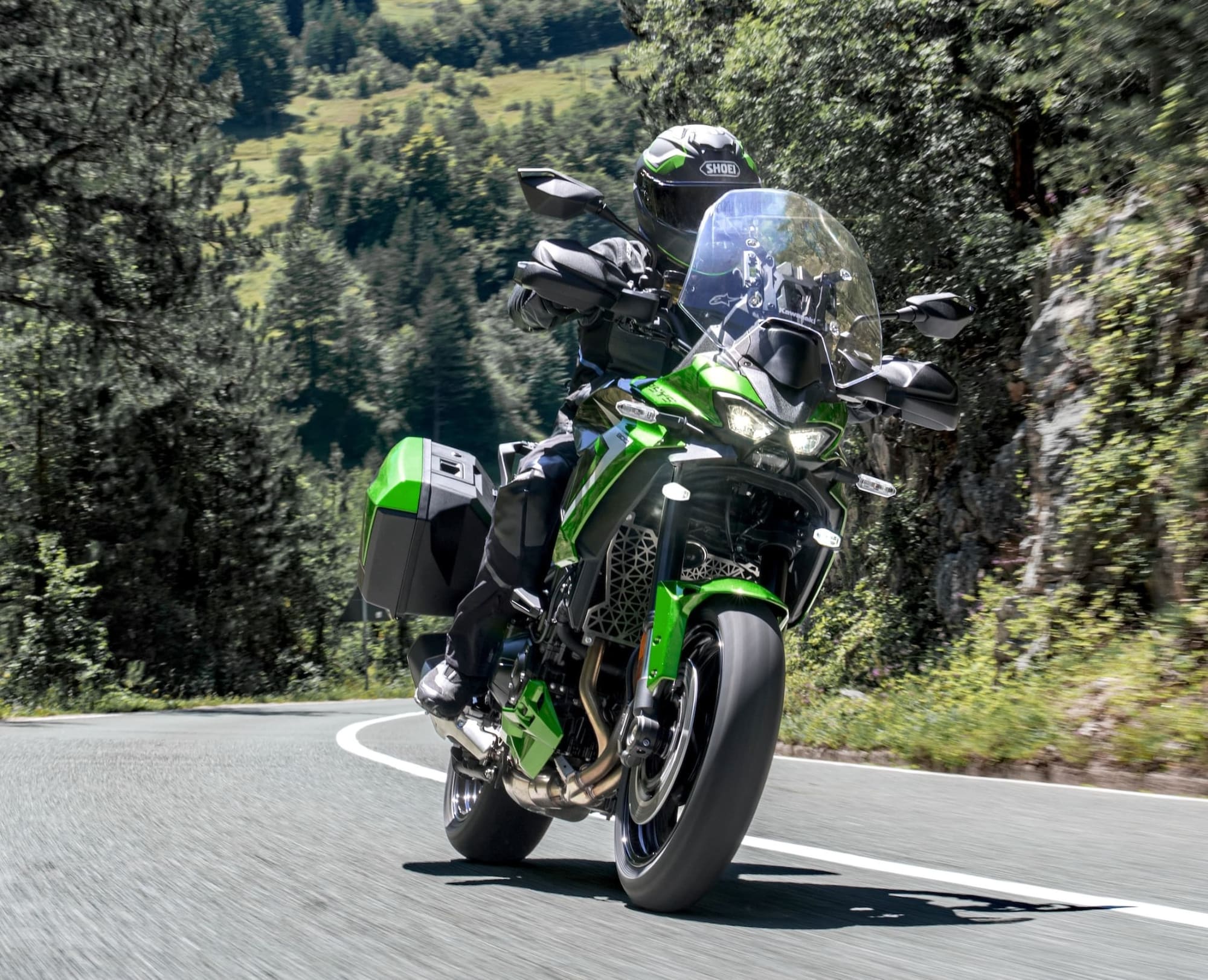
Well, Kawasaki has come to the rescue — at least partly. For 2027 it’s introducing the Kawasaki Versys 900, a 948 cc inline-four sport tourer with radar-based Adaptive Cruise Control Lite, forward collision warning and blind-spot detection. This is the first Versys to get radar assistance. And it’s an exciting sign that the technology is moving beyond ultra-premium machines.
Kawasaki has form here: it’s willing to put modern rider electronics into bikes that aren’t race replicas, and its recent hybrid motorcycle experiments make it one of the Japanese manufacturers most willing to try unusual ideas. The 900 is a much more conventional bike than those hybrids, but its radar is the interesting part.
One correction worth making before I get too carried away: the Versys 900 isn’t the first middleweight motorcycle with adaptive cruise. Yamaha beat Kawasaki to that with the 890 cc Tracer 9 GT+ in 2023. Kawasaki’s news is still welcome — especially since its cheaper, simpler ACC Lite works differently from full ACC.
Are you obsessed with motorcycles?
Well, I am. That’s why I created this site — as an outlet. I love learning and sharing what others might find useful. If you like what you read here, and you’re a fraction as obsessed as I am, you might like to know when I’ve published more. (Check the latest for an idea of what you’ll see.)
Why ACC Lite is the headline
The Versys 900’s front radar watches traffic ahead and adjusts the electronic throttle to keep one of three rider-selected following distances: near, medium or far. If a vehicle ahead slows modestly, the Kawasaki rolls off and lets engine braking reduce speed. Once the road clears, it accelerates back toward the speed you set.
But ACC Lite can’t apply the brakes. That is a big difference from the full adaptive cruise control on bikes like the Yamaha Tracer 9 GT+ or Kawasaki’s own supercharged Ninja H2 SX SE. If traffic slows abruptly or you need substantially more deceleration than engine management can provide, you need to brake yourself. Applying the brakes cancels ACC Lite, and you then press RES to resume.
So the name “Lite” is honest. The technology should reduce the repetitive throttle adjustments of highway riding, but it won’t do the complete speed management that full ACC does. And it certainly isn’t collision avoidance. Kawasaki also adds forward collision warning, blind-spot detection using rear radar, and an emergency stop signal that flashes under hard braking.
There’s a good argument for this compromise: it gives you some of the comfort of radar cruise without a system capable of intervening through the brakes. But if the latter is the reason you want ACC, take note. See my comparison of motorcycles with adaptive cruise control for the alternatives.
The rest of the bike: a 948 cc four-cylinder
Kawasaki has based the engine on its familiar Z-series 900-class inline-four. In the Versys 900, the 948 cc unit makes a claimed 89.6 kW (122 PS / about 120 hp) at 9,500 rpm and 97.3 Nm (72 lb-ft) at 8,000 rpm. That puts it closer in spirit to a lively naked bike than a low-revving tractor of an adventure tourer.
Kawasaki calls this its sportiest Versys. That’s believable from the engine choice and road-oriented chassis, though I’ll reserve judgement about the riding experience until I’ve tried it. A rev-happy inline-four is a particular pleasure on winding tarmac; it’s also a good fit for a machine intended to carry luggage over long distances.
There’s an all-new trellis frame, with Kawasaki claiming roughly 50:50 front-to-rear weight distribution. Long-travel suspension and 17-inch wheels with Metzeler Roadtec 01 tyres make the intention clear: this is a road bike that can deal with imperfect roads. It’s not meant to be a dirt-oriented alternative to the KLE500.
Touring comfort and everyday equipment
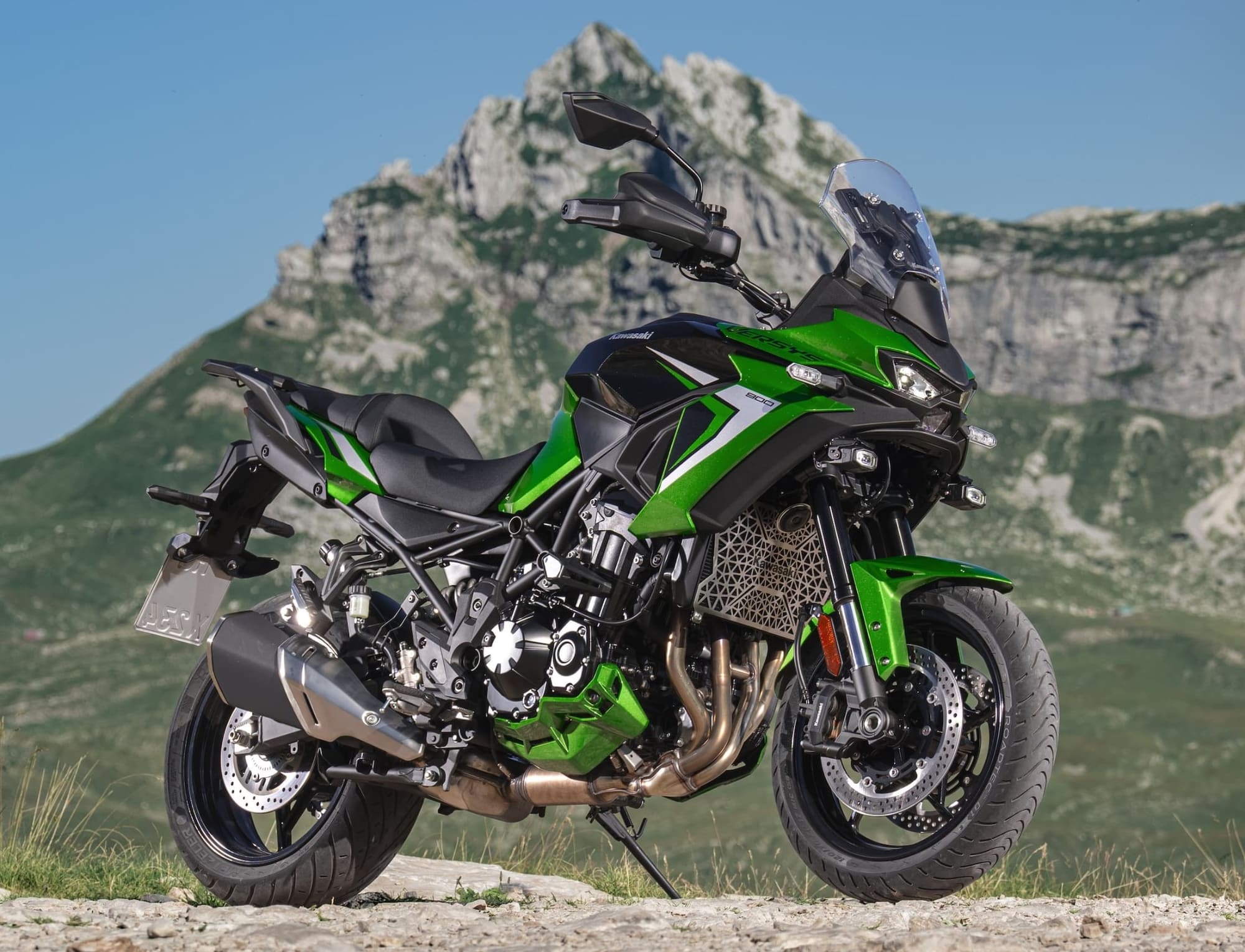
The riding position is upright, the windscreen has seven adjustment positions, and you can set the seat between 825 and 845 mm (32.5–33.3 in). A five-inch colour TFT dash connects to Kawasaki’s Rideology app and supports turn-by-turn navigation. The bike has a quickshifter, Kawasaki Cornering Management Function, traction control, enhanced ABS, power modes and integrated riding modes.
For touring, Kawasaki offers two 32 L side cases and a 47 L top case. In other words, there’s enough luggage capacity to do proper two-up trips without making this an enormous touring barge. Kawasaki says the new subframe is designed around carrying a passenger and luggage.
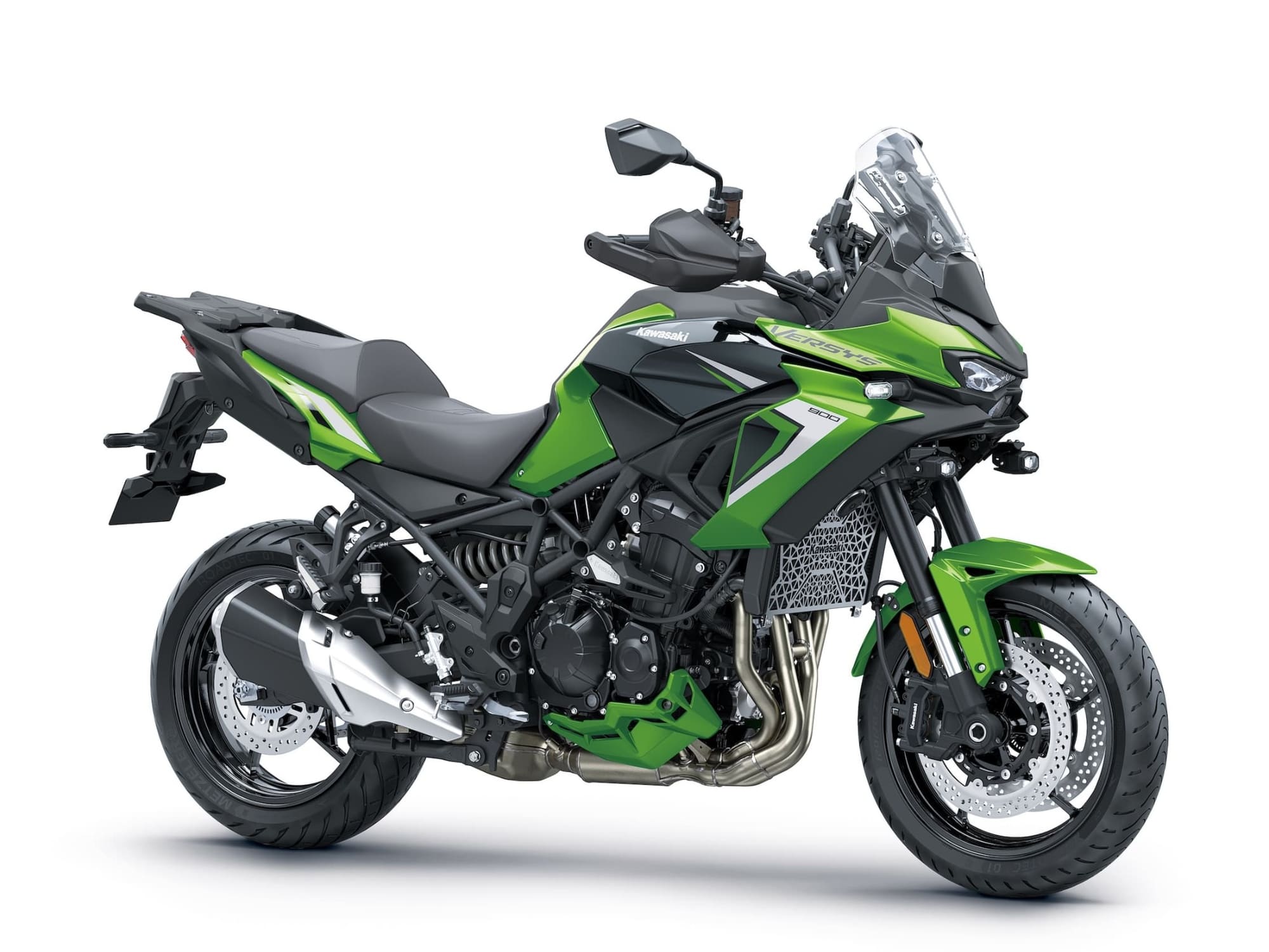
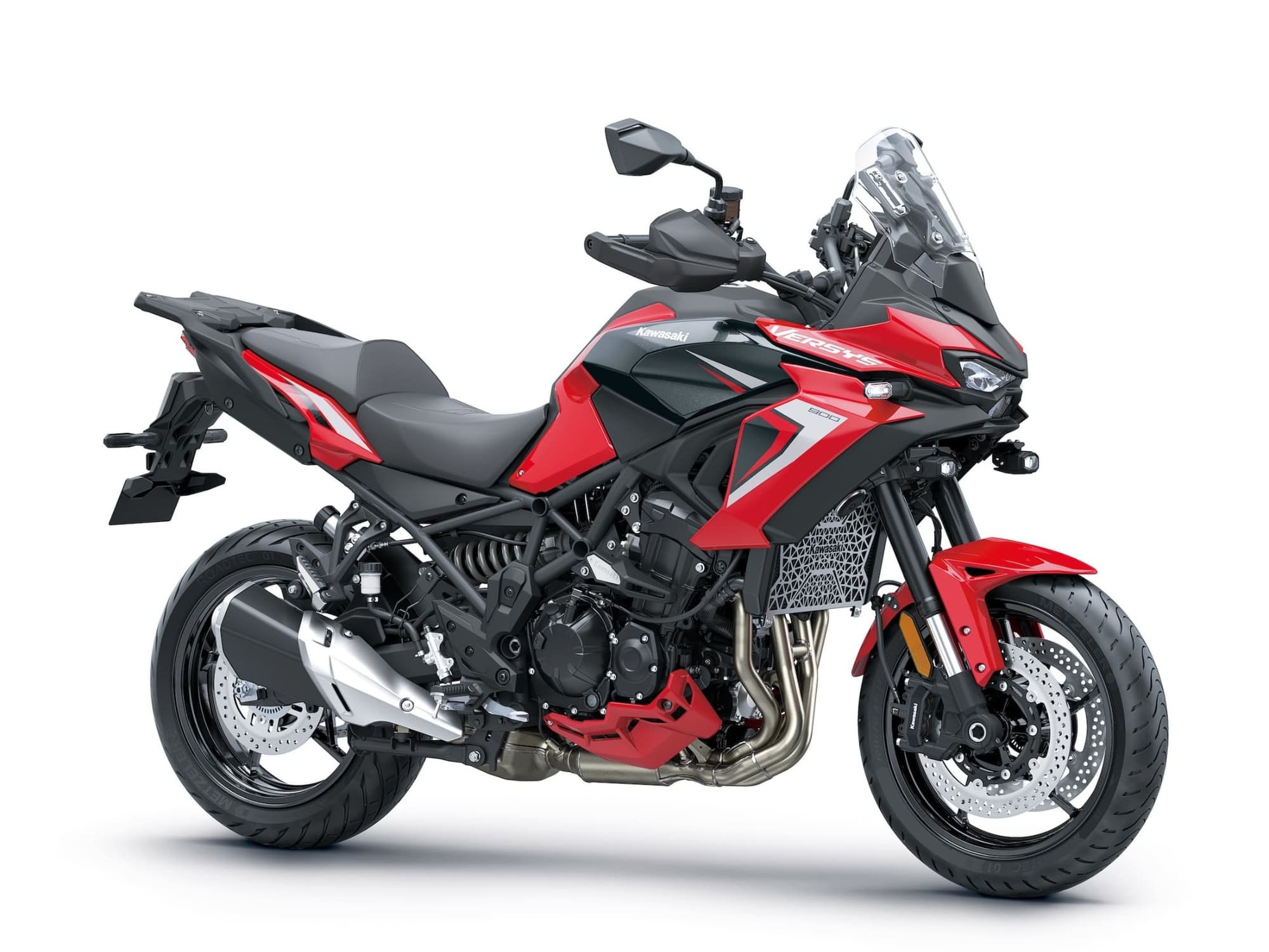
The Versys 900 SE adds the bits I’d want for travel: heated grips, hand guards, compact LED fog lights, radiator protection, frame sliders, an engine lower cowl and a centre stand. Kawasaki also lists Tourer and Grand Tourer accessory packages. There is a 70 kW version in some European markets.
Versys 900 vs Versys 1100: replacement or alternative?
I can see the 900 becoming the version of the Versys that appeals to riders who liked the original Versys 1000 SE for its flexible inline-four, upright comfort and ability to cover huge distances without giving up a bit of fun.
But Kawasaki hasn’t announced that the Versys 900 replaces the Versys 1100. The 1100 is still listed for model year 2027, including the higher-spec SE touring model in markets such as the US. The 900 seems to sit underneath it — with slightly less displacement, a more overtly sporting pitch and, interestingly, radar cruise that the longstanding Versys 1000/1100 line hasn’t offered.
The 1100 SE still makes sense for someone who wants the bigger engine and semi-active electronic suspension. For riders who don’t need that kit, the 900 is an interesting alternative. Neither has yet been compared by us on the road.
Price, arrival date and colours
Kawasaki UK says the regular Versys 900 will arrive in April 2027 at £10,899, with the SE at £11,799. In the US, Kawasaki lists the single Versys 900 SE LT ABS at a US$13,599 base MSRP, before destination and other charges. Pricing and equipment vary by market, so don’t assume the UK SE and American SE LT have identical packages.
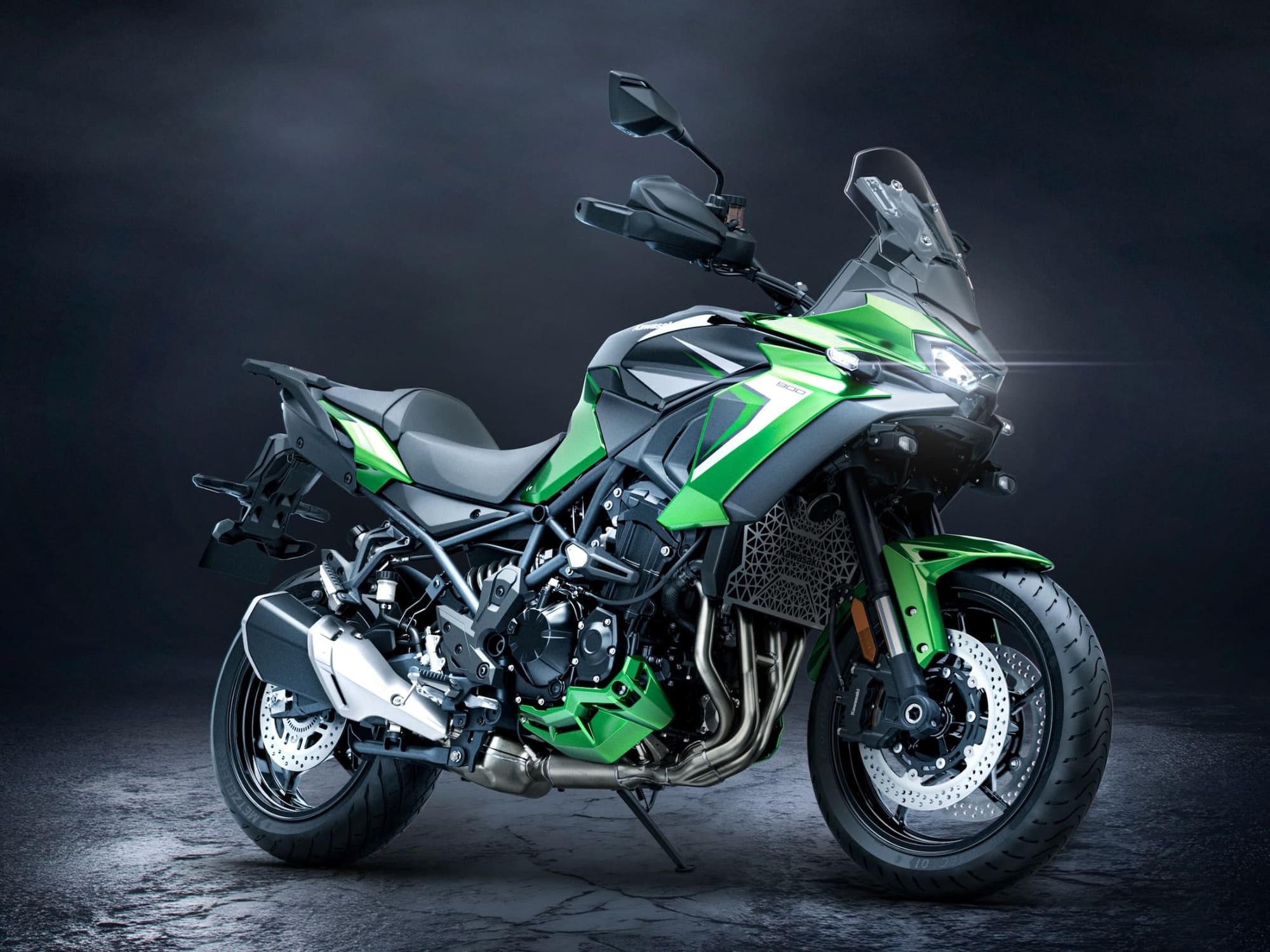
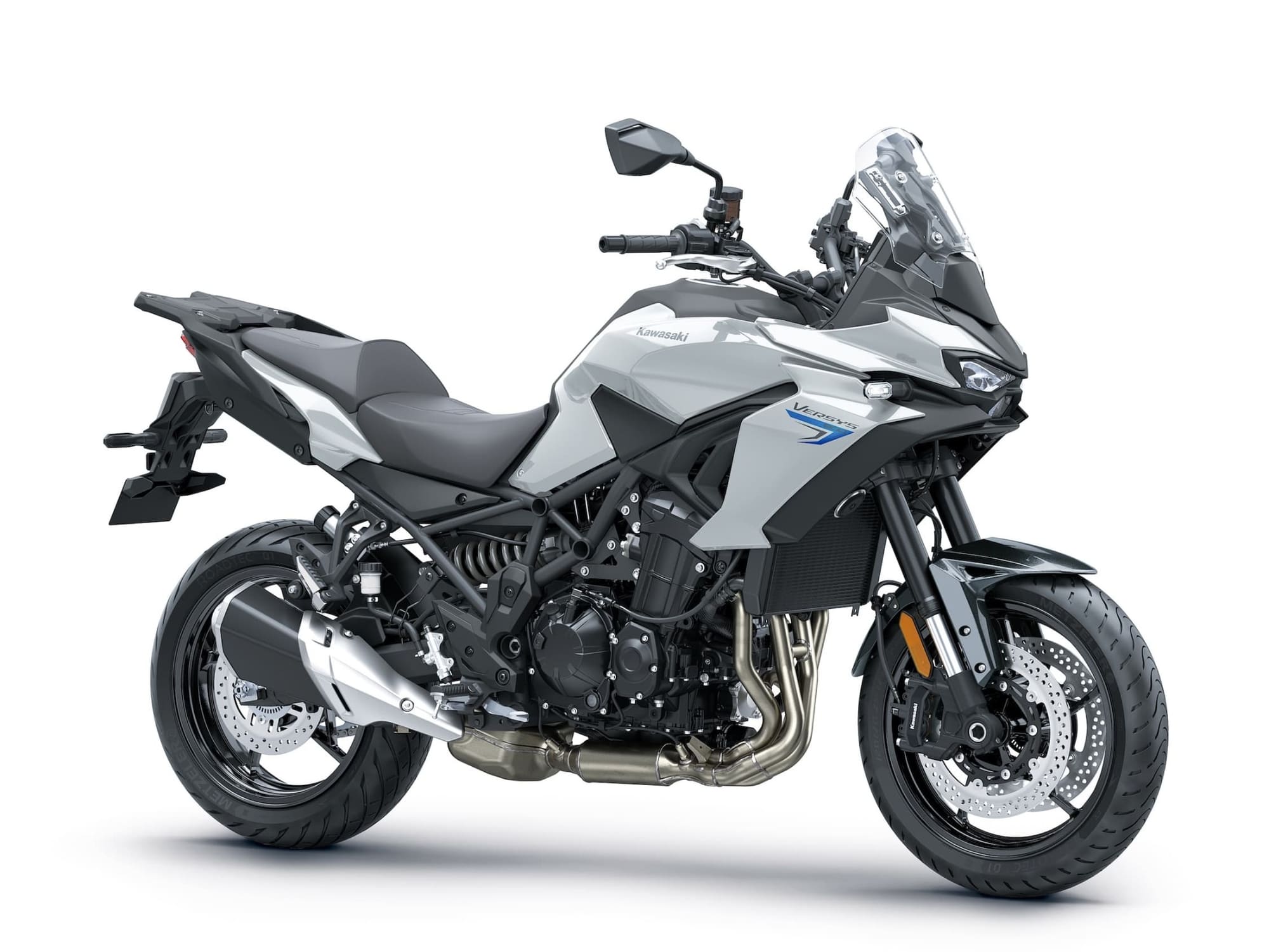
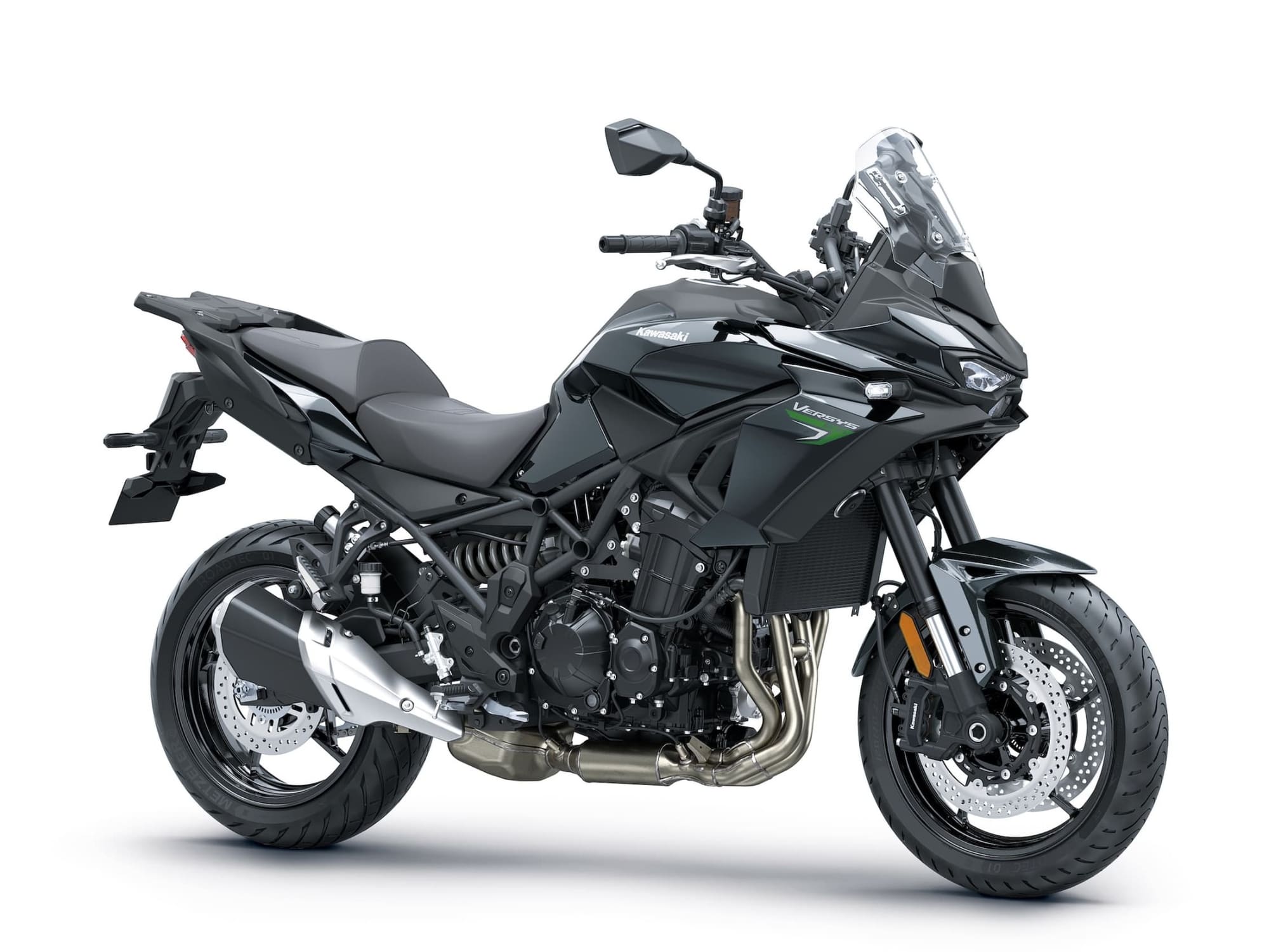
The standard bike comes in Metallic Spark Black or Pearl Robotic White. The SE comes in Plasma Lime Green / Metallic Spark Black or Firecracker Red / Metallic Carbon Gray. Here are the official studio pictures.
My take
I’m pleased to see another Japanese manufacturer bring radar cruise to a bike that isn’t its flagship. The Versys 900 looks appealing in its own right, too: a 120 hp-ish inline-four, upright ergonomics, 17-inch wheels and the ability to haul luggage is my kind of practical performance bike.
I’d have preferred full ACC — particularly when Yamaha already sells it in this class — and we still need actual road tests, prices in more markets and final specifications to judge the package. But this is a worthwhile addition to an embarrassingly short list. Here’s hoping Honda and Suzuki take note.
For the original specifications and trim details, see Kawasaki’s launch announcement and Versys 900 model page.