
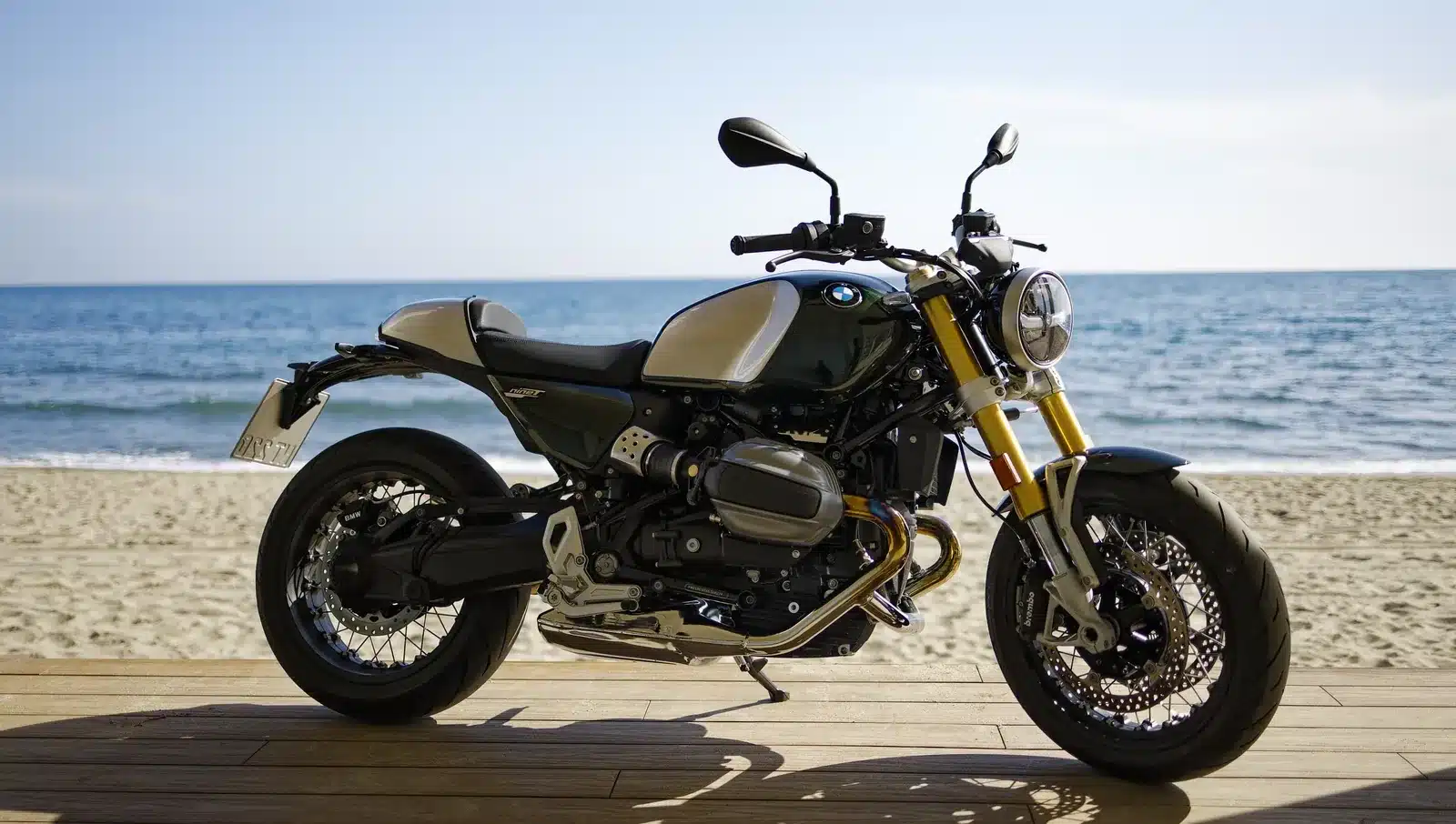
A number of years ago, I had the pleasure of riding and then owning the BMW R nineT. To me, it was a perfect throwback bike: full of character from the air/oil-cooled engine, great handling, road presence, a unique style, and enough power to have a LOT of fun without having to rev it to the moon.
The later bikes added technology to make life easier and give you a little more help when things went wrong. It’s why I loved the nineT, and why I was sad to see mine go.
BMW hasn’t given up on us. The R nineT has finished its production run, but the idea lives on in the R 12 family: the same basic boxer engine, repackaged into a new chassis, with a revised intake, updated electronics, and a few quite different personalities.
Something even better? Depending on what you want, perhaps. The R 12 nineT is the direct successor to the roadster I owned; the plain R 12 is a cruiser, the R 12 S dresses the roadster up as a tribute to the R 90 S, and the R 12 G/S takes the family off the tarmac.
Below I’ll go over the BMW R 12 models and show what they share, what is different between them, and which model is best suited to whom.
If you’re shopping for the older bikes, see my separate BMW R nineT model range buyer’s guide. This guide covers the newer R 12 family, including the S and G/S.
Are you obsessed with motorcycles?
Well, I am. That’s why I created this site — as an outlet. I love learning and sharing what others might find useful. If you like what you read here, and you’re a fraction as obsessed as I am, you might like to know when I’ve published more. (Check the latest for an idea of what you’ll see.)
BMW R 12 models — The quick answer
The easiest way to understand the range is to choose the kind of riding you want to do before looking at the accessories catalogue. Otherwise you’ll spend an afternoon comparing cylinder-head covers and forget what you went in for.
| Model | What it is | Who I’d shortlist it for |
|---|---|---|
| R 12 | A low cruiser with a 70 kW engine tune and 19/16-inch wheels | Someone who wants the boxer character in a relaxed, lower-seat package |
| R 12 nineT | The classic roadster, with 80 kW and 17-inch wheels | A rider who liked the original nineT and wants a road bike for bends, everyday rides, and customising |
| R 12 S | A nineT-based roadster with R 90 S-inspired styling and more standard equipment | Someone who wants that particular appearance and would buy many of the included options anyway |
| R 12 G/S | An enduro with a 21-inch front wheel and long-travel suspension | A rider who wants rough-road and off-road capability, and can manage a taller bike |
The R 12 and R 12 nineT arrived for the 2024 model year. BMW announced the S in November 2024 and the G/S in March 2025; the latter is labelled a 2026 model in the US. Registration year, model year, and the date a bike reached your country can differ, so use the actual specification when comparing adverts.
Also, “Option 719” is an equipment and styling programme, rather than a fifth fundamentally different motorcycle. A particularly shiny nineT is still a nineT. A cruiser with wire-spoke wheels is still a cruiser.
What all the R 12 models share
The centrepiece is BMW’s 1,170 cc air/oil-cooled boxer twin. It has two overhead camshafts per cylinder and four valves per cylinder, and belongs to the engine family many of us call the “Camhead”. If BMW engine nicknames have become a blur, here’s my guide to Airheads, Oilheads, Hexheads, and Camheads.
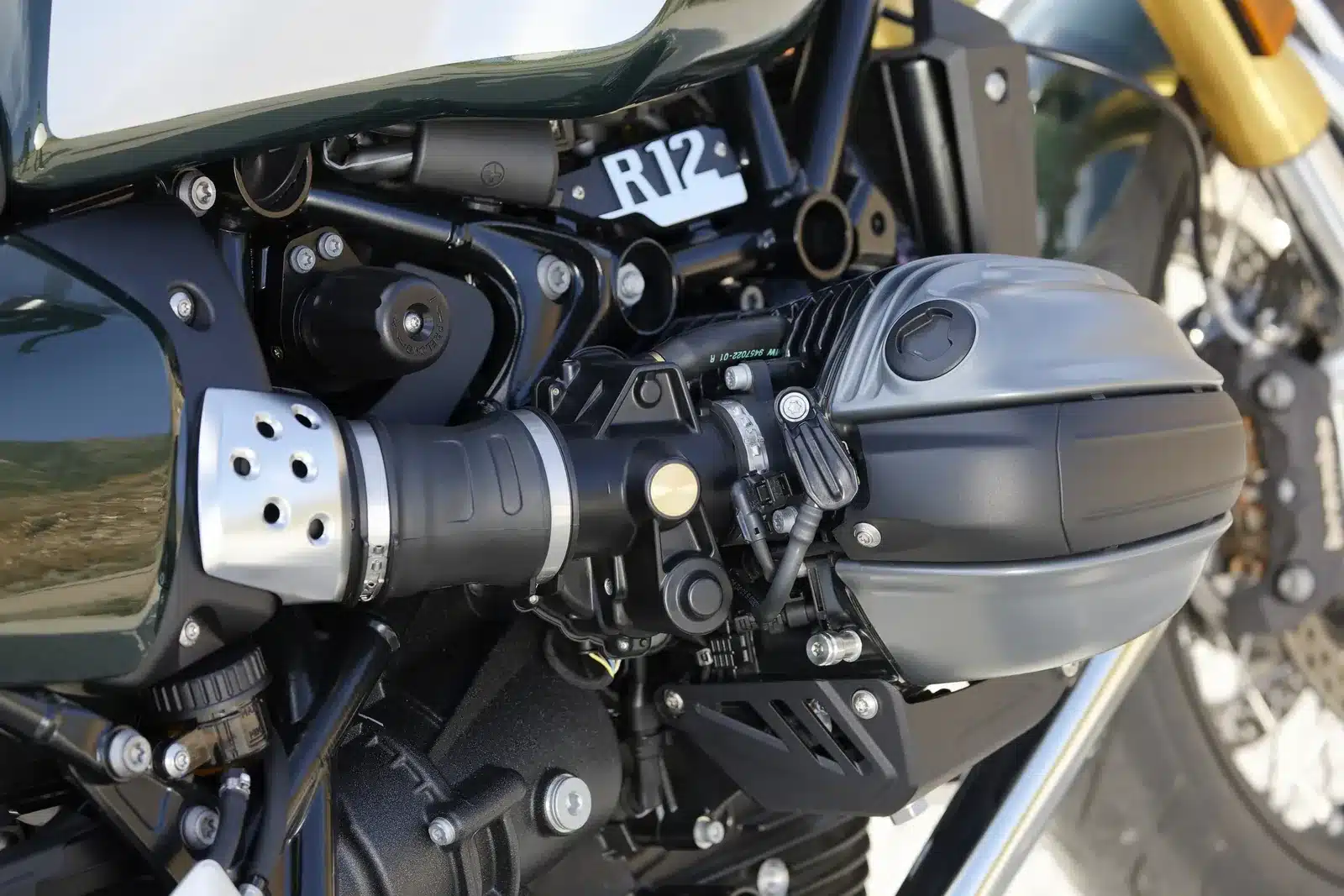
It’s an older engine architecture being kept alive in modern motorcycles. That matters to me: the shape of the cylinder heads, the sound, and the way a boxer makes an ordinary ride feel like an occasion are a large part of the appeal.
“Same basic engine” doesn’t mean every R 12 makes the same power. The full-power nineT, S, and G/S make 80 kW, while the cruiser makes 70 kW. Restricted-market versions complicate things further, which I’ll come to below.
| Shared feature | What it means for an owner |
|---|---|
| 1,170 cc air/oil-cooled boxer twin | Exposed cylinder heads and the familiar BMW boxer layout; no liquid-cooling radiator |
| Six-speed gearbox and hydraulically operated single-disc dry clutch | A conventional manual transmission; Shift Assistant Pro is an equipment choice, rather than an automatic gearbox |
| Shaft final drive and Paralever rear suspension | No chain to clean and lubricate, although the final drive still needs inspection and servicing |
| Steel tubular frame architecture with a bolt-on rear frame | A platform designed to accommodate different bodies and riding positions; the G/S has its own steering-head arrangement |
| ABS Pro, Dynamic Traction Control, and engine drag torque control | Modern braking and traction assistance, despite the retro appearance |
| LED lighting and Keyless Ride | Modern convenience; keyless starting doesn’t mean every lock on the bike is keyless |
Paralever is the rear swingarm and torque-reaction arrangement, not BMW’s Telelever front suspension. Every bike here uses a telescopic fork at the front. See my Paralever explainer if you’d like to know what the extra link does.
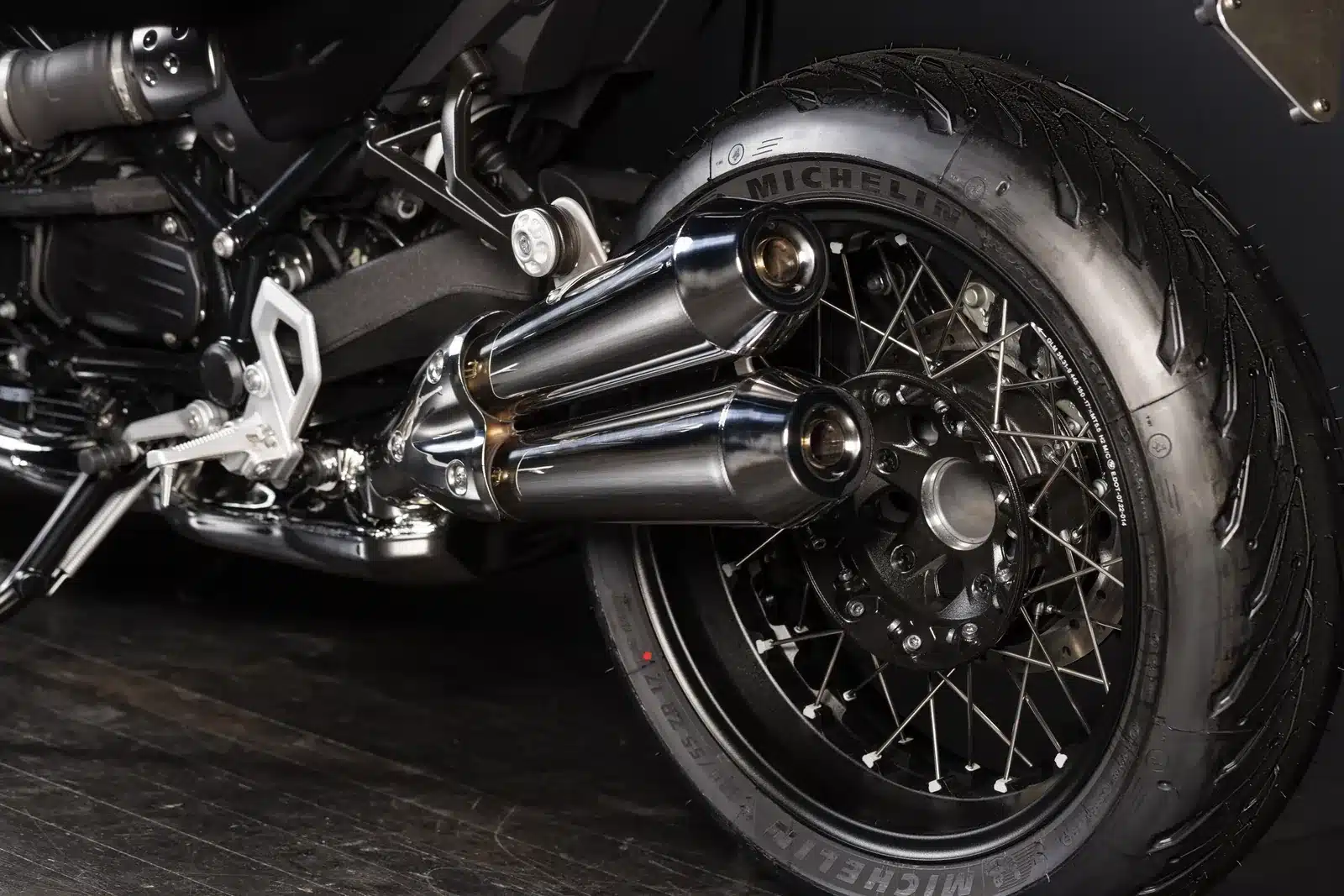
The safety equipment is worth appreciating, too. ABS Pro is BMW’s lean-sensitive ABS, while DTC manages traction under acceleration and engine drag torque control helps when closing the throttle or downshifting. There is more detail in my cornering ABS and IMU guide.
None of that changes the basic attraction. These are still bikes you might buy because you want to look back at them after parking, then find an excuse to go out again.
BMW R 12 specifications compared
Here are the main figures for the standard, full-power configurations. BMW’s technical pages and launch specifications are the basis for these comparisons; options, country-specific packages, and restricted versions can change the bike you’re actually buying.
| Specification | R 12 | R 12 nineT | R 12 S | R 12 G/S |
|---|---|---|---|---|
| Peak power | 70 kW (BMW: 95 hp) @ 6,500 rpm | 80 kW (BMW: 109 hp) @ 7,000 rpm | 80 kW (BMW: 109 hp) @ 7,000 rpm | 80 kW (BMW: 109 hp) @ 7,000 rpm |
| Peak torque | 110 Nm (81 lb-ft) @ 6,000 rpm | 115 Nm (85 lb-ft) @ 6,500 rpm | 115 Nm (85 lb-ft) @ 6,500 rpm | 115 Nm (85 lb-ft) @ 6,500 rpm |
| Front/rear wheel diameter | 19 / 16 inches | 17 / 17 inches | 17 / 17 inches | 21 / 17 inches; 18-inch rear with Enduro Package Pro |
| Front/rear suspension travel | 90 / 90 mm | 120 / 120 mm | 120 / 120 mm | 210 / 200 mm |
| Fork adjustment | Non-adjustable | Preload, compression, rebound | Preload, compression, rebound | Preload, compression, rebound |
| Rear shock adjustment | Preload and rebound | Preload and rebound | Preload and rebound | Preload, compression, rebound |
| Standard seat height | 754 mm (29.7 in) | 795 mm (31.3 in) | 795 mm (31.3 in) | 860 mm (33.9 in); 875 mm (34.4 in) with Enduro Package Pro |
| BMW quoted road-ready weight | 227 kg (500 lb) | 220 kg (485 lb) | 220 kg (485 lb) | 229 kg (505 lb) |
| Fuel capacity | 14 litres | 16 litres | 16 litres | 15.5 litres |
| Standard riding modes | Roll, Rock | Rain, Road, Dynamic | Rain, Road, Dynamic | Rain, Road, Enduro; Enduro Pro with the corresponding package |
| Standard instruments | Single speedometer | Speedometer and tachometer | Speedometer and tachometer | Single round instrument |
For power, the kW figures are the clearest common reference. BMW labels the European figures “95 hp” and “109 hp”; other markets and publications may use mechanical horsepower and round them differently. That doesn’t necessarily mean the engine has changed.
The weights are BMW’s quoted road-ready figures, not independently measured weights of fully accessorised dealer bikes. The important buying point is simpler: all four are substantial motorcycles, and the G/S adds a lot of height without losing much mass.
BMW R 12 — The cruiser
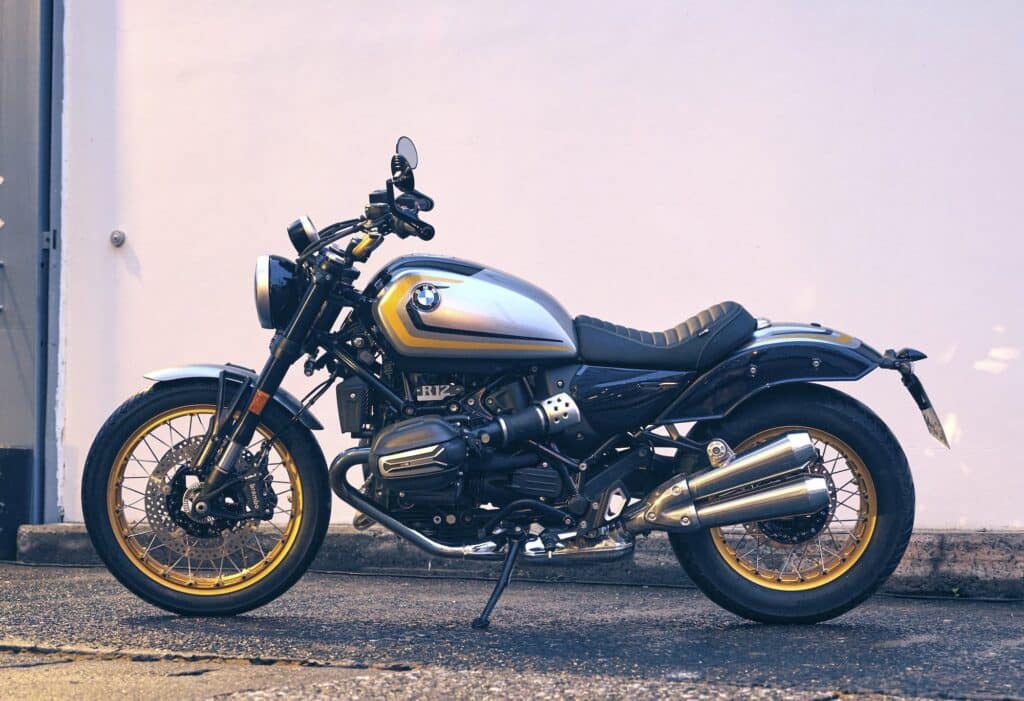
The plain R 12 is the easiest name to say and the easiest bike to misunderstand. It’s not an abbreviation for the R 12 nineT: it’s a separate cruiser configuration.
You can see the intention in its proportions. The tank and seat line fall towards the rear, the front wheel is larger than the rear, and the seat is much lower than the roadster’s. BMW gives it a wide handlebar and a more relaxed riding position.
The engine has a lower peak output, but that doesn’t make it a small or slow motorcycle. Seventy kilowatts and 110 Nm are plenty for the kind of road riding this package encourages.
Nor should “tuned for cruising” be read as “more torque everywhere”. Its quoted peak torque is lower than the nineT’s. I’d choose it for the riding position, appearance, and overall brief, rather than assuming the engine has a hidden performance advantage.
The other meaningful compromises are in the suspension. You get 90 mm of travel at both ends and a non-adjustable fork, although the rear shock has preload and rebound adjustment. A low seat can help at a standstill, but it doesn’t by itself guarantee a plush ride over broken roads.
That makes a test ride unusually useful here. Try the roads you actually use, and check whether the riding position suits your legs after more than five minutes in the showroom.
The cruiser also gets the appropriately named Roll and Rock riding modes. They’re different calibrations of the engine response and assistance systems; choosing Rock doesn’t turn it into the 80 kW roadster.
I’d shortlist the R 12 if: I wanted boxer character, a low seat, and a relaxed road bike without stepping up to the size of an R 18. If I wanted to attack a twisty road and experiment with fork settings, I’d start with the nineT.
BMW R 12 nineT — The natural successor
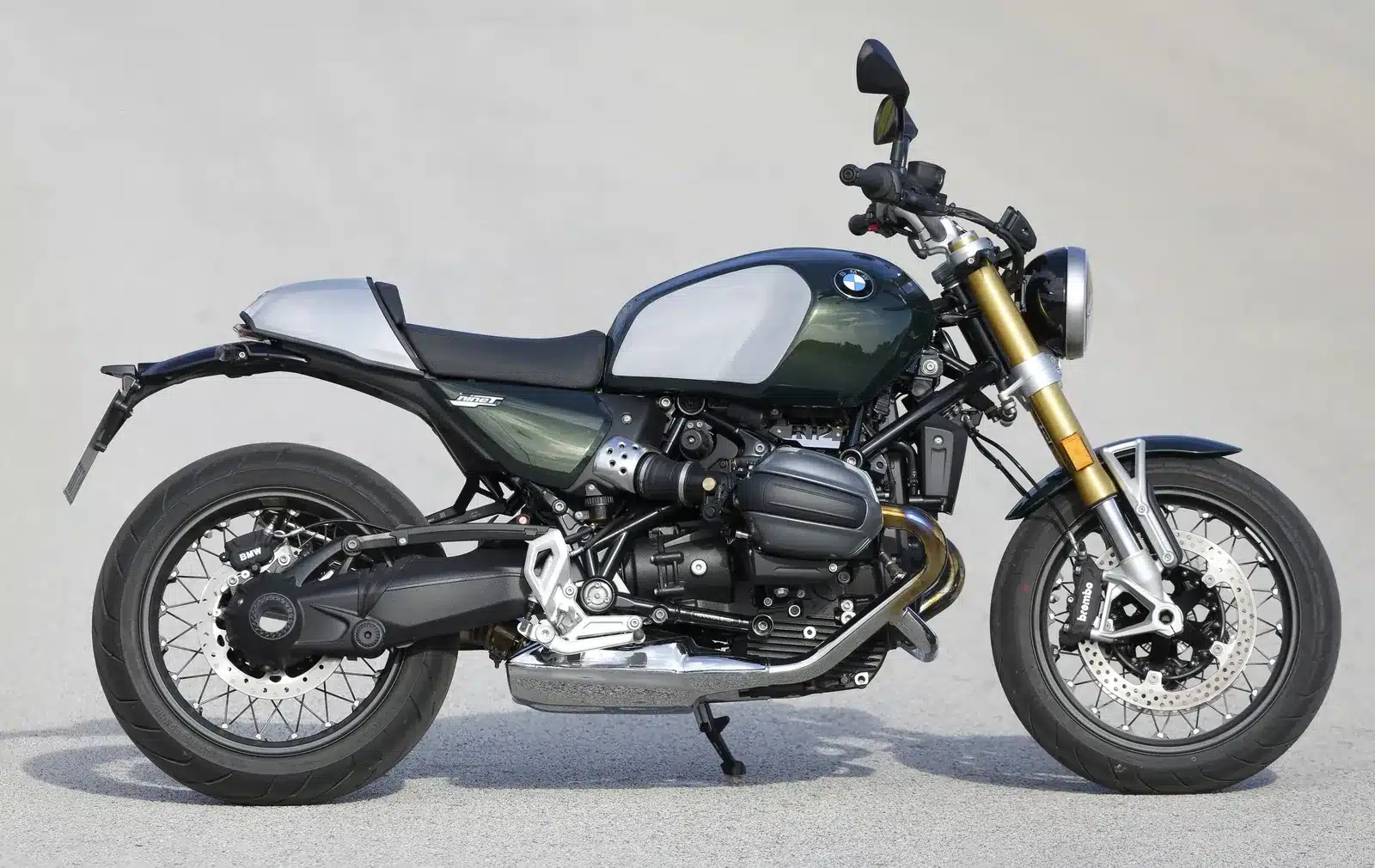
This is the R 12 I’d put first on the list if I were replacing the R nineT I owned. It keeps the roadster proportions and riding intent, rather than asking me to become a cruiser rider.
The specification suits that job: the 80 kW engine tune, a fully adjustable 45 mm upside-down fork, 120 mm of suspension travel at each end, and 17-inch wheels with road-oriented tyre sizes. Its 795 mm seat is also a much smaller step up than the G/S’s.
Those wheel sizes matter more to a road buyer than an extra badge. They’re familiar sport-road dimensions, and the nineT’s geometry is the one I’d choose as a starting point for riding bends.
Don’t mistake the spoke wheels in the photos for an across-the-range standard feature. BMW lists cast wheels on the standard nineT, with wire-spoke choices available as options. Press and dealer photos often show accessorised bikes.
The new chassis is more than a styling tweak. The one-piece main frame, airbox under the seat, and angled rear shock give BMW and customisers more freedom with the tank, seat, and rear-end arrangement.
Compared with the old nineT, BMW also shortened the tank and altered the ergonomics. Whether that makes the new bike more comfortable for you depends on your proportions, so I’d sit on both if buying used is an option.
For more on the change of platform, see my original R nineT versus R 12 launch comparison. That article concentrates on what BMW changed when the first two R 12 models arrived.
The attraction for me is that it remains a fairly straightforward roadster. You can add cruise control, heated grips, and a quickshifter, but you don’t have to turn it into a miniature touring bike to enjoy the engine.
I’d shortlist the R 12 nineT if: I wanted the most direct continuation of the original nineT experience, with useful suspension adjustment and the option to make it my own. It’s my default recommendation for a mostly-road rider who likes the whole family.
BMW R 12 S — The R 90 S tribute
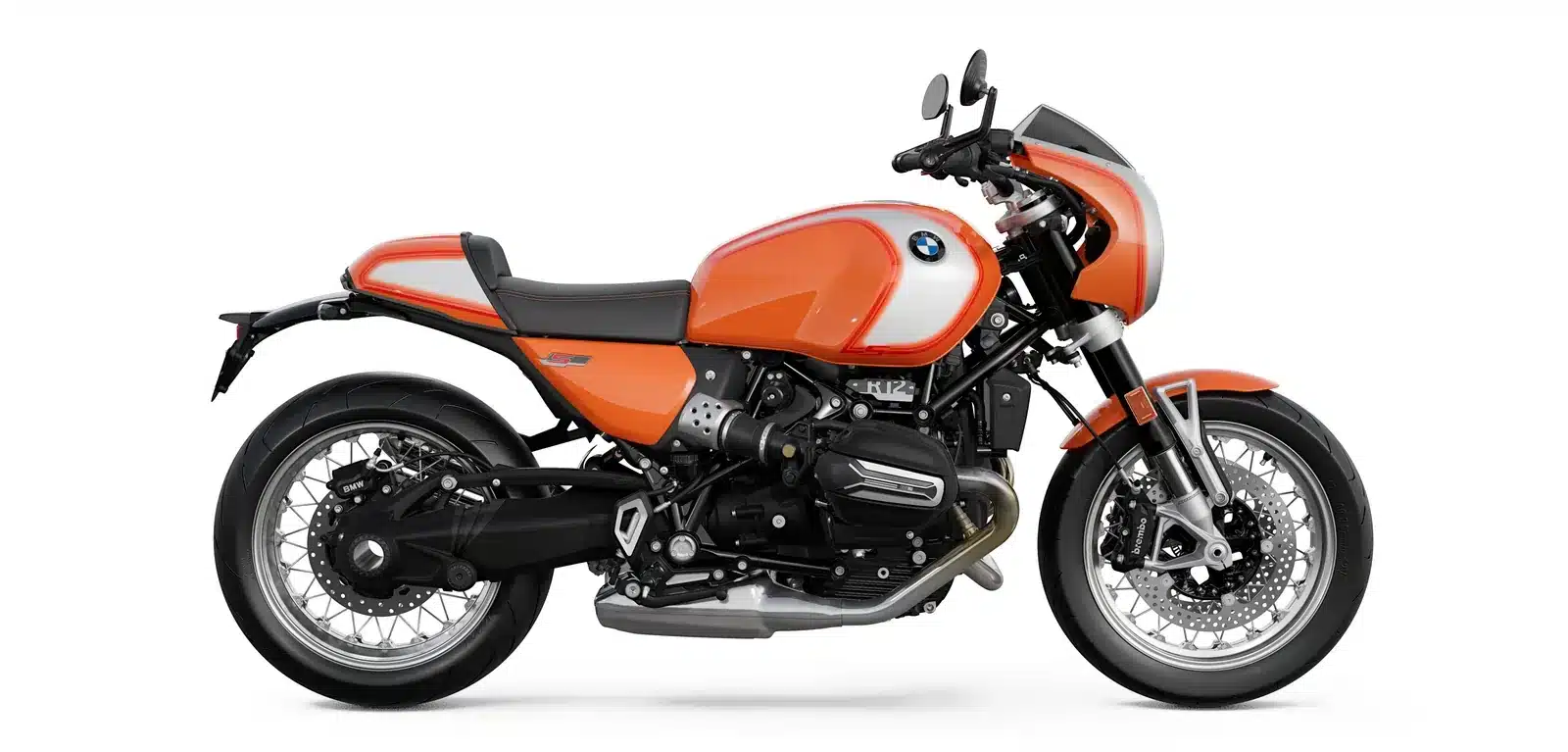
The R 12 S is based on the nineT roadster, not the R 12 cruiser. That is the most useful fact to know before getting lost in the orange paint.
BMW’s inspiration is the R 90 S: a small handlebar-mounted cockpit fairing, a tinted screen, a painted seat hump, and Lava orange metallic with brushed-aluminium accents. The S also gets Option 719 Classic II wire-spoke wheels and a selection of milled components.
The engine output, wheel sizes, suspension travel, and basic chassis dimensions are those of the full-power R 12 nineT. You’re not buying a different performance engine just because there is an S on the side.
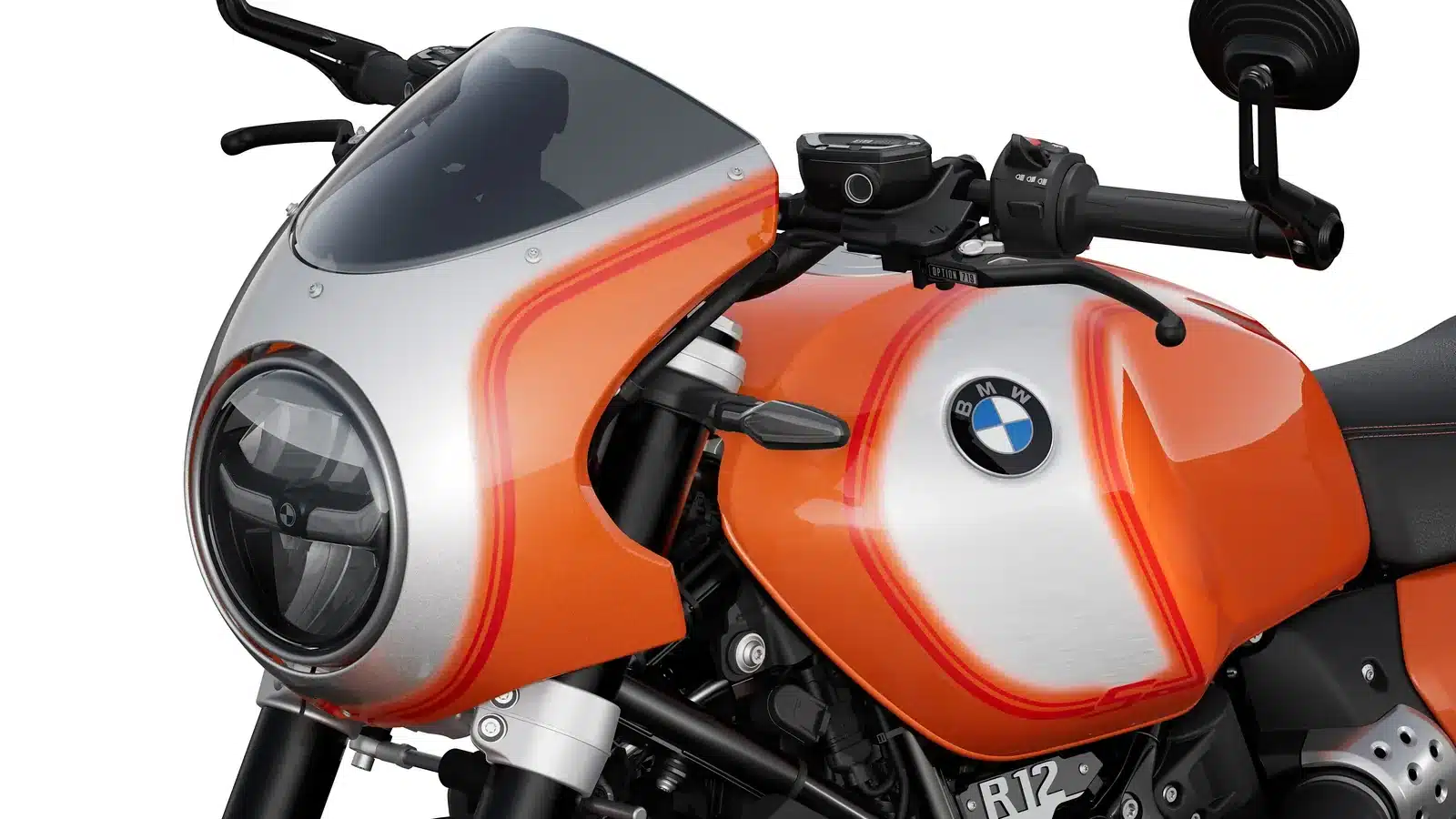
There is a practical side to the specification, though. BMW’s launch equipment includes cruise control, heated grips, Hill Start Control, Shift Assistant Pro, and the adaptive Headlight Pro, along with the styling parts. On the ordinary nineT, several of those are extra-cost choices.
That means the fair comparison is a suitably equipped nineT against the S, rather than the cheapest bare nineT against a fully dressed special model. Then decide how much the paint and fairing are worth to you.
The S isn’t a re-created R nineT Racer with the same low clip-on riding position. Its starting point is the nineT roadster, so don’t assume the fairing brings either a race-bike posture or touring-bike wind protection.
Personally, the S doesn’t pull me in as strongly as the G/S. I wrote about that in my 2026 best-looking motorcycles list. But if the R 90 S connection speaks to you, that’s a perfectly good reason to choose it.
I’d shortlist the R 12 S if: I loved this exact look and wanted the bundled comfort equipment. I wouldn’t pay the premium solely in the expectation of getting a faster or more capable sports bike.
BMW R 12 G/S — More than an Urban G/S successor
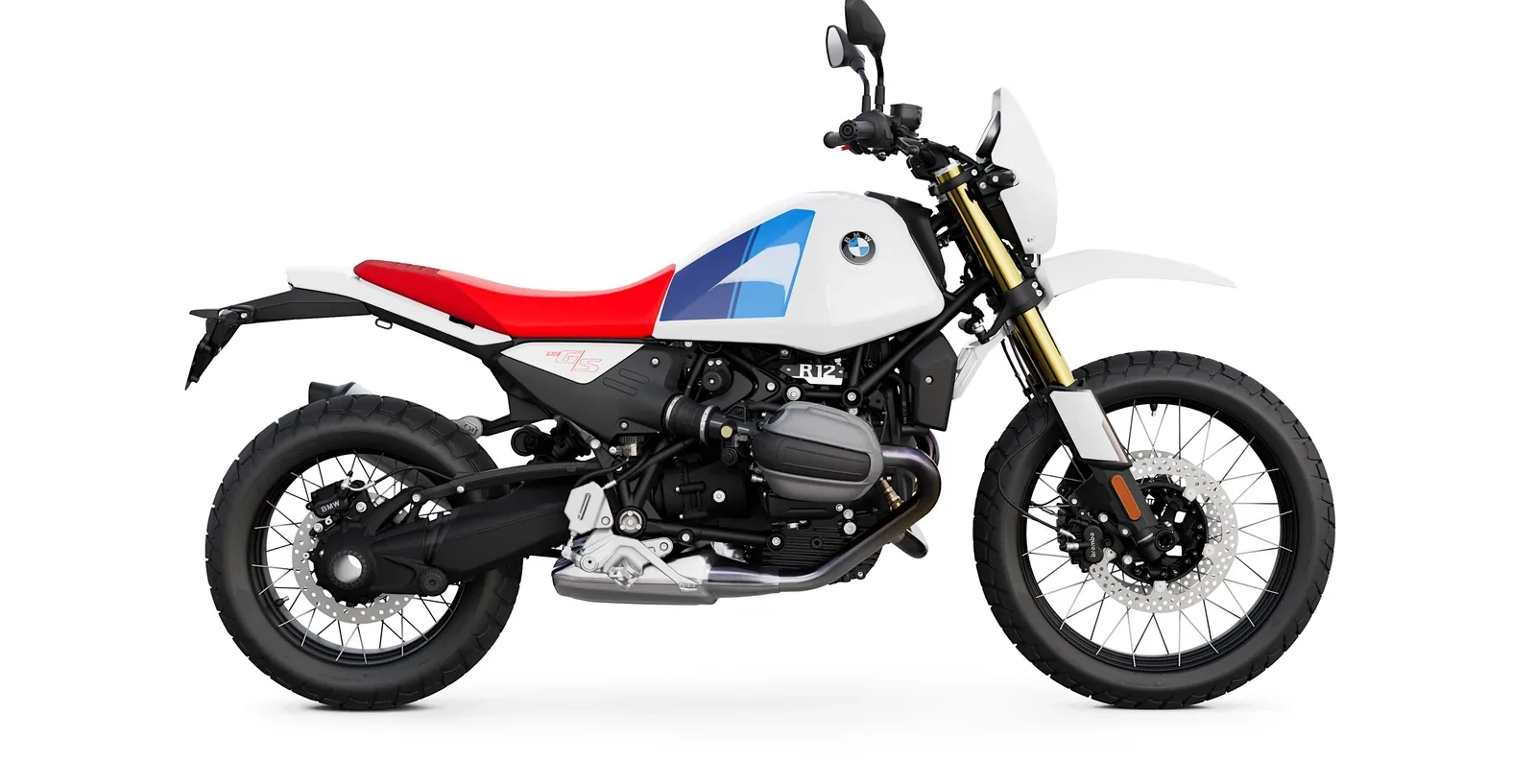
The G/S is the one that makes this family more interesting to me. I like the roadster, but a boxer in those classic enduro proportions is hard to walk past.
It also goes substantially beyond the old R nineT Urban G/S’s styling exercise. A standard 21-inch front wheel, 210 mm of front suspension travel, 200 mm at the rear, and 240 mm of ground clearance give it a much more serious rough-ground specification.
BMW revised the steering-head arrangement and gave it a wide steering angle, a flatter seat, suitable footrests, and a high-mounted silencer. Both the fork and the rear shock have preload, compression, and rebound adjustment.
The full-power engine is still the familiar 80 kW / 115 Nm boxer. The transformation is mostly in how the motorcycle supports the rider and deals with the surface beneath the tyres.
That’s the appeal, and also the compromise. A 21-inch front wheel and a tall enduro stance aren’t the choices I’d make solely to optimise a smooth-road cornering bike. And 229 kg is a lot of motorcycle if a gravel track becomes a muddy climb.
For my own use, the standard G/S would be a tempting starting point: road rides, imperfect surfaces, and dirt roads to country properties. Someone with more ambitious off-road plans may want the Enduro Package Pro.
What does Enduro Package Pro add?
The headline change is the 18-inch rear wheel in place of the standard 17-inch rear. BMW also lists off-road tyres, larger enduro footrests, a large engine guard, hand protectors, 20 mm handlebar risers, and a longer side stand in the launch package.
The package configuration raises ground clearance to 255 mm and the standard-seat height to 875 mm. Enduro Pro mode changes the assistance settings for more committed off-road use, including disabling rear-wheel ABS in that mode.
Choose the package for the terrain and ergonomics you’ll actually use. On a road-heavy bike, extra height is something you have to live with every time you stop, rather than a benefit simply because it appears on an options list.
The Rallye seat adds another 20 mm: 880 mm with the standard rear wheel or 895 mm with Enduro Package Pro. That is a meaningful difference when you’re trying to turn around on an uneven driveway.
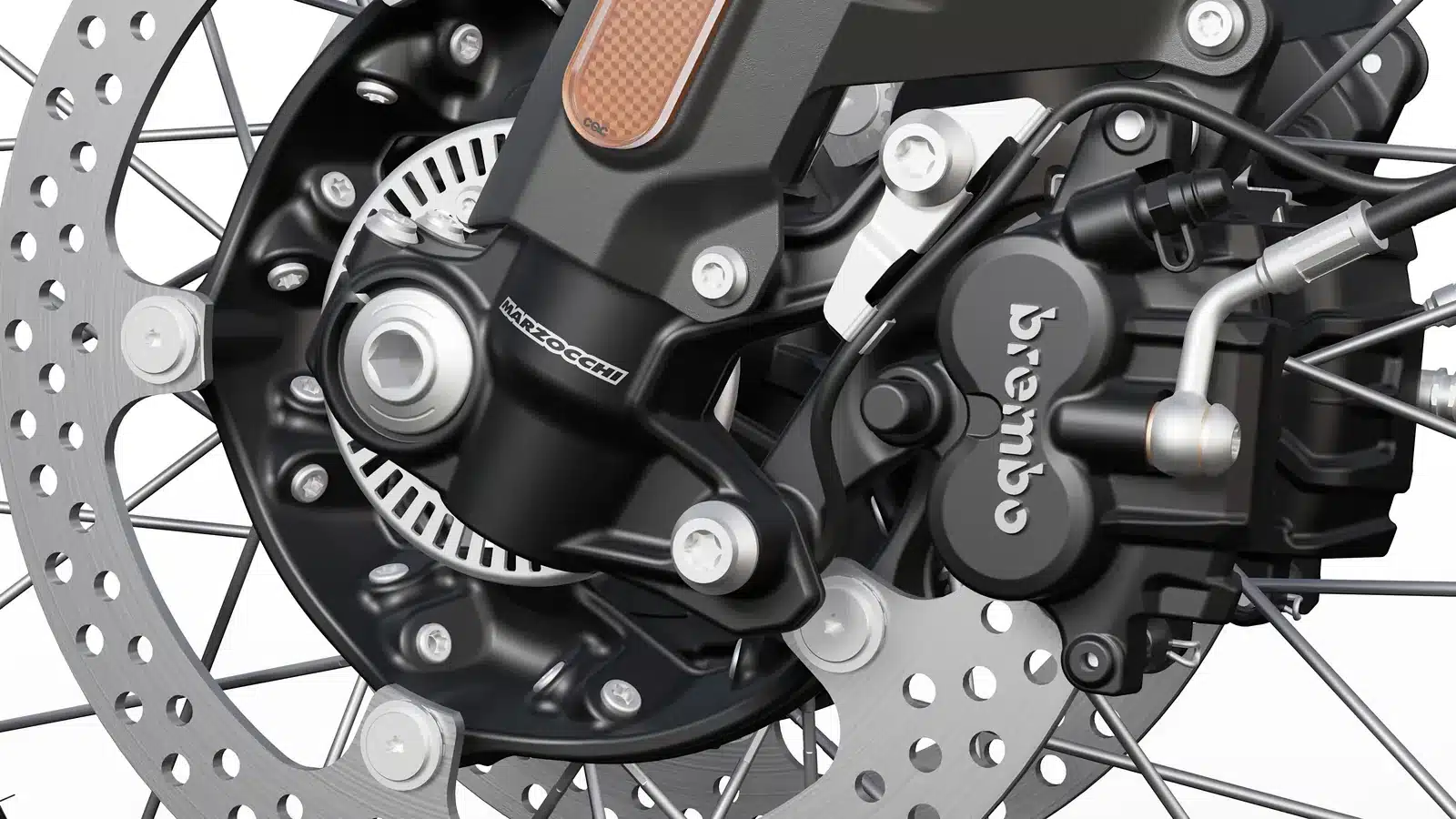
One detail that can be missed in a family comparison is the front brake hardware. The G/S has twin 310 mm discs with two-piston floating calipers, while the road models use four-piston radial monobloc calipers. It still has ABS Pro, but the hardware is not identical.
Check passenger equipment, too. BMW’s global launch specification gives the G/S a solo seat, with passenger accommodation supplied through the Pillion Package or other appropriate equipment choices.
I’d shortlist the R 12 G/S if: I wanted the retro boxer to cope with rougher roads and genuine off-road riding. I’d try the standard bike before automatically ordering the tallest configuration.
The options that actually matter when buying
BMW’s equipment names and bundles vary by country and model year. For a new bike, compare the itemised order; for a used bike, compare the actual fitted equipment. A seller saying “fully loaded” isn’t a specification.
| Equipment | Why I’d check it |
|---|---|
| Cruise control and heated grips | Useful enough that I’d look for them on a road bike. They’re commonly bundled with other comfort options, rather than standard on every R 12. |
| Shift Assistant Pro | Allows clutchless upshifts and downshifts in suitable conditions. Worth trying if you care about it; not a reason to assume the gearbox is automatic. |
| Hill Start Control | Handy on inclines, particularly if the seat height already stretches your confidence at a stop. |
| Headlight Pro | Adaptive cornering lighting, distinct from simply having an LED headlight. Included in the S’s announced equipment. |
| Tyre-pressure monitoring | A separate equipment item; don’t infer it from the presence of a digital display. |
| Wheel choice | Compare the actual rims, tyre requirements, and repair implications. “Spoked” alone is not enough information to establish whether a wheel needs a tube. |
| Passenger kit and luggage | Several configurations are shown or sold as solo bikes. Check seat, footrests, luggage clearance, and load limits for your intended use. |
| Option 719 parts | Mostly an appearance and finish decision. Nice to have if you love them, but I would prioritise fit and suspension condition. |
Round instruments or the Digital Display?
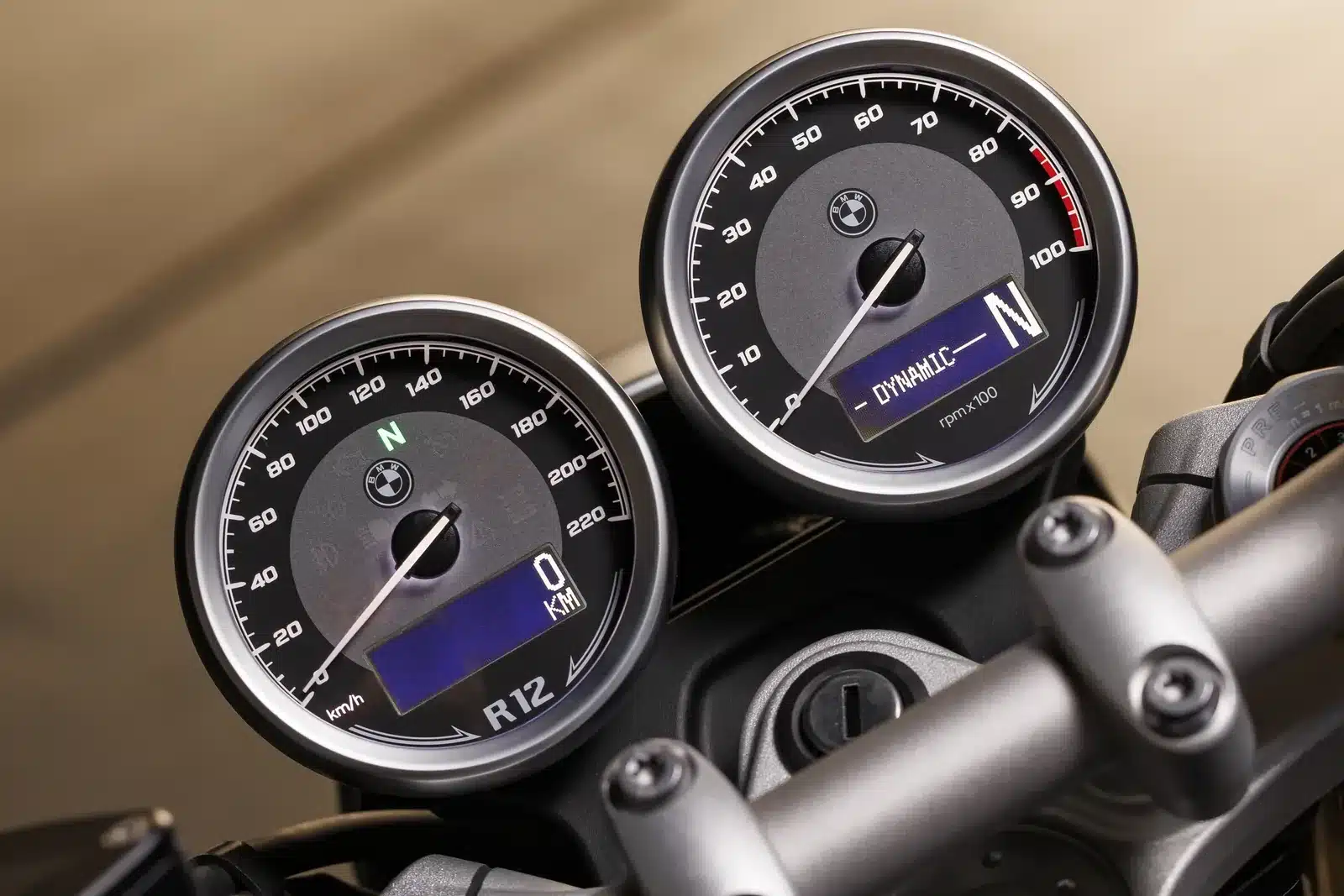
The nineT and S normally use two classic round instruments, while the cruiser and G/S start with a single round instrument. The cruiser can have a tachometer added.
BMW also offers a compact 3.5-inch micro-TFT as the Digital Display option. It replaces the classic instruments rather than adding a large touring-bike dashboard.
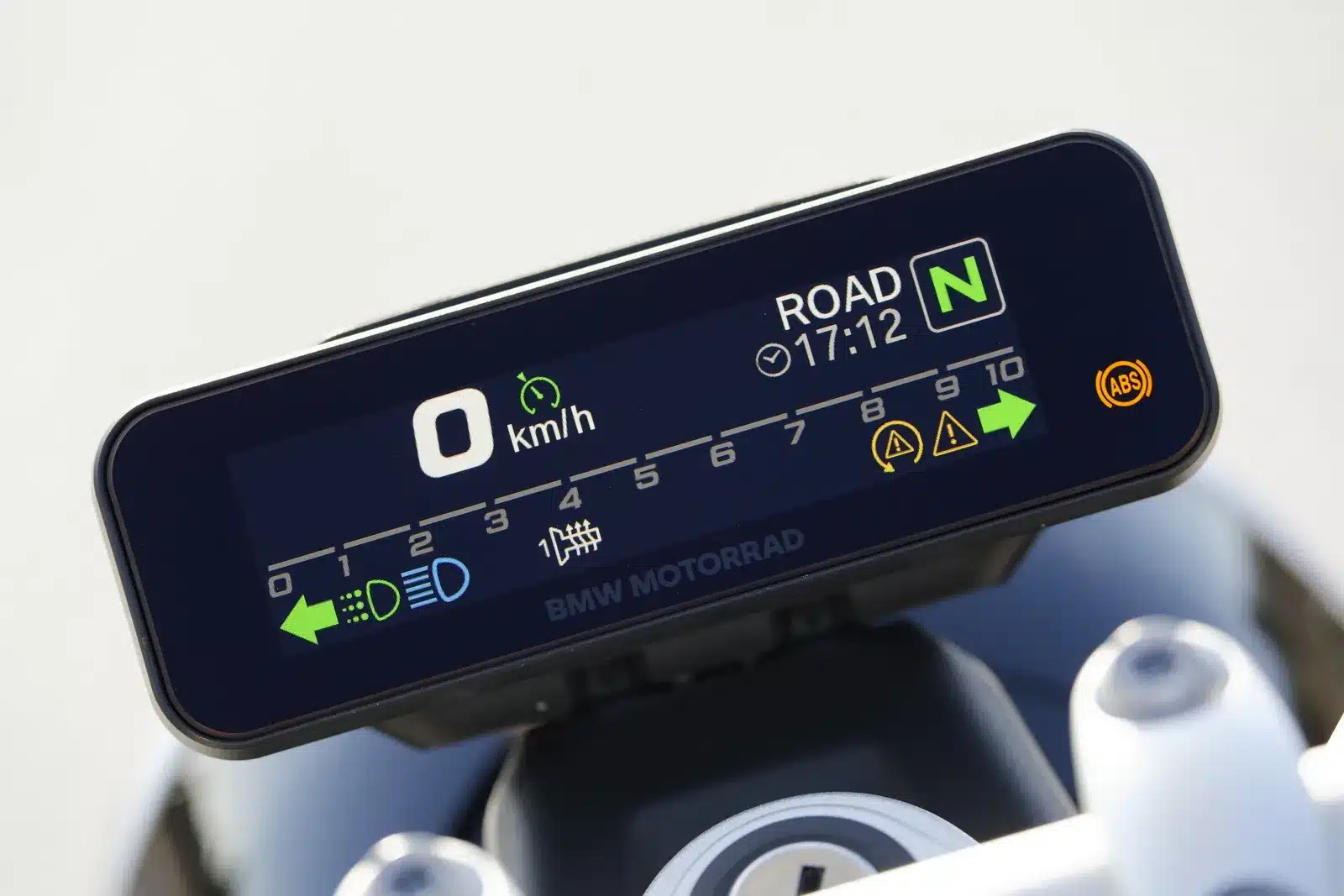
This is a preference I’d make in person. I like seeing two round dials above a boxer tank, but someone who prefers a cleaner cockpit may love the small screen. Smartphone control and mounting are separate choices, so check those rather than assuming the display includes everything.
A2 and restricted versions — Check the actual bike
There is an easy trap here: assuming every nineT or S advertised for sale is the full-power 80 kW version in the comparison table.
BMW’s current UK technical pages list A2-specific 70 kW versions of both the nineT and S, alongside a 35 kW power-reduction option. The cruiser also has a listed 35 kW version. The quoted torque figures for those variants differ from the full-power models.
For a restricted bike, ask for the factory specification, registration details, and documentation of any change in power configuration. Establish which version you are buying and what BMW supports for that exact motorcycle in your country.
An A2 offering in one country doesn’t establish eligibility for a different licensing scheme elsewhere, including Australian LAMS. Use your local approved-model information rather than the engine badge or a foreign advert.
Buying a used R 12 — What I’d inspect
The R 12 family is still relatively young, so I’d avoid treating anecdotes about older boxers as a proven list of R 12 defects. My inspection would concentrate on condition, maintenance records, accident damage, and whether the bike matches the advert.
- Identity and equipment: Confirm the exact model, power variant, build specification, passenger kit, and fitted options. Check that the keys or fob, emergency key, manuals, and receipts are present.
- Service history: Look for the running-in service and subsequent work due by time and mileage, following the schedule for that model. Low mileage alone doesn’t excuse overdue time-based servicing.
- Engine and drivetrain: Inspect for oil leaks, damaged cylinder-head covers, and signs of impact around the exposed engine. Check clutch operation, shifting, and the shaft-drive area during an inspection and test ride.
- Wheels and suspension: Check rims, spokes where fitted, tyres, fork seals, and shock condition. On a G/S, pay particular attention to rim damage and marks on the underside and protective parts.
- Electronics: Confirm the dashboard’s warning-light self-check and test the equipment the seller says is fitted, including heated grips, cruise control, keyless starting, and the quickshifter where appropriate.
- Modifications: Check the quality of wiring, indicators, exhaust installation, and tail conversions. Ask for the original parts and establish that the configuration can be registered and insured where you live.
- VIN checks: Have outstanding recalls or service campaigns checked for the exact VIN, along with the ordinary title and ownership checks for your country.
The dry clutch and shaft drive are reasons to pay attention, not reasons to panic. A shaft removes daily chain chores; it doesn’t remove maintenance. Accessible cylinder heads make valve work easier to reach; they don’t make it optional.
For a broader inspection, see my guide to the maintenance that actually matters. For exact intervals, fluids, and procedures, use the R 12 model’s own manual rather than transferring an R nineT schedule wholesale.
Which BMW R 12 would I buy?
For a mostly-road rider who loved the original nineT, my starting point would be the R 12 nineT with cruise control and heated grips. It keeps the roadster brief, gives you useful fork adjustment, and leaves room to choose your own appearance.
I’d choose the R 12 cruiser if the lower seat and riding position made me want to spend more time on it. I wouldn’t buy a taller or sportier bike just to win a specification comparison.
I’d choose the R 12 S if its look was the one I wanted and the included equipment made the price difference reasonable. That is an emotional purchase with a practical equipment argument, which is fine by me.
And the R 12 G/S is the one that tempts me in a different direction: classic boxer looks, useful suspension travel, and more freedom to turn onto a rough road. For my kind of riding, I’d first try the standard version rather than jump straight to Enduro Package Pro.
Finally, I wouldn’t rule out a good used R nineT. I loved mine, and the arrival of a new platform hasn’t made it a bad motorcycle. If the budget works better that way, use the older R nineT buyer’s guide to narrow the search.
What I’m glad about is that BMW has kept this engine and the idea around it alive. There are faster bikes, lighter bikes, and more practical bikes. But a handsome boxer that makes an ordinary afternoon ride feel special still has a place in my garage.
Sources and specification notes
This guide was checked against BMW’s launch material and current technical pages in October 2026. My ownership experience is with the original R nineT; the R 12 comparisons use BMW’s specifications and equipment descriptions. The comparison table uses full-power bikes; equipment and restricted variants should be checked for your market and the exact bike.
Photos are BMW Motorrad press images, with optional equipment visible in some examples.
- BMW’s November 2023 R 12 and R 12 nineT launch material, alongside the supplied May 2023 nineT announcement.
- R 12 technical data and R 12 nineT technical data.
- BMW’s supplied November 2024 R 12 S press release and R 12 S technical data.
- BMW’s supplied March 2025 R 12 G/S press kit and technical specification sheet, also available through the BMW R 12 PressClub archive.