
If you read about current Hondas such as the CRF1100L Africa Twin, XL750 Transalp, CB750 Hornet or Gold Wing, you will eventually meet the word “Unicam”. Honda normally puts it beside the familiar terms SOHC and four valves per cylinder, then carries on as though the name explains itself.
It does not. SOHC already means “single overhead camshaft”, while most modern high-performance motorcycle engines use two overhead camshafts. Single? Doesn’t that mean “uni”? Do I have a single brow, and aspire to ride a single cycle?
Anyway, why did Honda give this particular single-cam layout its own name? Why use one cam when using two appears to be the accepted answer?
The short answer is packaging. Honda’s Unicam design uses one camshaft per cylinder head to operate four valves through a mixed set of followers and rocker arms. It gives Honda much of the breathing and combustion-chamber freedom of a modern four-valve head, while keeping the head shorter, lighter and less crowded than a typical DOHC design.
The mechanism has changed since Honda introduced it on the 2002-model CRF450R, so “the intake valves are direct and the exhaust valves use rockers” is now an incomplete definition. The purpose has stayed consistent even where the exact followers have changed.
The TL;DR
- Unicam is a specific Honda SOHC layout. There is one camshaft in each cylinder head, even on engines with several cylinders or two cylinder banks.
- It still has four valves per cylinder. One cam operates the intake and exhaust sides through different follower or rocker arrangements.
- The main gain is a compact cylinder head. That helps Honda lower or shorten the engine, tighten the valve angle and package the motorcycle around it.
- It isn’t necessarily more reliable or easier to service (or more faster!!1) than DOHC. The complete engine design and the motorcycle around it decide those things.
Are you obsessed with motorcycles?
Well, I am. That’s why I created this site — as an outlet. I love learning and sharing what others might find useful. If you like what you read here, and you’re a fraction as obsessed as I am, you might like to know when I’ve published more. (Check the latest for an idea of what you’ll see.)
First: what a camshaft and the valves do
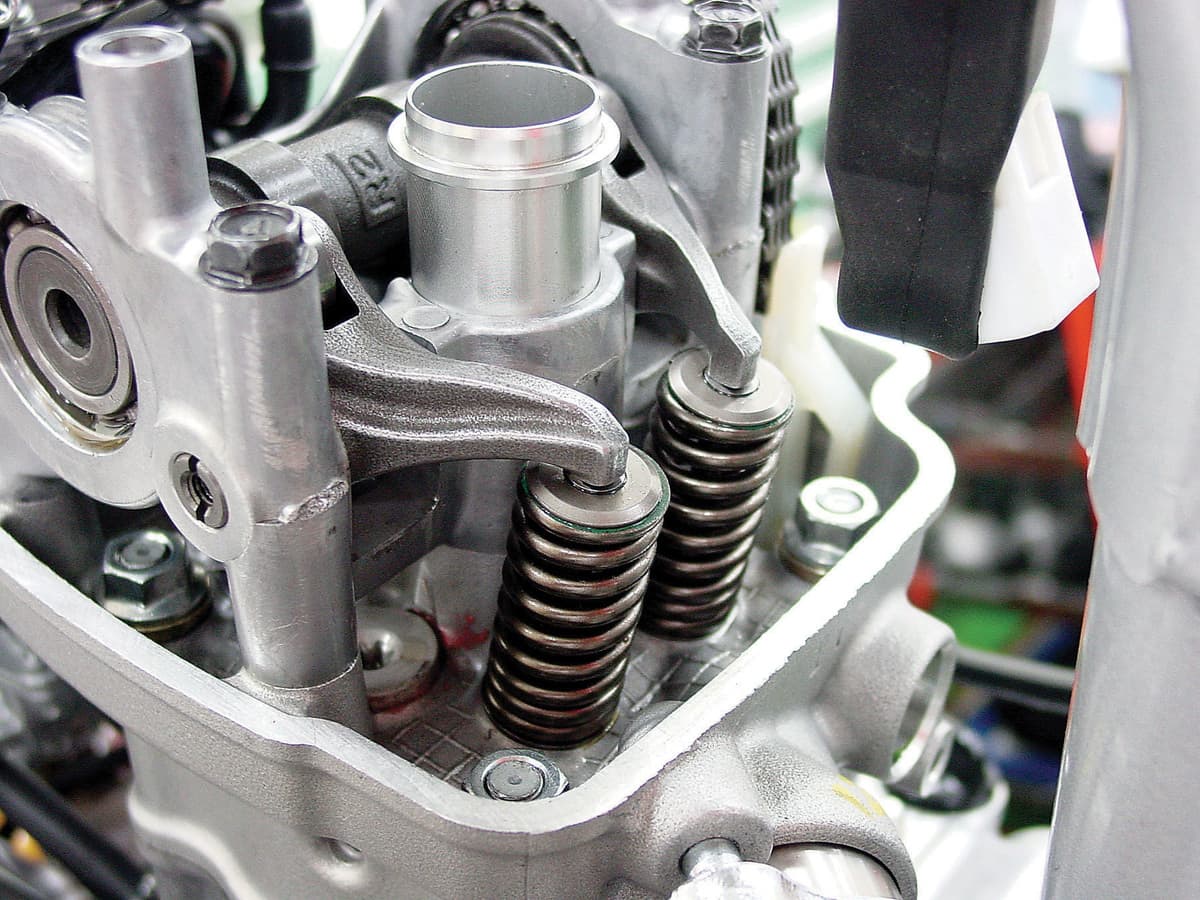
A four-stroke engine needs intake valves to admit fresh air and fuel, and exhaust valves to release burned gas. A camshaft carries eccentric lobes that push those valves open at the correct point in the engine cycle. Springs close them again in every Honda Unicam motorcycle engine.
The cam does not always touch a valve directly. It may press on a bucket over the valve stem, a short finger follower or a rocker arm that pivots and pushes somewhere else. These parts let an engineer put the camshaft where it fits, set the valve angle and change the direction or ratio of the cam’s movement.
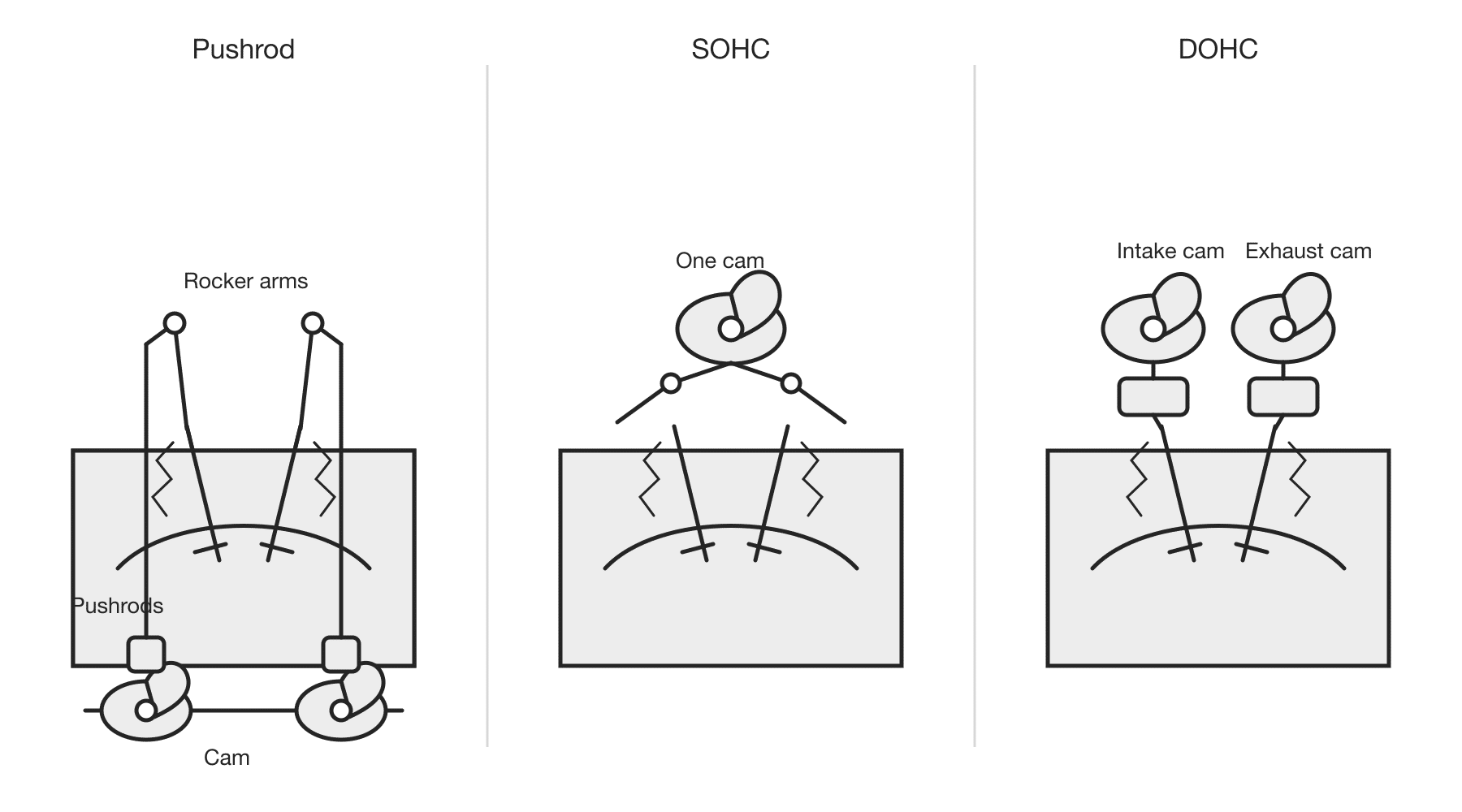
If you want the whole background, see the guide to motorcycle camshafts and valve-train types. It separates valve count, cam location, cam drive, valve closing and clearance adjustment. Those are related choices, but they do different jobs.
How Honda Unicam works
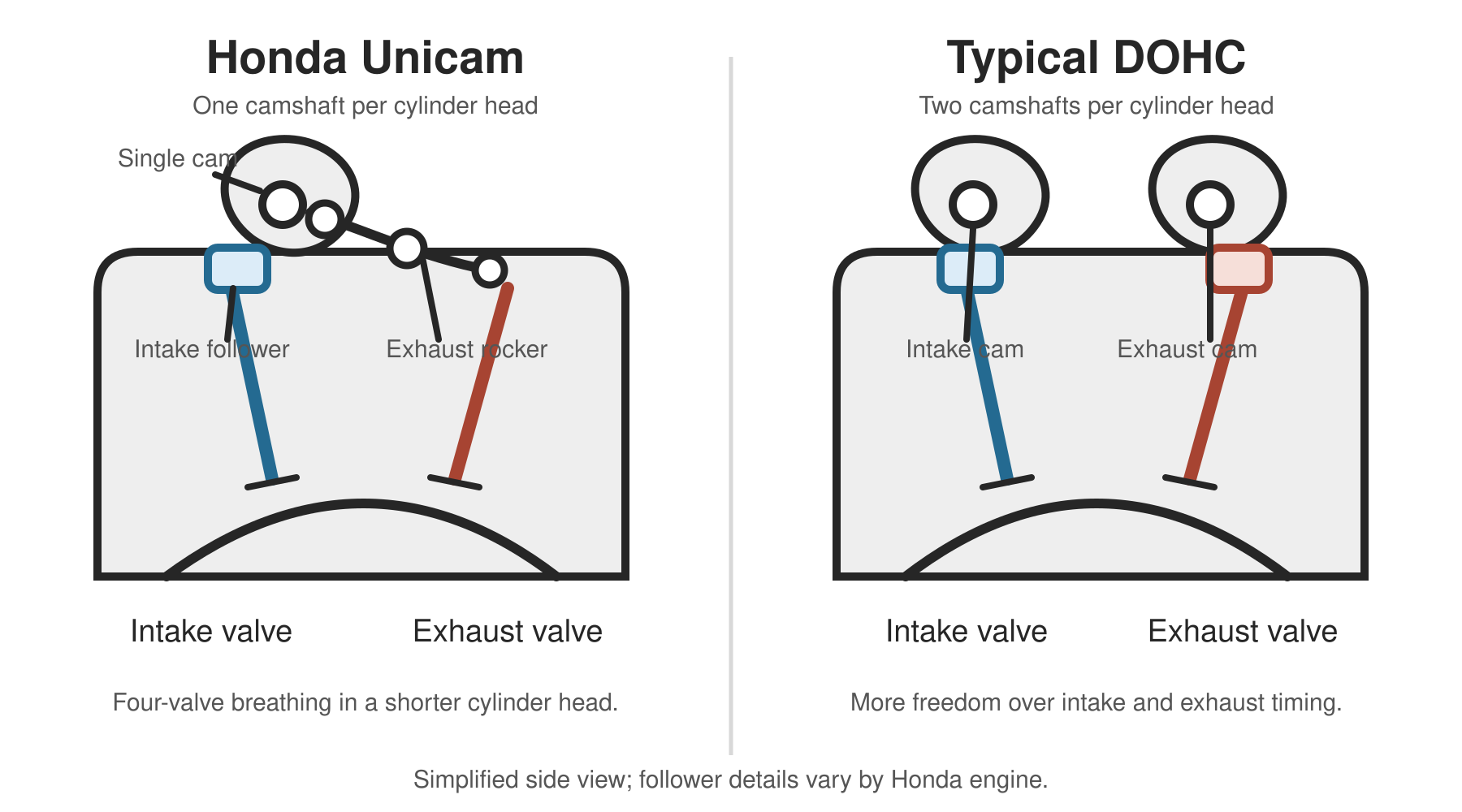
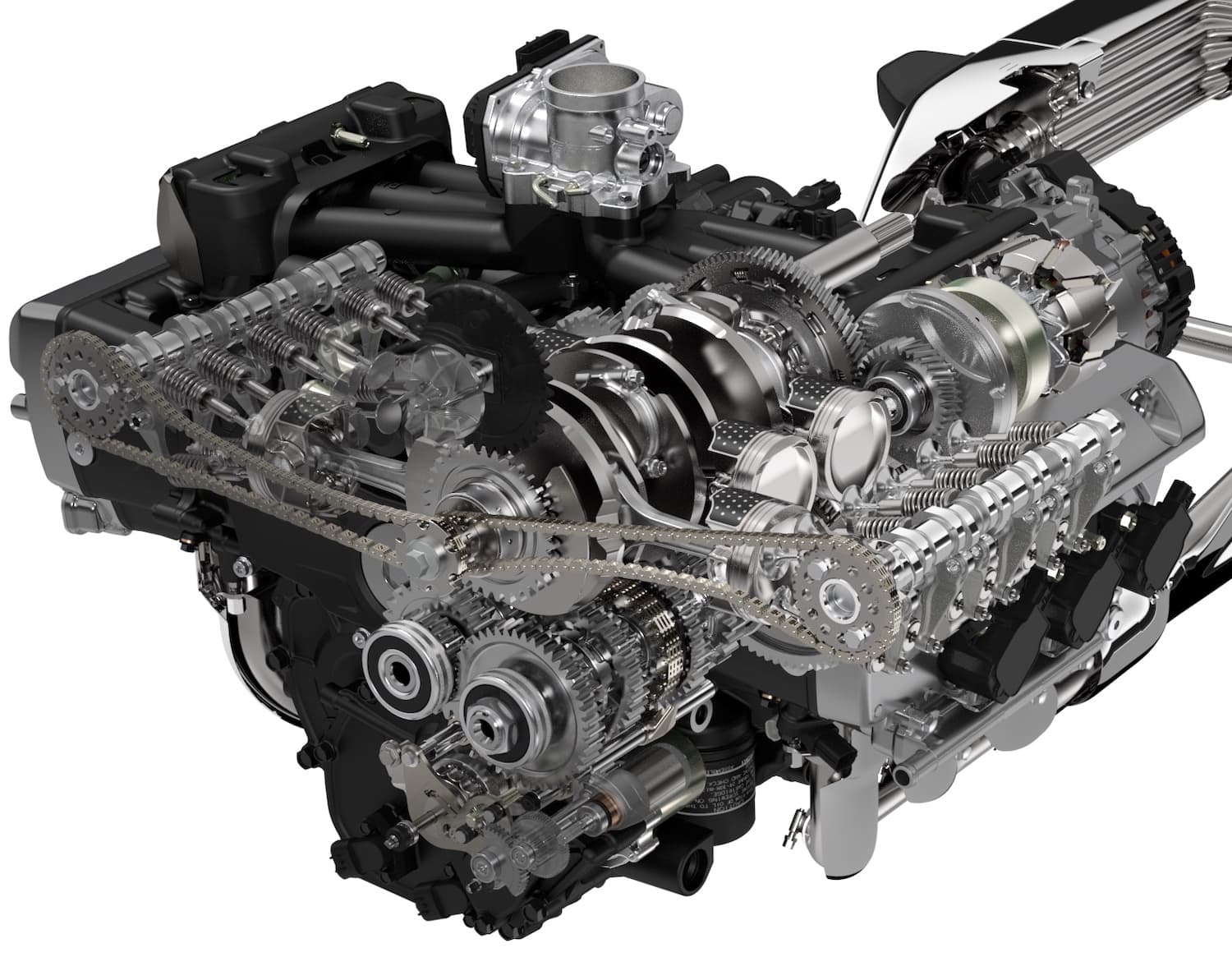
A Unicam head has one camshaft for each cylinder head. On the original CRF450R single, that means one camshaft for the whole engine. On the flat-six Gold Wing, it means one camshaft in the left head and another in the right head.
Honda positions the camshaft towards the intake side. In the original CRF arrangement, cam lobes act directly on the two intake valves, while another lobe works the two exhaust valves through roller rocker arms. The roller turns as the lobe passes over it, reducing sliding friction at that contact.
The path is simple: the crankshaft drives the camshaft at half engine speed; the cam lobes move the intake followers and exhaust rocker; those parts push the valves open; the valve springs return them to their seats. The cam profile still decides timing, lift and duration, just as it does in an ordinary SOHC or DOHC engine.
Differences between Unicam implementations
The Unicam design is also implemented in different ways in different Honda engines.
The first CRF450R gives us the neatest explanation, but Honda has revised the mechanism. Later CRF450R engines use a finger rocker on the intake side. The 2018-on Gold Wing uses finger-follower rocker arms for the intake valves and roller rockers for the exhaust valves. Some CRF engines use two separate exhaust rockers; others use one forked rocker to operate a pair of valves.
That is why I would define Unicam by its architecture and purpose rather than one fixed drawing: a Honda four-valve SOHC head that uses mixed, short-path valve actuation to keep the head compact.
Unicam vs ordinary SOHC and DOHC
So, what are the advantages and disadvantages of each design?
| Layout | Cams per head | Typical valve actuation | What the layout makes easier | Main constraint |
|---|---|---|---|---|
| Conventional four-valve SOHC | 1 | Rockers or finger followers on both sides | Narrow head and fewer cam-drive parts | One cam must serve intake and exhaust sides |
| Honda Unicam | 1 | Different short follower/rocker paths for intake and exhaust | Four-valve breathing, narrow valve angle and compact height | Less independent timing freedom than separate cams |
| Typical DOHC | 2 | Buckets or short finger followers; not always direct | Independent intake/exhaust geometry and easier use of cam phasers | More width, bearings and drive hardware |
DOHC has an engineering advantage when a designer wants separate control of intake and exhaust timing. Each cam can have its own phaser, and the ports and valve angles are not tied to one shaft position. That matters in engines built around very high rpm, aggressive valve lift or variable timing on both sides.
Unicam takes the other bargain. Honda accepts the shared camshaft, then uses followers and rockers to reach four valves from a lower, more compact position. It is a useful choice when engine height, width, ground clearance or mass placement matter more than having every possible valve-control option.
Why Honda developed Unicam for the CRF450R
Honda introduced the production CRF450R for the 2002 model year, during motocross racing’s move from two-stroke 250s to four-stroke 450s. Honda needed a four-stroke single that could match a two-stroke race bike’s output without turning the top of the engine into a heavy tower.
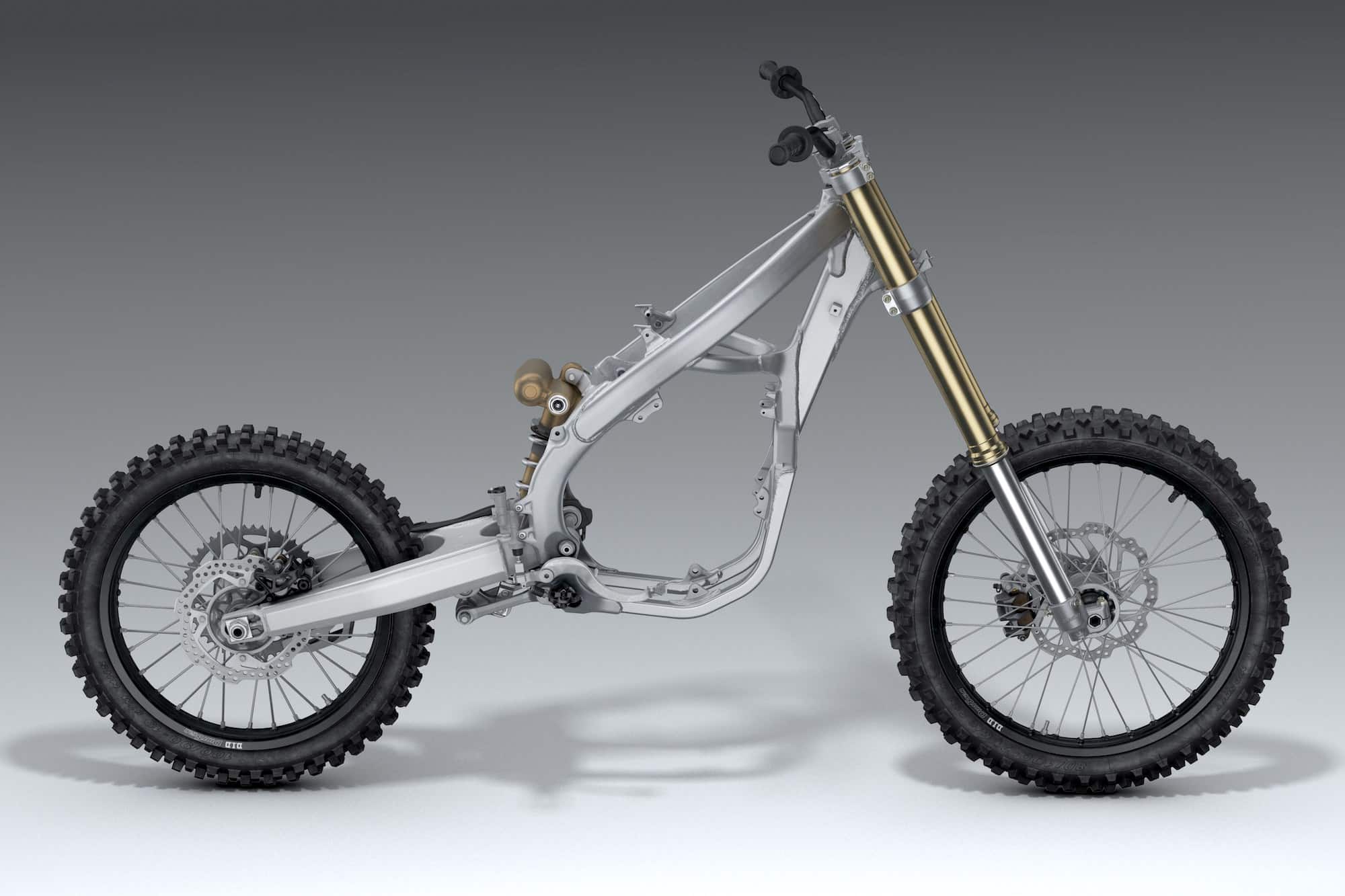
Four valves gave Honda the flow area and light individual valves needed for high engine speed. A single low camshaft reduced the size and mass above the cylinder. The narrow valve angle also produced a shallow combustion chamber with room for a high compression ratio and a central spark plug.
Honda’s CRF development history says the original cam directly operated the intake valves and used rockers for the exhaust side. Honda expanded Unicam through several CRF models, including the 2004 CRF250R. The 250 switched to DOHC for 2018 because Honda wanted more peak power and a higher redline. The engineering target changed, so Honda changed its approach.
How Unicam moved from motocross to road motorcycles
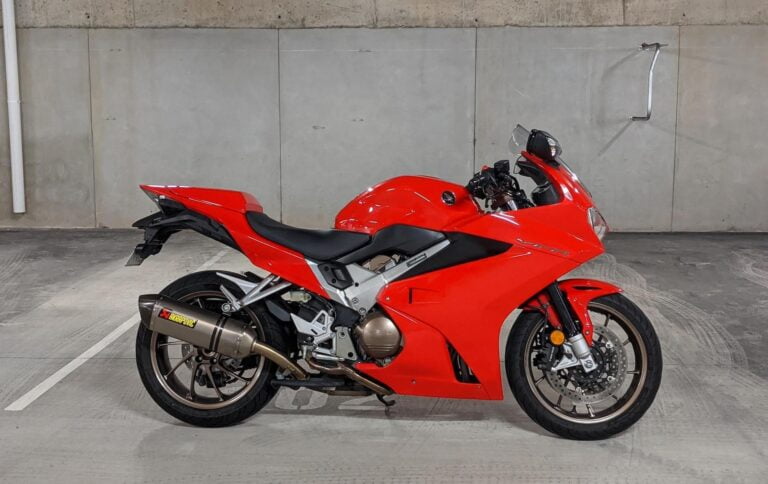
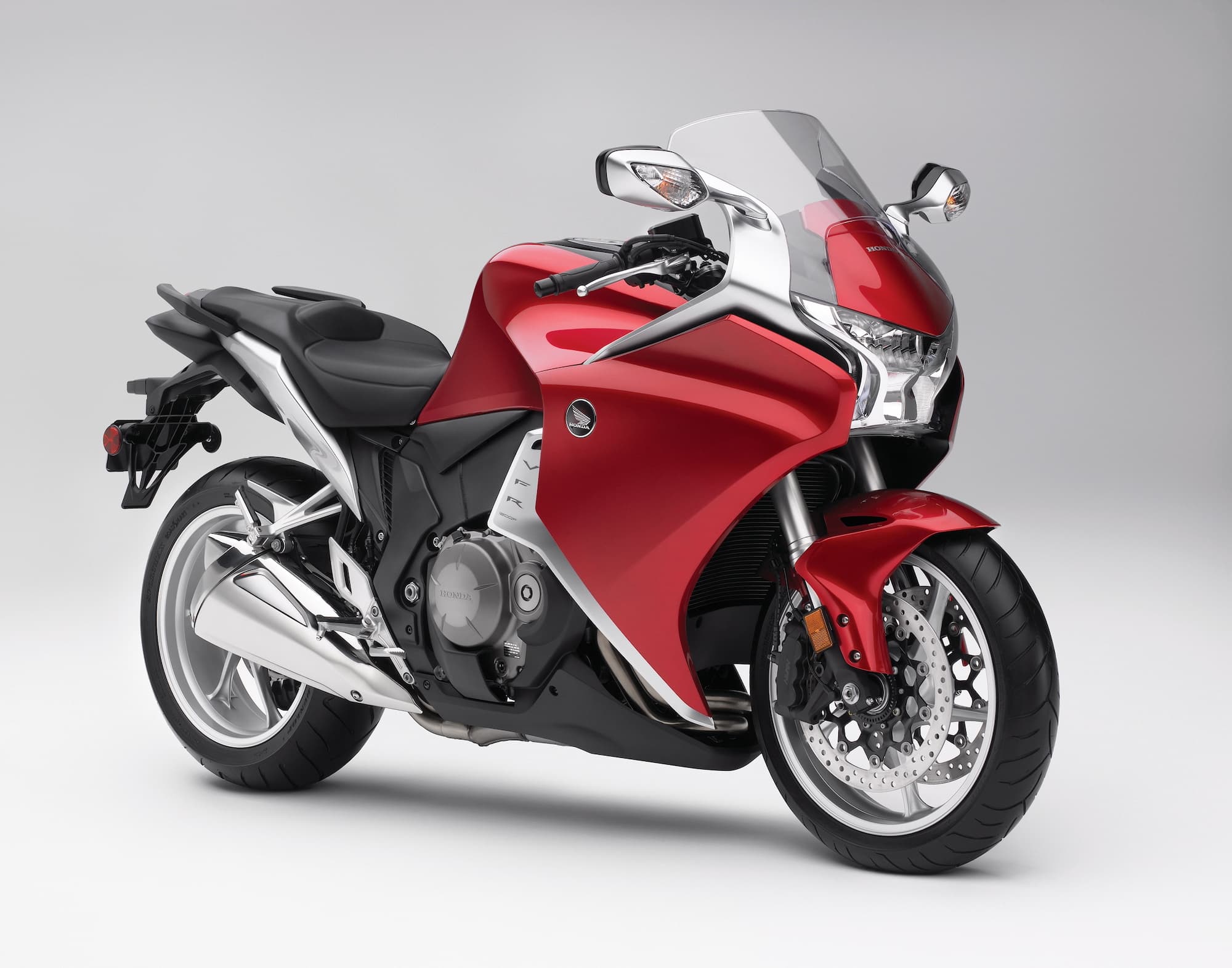
Honda first adapted the idea of the Unicam engine in a road-going engine for the 1,237 cc V4 in the VFR1200F, launched for 2010, and then the VFR1200X Crosstourer. Four cylinders and 16 valves made the scale different, but the goal was familiar: narrow, compact heads that helped Honda package a large V4 and its intake system inside a manageable motorcycle.
Honda then built the 998 cc parallel twin for the 2016 CRF1000L Africa Twin around the same packaging idea. The low-set camshaft shortened the engine, helping Honda provide 250 mm (9.8 in) of ground clearance without making the whole motorcycle needlessly tall. The later 1,084 cc CRF1100L engine also powers the NT1100, Rebel 1100 and Hawk 11 in different states of tune.

For 2018, Honda redesigned the GL1800 Gold Wing and gave its flat-six engine four valves per cylinder and Unicam heads. Honda said the manual-transmission engine became 6.2 kg (13.7 lb) lighter and 29 mm (1.1 in) shorter at the front. The new valve train contributed to that reduction, though it wasn’t the only thing responsible.
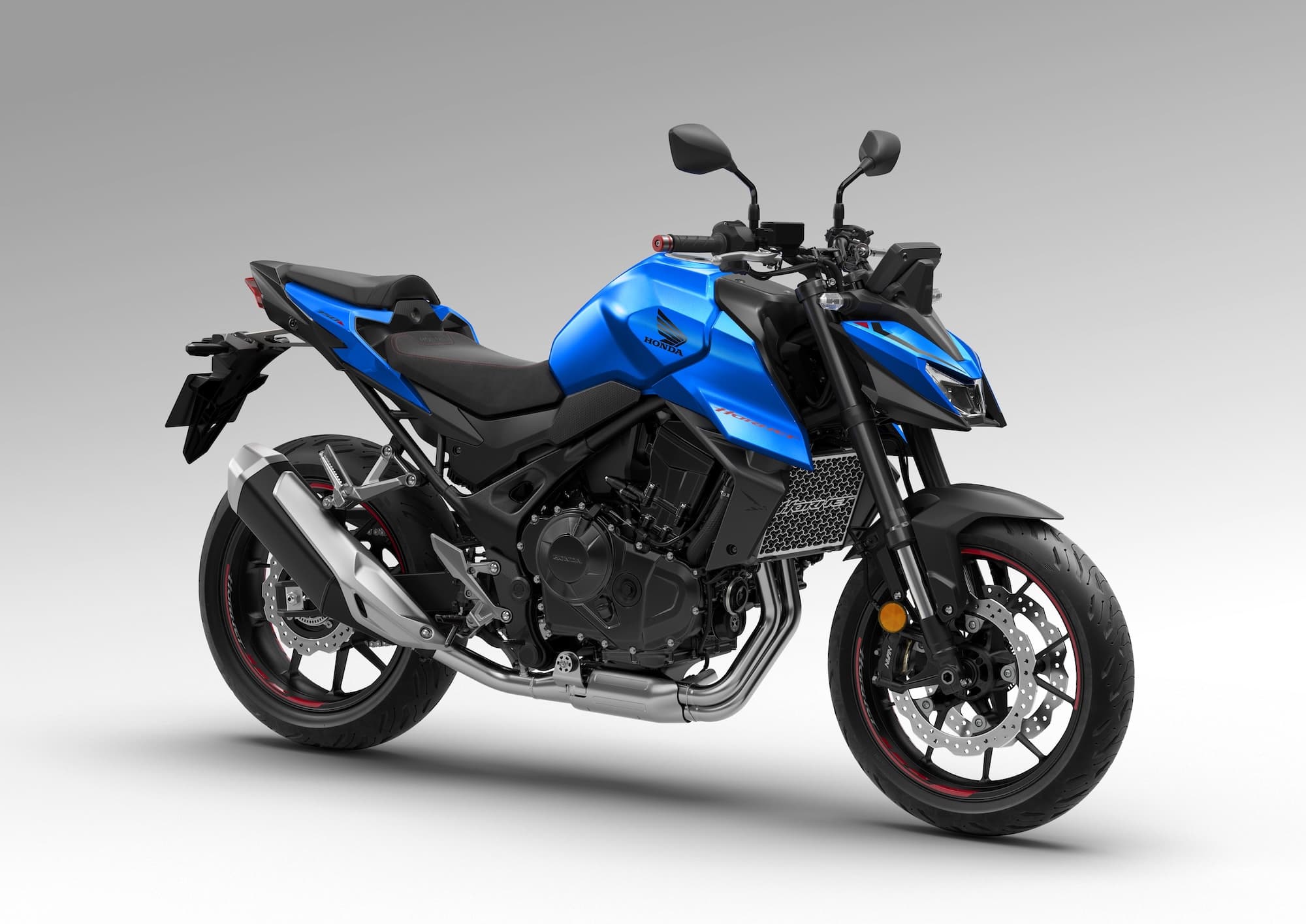
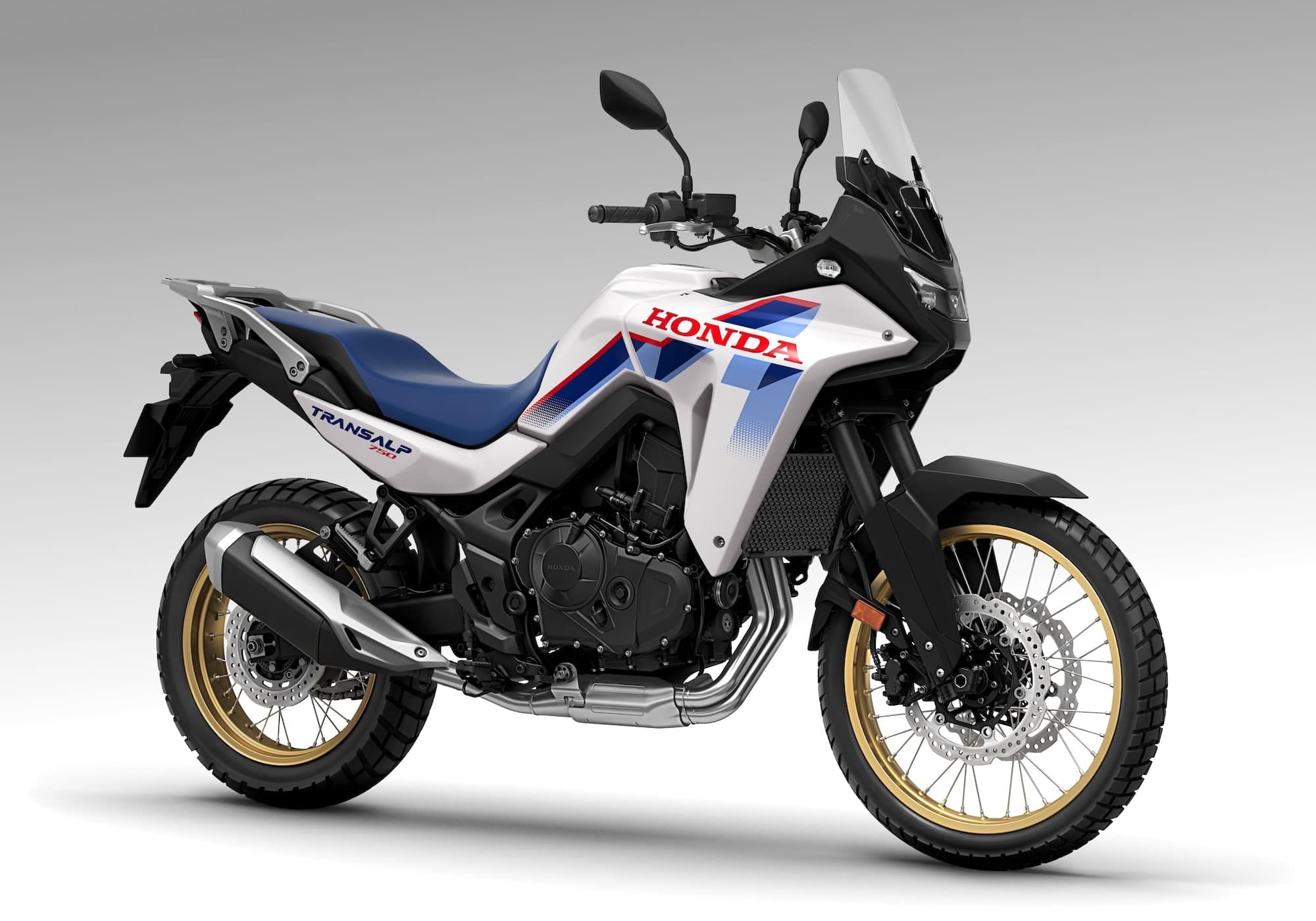
The 755 cc parallel twin in the 2023-onward CB750 Hornet and XL750 Transalp brought Unicam into a lighter, higher-revving middleweight engine.
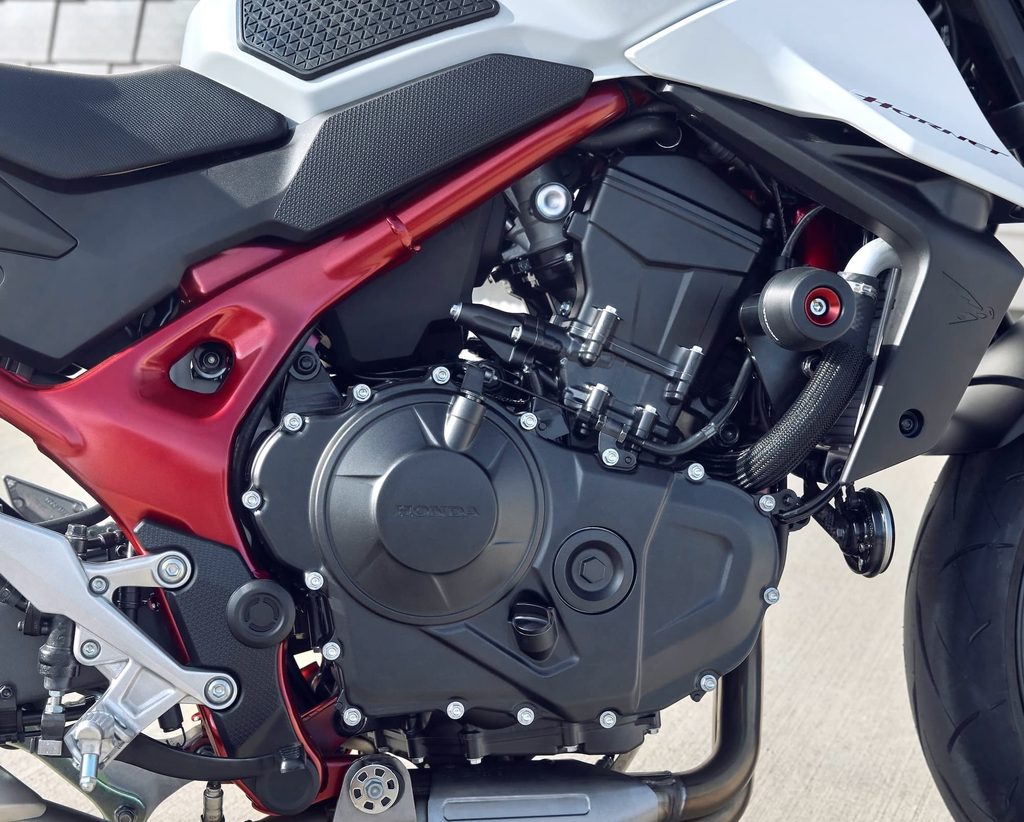
Honda’s Transalp technical overview points to the small valve angle, direct downdraft intake, compact layout and reduced friction. Again, the Unicam design helps both compact packaging and efficient combustion.
Honda motorcycles that use or used Unicam
Below is a quick overview of motorcycles that have used or use a Unicam design.
| Engine family | Representative motorcycles | Unicam period | Why it suited the engine |
|---|---|---|---|
| CRF racing singles | CRF450R/RX, CRF450X, CRF450L/RL, CRF150R; earlier CRF250R/X | 2002 model year onward; model-dependent | Light, compact head for high-output off-road singles |
| 1,237 cc 76-degree V4 | VFR1200F, VFR1200X Crosstourer | 2010–late 2010s, by model and market | Narrow heads and compact V4 packaging |
| 998/1,084 cc parallel twin | CRF1000L/CRF1100L Africa Twin, NT1100, Rebel 1100, Hawk 11 | 2016 onward | Short engine, low-set mass and flexible platform use |
| 1,833 cc flat-six | Gold Wing and Gold Wing Tour | 2018 onward | Four-valve breathing without making the opposed heads excessively wide |
| 755 cc parallel twin | CB750 Hornet, XL750 Transalp | 2023 onward | Compact head, narrow valve angle and straight downdraft intake |
Honda also uses the name on some side-by-sides, including the Talon 1000. I have left those out of the table because this is a motorcycle article. Conversely, not every Honda SOHC four-valve engine carries the Unicam name. Read the actual engine specification rather than applying the badge to anything with one cam.
Unicam Pros and Cons
Unicam engines require less hardware and room, allow a flatter combustion chamber, and result in less mass and friction.
Firstly, one camshaft needs fewer bearings, less drive hardware and less room than two. Honda can place it low and use short followers or rockers to reach the valves. On a dirt bike, that helps the engine fit under the frame and fuel tank. On an adventure bike, it helps ground clearance and the standing position. On a Gold Wing, it controls the width and length of an already large flat-six.
Secondly, valves that sit closer to parallel produce a flatter combustion chamber. That reduces the distance the flame has to travel, leaves room for a central spark plug and supports a higher compression ratio without an awkwardly domed piston. The practical result can be cleaner, faster combustion and good power, though port design, ignition and fuelling still do much of the work.
Finally, removing a camshaft removes its lobes, bearings, sprocket or gear and some of the structure around it. Roller contacts can reduce sliding friction where Honda uses them. Of course, the complete motorcycle may still be heavy, as a passing encounter with a Gold Wing will confirm!
However, there are some tradeoffs. At the end of the day, one camshaft ties the intake and exhaust lobes to the same shaft. Honda can grind different lobe shapes and phase them wherever it wants, but it can’t rotate the intake cam independently of the exhaust cam without adding a more complicated mechanism. A conventional DOHC layout makes independent cam phasing much easier.
Secondly, rockers and followers do add contacts, stiffness requirements and wear surfaces. Honda manages those with short parts, rollers, coatings and careful oiling. They are not free mechanical motion. A direct bucket layout can be extremely stiff and stable at high rpm, which helps explain why Honda replaced the Unicam CRF250R engine with a DOHC design when it chased more top-end performance for 2018.
Finally, a Unicam badge does not tell you the engine’s power delivery. The Africa Twin’s low- and mid-range response comes from its capacity, 270-degree crankshaft, cam timing, ports, intake, exhaust and mapping. The Hornet’s willingness to rev comes from a different combination of those decisions. Unicam gives Honda a useful cylinder-head package for both.
Does Unicam make valve maintenance easier?
Sometimes a single camshaft means fewer parts to remove and retime. It can also leave more room around one side of the head. That is a modest potential benefit, not a promise of a cheap valve service, if there is such a thing!
The adjustment system matters more. One side of a Unicam head may use shims under buckets or followers, while the rocker-operated side may use a different shim or adjuster arrangement. Changing a shim can still require camshaft removal. On a multi-cylinder road bike, the fuel tank, airbox, radiators, bodywork and frame access can account for more labour than the number of cams.
The service schedule matters too. A CRF450R is a competition motorcycle with maintenance measured against hard use. A Gold Wing or Africa Twin has a road-bike schedule. The shared Unicam name does not give them shared maintenance intervals, and it does not turn a race engine into a low-maintenance tourer.
So, is Unicam better than DOHC?
Unicam is better when Honda needs a compact four-valve head and can accept one shared camshaft. DOHC is better when separate intake and exhaust control, extreme rpm or a particular port and valve geometry justify the extra shaft and hardware.
For a buyer, the badge should sit well below condition, service history, engine tune and how the motorcycle fits its job. For an engineer, it is a clever compromise that has proved unusually adaptable: Honda has used the same basic answer on a motocross single, an adventure twin, a V4 and a flat-six.
That is the useful meaning of Unicam. Honda wanted four valves, a good combustion chamber and a smaller cylinder head. One camshaft, placed carefully and connected to the valves in two different ways, gave it those things.