

I only started paying attention to types of valves when manufacturers talked about them. Ducati made a lot of hoo-ha about “Desmodromic” valves. That was the first. Then I learned about Harley-Davidson’s hydraulic valve lash adjusters. Then I had to learn what the alternatives were and why they existed, and what both Ducati and HD moved on to later.
Motorcycle specification sheets often throw several valve-train terms into one line: four valves per cylinder, DOHC, chain-driven cams, variable timing and shim-under-bucket adjustment. Each term describes a different part of the system. But rarely do people explain why one is different from another (or “better”!)
The valves control gas flow into and out of the cylinder. The camshaft decides when and how far they open. The cam drive keeps that movement timed to the crankshaft. Springs or a mechanical closing system return each valve to its seat. A final set of parts maintains the small operating clearance between them. That’s the brief summary.
This guide separates those jobs and explains what the common designs mean when you ride, maintain or buy a motorcycle. (They might also apply to cars, I don’t know!)
The short version
- Four valves and DOHC are common on modern performance engines because small, light valves flow well and tolerate high engine speeds.
- SOHC and pushrod engines can be lighter, narrower or easier to package. They are design choices, not automatic signs of poor performance.
- Cam chains are the usual drive. Belts need to be scheduled for replacement; gears cost more and can be noisy but provide precise timing.
- Valve clearance is the cold gap that allows hot parts to expand without holding a valve open. The adjustment method affects service time more than ordinary riding.
Are you obsessed with motorcycles?
Well, I am. That’s why I created this site — as an outlet. I love learning and sharing what others might find useful. If you like what you read here, and you’re a fraction as obsessed as I am, you might like to know when I’ve published more. (Check the latest for an idea of what you’ll see.)
What valves in a motorcycle engine do
Most four-stroke motorcycle engines use poppet valves. An intake valve opens to let fresh air and fuel into the cylinder. An exhaust valve opens to let the burned gases out.
The valve has a long stem and a round head. A precisely machined band on the head, called the valve face, meets a matching valve seat in the cylinder head. When those two surfaces touch, they form a gas-tight seal. Cylinder pressure pushes the valve harder against the seat during compression and combustion.
That contact also carries heat away from the valve head. Exhaust valves have the harder job because hot combustion gas passes around them. A valve that cannot sit fully on its seat may leak compression and lose an important path for shedding heat, which is why an overly tight clearance can burn a valve.
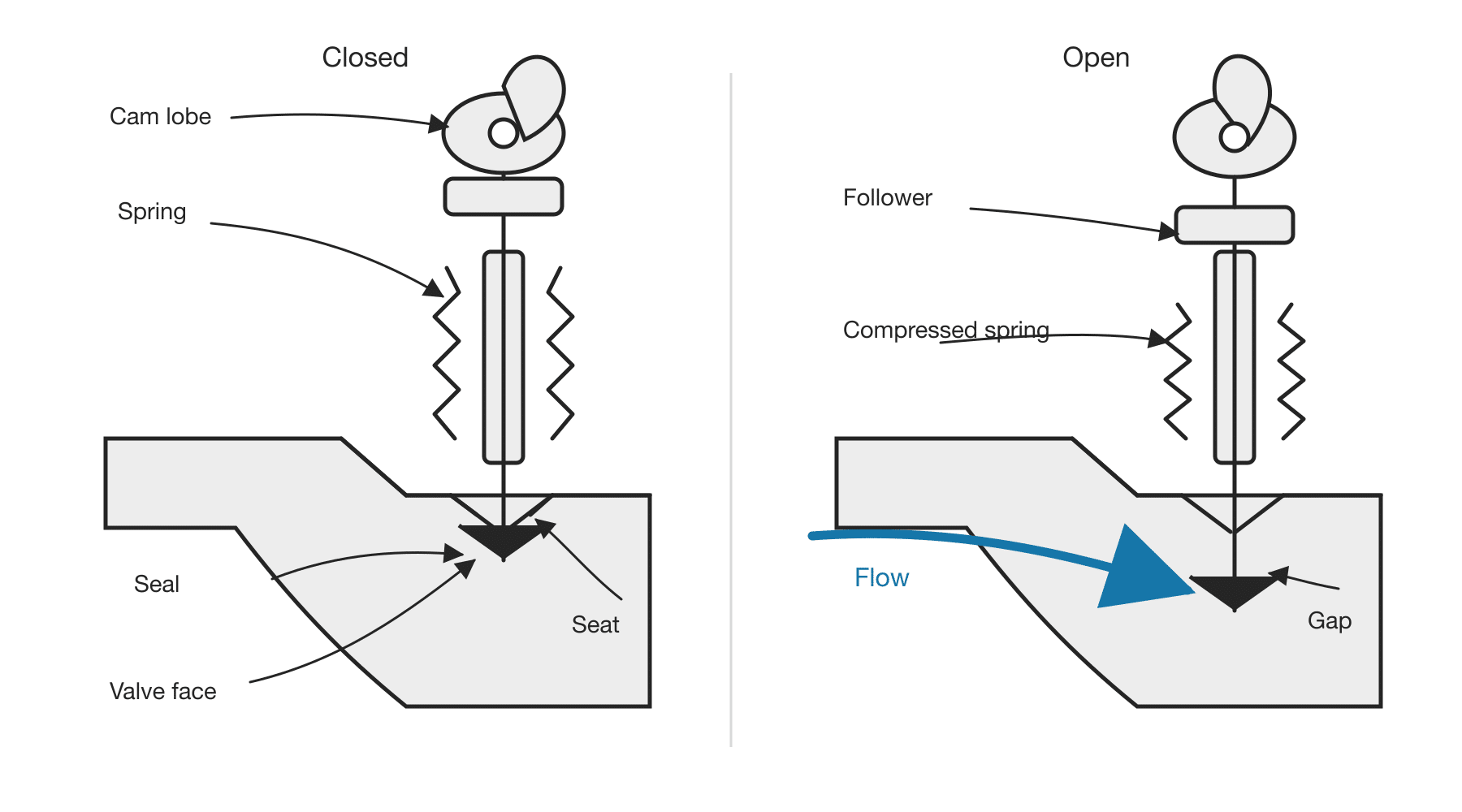
A cam lobe supplies the opening force. As the camshaft turns, the raised part of the lobe presses on a bucket, finger follower or rocker arm. That movement pushes the valve away from its seat and compresses the spring. When the lobe rotates away, the spring closes the valve again.
In a four-stroke engine, the crankshaft turns twice for each complete intake, compression, power and exhaust cycle. The camshaft therefore turns at half crankshaft speed. The drive between them must preserve that 2:1 relationship and keep every valve clear of the piston.

Two, three, four or five valves per cylinder
A cylinder needs at least one intake and one exhaust valve. Designers can increase the count to gain more opening area, use lighter individual valves or change the combustion-chamber shape.
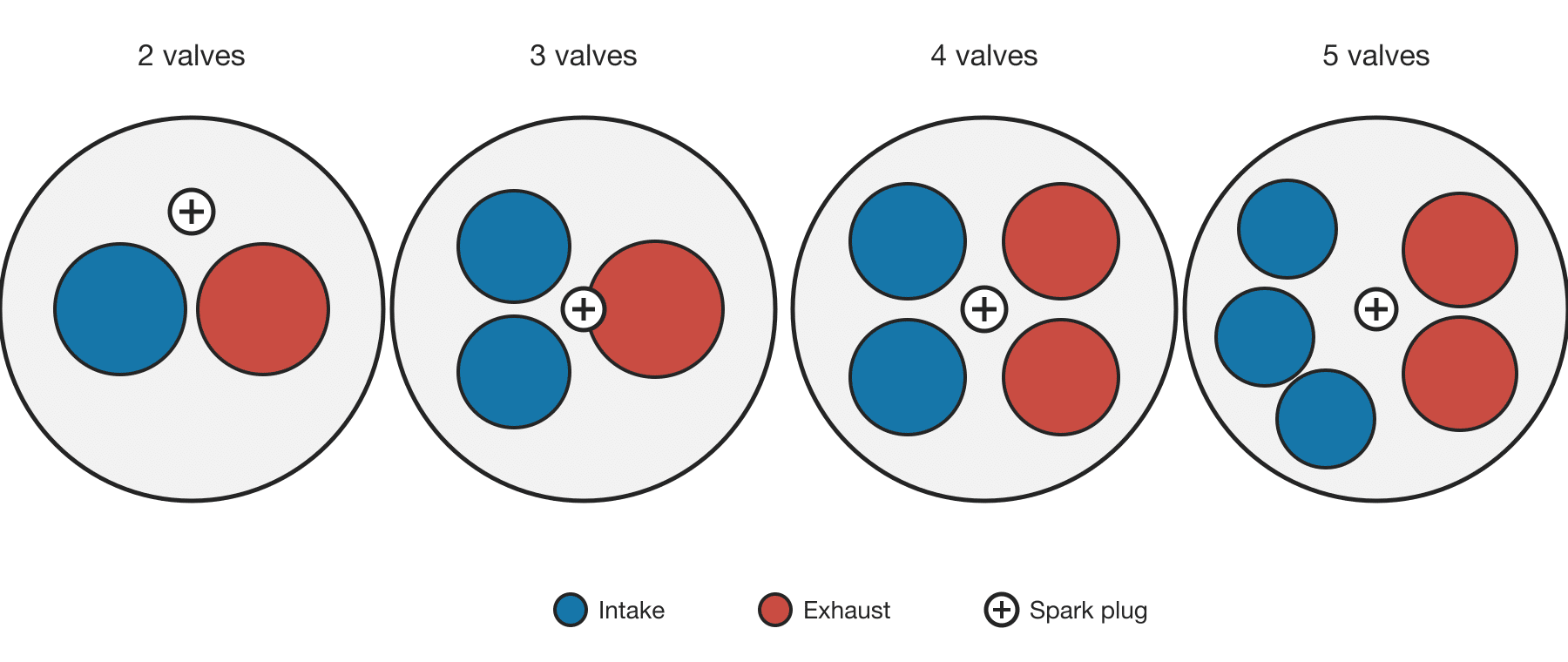
Two valves
A two-valve head is simple: one large intake valve and one large exhaust valve. It needs fewer parts, leaves room around the ports and often suits an engine tuned for low- and mid-range torque. The large valves are heavier, and the total opening perimeter is limited, so breathing becomes harder as rpm rises.
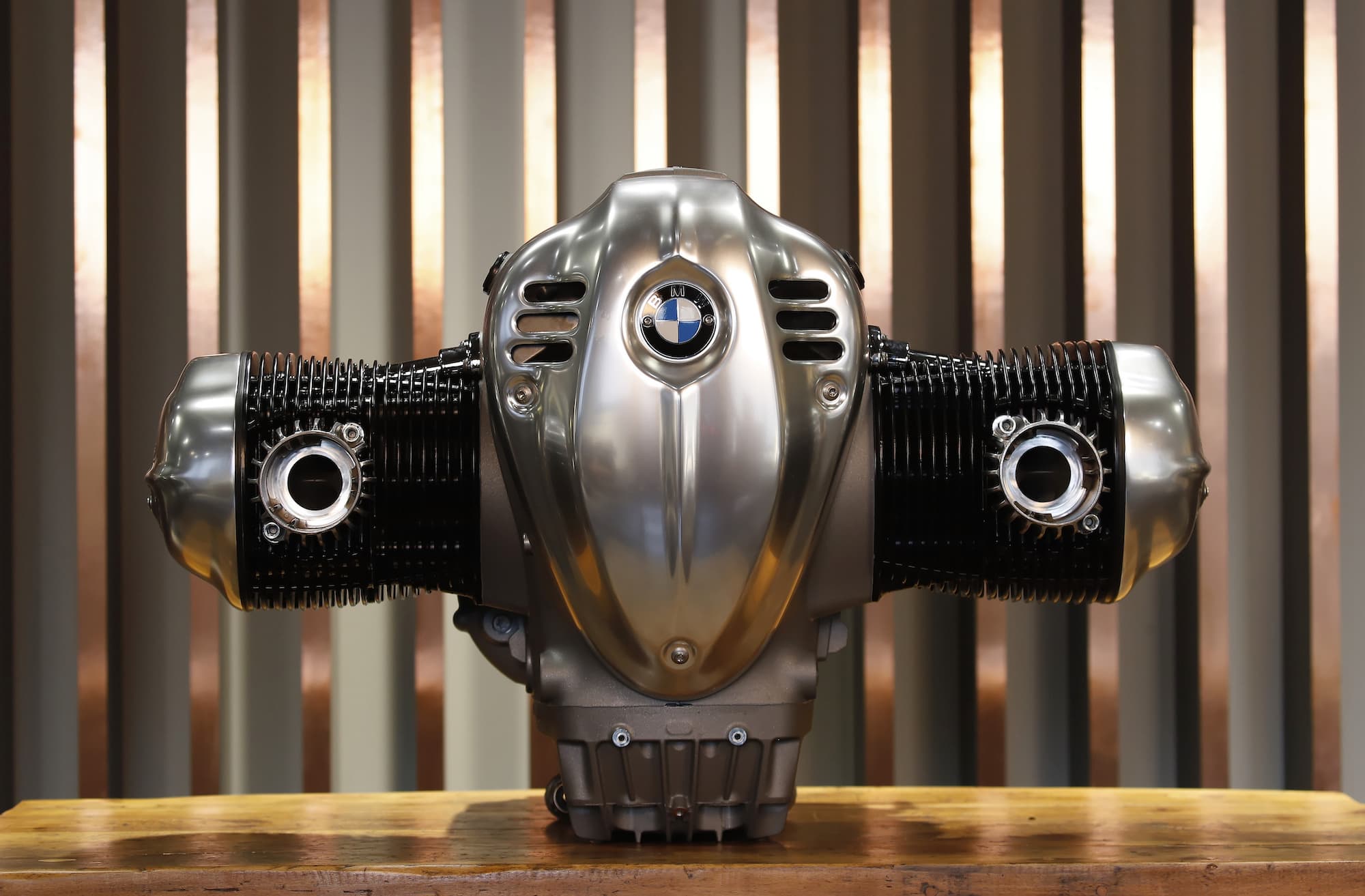
Two-valve heads still make sense on engines such as the BMW R 18 Big Boxer, Moto Guzzi’s air-cooled twins and Ducati’s air-cooled Desmodue family. Their purpose is accessible torque and compact mechanical construction, not the highest possible rpm.
Three valves
A three-valve head usually has two intake valves and one exhaust valve. The intake side gains flow area while the hot exhaust side keeps one larger valve. Ducati used this arrangement in the ST3, and Honda has used three-valve heads in smaller engines. It is uncommon now because a four-valve head offers more balanced flow without a large increase in manufacturing difficulty.
Four valves
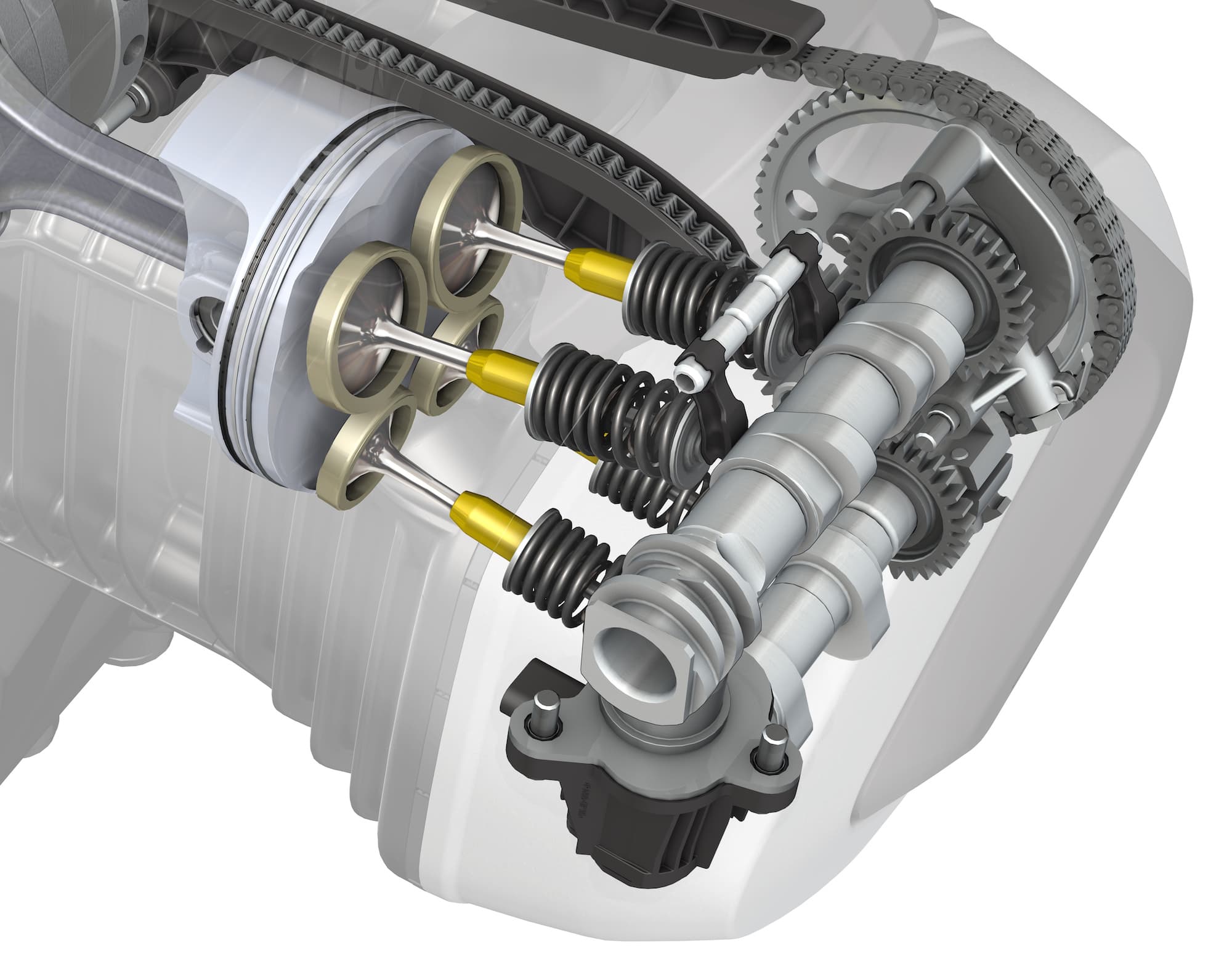
Two intake and two exhaust valves are the modern default. Four smaller circles can provide more total curtain area—the opening around each valve—than two large valves inside the same bore. Each valve can also be lighter, which makes it easier to control at high rpm. The layout leaves useful room near the centre for the spark plug and supports a compact combustion chamber.
Five valves
Five-valve heads usually have three intake valves and two exhaust valves. Yamaha made the layout famous with Genesis engines such as the 20-valve FZR1000. It offered plenty of flow area, but the crowded head required narrow valve angles and extra parts. Better four-valve port design and combustion modelling removed much of the advantage, so five-valve production engines are now historical curiosities rather than the next step after four.
| Valves per cylinder | Usual layout | Practical effect |
|---|---|---|
| 2 | 1 intake, 1 exhaust | Simple, compact and well suited to moderate engine speed |
| 3 | 2 intake, 1 exhaust | More intake area without two exhaust valves; now uncommon |
| 4 | 2 intake, 2 exhaust | Good flow, light valves and room for a central spark plug |
| 5 | 3 intake, 2 exhaust | Large total valve area, offset by a crowded and complex head |
Camshaft layouts: pushrod, SOHC and DOHC
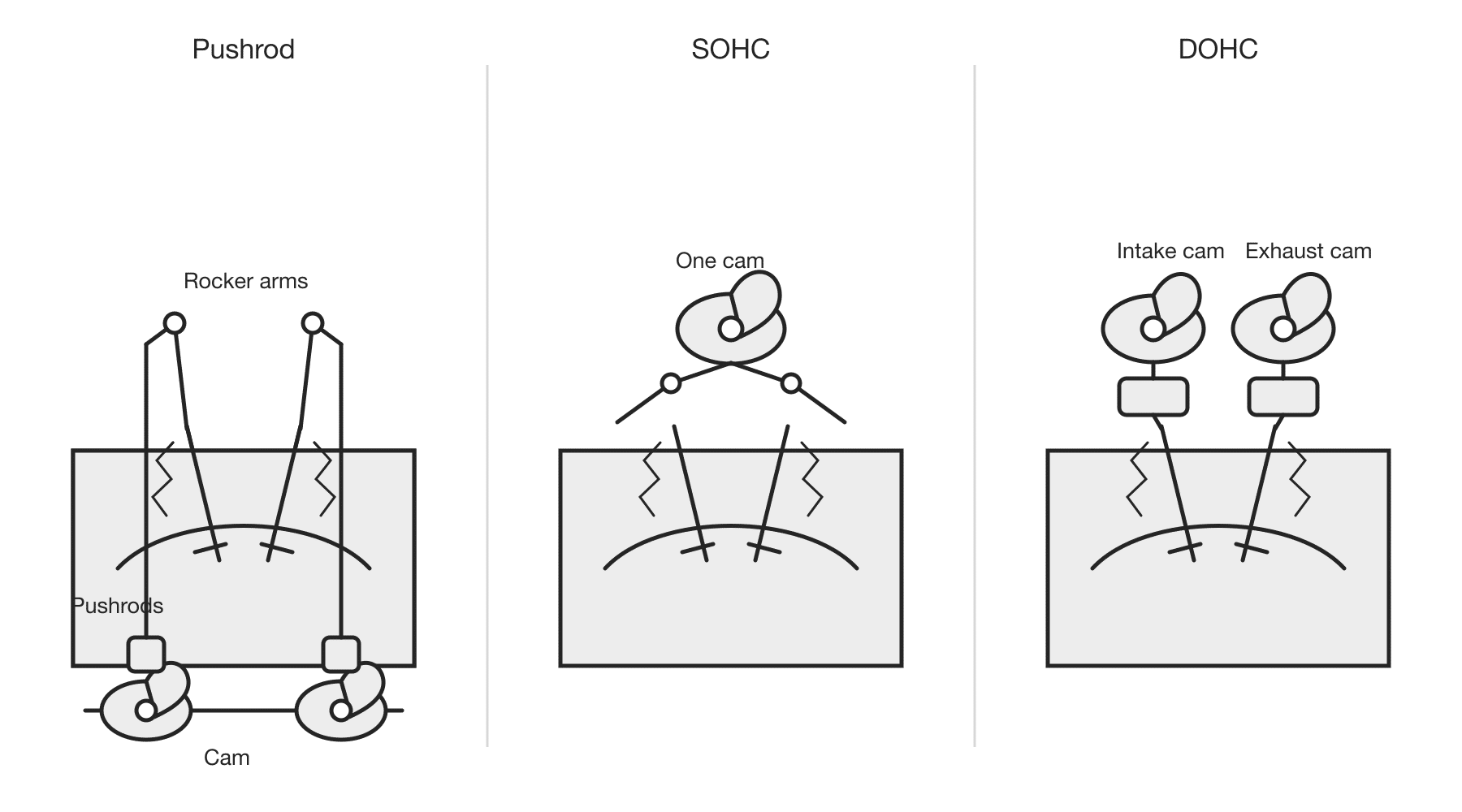
The valve count tells you how many openings the head has. OHV, SOHC and DOHC tell you where the camshaft sits and how its movement reaches those valves.
Side valves and flatheads
In an old side-valve or flathead engine, the valves sit beside the cylinder rather than above it. The camshaft can act on them through short tappets. The head is low and simple, but the long, indirect gas path limits breathing and compression. You may meet the design on early motorcycles and restoration projects, not on a current high-output road engine.
Pushrod or overhead-valve engines
In an overhead-valve engine, the valves sit in the head but the camshaft stays lower in the engine. A lifter follows the cam, a long pushrod carries the movement upward and a rocker arm pushes the valve open.
This keeps the cylinder head comparatively small and can make valve access easy. The trade-off is a longer chain of moving parts. Pushrods, lifters and rockers add mass and flex, which makes precise control harder at very high rpm. Modern design can take pushrod engines much further than the stereotype suggests, but the layout usually accompanies engines designed around torque rather than a five-figure redline.
Single overhead camshaft (SOHC)
An SOHC engine places one camshaft in each cylinder head. On a single-cylinder or inline engine, that normally means one camshaft for the whole head. On a V-twin or boxer, each head has its own single cam.
One cam can operate both intake and exhaust valves through rockers or finger followers. The design removes long pushrods while keeping the head narrower and lighter than many twin-cam layouts. SOHC does not tell you the valve count: an SOHC head may have two, three or four valves per cylinder.
Honda Unicam
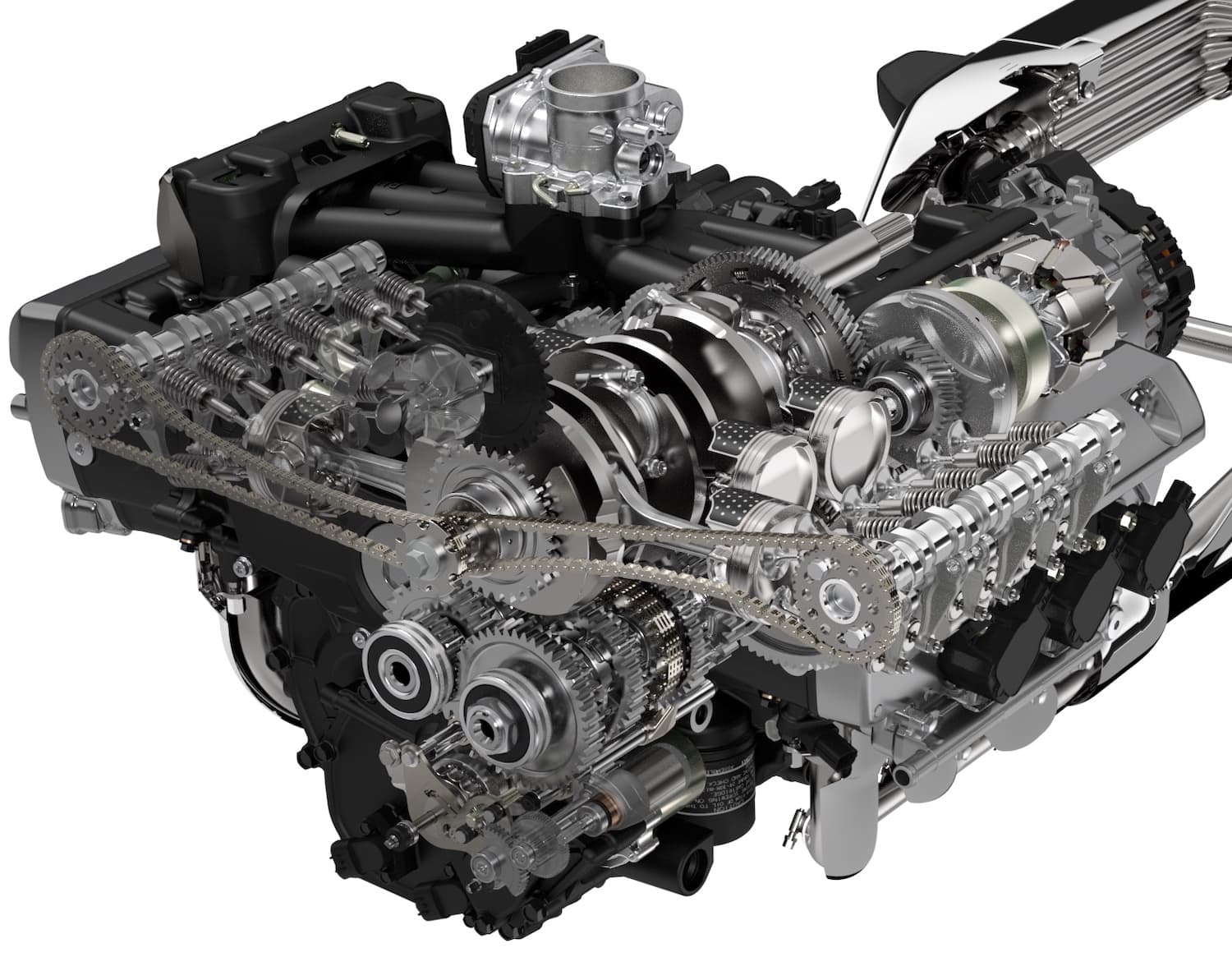
Honda’s Unicam is a specific SOHC arrangement. The single camshaft acts directly on the intake valves and operates the exhaust valves through roller rockers. Honda developed it for the CRF450R, then used versions of it in the Africa Twin, Transalp and current Gold Wing.
The layout gives Honda four valves per cylinder with a short, light head. Honda’s own CRF history describes the direct intake and rocker-operated exhaust arrangement. I cover the variations and maintenance implications in the separate Honda Unicam explainer.
Dual overhead camshafts (DOHC)
A DOHC head has one camshaft for the intake valves and one for the exhaust valves. Each can act through a bucket or a short finger follower. Separating the two sides gives designers more freedom over valve angle, port shape and timing. It also supports light, stiff actuation parts for high-rpm control.
The cost is width, part count and service access. Two cams need more bearings, drive hardware and room. A DOHC label therefore says something about the layout, but it does not guarantee more power than a well-designed SOHC engine of a different capacity or purpose.
How the crankshaft drives the camshafts
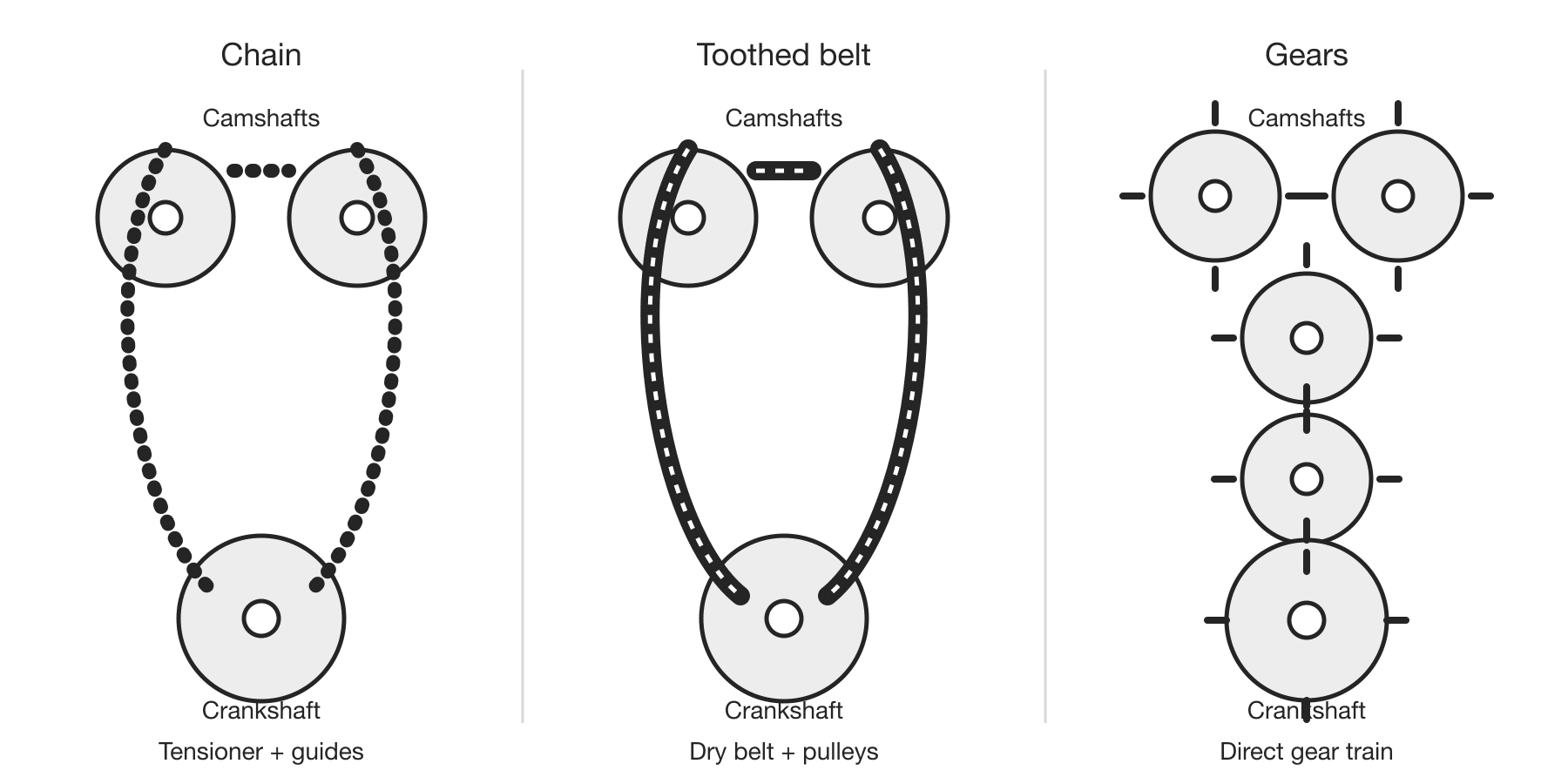
The cam drive has one strict job: keep the camshaft at half crankshaft speed and preserve the intended phase between them. A small timing error changes when the valves open. A large error can let a piston hit a valve.
Chain-driven cams
A chain is the most common solution. It is compact, strong, lubricated by engine oil and able to snake from the crankshaft to one or more cam sprockets. Guides control the chain path, and a mechanical or hydraulic tensioner takes up slack.
That oil has to protect the cam drive and valve train while many motorcycles also ask it to lubricate the gearbox and wet clutch. My motorcycle engine-oil guide explains how the SAE, API, and JASO markings divide those jobs.
Chains last a long time, but the links and guides wear. A weak tensioner or worn guide can cause a rattle, especially at startup. Cam-chain noise does not automatically mean the chain itself has failed, so diagnosis matters before buying parts.
Gear-driven cams
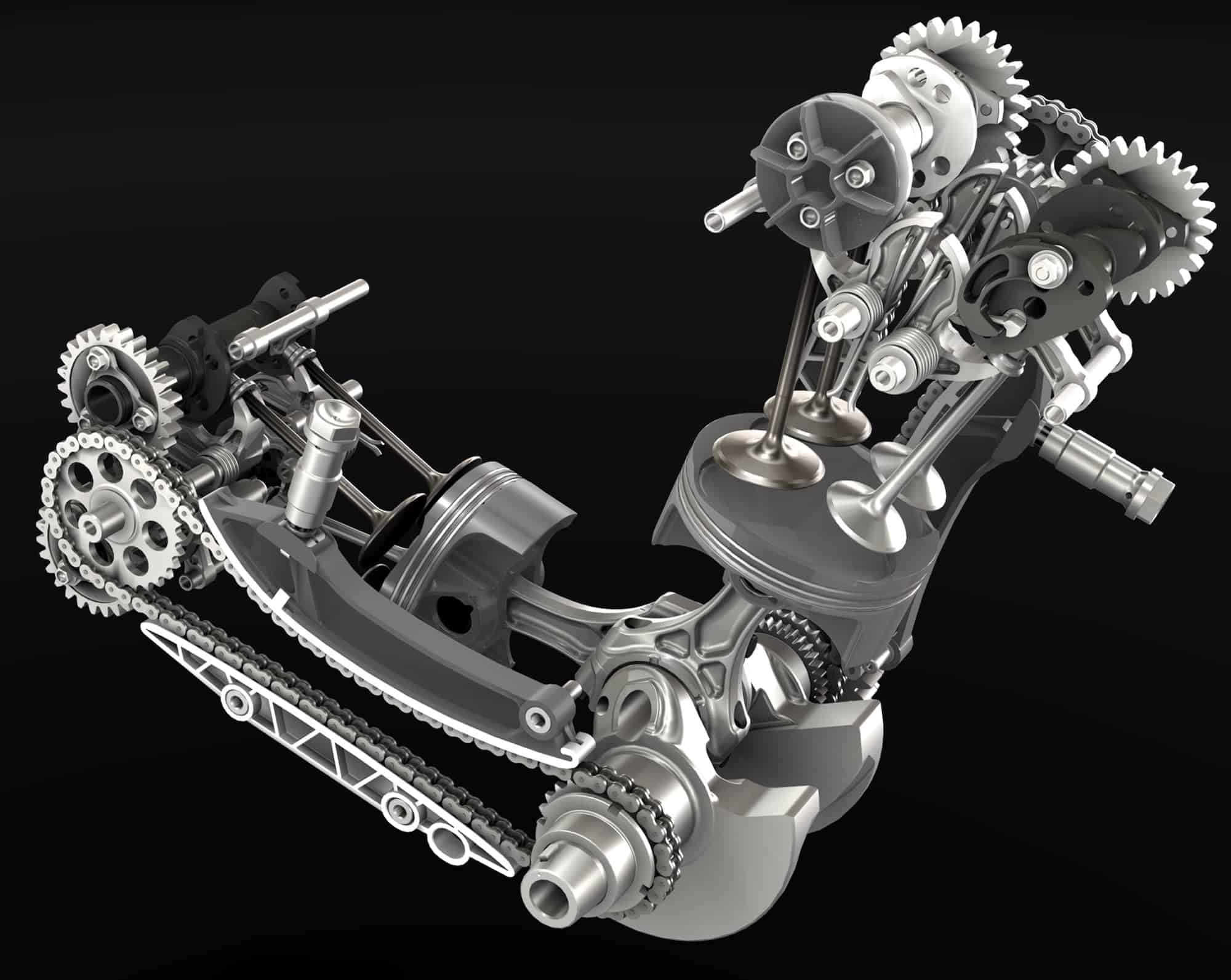
A gear train removes chain stretch and tensioner movement. Properly designed gears hold accurate timing and can last for the life of the engine. They cost more to manufacture, transmit noise and need careful control of backlash. A tall train of gears can also add weight.
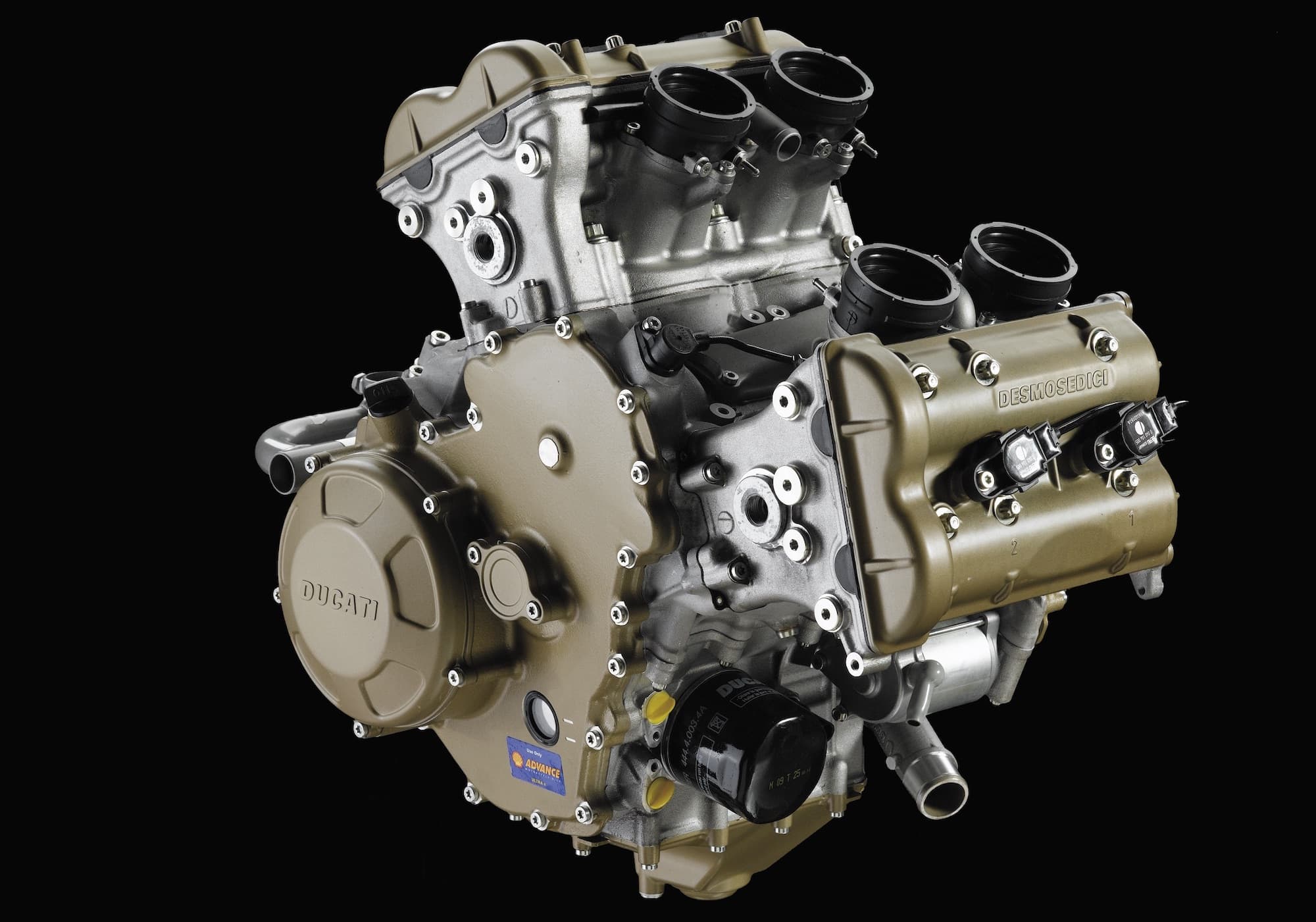
Honda used gear-driven cams in VFR750 and early VFR800 generations. Ducati used a gear train in the road-legal Desmosedici RR. Racing engines also use gears when precise timing and predictable high-rpm behaviour justify the cost.
Belt-driven cams
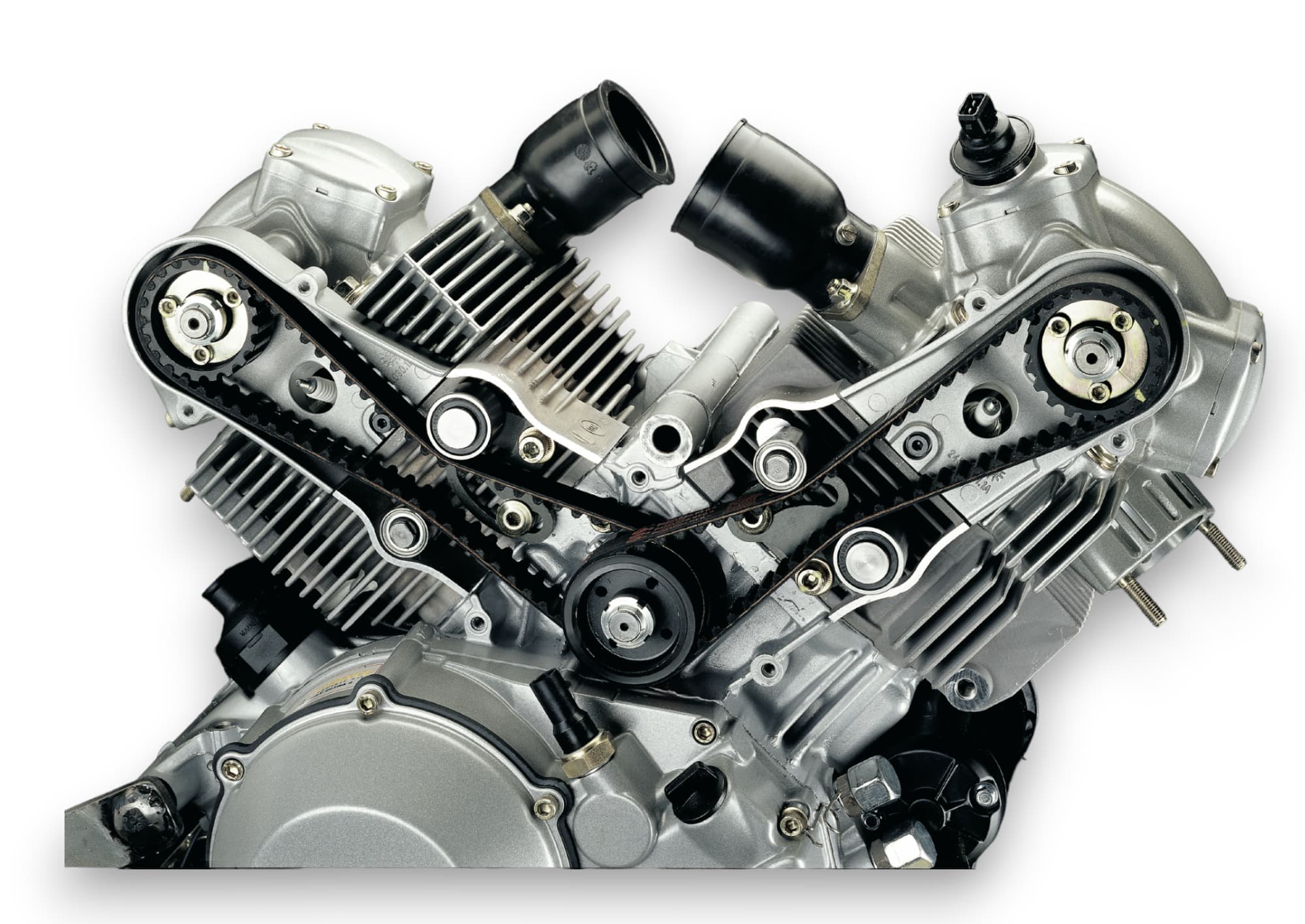
A toothed timing belt is light, quiet and does not need engine-oil lubrication. Ducati used external dry belts on decades of two- and four-valve V-twins. The belt material ages even when the motorcycle covers little distance, so replacement schedules normally include both time and mileage.
A broken belt can leave valves stationary while the piston keeps moving. On an interference engine, the likely result is bent valves and major repairs. The scheduled replacement is therefore preventative rather than cosmetic.
Hybrid cam drives
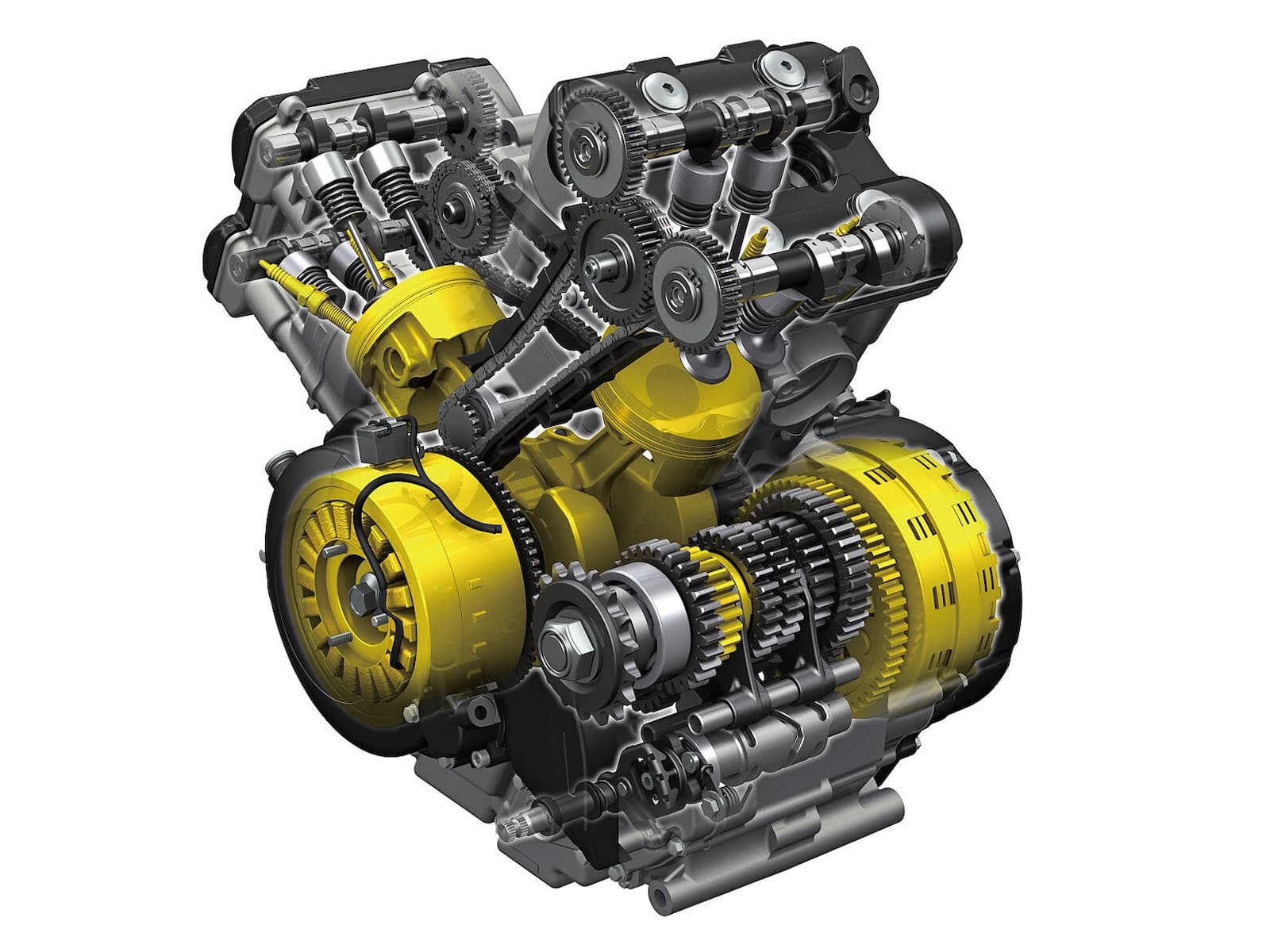
Some engines mix chains and gears. The crankshaft may drive an intermediate sprocket by chain, with gears carrying the final step to the camshafts. The arrangement can shorten the chain, reduce head width or let a mechanic remove a camshaft without disturbing the main chain.
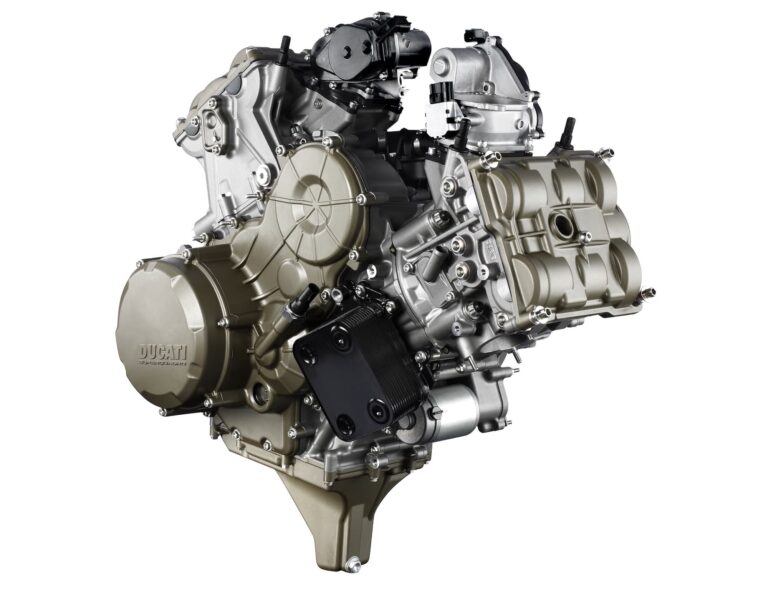
The Suzuki V-Strom 1000 and 1050 engine family uses a chain-and-gear system. Ducati’s V4 Granturismo and Desmosedici Stradale use a chain to one camshaft in each head and gears between the paired cams.
Cam profile, valve timing and overlap
A cam lobe defines three related things: when a valve starts to move, how far it opens and how long it stays open. Engineers call these timing, lift and duration.
The valves do not simply open and close at top dead centre or bottom dead centre. Gas has mass and keeps moving. An intake valve can begin opening before the piston starts its intake stroke and remain open after the piston passes bottom dead centre. An exhaust valve can open before the power stroke finishes so pressure starts escaping before the piston rises.
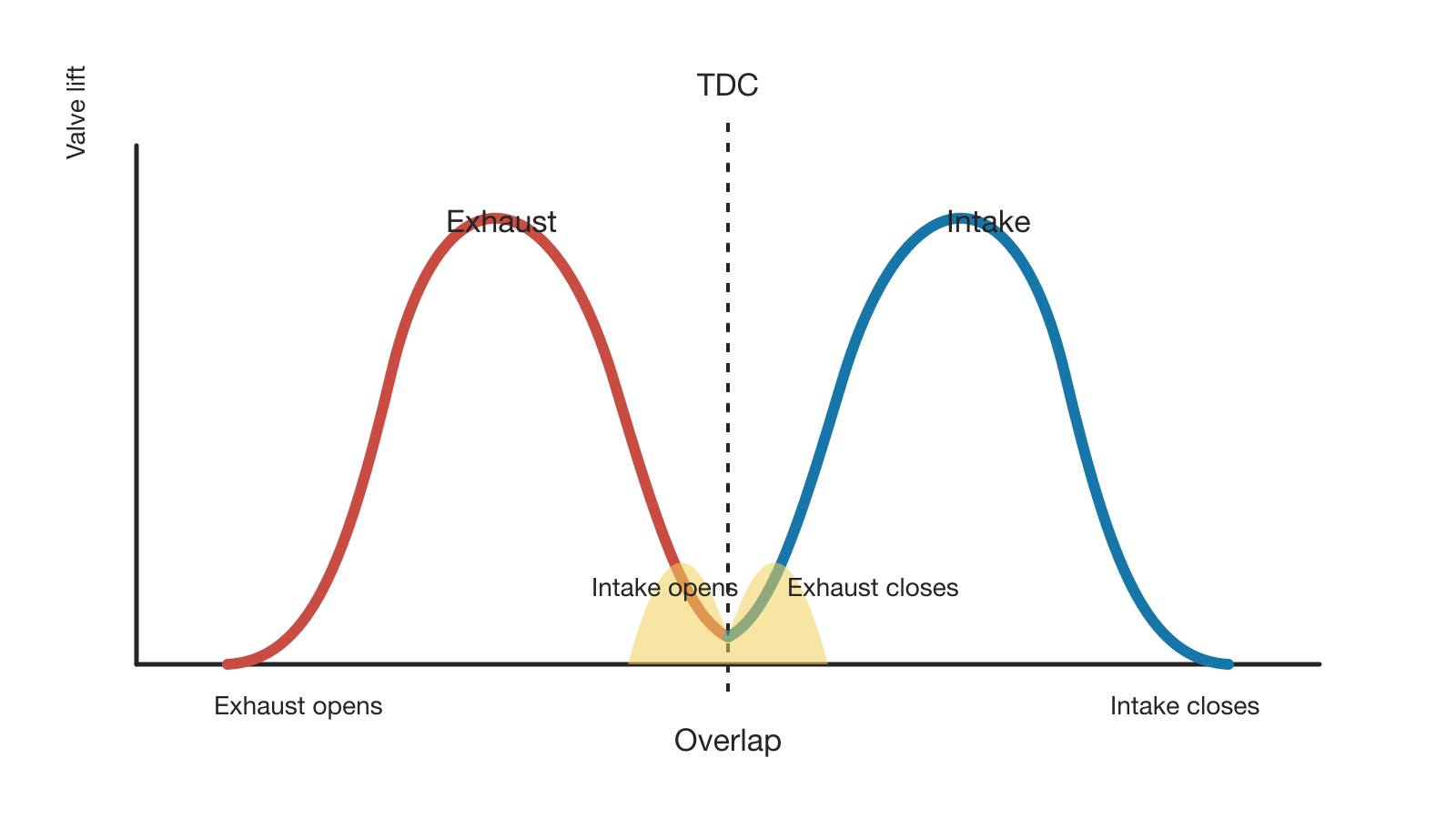
The interval when both valves are open is valve overlap. At high rpm, moving exhaust gas can help draw a fresh charge into the cylinder. Too much overlap at low rpm can let fresh mixture escape or exhaust gas flow backwards, which causes a rough idle, weak low-speed response and higher emissions.
This is why a cam designed for peak power can make an engine unpleasant in traffic, and why a small overlap figure can produce clean low-speed running. Ducati’s Testastretta 11° name refers to 11 degrees of overlap, as Ducati explains in its Testastretta engine summary.
Variable valve timing and variable lift
A fixed cam profile is a compromise. Short duration and little overlap suit idle, emissions and low-rpm torque. More duration, lift and overlap help an engine breathe near the top of its rev range. Variable systems change part of that compromise while the engine runs.
- Variable timing rotates a camshaft slightly relative to its sprocket, advancing or retarding the valve events.
- Variable lift or profile switches between cam lobes or follower paths, changing how far or how long a valve opens.
- Combined systems change timing and lift, sometimes only on the intake side.
Ducati DVT uses phasers on both the intake and exhaust camshafts. BMW ShiftCam moves part of the intake camshaft sideways so the followers run on a partial-load or full-load lobe. BMW states that this changes intake timing and lift; the boxer version also opens the two intake valves by different amounts at partial load to create mixture swirl.
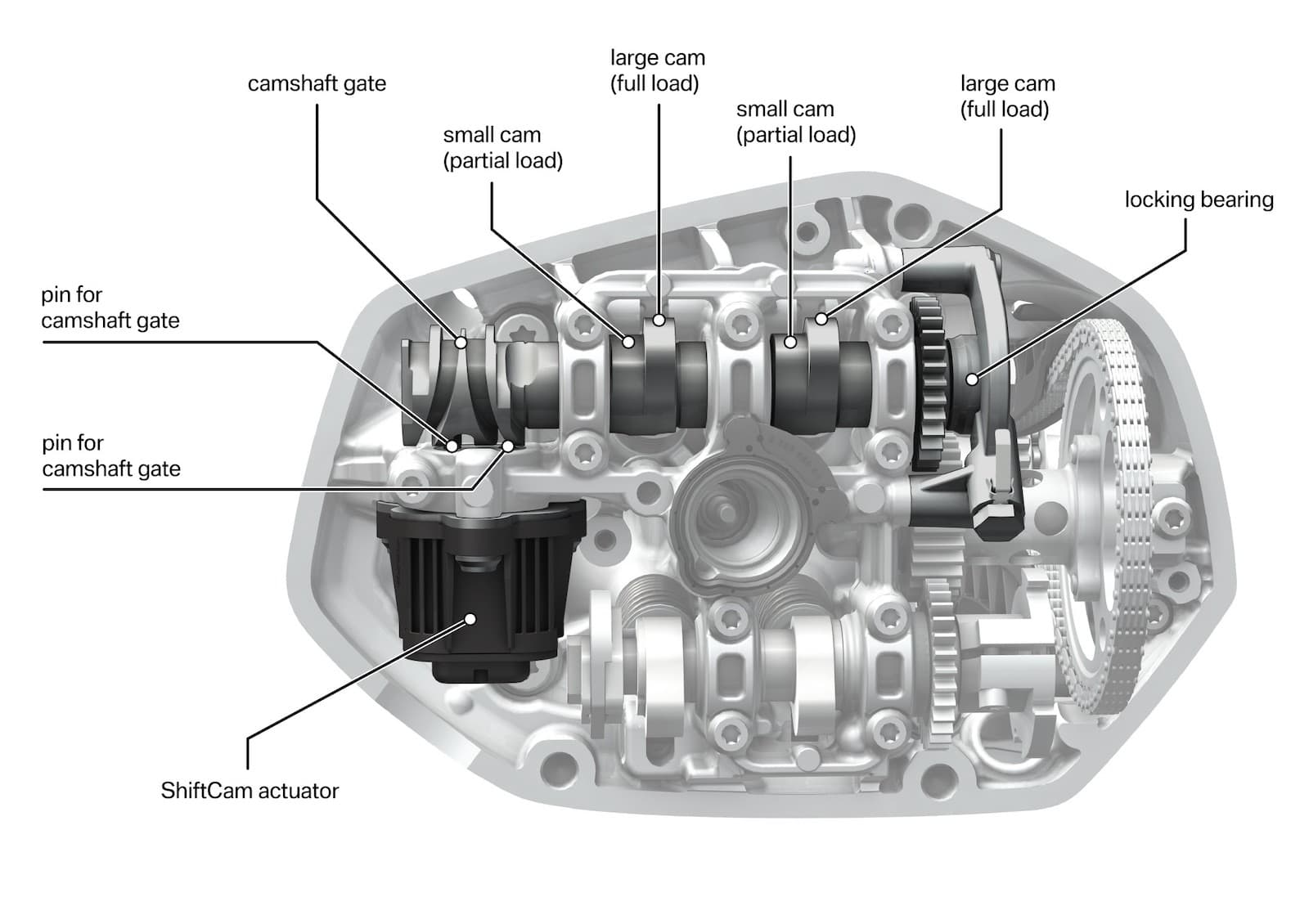
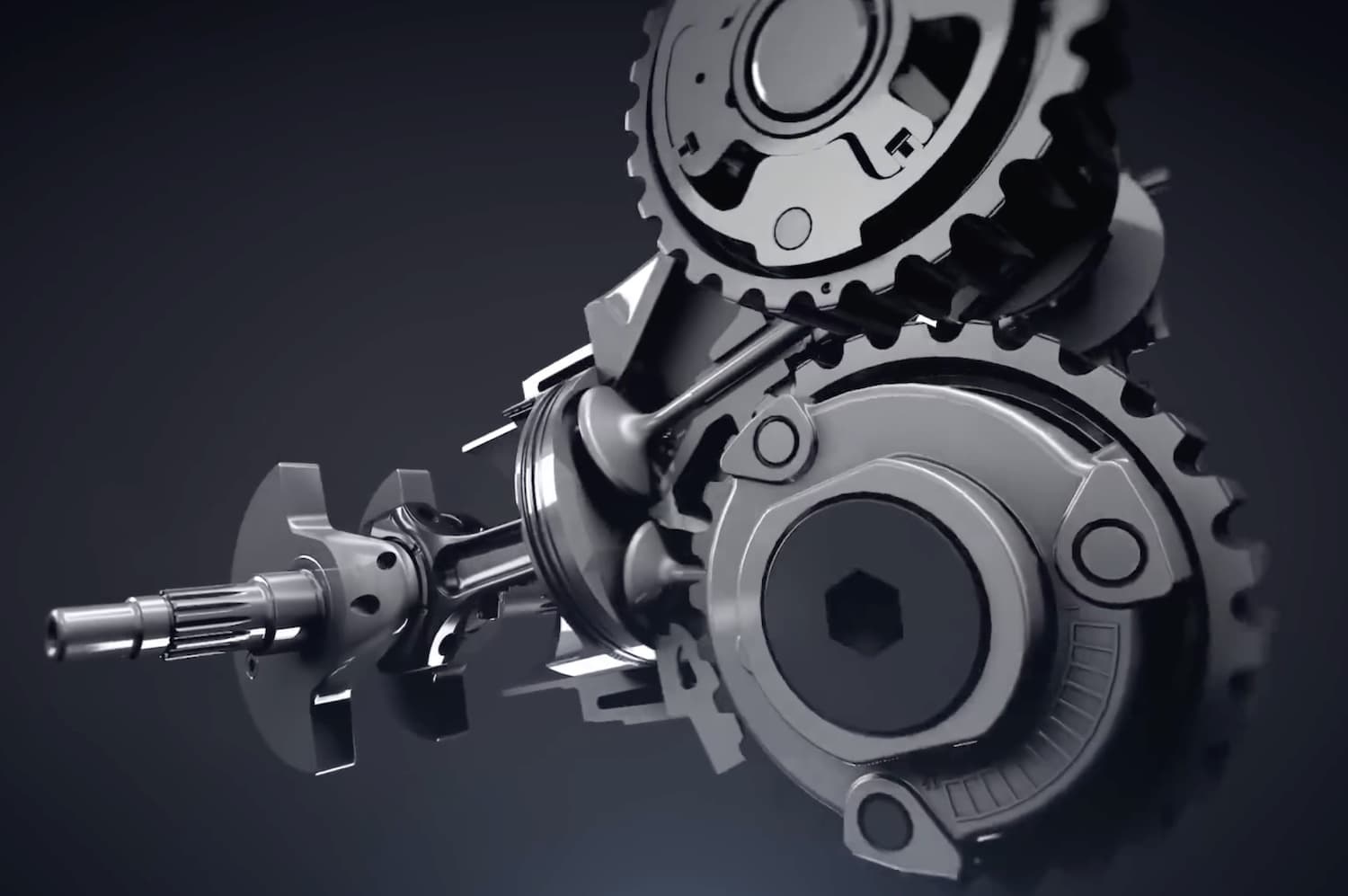
Honda VTEC is another form of variable valve control. On the VFR800, it brings the second pair of valves into operation above a set engine speed. The name on a specification sheet therefore needs context: variable timing, variable lift and variable valve count produce different effects.
How motorcycle valves close
Coil springs
Most production motorcycles use steel coil springs. The cam opens the valve and stores energy in the compressed spring. The spring then keeps the follower in contact with the cam and returns the valve to its seat.
The spring must be strong enough to control the valve at maximum rpm without adding excessive friction. If the valve train outruns the spring, the follower can lose contact with the cam. This valve float reduces control and may allow piston contact.
Desmodromic closing
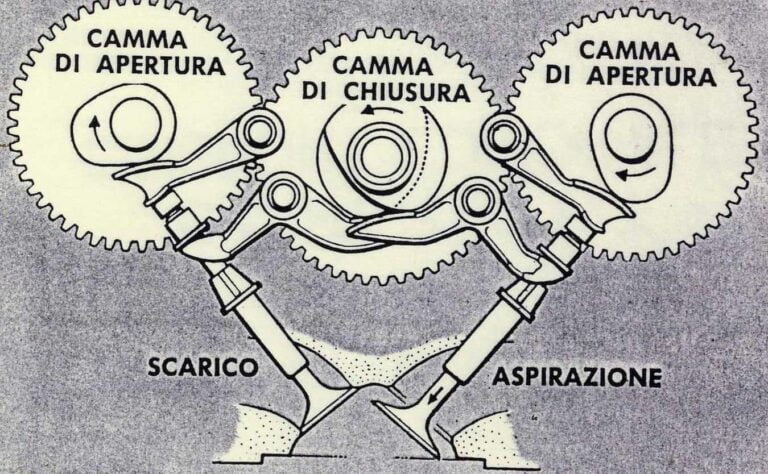
A desmodromic system uses one cam and rocker to open a valve and another to close it. Ducati adopted the design when available valve springs struggled at racing engine speeds. Modern springs can support very high rpm, but Ducati continues to use desmodromic actuation where it suits the engine’s design and identity.
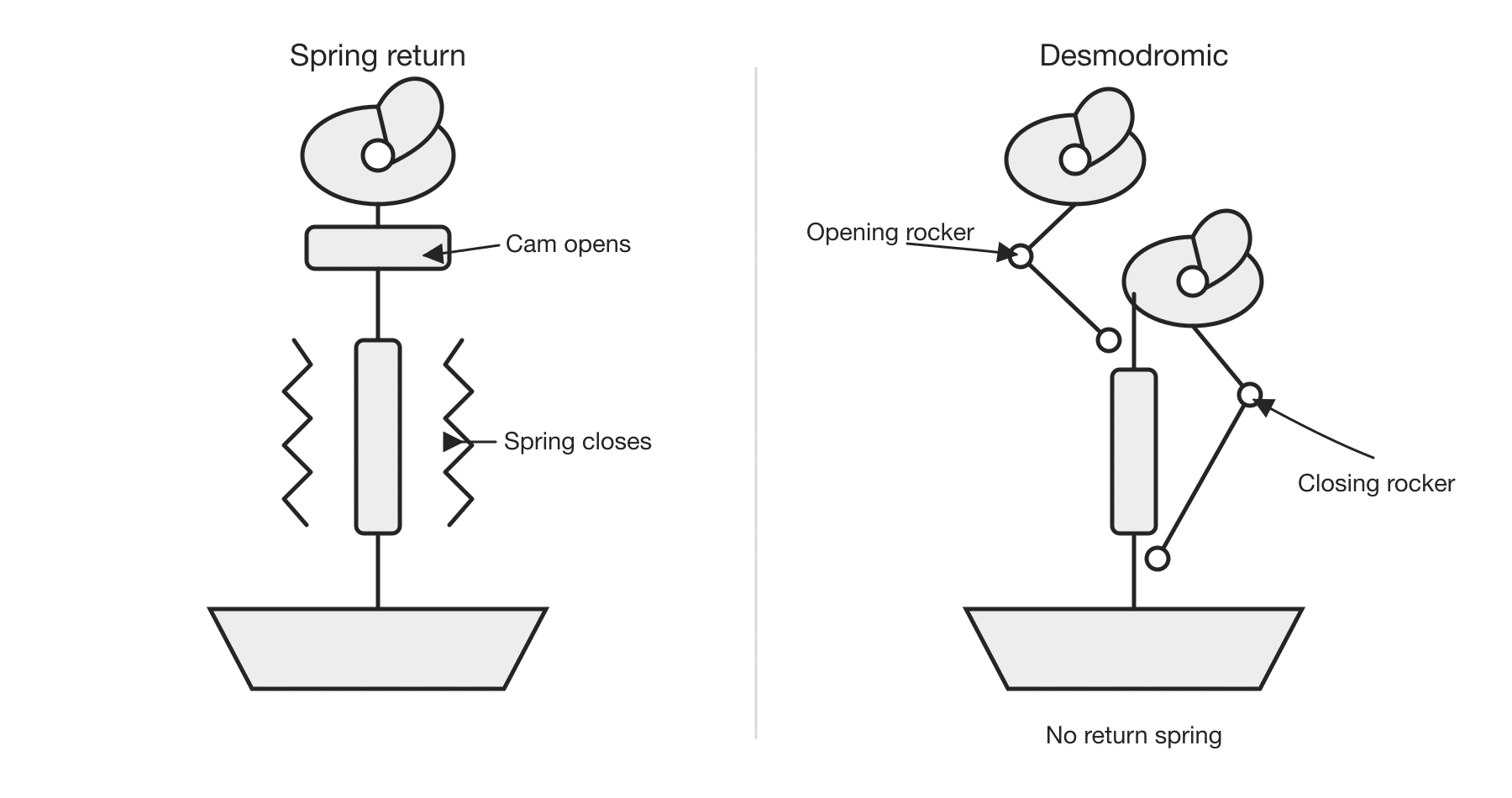
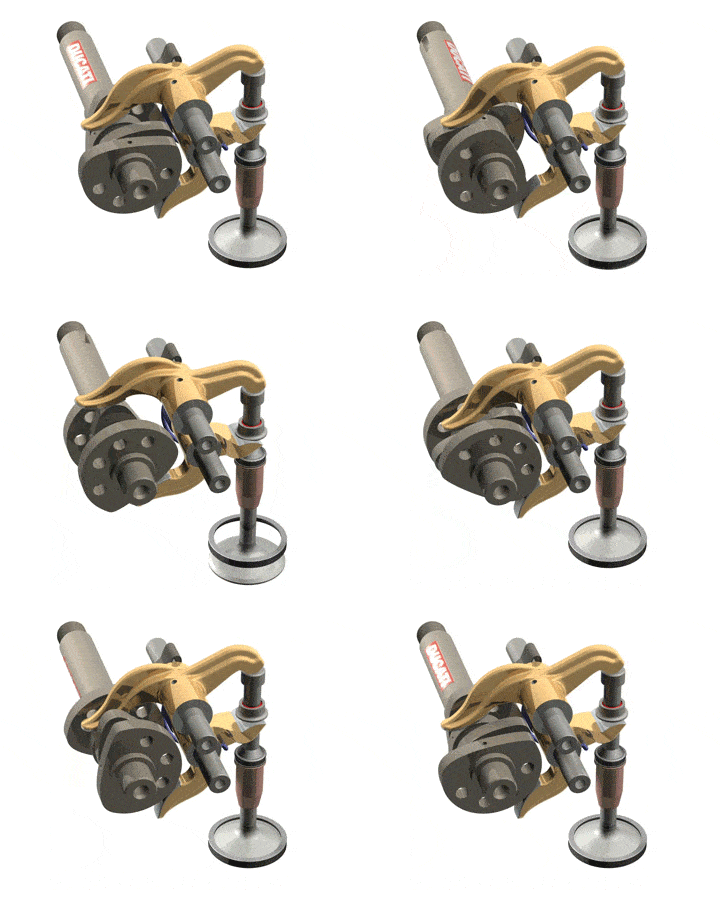
Desmo maintenance involves opening and closing clearances, so each valve has more measurements and shims than a spring-return valve. See the full desmodromic valve guide for the mechanism, history and service implications.
Pneumatic return systems
Some racing engines replace the metal coil spring with a pressurised gas system. The cam still controls valve opening; the pneumatic system supplies the closing force. Calling this a camless engine is incorrect. MotoGP engines use pneumatic valve return because it can control the valves at engine speeds beyond the practical range of ordinary coil springs, but the pressurised system and its support equipment are poor fits for a road motorcycle.
Valve clearance and adjustment systems
A cold engine usually has a small specified gap between the cam or adjuster and the valve train. As the engine heats, the valve stem and cylinder head expand. The cold clearance gives them room to grow while still allowing the valve to close fully.
Too much clearance causes ticking and slightly reduces effective lift and duration. Too little clearance is more dangerous: the valve may never seal, which lowers compression and can overheat the valve face. Clearances can tighten or loosen with wear, so the service schedule calls for inspection rather than assuming a direction.
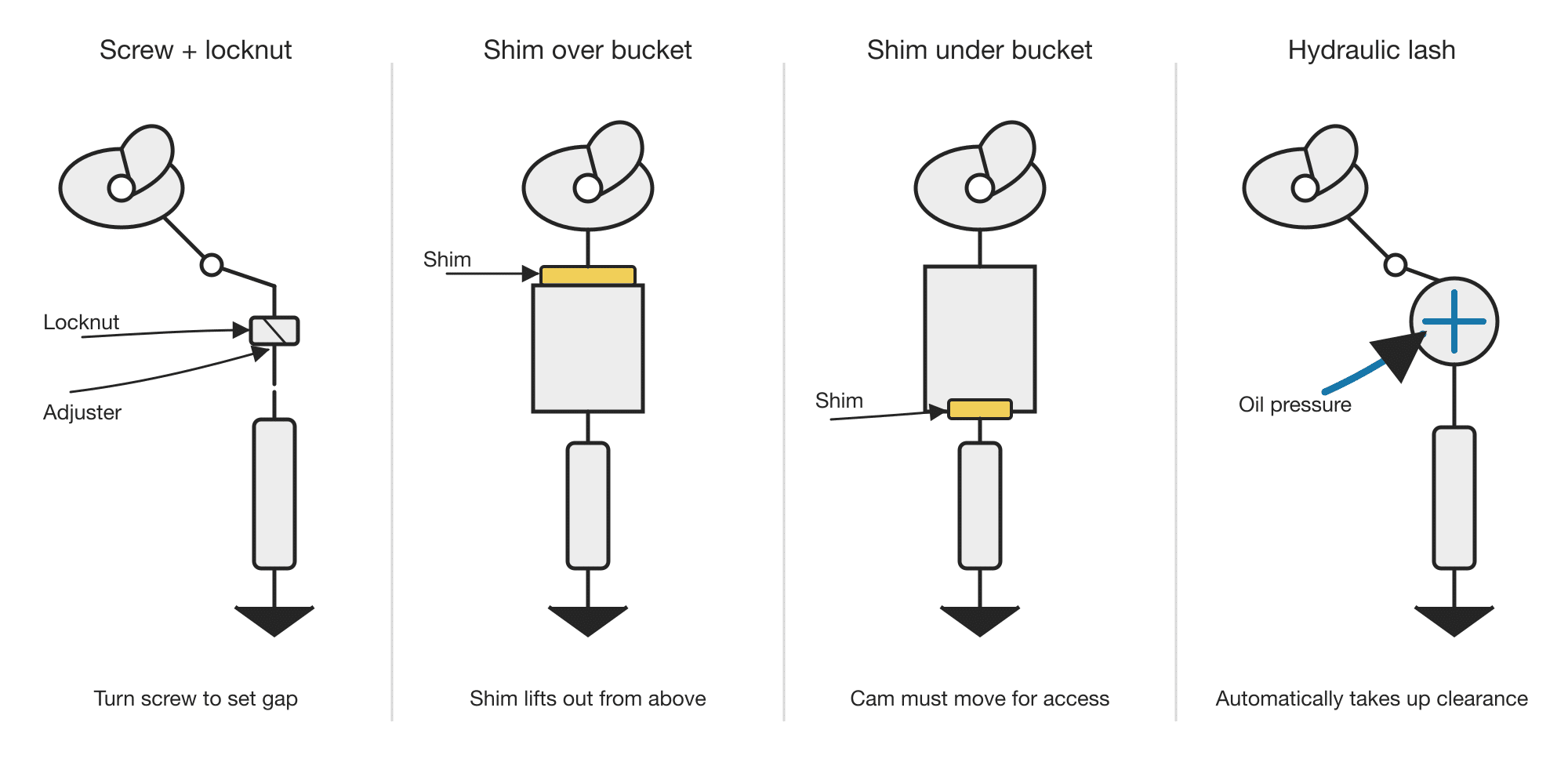
Screw and locknut
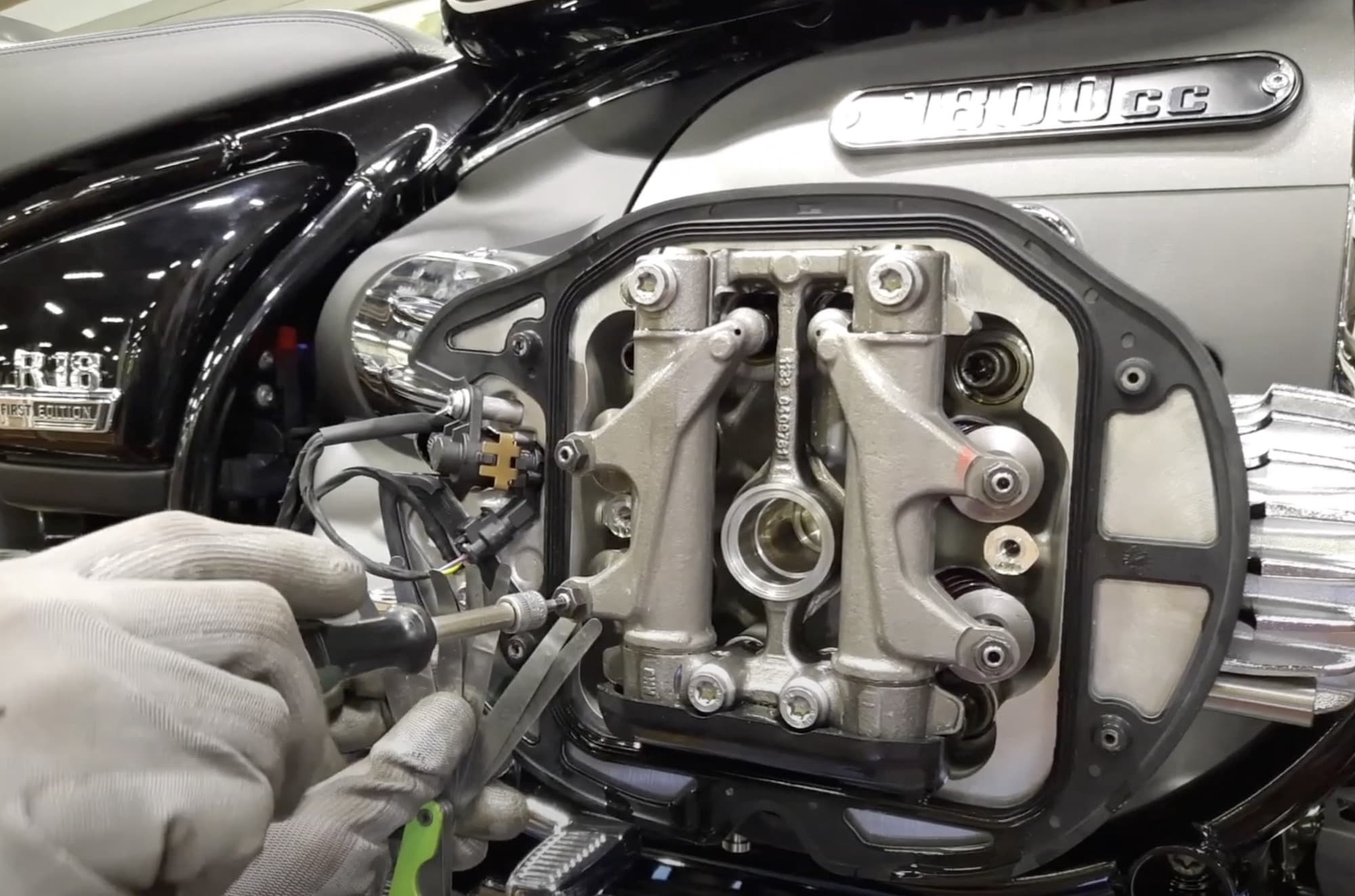
A threaded adjuster sits in a rocker arm. You loosen the locknut, turn the screw until a feeler gauge shows the specified gap, then hold the screw while tightening the nut. The parts are inexpensive and adjustment is quick when the valve covers are easy to reach.
The BMW R 18 and Moto Guzzi V85 TT are modern examples. Their exposed boxer or transverse-V cylinder heads also make access easier than it is on an inline-four buried beneath a frame and airbox.
Shim over bucket
A thin calibrated disc sits on top of the bucket follower. Changing to a thicker shim reduces clearance; a thinner shim increases it. The shim can often be removed without taking out the camshaft, which saves time. The exposed position is less secure at extreme engine speeds, so the arrangement is more common on older engines than on current high-rpm designs.
Shim under bucket
The shim sits beneath the bucket on top of the valve stem. The bucket retains it even under severe acceleration, making this a secure design for high-rpm engines. Measuring is straightforward, but changing a shim normally means removing the camshaft. That is why a valve inspection can be modest if everything is in specification and much dearer if several shims need changing.
Hydraulic lash adjustment
An oil-fed plunger automatically takes up clearance as the engine runs. This removes scheduled manual valve adjustment on engines including Harley-Davidson’s Milwaukee-Eight and Revolution Max. Harley describes the Revolution Max as having hydraulic self-adjusting lifters.
The system depends on clean oil and adds parts and moving mass. It suits engines where low maintenance and everyday running matter more than the lightest possible high-rpm valve train.
How to read a motorcycle valve-train specification
Read each term as an answer to a separate question:
- “Four valves per cylinder” tells you how many intake and exhaust openings the head has.
- “SOHC”, “DOHC” or “OHV” tells you where the camshaft sits and how it reaches those valves.
- “Chain-driven”, “belt-driven” or “gear-driven” tells you how the crankshaft turns the camshaft.
- “VVT”, “DVT”, “ShiftCam” or “VTEC” tells you that some part of the valve event can change while the engine runs; the mechanism still needs checking.
- “Desmodromic” or “spring return” tells you how the valves close.
- “Shim-under-bucket”, “screw and locknut” or “hydraulic lash” tells you how clearance is maintained and what a service may involve.
The whole combination matters. A four-valve DOHC head with lightweight followers suits a high-revving sport bike. A two-valve pushrod engine with hydraulic lifters can suit a large road engine whose owner values torque and low routine maintenance. Honda Unicam sits between familiar categories because Honda wanted four-valve breathing in a shorter head.
If you want to see how manufacturers combine these choices in one family, the guide to Ducati engine types follows the changes from two-valve belt-driven Desmodue engines to chain-driven V4s. The BMW GS boxer history tracks a different path from pushrods to DOHC and ShiftCam.
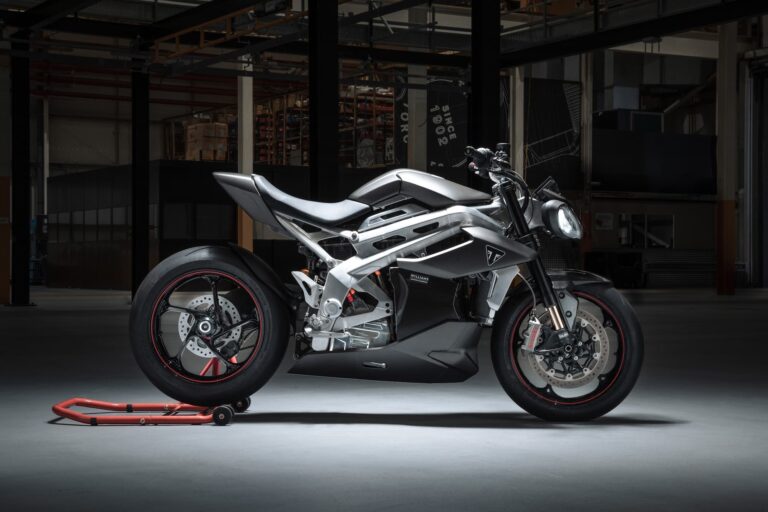
One final word — it may be that we’re at the peak of civilisation with the four-valve-per-cylinder, dual overhead cam engine design. As engines move towards electrification, I don’t think we’re going to continue to refine the concept of the internal combustion engine much further — at least, not with petrol-powered engines (maybe hydrogen or something else). So, with a bit of luck, I’ll never have to update this post!


good article thank you 🙂