

So, you want your first motorcycle, and you want it to be a Triumph. Or, you want an everyday Triumph. Or you just wandered into a dealer, saw all the bikes, and weren’t satisfied with what the salesperson had to say (or didn’t want to bother them) about the differences between Triumph’s entry-level range.
If any of these is the case, this is your guide to the Triumph 400 motorcycle models, including the Scrambler (X and XC), the Speed, the Tracker, and the Thruxton.
Are you obsessed with motorcycles?
Well, I am. That’s why I created this site — as an outlet. I love learning and sharing what others might find useful. If you like what you read here, and you’re a fraction as obsessed as I am, you might like to know when I’ve published more. (Check the latest for an idea of what you’ll see.)
Quick Background of the Triumph 400 Range
I think it’s interesting to consider both Triumph’s history and the current competitive landscape in describing the Triumph 400 range.
Triumph has had a long and storied history, roughly in three phases. The most recent phase started in 1983 (after I was born, but already older than most people reading this!) when John Bloor, a British entrepreneur, bought the rights to the brand from the defunct Meriden cooperative and decided to rebuild Triumph to be competitive in the modern era. (You can see here for more about Triumph’s history.)
This is important context because Triumph died in the 1970s because it failed to innovate. The British company couldn’t keep up in production volume or quality with Japanese brands, and the high price wasn’t enough to get enough buyers to stay loyal. It’s a bit sad, but that’s global competition for you. (It wasn’t just Triumph, either — all of British manufacturing suffered.)
One of the ways in which Japanese manufacturers got a foothold in foreign markets was by making cheap, good-quality, small motorcycles. They built up customers and volume in that way, expanded their dealer networks, and so when they released their big motorcycles, they did so to an existing, large customer base. Triumph intentionally let go of its small bikes in the 1970s, and that was one way in which it lost.
Not this time. Small bikes have been getting popular again. Many entry-level riders want something they can hop onto and instantly feel capable and cool. Big bikes often seem too much, even to experienced riders, who are well aware of how ridiculous it is to pootle past speed cameras or through ever-increasing traffic on 1800 cubes of fury. This is why Triumph has been working on learner-legal bikes like the Trident 660, and why the 400 range exists.
As a side note, I’m curious as to why Triumph hasn’t released a sub-660 cc parallel twin. Even these Triumph 400s could have been twins rather than singles. But that’s a conversation to be had with the engineers and product managers one day.
Quick Overview — Triumph 400 Models In A Nutshell
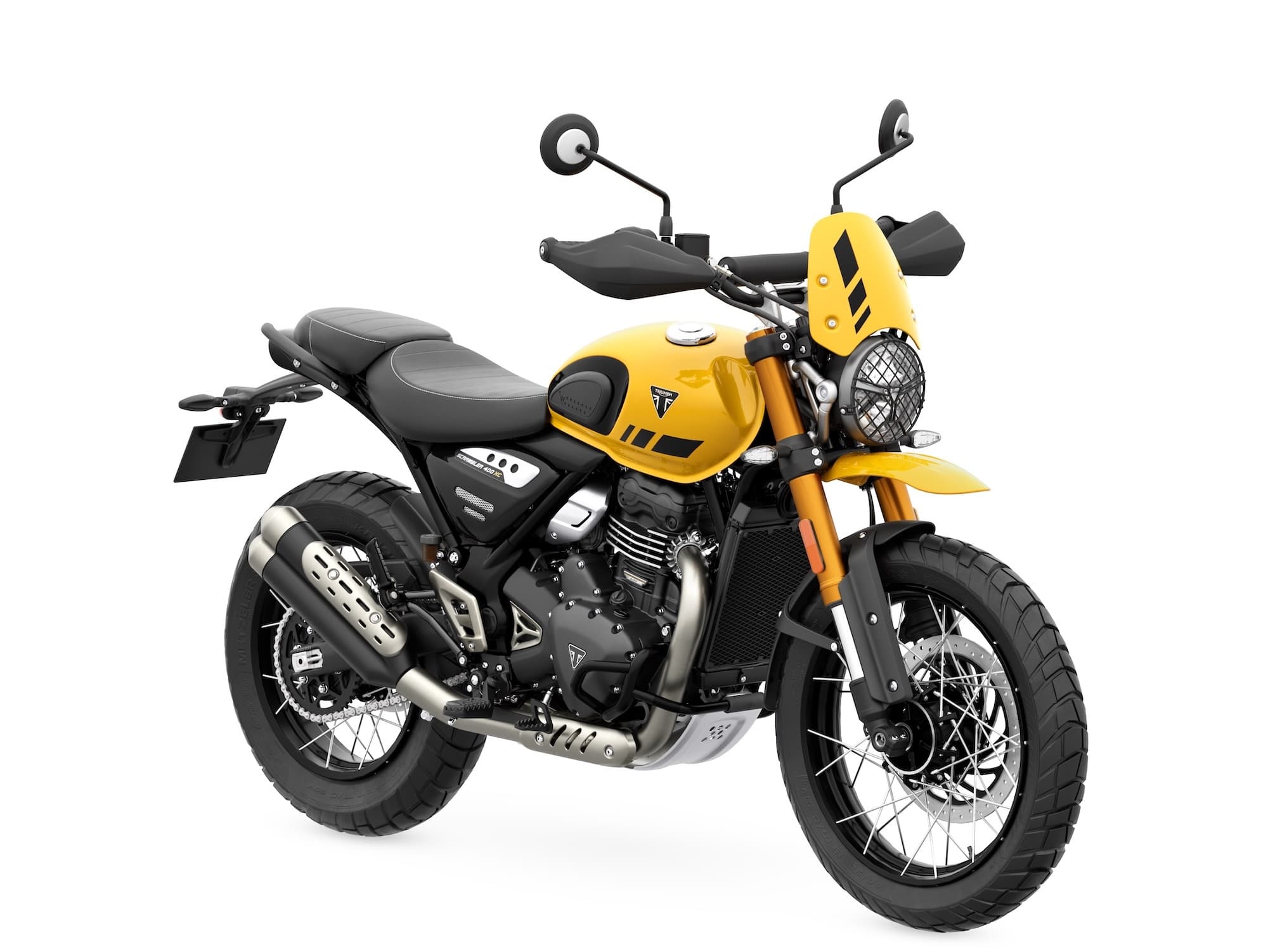
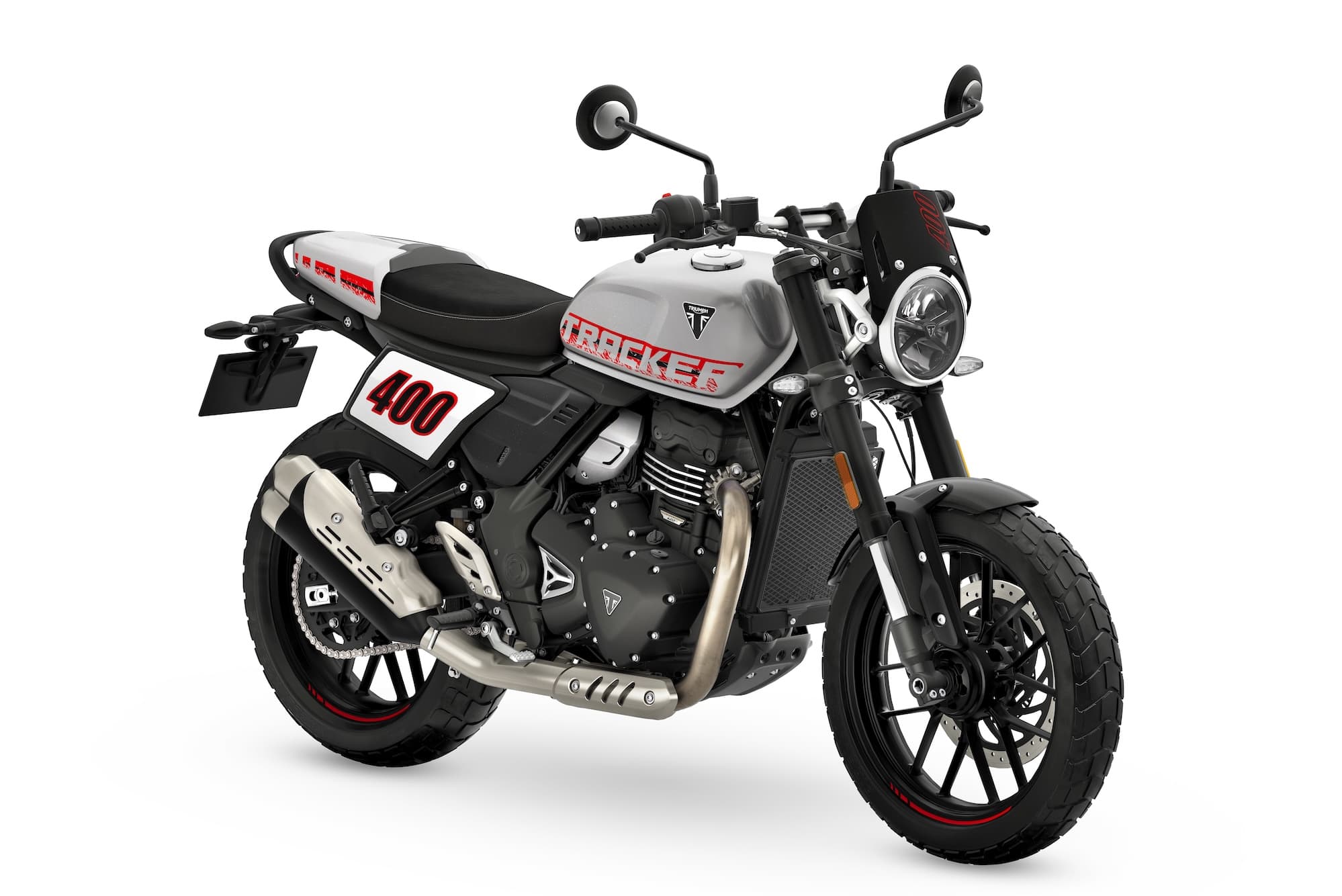
The Triumph 400 bikes all share an engine (in roughly the same state of tune and with the same gearing ratio) and frame, but differ in their ride gear, and of course, style.
The engine: The engine in all the Triumph 400s is the same 398 cc single-cylinder engine. It has four valves, dual overhead camshafts, and a six-speed gearbox. This engine originally made 29 kW / 40 hp at 8000 rpm, and peak torque of 38 Nm / 28 lb-ft at 6,500 rpm.
For 2026, Triumph tuned the motorcycles to make 42 PS (41 hp, 31 kW) at 9,000 rpm, with peak torque of 38 Nm coming on at 7,500 rpm.
| Tune | 2024/2025 models | 2026 models |
|---|---|---|
| Peak power | 40 PS / 39 hp / 29 kW @ 8,000 rpm | 42 PS / 41 hp / 31 kW @ 9,000 rpm (slightly more power, but higher up) |
| Peak torque | 38 Nm / 28 lb-ft @ 6,500 rpm | 38 Nm / 28 lb-ft @ 7,500 rpm (higher up) |
This is just the implacable onslaught of emissions requirements to which manufacturers respond with less noise and mid-range torque, but hey, here’s a bit more top-end to distract you.
Here’s how the Triumph 400 motorcycles are different. I’ve put the Scrambler 400 X and XC together so you can see how they’re different, as they’re similarly-targeted bikes. Ditto with the Speed and Thruxton.
Common specs:
- Front suspension is all 43mm USD with a Big Piston fork design, but differ in travel.
- The rear suspension is a monoshock with external reservoir and pre-load adjustment, but different travel.
- The front brake always has a single disc with a four-piston radial caliper, but varies in disc size.
- Front wheel size varies. Some models are cast, some spoked.
- Stock tyre varies.
- The weight varies — mostly due to the above.
- The seat height varies considerably, which will affect riding position, and how comfortable some newer riders (particularly those of shorter stature) feel.
| Item | Scrambler 400 X | Scrambler 400 XC | Speed 400 | Tracker 400 | Thruxton 400 |
|---|---|---|---|---|---|
| Engine tune | 40 PS / 29 kW | 40 PS / 29 kW | 40 PS / 29 kW | 42 PS / 31 kW | 42 PS / 31 kW |
| First year | 2024 | 2026 | 2024 | 2026 | 2026 |
| Seat height | 825 mm / 32.5 in | 835 mm / 32.9 in | 790 mm / 31.1 in | 805 mm / 31.7 in | 795 mm / 31.3 in |
| Front fork travel (mm) | 150 | 150 | 140 | 140 | 135 |
| Rear shock travel (mm) | 150 | 150 | 130 | 130 | 130 |
| Front brake disc diameter (mm) | 320 | 320 | 300 | 300 | 300 |
| Front wheel | 19-inch, cast | 19-inch, spoked tubeless | 17-inch, cast | 17-inch, cast | 17-inch, cast |
| Rear wheel | 17-inch, cast | 19-inch, spoked tubeless | 17-inch, cast | 17-inch, cast | 17-inch, cast |
| Standard tyres | Metzeler Karoo Street | Metzeler Karoo Street | Metzeler Sportec | Pirelli MT60 | Pirelli Diablo Rosso IV |
| Weight (wet, 90% fuel) | 179 kg / 395 lb | 186 kg / 410 lb | 170 kg / 375 lb | 173 kg / 381 lb | 176 kg / 388 lb |
Scrambler 400 X
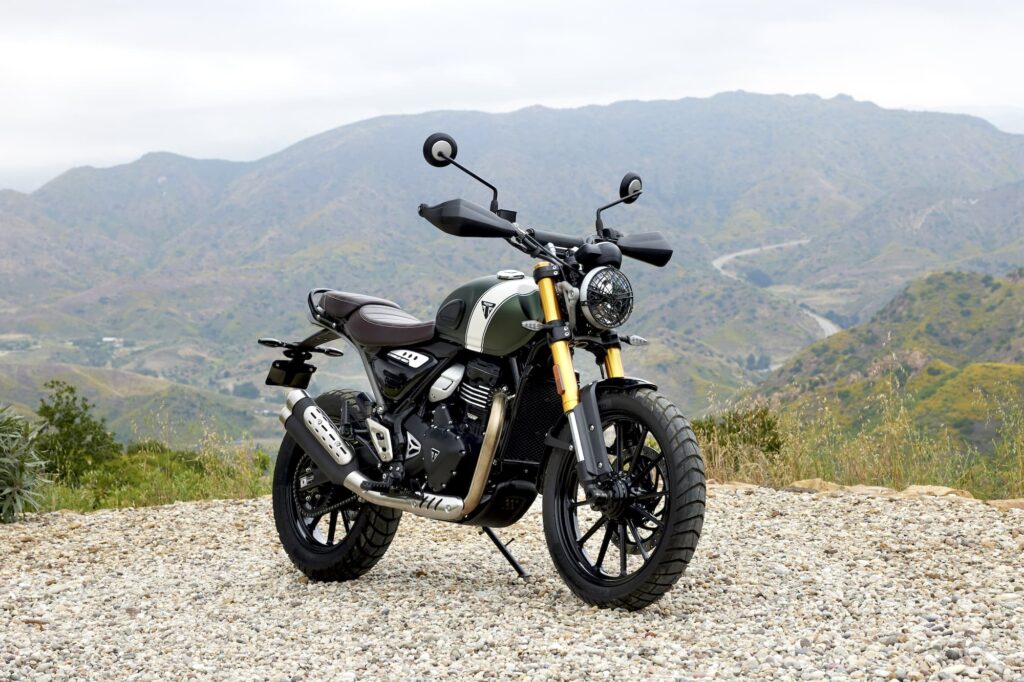
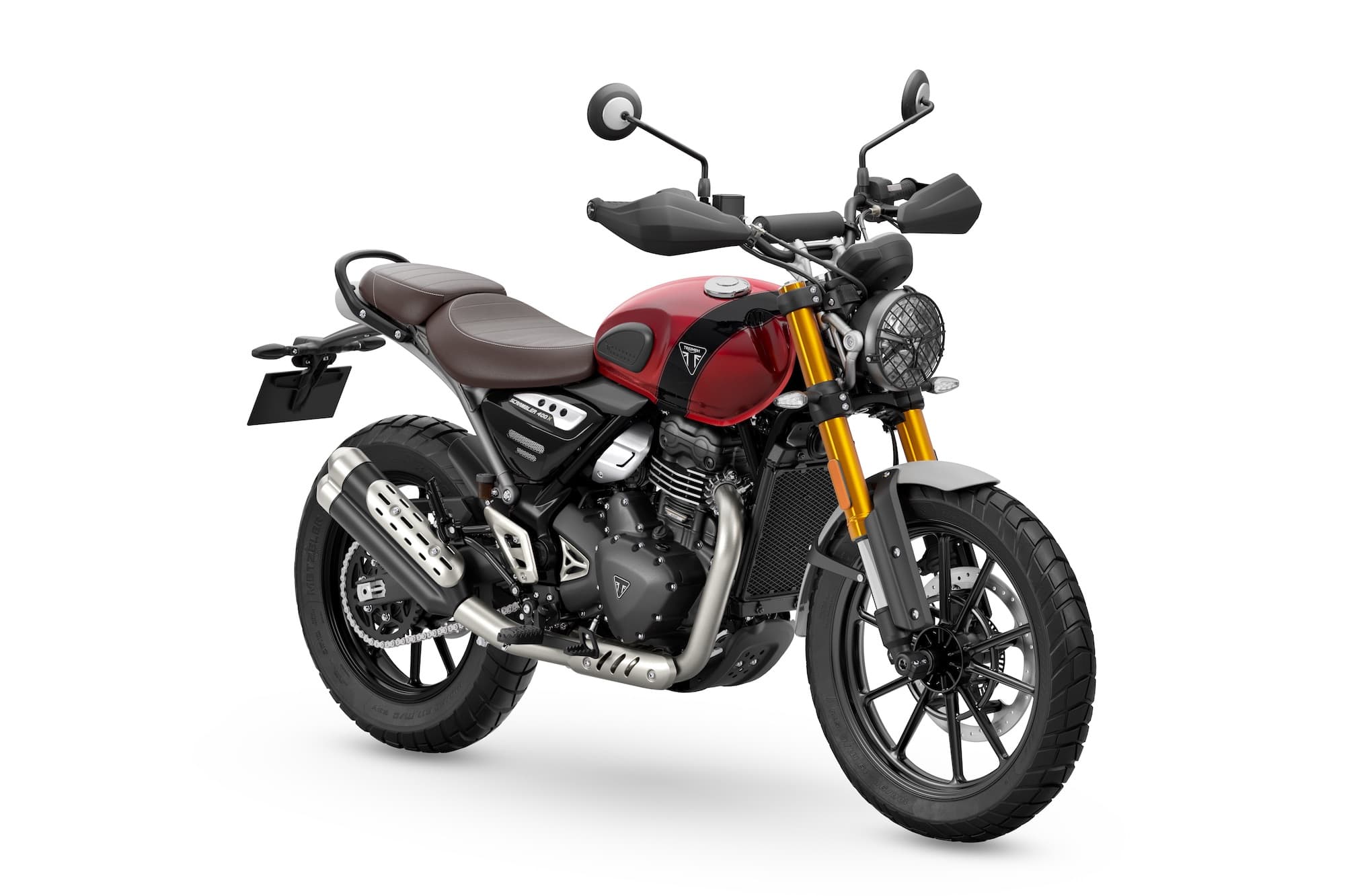
The Scrambler X embodies a lot of what Triumph’s higher-end Scramblers do (both the 900 and the 1200), but in an entry-level chassis.
The thing is, the low weight of the Scrambler 400 make it a contender for being a better scrambler. It’s not the tyres or the protection that make a scrambler: It’s the clearance and the weight. The best scramblers are dirt bikes that are good on the road. And that’s what this is.
The Scrambler X (and XC) has a taller seat than most of the Triumph 400s, so have a seat on it and see whether it fits you or not.
Triumph made a minor update for the 2025 Scrambler XC, giving it spoked rims and a bit more external protection. Otherwise, they’re largely the same.
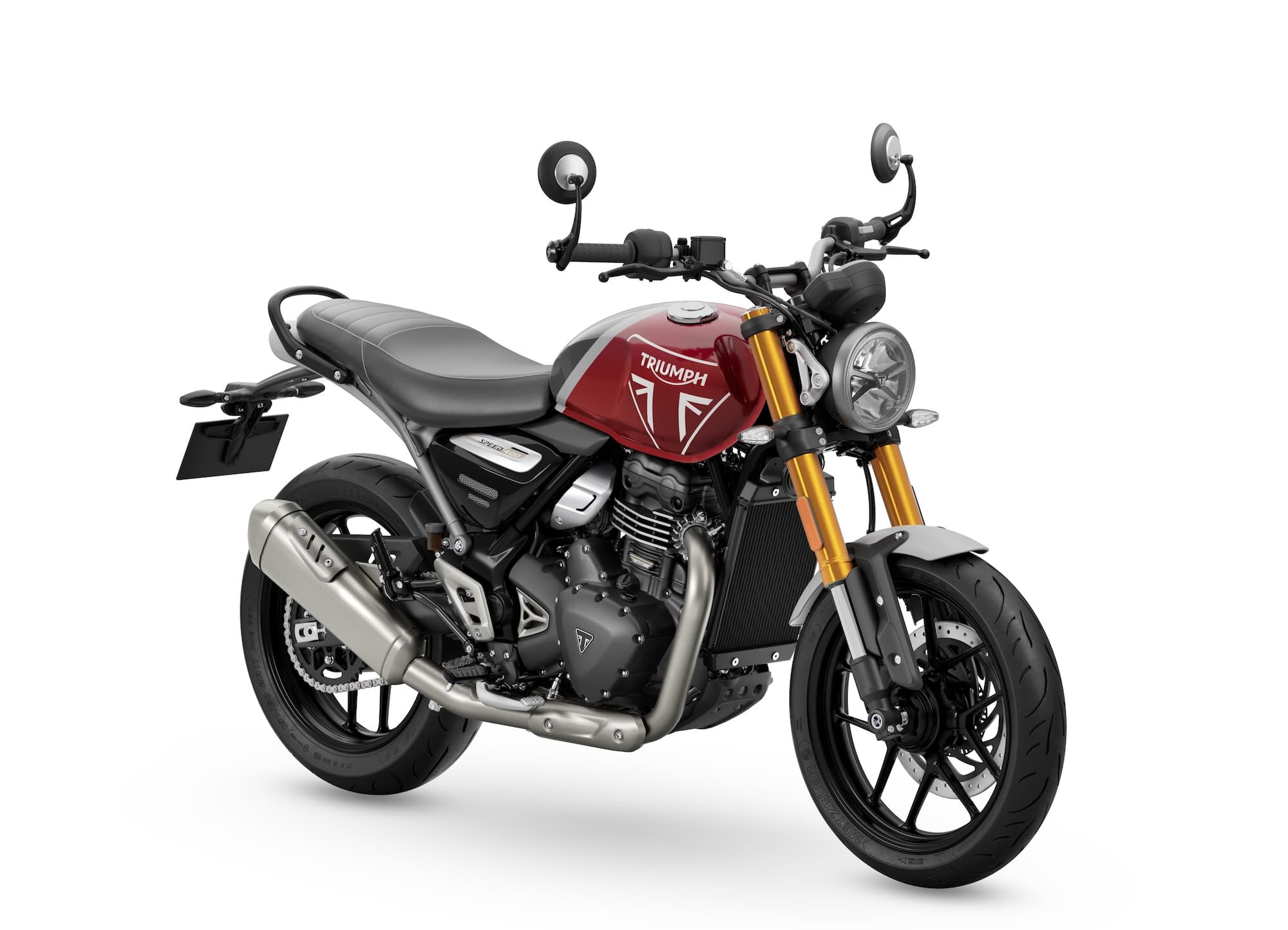
Speed 400
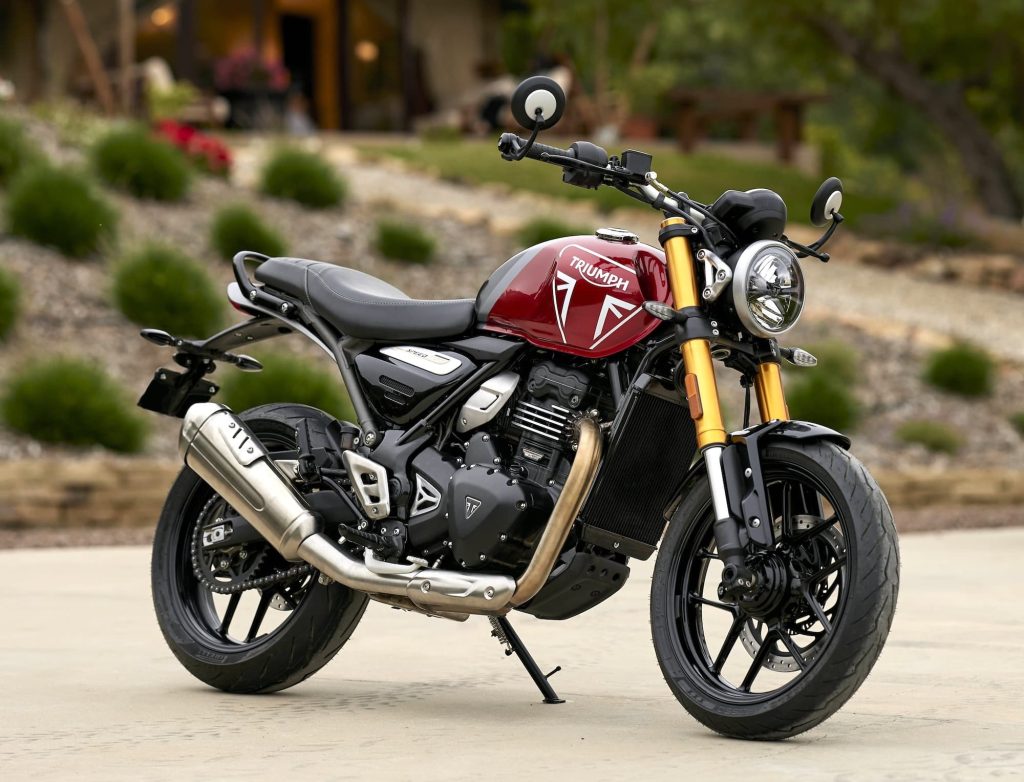
The Speed 400 is the road-going entry-level Triumph 400. It could have been called the Street 400. The interesting thing is that it still does have sump protection and a not-low exhaust pipe, and it’s lighter than the Scrambler models… so there’s nothing to prevent you from taking this on dirt roads. Maybe just the tyres, but that’s an easy fix.
The Speed 400 also has the lowest seat height of all the Triumph 400s by quite a bit, so that will make it a more compelling choice for many.
Scrambler 400 XC
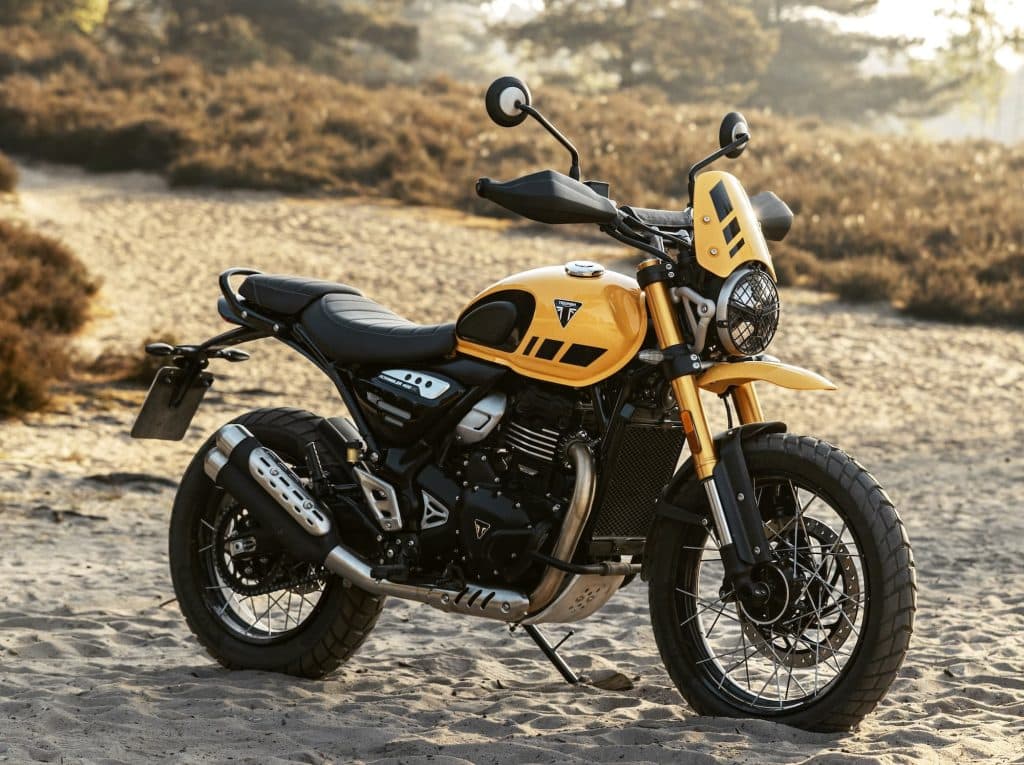
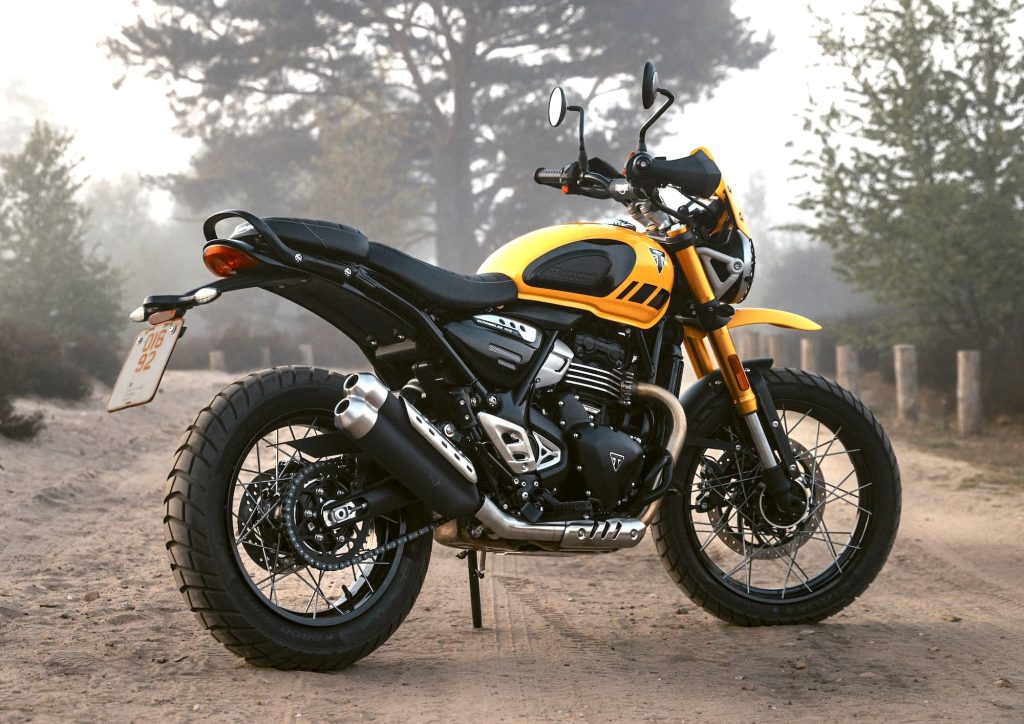
The Triumph Scrambler 400 XC is very similar to the original scrambler, but has spoked rims, a more obvious bash plate, that high mud guard (atop the existing guard), and the little fly screen to keep bugs off the gauge and your belly button area.
Also, it comes in yellow… should have led with that!
Note that the Scrambler 400 XC is heavier than the Scrambler 400 X. I’m not sure where that comes from, but it is probably mostly in the rims.
Thruxton 400
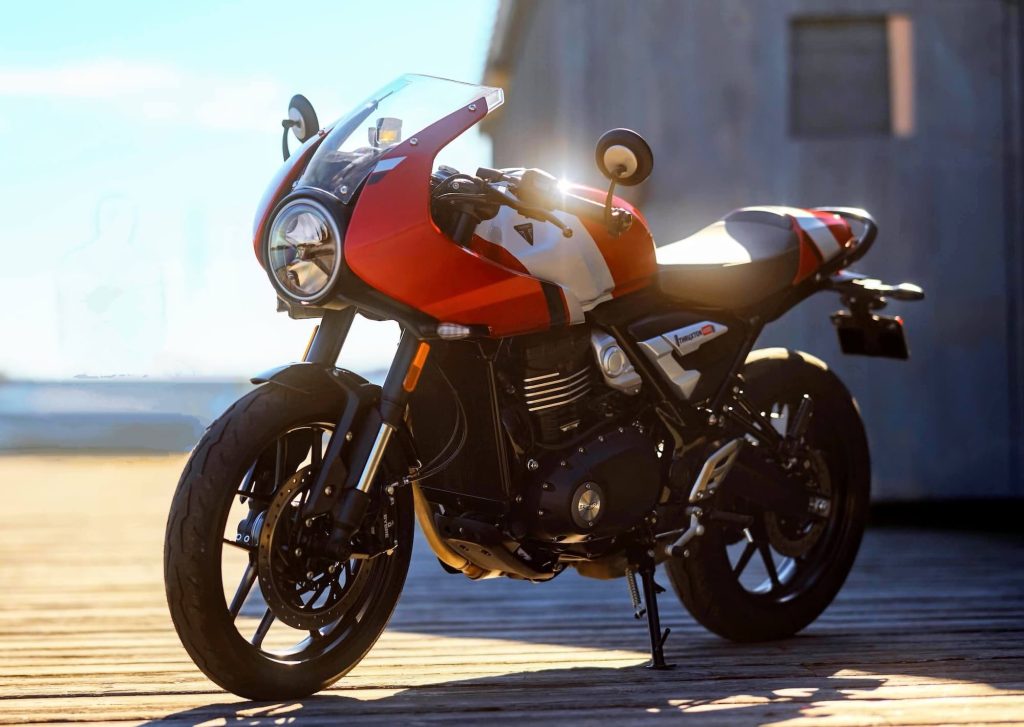
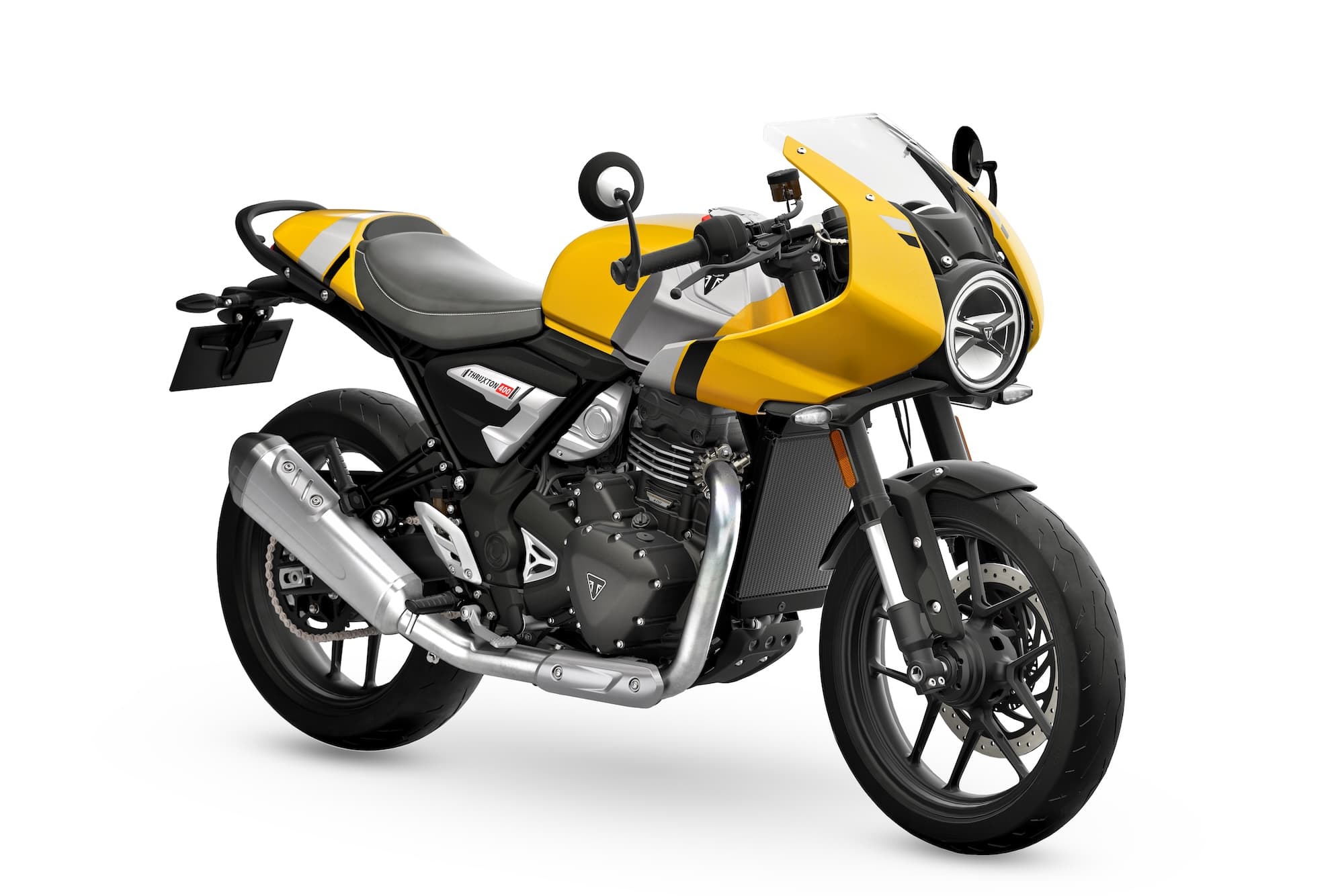
The Thruxton is a slightly different styled Speed 400 in Triumph’s 400 range.
It’s named after the Thruxton, which was a sport bike in the Modern Classics range. Triumph no longer makes a Thruxton, but it was Triumph’s iconic café racer until 2024. The big Thruxton had the kitchen sink of high-end components in a top-spec parallel twin engine.
The baby Thruxton 400 is supposed to capture that same essence but in a beginner-friendly format. It has the hood cowl and bar-end mirrors, but in a lightweight, single-cylinder format, with thin tyres.
I’m not sure it really captures the zing of the Thruxton RS, which I feel it would be unfair to picture here, but it’s not bad looking for an entry-level bike.
See here for more about the Thruxton, part of the Triumph 1200 model guide.
Tracker 400
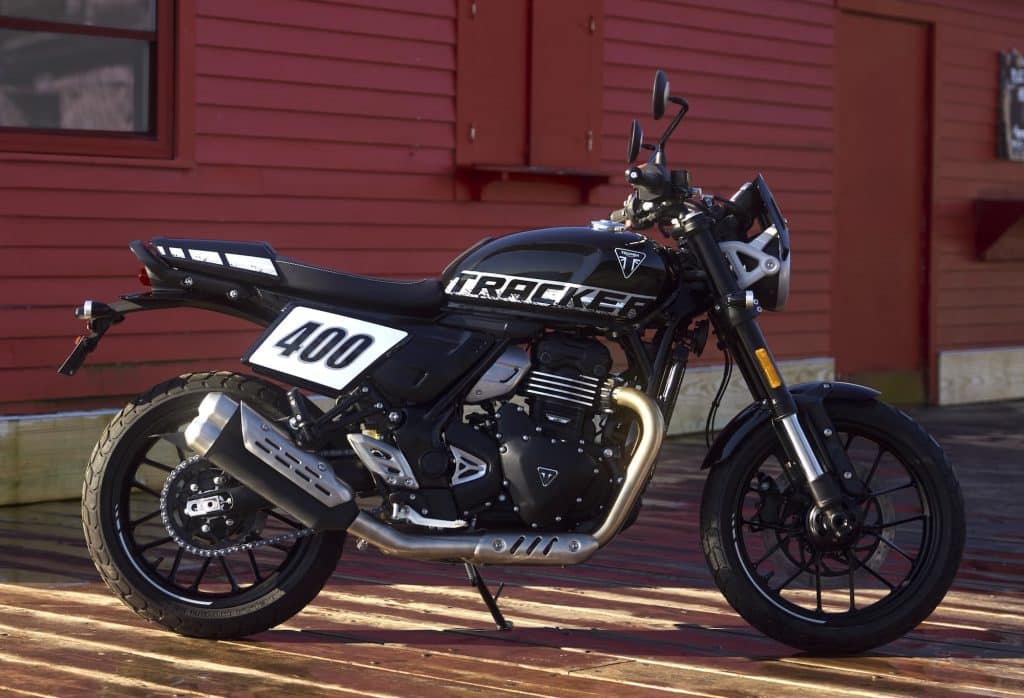
Finally, the Tracker 400. The Triumph Tracker 400 is a flat-track inspired bike in the Triumph 400 range.
Trackers are lightweight bikes that do mixed duty between street and off-road. So, quite like a scrambler. Whether you prefer the Scrambler X, Scrambler XC, or Tracker is going to be a question that your eyes (and bum) decide more than anything else.
The Tracker 400 is one of the two 2026 models of Triumph 400 models that get a minor power bump, but torque and power are higher up in the curve.
Alternatives to the Triumph 400 range
No motorcycle exists in a vacuum! Here’s a quick overview of what else you might consider.
Looking at alternatives, it actually looks like Triumph has a decent chance of cornering the sub-400cc retro market. Their engine is powerful, their style is excellent, and they have a decent spread of features!
Royal Enfield Scram 411
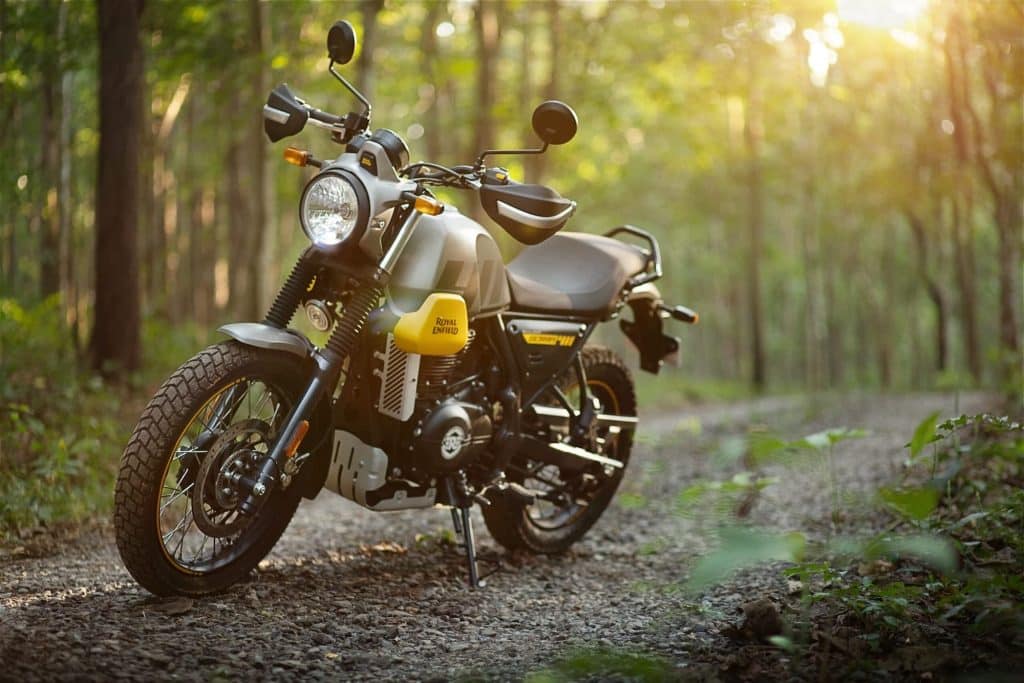
It’s hard to pick just one Royal Enfield, so I’ll pick the Scram 411. I could also have picked e.g. the Meteor 350.
The Royal Enfield Scram 411 is a back-to-basics, functional Scrambler-style motorcycle, powered by RE’s 411 engine that debuted in the revamped Himalayan.
The 411 (surprise!) cc engine is a single-cylinder, single overhead cam, 2-valve engine that makes a heart-stopping 18 kW / 24 hp at 6500 rpm. This bike comes with the kitchen sink of performance parts, if your kitchen sink is currently empty. It has ABS, a conventional, non-adjustable fork, and a single disc brake.
It does have 19/17 tyres, and looks that you wouldn’t mind getting dirty (in fact, it might even improve it).
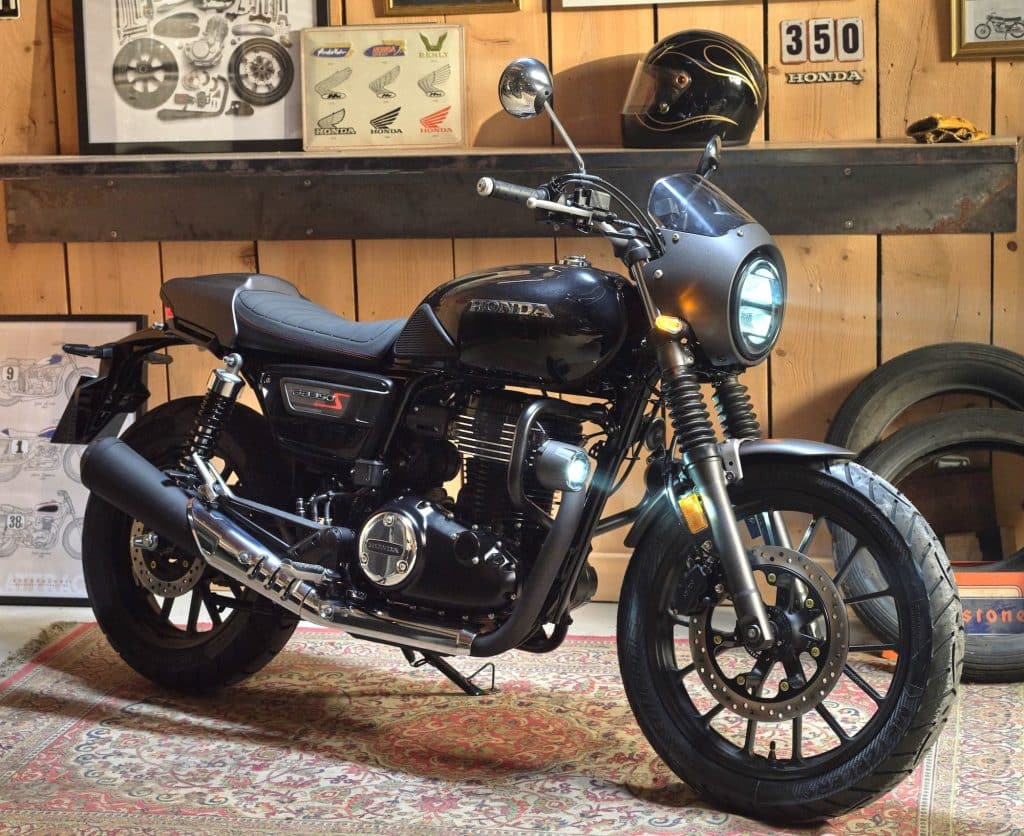
Honda released the H’ness to global markets and I’m glad they did. I love a good, simple Honda.
Similar to the Royal Enfield, the Honda GB350 is a low-spec machine powered by a SOHC 348-cc 2-valve air-cooled engine. It makes peak power of 15.5 kW / 20 hp at 5,500 rpm, with peak torque of 29 Nm / 22 lb-ft at 3,000 rpm.
The simplicity of the GB350S is what makes it great. It’s easy to ride, to own, and to work on. But frankly, for a lot of people, it’s going to feel underpowered.
Which One Is For You?
If you’re dead-set on a Triumph 400 as your first (or next) bike, then you have a difficult challenge: Choosing one of the above!
If this is your first bike, then I’d bake in an assumption you want to resell it. Unless you’re loaded with cash (which, it appears, people who write about motorcycles on blogs aren’t), you want to think about resale, and so think about which of the above motorcycles is most popular in your region.
For example, I’d personally buy the Scrambler 400 XC. Quasi-adventure bikes, or those that you wouldn’t mind taking offroad, tend to excite something in people. You can’t wait to take it down a gravel road and pose with a picture of the bike down by the ocean or something. It’s accessible awesomeness, much more so for first riders than the idea of buying a sport bike and taking it to the track. So, I’d pick the Scrambler 400 XC.
But all these bikes in the Triumph 400 range are so similar that really, it’s an aesthetic choice.

Other than the excellent blog post. I want to say that i was regularly checking your blog to see if and when you would make a comeback and i have to admit i’m very happy you did. Happy to ‘see’ you back again and eager to check every other day the blog to check whether a new post is up. Cheers from Greece.
Hi Stelios, yep I’m back! I had to take a break for various reasons, but I do like writing and motorcycles, and I particularly love the audience of people that reads this blog! Thank you for checking in!