

This is a belated list of just what I think are the best-looking motorcycles for 2026. I realised I stopped doing these lists a few years ago because it seemed nobody cared. But I care! I like looking at pretty pictures and dreaming of a complete garage of bikes I ride one at a time, when it’s nice out, and I won’t get them too dirty.
These motorcycles have all been announced for the 2026 model year, most of them mid-to-late 2025. I might add to the list if some new bikes get announced mid-year.
This is an entirely subjective list of what I think makes a good-looking bike. It’s in alphabetical order of brand. I try to keep it to one per brand, but occasionally fail.
You might have other suggestions, and I welcome them.
Something that shows how biased this list is is that every motorcycle here makes around 120 hp. It’s the sweet spot for everyday riding. But that’s just, like, my opinion, man.
See all the lists of best-looking motorcycles if you want to look at other pretty pictures:
Are you obsessed with motorcycles?
Well, I am. That’s why I created this site — as an outlet. I love learning and sharing what others might find useful. If you like what you read here, and you’re a fraction as obsessed as I am, you might like to know when I’ve published more. (Check the latest for an idea of what you’ll see.)
BMW R 12 G/S
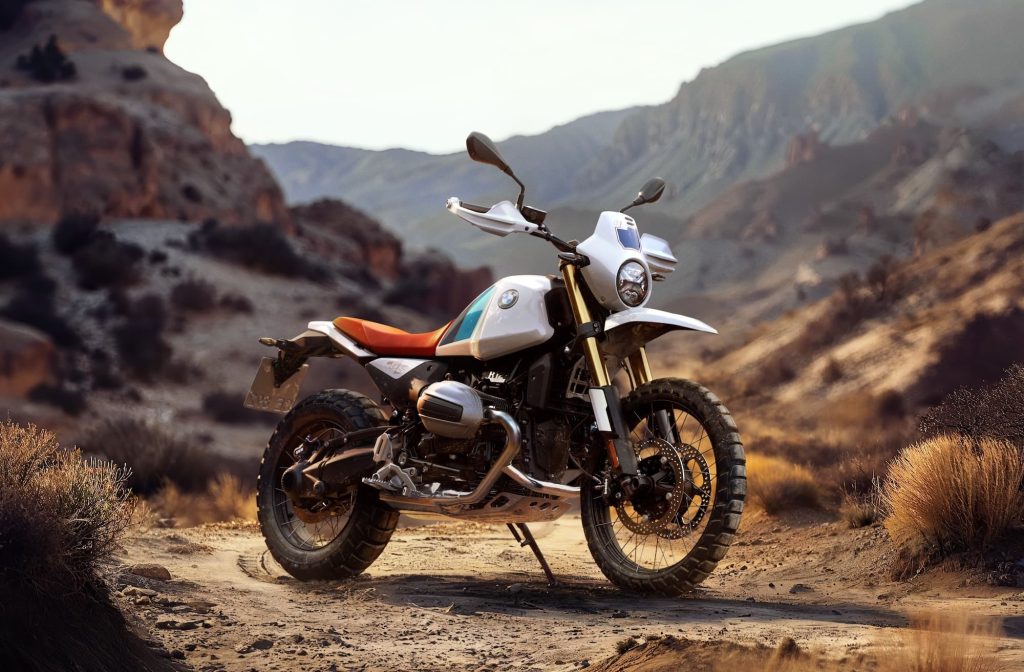
Disclaimer: The 2025 BMW R 12 S didn’t really do it for me. I used to have a BMW R 1200 S, and that was a cool bike. Sporty, interesting, and unique. Prices on it (including mine, despite miles going up) have skyrocketed… yet another case of me selling too soon. But the R 12 S was neither Arthur nor Martha in terms of sportiness, and the colour to me looks weird.
But the R 12 G/S — especially in those iconic Dakar colours — now you’re talking!
I don’t ride off-road, other than dirt roads that sneak up on me surprisingly often once I’m outside the city, so I’m never looking for a dirt bike or even an adventure bike. Instead, a road bike with somewhat knobby tyres and more ground clearance is my sweet spot.
This is where the R 12 G/S comes in. It’ll do the city, it’ll cope with getting dirty, and it looks good everywhere.
It has the same core as the other R 12 motorcycles (and indeed R nineT motorcycles) — the air/oil-cooled 1,170 cc boxer that makes 80 kW / 109 hp at 7,000 rpm. The general layout of the motorcycle is the same too, with the drive shaft on the right, hiding that exposed rear wheel with a single-sided swingarm — an aesthetic choice BMW moved away from much earlier with the K 1200 S in 2005.
But a number of differences make the R 12 G/S a not crazy platform for taking off-road:
- A 21-inch front wheel, coupled with either a 17-inch or 18-inch rear wheel (the 18-inch one being part of the Enduro Package Pro)
- Fully adjustable upside-down fork at the front with 210 mm of travel, with the Paralever swingarm at the back.
- 240mm of ground clearance (255 mm with the Enduro Package Pro)
- High-mounted rear exhaust
- Multiple seat and footrest options to adapt to your level of adventuring
- That sweet paint on the G/S optional colour version!
This list is just about how good-looking motorcycles are, and so let’s leave it at that.
Honda CB1000F Hornet
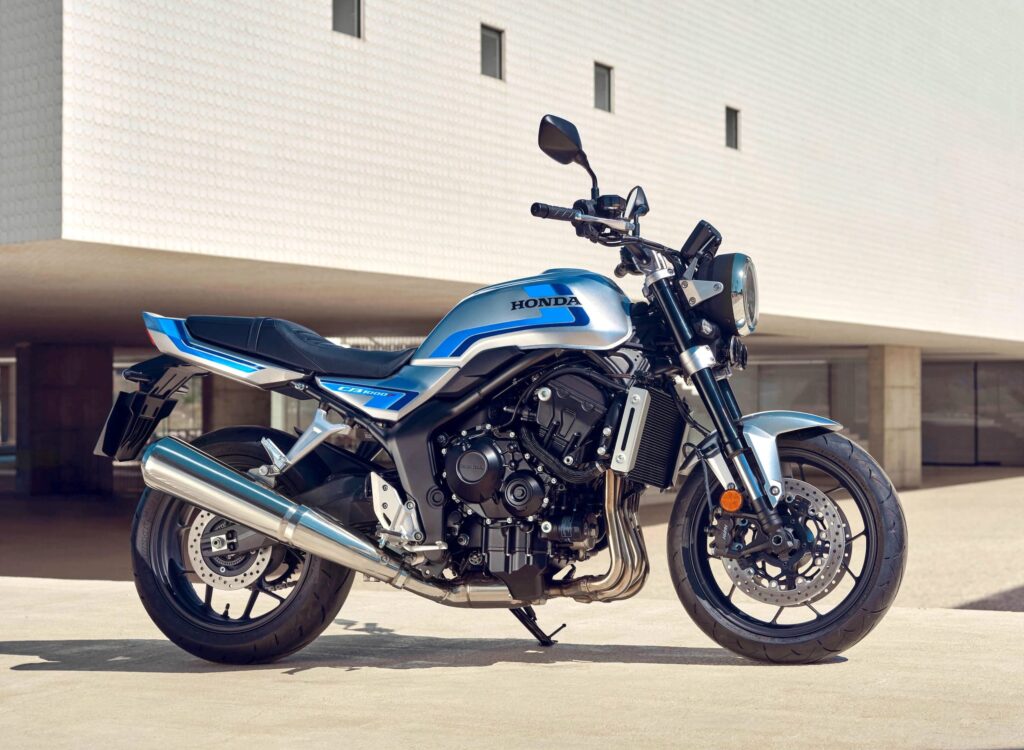
I nearly placed an instant order for the CB1000F. Why? Because it looks like — and is inspired heavily by — my very first motorcycle, a CB900F Bol d’Or.
Being a man of a certain age (as are most motorcycle riders… apologies to those younger, or those not men, but you know the demographics!), I love vintage-inspired bikes. Car drivers don’t get the same aesthetics we take for granted. So I was very happy that Honda decided to actually produce the CB1000F.
The CB1000F is based on the CB1000 Hornet. It both simplifies the Hornet and zhuzhes it up a little. The 1,000 cc inline four makes peak power of 91 kW / 122 hp at 9,000 rpm, with peak torque of 103 Nm / 76 lb-ft arriving at 8,000 rpm. More of a midrange focus.
The ride gear has come a long way since the 80s, with 41mm Showa SFF-BP forks at the front (inverted) and a Showa rear shock. Brakes are four-piston radial-mounted calipers on twin 310mm discs. For ride safety, the CB1000F even has a six-axis IMU — cornering ABS! But there’s no cruise control.
Indian 101 Scout
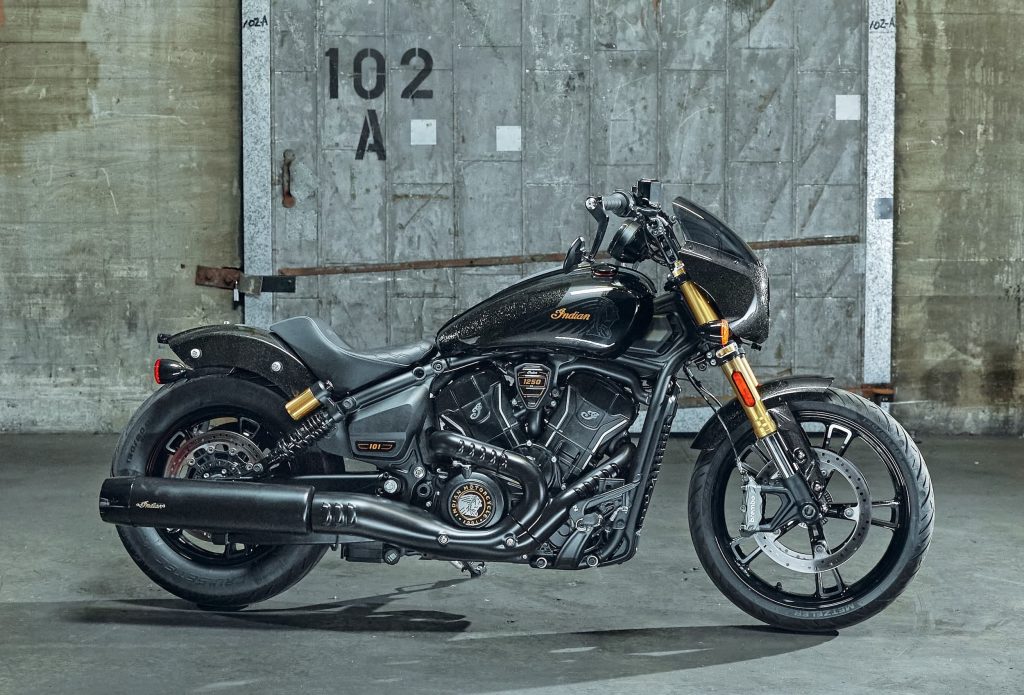
Indian released the touring-focused Indian Sport Scout RT for 2026. The thing is, those panniers take away from the lines of the Scout, and the Sport Scout isn’t top-spec, so instead, I’m going to show you a picture of the Indian 101 Scout in the new 2026 “Black Crystal Super Graphite” colour.
Indian revamped its Scout line for 2025 significantly. The most significant update was that Indian changed the engine from the 1133cc PowerPlus engine to the SpeedPlus 1250, giving a healthy power and torque bump. The 101 Scout makes a bit more, with peak power of 82 kW / 111 hp, and peak torque of 109 Nm / 80 lb-t at 6,300 rpm.
All models get an updated tubular steel frame, improved suspension, and LED lighting. Various trim levels can get you cruise control, ride modes, traction control, and a “Ride Command”-enabled 4-inch touchscreen display at the top end.
The 101 Scout has ride gear that no other bike in the line-up gets, including twin front discs (the others have a single disc!), Brembo four-piston calipers, and an inverted fork that’s fully adjustable (the others get a conventional, non-adjustable fork).
Kawasaki Z900RS
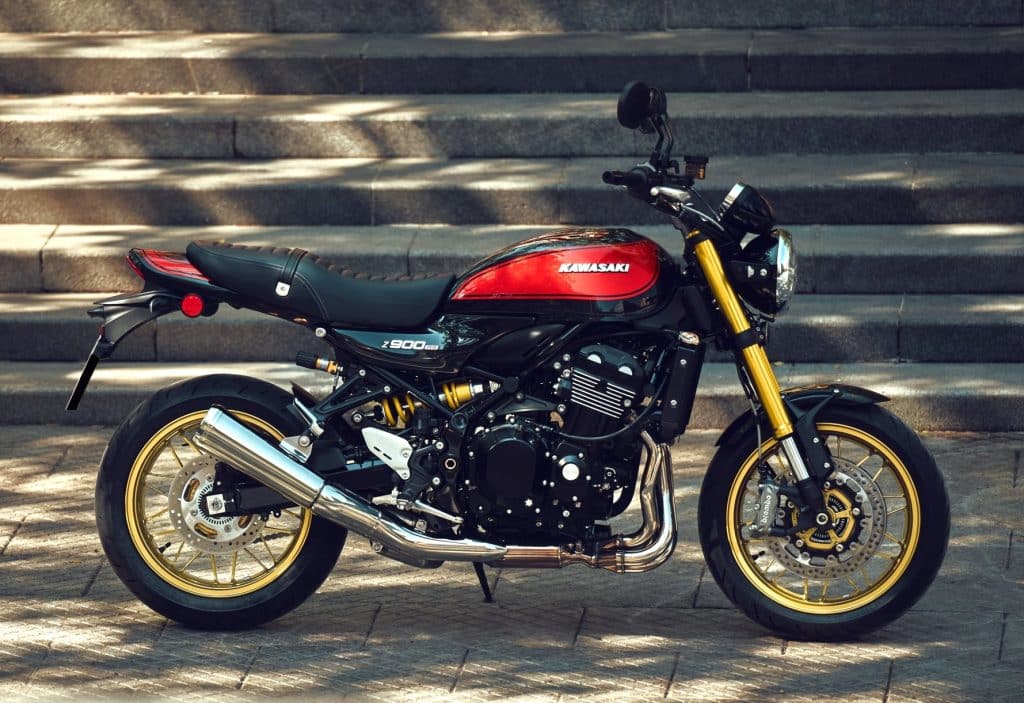
Kawasaki has been making the Z900RS for a while (released in 2017 for the 2018 model year), and the core of it has remained the same. Oh, other than the fact that they retired the green variants and the café racer one, sad face.
But for the 2026 model year, the Kawasaki Z900RS gets the same tech updates the Z900 got a year earlier — cruise control and an IMU.
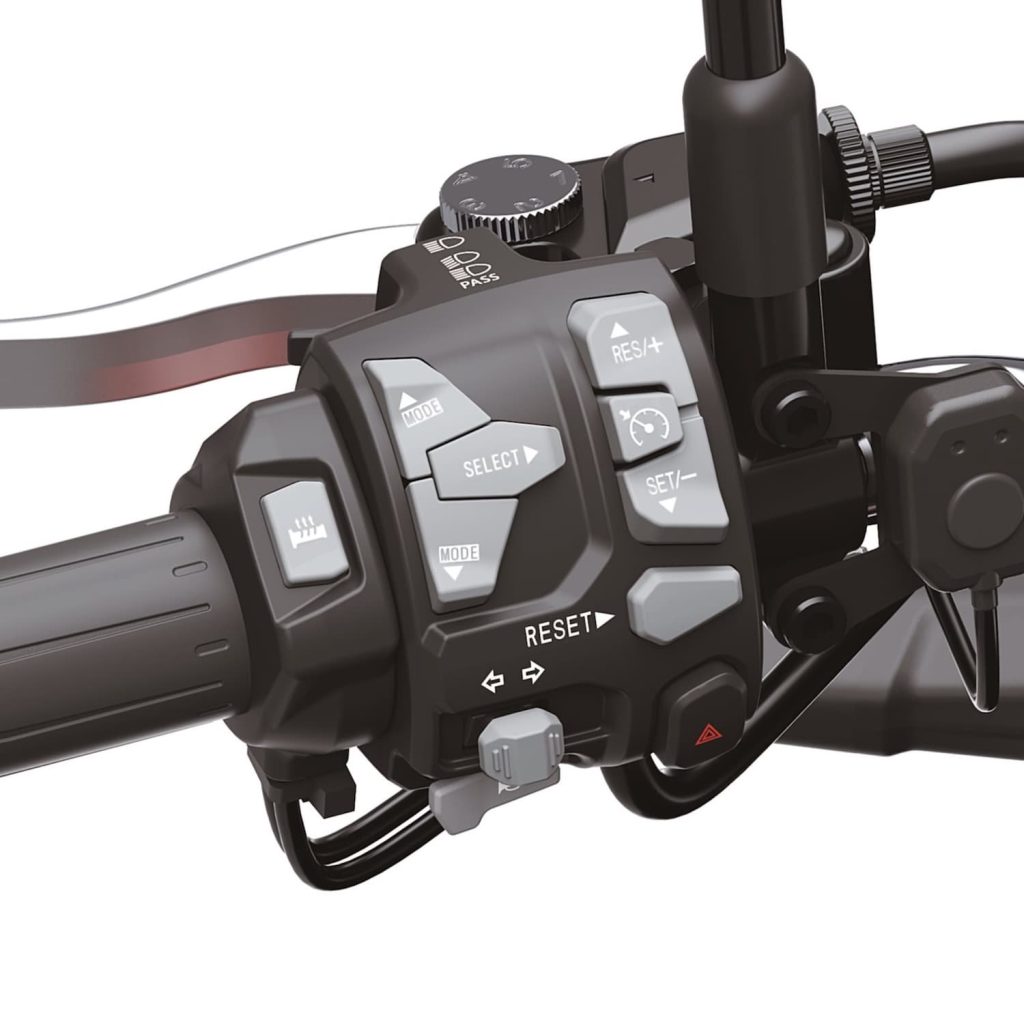
This brings it firmly into the 21st century, which is pretty cool for a retro-style bike!
Aside from that, Kawasaki has retuned the engine (increasing the compression ratio, no doubt in the name of emissions compliance), but kept the core the same — it’s a retro naked powered by an in-line 948 cc four-cylinder engine with DOHC and 16 valves. I personally like it more than the Z900 streetfighter equivalent, and that’s a popular opinion, but it also makes the second-hand Z900 often a good value buy.
Suzuki GSX-8TT
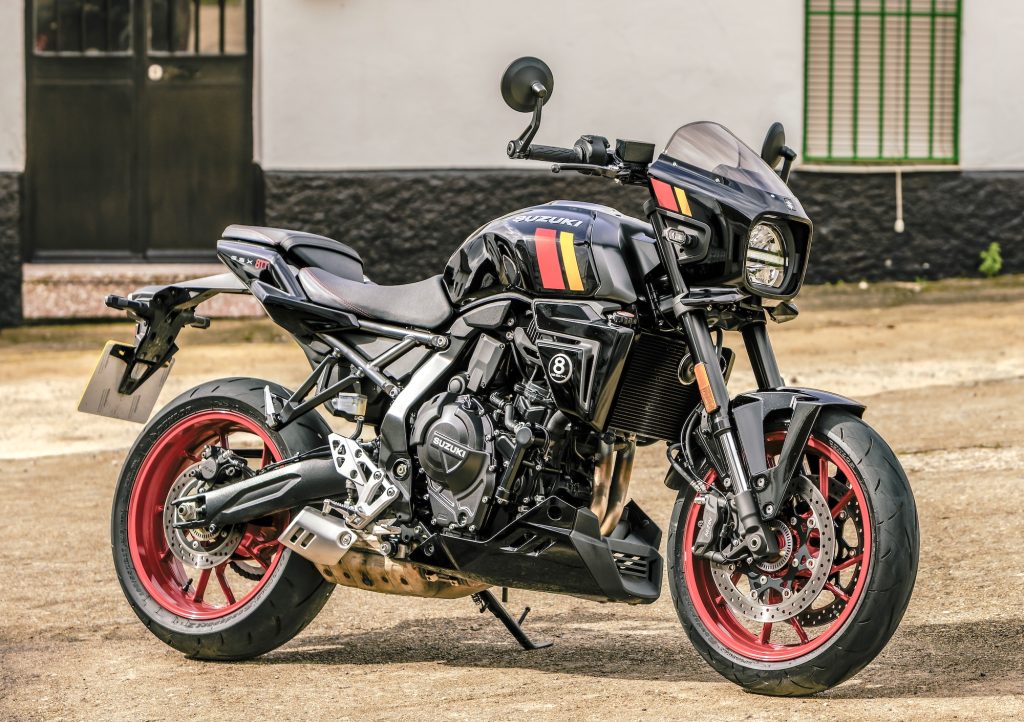
Suzuki, bless their cotton socks, has made a throwback retro design version of the already well-loved GSX-8S. People like the GSX-8S so much that they’re not even complaining Suzuki abandoned the V-Twin of the SV650. The engine is just that good.
The core is the same, including the engine, chassis, and all ride gear. It’s a modern roadster with a 776 cc parallel twin, DOHC engine with a 270-degree crankshaft, producing a feel and exhaust note quite similar to that of the SV650 (after all, it’s the cylinder firing that produces the feel and sound, not the way in which the cylinders are arranged). The engine makes 61 kW / 83 hp at 8,500 rpm, with peak torque of 78 Nm / 57.5 lb-ft coming at 6,800 rpm.
But Suzuki upped the tech game a lot with the GSX-8 platform, giving all models ride-by-wire with most of its benefits, including ride modes, and traction control. I’m a bit disappointed it got neither cruise control nor an IMU, but whatever, it’s still a mid-range, relatively affordable bike. And it’s still a looker!
Triumph Trident 800
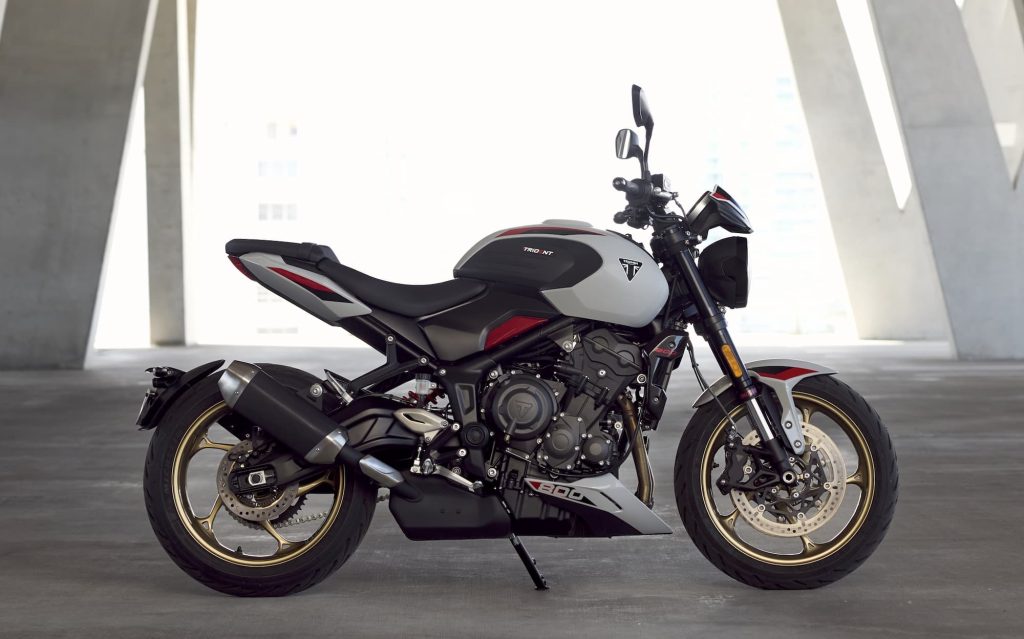
Triumph has so many sizes of motorcycle it’s dizzying. They’re trying to corner every market!
The Trident 660 was positioned as the Street Triple for your Average Joe (or Zhou, or Joanne, or Jafar) — loads of character from the triple, enough tech to keep you out of trouble (and quite a lot of it, since 2025, with cruise control and an IMU!), and looks for days. Triumph even upped the ante with more power in 2026.
But for seasoned riders who don’t need something low-power for legal reasons, the Trident 800 is even better positioned as the everyday bike.
Triumph has been killing it with its mid-range motorcycles lately. Sure, they have the Speed Triple 1200 RS to encourage you to dream of a world with infinite smooth roads and no traffic or speed limits, but their mid-capacity Tridents and Tigers, or modern classics with parallel twins, are what most people end up with.
The Trident 800 is based on a 798 cc inline three-cylinder engine that makes peak power of 85 kW or 115 PS at 10,750 rpm. I’ve always liked this power band — it’s “just right”.
Yamaha YZF-R9SP and XSR900 GP
I’m breaking one of my own rules (this is my blog, damn it!) and including two bikes here, but only because they’re so similar, and both awesome.
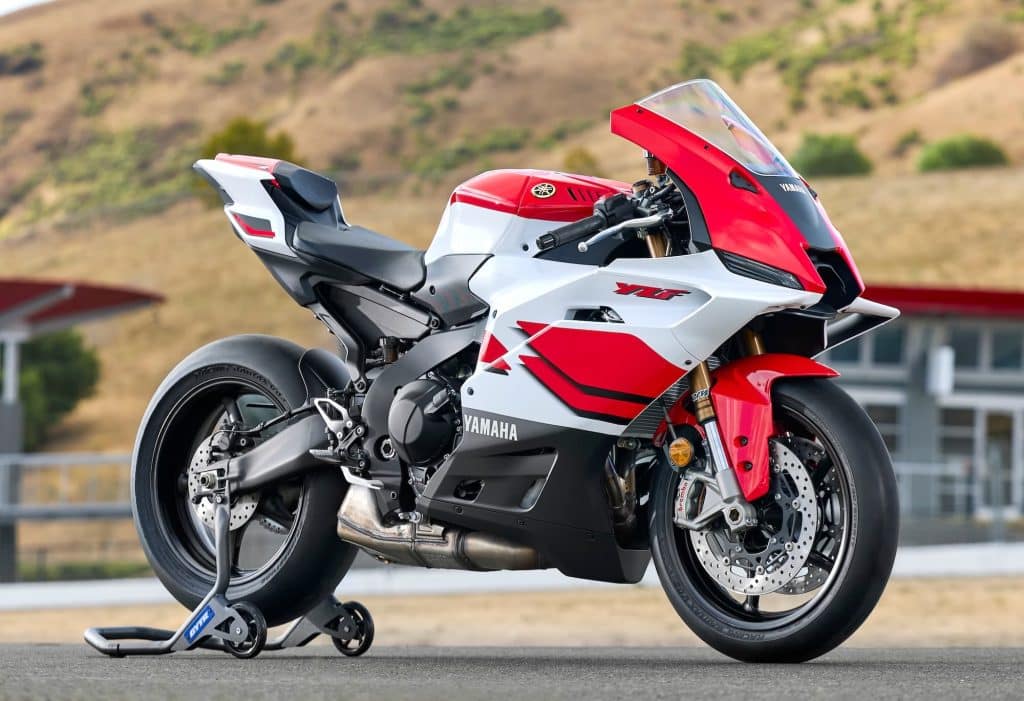
The YZF-R9SP is the 70th anniversary edition model of the YZF-R9, a bike which only came out a couple of years ago but which is, in many ways, the perfect motorcycle: Sporty but not uncomfortable, laden with tech but not expensive, good looking but not over-the-top.
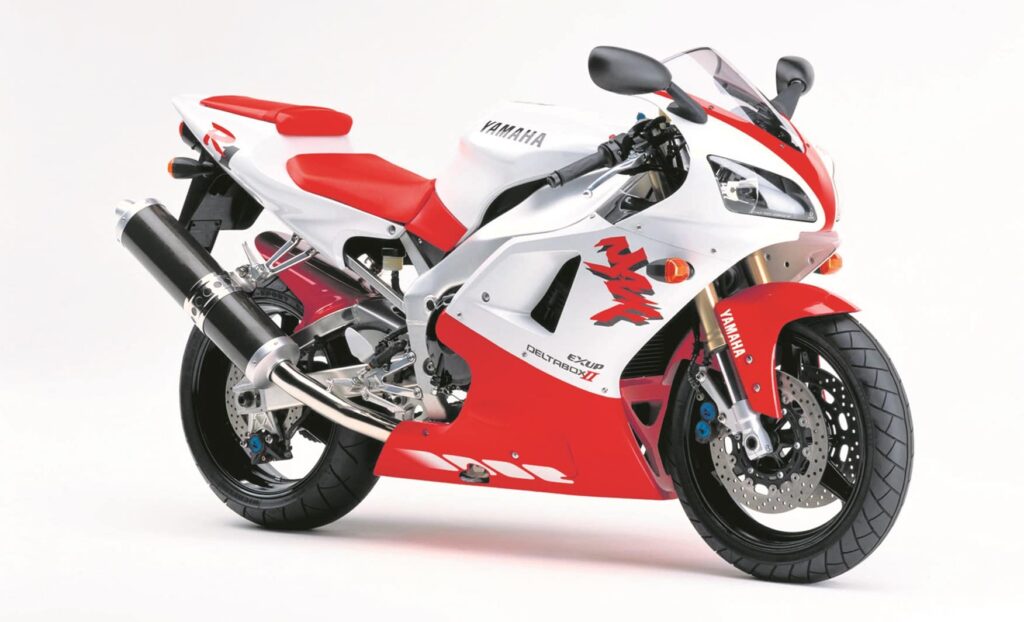
People pay top dollar for a red-and-white 1999 Yamaha YZF-R1 (pictured below) in mint condition. Great bike, awesome design, but unless you’re particularly into vintage, I dare say most would prefer the easier servicing and safety features of the YZF-R9. Boo, hiss, vintage is better… of course it is for history’s sake. But many people would be devastated to have a bike like the below go vastly up in miles, or — gasp — be crashed.
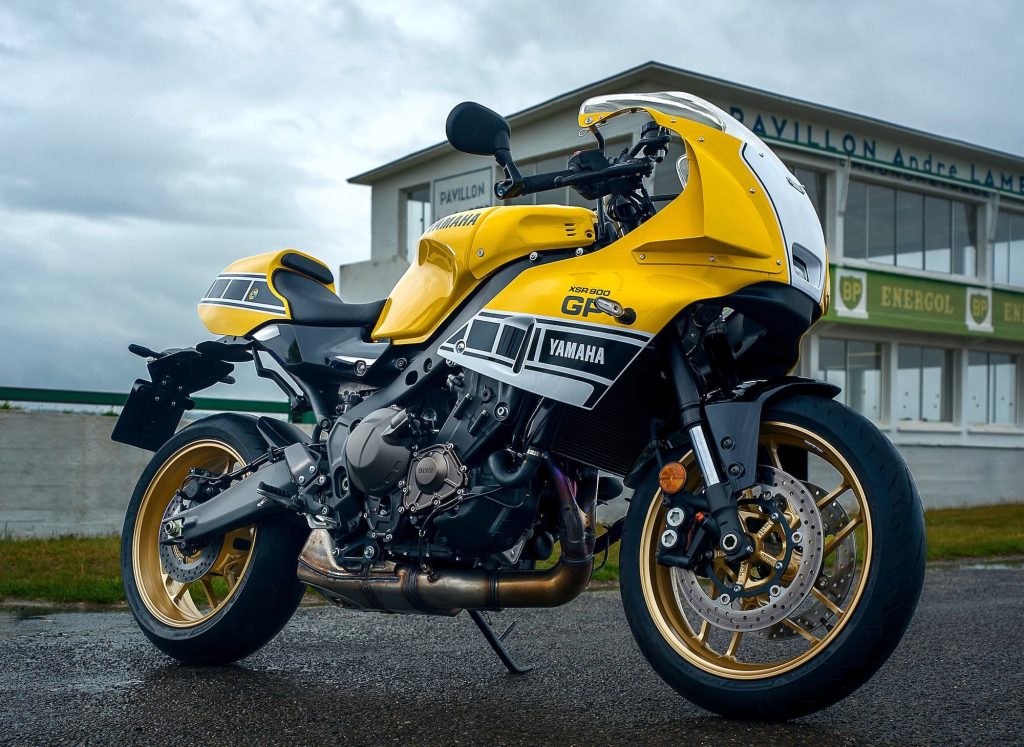
But then there’s also the Yamaha XSR900GP, which is the XSR900 but with some body kit stuff on it that has those who remember the 80s swoon and drool slightly. I’m sorry for those who don’t get the GP in your markets (the US), but you can still look at pictures of other people riding bikes, and just ride a regular XSR900 (or R9) and get the same riding experience.
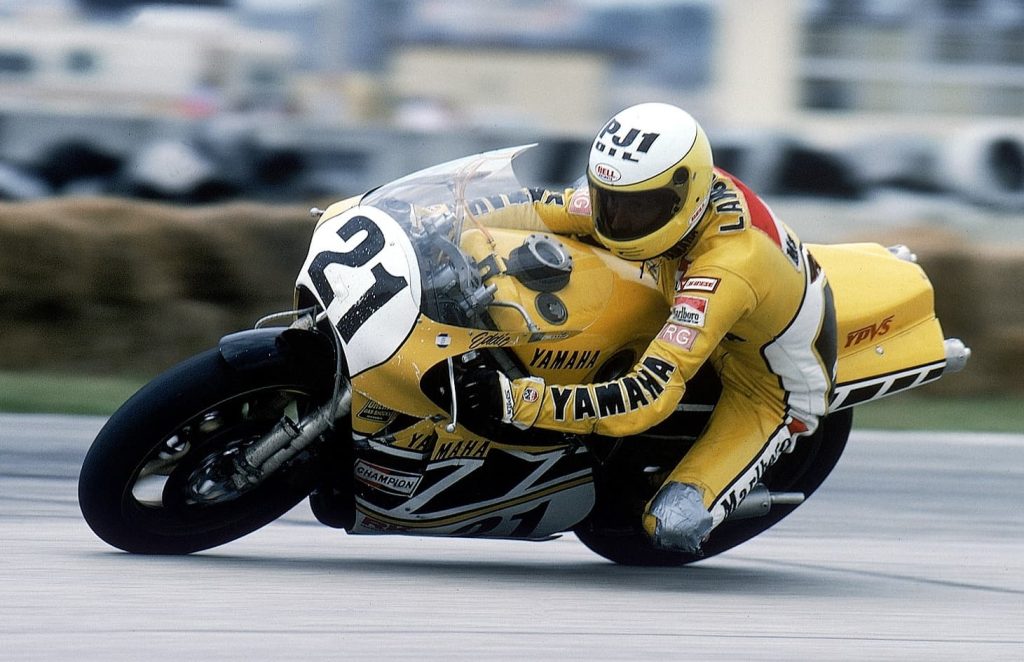
This one, too, hearkens back to Yamaha’s YZR race bikes of the 1970s and 1980s. Here’s Eddie Lawson on a Yamaha YZF700, from 1984.
Both the motorcycles above (the YZF-R9 and the XSR900GP) are based on a similar platform – the 890 cc “CP3” motor, an inline three-cylinder engine optimised for midrange with just enough top-end to keep things interesting, making 87.5 kW / 117.4 hp at 10,000 rpm, with peak torque of 93 Nm / 68.6 lb-ft coming on at a reasonable 7,000 rpm. With a modest slip-on exhaust, both motors sound absolutely wonderful.
Both models also come with the full suite of ride aids (cruise control and an IMU). Their different riding positions and colour schemes, plus memories and feelings they evoke from their owners, will be how most choose between them.
Wrap-up / Themes Observed
I made this list just looking at motorcycles and thinking, “Hmm, what’s the best-looking one from each brand for 2026?”
Granted, it has a subjective focus, but I’m looking at the models each brand puts out intending to appeal to the market that prioritises aesthetics over pure function, which would take more riders towards the performance end (whether track or off-road).
In doing so, I’ve noticed a distinct theme: These are all mid-range powered, mostly naked motorcycles, and all with a retro/vintage/throwback style. The R9 has been released in colours that remind us of Yamaha’s days racing. The Indian 101 Scout is literally named after one of its early models. The Honda CB1000F is a re-release of an 80s bike. And so on.
On the one hand, it’s like the motorcycle market has released its ageing demographic wants things that look like what they used to look like. On the other hand, I can’t help but think that maybe manufacturers can’t think of anything new, and maybe the motorcycle industry is nearing its end. (I don’t think electric bikes will replace it, just as electric guitars didn’t replace acoustic guitars.)
Anyway, I’m curious to know what you think is a looker for 2026, and let me know if you want.

Hey Dana, you’re back at it, great! The new Honda CB1000F is one of my favorites also, along with the newly updated Kawasaki Z900RS. Just wanted to point out that the CB1000F does not have an IMU, unlike the Z900RS.
Dana, now that the Honda CB1000F has arrived for some countries, not U.S. yet, and the Kawasaki Z900RS has been updated for 2026 with very appealing upgrades to make it more modern, which one is the best Neo-Retro to you. I love both and I’m able to make a case for each one, but think the new Honda may be the best choice for the old-school Sportbike enthusiast. What are your thoughts?
The 2026 Kawasaki Z900RS is beautiful with that 70’s retro look, best looking Kawasaki ever IMO, but the new Honda CB1000F with more power, more torque, less weight, and a wider black moto-style handlebar in black comes out on top to me. You get an 80’s more angular design and a sportier bike that is faster, hard to beat. Both great choices, but Honda may take the cake is this retro battle.
Dana, why is there no option for posters to edit their comments, correct spelling, grammar errors, etc.?
Dana, not sure where you found that the Honda CB1000F has an IMU. I did see that the site Bennetts BikeSocial does state that it has an IMU with cornering ABS, but they are wrong. It does not have an IMU just like its sibling the CB1000 Hornet.
Sorry, looks like I’m wrong about the IMU for the new 2026 Honda CB1000F. It does have an IMU, thought I read that it did not have one like the Honda CB1000 Hornet. I wish your site had that edit function, oh well.