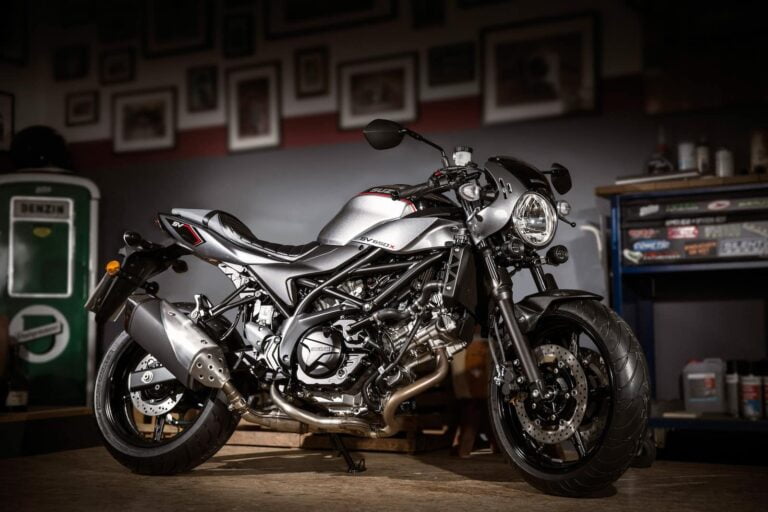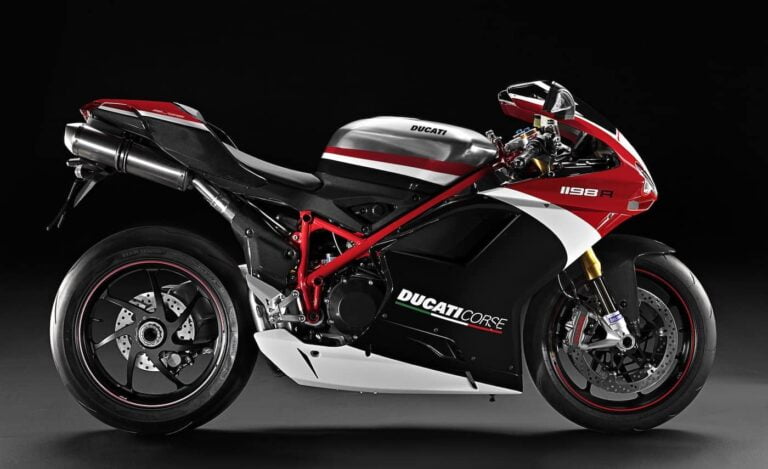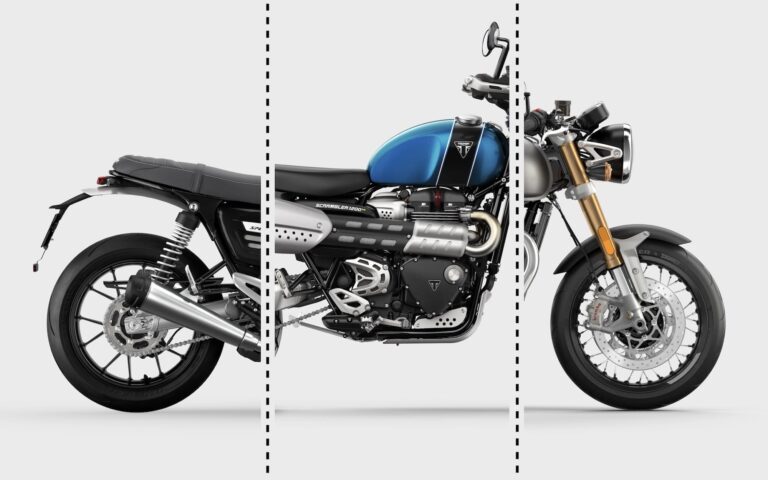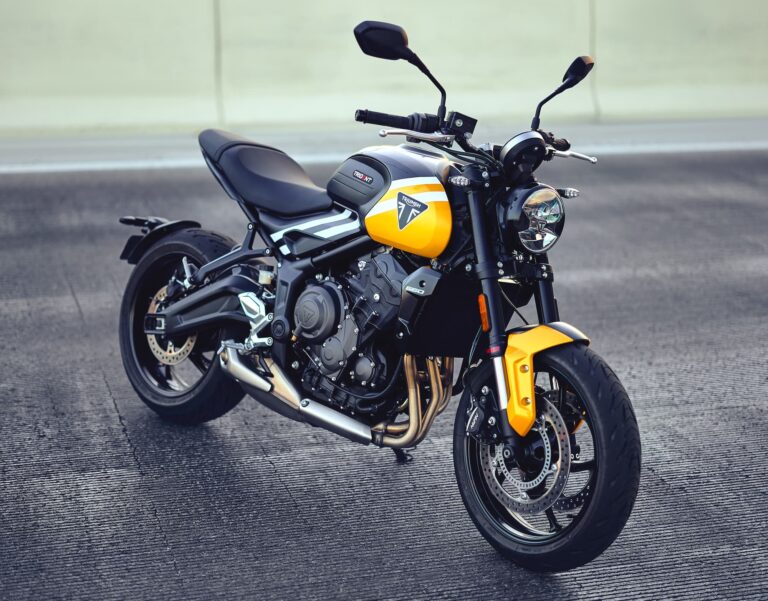

So, you want to ride a legendary K5 Gixxer, because it has a broad spread of torque, good handling, and classic superbike looks.
But your wrists and back scream “No”, your wallet says “Excuse me? They cost how much these days?”, your ride-aid-equipped commuter says “Have you never seen an oil slick?”, and your insurance company says “Stop asking stupid questions.”
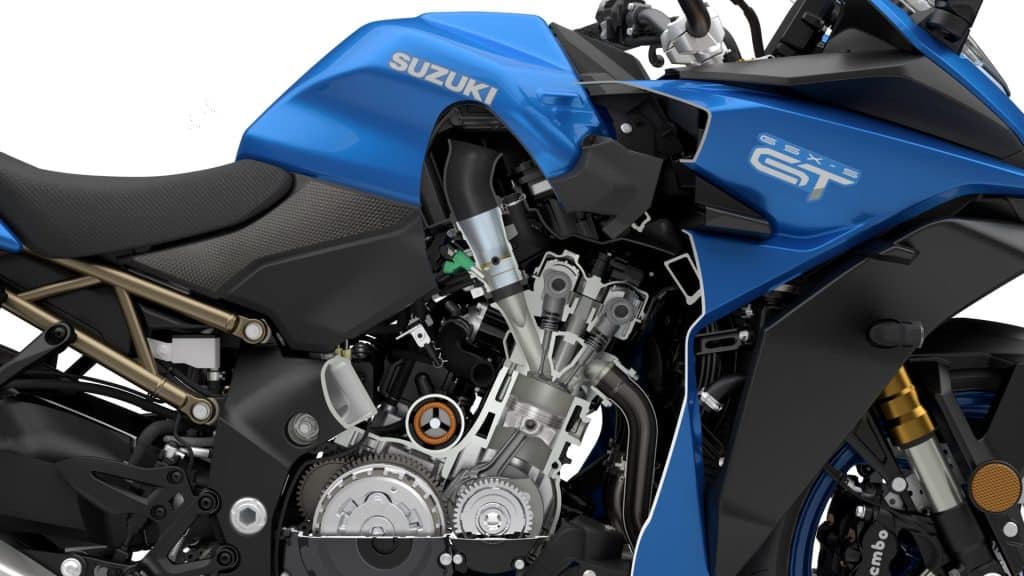
Well, I have an answer for you. Suzuki took the long-stroke architecture of the 2005-2006 GSX-R1000 engine and turned it into the GSX-S1000 family: first the naked GSX-S1000 and faired GSX-S1000F, then the GSX-S1000GT sport tourer and GSX-S1000GX crossover.
The GSX-S versions pair the K5’s long-ish stroke engine with road-specific engine parts, gearing, chassis, electronics, and riding positions. The result keeps the broad inline-four delivery and willingness to rev in motorcycles built for everyday roads.
Of course, it’s not a pure GSX-R — this is an everyday bike. That’s good for most people, but I don’t want to pull the wool over your eyes here!
This is the history of that family: what Suzuki introduced, when it changed, and how one fairly simple naked bike grew into three distinct branches.
Are you obsessed with motorcycles?
Well, I am. That’s why I created this site — as an outlet. I love learning and sharing what others might find useful. If you like what you read here, and you’re a fraction as obsessed as I am, you might like to know when I’ve published more. (Check the latest for an idea of what you’ll see.)
The K5 GSX-R1000: Godzilla’s First Life
It all started with the K5 Gixxer, a.k.a. the 2005-2006 Suzuki GSX-R1000 K5/K6. In fact, that’s the genesis for a number of stories, but in this particular case, the engine for the GSX-S1000 series came directly from that series of GSX-R1000 superbikes.
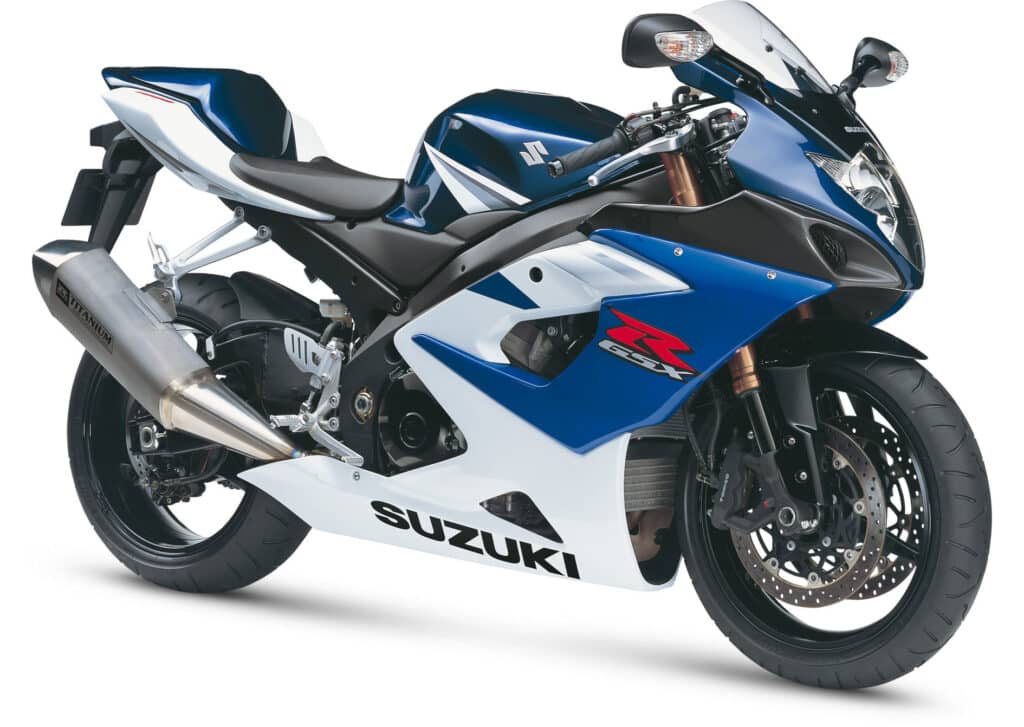
“What’s so special about the K5?”, you wonder. The K5 was a new motorcycle rather than a light revision of the K3/K4. Suzuki increased the bore from 73.0 to 73.4 mm, kept the 59.0 mm stroke, and raised capacity from 988 to 998.6 cc. The engine sat in a new aluminium frame with a revised swingarm and more compact packaging.
Those 73.4 × 59.0 mm dimensions made the K5 (and subsequent years, from 2005 through 2009) relatively long-stroke beside its litre-bike rivals and later GSX-R1000 engines. Bore and stroke formed only part of the result. Suzuki combined them with new cylinder heads, titanium valves, forged pistons, revised camshafts, twin-barrel throttle bodies, and a lighter exhaust system.
The K5 Gixxer was famous for delivering torque across a wide rev range. It pulled hard through the middle, continued building speed near the top, and gave the rider a clear, linear connection between the throttle and rear tyre. That combination made it fast on roads as well as on the track. The compact engine also helped Suzuki produce a narrow motorcycle — it had a dry mass of only 166 kg, very light, for the time, and also for later years!
The K5 arrived at the height of the Japanese litre-bike contest. Honda had the CBR1000RR (only recently upgraded from the CBR954RR), Kawasaki had the ZX-10R, and Yamaha had the YZF-R1, which also had a great year in 2005. Each manufacturer was replacing its flagship at short intervals, and each generation brought more power, less mass, or both. The K5 stood out because its engine, chassis, brakes, and proportions worked together particularly well, rather than because of a single specification.
Suzuki took the same platform into the 2005 World Superbike Championship with Alstare. Troy Corser won eight races and secured the riders’ championship, while Suzuki won the manufacturers’ title. Those results gave the new GSX-R1000 immediate competition credibility.
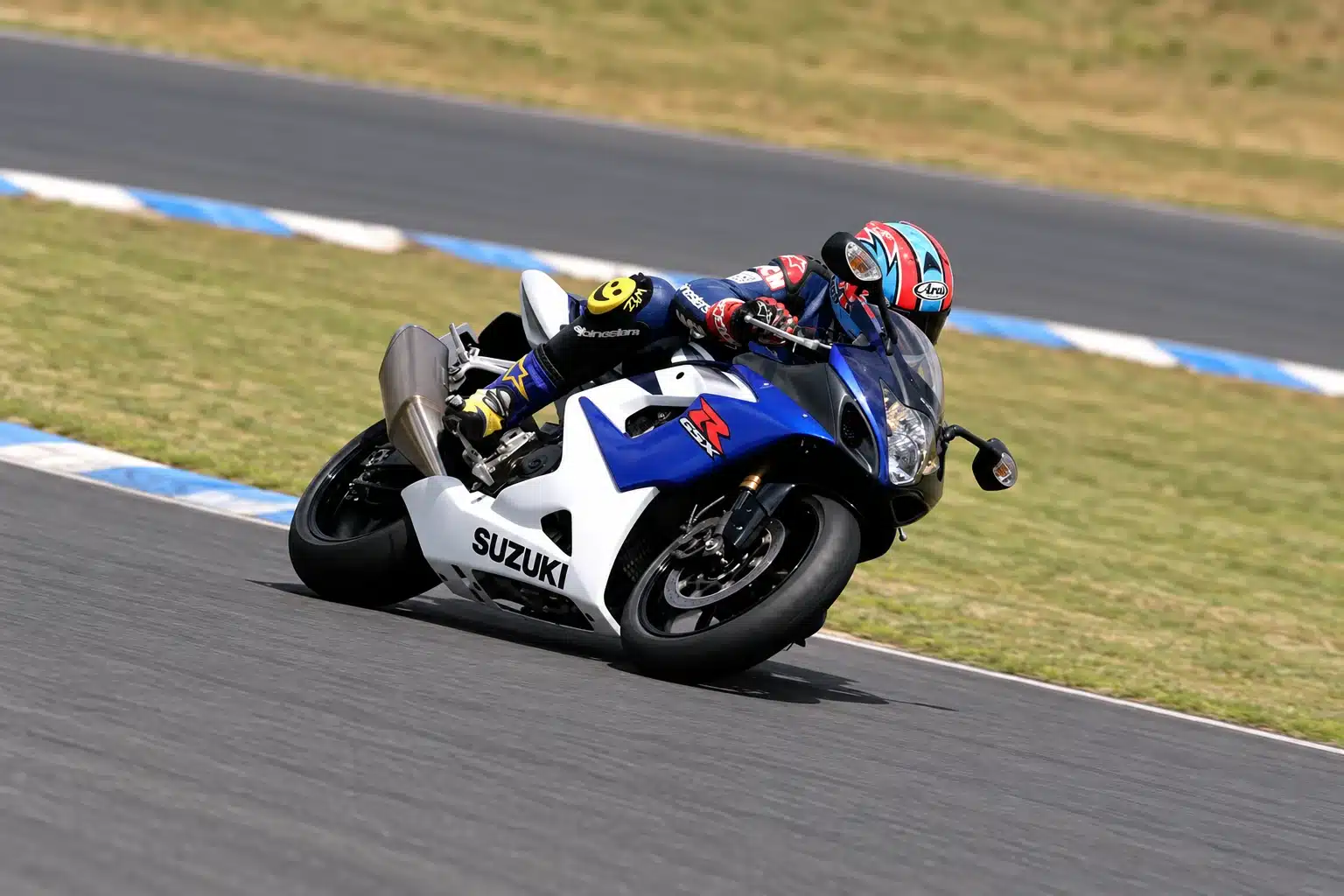
The K6 kept the K5’s engine, frame, suspension, brakes, dimensions, and core specification, so it’s the same thing. Suzuki redesigned the GSX-R1000 for 2007. The K7/K8 engine kept the 73.4 × 59.0 mm bore and stroke, while receiving new internal parts, dual injectors, Suzuki Drive Mode Selector, and a larger twin-silencer exhaust system. Those additions took away a bit from the K5/6’s glory, but it’s easy at least to ditch the exhaust for an aftermarket model, if that hasn’t been done already.
The K5/K6 also influenced another superbike programme. BMW used it as a benchmark while developing the first S 1000 RR. The production BMW used its own engine, chassis, electronics, and engineering, but the Suzuki helped set the performance target for BMW’s entry into the four-cylinder superbike class.
So, if the K5/K6 was so great, why was it permanently ditched? Exactly. Some of the boffins at Suzuki had that exact idea when they thought they should reinvent it for road use.
The engine in the GSX-S1000 series has the same 73.4 x 59.0 mm dimensions, but it’s made for road use. It doesn’t rev as high or make as much power, but it still makes plenty, and it’s much easier to use. It has different pistons, cam profiles, valve timing, throttle bodies, airbox, exhaust, crankshaft-related parts, compression ratio, and ECU calibration.
The Most Important Differences — Power and Weight
Let’s get one thing out of the way — the GSX-S isn’t a GSX-R. It makes less power, it’s heavier, and it isn’t as focused.
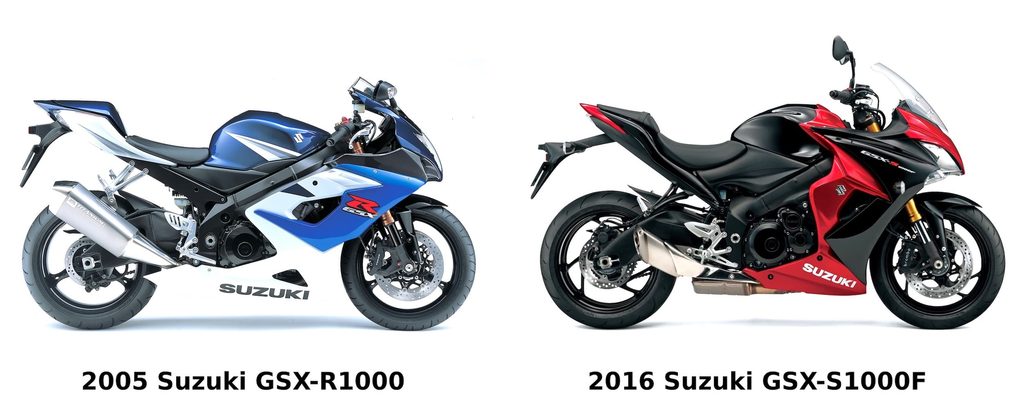
Even if you compare the GSX-S1000F (kind of the most similar, as it’s the “Sport” bike), and K5 GSX-R1000 side-by-side, you’ll immediately notice handlebars and that it’s slightly bigger.
Top-line specs already tell the difference in peak power, but you should also consider the engine and how it delivers its torque. The composite chart below is from different dyno runs (different machines, years, publications), and so I wouldn’t consider it as more than a comparison with ~5% accuracy, but even so, it’s clear that the K5 makes more torque, and across a broader spectrum.
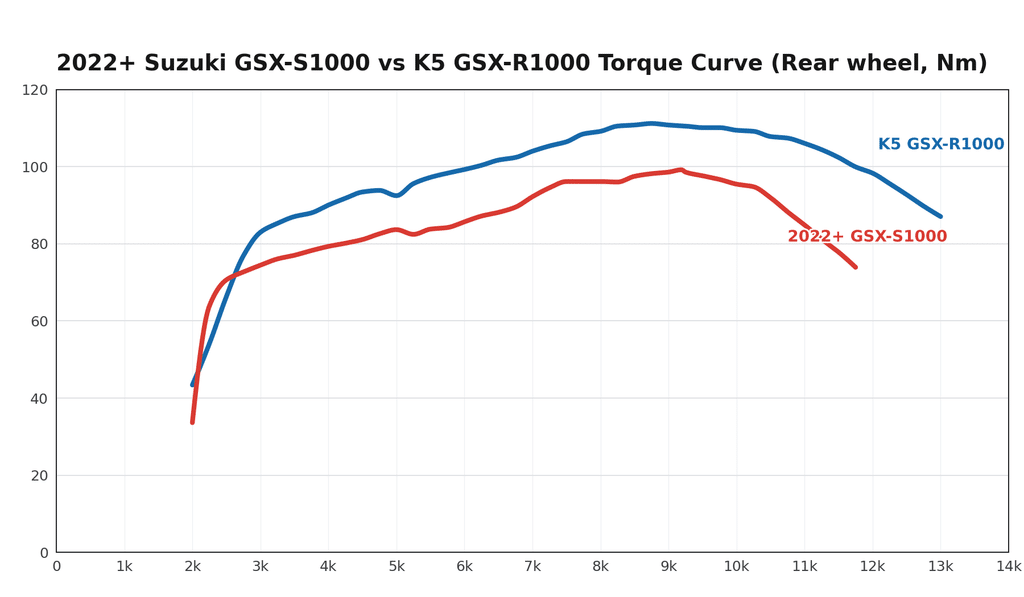
“OK, so why not just bung in the K5 engine as is? Seems better all round!” Well, it’s not that simple… regulations change and I’m sure the old engine would be considered too noisy and polluting by modern standards. Heck, they had to restrict it by even 2007. That’s why they iterated on the GSX-R1000’s engine.
Torque, of course, isn’t the whole story. The K5 had different gearing, and people sometimes modify the final drive of old bikes, so how torque is applied to the ground would definitely vary.
Finally, nothing changes the fact that the 2005/2006 GSX-R 1000 was, and is, a classic bike. You might not want to ride a bike like that every day, though… oil slicks happen to the best of us.
OK, so if that hasn’t dissuaded you, look below at what the GSX-S1000 series can offer.
What Every GSX-S1000 Model Shares
Every GSX-S1000, F, GT, and GX uses the same basic 999 cc, liquid-cooled, double-overhead-cam inline four-cylinder layout. Suzuki sometimes describes the earliest engine as 998 cc and later ones as 999 cc, but the 73.4 × 59.0 mm dimensions didn’t change.
| Item | Shared specification | What it means |
|---|---|---|
| Engine | 999 cc inline four, liquid-cooled, DOHC, 16 valves | Smooth low-speed running, strong midrange, and a harder rush as the revs rise |
| Bore × stroke | 73.4 × 59.0 mm (2.89 × 2.32 in) | Longer-stroke dimensions than later GSX-R1000 engines |
| Compression ratio | 12.2:1 | The family uses the same nominal ratio despite later emissions and cam changes |
| Transmission | Six-speed, chain final drive | Light and direct, but touring models still need normal chain care |
| Front tyre | 120/70 ZR17 | A conventional road-sport size with a wide choice of tyres |
| Rear tyre | 190/50 ZR17 | All branches have road-biased 17-inch wheels, including the tall GX |
| Main frame | Aluminium twin-spar | The GT and GX change their subframes and ergonomics but keep the same basic frame |
| Front brakes | Twin 310 mm discs with radial four-piston Brembo calipers | Core brake hardware stayed broadly consistent while the electronic control became more advanced |
The common hardware explains why the bikes feel related. The differences come from throttle control, suspension, fairings, rider aids, mass, luggage provision, and riding position. The GX changes the experience most, with electronics and a different chassis, despite sharing the engine and wheel sizes.
Suzuki GSX-S1000 Model Timeline
Below is a quick overview of how the models changed over time.
| Introduction | Model | Main change |
|---|---|---|
| 2015 globally; commonly MY2016 in North America | GSX-S1000 | New naked road bike with the K5-derived long-stroke engine, cable throttle, ABS, and three-level traction control |
| 2015 globally; commonly MY2016 in North America | GSX-S1000F | Full fairing and screen on the same chassis, with the same high handlebar and compact 17-litre tank |
| 2017 globally; commonly MY2018 in the US | GSX-S1000 and F update | More power and torque, an assist-and-slipper clutch, revised trim, and a tinted F screen in some markets |
| 2021 globally; commonly MY2022 in North America and Australia | Second-generation GSX-S1000 | New bodywork, Euro 5 engine revisions, ride-by-wire, three power modes, five-level traction control, quickshifter, and 19-litre tank |
| Late 2021 globally; MY2022 in many markets | GSX-S1000GT and GT+ | Replacement for the F with proper touring bodywork, cruise control, colour TFT, revised subframe, better pillion provision, and optional or bundled panniers |
| Late 2023; MY2024 | GSX-S1000GX and GX+ | Tall crossover with an IMU, cornering ABS, 150 mm suspension travel, electronic damping, automatic rear preload, and a more upright riding position |
2015-2016 Suzuki GSX-S1000: The First Naked Bike
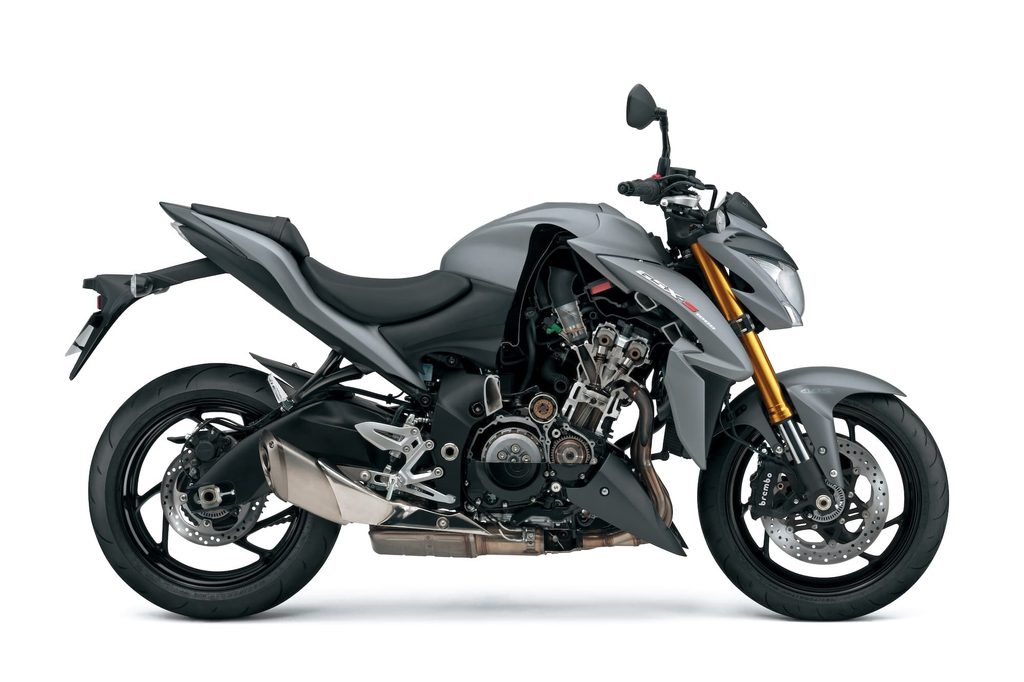
Suzuki showed the GSX-S1000 in late 2014 and put it into production in 2015. North American buyers generally know the first bikes as 2016 models. While they have “literbike” engines, these were naked and sport-touring bikes, competing with the Kawasaki Z1000 and Ninja 1000, for example, rather than the ZX-10R.
The engine in the original GSX-S1000 made 107 kW (143 hp) and 106 Nm (78 lb-ft). A 17-litre (4.5 US gal) tank, 815 mm (32.1 in) seat, and wet mass of roughly 209 kg (461 lb) made it compact and fairly lightweight by road standards. A fully adjustable 43 mm KYB fork sat at the front, and the rear shock allowed preload and rebound adjustment.
Electronics were basic but standard for 2015. You had select three traction-control intervention levels or switch the system off. ABS and Suzuki’s one-touch Easy Start system came fitted in most major markets. The bike had no riding modes, IMU (c’mon… it was 2016!), cruise control, or quickshifter, and the throttle cables were indeed cables.
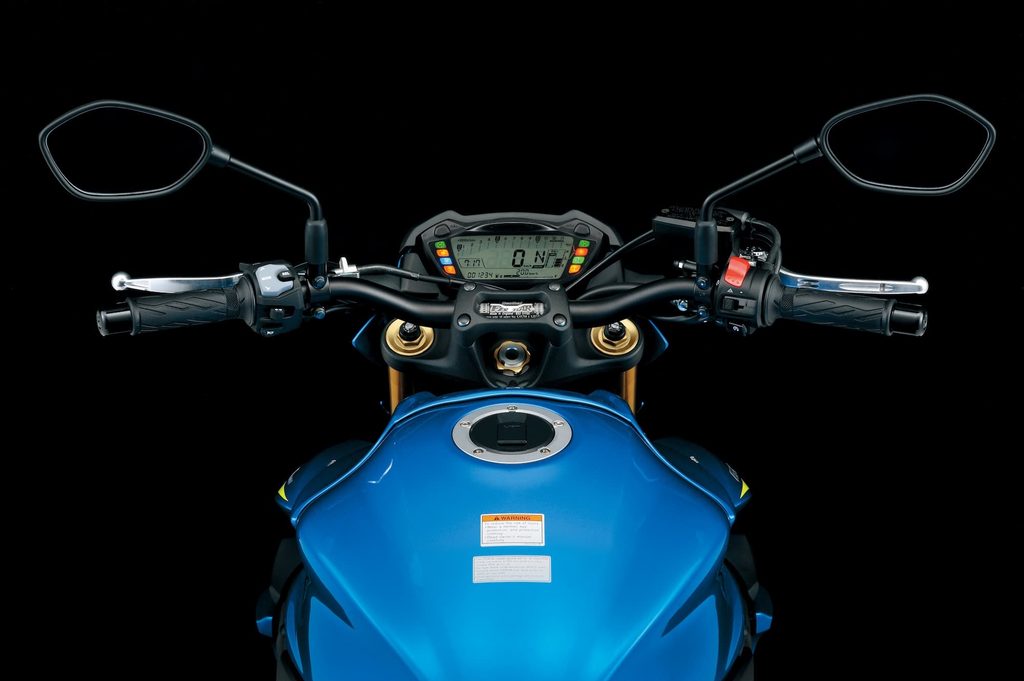
The 2016 models had a monochrone LCD with a gear indicator, fuel level, speed, revs, traction-control setting, and trip information. It packed in the required information but lacked the visual clarity and menu structure of the later GT and GX TFT, or the pizzazz of twin gauges.
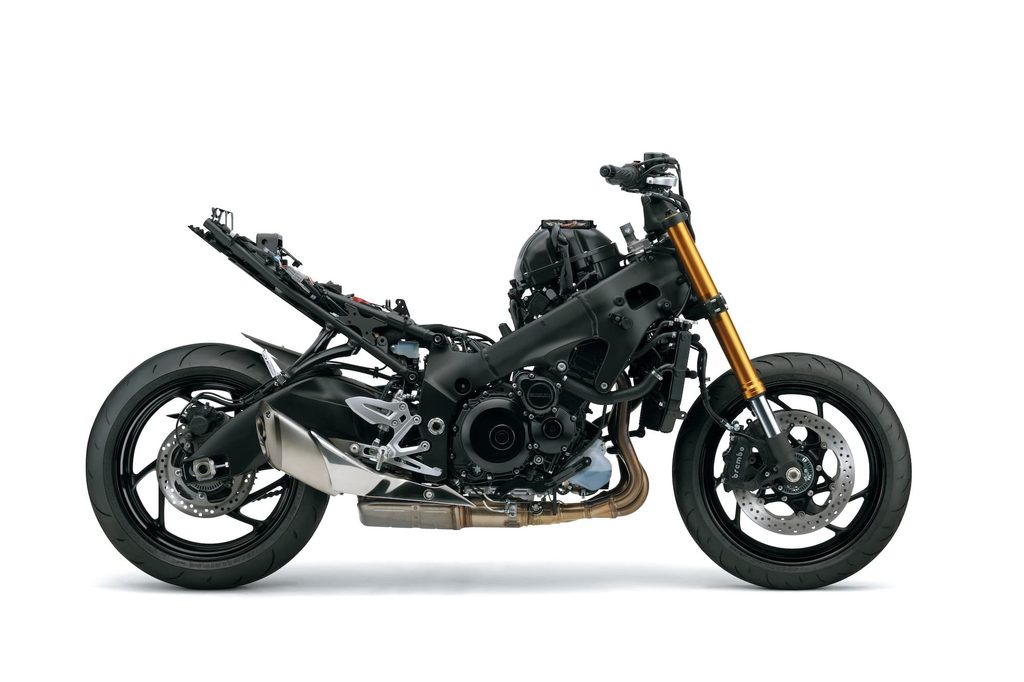
The early GSX-S earned a reputation for abrupt initial fuelling — not an uncommon complaint on fuel-injected, high-performance bikes. The staccato torque curve was even evident in dyno readings. Small throttle openings could produce an on-off response, particularly on the earliest examples and in lower gears.
Riders corrected this by adjusting throttle-cable free play and the chain, but it would take an ECU reflash or a fuel controller to properly tame it. Suzuki fixed it in later versions of the bike, though.
2015-2021 Suzuki GSX-S1000F: Fairing, Same Foundation
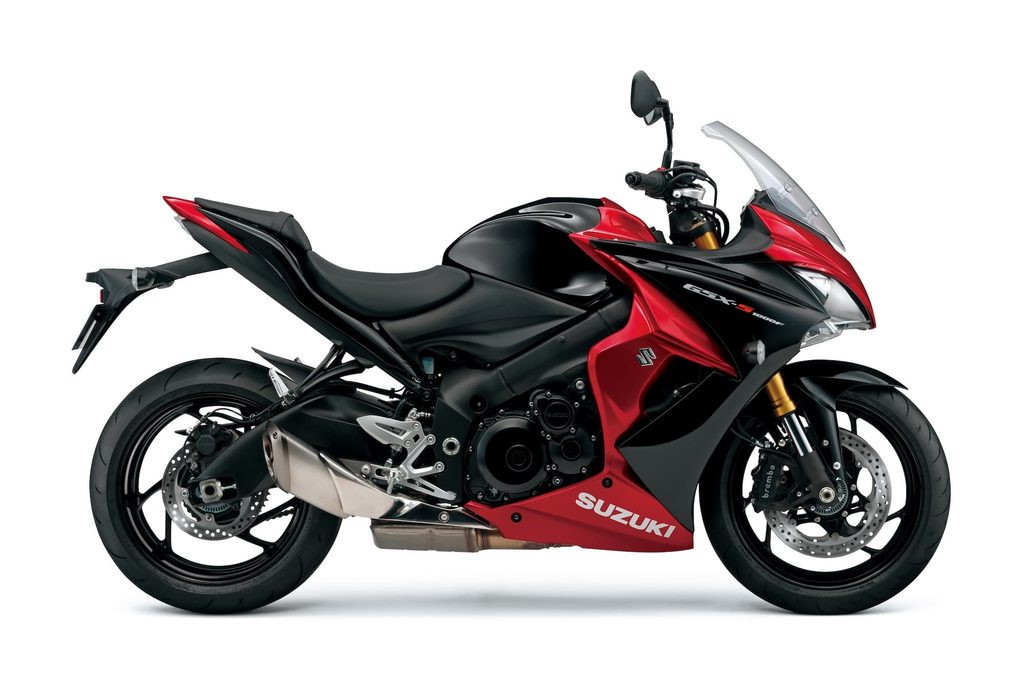
Suzuki launched the GSX-S1000F alongside the naked model. The F added a full fairing, twin headlights, and a screen, but still had the high one-piece handlebar, 17-litre tank, suspension, brakes, gearing, and electronics of the naked bike.
The extra bodywork lifted wet weight to about 215 kg (474 lb). But this was still much lighter than a traditional long-distance tourer — much lighter than, for example, a Honda VFR800, which also makes much less power despite the awesomeness of the V4 engine. The F worked as a fast road bike with better wind protection rather than a smaller Hayabusa or a machine built around two-up luggage.
This is why the F and later GT shouldn’t be treated as the same motorcycle with different noses. The F was the first-generation naked bike wearing a fairing. The GT got a new touring-focused subframe, rider triangle, display, cruise control, pannier mounts, and better passenger accommodations.
2017-2021 First-Generation Update
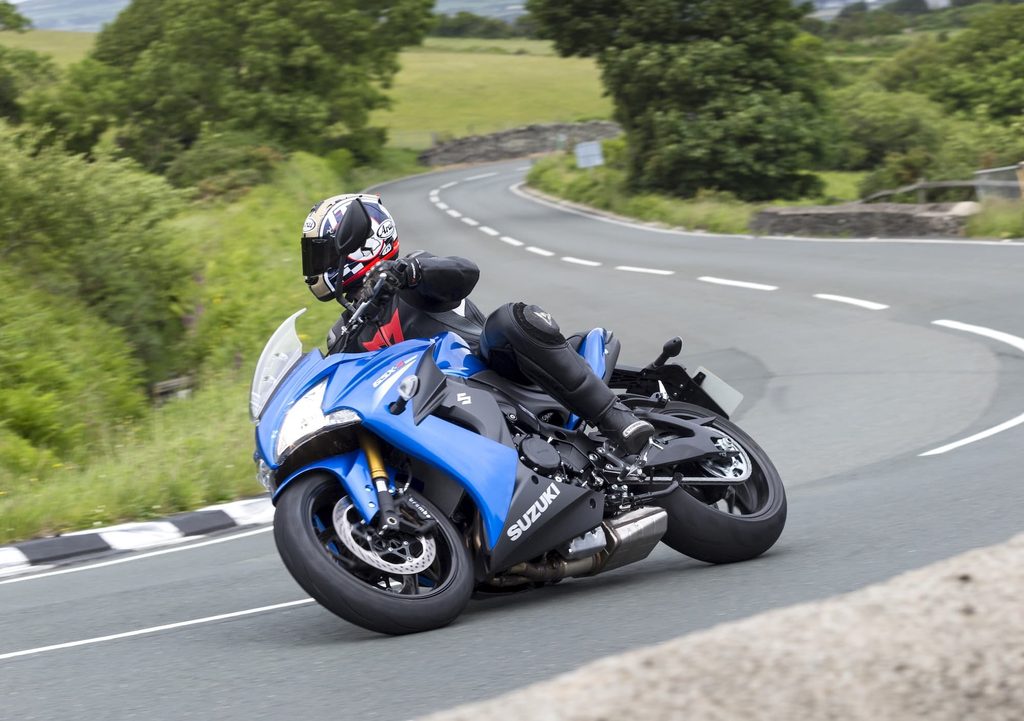
Suzuki revised both first-generation models for 2017, with the updated specification arriving as a 2018 model in the US. Suzuki increased peak output from about 107 to 110 kW (143 to 148 hp), and increased peak torque from 106 to 108 Nm (78 to 80 lb-ft). The difference on the road was modest, but the change to an assist-and-slipper was easier to notice.
| Change | Early first generation | 2017 update onward |
|---|---|---|
| Claimed peak output | 107 kW (143 hp) | 110 kW (148 hp) |
| Claimed peak torque | 106 Nm (78 lb-ft) | 108 Nm (80 lb-ft) |
| Clutch | Conventional wet multiplate | Assist-and-slipper clutch |
| Visual clues | Silver levers and control hardware on many versions | Black levers, foot controls, and other market-dependent trim |
| GSX-S1000F screen | Clear | Tinted in several markets |
An assist/slipper clutch is an underrated feature. The slipper function reduces rear-wheel disturbance during hurried downshifts, and the assist ramps let Suzuki use lighter clutch springs. The cable throttle and original electronics continued, so the update didn’t cure every complaint about abrupt response.
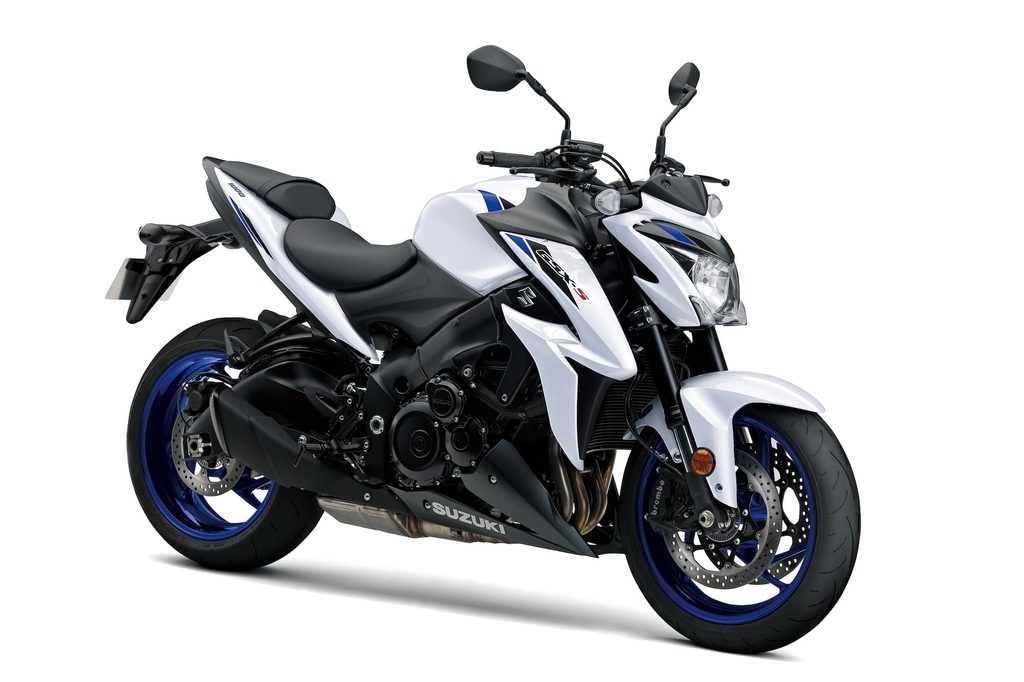
From there until the second gen, Suzuki mainly changed paint and graphics. Production and registration years vary by country: many markets ended the first-generation naked and F after MY2020, while others continued selling them into 2021. The mechanical dividing line is the redesigned naked bike introduced globally in 2021.
2021/2022 Second-Generation GSX-S1000
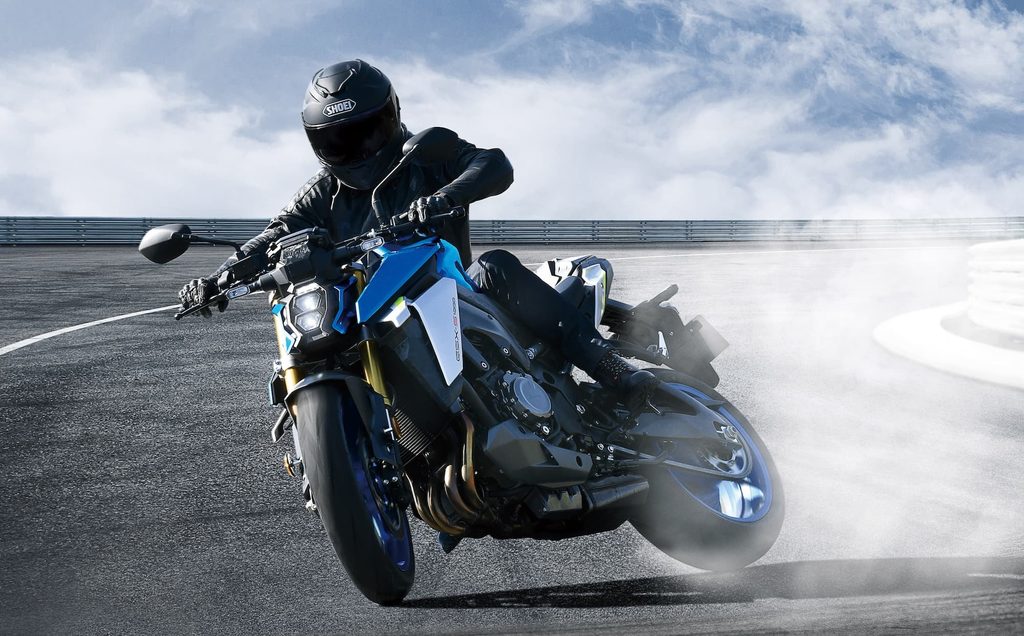
Suzuki made a bunch of changes on the second-gen GSX-S1000. It looks new because nearly every visible panel changed! Stacked hexagonal LED headlights replaced the broad first-generation face, the tank grew from 17 to 19 litres (4.5 to 5.0 US gal), and the handlebar became 23 mm (0.9 in) wider. Wet weight rose to 214 kg (472 lb), while seat height dropped slightly to 810 mm (31.9 in).
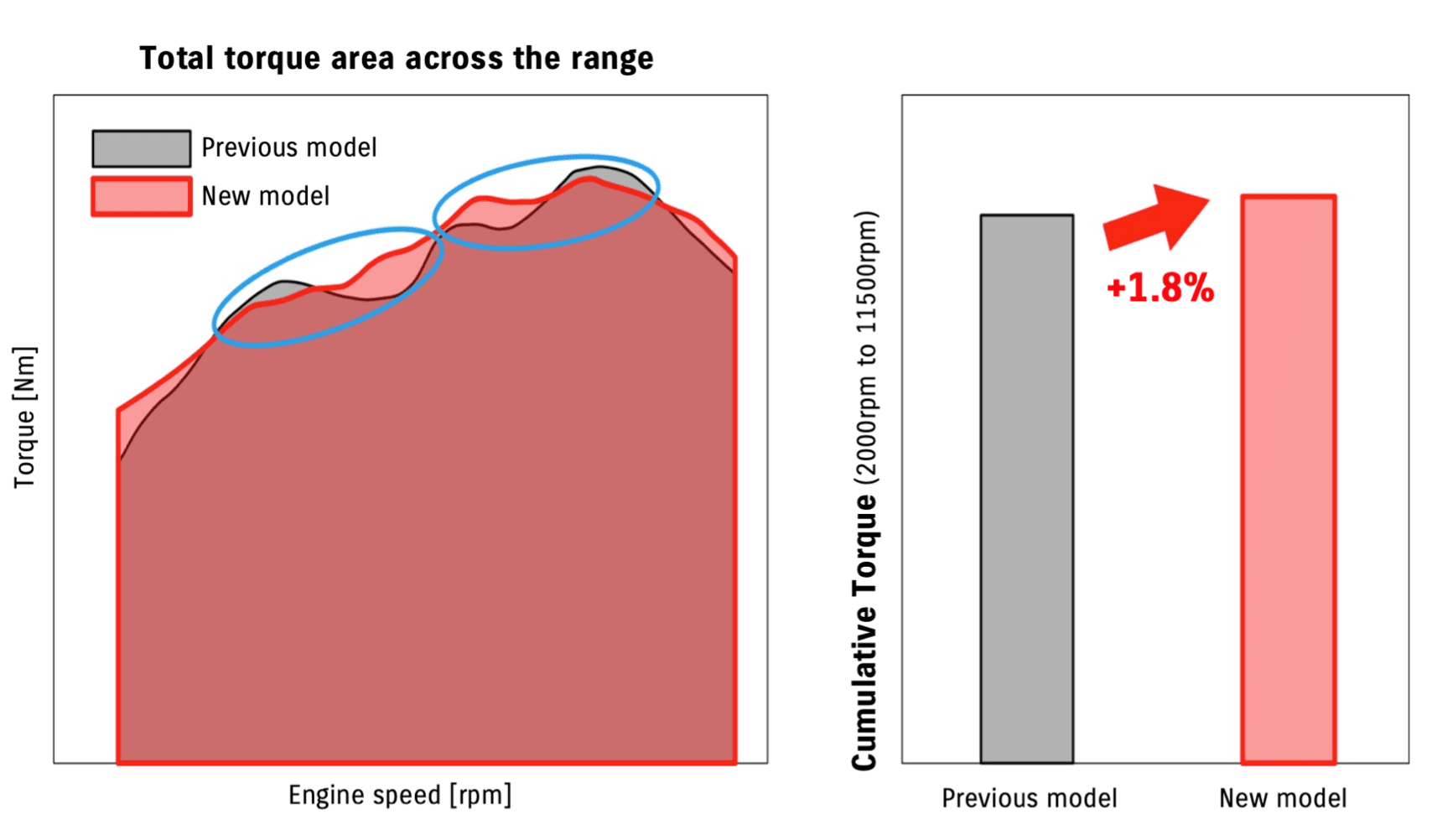
Suzuki kept the engine dimensions, aluminium frame, swingarm concept, Brembo brakes, and adjustable KYB suspension, but gave it new cam profiles, valve springs, intake parts, clutch and exhaust, which all help the engine meet Euro 5 while increasing peak output to 112 kW (150 hp). Peak torque (at the engine) dropped slightly to 106 Nm (78 lb-ft), but the revised curve filled in dips across the operating range.
The largest functional change was ride-by-wire. Suzuki gave the GSX-S1000 three throttle-response modes, five traction-control levels plus off, an up-and-down quickshifter, Low RPM Assist, and a later version of the assist-and-slipper clutch. All three power modes reach full output; they change how quickly torque arrives as the rider opens the throttle.
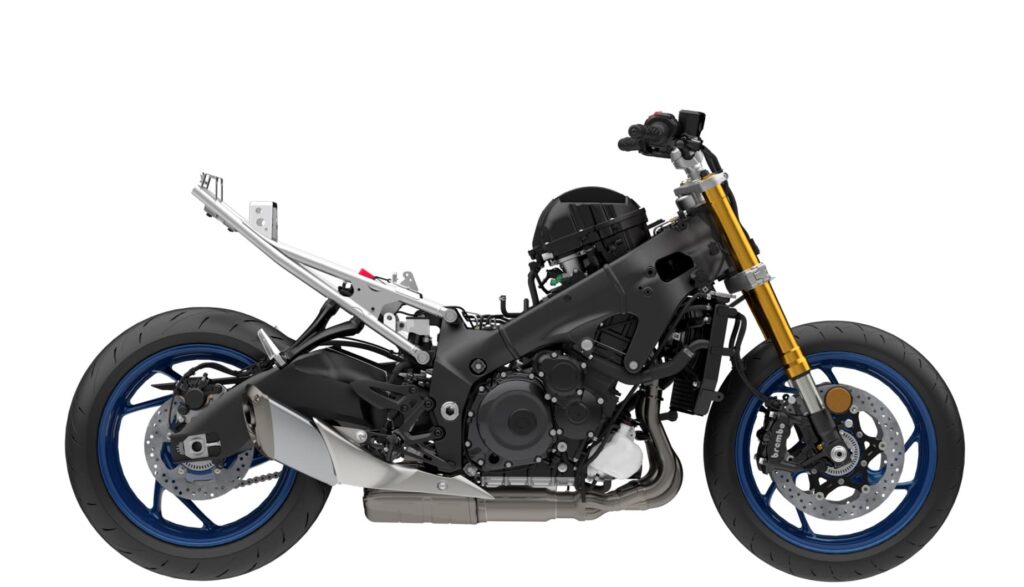
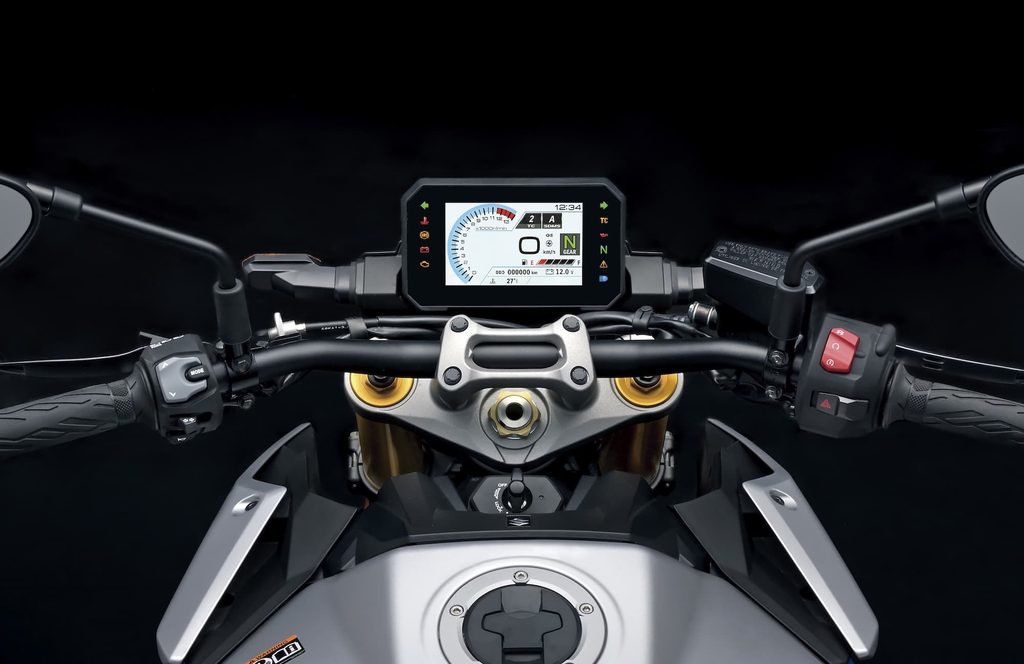
The naked bike still had a monochrome LCD rather than the GT’s colour display. It also missed out on cruise control and an IMU. Its ABS and traction control don’t account for lean angle. Suzuki kept it mechanically straightforward while making the throttle and gearbox much easier to live with.
Suzuki updated the GSX-S1000’s display for the 2025 model year.
2022 Suzuki GSX-S1000GT: The F Grows Up
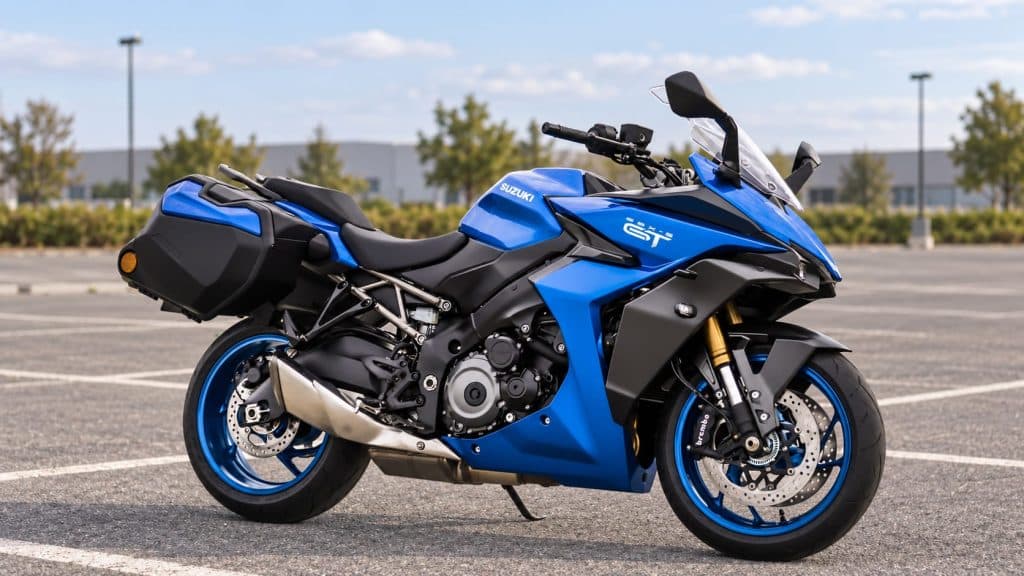
Suzuki announced the GSX-S1000GT in September 2021 and began the global rollout that October. North America received it as a 2022 model. Suzuki called it a complete redesign of the GSX-S1000F, which accurately describes the relationship: the engine and main-frame lineage continued, but the touring hardware changed substantially.
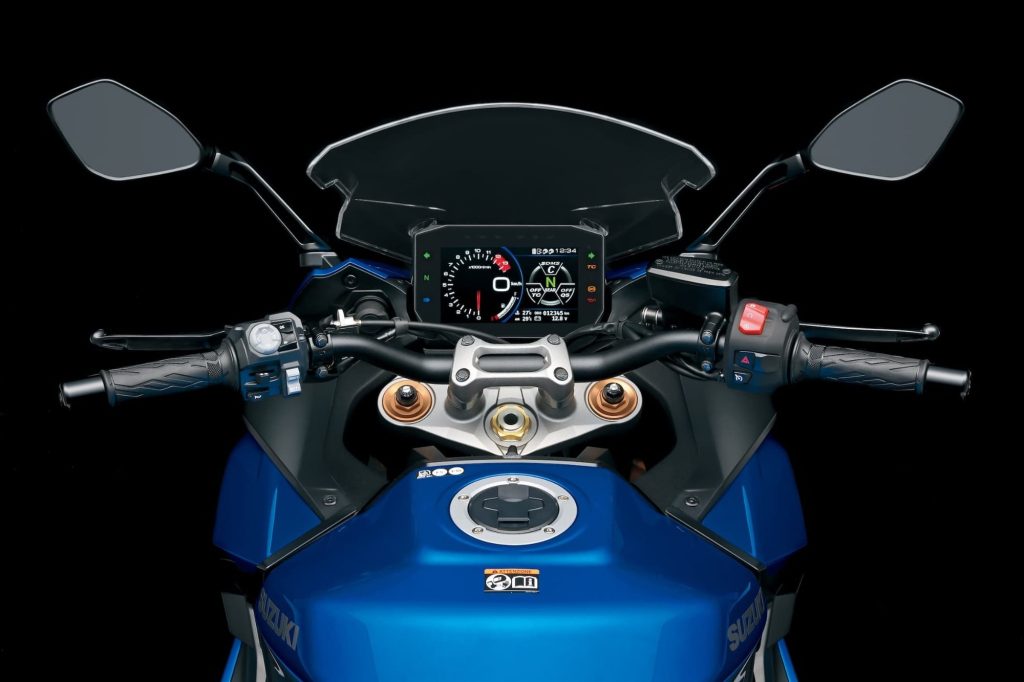
The GT has the second-generation 112 kW (150 hp) engine and ride-by-wire electronics. It adds cruise control, a 6.5-inch colour TFT with Suzuki mySPIN phone connectivity, a broader fairing, rubber-mounted handlebars, rubber-covered footrests, a reshaped rider seat, and a much larger pillion seat.
A new rear subframe provides stronger pannier mounts and more room for the passenger. Each factory side case holds 36 litres, although whether Suzuki includes them depends on the market and suffix. The 19-litre tank and 226 kg (498 lb) wet mass put the GT firmly in sport-touring territory without making it unusually large.
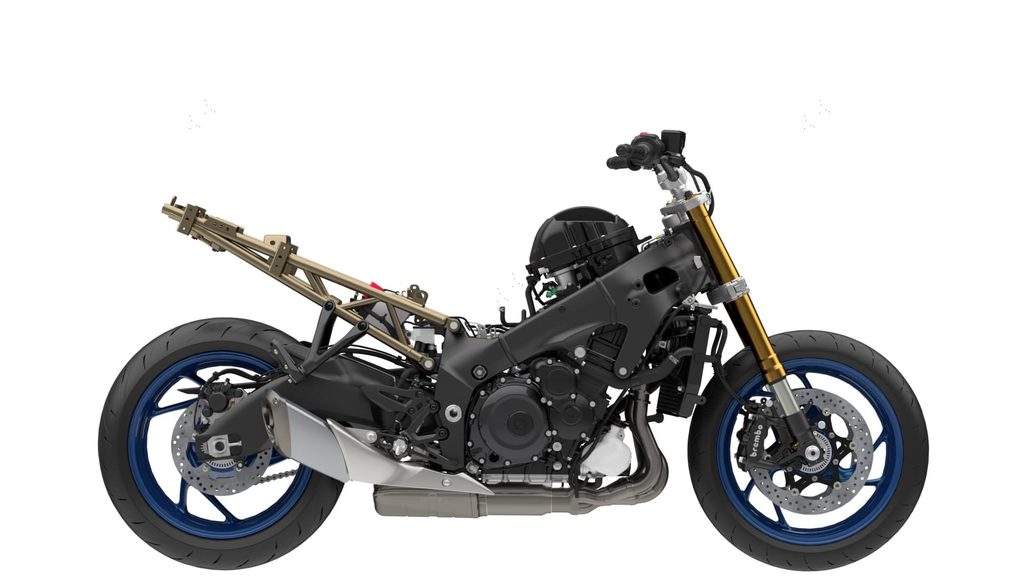
The 43 mm KYB fork is fully adjustable, like on other models. The rear shock still limits the rider to rebound damping and spring preload, but Suzuki added a hand-operated remote preload adjuster to make luggage and passenger changes less tedious.
The GT has no IMU, so its ABS and traction control aren’t lean-sensitive. That omission became more conspicuous as competing sport tourers adopted cornering ABS. Suzuki later addressed it on the GX rather than revising the GT. For more detail on how the GT works as a road bike, see my separate GSX-S1000GT review.
What GT+ Means
Suzuki added a GT+ model in some markets. The package varies by country. In the US, the original GT+ mainly added the matched 36-litre side cases and their mounting hardware, whereas in Australia, the MY2026 GT+ also includes heated grips, upgraded rider and pillion seats, and tank protectors.
Used-bike advertisements often blur this distinction because owners add the factory cases to a base GT. Check the fitted equipment rather than relying on the badge or seller’s title.
2024 Suzuki GSX-S1000GX: The Tall, Full-Fat Crossover
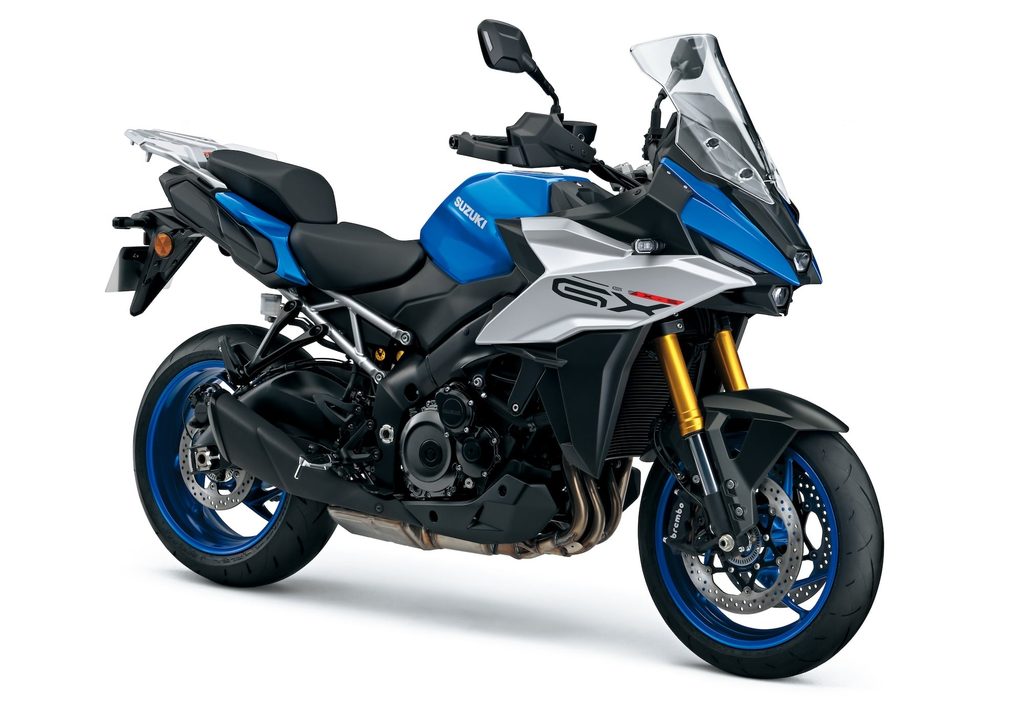
Suzuki unveiled the GX at EICMA in November 2023 and began deliveries the following month for the 2024 model year. It answers the BMW S 1000 XR formula: superbike-derived four-cylinder performance, an upright riding position, long suspension travel, 17-inch road wheels, and substantial wind protection.
The GX keeps the 112 kW (150 hp), 106 Nm (78 lb-ft) engine and 19-litre tank. It stretches wheelbase from 1,460 to 1,470 mm (57.5 to 57.9 in), raises the seat to 845 mm (33.3 in), increases ground clearance to 155 mm (6.1 in), and weighs 232 kg (511 lb) wet without side cases.
The active suspension is the most important engineering change. Suzuki gave the GX 150 mm (5.9 in) of travel at each end and fitted Suzuki Advanced Electronic Suspension, based on Showa EERA hardware. The system adjusts damping while the bike moves and can automatically set rear preload when a passenger or luggage changes the load.
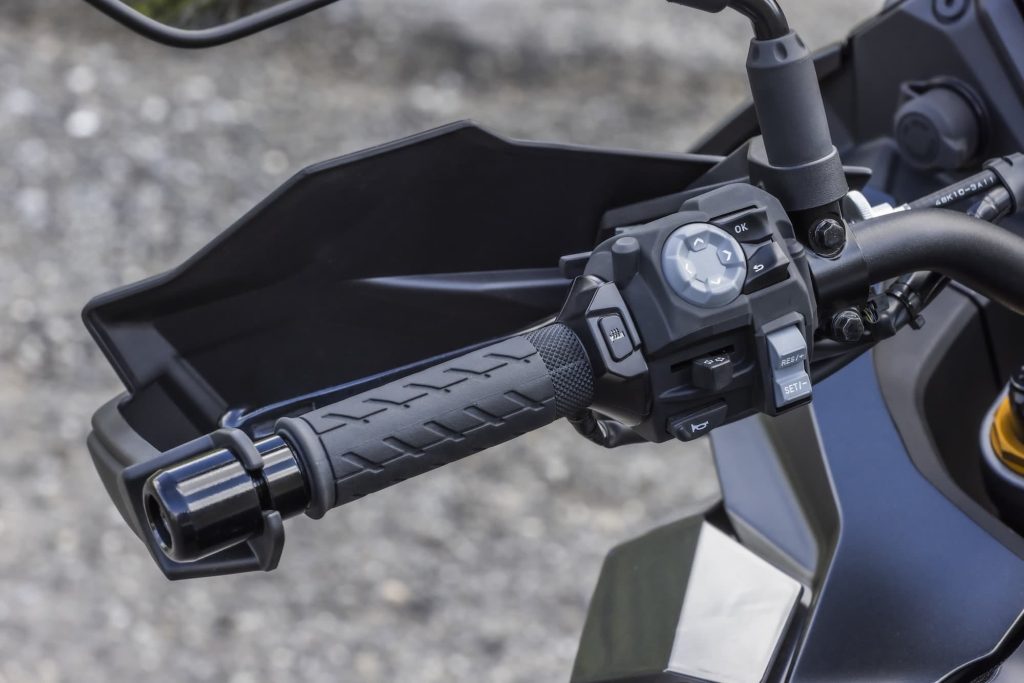
The GX is also the first GSX-S1000 with an IMU. Its electronics add cornering ABS, lift control, lean-angle-aware torque control, downhill rear-lift control, seven traction-control levels, and integrated ride modes that coordinate throttle response and suspension damping. Smart Cruise Control allows clutchless gear changes without cancelling the set speed.
Suzuki Road Adaptive Stabilisation uses wheel-speed, throttle, brake, and suspension data to recognise broken surfaces and soften the response. This doesn’t turn the GX into an Africa Twin: the cast 17-inch wheels, 190/50 rear tyre, road bodywork, and modest 155 mm clearance show its priorities. It can absorb rough pavement better than the GT, but it remains a road motorcycle.
What GX+ Means
Where offered, the GX+ bundles side cases and market-dependent touring accessories with the standard GX. The underlying engine, frame, brakes, suspension, and electronics are the same. As with the GT+, equipment lists can change between countries and model years.
The Current Family Side-by-Side
| Model | Role | Wet mass | Seat | Defining equipment |
|---|---|---|---|---|
| GSX-S1000 | Naked road bike | 214 kg (472 lb) | 810 mm (31.9 in) | Ride-by-wire, quickshifter, adjustable KYB fork, monochrome LCD |
| GSX-S1000GT | Sport tourer | 226 kg (498 lb) | 810 mm (31.9 in) | Full fairing, cruise control, 6.5-inch TFT, pannier-ready subframe |
| GSX-S1000GX | Road crossover | 232 kg (511 lb) | 845 mm (33.3 in) | IMU, cornering ABS, electronic suspension, 150 mm travel, automatic rear preload |
All three make the same claimed peak power and torque. Suzuki changes the job around the engine rather than selling a ladder of engine tunes. The naked bike removes wind protection and touring equipment; the GT adds long-distance hardware; the GX adds height, suspension travel, and lean-sensitive electronics.
“Hey, what about the Katana?”
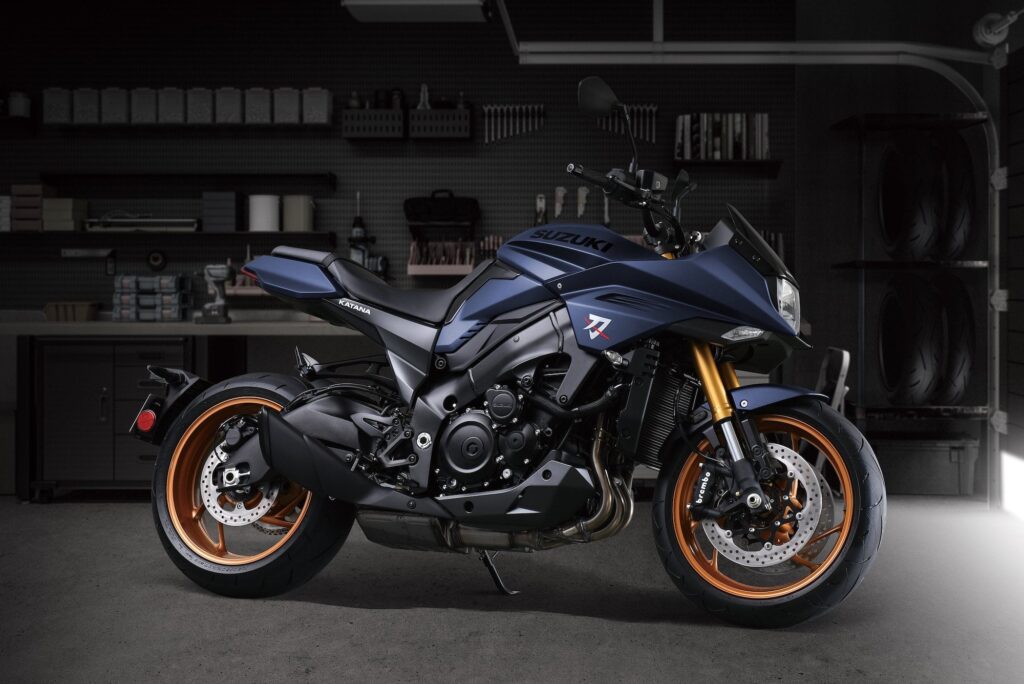
Suzuki doesn’t name the modern Katana as a GSX-S1000 variant, but it belongs in the family history — or at least alongside it. The 2019 Katana used the first-generation GSX-S1000 engine and chassis hardware beneath bodywork inspired by the 1981 GSX1100S. Its small 12-litre (3.2 US gal) tank and styling-led ergonomics give it a different purpose.
The updated 2022 Katana adopted the second-generation engine changes, ride-by-wire, power modes, five-level traction control, and bidirectional quickshifter. It stayed a separate design branch rather than becoming another GSX-S suffix.
If you’re after a Katana you’re after a very specific look, and might remember the original Katana of the 80s (which cost the same ballpark as used classics). The modern Katana is essentially the same as the GSX-S1000 mechanically and in terms of features.
How the GSX-S1000 Family Changed on the Road
The first generation gives the rider the most direct version of the engine. It is light for the class, has little electronic filtering, and responds hard when the throttle opens. That directness can feel exciting on a clear road and clumsy through a bumpy, constant-radius corner if the fuelling is abrupt.
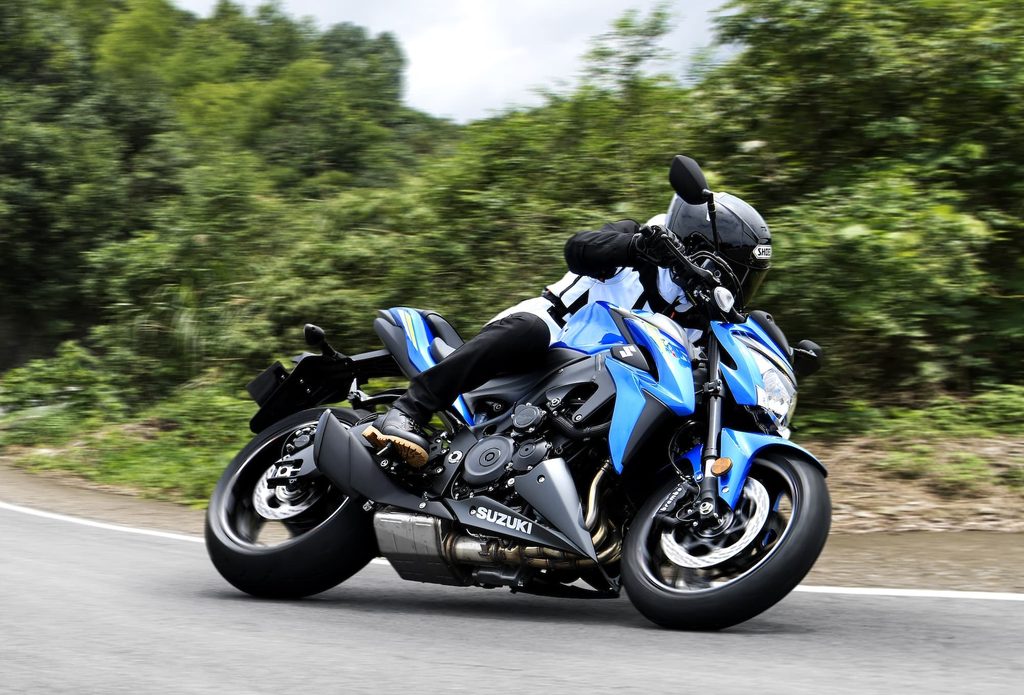
The second-generation naked bike smooths those transitions and makes full-power acceleration easier to manage. The quickshifter also changes how often the rider interacts with the clutch. Its extra 5 kg (11 lb) doesn’t turn it into a heavy bike, and the larger tank improves range.
The GT carries another 12 kg (26 lb) before luggage, but the added mass comes with real touring equipment. Wind protection, cruise control, a calmer rider triangle, and better passenger support make a bigger difference after several hours than two extra kilowatts ever could.
The GX adds only 6 kg (13 lb) over the bare GT, yet it feels like the furthest relative because the rider sits higher and the suspension moves farther. The electronics also intervene with more information: lean angle, pitch, wheel speeds, and suspension position. Its 845 mm seat and broad handlebar will have more effect on low-speed confidence than the small weight increase.
Ownership and Maintenance
The family uses a conventional chain drive, cable-operated clutch, shim-under-bucket valve adjustment, and a proven engine design. There is no variable valve timing, hydraulic valve gear, shaft drive, or semi-automatic transmission to add another service system.
Service schedules differ by market. Suzuki commonly specifies oil service at 6,000 km (3,750 miles) in North American schedules, while some non-US schedules allow 12,000 km (7,500 miles). Valve-clearance inspection commonly falls at 24,000 km (15,000 miles). Use the schedule for the motorcycle’s country and exact model year rather than combining intervals from two manuals.
- GSX-S1000 and GSX-S1000F maintenance schedule, 2016-2021
- Second-generation GSX-S1000 maintenance schedule, 2022 onward
- GSX-S1000GT maintenance schedule, 2022 onward
- GSX-S1000GX maintenance schedule, 2024 onward
Touring use makes chain access worth considering. The GT doesn’t include a centre stand, while Suzuki lists one as an accessory for the GX. A paddock stand works at home, but you might have to faff about a bit on a trip (or get a Scottoiler).
Recurring Complaints and Inspection Points
The first-generation throttle response is the best-known complaint. Before assuming the ECU needs work, check throttle-cable free play, chain slack, sprocket condition, and idle quality. Excess driveline lash exaggerates every transition between closed and open throttle.
The rear shock is another common target for modification. It controls spring preload and rebound but has no compression-damping adjustment, and riders who carry luggage or ride hard often want better damping. The same basic limitation continues on the naked second generation and GT, although the GT’s remote preload adjuster makes load changes easier. The GX’s electronic Showa suspension addresses this area properly.
On an F or GT, inspect the fairing fasteners, screen, luggage mounts, and case locks for crash damage or forced alignment. On every model, look for bent bar ends, damaged engine covers, scraped exhaust parts, leaking fork seals, seized suspension adjusters, and overdue brake fluid. A clean service record matters more than an aftermarket silencer.
Software-driven equipment deserves a functional check on later bikes. Confirm that every ride mode, traction setting, quickshifter direction, cruise-control switch, TFT control, and phone connection works. On the GX, cycle through the suspension modes and rear-preload settings and check for warning messages.
How the Family Sat Against Its Contemporaries
The GSX-S1000 line crossed several classes as it grew. The engine stayed constant while the closest comparison changed with the bodywork.
| GSX-S branch | Closest contemporary rivals | Main difference in approach |
|---|---|---|
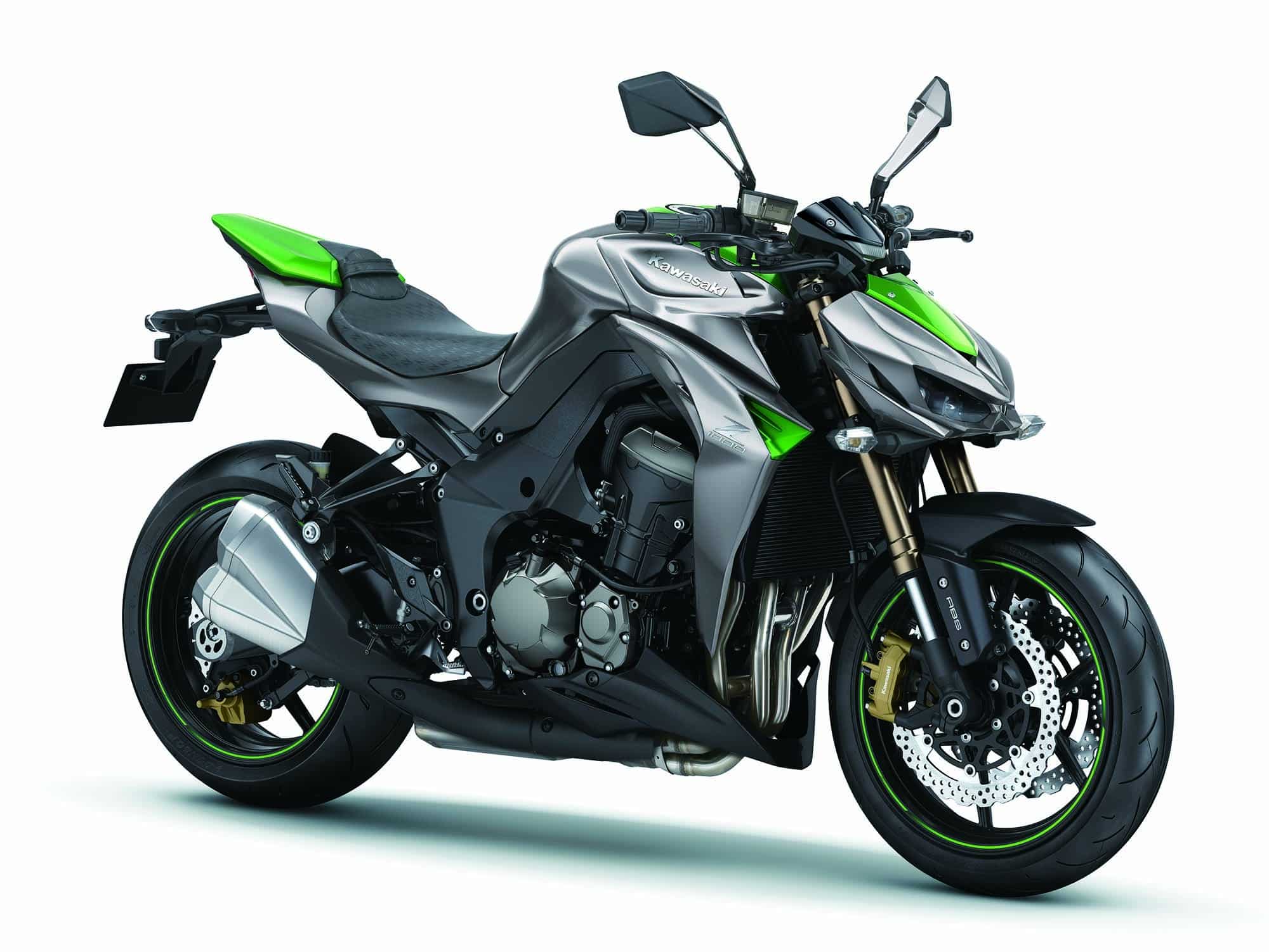
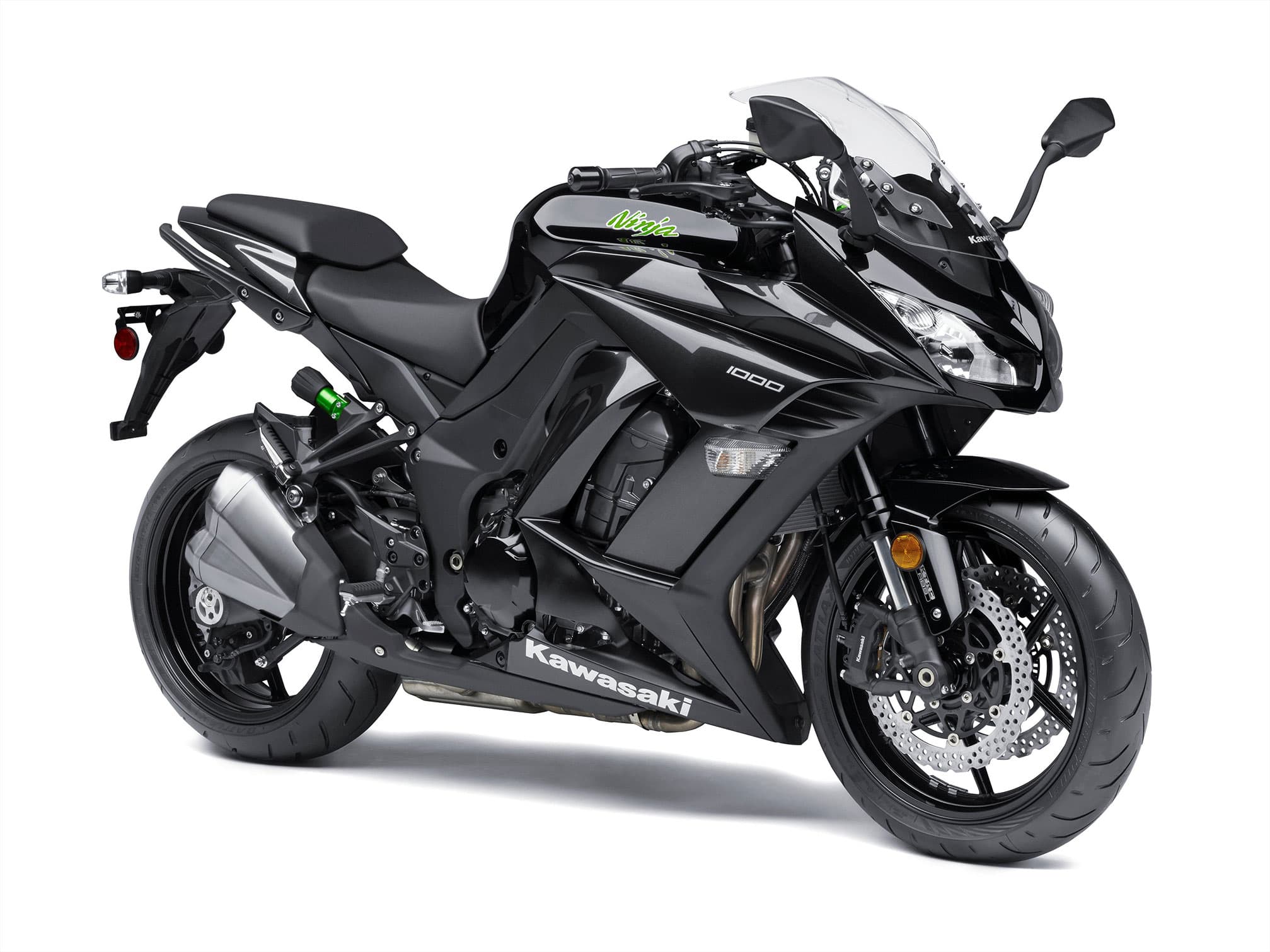
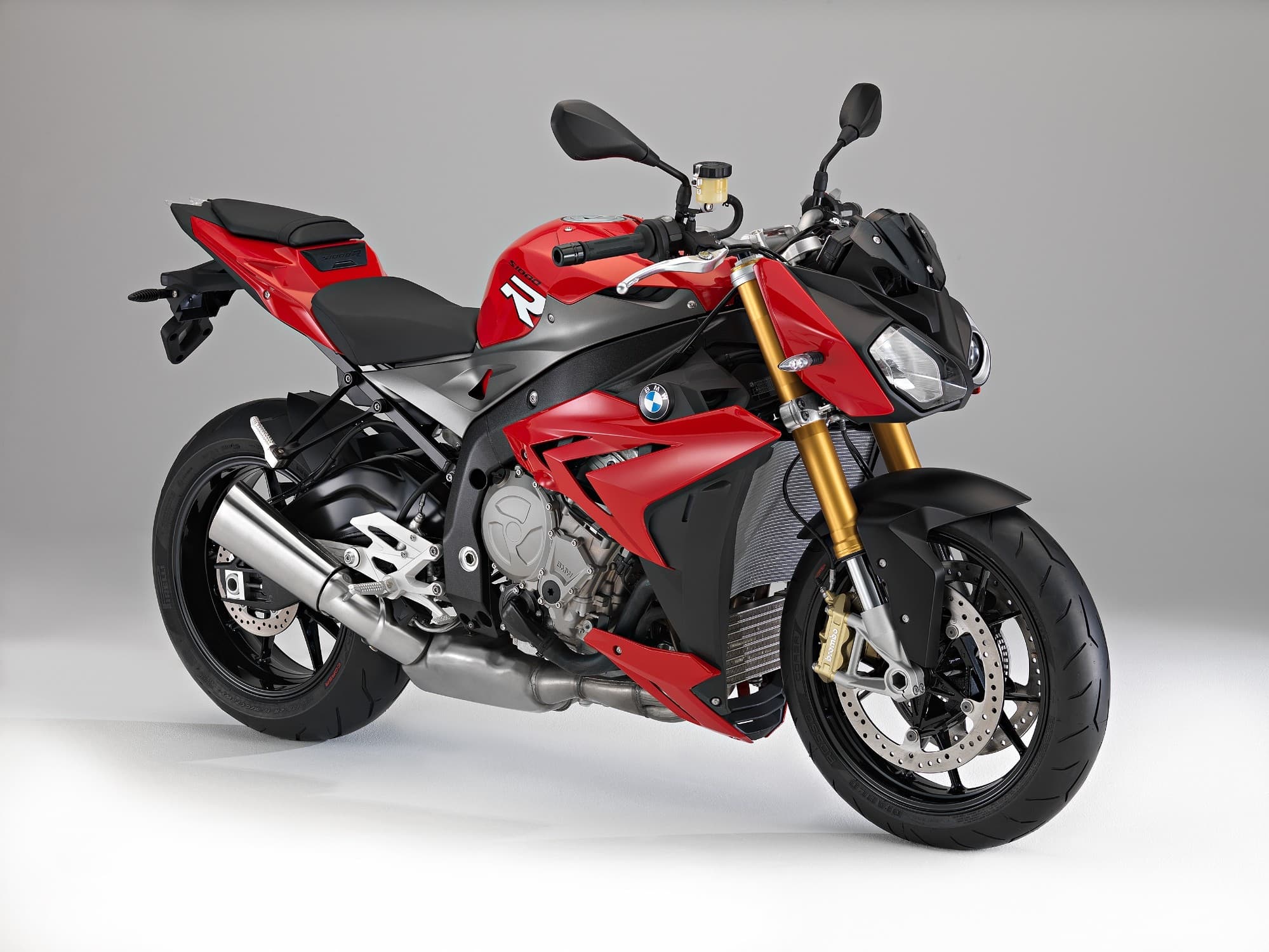
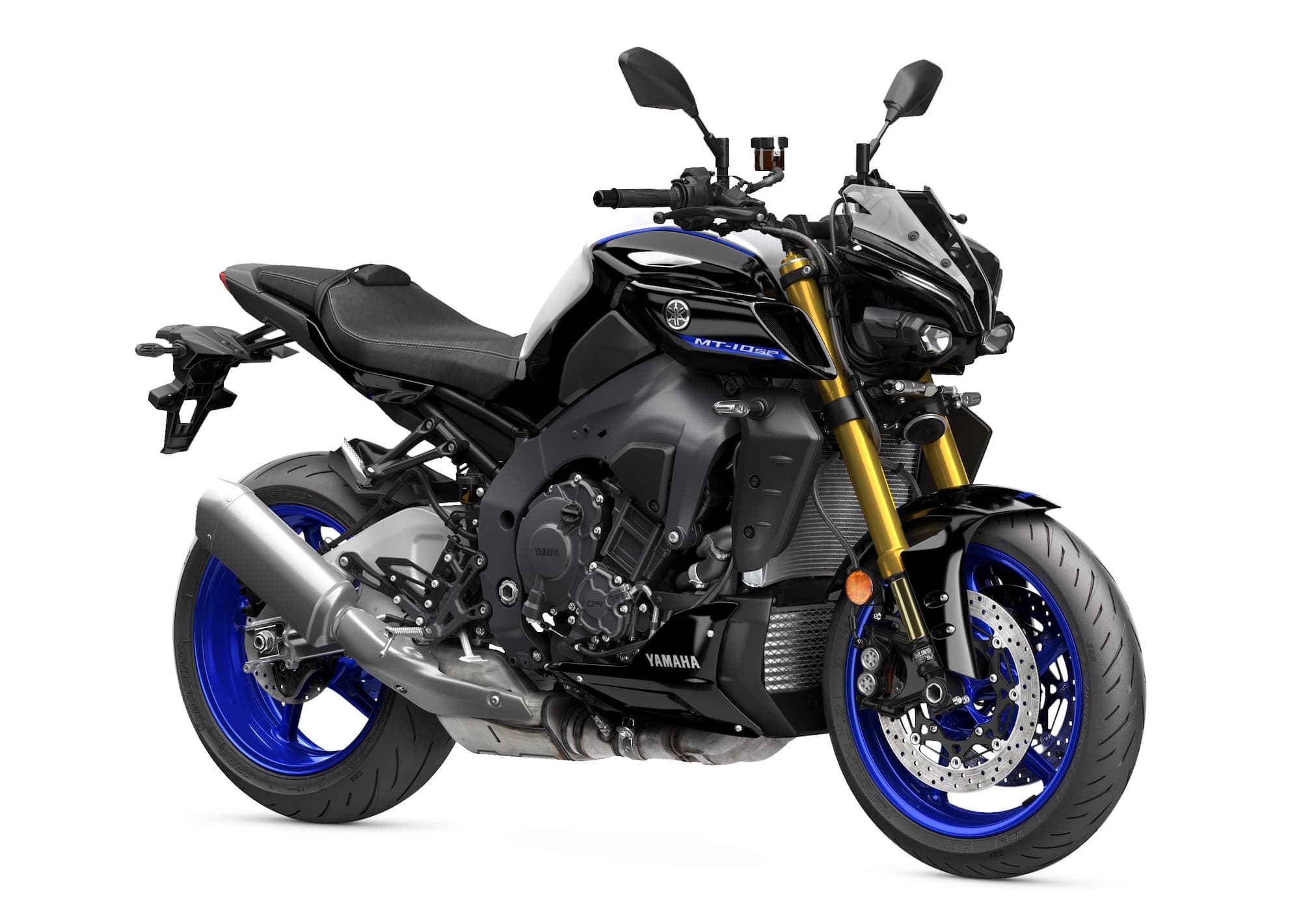
| First-generation GSX-S1000 | Kawasaki Z1000, BMW S 1000 R, Yamaha MT-10 | Simpler electronics and older engine architecture, usually at a lower price |
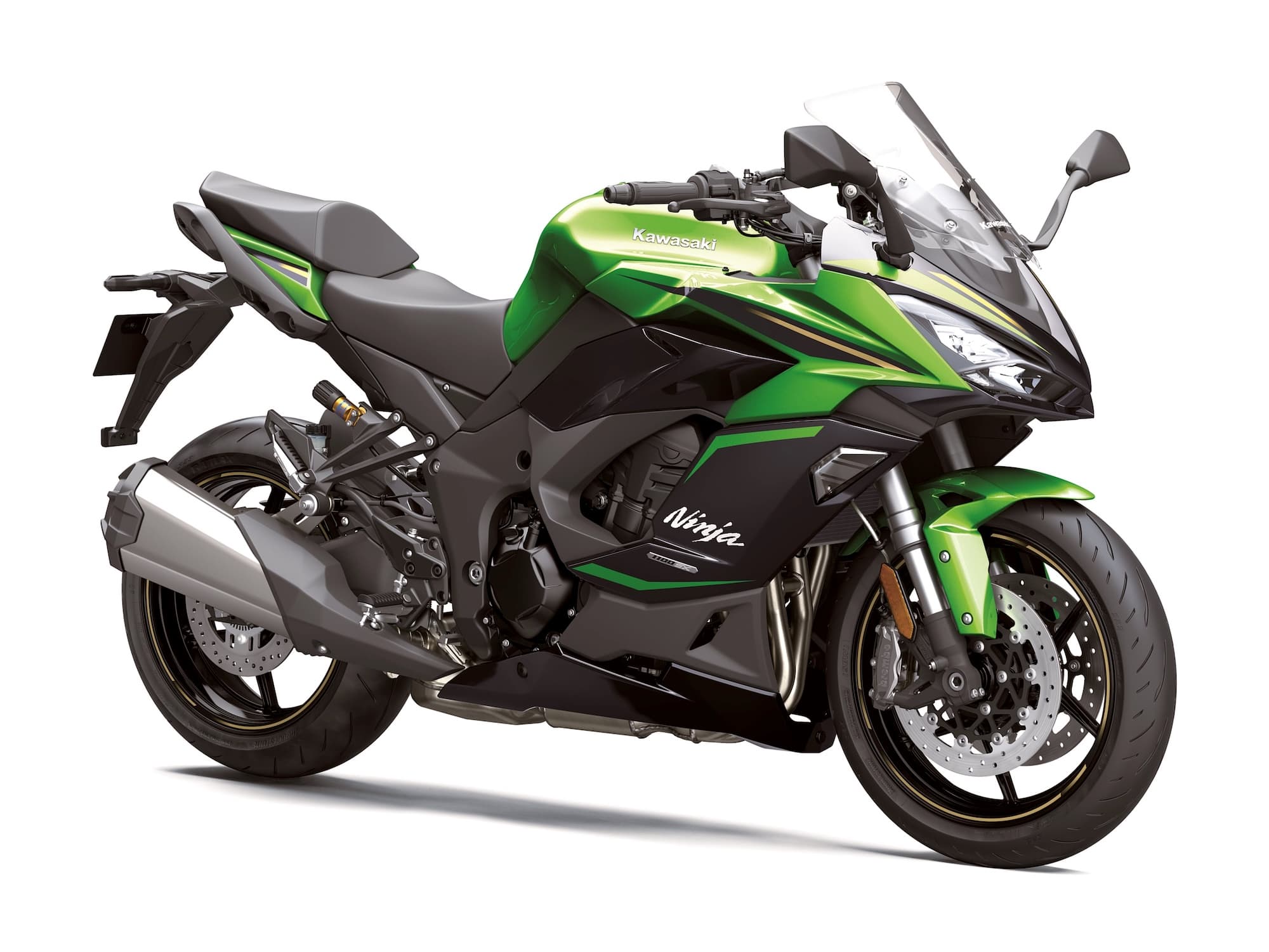
| GSX-S1000F | Kawasaki Z1000SX/Ninja 1000, Honda VFR800 | Lighter and more naked-bike-like than a traditional sport tourer |
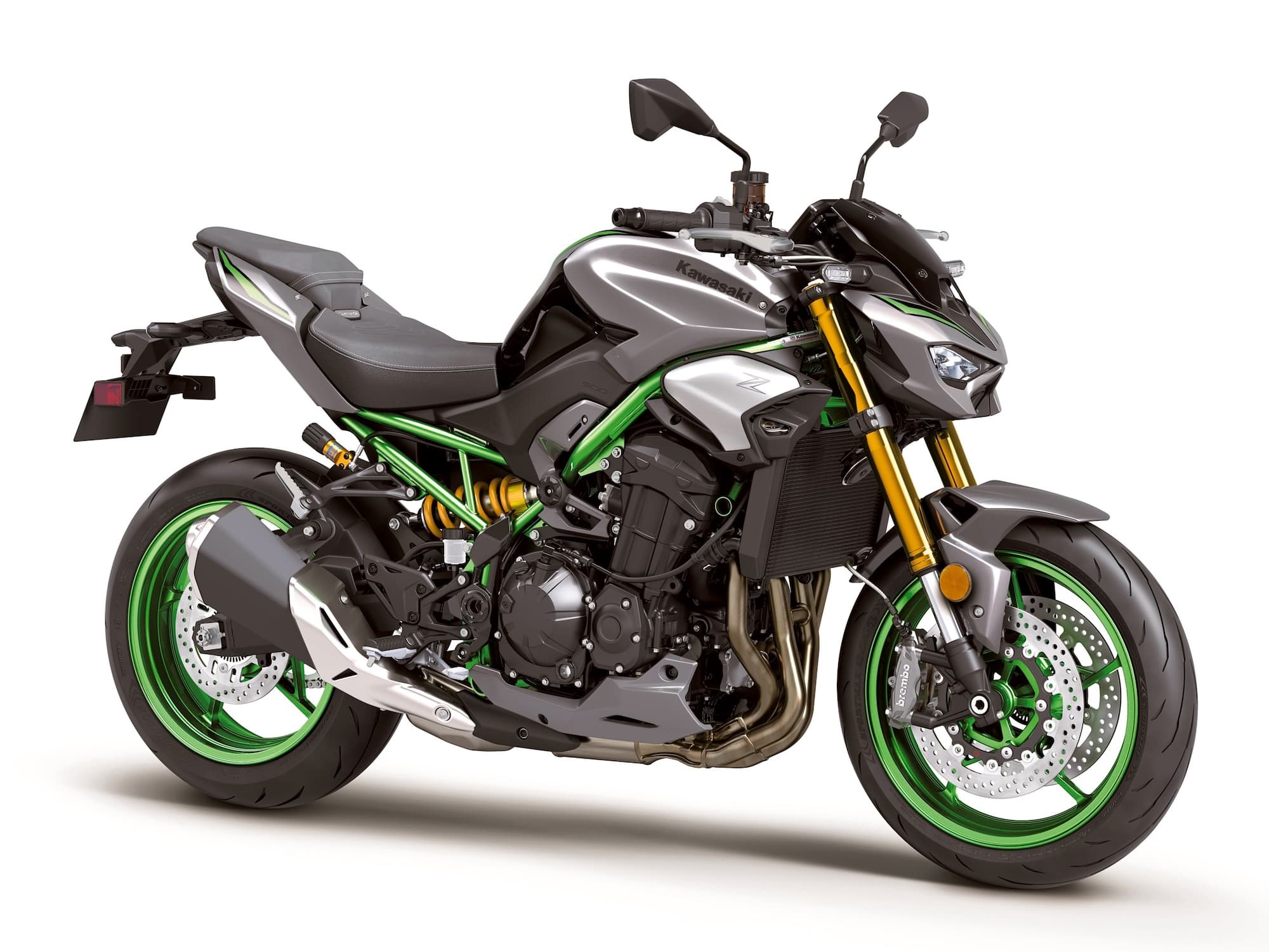
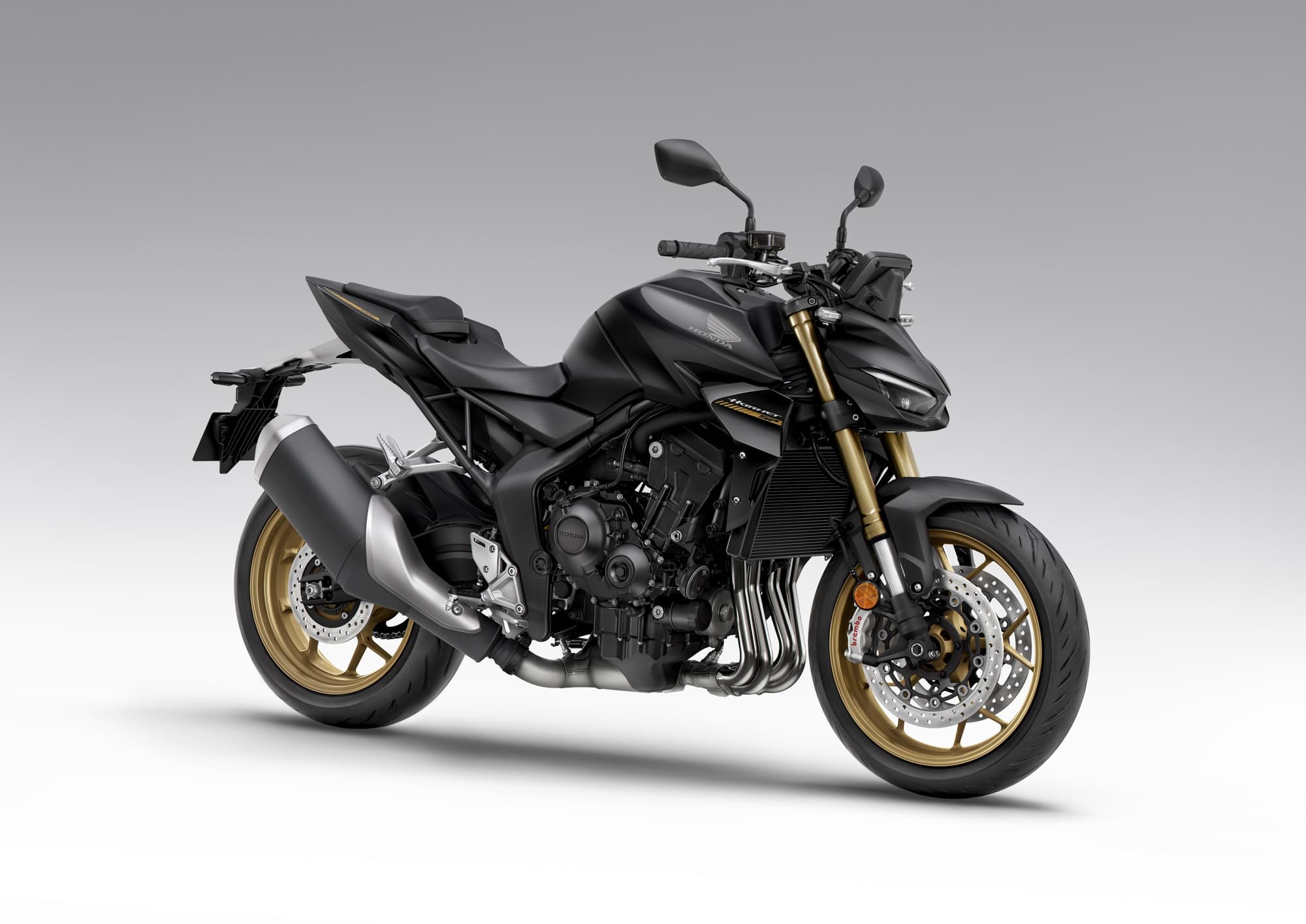
| Second-generation GSX-S1000 | Yamaha MT-10, Kawasaki Z900/1100, Honda CB1000 Hornet | Strong mechanical specification without an IMU or colour TFT |
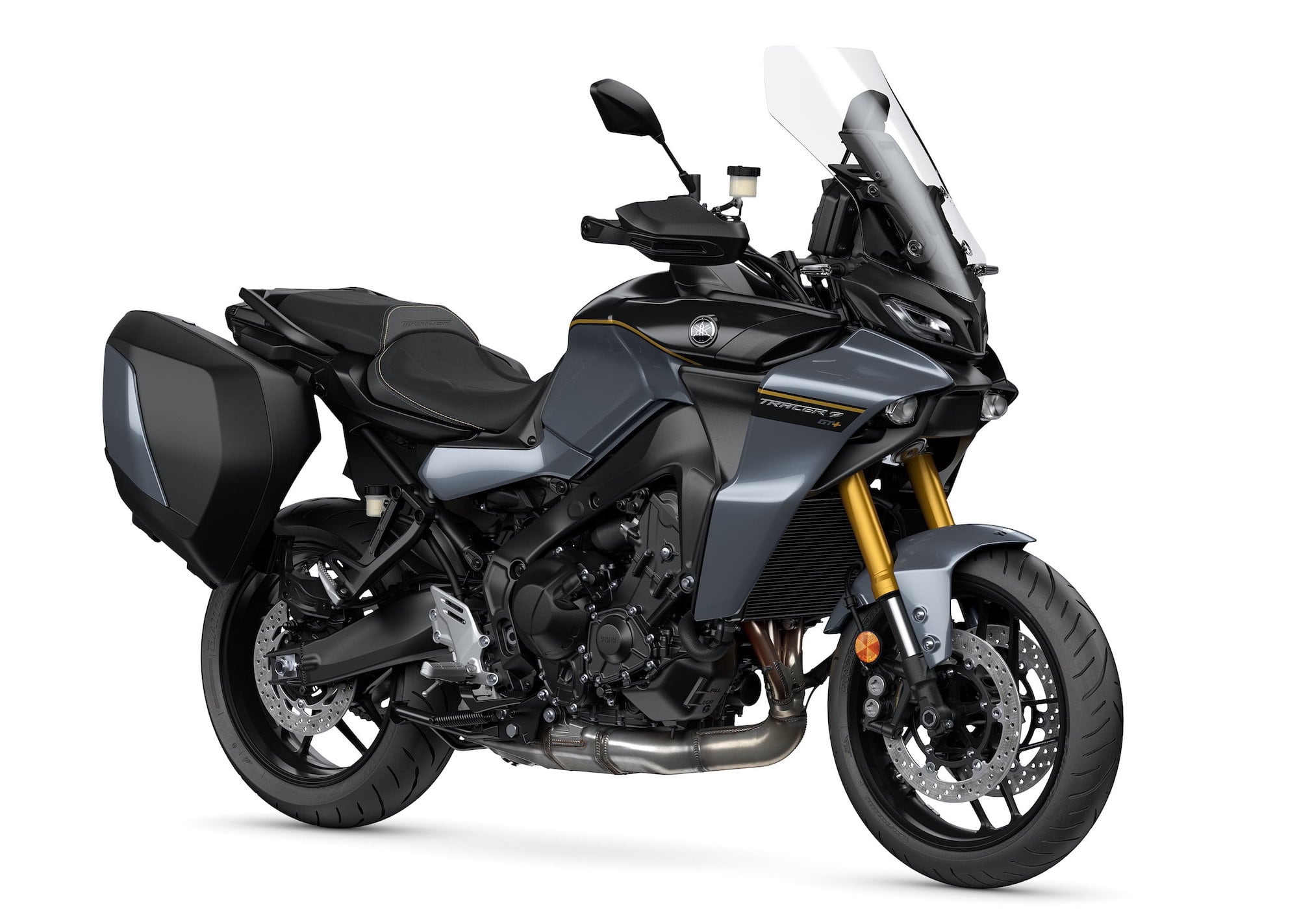
| GSX-S1000GT | Kawasaki Ninja 1000SX/1100SX, Yamaha Tracer 9 GT | Four-cylinder performance and strong touring basics, but no cornering ABS |
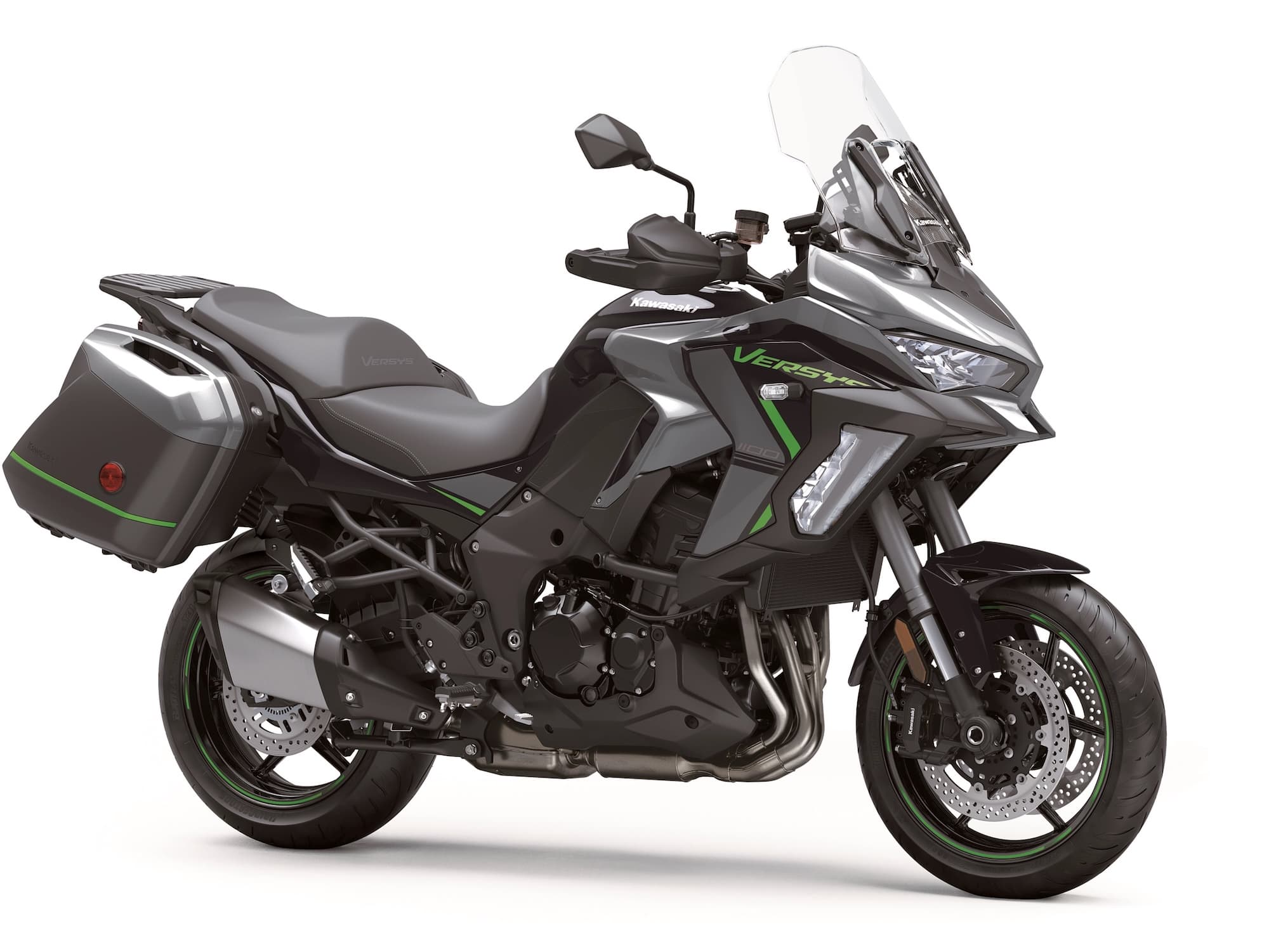
| GSX-S1000GX | BMW S 1000 XR, Kawasaki Versys 1100 SE | Electronic suspension and road-sport wheels around the long-running Suzuki engine |
The GSX-S family rarely had the longest equipment list in its class. Suzuki concentrated spending on the engine, aluminium frame, Brembo front brakes, and adjustable fork, then kept the base electronics modest. The GX breaks that pattern by adding the IMU and semi-active suspension that its class expects.
Godzilla, Rehoused
Sometimes we can have nice things. It’s rare for an old engine design to be celebrated enough that a manufacturer (and customers) think it’s worth bringing back even with a more muted power curve. Suzuki chose the long-stroke dimensions of a celebrated superbike engine, rebuilt the package for the street, and kept developing it while the motorcycle around it changed.
The first GSX-S1000 and F were fast, simple road bikes with an unruly edge. The second-generation naked bike brought smoother electronic control. The GT made the platform work for passengers and luggage, while the GX added height, suspension travel, and the lean-sensitive electronics missing from the rest of the range.
More than a decade after the first model entered production, the common thread remains easy to recognise: a compact aluminium chassis wrapped around a broad, rev-happy four-cylinder engine. The bodywork now ranges from almost none to a full crossover shell, but Godzilla’s dimensions are still there to reckon with.