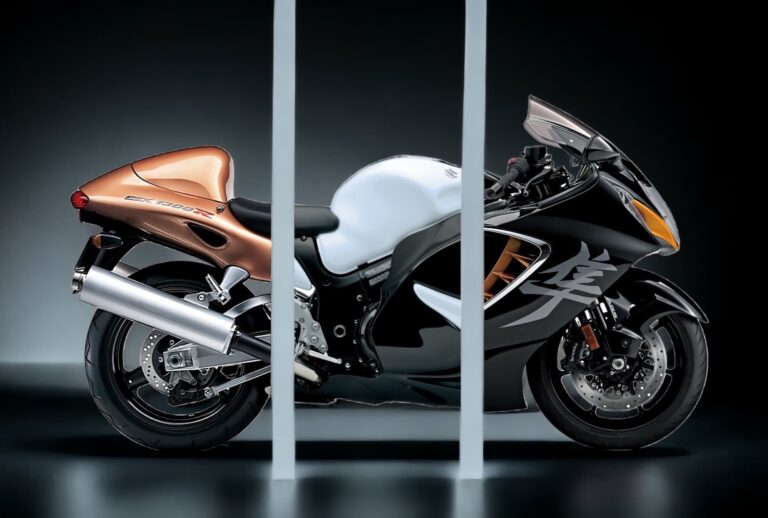

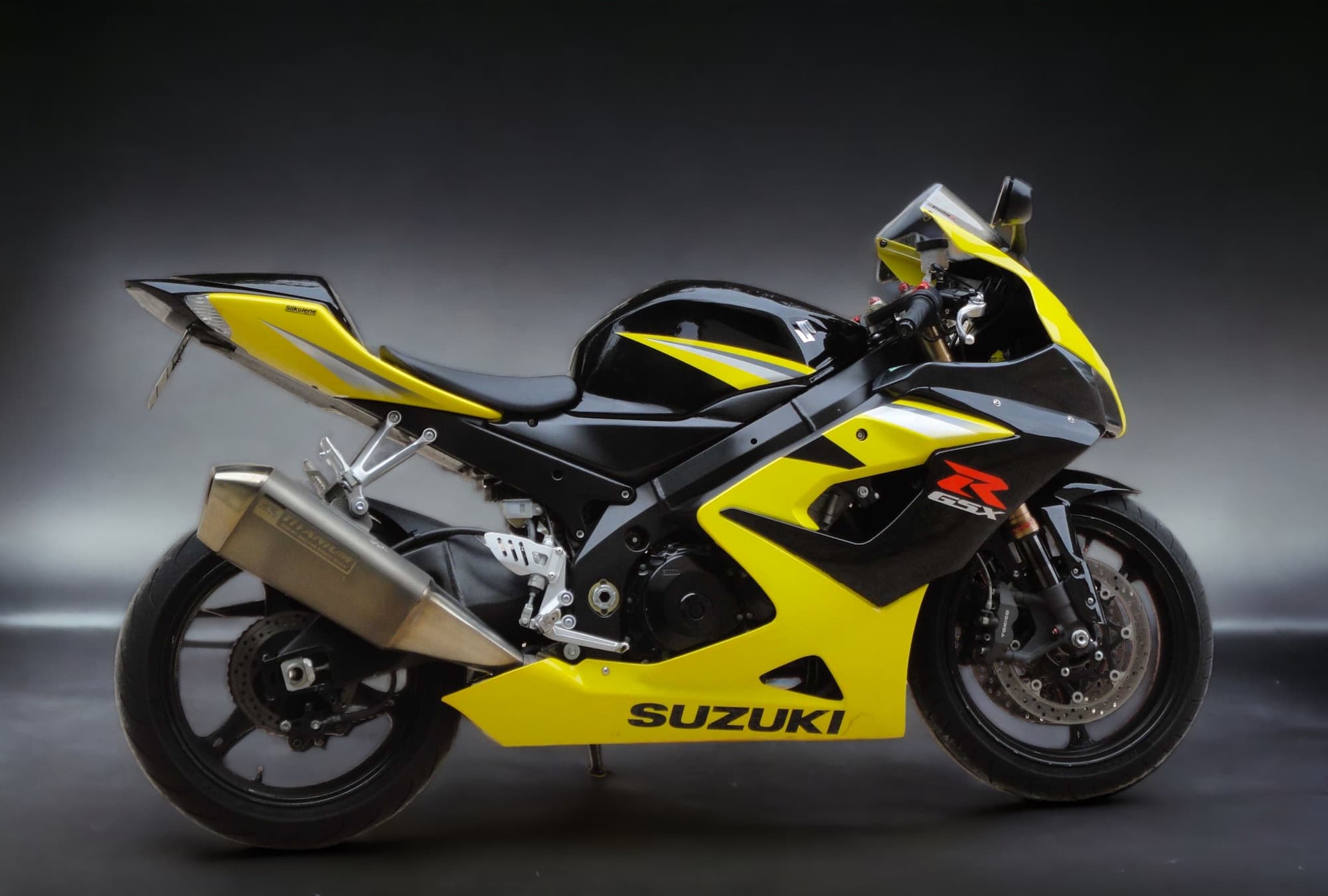
The 2005 Suzuki GSX-R1000 K5 has had 20 years to become larger than life. People call it the best GSX-R1000, the last pure litre bike, and, thanks largely to a 2012 Cycle World story, “Godzilla”.
The legend has a factual core. Suzuki built a compact 999 cc engine with a broad spread of torque, put it in a light and well-balanced chassis, and sold the result without traction control or ABS. The K5 also arrived when production superbikes were directly feeding World Superbike grids, and Troy Corser won the 2005 championship on one.
But nostalgia can flatten the story. The K5 wasn’t the final good GSX-R1000, its “long-stroke” engine wasn’t magical by bore and stroke alone, and its lack of rider aids isn’t an advantage in every situation. Twenty-year-old condition now counts for more than internet mythology.
I haven’t owned or ridden a K5, so I won’t pretend this is a personal road test. This is an explanation of what Suzuki changed, what period testers and later back-to-back tests found, and what I’d check before buying one now.
The short answer
The K5 and mechanically identical K6 deserve their reputation because Suzuki combined a strong, controllable engine with low mass and a chassis that let riders use it. Buy one for that combination and for its place in superbike history. Don’t buy one simply because it has no electronics. A clean K7/K8 is cheaper and nearly as direct, while a modern GSX-S1000 gives you a K5-derived engine in a far easier road bike.
Are you obsessed with motorcycles?
Well, I am. That’s why I created this site — as an outlet. I love learning and sharing what others might find useful. If you like what you read here, and you’re a fraction as obsessed as I am, you might like to know when I’ve published more. (Check the latest for an idea of what you’ll see.)
What do K5 and K6 mean?
“K5” is Suzuki shorthand for the 2005 model year. K0 through K9 mean 2000 through 2009; L0 through L9 cover 2010 through 2019; M0 onward covers the 2020s. A K6 is therefore a 2006 model, and an L7 is a 2017 model.
For this GSX-R1000, K5 and K6 identify the same generation. Suzuki changed colours and sold a few market-specific editions for 2006, but the engine, frame, suspension, brakes, dimensions and basic specification carried over. When people say “the K5”, they often mean the whole 2005–2006 generation.

What Suzuki changed for the 2005 GSX-R1000
The K5 was a new engine and chassis rather than a light update to the 2003–2004 K3/K4. Suzuki increased the cylinder bore by 0.4 mm, taking capacity from 988 cc to 998.6 cc, but kept the 59.0 mm stroke. The number moved closer to a full litre; the internal changes mattered much more.
Suzuki fitted lighter forged pistons, titanium valves, stronger connecting rods and a reinforced crankshaft. Compression rose from 12.0:1 to 12.5:1. Larger 44 mm throttle bodies and twin injectors per cylinder fed the engine, with the upper injectors adding fuel at high rpm. The redline rose, while a back-torque-limiting clutch reduced rear-wheel chatter during hard downshifts.
The engine sat in a new aluminium twin-spar frame. Suzuki shortened the motorcycle, moved mass closer to its centre, revised the swingarm and rear linkage, and tuned frame stiffness to give the rider more feel under braking and cornering load. Claimed dry mass fell by 2 kg (4.4 lb), from 168 kg (370 lb) to 166 kg (366 lb).
That 2 kg figure sounds small. Period testers said the bike felt much lighter than the scale change suggested because Suzuki changed where the weight sat and how readily the bike changed direction.
| Item | 2003–2004 K3/K4 | 2005–2006 K5/K6 | What changed for the rider |
|---|---|---|---|
| Capacity | 988 cc | 998.6 cc | A small capacity increase backed by much larger internal and fuelling changes |
| Bore × stroke | 73.0 × 59.0 mm | 73.4 × 59.0 mm | The K5 kept the comparatively long 59 mm stroke and gained breathing room |
| Claimed output | 120.6 kW (164 PS) | 131 kW (178 PS) | More drive throughout the rev range, with a higher ceiling |
| Claimed torque | 110.7 Nm (81.7 lb-ft) | 117.6 Nm (86.7 lb-ft) | Less need to chase revs or make a perfect gear choice on the road |
| Claimed dry mass | 168 kg (370 lb) | 166 kg (366 lb) | The new packaging made direction changes feel easier than the 2 kg reduction suggests |
| Wheelbase | 1,410 mm (55.5 in) | 1,405 mm (55.3 in) | Compact steering without throwing away high-speed stability |
| Clutch | Conventional cable clutch | Cable-operated back-torque limiter | Calmer rear-wheel behaviour on aggressive downshifts |
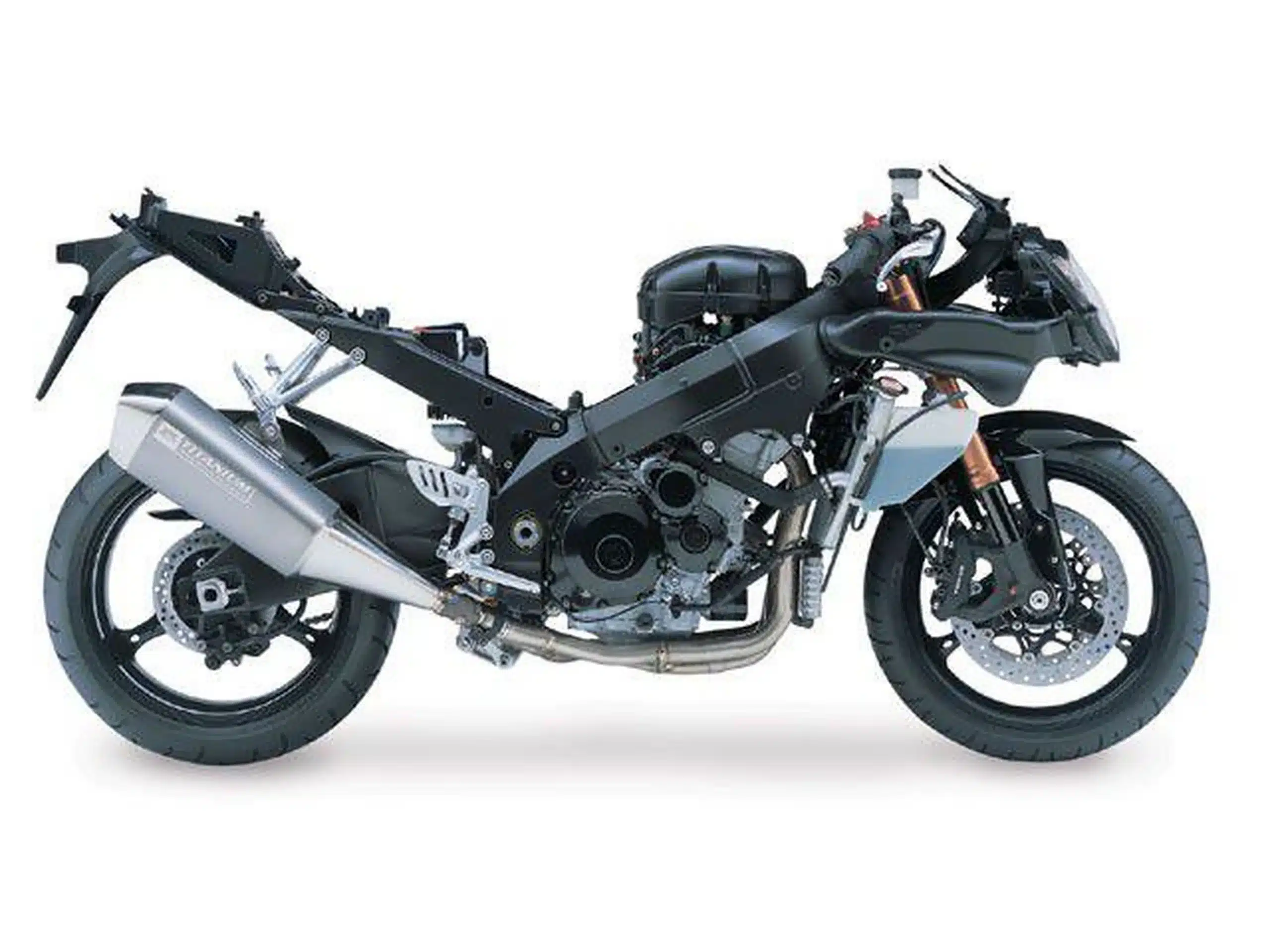
K5 GSX-R1000 specifications, with context
Period specifications need careful labels. Suzuki quoted crank output and dry mass, while magazine dynos measured rear-wheel power and scales measured ready-to-ride mass. Mixing those figures can make the K5 look faster or lighter than it was.
| Item | 2005–2006 Suzuki GSX-R1000 | What it means |
|---|---|---|
| Engine | 998.6 cc liquid-cooled DOHC inline four | Conventional layout, exceptional output for 2005 |
| Bore × stroke | 73.4 × 59.0 mm | Still oversquare, but longer-stroke than later GSX-R1000 engines |
| Compression ratio | 12.5:1 | Premium fuel is the sensible choice; check the manual for your market |
| Claimed peak power | 131 kW (178 PS) at 11,000 rpm, crank | The K5 made serious top-end power without moving all of its performance near the limiter |
| Claimed peak torque | 117.6 Nm (86.7 lb-ft) at 9,000 rpm, crank | Strong roll-on drive and less dependence on frequent downshifts |
| Transmission | Six-speed, chain drive, back-torque-limiting clutch | Close ratios for track work; the clutch helps settle rushed downshifts |
| Front suspension | 43 mm KYB inverted fork, adjustable for preload, compression and rebound damping | Fully adjustable, but a 20-year-old fork needs fresh oil and healthy seals before setup means much |
| Rear suspension | KYB linkage shock, adjustable for preload, compression, rebound and ride height | Good adjustment range; an untouched original shock is overdue for service |
| Front brakes | Twin 310 mm discs, radial-mount four-piston Tokico calipers | Strong period hardware; hoses, fluid, master cylinder and pad choice shape the feel now |
| Tyres | 120/70 ZR17 front; 190/50 ZR17 rear | Modern road and track compounds transform grip, but geometry changes if you fit a 190/55 rear |
| Seat height | 810 mm (31.9 in) | Low for a superbike, though the clip-ons and high pegs still make it demanding |
| Fuel capacity | 18 L (4.8 US gal) | A generous tank for the class; real range depends heavily on throttle use |
| Claimed dry mass | 166 kg (366 lb) | Don’t compare this directly with a modern wet or kerb figure |
Why people call the K5 engine “long-stroke”
The K5’s 73.4 mm bore and 59.0 mm stroke make it oversquare, so “long-stroke” is relative. Its stroke was long beside rival litre-bike engines and beside later GSX-R1000 motors, not beside engines in general.
A longer stroke can help an engine make strong torque at lower rpm, but bore and stroke don’t write a torque curve alone. Cam timing, intake length, exhaust design, compression, fuelling, throttle calibration and gearing all have a say. The K7 kept the same bore and stroke, yet its emissions equipment, exhaust and tuning changed how the engine felt.
What riders noticed was simple: the K5 pulled hard without waiting for five-digit rpm. Cycle World’s 2005 launch report described the delivery as broad and linear, with clean response as the rider returned to the throttle. That control mattered because there was no traction control waiting to correct a greedy right hand.
A later RevZilla comparison between a high-mileage K5/K6 and a 2020 Ducati Panigale V4 S reached a similar conclusion. The old Suzuki gave away power, electronics and premium hardware, but its engine and chassis still worked together well enough to make the bike fast and readable on track.
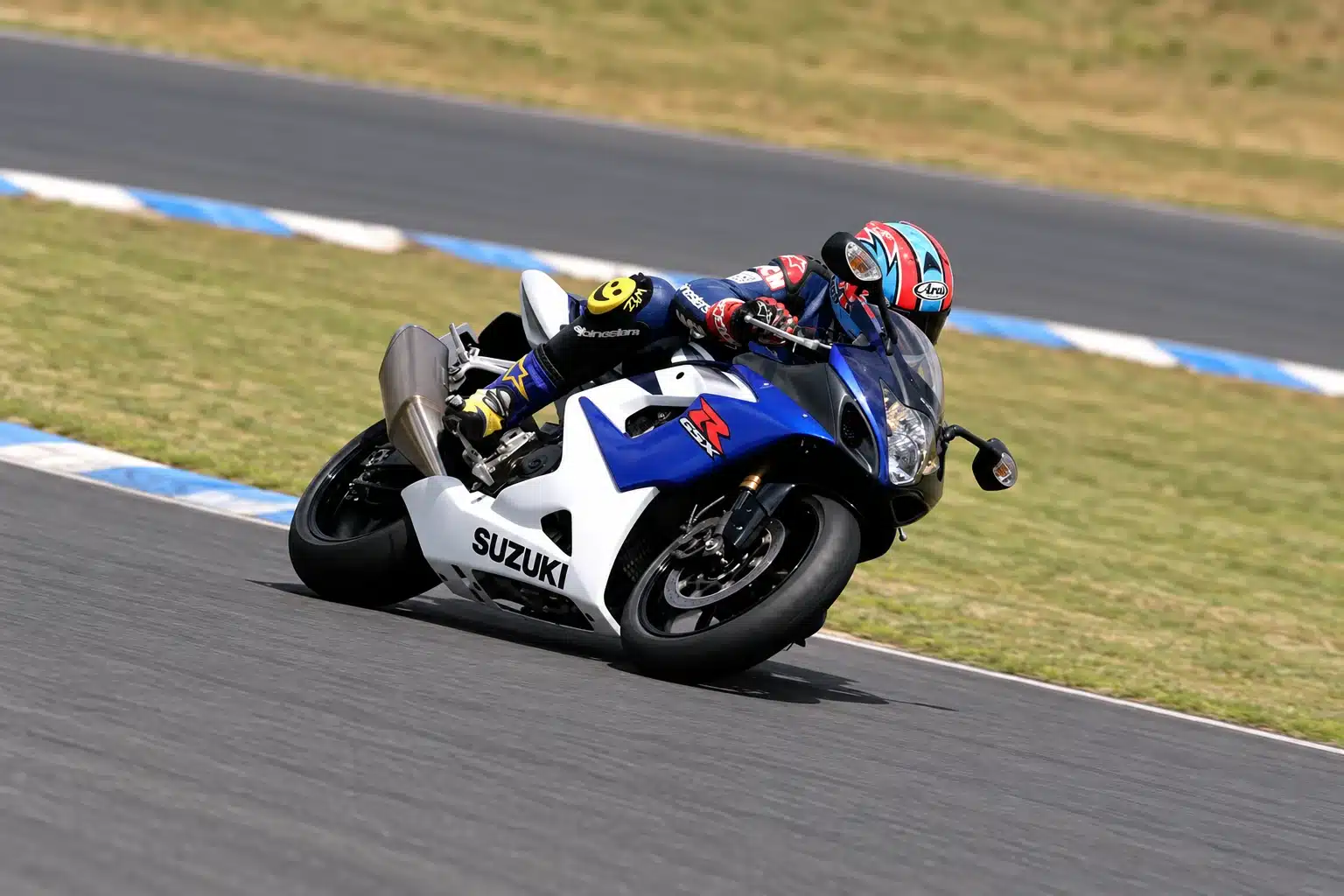
The chassis made the engine usable
Raw output alone didn’t make Godzilla. The first-generation Kawasaki ZX-10R was already proving that a light, powerful litre bike could feel wild. Suzuki’s achievement was giving the K5 a strong engine without making the chassis vague or nervous.
Period testers praised the connection between the throttle and rear tyre, the fork’s response under braking, and the bike’s willingness to change direction. They could steer with the throttle and feel the rear tyre approaching its limit. That was a serious advantage before electronic intervention could hide a rough throttle hand.
Twenty years later, none of that guarantees that a used K5 will handle well. Old fork oil, a tired shock, worn steering-head or swingarm bearings, poor tyres, altered rear ride height and amateur suspension settings can bury the original balance. Budget for a chassis refresh if there’s no evidence that someone has already done it properly.
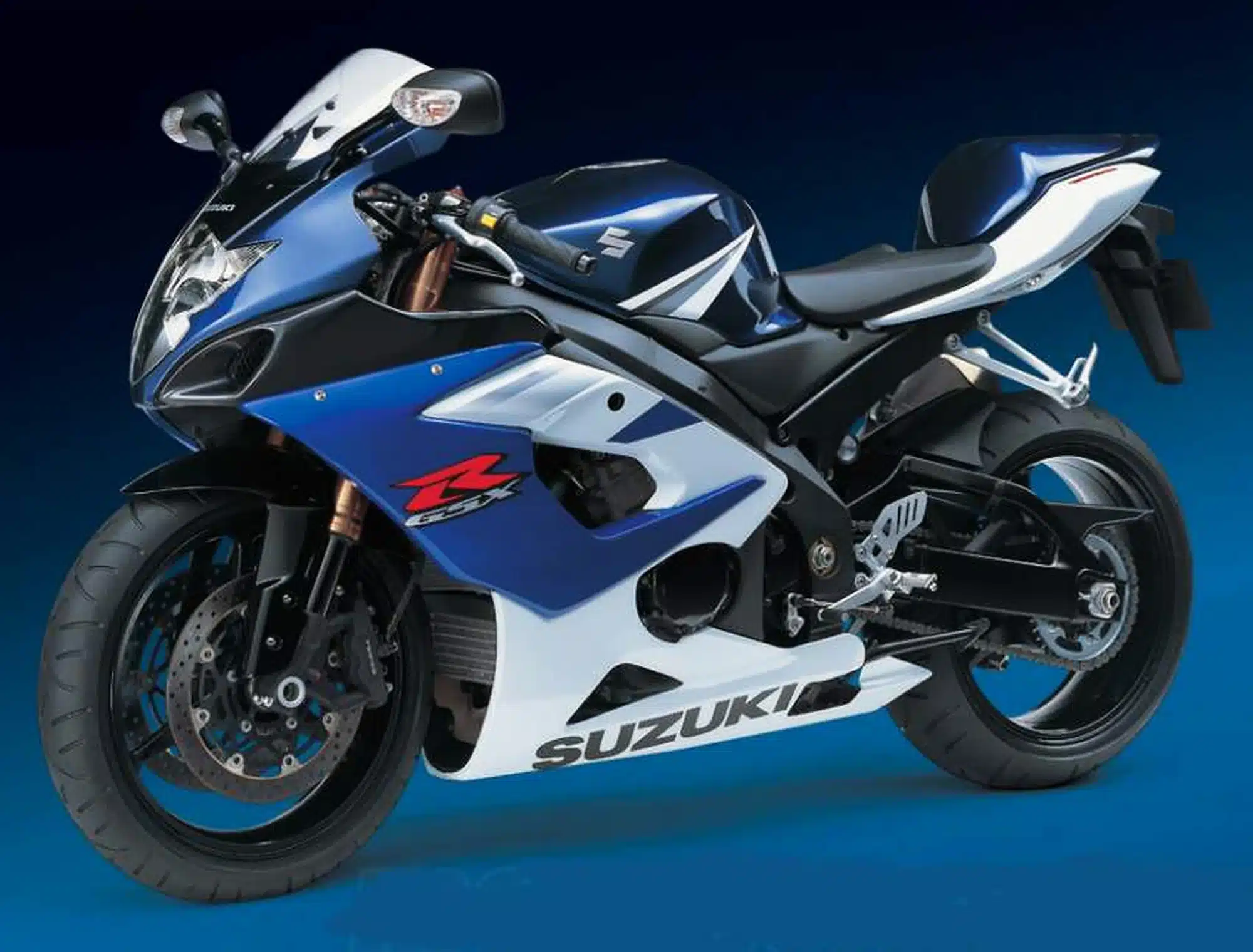
No traction control doesn’t mean no control systems
The K5 has no ABS, traction control, selectable power modes, launch control, quickshifter or inertial measurement unit. The throttle uses cables, and the rider controls the brakes without an electronic safety net.
It still has systems that shape the engine’s response. Suzuki’s Dual Throttle Valve setup uses computer-controlled secondary butterflies to manage intake velocity, and the exhaust has a servo-operated tuning valve. The twin-injector system changes fuelling at high rpm. A hydraulic steering damper and the back-torque-limiting clutch also help control the chassis.
So the K5 isn’t a carburetted animal with an ignition coil and a prayer. Suzuki used the electronics available in 2005 to make a powerful motorcycle easier to read. What it won’t do is save you from locking the front tyre on a wet road or asking too much of the rear tyre while leaned over.
If the absence of ABS and traction control makes you tense, buy a later bike. You won’t become a purer rider by worrying every time the road turns cold or wet.
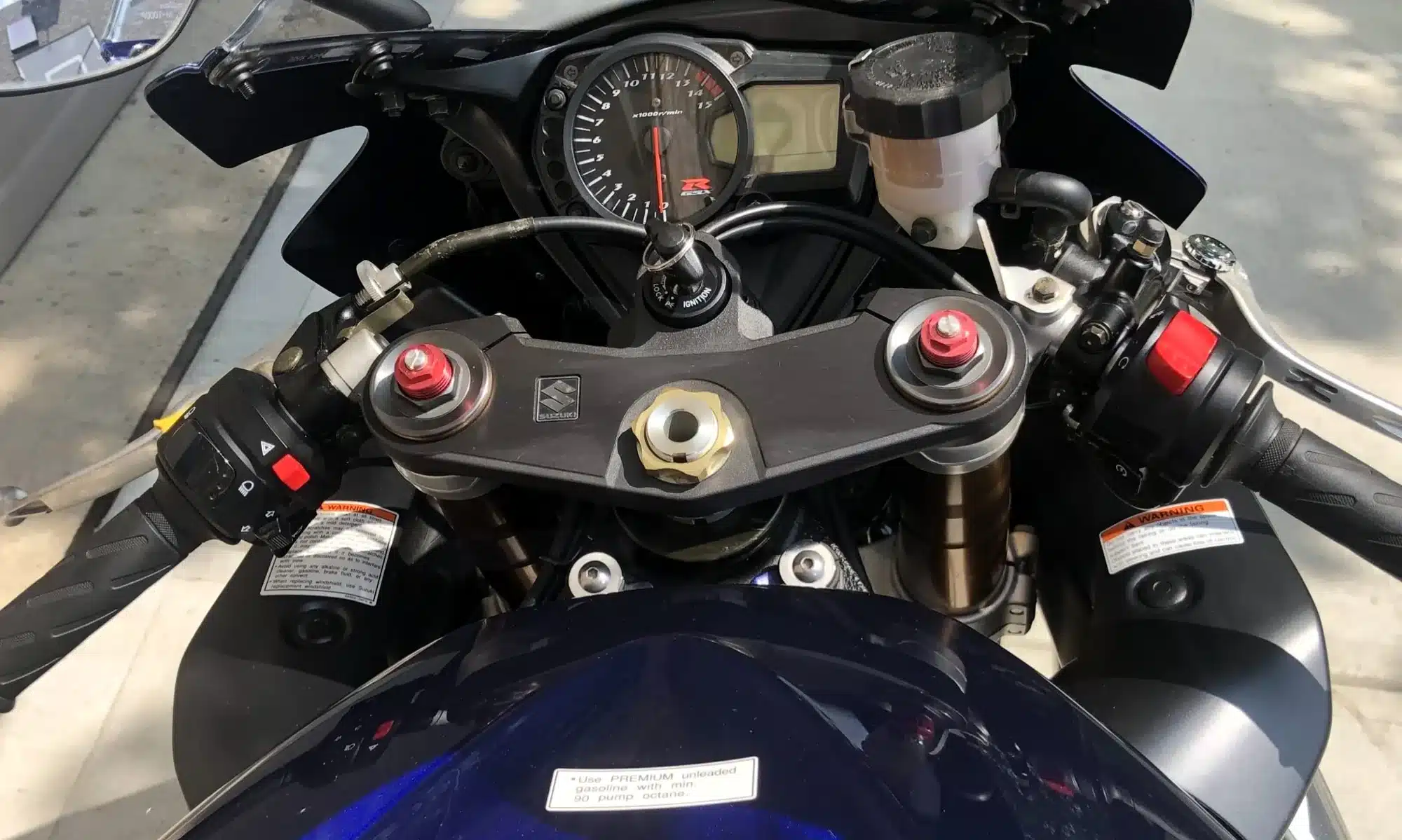
The K5 won on Sunday, too
The showroom bike had the right story behind it. Suzuki returned to World Superbike with Alstare in 2005, and Troy Corser won the riders’ championship. Suzuki also took its first World Superbike manufacturers’ title. The race bike wasn’t a stock K5 with number plates removed, but the results gave buyers evidence that the new platform worked at the highest production-based level.
The road bike also won favour in multi-bike track tests. That mattered in 2005, when Japanese manufacturers were rebuilding the litre class every two years and each launch promised a few more horsepower. The K5 didn’t earn its reputation in hindsight alone.
K5 versus K6 GSX-R1000: which should you buy?
Buy the better motorcycle. The 2005 K5 and 2006 K6 are mechanically the same, so condition, history and originality should decide the purchase. A clean K6 is a better buy than a modified or neglected K5 wearing the more famous code.
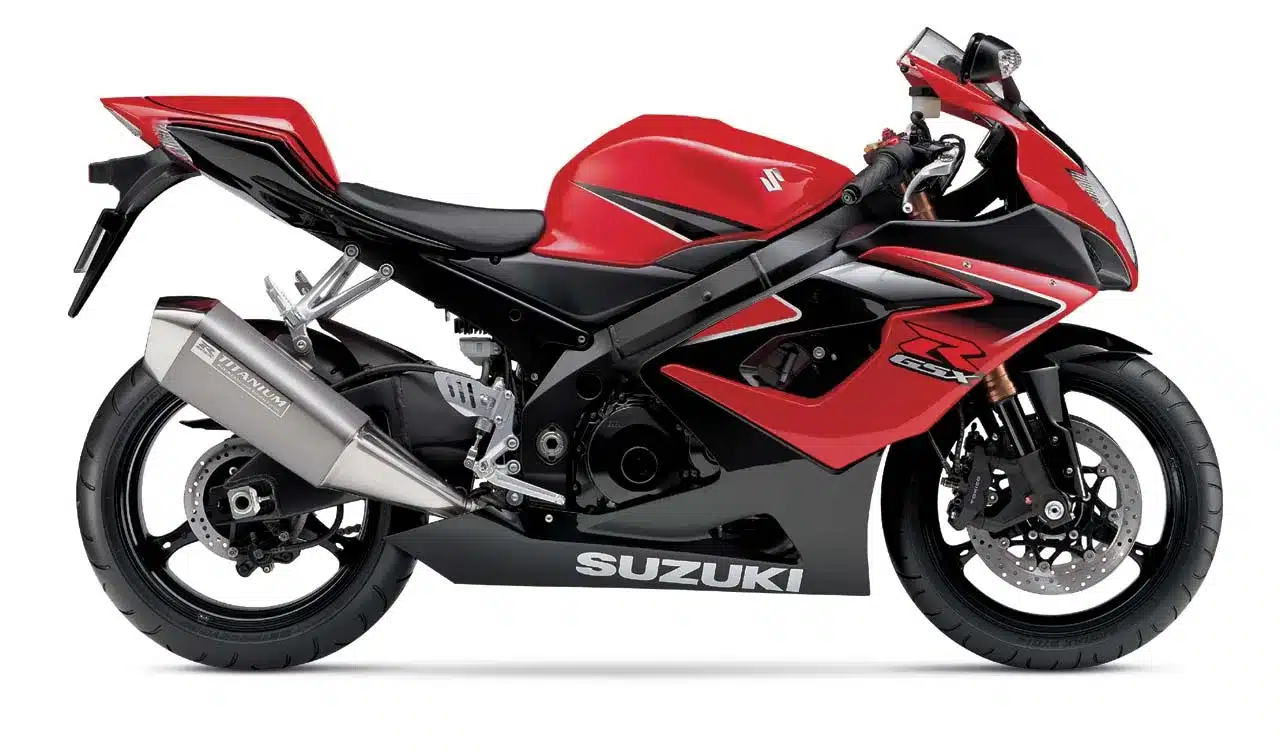
Collectors may still prefer a first-year K5 in blue and white or yellow and black. Some markets also received special K6 versions, including dark “Phantom” paint and a Yoshimura silencer. Check whether you’re looking at a factory market edition or a later cosmetic conversion; a decal kit doesn’t create provenance.
K5/K6 versus K7/K8 GSX-R1000
The 2007 K7 didn’t abandon the K5 engine layout. It kept the 73.4 × 59.0 mm bore and stroke, increased peak power, added three selectable power maps and changed to a hydraulic clutch. It also gained twin silencers and about 6 kg (13 lb) of claimed dry mass as Suzuki met tighter emissions and noise rules.
| Item | 2005–2006 K5/K6 | 2007–2008 K7/K8 | Buying consequence |
|---|---|---|---|
| Engine geometry | 73.4 × 59.0 mm | 73.4 × 59.0 mm | Both use the comparatively long-stroke 998.6 cc layout |
| Claimed peak power | 131 kW (178 PS) | About 136 kW (185 PS) | The K7 has more top-end, but the K5’s lower mass and delivery define its appeal |
| Claimed dry mass | 166 kg (366 lb) | 172 kg (379 lb) | The K5 feels and looks simpler; real wet figures vary by test method |
| Power maps | None | Three modes | The K7 can soften response, but still has no traction control |
| Clutch | Cable | Hydraulic | The K5 is simpler; the K7 has a different lever feel |
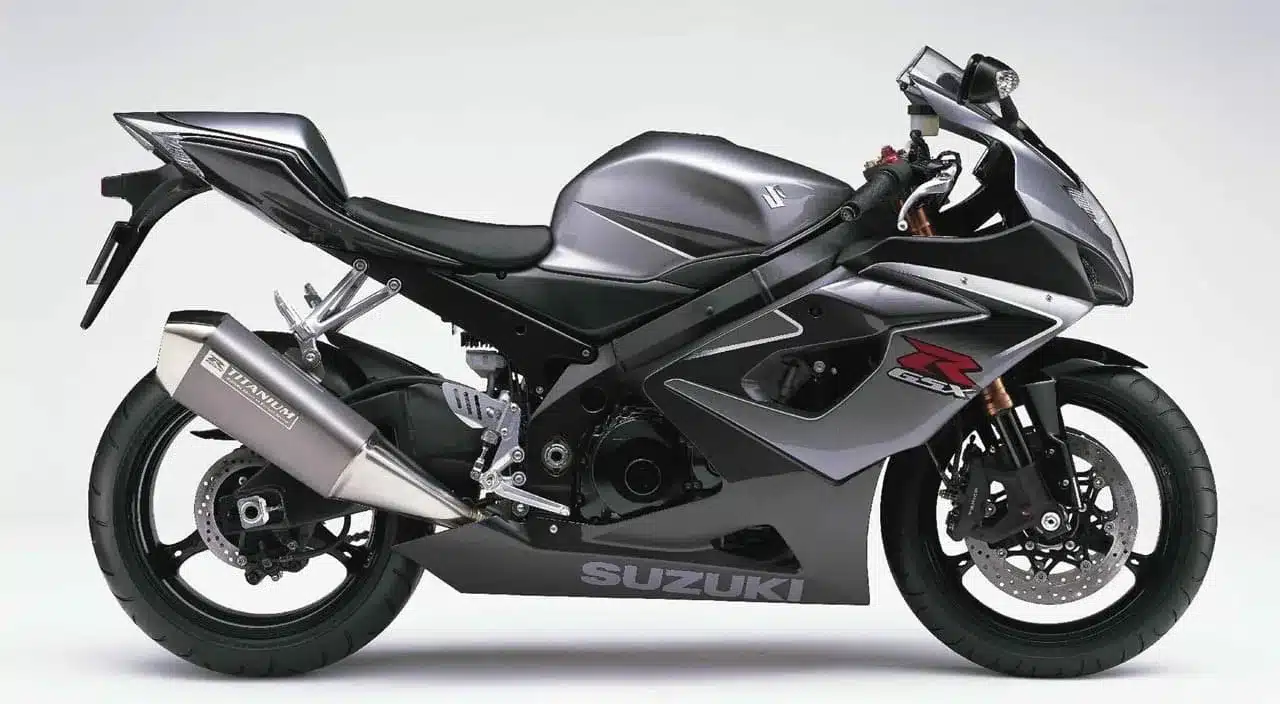
| Exhaust | Single titanium silencer | Twin silencers | The K5 is lighter and cleaner-looking; many K7s now have aftermarket systems |
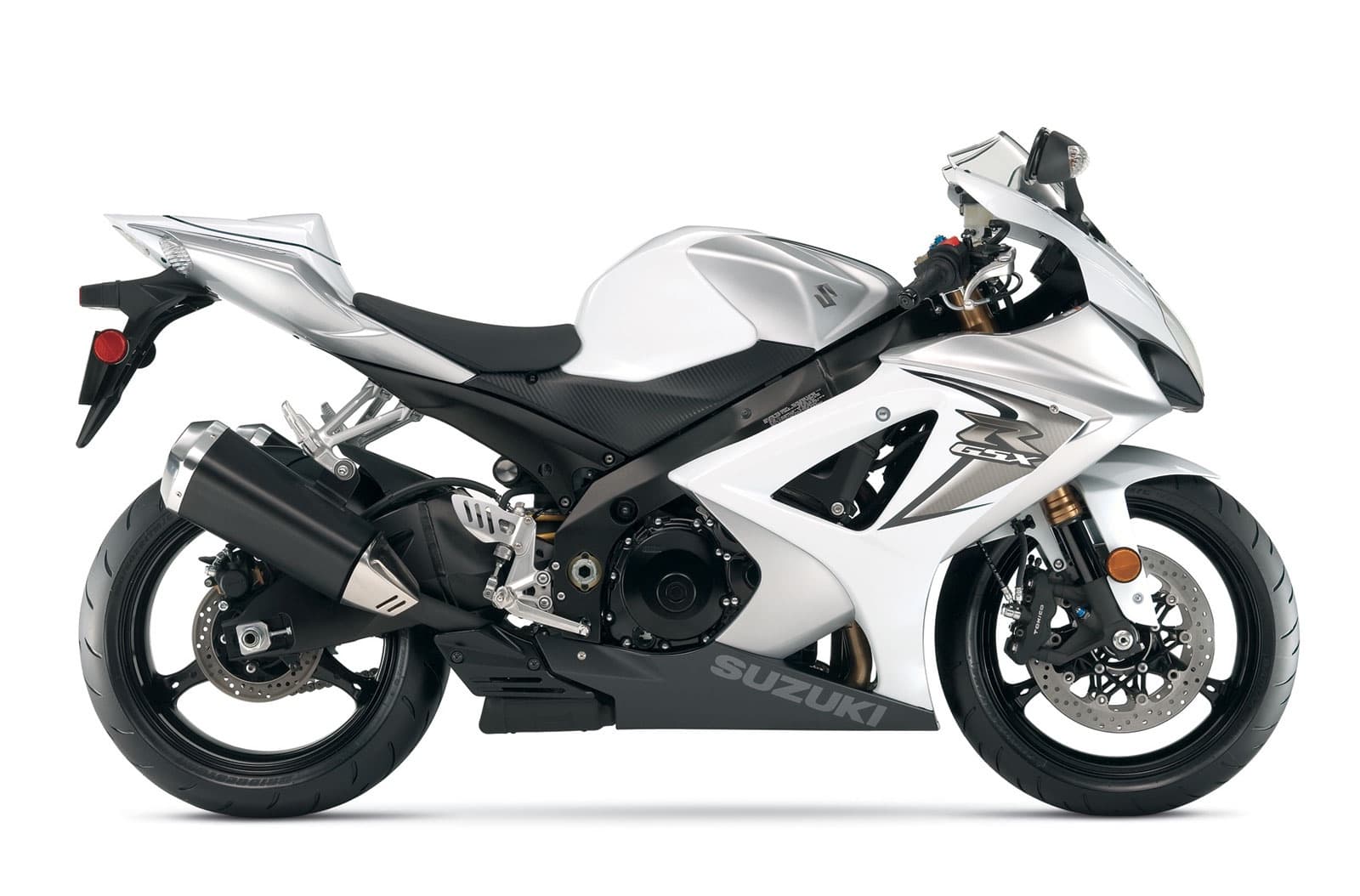
A K7/K8 suits a rider who wants nearly the same engine architecture, a little more peak power and lower collector demand. A K5/K6 suits someone who wants the lighter, single-silencer version that set the reputation in the first place.
Did BMW copy the K5 for the S 1000 RR?
BMW used the K5/K6 GSX-R1000 as a benchmark while developing its first S 1000 RR. That supports the K5’s status, but “BMW copied it” goes too far. Benchmarking means measuring a strong rival and setting targets; it doesn’t mean the engines or chassis are the same.
BMW had no internal four-cylinder superbike to use as its baseline. The Suzuki gave the project team a clear example of strong, accessible power and balanced handling. BMW then built a different motorcycle with more power and a much larger electronics package.
The K5 engine’s second life in the GSX-S1000 and Katana
Suzuki brought the K5 architecture back for the GSX-S1000 and GSX-S1000F. The naked and faired road bikes kept the 73.4 × 59.0 mm dimensions but received different pistons, cams, compression, intake, exhaust and engine management. Calling it “the same engine” hides a lot of engineering; calling it K5-derived is fair.
The later Katana, GSX-S1000GT and current GSX-S1000 family trace the same line through further emissions and electronic changes. If you want the engine’s broad road character with an upright riding position, modern tyres, traction control and available cruise control, the GSX-S1000GT makes far more sense than turning a collectible K5 into a tourer.
What to check before buying a K5 or K6 GSX-R1000
Start with identity and history, then inspect the motorcycle in front of you. Many K5/K6s have been crashed, stunted, raced, modified, rebuilt or all five. Low mileage doesn’t cancel two decades of storage, and shiny fairings don’t prove that the chassis underneath is straight.
- Confirm the VIN and recall work. In the US, campaign 2A08 / NHTSA 09V-022 covered 2005–2006 frames. Dealers inspected the area behind and below the steering neck, replaced cracked frames, or installed a light aluminium reinforcement brace when no crack was present. Ask for paperwork and check the brace rather than trusting a seller’s memory.
- Check the front brake master-cylinder recall. Suzuki’s 2013 campaign covered 2005–2013 GSX-R1000s in the US. The remedy replaced the master cylinder and flushed the system. A spongy lever needs investigation even if the recall has been completed.
- Look for crash and stunt damage. Inspect steering stops, frame spars, engine covers, fork bottoms, wheels, subframe, swingarm, rearsets and fairing mounts. Fresh paint or new bodywork needs an explanation, not automatic rejection.
- Test second and third gear under load. If the bike jumps out of gear, worn engagement dogs or bent selector parts can turn a tempting purchase into an engine-out repair.
- Check the charging system. Measure battery voltage with the engine off and running, and inspect stator and regulator/rectifier wiring for heat damage or poor repairs.
- Inspect the chassis as a system. Check wheel and steering-head bearings, fork seals, shock condition, brake rotors, caliper movement, chain and sprockets. Ask who set the suspension and why.
- Read the modifications. A quality exhaust and properly mapped fuelling can work well. Cut wiring, an unidentified ECU flash, stretched swingarm parts, lowered suspension and missing road equipment should lower the price or end the inspection.
- Check cold starting and hot running. Listen before the seller warms it up. Watch for smoke, unstable idle, fuel leaks, cam-chain noise that doesn’t settle, cooling-fan problems and signs of old fuel.
Maintenance costs and service intervals
The K5/K6 uses conventional Japanese inline-four servicing. The schedule calls for oil changes every 6,000 km (3,750 miles), spark plugs every 12,000 km (7,500 miles), and valve-clearance inspection every 24,000 km (15,000 miles). See the full K5–K8 GSX-R1000 maintenance schedule for the complete checklist and market notes.
Age-related work will often cost more than scheduled engine service. Brake hoses, coolant hoses, fork seals, bearings, rubber intake boots and electrical connectors don’t care how little the odometer has moved. If the rear shock has never been rebuilt, treat it as a service item rather than a valuable original part.
A stock, documented motorcycle usually costs more because originality is hard to recover. Pay for condition and evidence, not a seller’s list of carbon accessories. Keep any factory parts that come with the bike.
Alternatives to a K5/K6 GSX-R1000
| Motorcycle | Choose it if… | Why you might still choose the K5/K6 |
|---|---|---|
| 2007–2008 Suzuki GSX-R1000 K7/K8 | You want similar engine geometry, more peak power and a lower entry price | The K5/K6 is lighter, has one silencer and carries the stronger collector story |
| 2002–2003 Honda CBR954RR FireBlade | You want the final Tadao Baba FireBlade, less power and a very light road-focused chassis | The Suzuki is much stronger and represents the next stage of the litre-bike arms race |
| 2004–2005 Kawasaki Ninja ZX-10R | You want a sharper, wilder early-2000s litre bike | The K5’s power delivery and chassis are easier to read |
| 2004–2006 Yamaha YZF-R1 | You prefer the Yamaha’s high-rpm engine character and under-seat-exhaust design | The K5 has stronger midrange and a simpler single low silencer |
| Suzuki GSX-S1000 or Katana | You want K5-derived engine architecture with upright ergonomics and modern rider aids | The K5 is lighter, more direct and far more important as a period superbike |
| 2017–2027 Suzuki GSX-R1000/R | You want a faster GSX-R with an IMU, traction control and, on the R, stronger track equipment | The K5 has less electronic filtering, lower collector-era mass and the original Godzilla story |
Does the K5 GSX-R1000 deserve the Godzilla name?
Yes, with some limits. The K5 was one of those rare redesigns where the engine, chassis and timing all landed together. It made huge power for 2005, delivered it across a wide rev range, handled well enough to use that power, won at World Superbike level, and later became the benchmark for BMW’s first S 1000 RR project. Modern tests show that a properly sorted example can still move around a track at a serious pace.
Buy one if you specifically want a landmark analogue superbike and can find a straight, documented example with the applicable recall work addressed. Skip it if you mainly want the fastest lap time, ABS for road riding, or an uncomplicated daily motorcycle. A later GSX-R1000 is faster and safer; a GSX-S1000 is easier to live with.
The badge and model code don’t protect you from a bad purchase. The best K5 is the one that still shows why people started calling it Godzilla, not the one that needs a legend to excuse twenty years of neglect.