
Many people’s answer to “What first bike should I get?” is, if it’s not “turbo ‘busa” or “Grom”, a Yamaha MT-07.
Of course, there’s an infinite (and rising! defying math) number of first bikes, just as there are an infinite number of types of riders and their preferences. But so many of those preferences are met by the MT-07.
It’s well-built, comfortable, fast enough, has a cracker of an engine with a great sound and feel, and is reliable. It looks good, or at least doesn’t look bad. And these days, Yamaha is giving them ride tech up the wazoo to help new riders feel like they won’t end up as a smear on the highway.
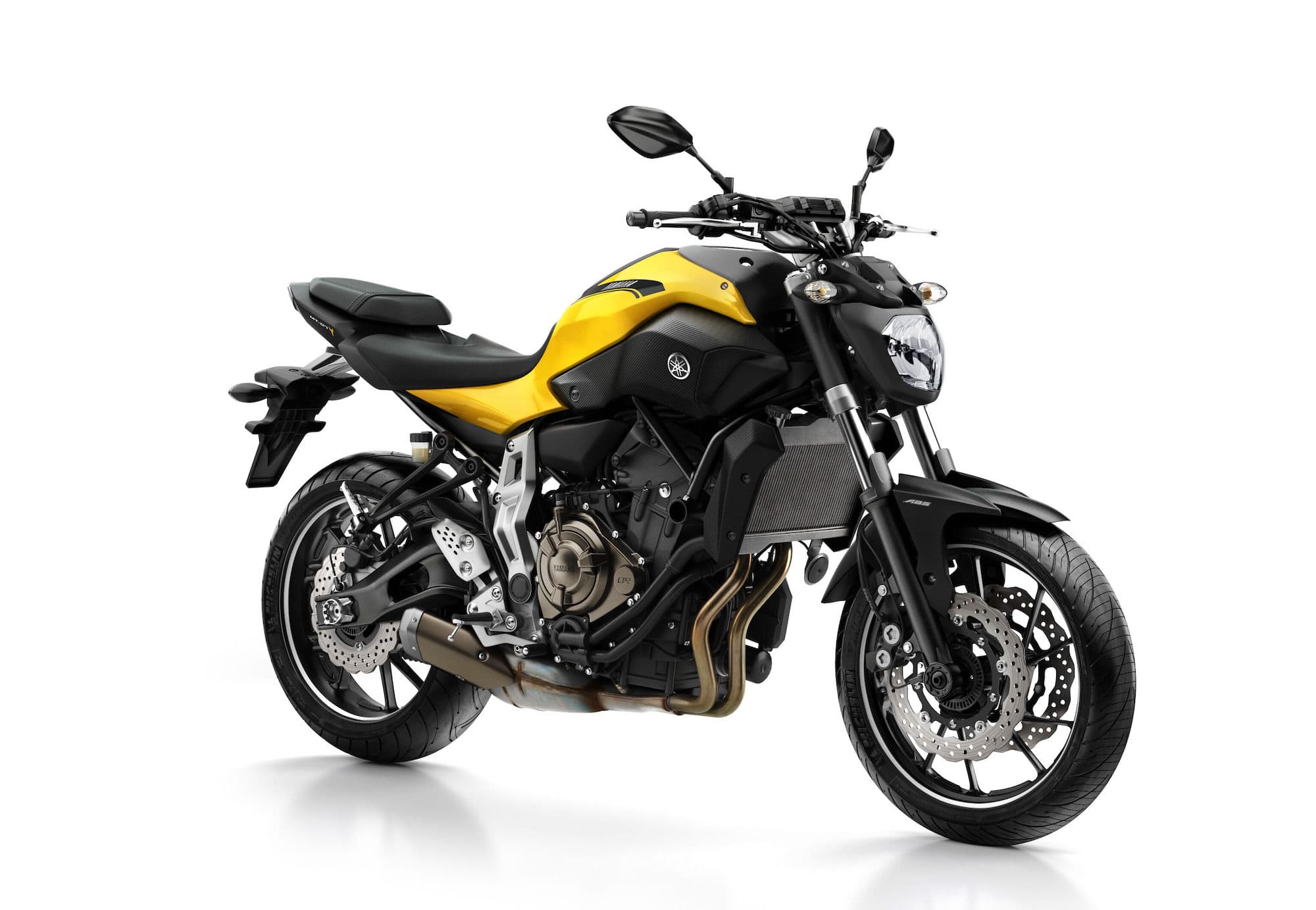
While Yamaha has built a number of bikes around the CP2 engine, the MT-07 (first called the FZ-07 stateside) was the first, and the XSR700 is so similar that it’s worth bundling them together. The MT-07 and XSR700 are both light road bikes with a naked “everyday sporty” philosophy. The MT-07 modern-looking, a bit more compact, and lighter, whereas the XSR700 is retro-styled, slightly roomier, and very slightly heavier. But they’re both milkshakes, just strawberry or chocolate.
Since launch, the MT-07 has had several substantial updates, culminating in the much better-equipped fourth-generation bike for 2025. The XSR700 has evolved at a different cadence. Australian buyers also have to distinguish the 655 cc learner-approved models from the full-power 689 cc MT-07HO.
This guide explains the names, every meaningful model change, the differences between the MT-07 and XSR700, the Australian LA and HO versions, what to inspect on a used bike, and when another CP2 Yamaha—or an MT-09/XSR900—makes more sense.
First published August 2026. Covers the 2026 MT-07, MT-07 Y-AMT and XSR700, with regional differences noted.
Are you obsessed with motorcycles?
Well, I am. That’s why I created this site — as an outlet. I love learning and sharing what others might find useful. If you like what you read here, and you’re a fraction as obsessed as I am, you might like to know when I’ve published more. (Check the latest for an idea of what you’ll see.)
Yamaha MT-07/FZ-07 Generation Oview
Below is a summary table of how the MT-07 / FZ-07 has changed over time.
| Model | Main changes | Why buy it |
|---|---|---|
| 2014–2017 FZ-07 / MT-07 | Original 689 cc CP2 bike; 282 mm front discs; basic suspension; ABS optional in some markets | The lightest, simplest and usually cheapest, but kind of ugly… buy if cheap and not thrashed. |
| 2018–2020 MT-07 | New bodywork and seat; revised fork settings; rebound-adjustable rear shock; FZ-07 renamed MT-07 in the US | The used-market sweet spot if you do not care about a colour screen or rider aids. |
| 2021–2022 MT-07 | EU5 engine in relevant markets; LED projector headlight; 298 mm front discs; wider handlebar and revised bodywork | Better brakes and a fresher riding position without much electronic complexity. |
| 2023–2024 MT-07 | 5-inch TFT, phone connectivity and quickshifter preparation in many markets | Choose it if you want the older chassis with a modern dashboard. |
| 2025–2026 MT-07 | Ride-by-wire, power modes, switchable traction control, assist/slipper clutch, 41 mm inverted fork, radial calipers, SpinForged wheels and revised frame | The best-handling and best-equipped MT-07. It is a real generation change, not a cosmetic update. |
| 2025–2026 MT-07 Y-AMT | Automated manual gearbox and cruise control; 186 kg (410 lb), versus 183 kg (403 lb) for the manual | Choose it for urban traffic, an injured clutch hand, or cruise control. The manual is simpler and lighter. |
| 2016–2021 XSR700 | Original retro CP2 roadster; cable throttle; 282 mm front discs; round LCD; removable rear subframe | The uncomplicated retro choice. Mechanically close to the early MT-07. |
| 2022–2026 XSR700, European specification | EU5 engine, LED lighting, revised cockpit and 298 mm front discs | A cleaner and better-braked XSR700, but still far simpler than the latest MT-07. |
| XSR700 XTribute / Legacy | Scrambler-style seat, bars, gaiters, tyres, colours and trim; market-dependent availability | Buy one because you like the specific riding position and appearance, not because it has more performance. |
For most used buyers, I would start with a clean (not thrashed or modified) 2018–2020 MT-07. It has the original bike’s directness, but the revised seat and suspension make it a little more settled. If your budget reaches the 2025 generation, that bike earns its premium through chassis and brake improvements rather than a token dashboard update.
Choose the XSR700 when you prefer its shape enough to pay for it. The metal tank covers, separate seat and removable subframe also make it a better base for a tasteful custom build. (Do not assume that a same-year XSR700 has the same electronics or brakes as the MT-07 — they’re always slightly off.)
MT-07, FZ-07 and XSR700 — Are there any differences?
No. Well, ok, some small ones.
Yamaha launched the MT-07 in Europe and other markets for 2014. In the United States, it arrived as the FZ-07 for the 2015 model year. Yamaha standardised the American name as MT-07 for 2018. An FZ-07 is therefore an early US-market MT-07, not a separate model.
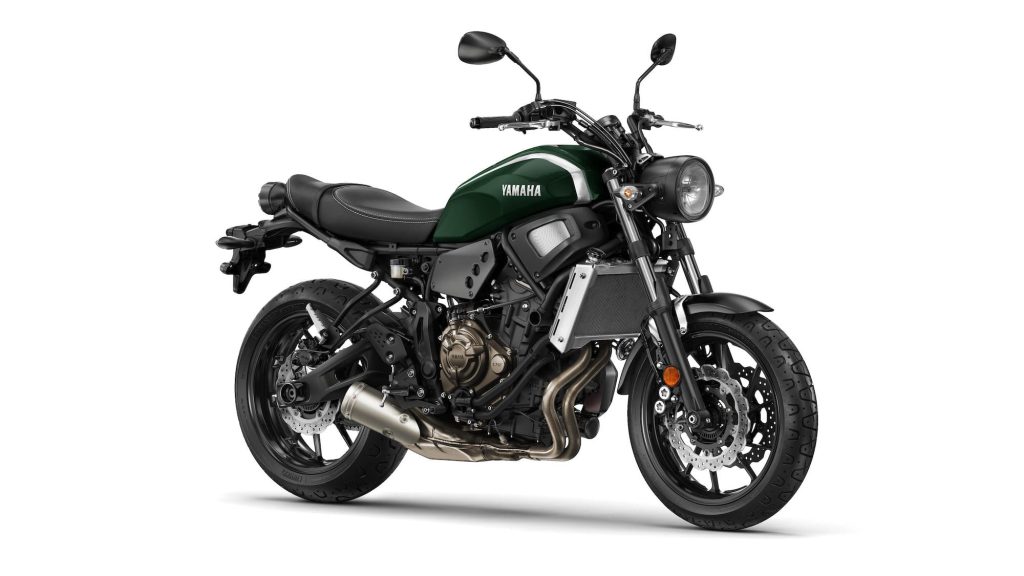
The XSR700 arrived in Europe in 2016 and in the US in 2018. It shares the CP2 engine and much of the steel-frame platform with the MT-07, but Yamaha changed the bodywork, seat, handlebar position, lighting, instruments and some chassis dimensions. The XSR also has a bolt-on rear subframe that makes custom work easier.
The Australian LA and HO versions
Australia needs its own explanation. Yamaha sells a learner-approved MT-07LA with a 655 cc engine and an unrestricted MT-07HO with the usual 689 cc CP2. This is because in Australia, learner riders aren’t just limited to a power maximum — in most states (but not all!), you have to also have a displacement under 660 cc. So the MT-07LA motor uses a 78.0 mm bore rather than the HO bike’s 80.0 mm bore, and has an 11.0:1 compression ratio rather than 11.5:1. This is not only an electronic restriction that you can remove with a flash — though you can definitely upgrade the LA’s power, just not to the same max as the HO.
Because the MT-07 is so popular as a first bike, the majority I’ve seen sold used are the LA model, not the HO. Buyer beware! Because if you’re analysing the MT-07 using reviews you read online, you almost definitely will be thinking of the HO.
The current Australian XSR700 is also a 655 cc LAMS model. A used listing that says only “MT-07” or “XSR700” may leave out the most important part of the specification, so check the compliance plate, VIN and engine capacity.
The Y-AMT in Australia only comes in full power spec.
| Australian model | Engine | Licence / output | Current-generation equipment |
|---|---|---|---|
| MT-07LA | 655 cc, 78.0 × 68.6 mm, 11.0:1 | LAMS approved | 2025-on chassis, ride-by-wire, modes, traction control, inverted fork and radial brakes |
| MT-07HO | 689 cc, 80.0 × 68.6 mm, 11.5:1 | Full power | Same 2025-on chassis and electronics; six-speed manual |
| MT-07HO Y-AMT | 689 cc, 80.0 × 68.6 mm, 11.5:1 | Full power | Automated manual transmission and cruise control; no clutch lever |
| XSR700 | 655 cc, 78.0 × 68.6 mm | LAMS approved | Retro bodywork, cable throttle and simpler chassis specification |
The CP2 Engine — Why the MT-07 Feels Stronger Than the Numbers Suggest
What’s so special about the CP2 engine? Why has Yamaha used it in five different motorcycles, all of which are popular??
There’s a special sauce in it, and it comes down to the fact that it’s lightweight, it feels great, and it’s powerful enough for most people. It’s in that sweet spot of power and torque where it’ll easily take you through most turns at speeds where you can become genuinely frightened. It won’t scream down the straight, but considering most of us do that for less than 0.5% of our riding ever (I know, some of you are saying “you’re doing it wrong”), that’s fine.
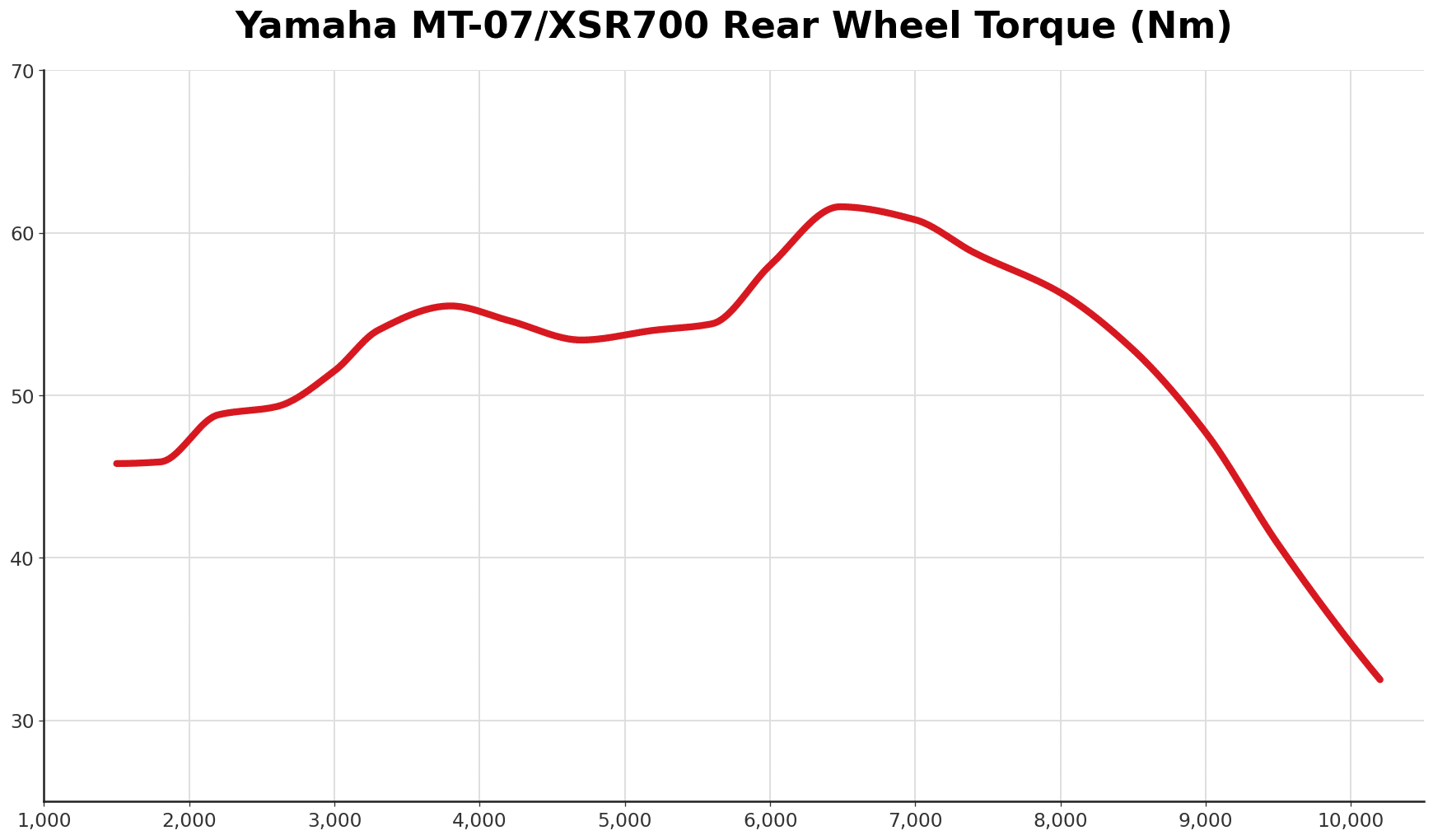
The CP2 is a 689 cc liquid-cooled, DOHC parallel twin with four valves per cylinder, a 270-degree crank and a six-speed gearbox. Bore and stroke are 80.0 × 68.6 mm, so the motor is neither an especially long-stroke torque engine nor a short-stroke screamer. (See here for bore and stroke explained.)
Yamaha describes the engine as making 54.0 kW (73 PS / 72 hp) at 8750 rpm and 67 Nm (49 lb-ft) at 6500 rpm, with slight variances depending on model year and region. On a dyno, the figures are not that different from those at the crank.
The numbers aren’t stratospheric. But more useful than the peak is the shape: the engine is already making roughly most of its torque by 1500 rpm and stays usefully strong until over 8,000 rpm. And above 8k… well, you might want to go there sometimes, but in reality, you probably won’t very often.
Yamaha didn’t invent the 270-degree crankshaft, but they certainly helped its use become widespread. There’s a whole generation of bikes with offset cranks, and I attribute their rise entirely to the MT-07’s popularity. (In turn, I think Yamaha’s use of the crank was in part inspired by the SV650‘s popularity.)
Yamaha calls it “Crossplane” and talks about how it helps with traction feel. That mumbo jumbo aside, the reality is that it sounds and feels good, and inspired others to build similar designs.
For the full technical history, including the crank layout, internal revisions and every application, see the complete guide to Yamaha’s CP2 motor.
The CP2 has evolved over time with emissions regulations. Peak power has dropped, as has torque, but by a negligible degree. In practice, conditions, gearing and throttle calibration matter more than that small difference.
In 2025, Yamaha kept everything the same internally but added YCC-T ride-by-wire (something they had on other bikes since decades ago… see the YZF-R6 model history, for example), an assist/slipper clutch and an intake system that channels more induction sound toward the rider. Ride-by-wire allows Sport, Street and Custom settings plus switchable traction control.
Yamaha FZ-07/MT-07 Model History and Changes
Below is an overview of how the FZ-07 and MT-07 changed over time.
First generation: 2014–2017 MT-07 / 2015–2017 FZ-07
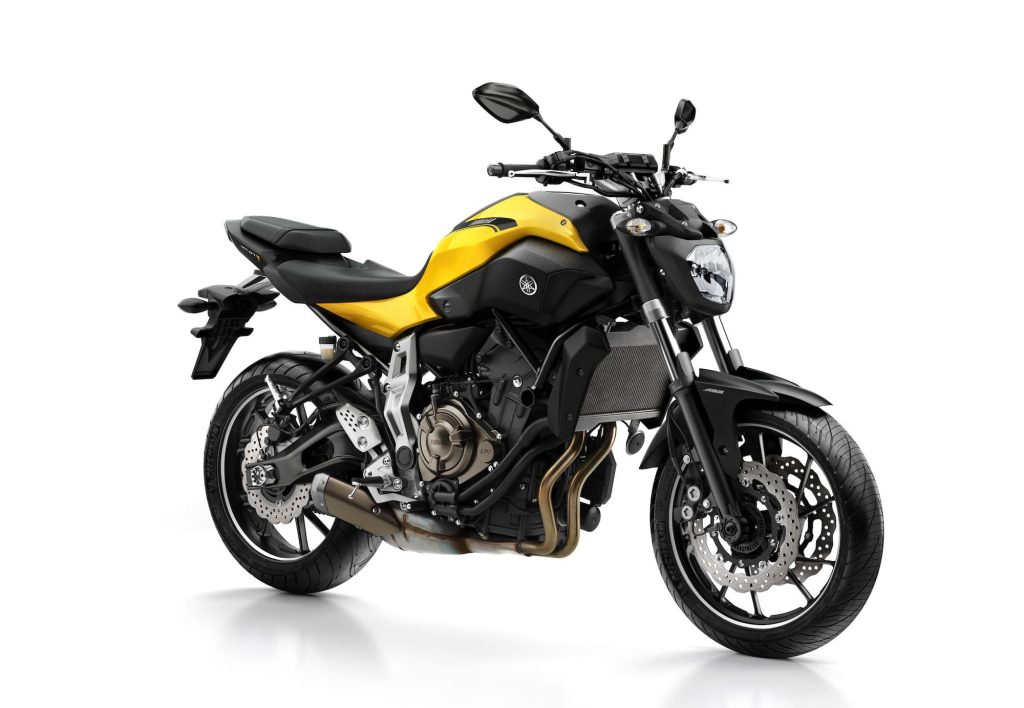
Yamaha released the first MT-07 and FZ-07 in 2014/2015 in US and European markets.
The basic formula was the same as today — a parallel twin engine in a lightweight chassis and naked bike configuration. The first-gen FZ-07 was 179 kg / 395 lb wet (without ABS) – this is in the same ballpark as many bikes in the 300 or 400 cc class!
The chassis of the first-gen is simple — a steel diamond frame that uses the engine as a stressed member, a conventional 41 mm fork with no adjustment, a preload-adjustable linked rear shock and axial (as opposed to radial, more modern) four-piston (still better than two!) calipers on 282 mm front discs.
The first gen works well at commuting and back-road speeds, but a heavier or fast rider can use all the suspension travel quickly. The fork can also feel vague when braking hard on a bumpy road.
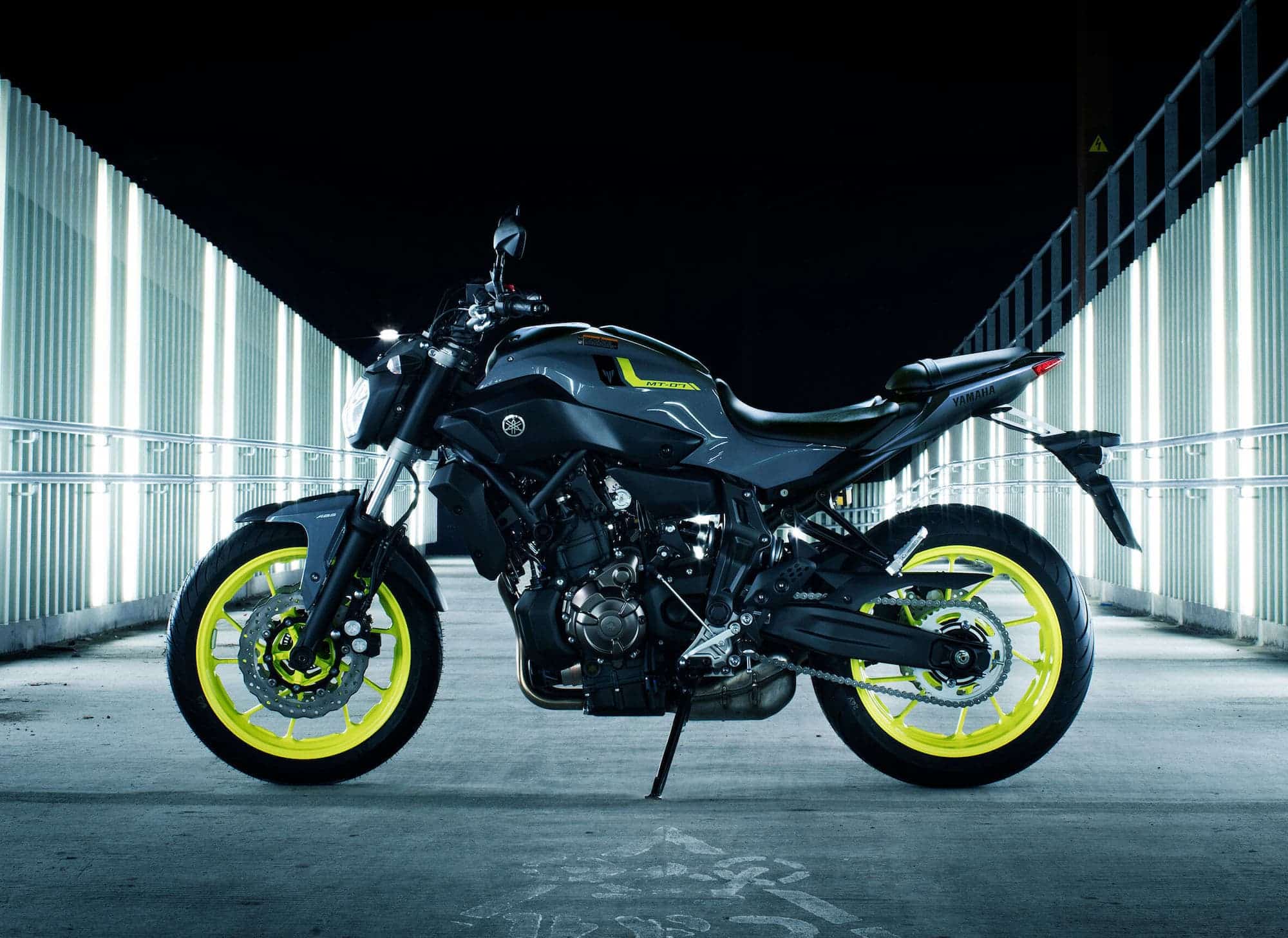
Yamaha remedied many issues with the first-gen FZ-07 in later models, improving chassis rigidity, braking, and suspension. But all that came over time. It didn’t matter, though, because the first-gen was already a winner.
This is in contrast with the first-generation FZ-09/MT-09, by the way, where the lightweight chassis was overpowered by the engine. As much as people like the engine, that bike felt unfinished without some suspension work.
Second generation / facelift: 2018–2020 MT-07
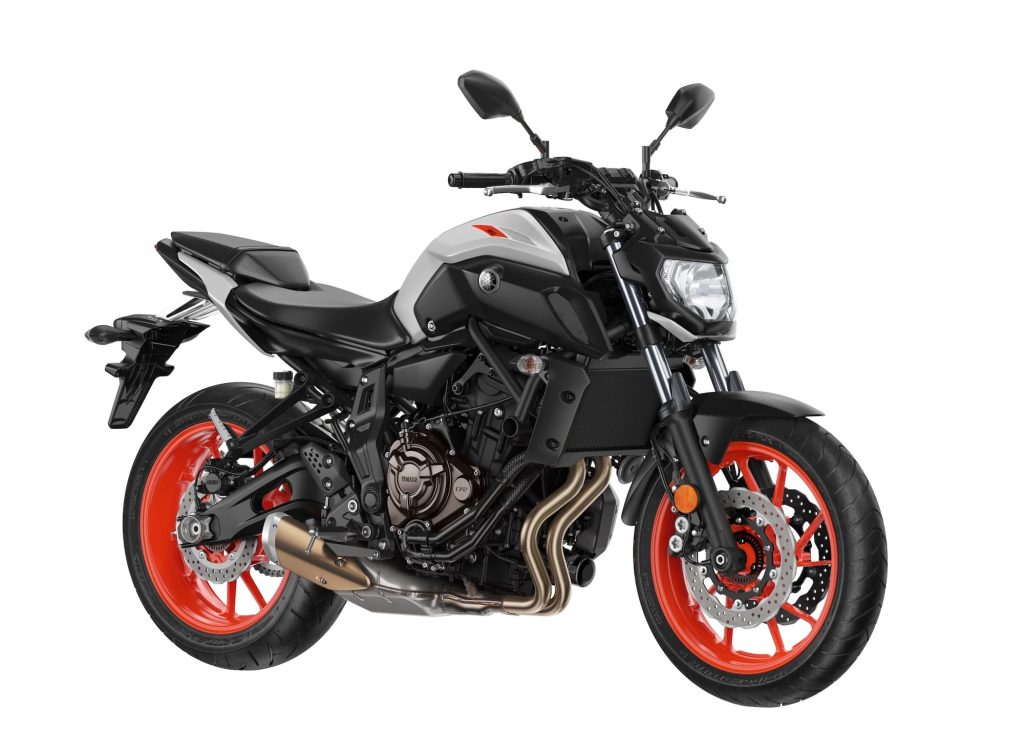
For 2018, Yamaha fixed many of the bugbears of the original model, and gave it a consolidated name – MT-07 in every market.
Most significantly, Yamaha gave the fork firmer settings and the rear shock rebound adjustment. Yamaha did not change the engine, frame, brakes or basic geometry.
Cosmetically, Yamaha also reshaped the tank covers, air scoops, headlight and tail, then fitted a broader two-piece seat.
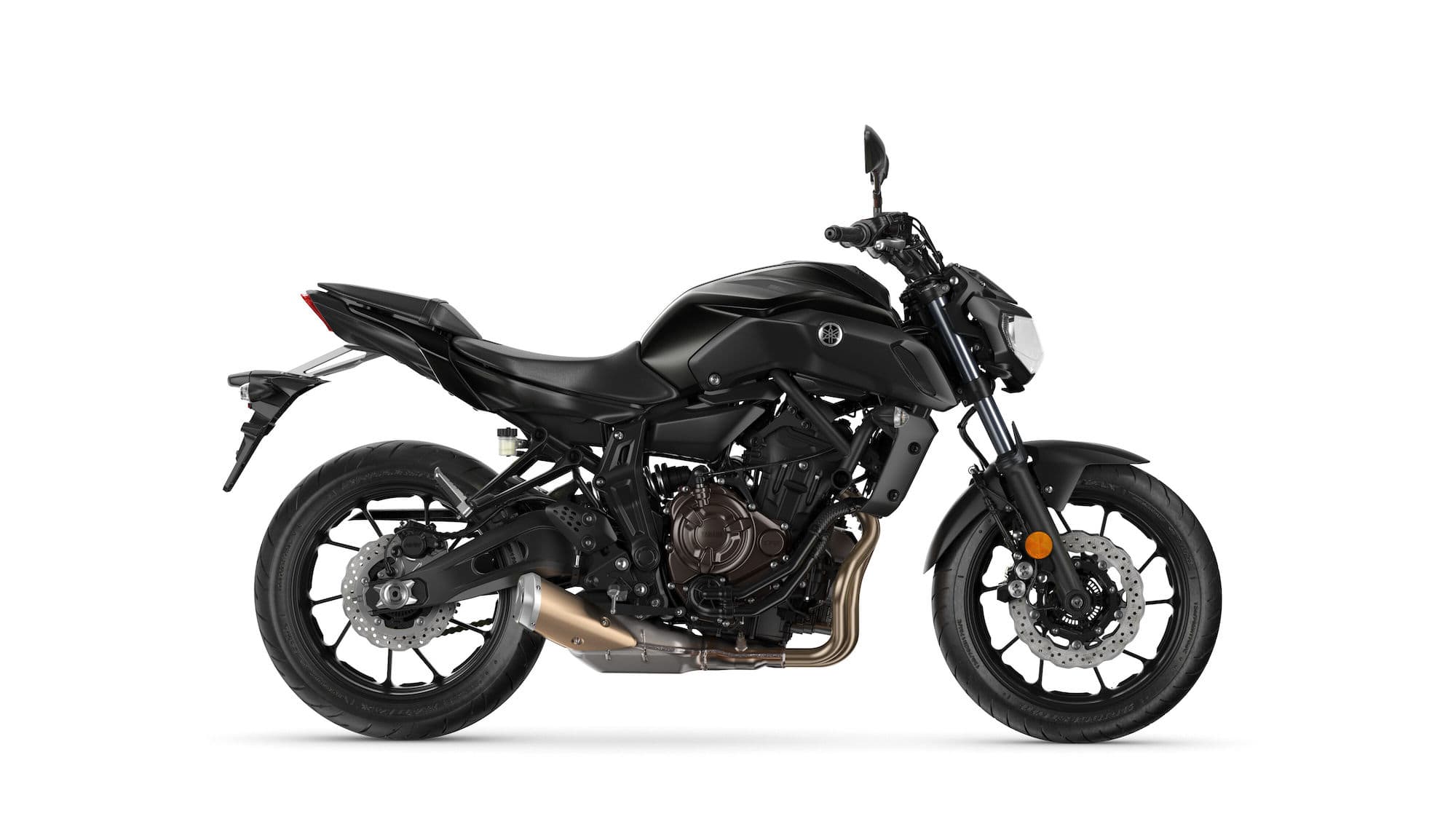
The 2018 model is now old enough to be cheap, and address common complaints without adding much cost or complexity. Owners still upgrade the fork springs, oil and shock, especially if they ride quickly or carry a passenger.
Third generation: 2021–2022 MT-07
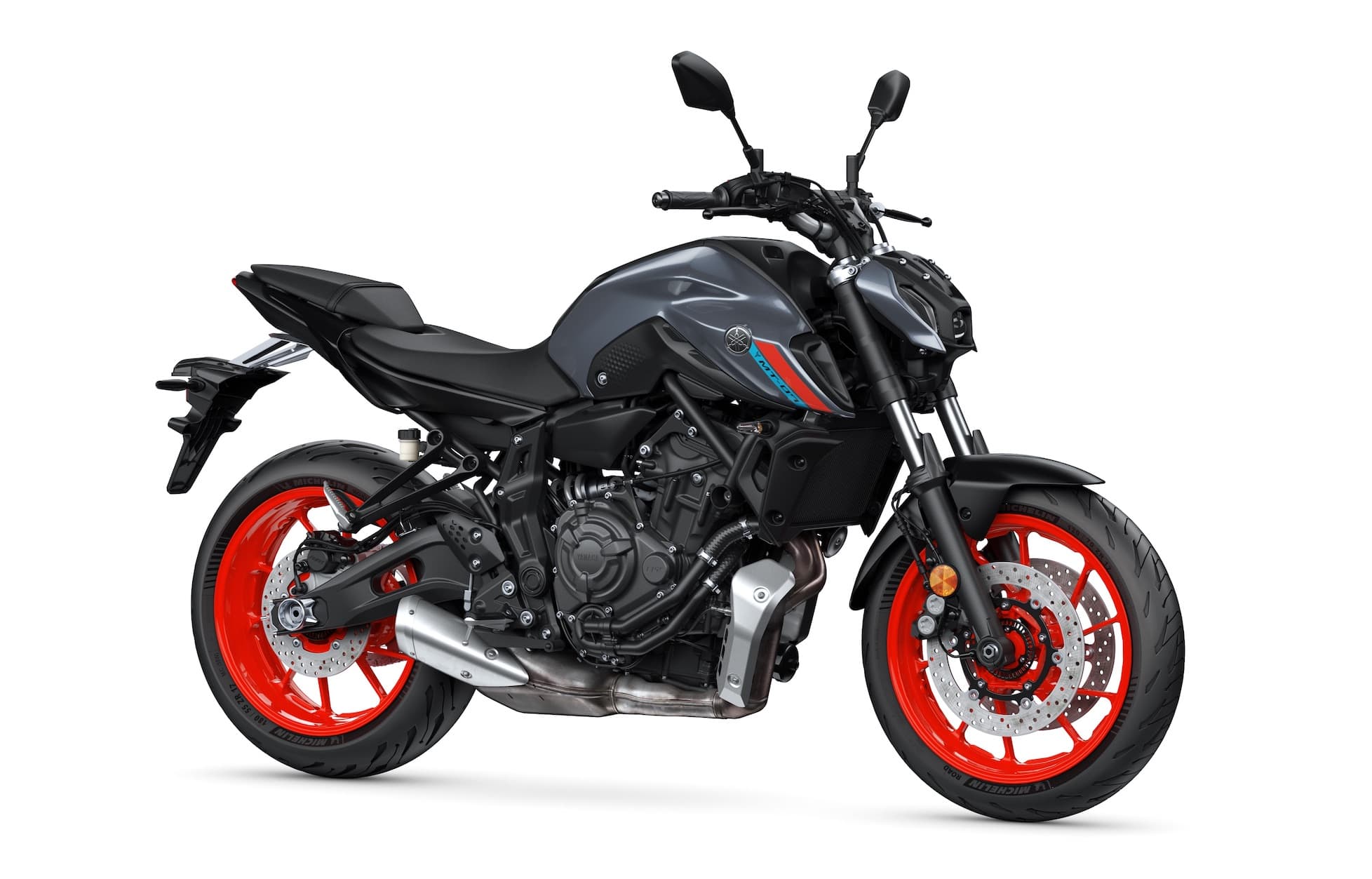
The 2021 update is easy to recognise by its central LED projector headlight and small side running lights. Yamaha also fitted wider tapered aluminium handlebars, changed the tank and side panels, revised the intake and exhaust for Euro 5, and enlarged the front discs from 282 to 298 mm. Wet weight rose to about 184 kg (406 lb)… just a smidgen, but every smidgen counts. (What, now I have to lose a few kgs? No deal!)
Yamaha kept the fork conventional and non-adjustable, and the calipers axial rather than radial.
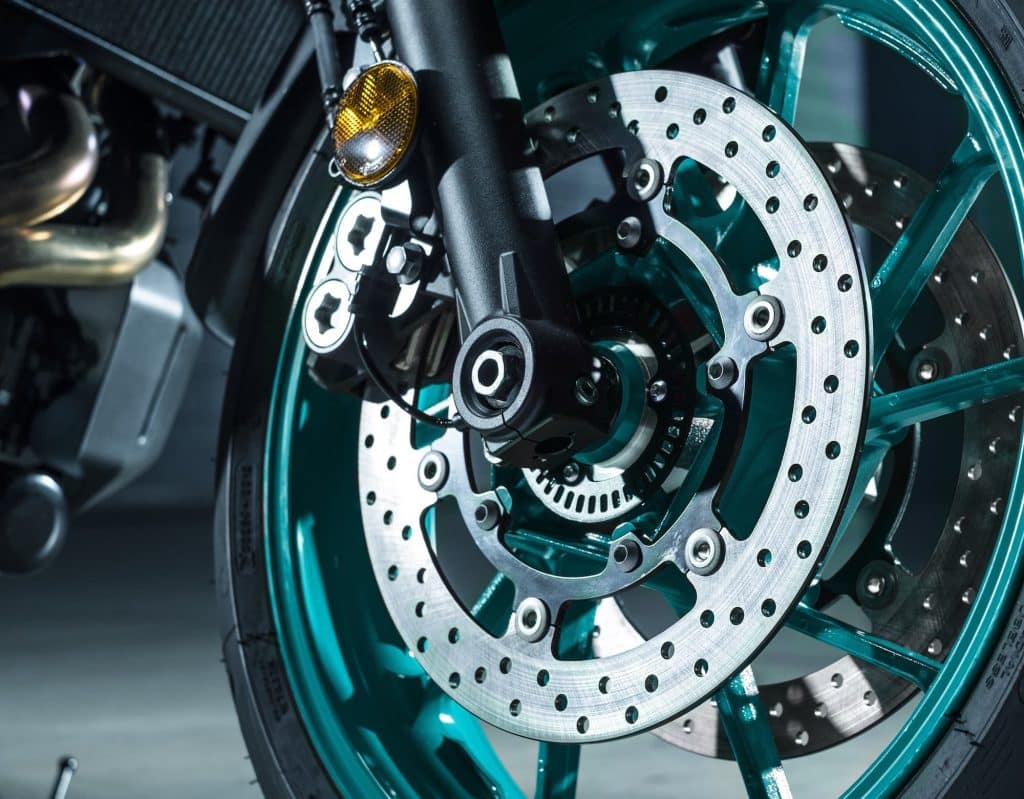
The projector headlight kept the theme of the MT-07 in line with the MT-09. It was somewhat divisive, and if I may editorialise, a little ugly… but it’s not keeping me up at night.
TFT update: 2023–2024 MT-07
From 2023, Yamaha updated the display from an LCD to a TFT. It looked decent already, but the update is a significant one. Plus, the new display meant MyRide phone connectivity, so now you can ride your motorcycle from your phone, presumably.
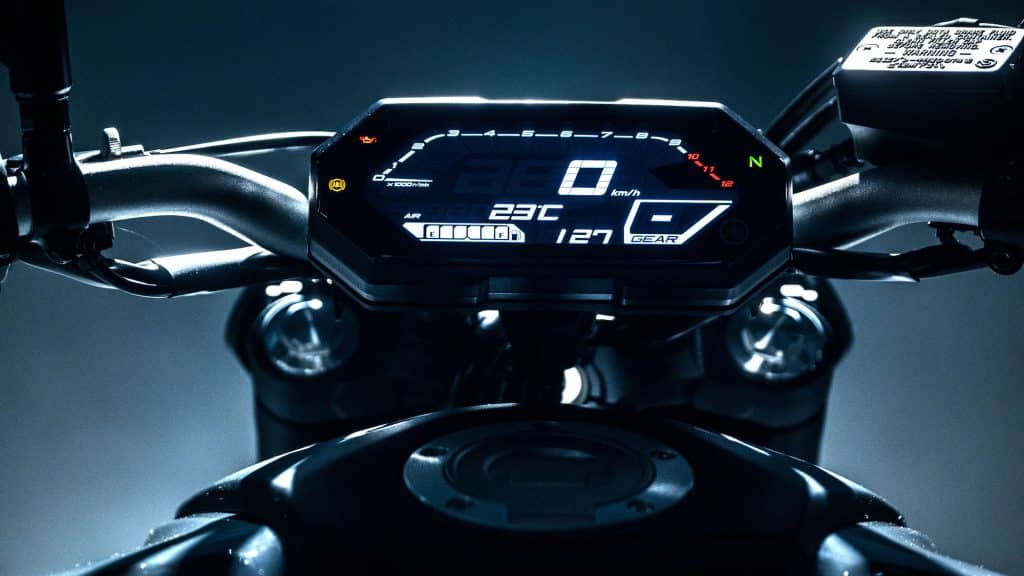
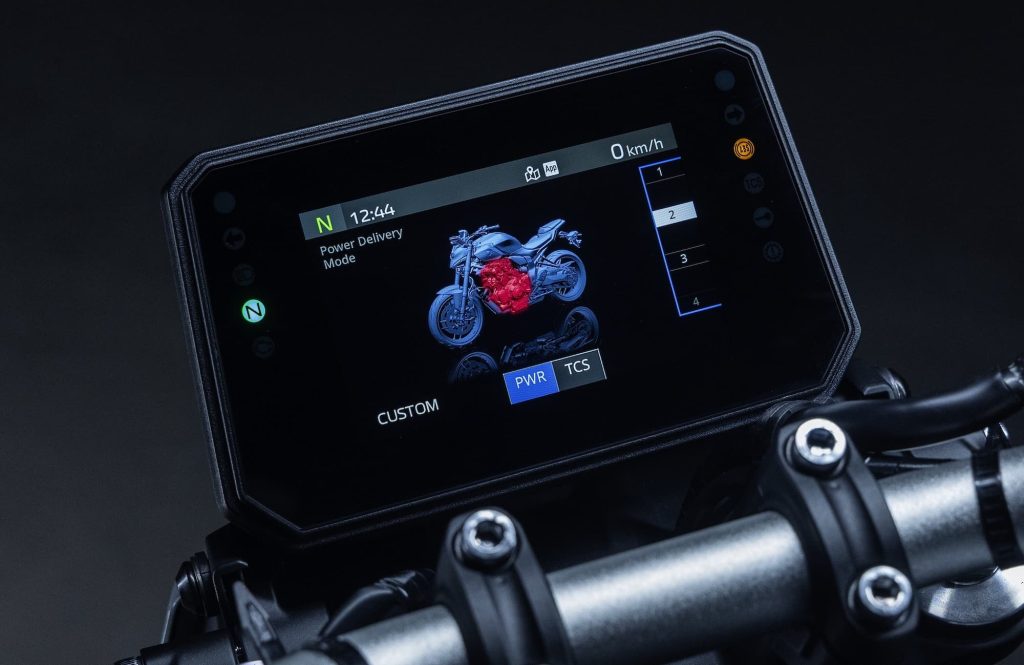
Seriously, I guess I’m now awkwardly thinking of LCD as being “retro”, even though what I should really be reminiscing about is dials.
Fourth generation: 2025–2026 MT-07
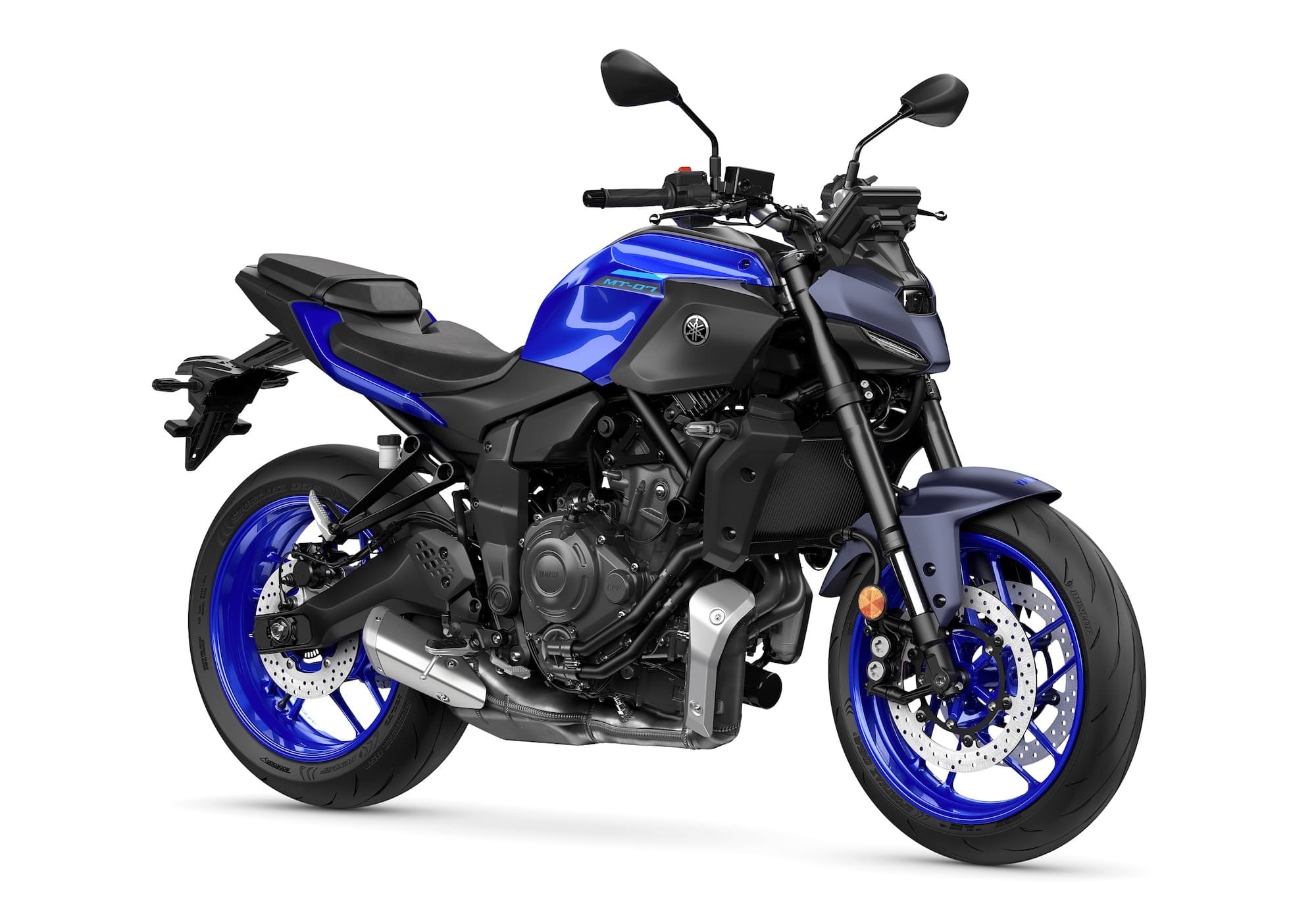
The 2025 MT-07 is the largest change in the model’s history. Again, Yamaha kept their winning frame and 689 cc CP2, but revised the frame and swingarm pivot for roughly 12–13% more rigidity while keeping the frame at about the same weight.
The bike also has lighter SpinForged wheels and weighs 183 kg (403 lb) wet in manual form.
But wait, there’s more! Yamaha’s biggest changes were on the front end. They blessed the MT-07 with a 41 mm inverted KYB fork and radial four-piston front callipers, giving the tyre, fork and brake assembly more stiffness.
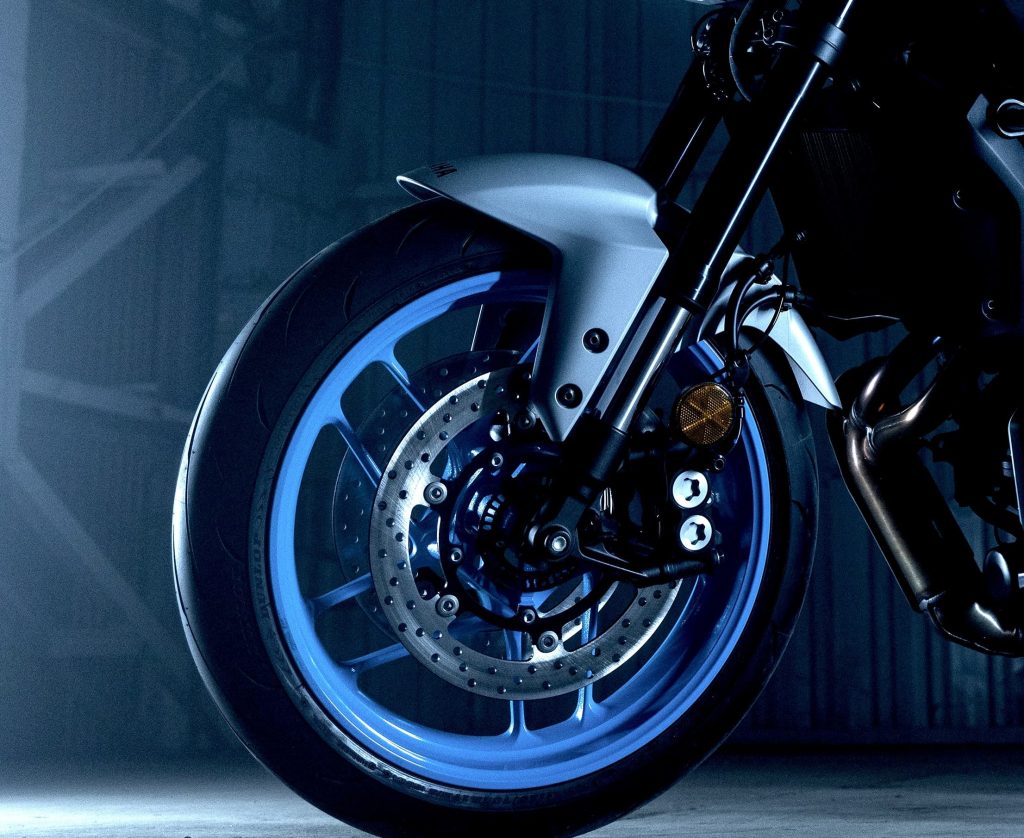
The rear shock still adjusts only for preload and rebound, but Yamaha retuned it for the new chassis. The handlebar is lower and closer, and the wheelbase is shortened slightly.
Electronics also progressed. Yamaha gave the MT-07 ride-by-wire, which means they could implement three ride modes, switchable traction control and compatibility with an accessory up/down quickshifter. The indicators self-cancel, and an emergency-stop signal flashes them during hard braking.
What the MT-07 still lacks is an IMU, so the ABS and traction control are not lean-sensitive. The manual MT-07 also has no cruise control. Both points separate it from the more expensive CP3 bikes, as well as some tech-forward competitors (like the Triumph Trident 660).
MT-07 Y-AMT model
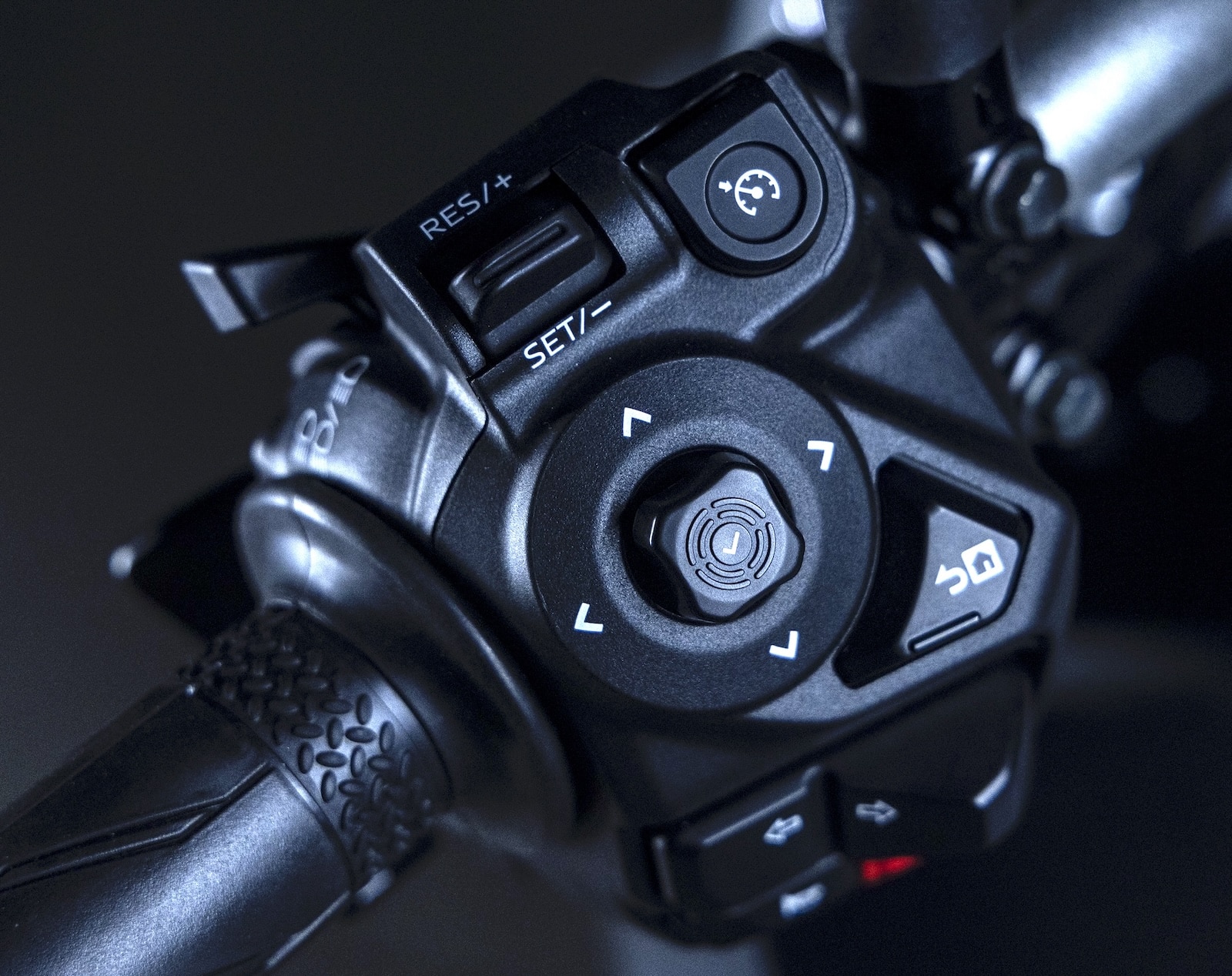
The Y-AMT model is just an MT-07 with an automated version of the six-speed manual gearbox, not a belt-drive CVT or a dual-clutch transmission. Electric actuators operate the clutch and selector. You can let it shift automatically or select gears with a finger-operated rocker on the left handlebar. There is no clutch lever or foot shifter. For the mechanical and control differences, see how Y-AMT compares with DCT, E-Clutch, and other automatic motorcycle transmissions.
The Y-AMT bike weighs 186 kg (410 lb), 3 kg (6.6 lb) more than the manual, and it is the only MT-07 version with cruise control. It suits stop-and-go traffic and riders who want to remove clutch work without losing stepped gears. Buy the manual if mechanical simplicity, low weight and clutch control are part of why you want an MT-07. Buy this one if you want cruise!
(See my list of unusual motorcycles with cruise control.)
XSR700 Model History and Variants
The XSR700 came out after the MT-07. It’s largely a styling exercise, but what style!
Original XSR700: 2016–2021
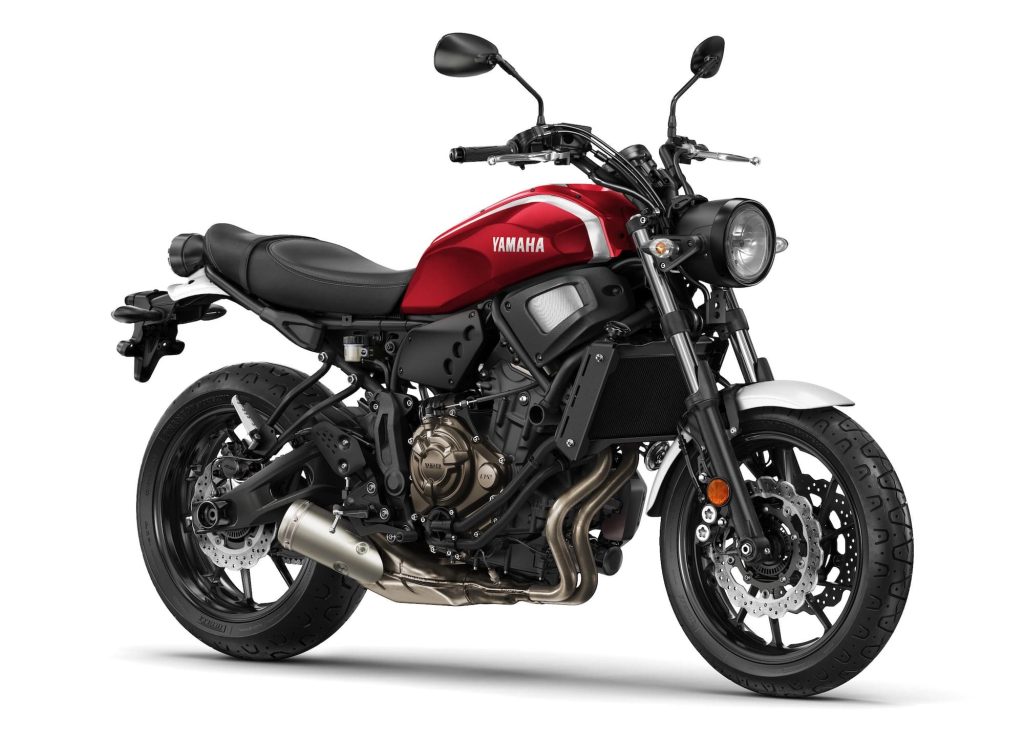
The original XSR700 takes the early MT-07 platform and changes the parts you see and touch. It has aluminium tank covers, a round headlight and taillight, a stitched two-level seat, a round LCD, a wider handlebar and a removable rear subframe.
The interesting part is that Yamaha did also change the geometry, with a taller seat and longer wheelbase, which gives the XSR700 a roomier feel. This comes with a slight weight penalty of a few kgs, but nothing significant if you’re riding this on aesthetics.
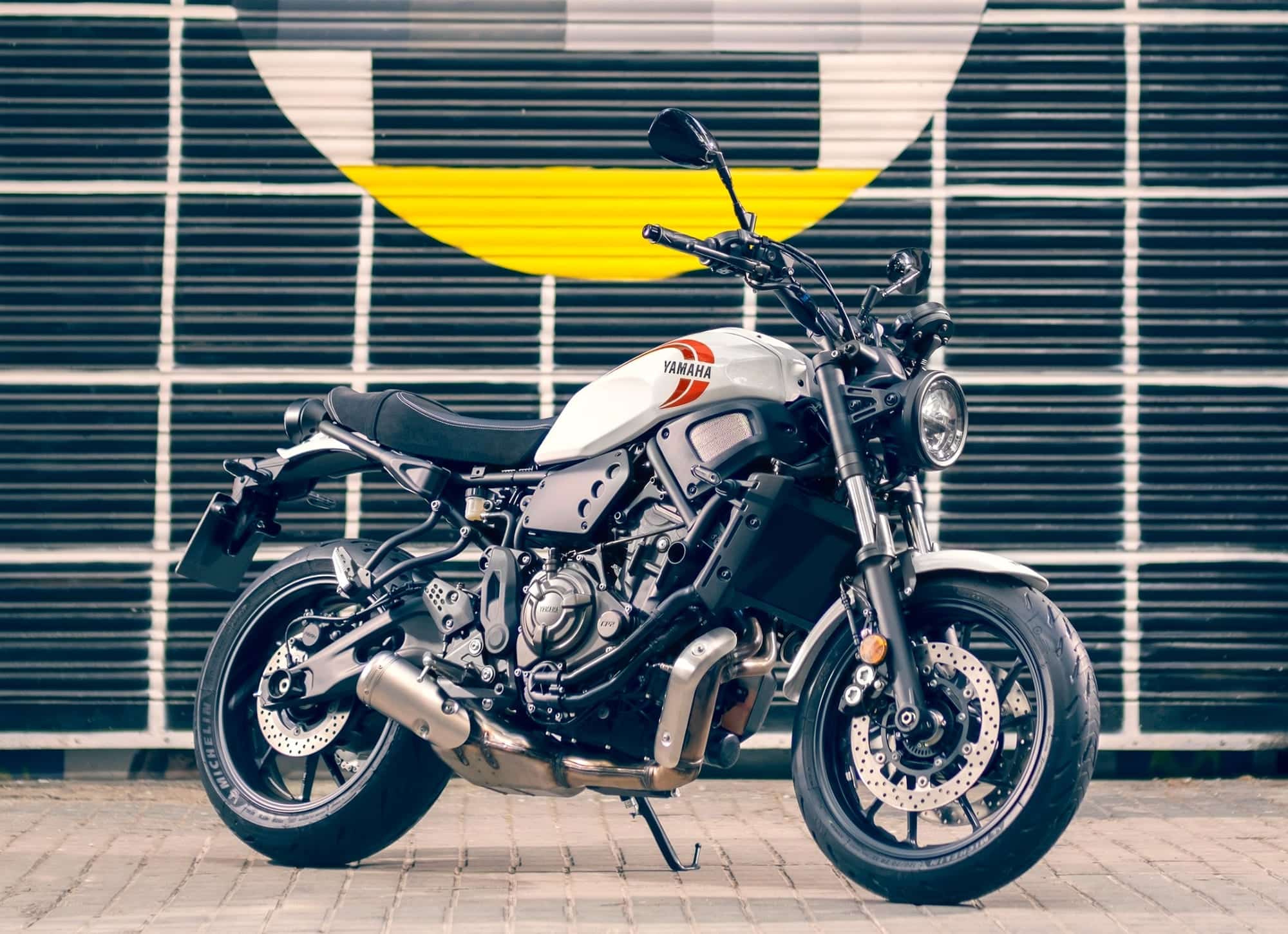
The conventional fork and basic shock give it the same limits, and the extra trim does not turn it into a premium chassis. What you pay for is the design, riding position and easier customisation.
Updated European XSR700: 2022 onward
Yamaha updated the XSR700 in 2022 with a new engine tune, a round LED projector headlight, an LED tail light and indicators, a repositioned inverted LCD, revised switches and larger 298 mm front discs. The seat rose to 835 mm (32.9 in), and weight increased to 188 kg (414 lb) wet.
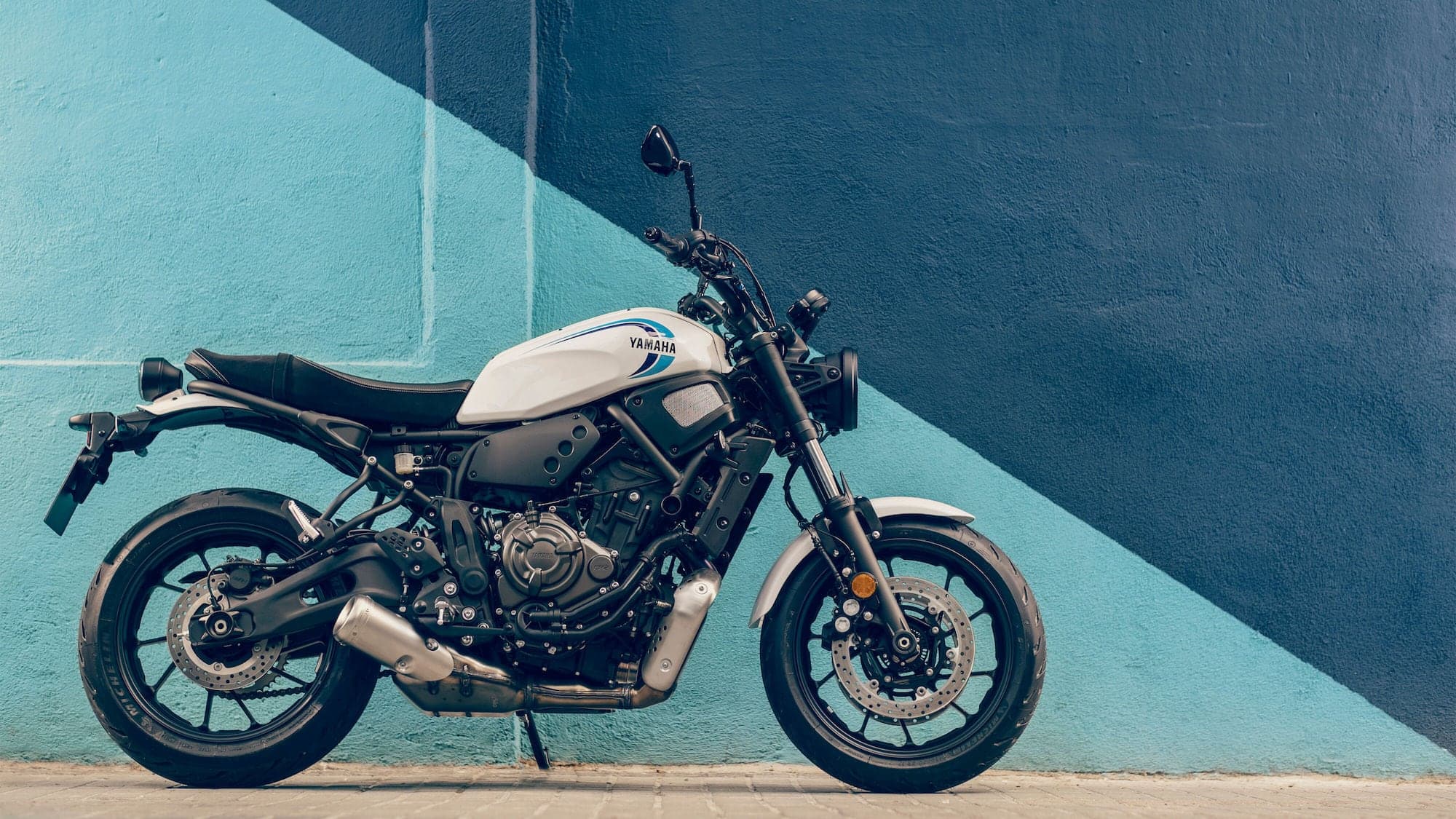
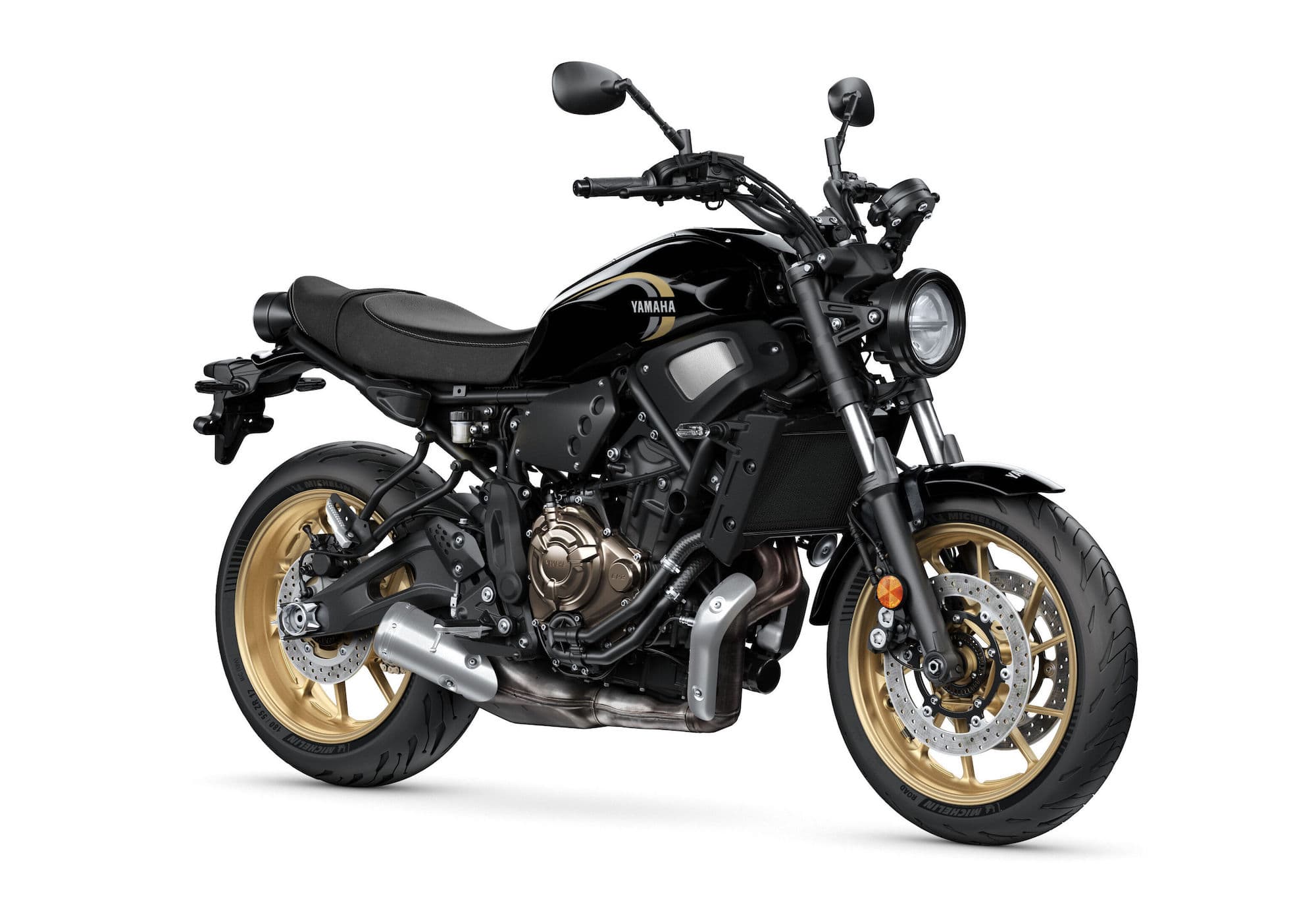
This update did not bring ride-by-wire, riding modes, traction control, an inverted fork or radial calipers. By 2025, the MT-07 had moved a full generation ahead in chassis and electronics, so we’re still waiting for the XSR700 to catch up (if it ever does).
XSR700 XTribute & Legacy: 2019 onward (selected markets)
From 2019, Yamaha started marketing two re-stylings of the Yamaha XSR700 – the XTribute and the XLegacy. They’re very similar — scrambler restylings.
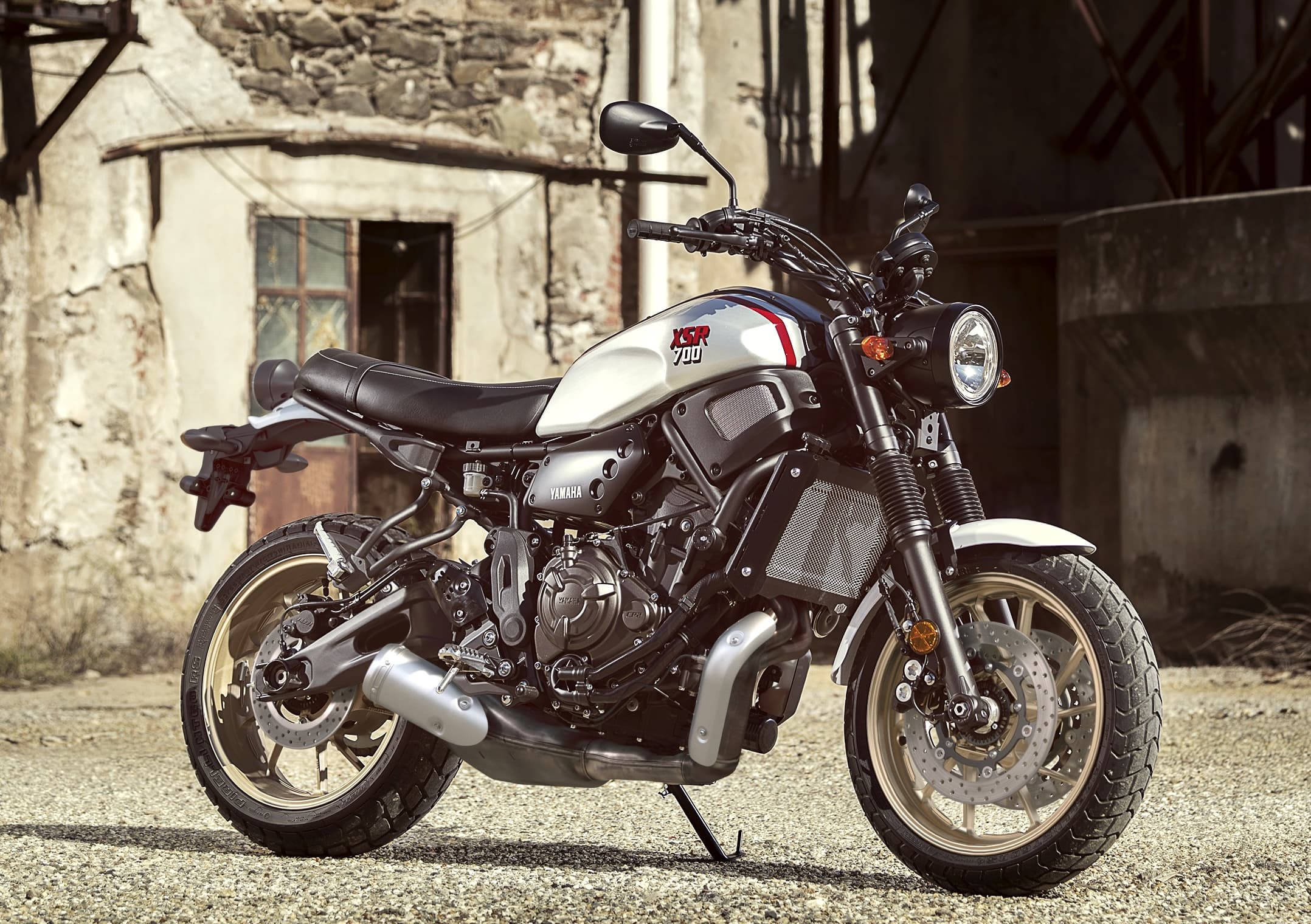
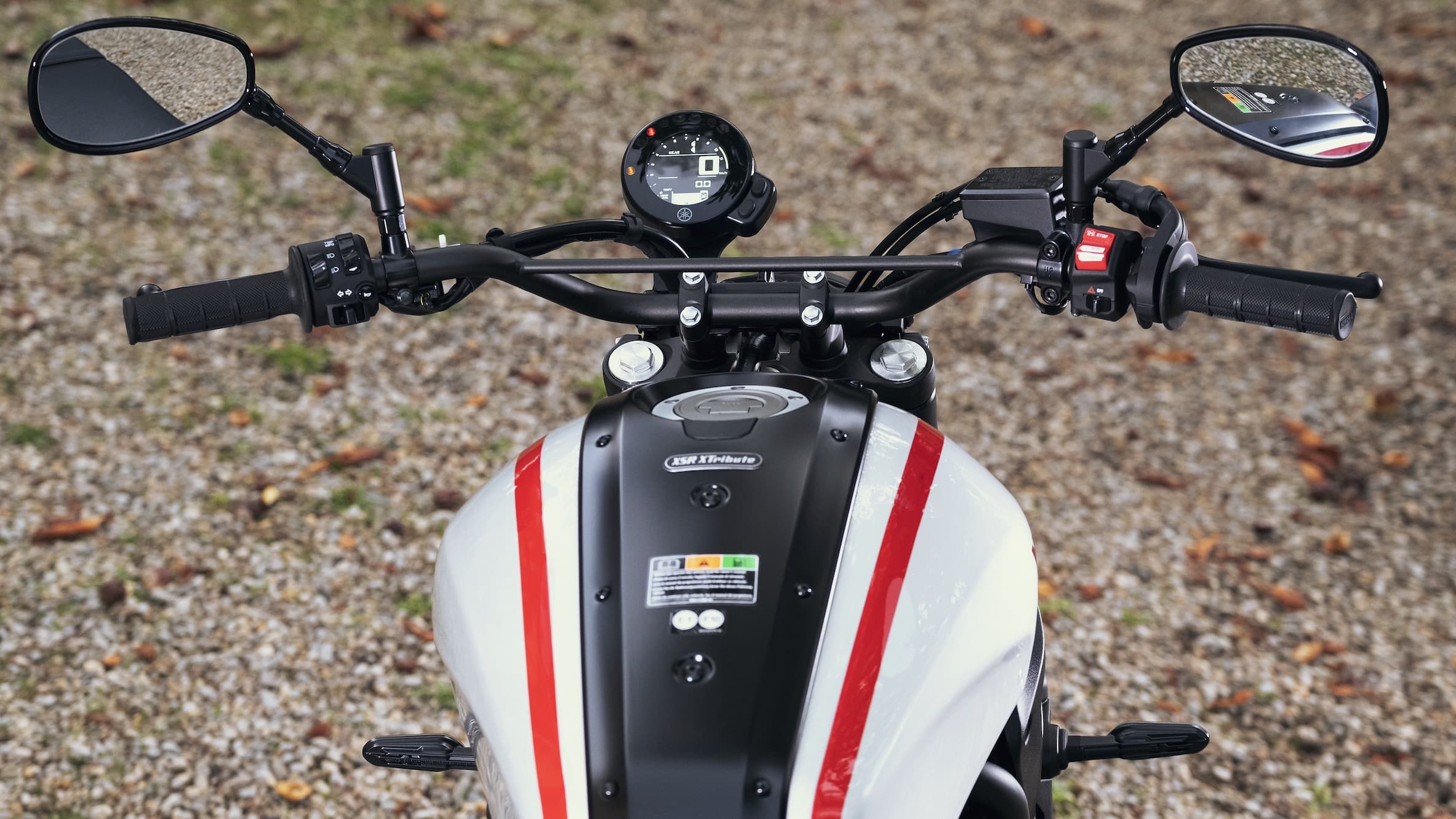
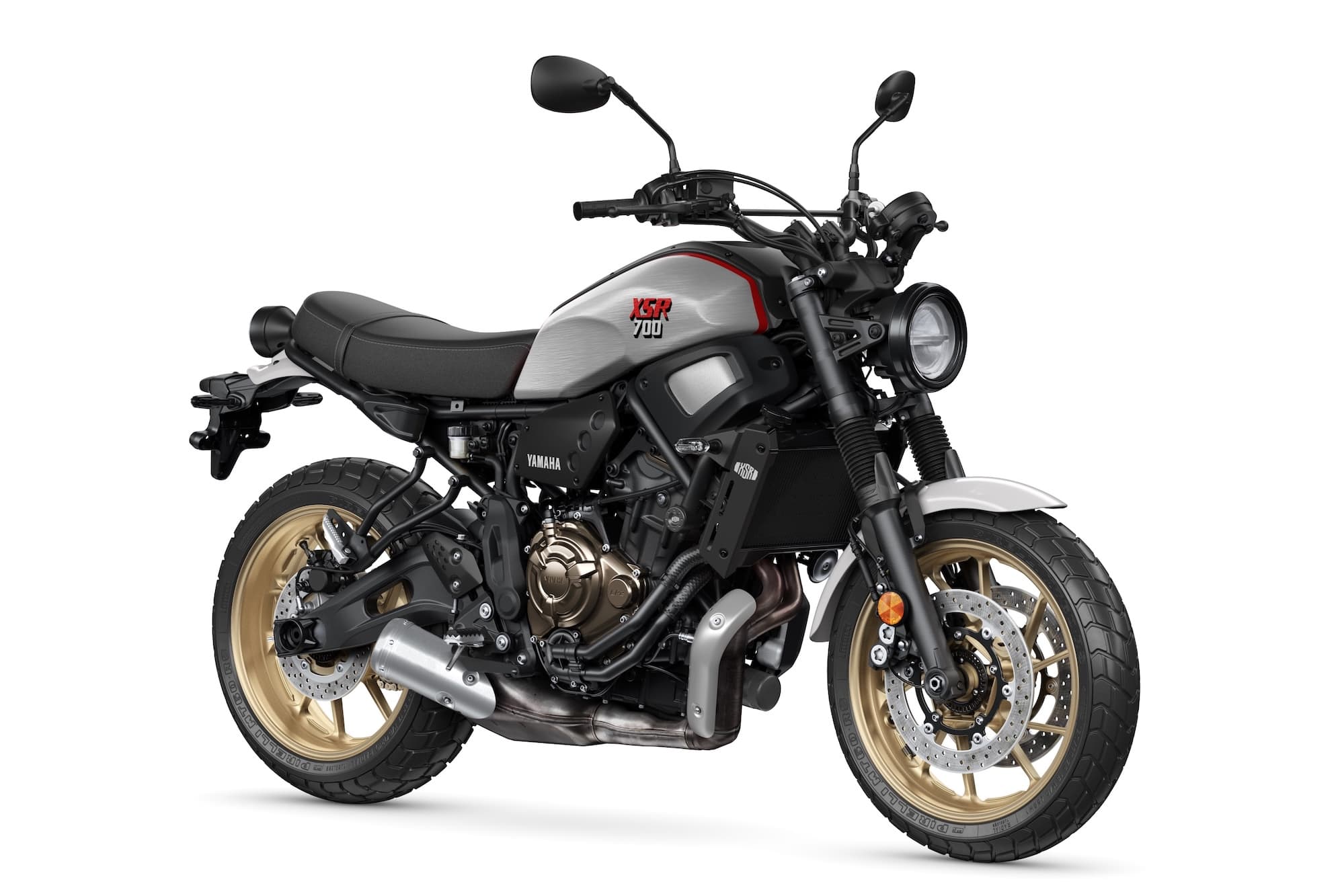
The XTribute is a factory scrambler-style XSR700 inspired by the XT500. The original version added a flatter seat, wide off-road-style handlebar, fork gaiters, serrated footrests, block-pattern tyres, gold wheels and model-specific paint. The 2022 version adopted the updated XSR lighting, cockpit and EU5 engine.
Suspension travel and core chassis parts stay close to the standard XSR700, so the XTribute is not a small Ténéré. The tyres, tall 845 mm (33.3 in) seat and bar may suit gravel roads and standing control, but wheel sizes and suspension remain road-bike equipment.
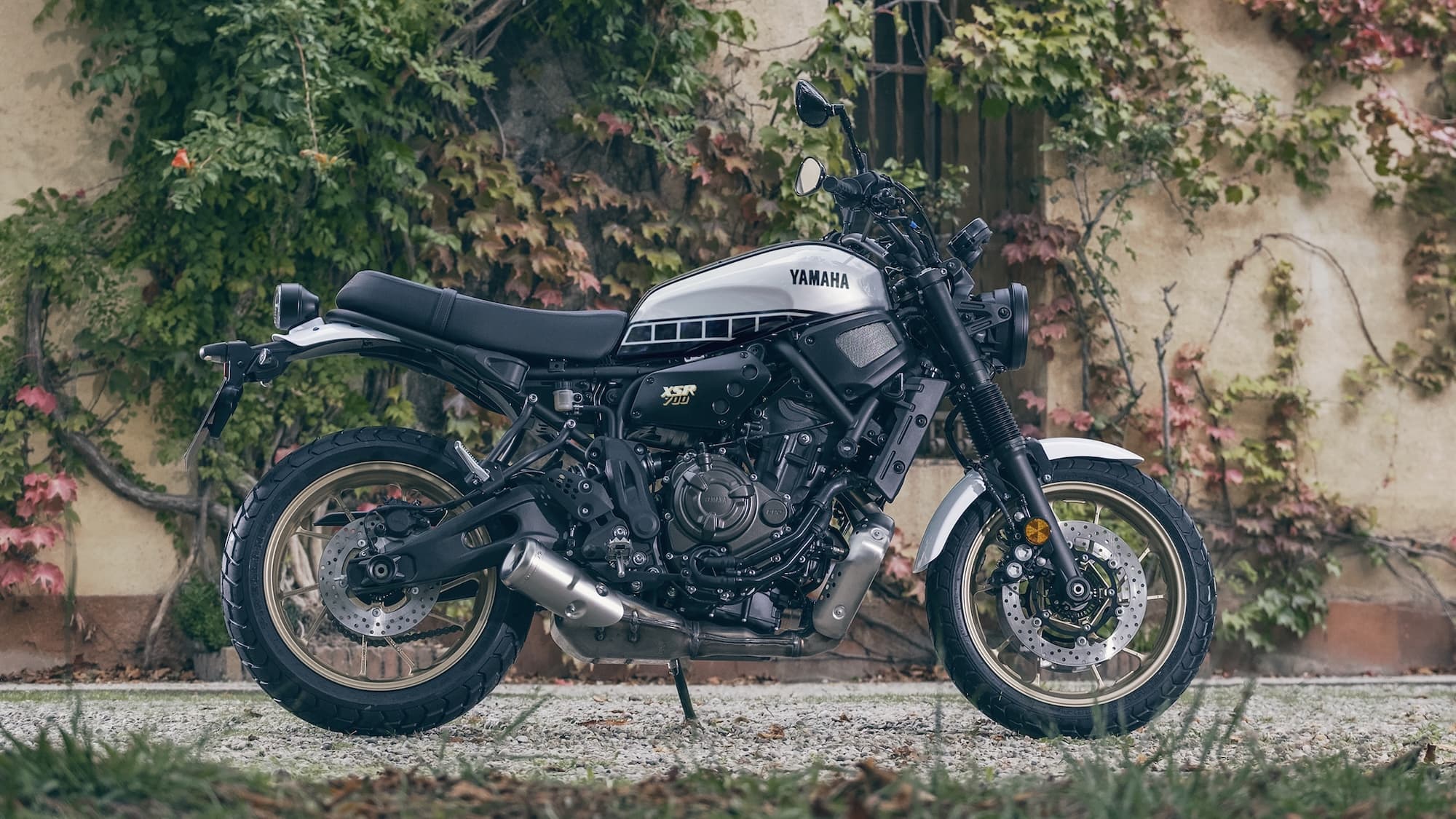
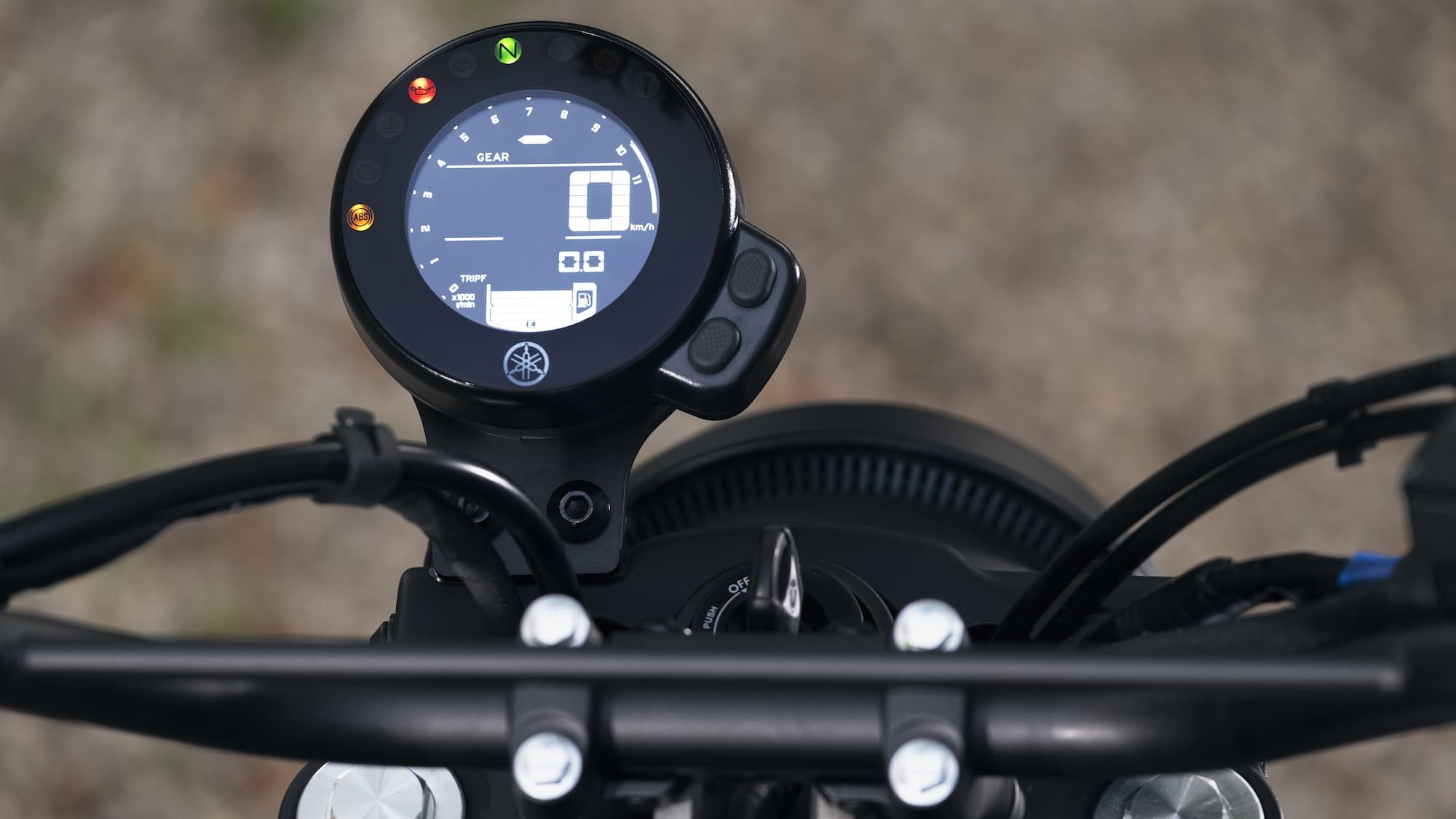
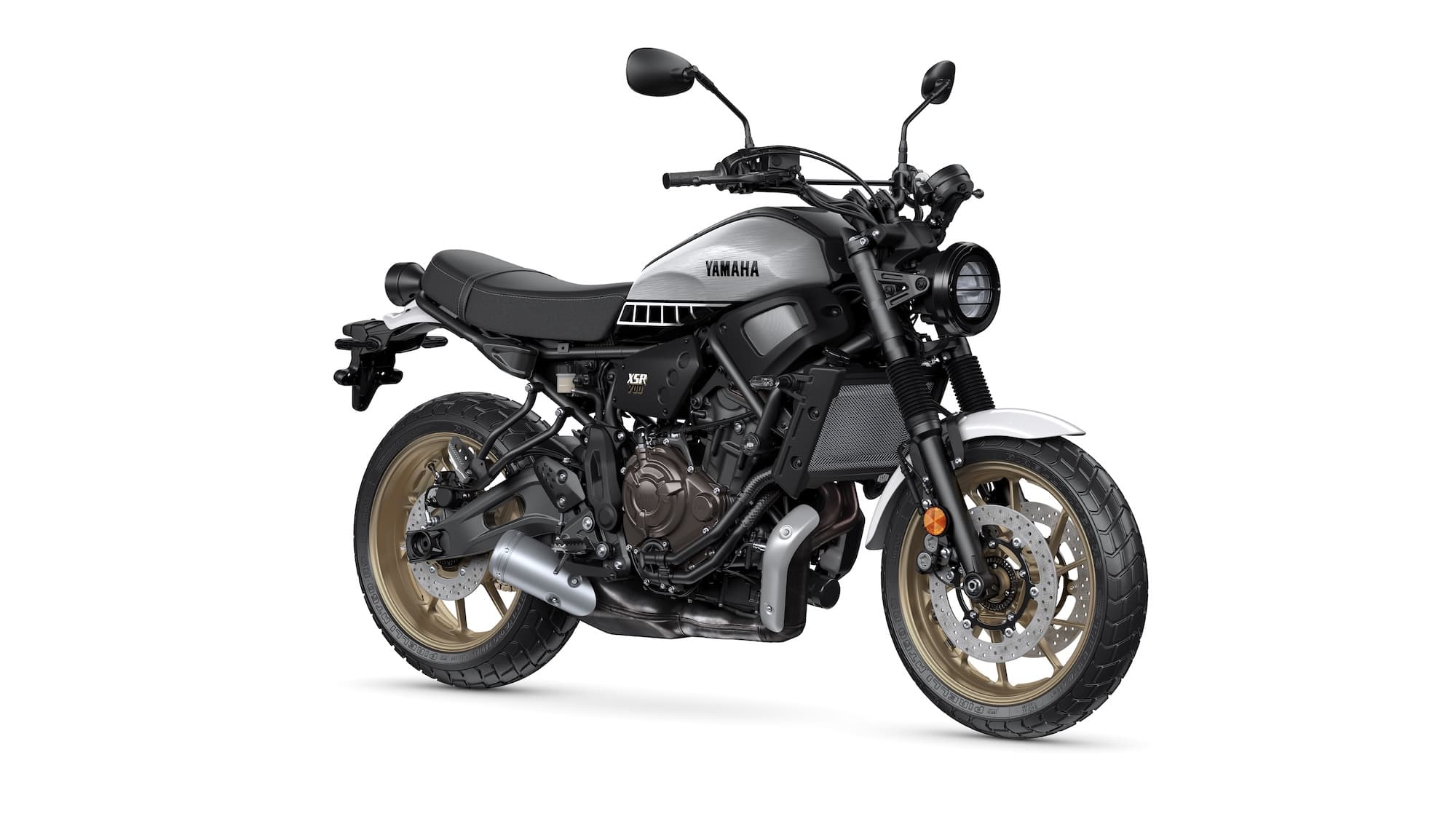
Yamaha also marketed the XSR700 Legacy from 2023, using the updated 2022 platform with scrambler cues like fork gaiters, a handlebar brace, gold wheels, block-pattern Pirelli tyres and model-specific colour and trim. Like the XTribute, it is primarily a style and ergonomics package.
MT-07 vs XSR700 — The Differences That Matter
Below is a summary table of the differences of the current versions of the MT-07 and XSR700.
| Area | MT-07 | XSR700 |
|---|---|---|
| Character | Compact modern naked; lower and more forward on the 2025 bike | Taller, roomier retro roadster with a broad bar |
| Seat height | 805 mm (31.7 in) | 815 mm (32.1 in) early; about 835 mm (32.9 in) on current European/US bikes |
| Weight | Roughly 179–184 kg (395–406 lb); 2025 manual is 183 kg (403 lb) | Roughly 186–188 kg (410–414 lb), depending on market |
| Chassis | 2025-on bike has revised frame, inverted fork, radial calipers and SpinForged wheels | Conventional fork and simpler brake/chassis package |
| Electronics | 2025-on bike has ride-by-wire, modes and switchable TCS; Y-AMT adds cruise | Cable throttle, ABS and no riding modes or TCS in current markets checked |
| Custom work | Large aftermarket, but modern body panels dominate the shape | Removable subframe and separate metal covers make visual changes easier |
| Passenger | Small rear seat, especially on later bikes | Longer-looking bench, though comfort still depends on passenger size and trip length |
| Best reason to buy | Value, low mass and—on the latest version—better road hardware | Design, upright room and a simpler retro package |
If the prices are close, the 2025-on MT-07 is the rational choice. Its fork, brakes, wheels, clutch and electronics are meaningful upgrades. The XSR700 wins when you prefer its appearance and taller riding position enough that those things matter more than specifications.
What to Check When Buying a Used MT-07 or XSR700
The CP2 has a strong reliability record, and neither bike has a reputation for expensive engine failures. Most bad examples have suffered from cheap ownership: missed chain care, outdoor storage, crash damage or modifications that were installed without much patience. Remember, these are common first bikes.
- Crash and stunt damage: Check bar ends, levers, engine cases, footrests, radiator edges, fork stops and the underside of the exhaust. MT-07s are popular first bikes and wheelie bikes.
- Chain and sprockets: Look for tight links, hooked teeth and a chain adjusted so tightly that suspension movement loads the output shaft. Budget for a set if adjustment is near its limit.
- Steering-head and wheel bearings: Raise or unload the front if possible. Feel for a notch around straight ahead and listen for a knock when applying the front brake.
- Fork seals and tubes: Oil rings on the stanchions, pitting and a twisted front end suggest neglect or a fall.
- Corrosion: Inspect fasteners, radiator fins, coolant-pipe joints, the swingarm, rear shock and exhaust. A mechanically healthy bike can still become an unpleasant restoration if it lived outside near the sea.
- Cold start: Ask the seller not to warm the bike. It should start promptly, settle to an even idle and take throttle cleanly without warning lights.
- Clutch and gearbox: Test clutch take-up, neutral selection and every gear under load. On a Y-AMT bike, test both manual and automatic operation and confirm that software/service campaigns are complete.
- Aftermarket exhaust and tune: A loud pipe is not evidence of a good ECU calibration. Check for cut wiring, intake changes, warning lights and whether the original parts come with the bike.
- Service history: Oil schedules differ by country, but valve-clearance inspection is generally due around 40,000 km (26,600 mi). Evidence matters more than a seller saying these engines “never need anything”.
See my inspection checklist for more details.
Recalls worth checking
Recall coverage is VIN- and market-specific. Ask a Yamaha dealer to check the VIN rather than assuming that every bike of a listed year is affected.
| Market / models | Issue | Buyer action |
|---|---|---|
| Australia, early 2014 MT-07 | Battery lead could be pinched beneath the seat and wear through | Confirm Yamaha campaign BLW/MT was completed |
| Australia, 2016 XSR700 | Main-switch wire routing near the steering head could chafe | Confirm campaign W038 and inspect the harness routing |
| Australia, some MY17 MT-07 and MY16–17 XSR700 | Incorrect stationary-noise label | Compliance issue rather than a mechanical defect; confirm the label campaign |
| Australia, some 2023 MT-07 and 2022–2024 XSR700 | Clutch may not fully disengage, allowing unintended movement | Confirm the clutch replacement recall has been completed |
A completed recall is not a reason to avoid a bike. An outstanding safety recall is a reason to arrange the free repair before treating it as ready to ride.
Other CP2 Motorcycles — Which One Should You Choose?
The engine is only part of the motorcycle. Yamaha has put the CP2 into machines with very different suspension, bodywork, riding positions and electronics.
| CP2 model | What changes | Choose it over an MT-07/XSR700 when… |
|---|---|---|
| Yamaha YZF-R7 | Fairing, clip-ons, rear-set footrests, sport chassis, adjustable inverted fork and radial brakes. The 2026 European model adds ride-by-wire and an R1-derived six-axis IMU. | You want track days, high-speed wind protection and accurate front-end control, and accept a committed riding position. |
| Yamaha Tracer 7 / GT | Fairing, larger tank, passenger room, luggage options and touring ergonomics. The latest generation adds ride-by-wire, modes, traction control, cruise and optional Y-AMT in relevant markets. | You regularly ride highways, carry luggage or take a passenger. |
| Yamaha Ténéré 700 | 21/18-inch wheels, long-travel suspension, upright dirt-road ergonomics and a stronger adventure chassis. Newer versions add ride-by-wire; the 2026 World Raid has an IMU and cruise. | Your routes include unsealed roads, rough tracks or long-range adventure travel. |
| MT-07 | Lowest, light road-focused package; latest chassis has the most road equipment of any MT-07 | You want a compact everyday road bike and do not need a fairing. |
| XSR700 | Retro body, taller seat, bolt-on subframe and simple electronics | You value traditional proportions and custom potential over the latest chassis parts. |
The R7 deserves special attention because it is easy to dismiss as an MT-07 with a fairing. It has a different frame, a fully adjustable inverted fork, radial brakes, clip-ons and a much more forward riding position. See the full YZF-R7 comparison and model update.
The Ténéré is farther removed again. Its road manners still have the familiar CP2 response, but the 21-inch front wheel, suspension travel and tall riding position make it the right choice for rough roads rather than an upgraded MT-07. The Ténéré 700 buyer’s guide explains the many variants.
When to Step Up to the MT-09 or XSR900
The MT-09 and XSR900 use Yamaha’s 890 cc CP3 triple, with output around 87.5 kW (119 PS / 117 hp) and 93 Nm (69 lb-ft). That is a large increase over the 54.0 kW and 67–68 Nm of a full-power CP2, while wet weight stays close to 193 kg (425 lb) on current versions.
| Question | Stay with MT-07 / XSR700 | Move to MT-09 / XSR900 |
|---|---|---|
| Road speed | You want to use much of the engine on ordinary roads | You want much harder acceleration and stronger roll-on performance at highway speed |
| Electronics | ABS and basic TCS are enough; cable throttle appeals on the XSR700 | You want an IMU, cornering ABS, lean-sensitive TCS, slide/lift control, cruise and a standard quickshifter |
| Chassis | Low weight and friendly responses matter most | You ride fast enough to value the aluminium frame and higher suspension specification |
| Cost | Purchase price, tyres, insurance and fuel matter | You accept higher running costs for the extra performance |
| Experience | You are a learner, returning rider or simply enjoy a compact bike | You have good throttle discipline and will use the extra chassis and electronic capability |
The latest MT-09 and XSR900 have a six-axis IMU that supports cornering-aware rider aids, cruise control, a quickshifter, and substantially more adjustable suspension. The XSR900 is also much more performance-focused than the XSR700 despite the family resemblance.
Read the separate MT-09/FZ-09 buyer’s guide and XSR900 buyer’s guide before assuming the biggest number is the best fit.
Non-Yamaha Alternatives
Below is a quick overview of the main competitors to the MT-07. Here are the ones that I think are the most realistic ones:
- Kawasaki Z650 / Z650RS: lower and calmer, with a friendly chassis. The engine has less pulse and top-end urgency than the CP2. THe Z650RS is the retro-styled version (like the XSR700).
- Triumph Trident 660: a smoother three-cylinder alternative with a more polished standard equipment list, including a standard IMU and cruise control. It’s also more expensive. See the Trident 660 model guide.
- Honda CB750 Hornet: considerably more powerful and still light. It competes more directly with the value of an MT-09 than with the gentle side of the MT-07.
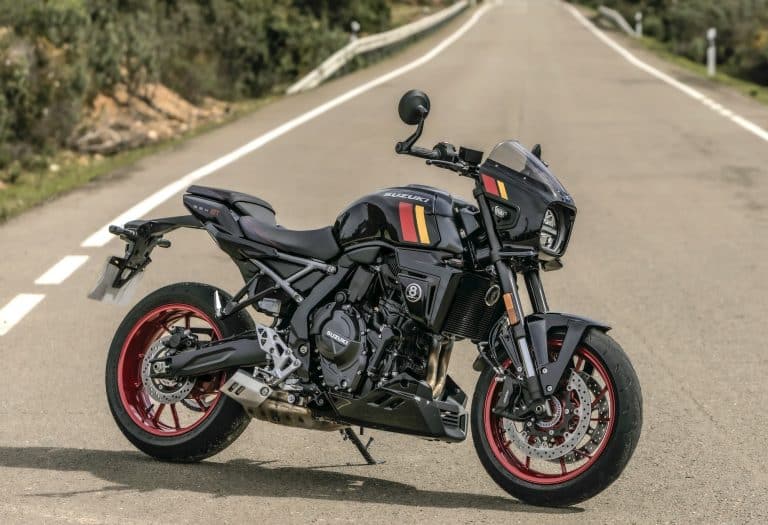
- Suzuki GSX-8S: a stronger, more substantial parallel twin with a good chassis, at the cost of extra mass. The successor to the indomitable SV650.
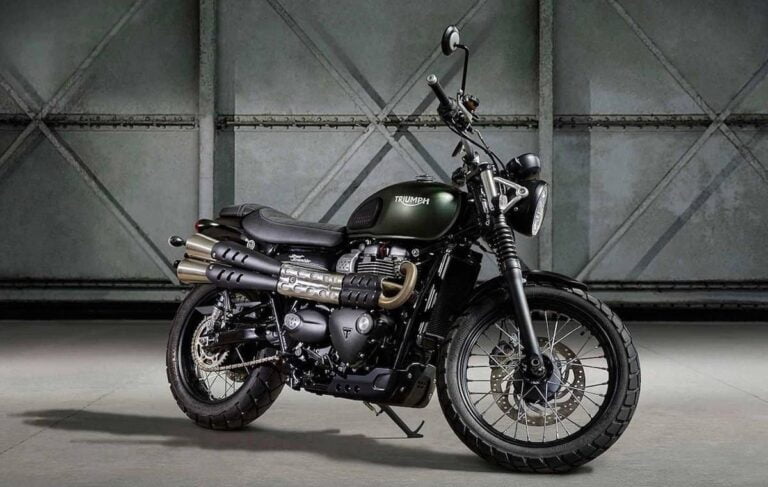
- Ducati Scrambler 800: an air-cooled alternative to the XSR700 with stronger heritage styling and a different ownership proposition. See the Ducati Scrambler 800 buyer’s guide.
The wider comparison is in the guide to current middleweight naked sport bikes.
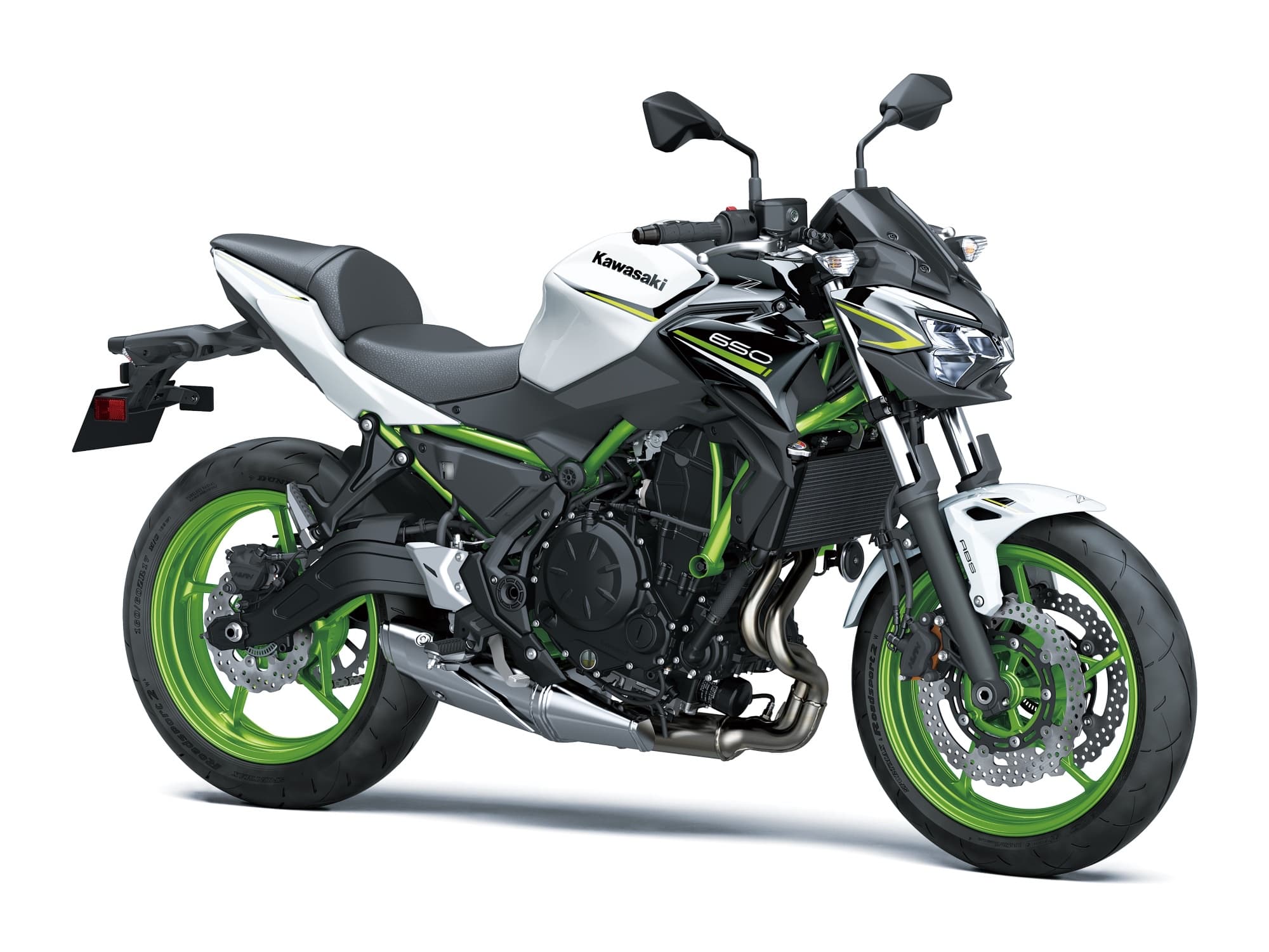 2021 Kawasaki Z650 — Sugomi-inspired
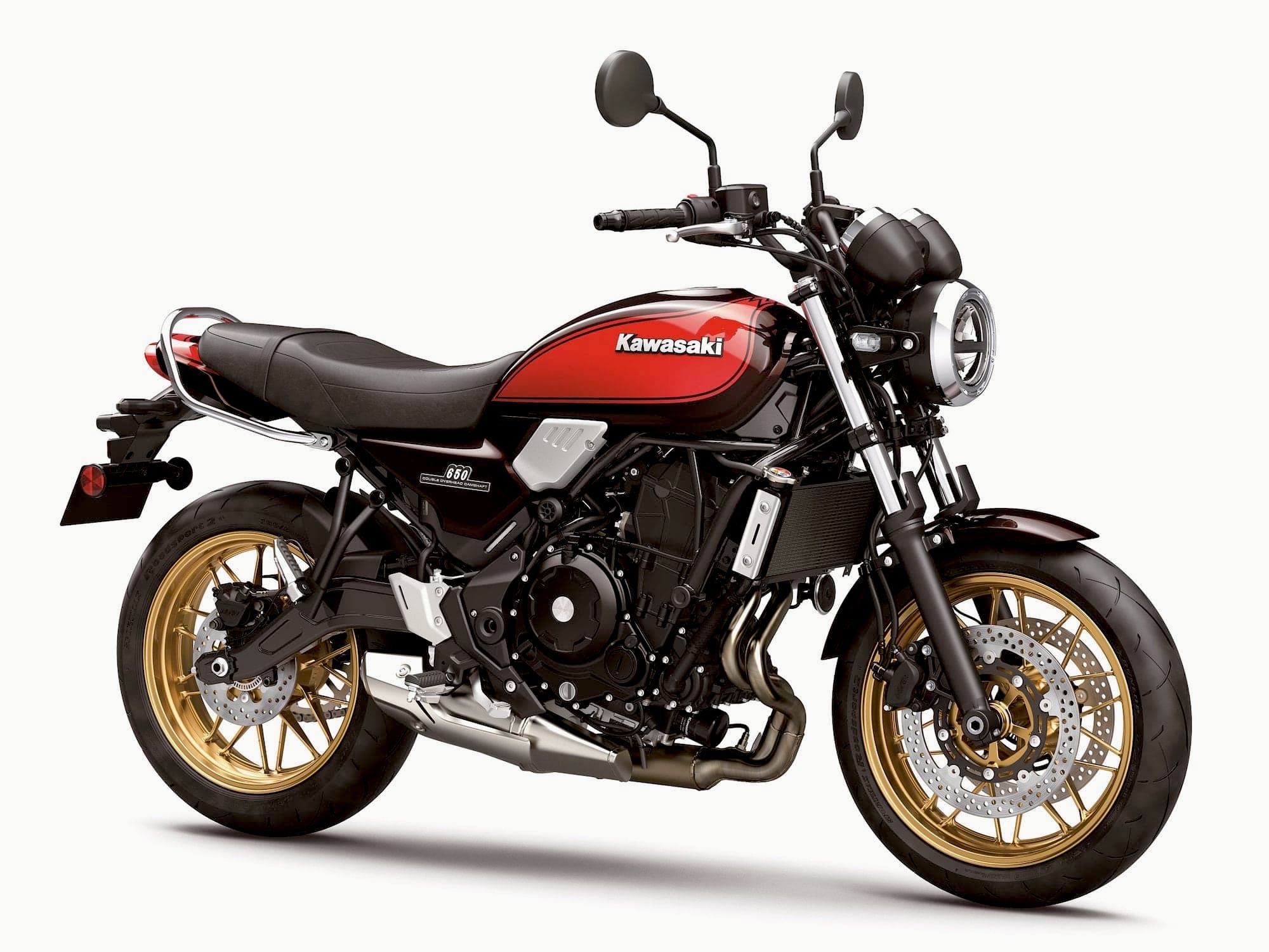 2022 Kawasaki Z650RS Anniversary
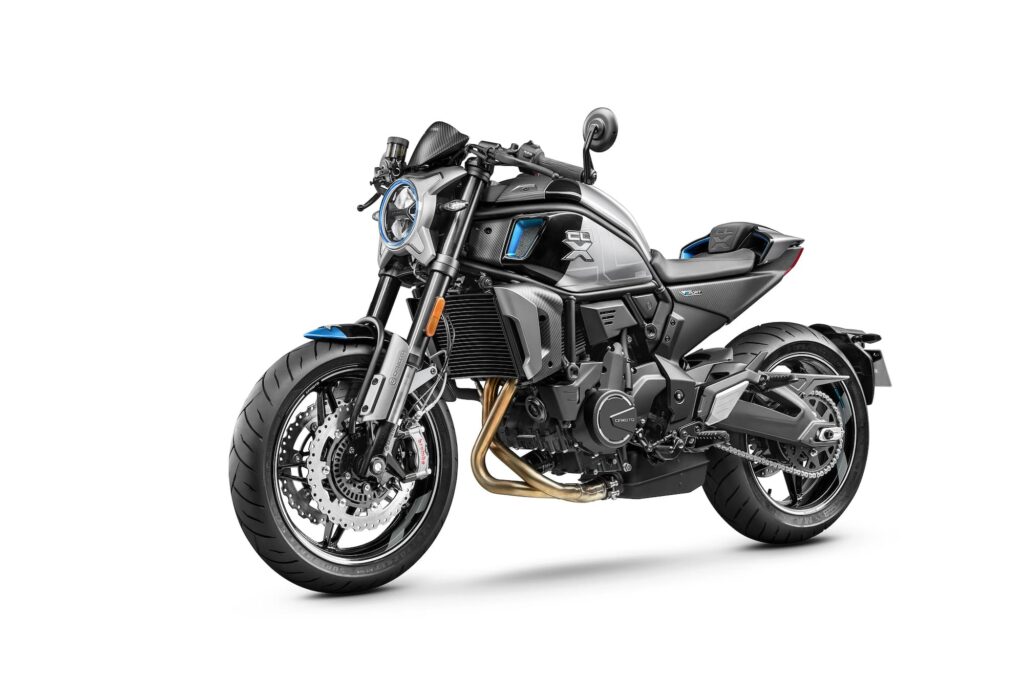
The CFMOTO 700 CL-X is a high-spec middleweight sport bike by emerging Chinese manufacturer CFMOTO. It is powered by a 693 cc liquid-cooled parallel twin with a 180-degree crankshaft. The CL-X comes with a slipper clutch, mid/high-end brakes and suspension, and lots of style.
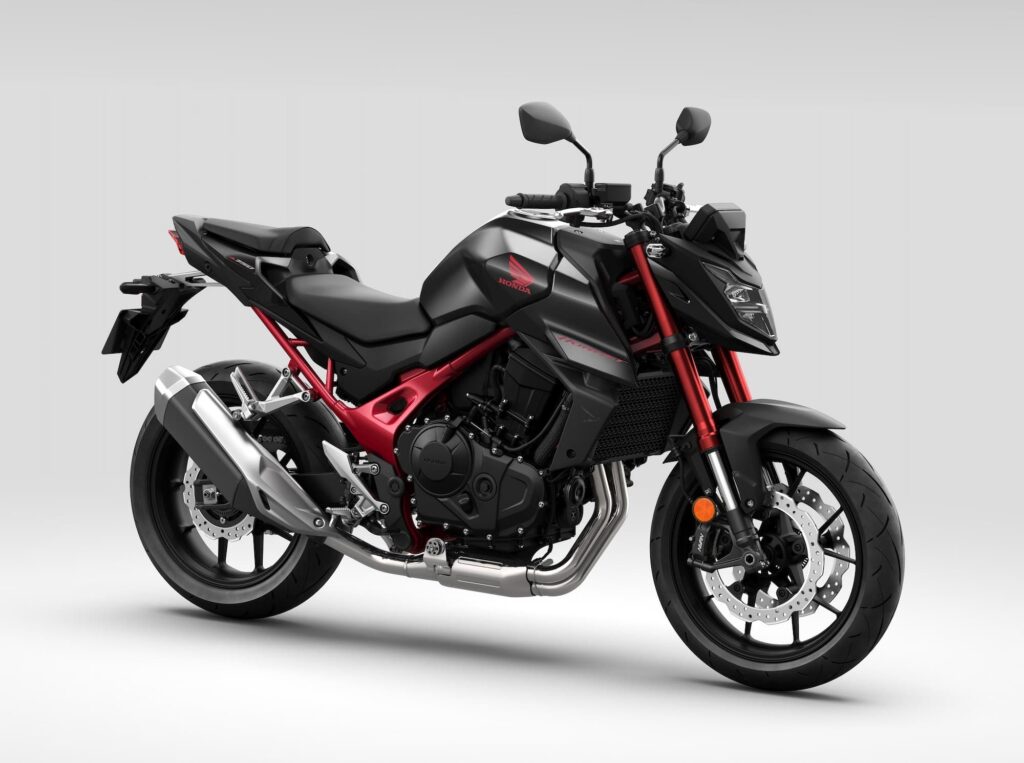
The Honda CB750 Hornet is a 2023-onward re-launch of the Hornet brand, as well as a re-launch of the CB750 brand. Unlike former Hornets (and many former CBs), the CB750 Hornet is powered by a parallel twin with a 270-degree crankshaft. It brings the Hornet into the modern age with advanced ride gear, including traction control and a quickshifter, though it lacks the latest and greatest of the bigger CB sport motorcycles.
The Kawasaki Z650 and Z650RS — same bike, but the RS in retro modern form — is powered by a 649 cc parallel twin with a 180-degree crankshaft. Kawasaki has a long history of parallel twins dating back decades, and they’ve consistently been known for being dead reliable, easy to live with, versatile. Kawasaki has updated the Z650 / RS a few times. Both come with a slipper clutch, and the Z650RS has a TFT display.
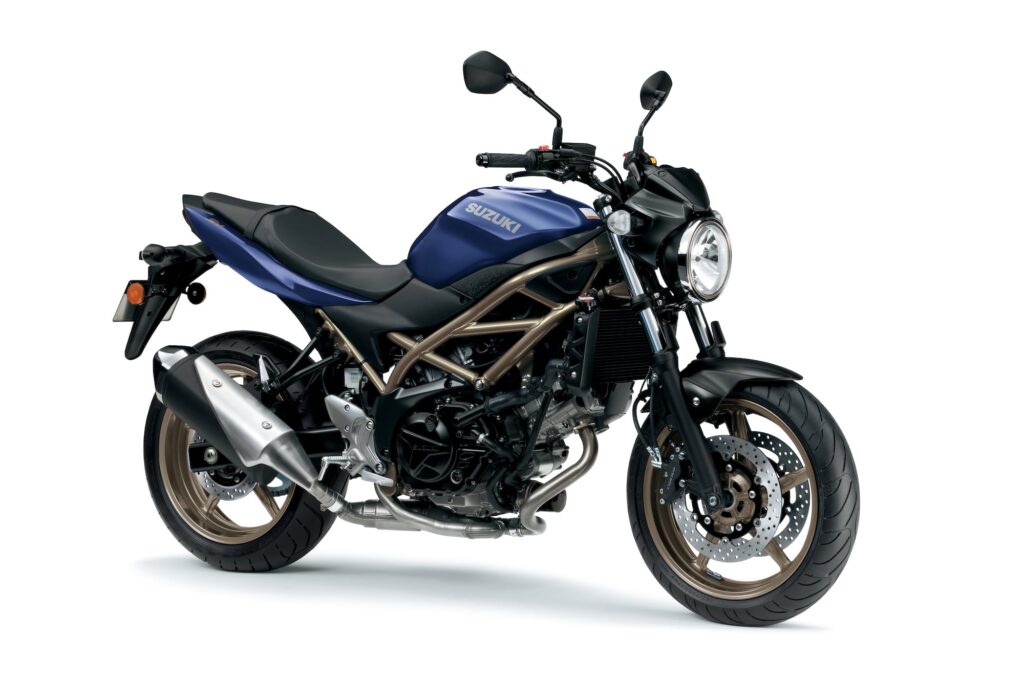
The Suzuki SV650 was one of the first bikes to really kick off the middleweight twins phase. It has a sparkling 645 cc liquid-cooled V twin which has had the same format for over 20 years. It’s now in its last days, with the Suzuki GSX-8S sure to take the mantle, but there’s a lot of joy to be had in the SV. It has striking looks with its trellis frame, easy manners, and plenty of engine character.
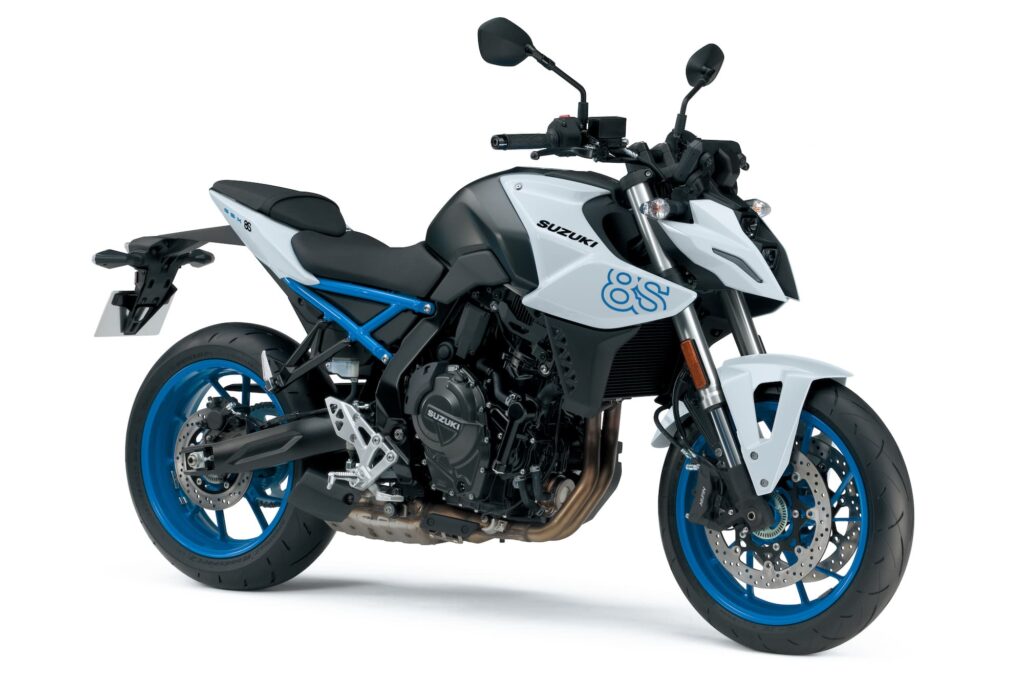
The Suzuki GSX-8S is a new-for-2023 middleweight naked sport motorcycle. It is powered by a 776 cc parallel twin that makes a broad spread of torque, though it peaks with less power than the also new-for-2023 CB750 Hornet. It has more ride aids than most bikes of its class (with TC, a quick shifter, and ride modes), but lacks cornering ABS.
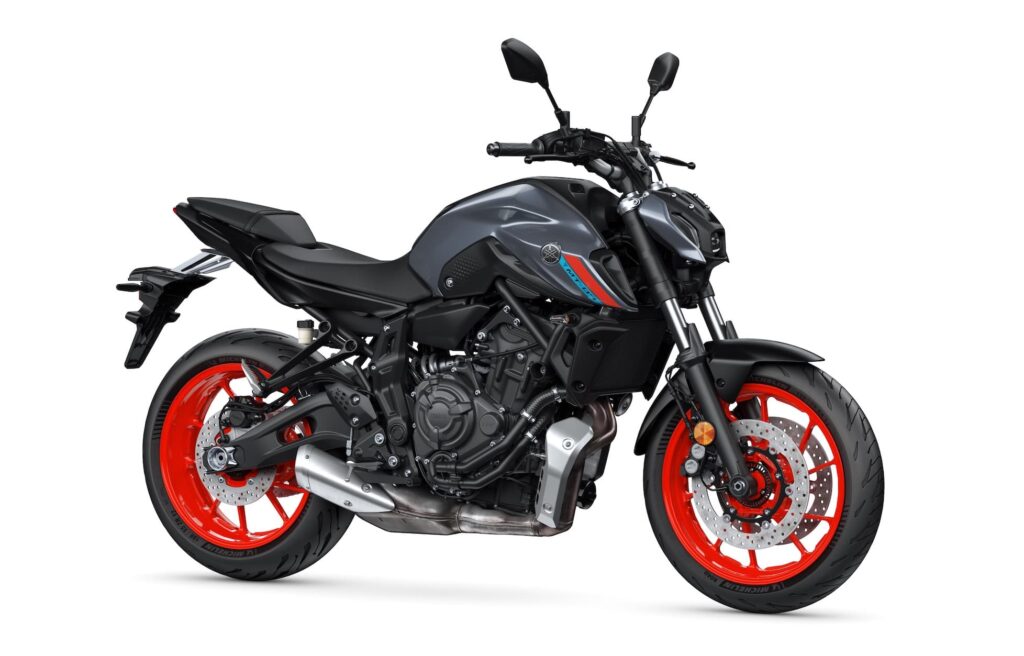
The Yamaha MT-07, formerly FZ-07, stepped into the shoes of the Suzuki SV650 in 2015 while the SV was taking a break between the 2nd and 3rd generations. It is powered by a parallel twin with a 270-degree crankshaft, and is known for being a fun and characterful wheelie machine.
Final Recommendation
Buy a 2018–2020 MT-07 if you want the value answer. It has the same lively engine as the original bike, a better seat and more useful suspension adjustment, and there is little electronic equipment to date it. And its looks are a little more modern.
Buy the 2025-on MT-07 if you brake hard, ride quickly on rough roads or want current electronics. The inverted fork, radial calipers, lighter wheels and stiffer chassis change how the motorcycle behaves. The Y-AMT version is for riders who specifically want automated shifting or cruise control; otherwise, the manual saves weight and money and preserves the traditional feel of a bike.
Buy the XSR700 if its taller, traditional shape is the reason you keep looking at it. It is still a light, tractable CP2 roadster, and the bolt-on subframe makes it a good custom base. Just price it against the equipment it actually has in your market. In Australia, remember that the XSR700 is the 655 cc learner model, while the MT-07 is also available as the full-power 689 cc HO.
Move to an R7 for track-focused control, a Tracer 7 for road touring, a Ténéré 700 for rough-road travel, or an MT-09/XSR900 when you want a much faster motorcycle with an IMU-based electronics package. The shared engine family does not make any of them substitutes for the same job.