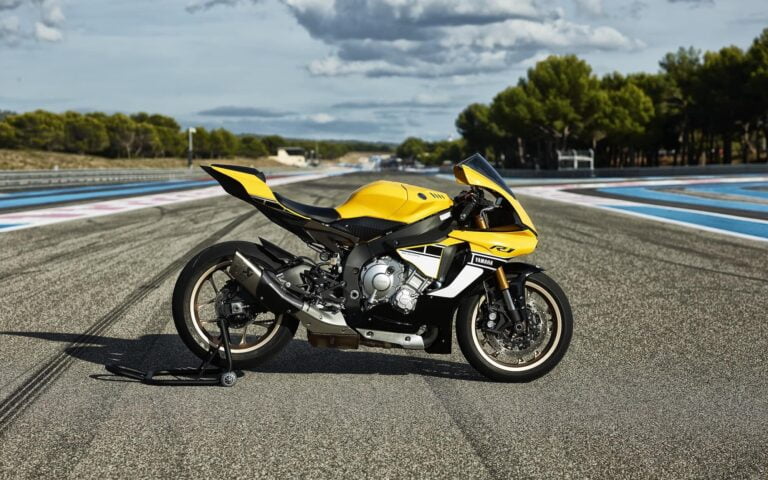

Yamaha’s CP2 is one of those engines that makes you wonder why everybody chases more cylinders, more capacity, and more horsepower. It is not the fastest Yamaha motor, nor the fanciest. But this compact 689 cc parallel twin has spent more than a decade turning up in motorcycles that are genuinely fun, usable, and not wildly intimidating.
It began in the 2014 FZ-07 / MT-07 and has since moved through naked bikes, retro roadsters, sport-tourers, adventure bikes, and a proper-looking sport bike. That is platform sharing, sure. But it is unusually convincing platform sharing: the CP2 still feels at home whether it is under an MT-07, a Ténéré 700, or an R7.
This is everything useful to know about Yamaha’s CP2 motor: the Yamaha twins that led to it, why its 270-degree crank makes it feel different, the engines it inspired or joined, and the bikes that carry it today.
Are you obsessed with motorcycles?
Well, I am. That’s why I created this site — as an outlet. I love learning and sharing what others might find useful. If you like what you read here, and you’re a fraction as obsessed as I am, you might like to know when I’ve published more. (Check the latest for an idea of what you’ll see.)
The Yamaha CP2 at a glance
| Layout | Liquid-cooled, DOHC parallel twin; four valves per cylinder |
| Capacity | 689 cc (often described as 700 cc) |
| Bore × stroke | 80.0 × 68.6 mm |
| Compression ratio | 11.5:1 |
| Crank | 270 degrees; uneven 270° / 450° firing intervals over the 720° four-stroke cycle |
| Typical full-power output | About 54 kW (73–74 PS) at 8,750 rpm and 68 Nm / 50 lb-ft at 6,500 rpm, depending on market and model |
| First application | 2014 Yamaha FZ-07 / MT-07 |
Those figures are taken from current Yamaha technical material for the CP2 family. The important number is not really the peak power, but rather the broad 68 Nm (50 lb-ft) torque figure, arriving at a very street-friendly 6,500 rpm. You can make quick progress without waiting for an engine to wake up at five figures.
Yamaha’s long road back to the 270-degree twin
For those who just woke up, Yamaha have been at this motorcycle business for a while. The CP2 did not arrive out of nowhere. Yamaha has built parallel twins for decades, but it has taken several routes through the layout.
- XS1 / XS650 (1970s–1980s): Yamaha’s famous air-cooled 653 cc twin used a 360-degree crank. It was a charming, traditional British-twin answer, but a very different animal from the CP2.
- TX500 / XS500 (1973+): a technically ambitious 498 cc DOHC parallel twin with balancing hardware. Yamaha was clearly interested in making a twin smoother and more sophisticated, even if the model itself did not become a legend.
- XTZ750 Super Ténéré (1989): an 749 cc liquid-cooled five-valve twin with a 360-degree crank. It was a serious Dakar-era adventure engine, and proof Yamaha liked a versatile twin long before the T7.
- TDM850 (1991; 270-degree crank from 1996): the crucial precursor. Yamaha itself says the second-generation TDM850 changed from 360 to 270 degrees in 1996, bringing a richer pulse and wider, more dynamic-feeling torque band.
- TRX850 (1995): the other direct ancestor. Yamaha described its 849 cc five-valve parallel twin as a 270-degree-crank engine with an uneven firing interval and torquey feel. It was not a commercial giant, but it absolutely previewed the CP2’s character.
So Yamaha had already learned what a 270-degree parallel twin could do. The difference with the CP2 was scale, packaging, and judgment. The older TDM/TRX engine was an 849 cc five-valve unit from a different era; the CP2 is smaller, lighter, simpler in concept, fuel-injected, and designed from the outset to be the centre of a family of affordable modern motorcycles.
What “CP2” means — and why the 270-degree crank matters
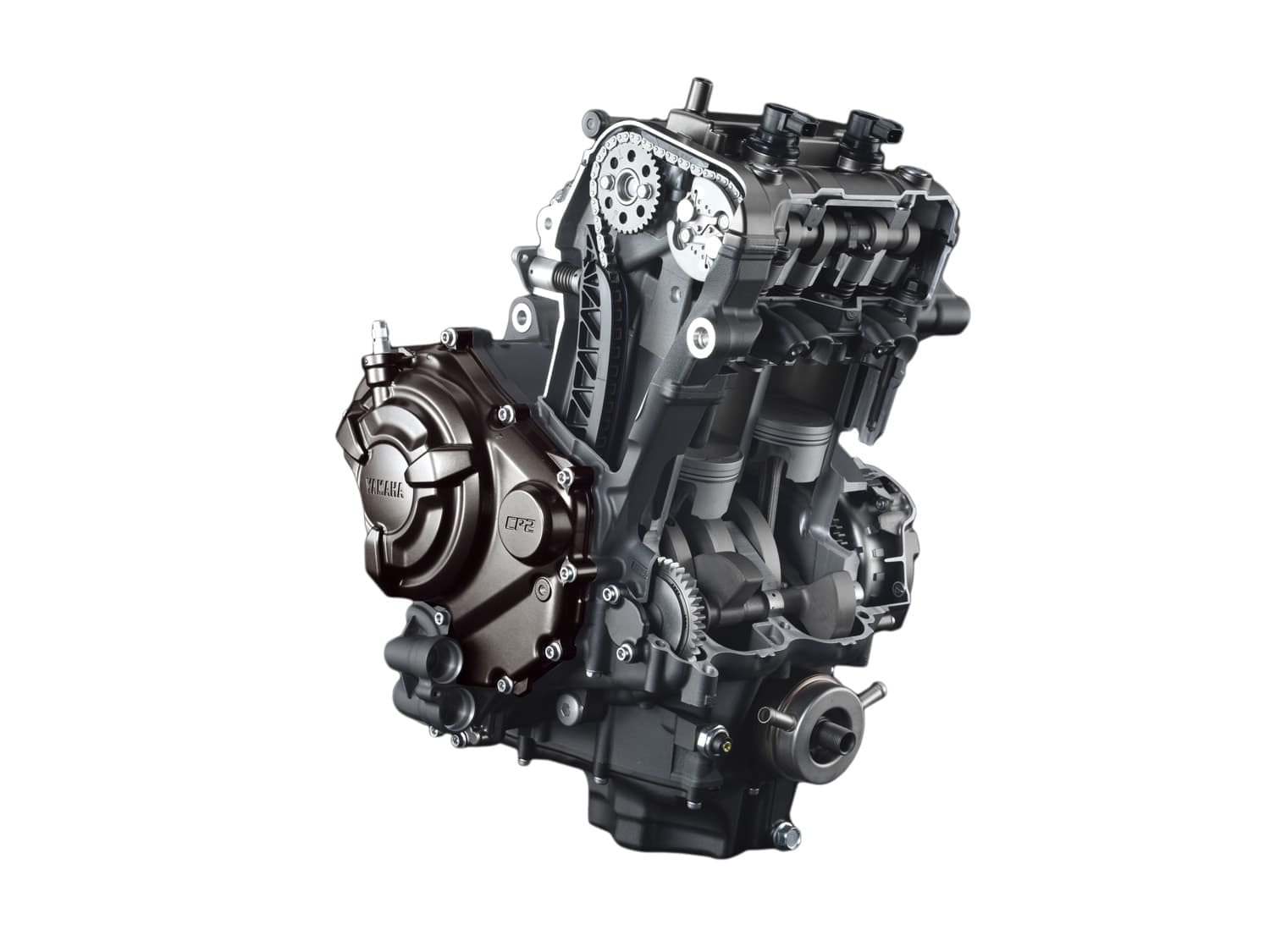
CP2 is Yamaha shorthand for its “Crossplane Concept” two-cylinder engine. In a twin, that does not mean the same thing as the crossplane four in the 2009-on YZF-R1. Here the key hardware is the 270-degree crankshaft.
A four-stroke cylinder fires once every 720 degrees of crank rotation. On the CP2, cylinder two fires 270 degrees after cylinder one, then there is a 450-degree gap before cylinder one fires again. That uneven rhythm is why it sounds and feels closer to a 90-degree V-twin than to the more regular-sounding parallel twins many people grew up with.
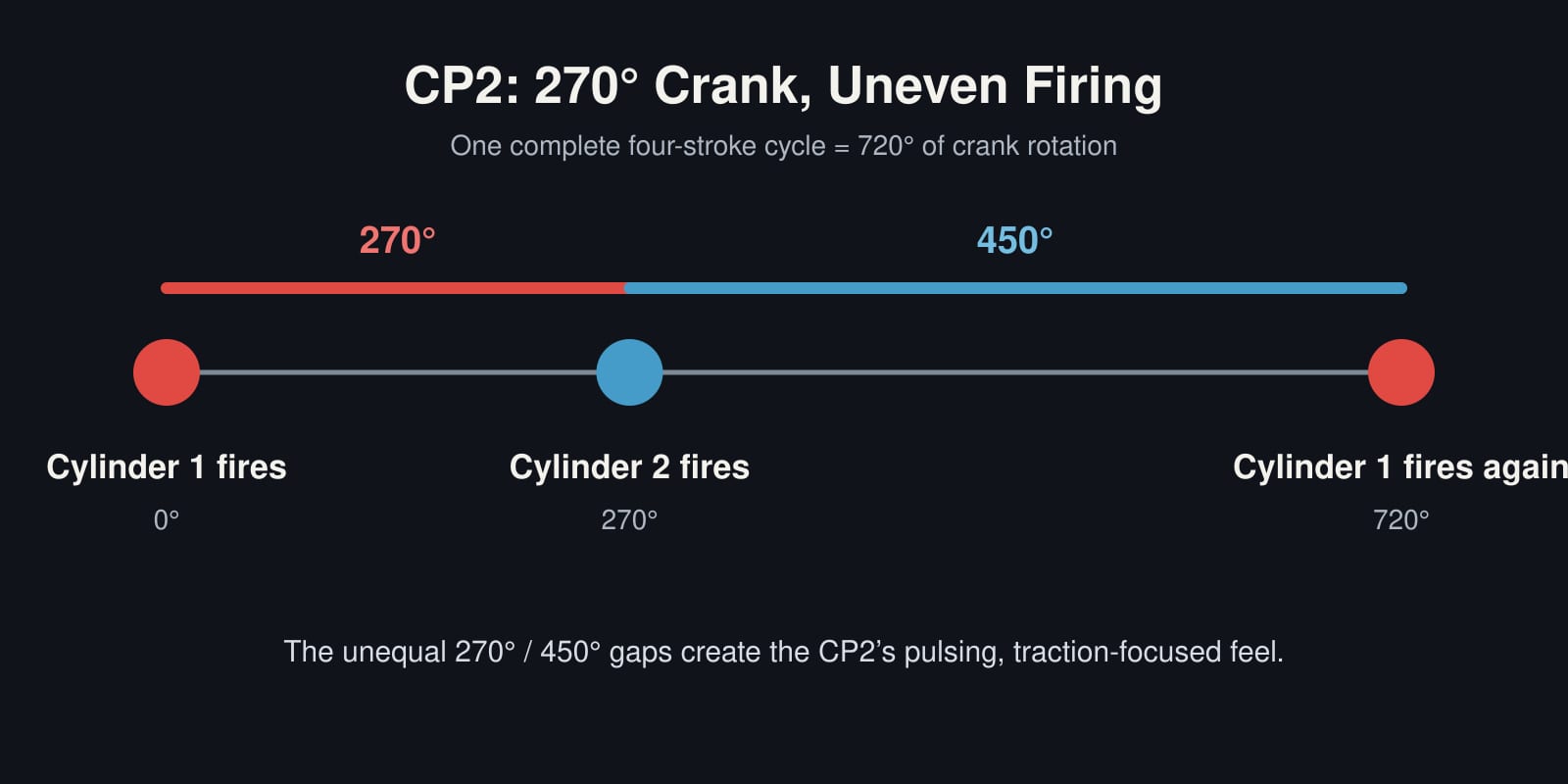
The result is not magically more grip. Tyres do not know marketing language, no matter how much you spend on them. But the distinct pulses give the rider a very clear sense of when the rear tyre is being driven, and Yamaha deliberately tuned the CP2 for direct, linear low- and mid-range response rather than an impressive-looking dyno peak. Yamaha’s own MT history describes the development goal bluntly: “Torquey & Agile,” with useful road-speed torque taking priority over redline theatrics. (This is in contrast with other motorcycles, whose goal is not to be either torquey nor agile… but my rants about marketing spin are for another day…)
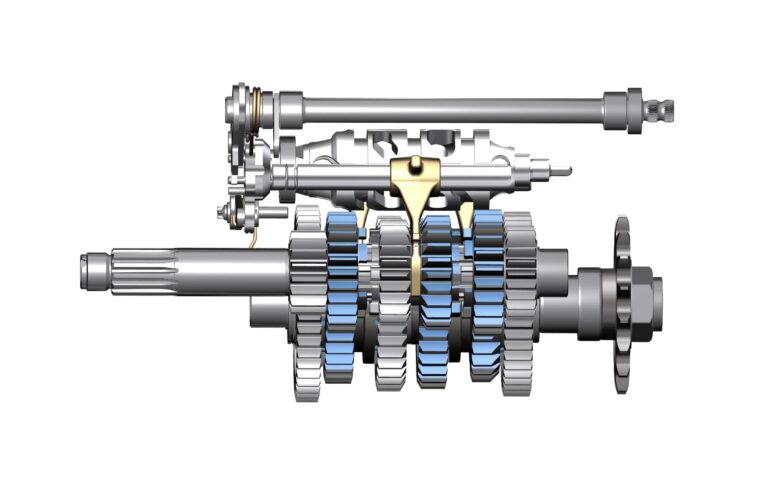
The rest is basic, modern engineering. The CP2 has a compact triangular transmission layout, offset cylinders to reduce friction, and a balance shaft to keep the mechanical pulse enjoyable rather than numbing your behind. It is an engine with character, but it does not feel like it is constantly trying to overwhelm you with it.
Why the CP2 feels like the sweet spot
The magic of motors like the CP2 is that they make ordinary speeds feel fun. The CP2 pulls usefully from low revs, builds cleanly through the middle, and still has enough top-end to make a short back road or a track day interesting. You are generally working with the engine, not waiting for it.
- Useful rather than excessive: around 74 PS is enough for quick overtakes, a passenger, motorway miles, and track-day learning without turning every small mistake into a negotiation. No, you won’t break land-speed records, other than in your head.
- Character without bulk: it has the pulse and soundtrack people associate with a V-twin, but comes in a narrow, compact package with one cylinder head and straightforward access.
- Strong base tune: the same motor can feel lively in the MT-07, calm on a Tracer 7, tractable on loose surfaces in a Ténéré 700, and surprisingly serious in an R7.
- It is not trying to be a CP3: Yamaha’s excellent CP3 triple brings more power, more drama, and more money. The CP2 keeps things simpler and a little more approachable.
The cool thing about the CP2 is that despite being in a bunch of affordable motorcycles, the sound really makes you turn your head. It does that to me, anyway…
There’s a lot of lore about who makes the most reliable motorcycles (Honda and Yamaha are often mentioned), but very little data. Still, there is little to contradict the assertions that the CP2 is reliable, in that it’ll last for longer than most riders do riding, or most motorcycles stay upright.
That does not remove the need for normal ownership discipline: follow the service schedule for your market and year, keep oil and coolant fresh, inspect the chain and air filter, and do not ignore a bike that has been dropped repeatedly off-road. But the CP2’s reputation comes from a very mature, relatively unstressed design and from a decade of wide deployment, not from mythology.
Inspired by the CP2
The Yamaha CP2 inspired a whole wave of offset motors from nearly every manufacturer except Kawasaki, who stayed with their 180-degree crank (and why not?). OK, KTM’s is 285-degrees, but let’s not split hairs.
| Engine / Motorcycle | What it shares with the CP2 | What is different |
|---|---|---|
| Honda 670/745 cc NC twin (2012–) | 270° crank, usable torque, practical everyday focus | Long-stroke, low-rev character and, in many versions, DCT rather than Yamaha’s sportier feel |
| Aprilia 659 cc twin (2021–) | 270° crank, modern middleweight family across road and adventure bikes | A higher-spec, more performance-focused engine derived conceptually from Aprilia’s V4 architecture |
| KTM 790/890 LC8c (2018–) | Compact liquid-cooled parallel twin built for lively middleweight motorcycles | 285° crank and much higher output; more aggressive, more expensive proposition |
| BMW 853/895 cc F-series twin (2018–) | 270°-style pulse and broad all-rounder remit | More capacity, stronger touring/adventure bias, different chassis and price point |
| Suzuki 776 cc GSX-8S/V-Strom 800 twin (2023–) | 270° crank, balance shaft, deliberately characterful midrange | More recent competitor, with Suzuki’s cross balancer and a distinctly punchier tune |
If you want the longer technical version of why so many manufacturers have landed here, see our guide to parallel twins with 270-degree cranks.
Motorcycles with the CP2 engine
Yamaha, like other manufacturers, re-uses engines and other parts on a variety of motorcycles. While Yamaha started with the MT-07, they expanded the range over the subsequent decade.
The core CP2 family is five bikes, though the Ténéré line has several variants and availability changes by country. Current 2026 equipment varies between regions, particularly where Yamaha offers Y-AMT. The table below uses the latest Yamaha Europe material as a guide to the current feature set.
| Model | First release | What it is | Latest-model highlights |
|---|---|---|---|
| MT-07 / FZ-07 | 2014 | The original CP2 naked; light, simple, and cheeky | YCC-T, Yamaha Ride Control modes, switchable traction control, 5-inch TFT, updated chassis; Y-AMT in selected markets |
| XSR700 | 2016 | Neo-retro standard with a more relaxed, classic-looking presentation | CP2 engine, circular LED headlight, heritage styling, compact steel frame; equipment is less electronic-led than the newest MT/Tracer models |
| Tracer 700 / Tracer 7 | 2016 | Light sport-tourer: more weather protection and range without going huge | YCC-T, YRC throttle maps, switchable traction control, cruise control, 5-inch TFT, USD fork; Y-AMT and GT versions in selected markets |
| Ténéré 700 | 2019 | Middleweight adventure bike with genuine dirt-road and off-road intent | YCC-T, Sport/Explorer modes, switchable ABS and traction control, 6.3-inch TFT, 21/18-inch spoked wheels; Rally and World Raid variants add their own kit |
| YZF-R7 | 2021 (2022 model year) | A focused middleweight supersport built around corner speed, not huge peak power | Clip-ons and fairing, KYB USD fork, radial front brake master cylinder; latest updates add YCC-T and more electronic assistance depending on market |
Yamaha MT-07 / FZ-07 — the one that started it
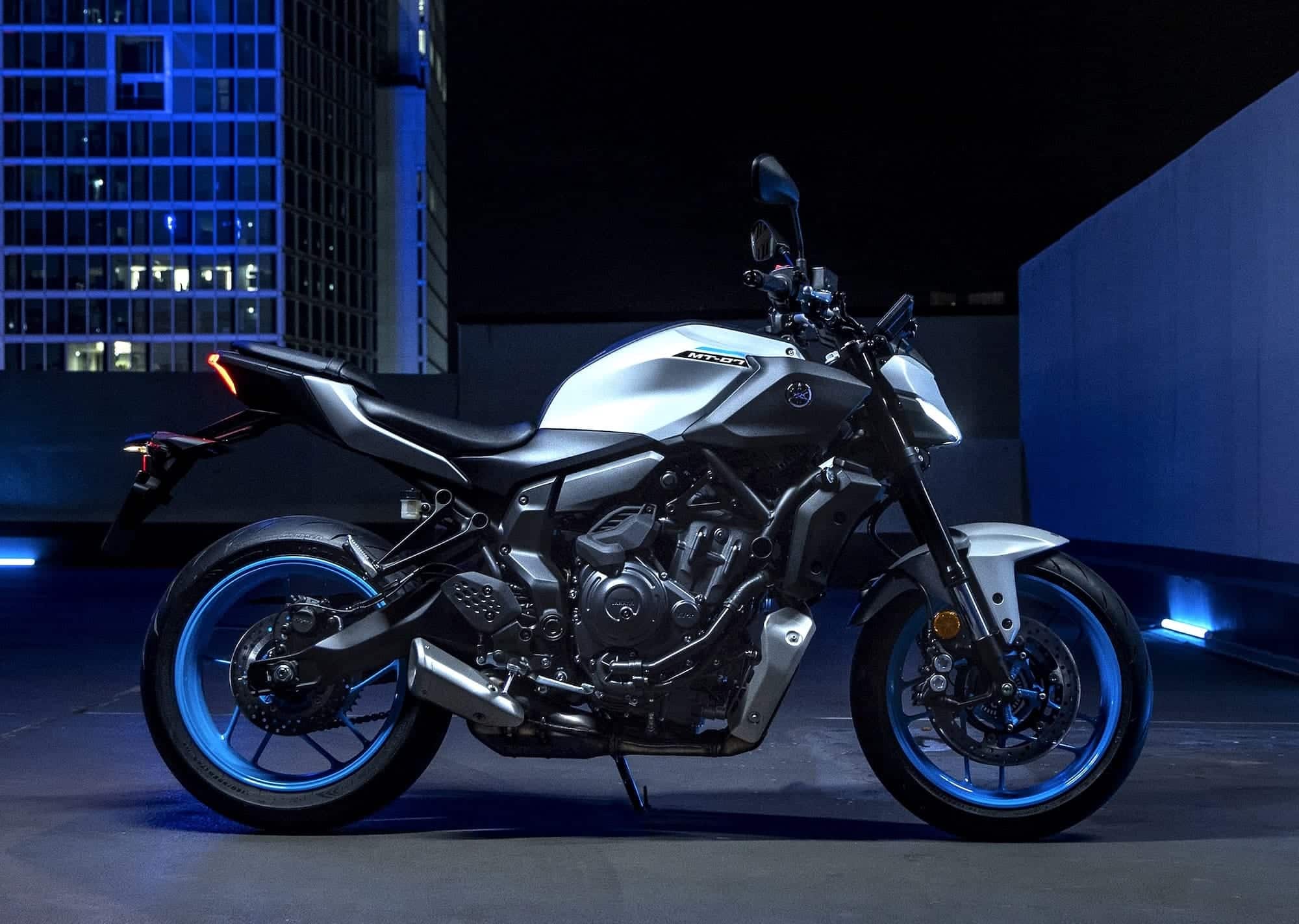
The MT-07 is the point of the whole exercise. First released as the FZ-07 in some markets in 2014, it put the CP2 in a compact naked chassis and made middleweight bikes feel fun again. The current version finally gets the modern electronic polish people expected: ride-by-wire, configurable riding modes, switchable traction control, TFT instrumentation, and sharper chassis hardware. But the appeal remains the same: it feels quick everywhere you can sensibly ride one.
Yamaha XSR700 — retro clothes, same pulse
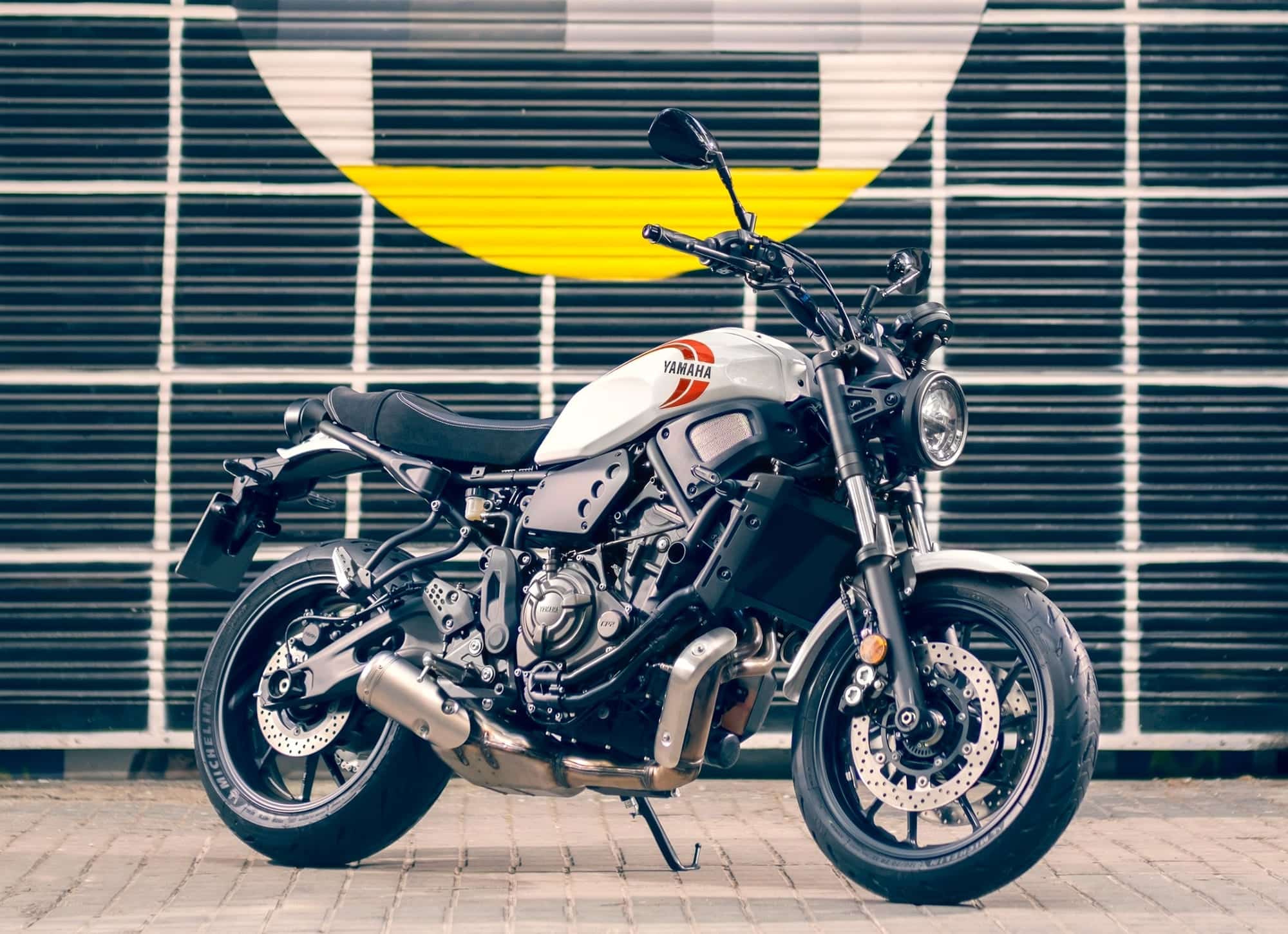
The XSR700 arrived in 2016 and proves that an engine does not need a different tune to feel different. Its slightly altered rider triangle and retro bodywork make it the more relaxed, more visual CP2 choice. It is not just an MT-07 wearing a different hat, though it shares the essential frame-and-engine recipe. Choose it because you want a roadster with a simple, tactile feel and because you enjoy looking back at it after parking.
Yamaha Tracer 7 — the compact long-distance version
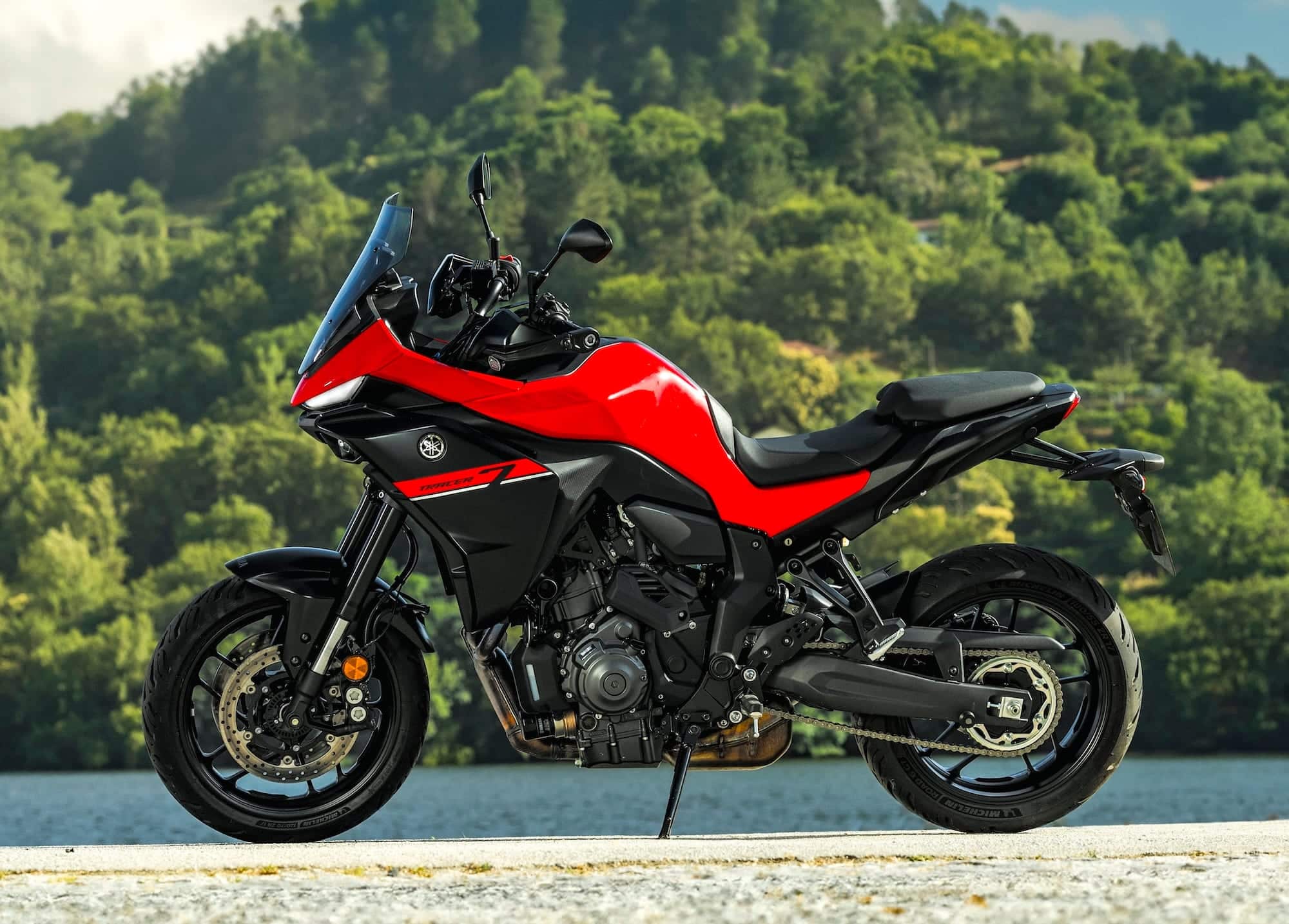
Introduced as the Tracer 700 in 2016, the Tracer 7 gives the CP2 a screen, more comfortable geometry, and enough fuel and luggage potential for proper trips. The latest bike is a major step up in equipment, with YCC-T, selectable throttle maps, traction control, cruise control, a 5-inch TFT, and a more substantial fork. It is still the light, nimble alternative to a full-size sport-tourer, which is exactly why it makes sense.
Yamaha Ténéré 700 — the CP2 goes properly adventuring
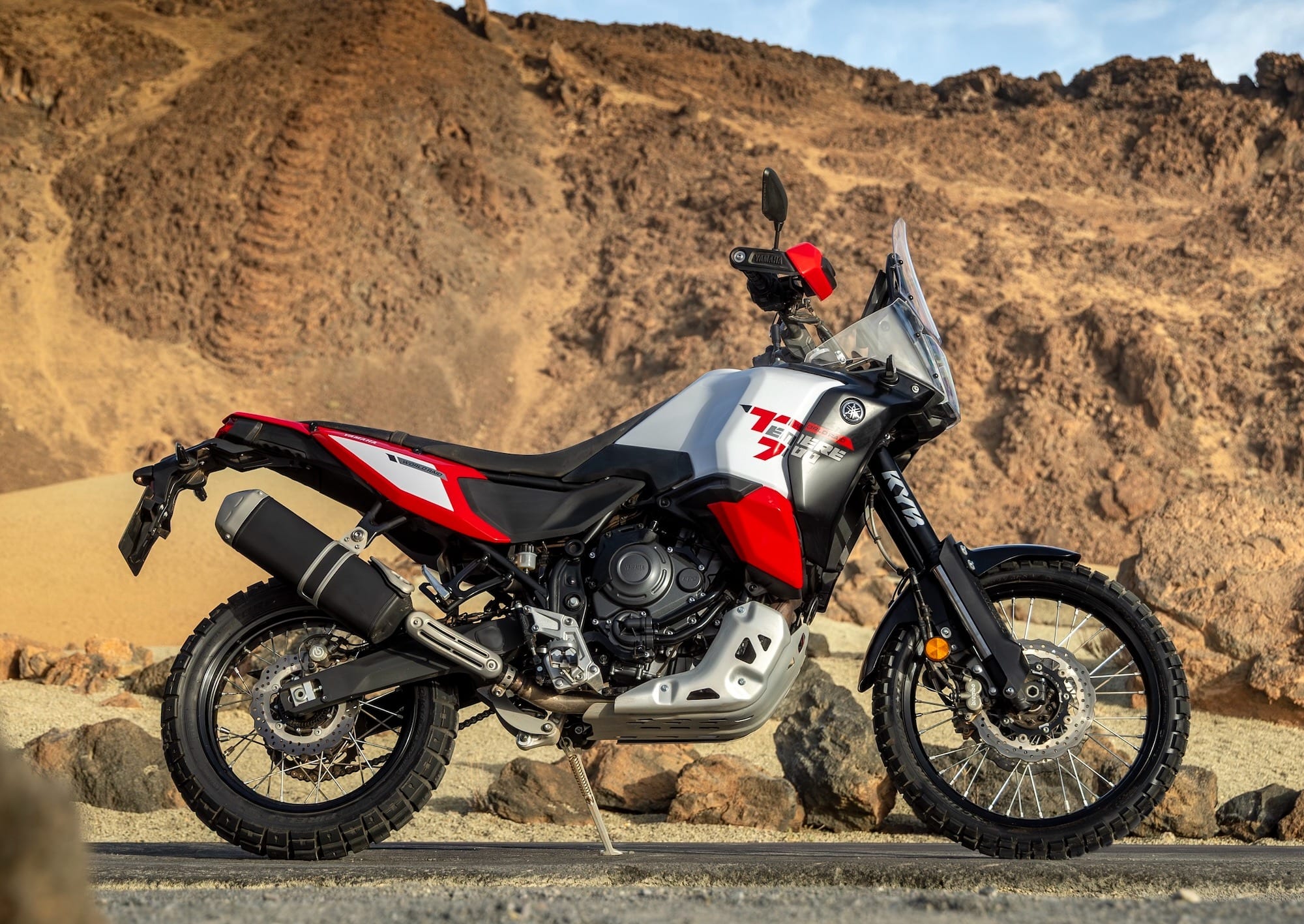
The Ténéré 700 is the most persuasive argument for the CP2. Since its 2019 launch, it has been a serious middleweight adventure bike rather than an MT-07 with a beak. The engine’s compact size lets Yamaha build a narrow bike with a 21-inch front and 18-inch rear wheel, while the 270-degree pulse gives useful low-speed control. The latest version adds electronic throttle, two modes, traction control, switchable ABS, and a 6.3-inch TFT without losing the basic directness that made the T7 popular. For the variations, here is the Ténéré 700 model guide.
Yamaha YZF-R7 — the sport bike that chose usability
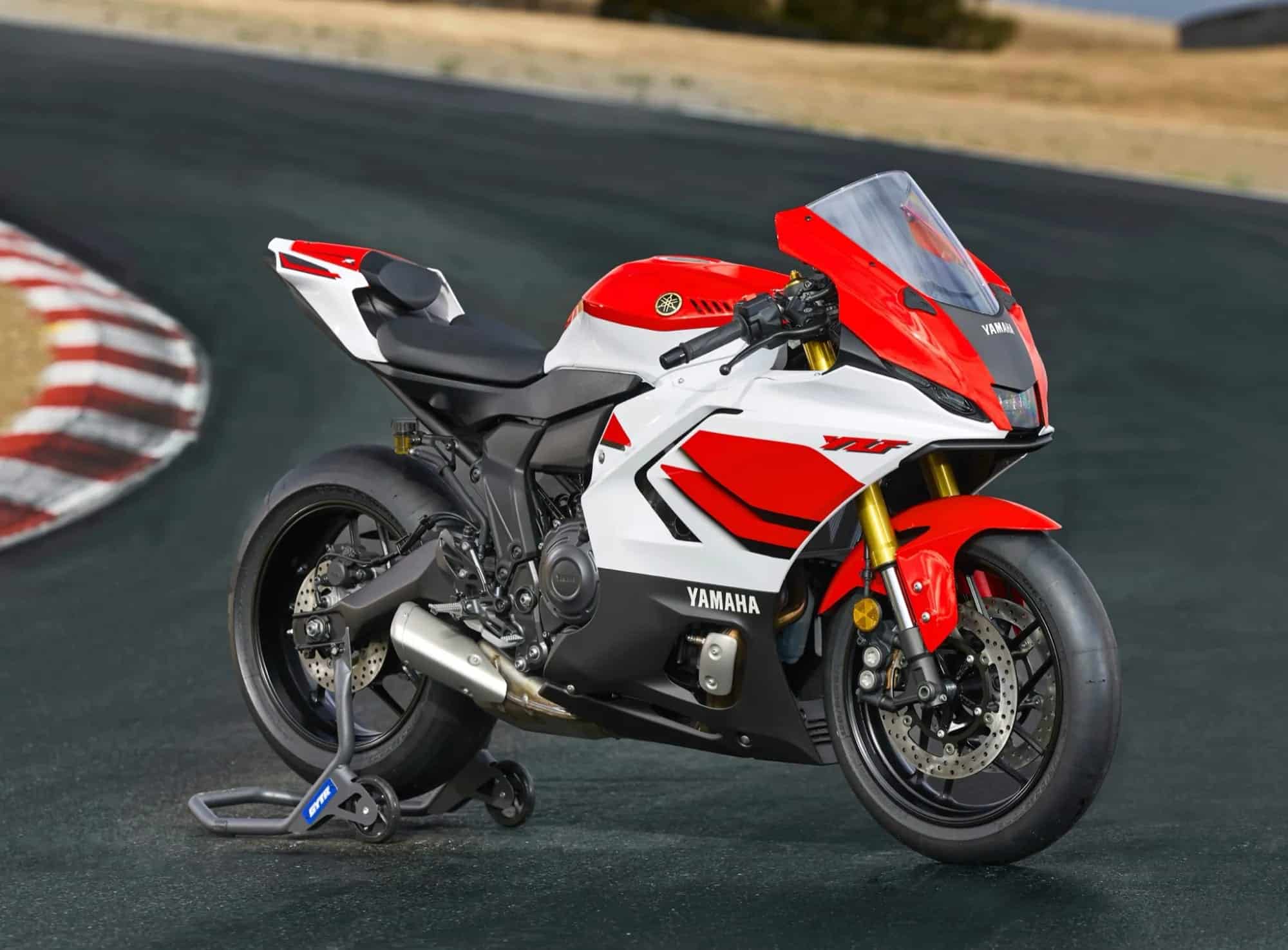
The R7 was announced in 2021 as a 2022 model, and it deliberately does not try to recreate the old four-cylinder R6. Instead, it takes the CP2’s midrange and puts it in a narrow, committed chassis with proper suspension and brakes. That makes it a very sensible track-day or road sport bike: less frantic than a 600 supersport, easier to exploit, and still quick enough to teach you plenty. Read more on why the R7 is different.
Wrap-up
The CP2 is not remarkable because it is revolutionary in any one way. Yamaha had built 270-degree twins before; other companies now build excellent ones. It is remarkable because Yamaha got the whole compromise right: enough capacity, enough pulse, enough power, low enough weight, and a shape that works in almost any motorcycle around it.
That is the sweet spot. The CP2 makes you feel like you are using a motorcycle rather than managing one — and that is more valuable than another 20 horsepower most of the time.