
Remember the Suzuki SV650? Kinda? I do! It was the motorcycle that epitomised a whole generation of affordable, reasonably priced, and fun motorcycles — a good, usable engine with plenty of everyday power, character, affordability, and looks. It lasted a few generations (with a couple of awkward breaks) and inspired a bunch of other bikes, like the Yamaha MT-07 (that’s my theory, anyway; though Yamaha has done other, similar bikes for ages).
Times moved on and the SV650 platform started to get old, and the V-twin’s days were numbered. Parallel twins have many advantages, but mainly, they’re lighter and easier to service, with no cost to character if you keep a 270-degree crank. Thus, the GSX-8 platform was born, with the first models, the GSX-8S and GSX-8R instantly granted tech that the SV never got, confirming the SV’s days were numbered.
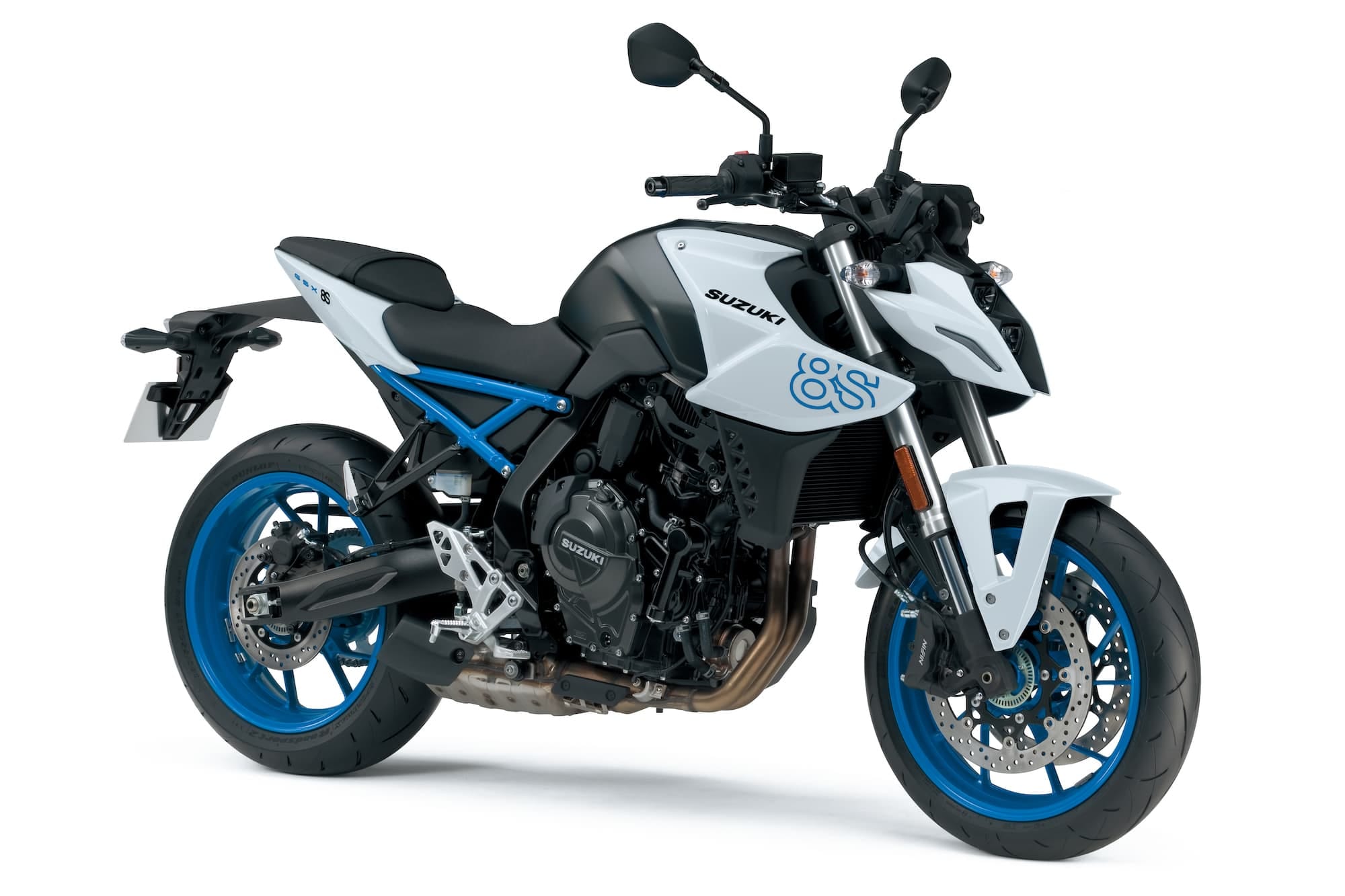
The Suzuki GSX-8 range has expanded to become a small family very quickly. The GSX-8S is the naked one, the GSX-8R is the faired sport bike, and the GSX-8T and GSX-8TT dress the same basic motorcycle in two flavours of retro bodywork.
That makes the buying decision sound cosmetic. It mostly is — but not entirely, and that’s where this guide comes in. The GSX-8R has different Showa suspension and proper wind protection. The GSX-8T and GSX-8TT have larger fuel tanks, different seats, bar-end mirrors, and lithium-ion starter batteries. Prices vary enough that the cheapest and most expensive versions don’t make the same value argument.
This guide covers the road-going Suzuki GSX-8S, GSX-8R, GSX-8T, and GSX-8TT through the 2026 US model year. Suzuki launched the 8T and 8TT globally in mid-2025, so some regions call them 2025, 2026, or 2027 models.
TL;DR: Buy the GSX-8S if you want the best value and like its modern naked-bike styling. Buy the GSX-8R if you want wind protection, a slightly more planted front end, or occasional track days without a supersport riding position. Buy the GSX-8T if you want a retro roadster and the slightly larger 16.5 L tank. Buy the GSX-8TT only if its little cowl, belly pan, and paint are worth the extra money to you. They are to me!
Are you obsessed with motorcycles?
Well, I am. That’s why I created this site — as an outlet. I love learning and sharing what others might find useful. If you like what you read here, and you’re a fraction as obsessed as I am, you might like to know when I’ve published more. (Check the latest for an idea of what you’ll see.)
The Suzuki GSX-8 family in one table
All four motorcycles use the same engine tune, brakes, wheel sizes, wheelbase, and basic steel chassis. These are the differences you would notice when choosing and riding one.
| Model | GSX-8S | GSX-8R | GSX-8T | GSX-8TT |
|---|---|---|---|---|
| Model years | 2023 onward | 2024 onward | 2026 US; mid-2025 global launch | 2026 US; mid-2025 global launch |
| Job | Modern naked roadster | Everyday faired sport bike | Retro naked roadster | Retro roadster with bikini fairing |
| Claimed output | About 61–62 kW (82–83 hp); 78 Nm (57.5 lb-ft) | Samesies | Samealicious | Sameissimo |
| Front suspension | KYB inverted fork, 130 mm (5.1 in), non-adjustable | Showa SFF-BP inverted fork, 130 mm (5.1 in), non-adjustable | KYB inverted fork, 130 mm (5.1 in), non-adjustable | KYB inverted fork, 130 mm (5.1 in), non-adjustable |
| Rear suspension | Link-type shock; preload adjustment | Showa link-type shock; preload adjustment | KYB link-type shock; preload adjustment | KYB link-type shock; preload adjustment |
| Fuel capacity | 14 L (3.7 US gal) | 14 L (3.7 US gal) | 16.5 L (4.4 US gal) | 16.5 L (4.4 US gal) |
| Seat height | 810 mm (31.9 in) | 810 mm (31.9 in) | 815 mm (32.1 in) | 810 mm (31.9 in) |
| Claimed kerb mass | 202 kg (445 lb) | 205 kg (452 lb) | 201 kg (443 lb) | 203 kg (448 lb) |
| Wind protection | None | Full fairing and screen | None | Small headlight cowl |
| Value prop | Price and simplicity | Road-sport versatility | Retro looks plus range | You want the 8TT specifically |
Specifications above use the current Global Suzuki listings for the GSX-8S, GSX-8R, GSX-8T, and GSX-8TT.
What all four Suzuki GSX-8 models share
The engine is the reason this platform works. Suzuki could have built four nice-looking motorcycles around a dull motor and ended up with four different ways to feel underwhelmed. It didn’t.
The 776 cc, 270-degree parallel twin
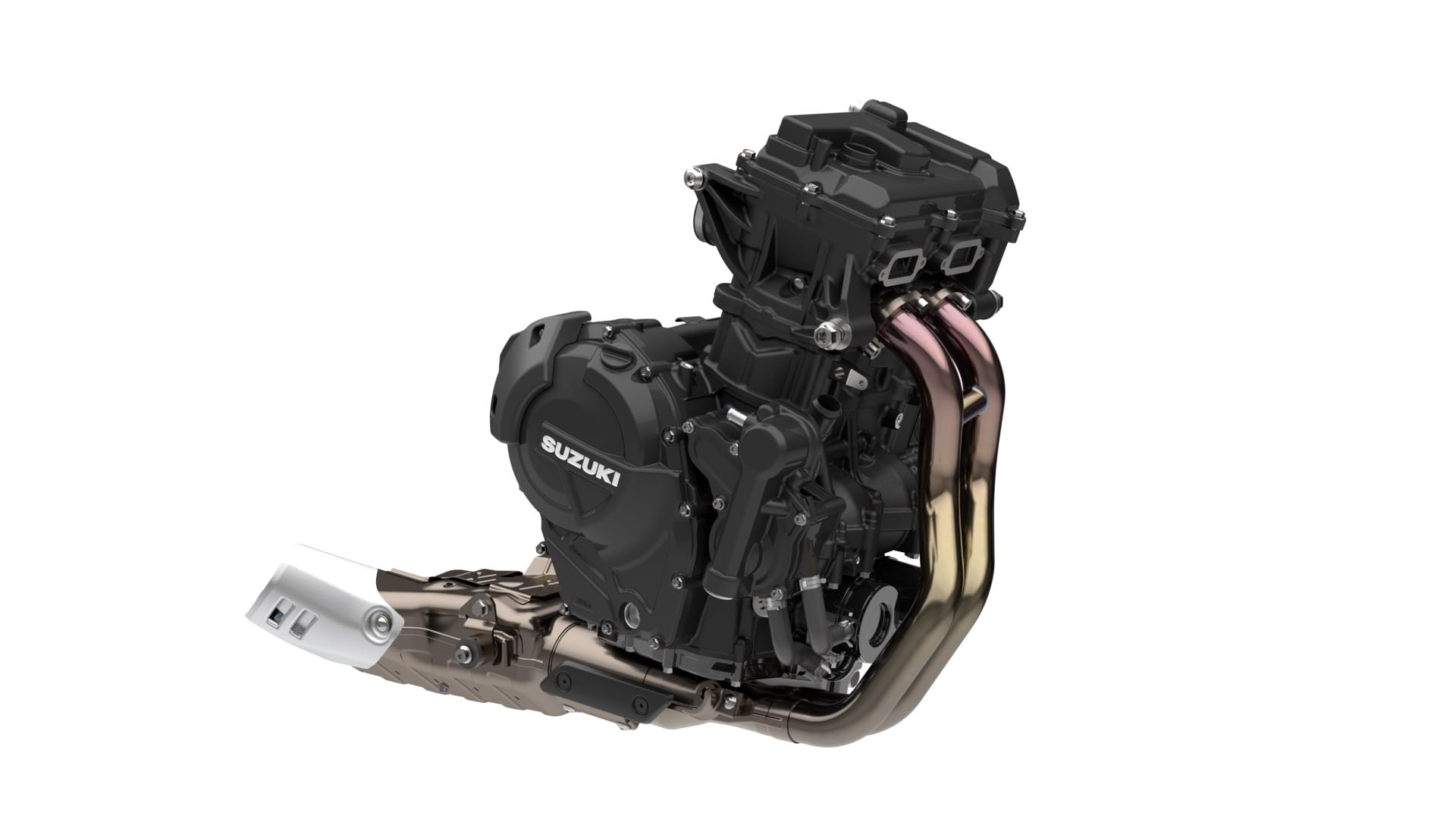
The liquid-cooled, double-overhead-cam twin has an 84 × 70 mm bore and stroke, four valves per cylinder, and a 12.8:1 compression ratio. The power it makes is roughly 61–62 kW (82–83 hp) at 8,500 rpm and 78 Nm (57.5 lb-ft) at 6,800 rpm.
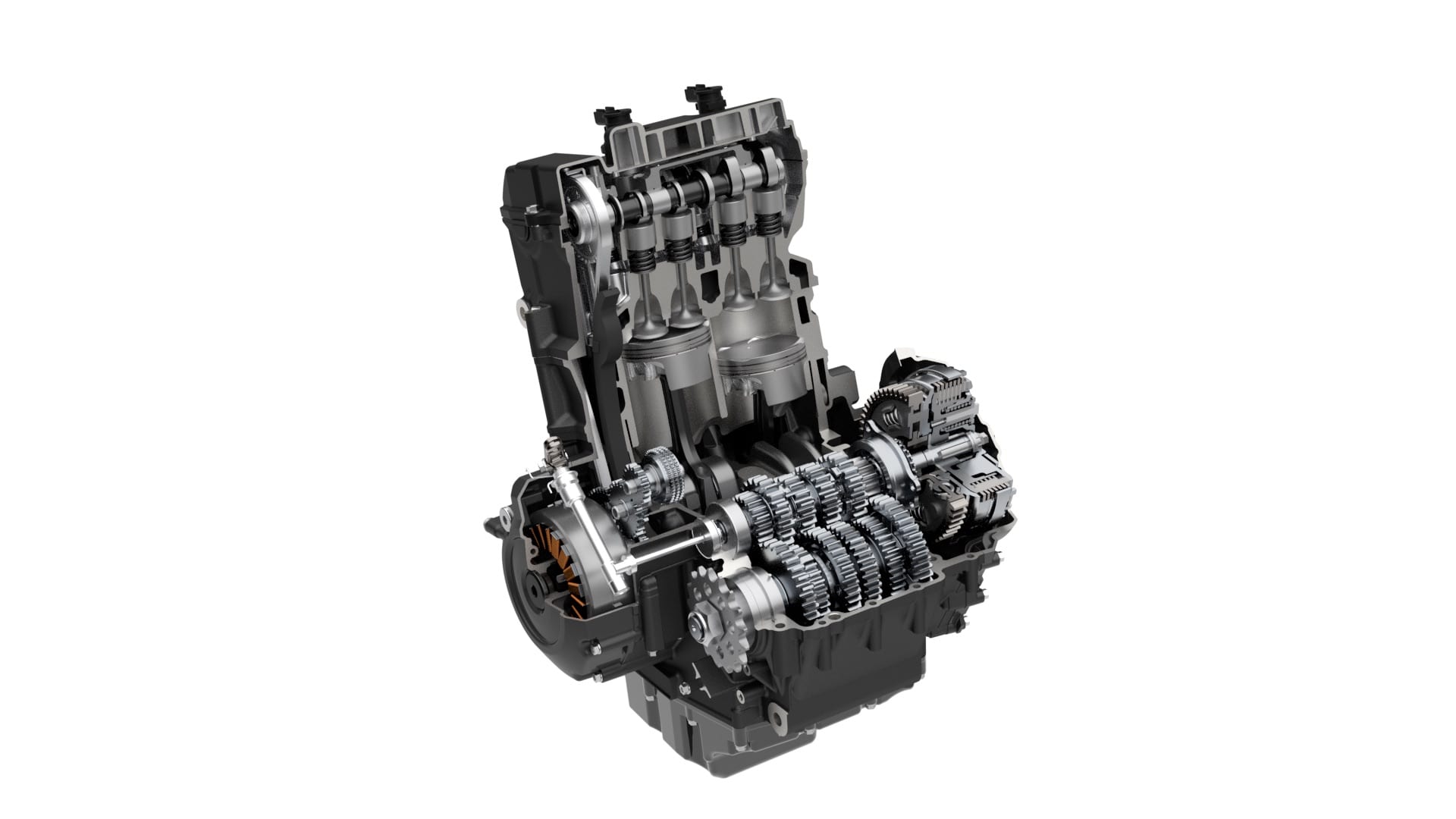
A 270-degree crankshaft gives the engine unevenly spaced firing pulses. That doesn’t turn it into an SV650 V-twin, but it gives the engine a similar off-beat rhythm and traction feel. It also delivers its strongest shove in the middle of the rev range, where a road bike spends far more time than it does near the redline.
Suzuki’s Cross Balancer uses two balancer shafts arranged at right angles to the crankshaft. The compact arrangement lets Suzuki control the vibration of a characterful twin without making the engine excessively tall or long. See our explanation of why 270-degree parallel twins feel different if you want the firing-order details.
This is also the engine in the road and adventure versions of the V-Strom 800. The V-Strom 800 guide explains how much a chassis can change the job of the same motor. In the lighter GSX-8 road bikes, it feels more immediate and sporty.
The electronics are good, but not premium
Every model gets ride-by-wire throttle, three engine maps, three traction-control levels plus off, ABS, Low RPM Assist, Easy Start, an assist-and-slipper clutch, and a bidirectional quickshifter. The five-inch colour TFT is also shared.
The quickshifter matters more than the ride modes. It works in both directions and suits an engine that encourages short, cheerful bursts through the middle of the rev range. The three maps deliver the same peak power with different throttle response, so the softer settings can calm wet or crowded riding without turning the bike into a lower-output learner model.
None of the four has an inertial measurement unit (IMU), cornering ABS, lean-sensitive traction control, or cruise control. That is reasonable on the 8S at the cheaper end of the family. It becomes harder to ignore when an 8TT costs close to more powerful motorcycles with richer electronics.
The frame, wheels, brakes, and geometry
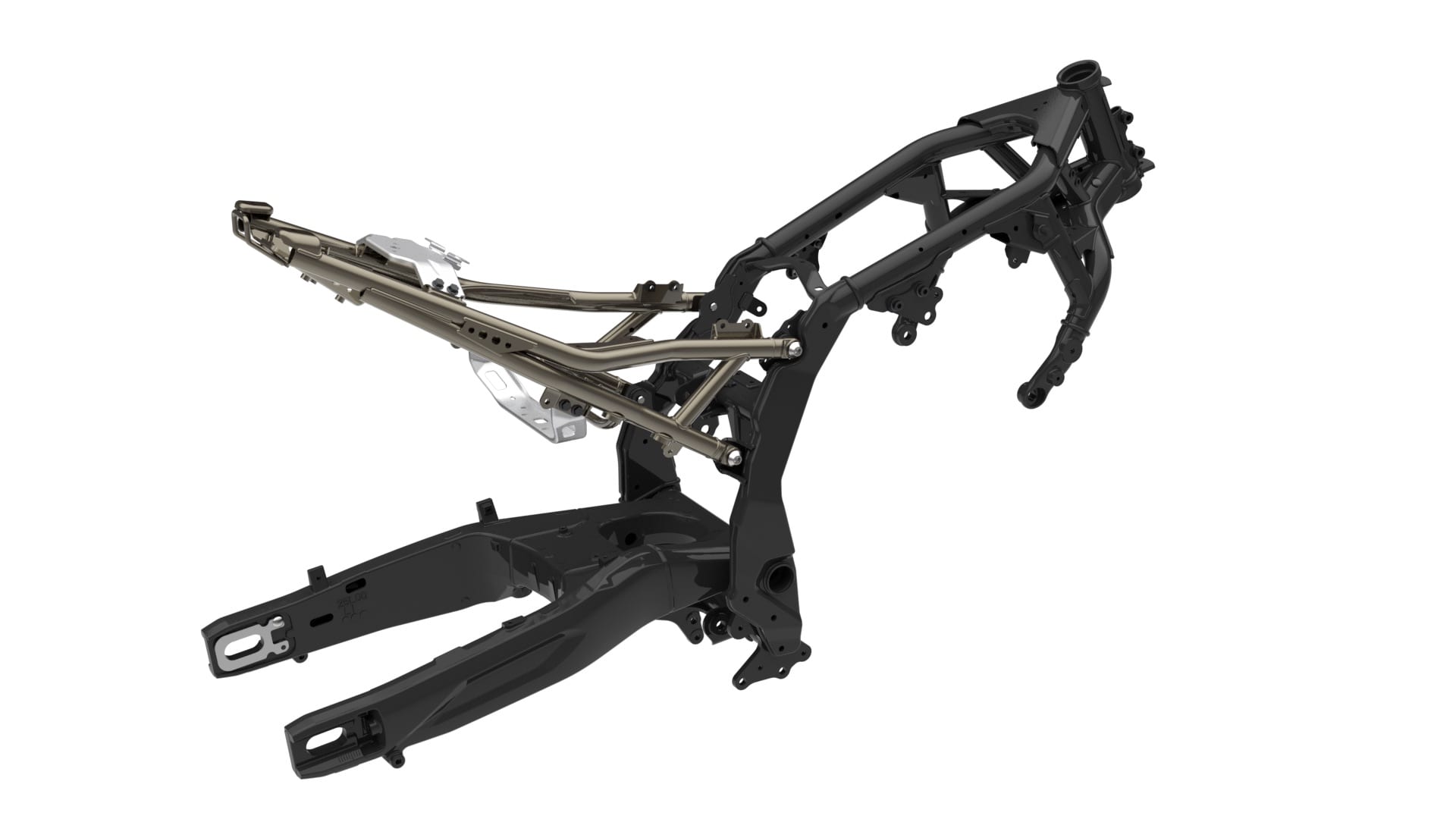
The GSX-8 platform uses a steel-tube main frame, a bolt-on steel rear subframe, and an aluminium swingarm. All four road bikes have a 1,465 mm (57.7 in) wheelbase, 25 degrees of rake, 104 mm (4.1 in) of trail, and 145 mm (5.7 in) of ground clearance.
They also share 17-inch cast wheels, 120/70 front and 180/55 rear tyres, twin 310 mm front discs, and radial-mount four-piston Nissin calipers. Rear preload is the only suspension adjustment. Riders who want to tune compression and rebound for track work, luggage, or a particular road surface will reach the platform’s limit before they reach the engine’s.
A claimed mass around 200 kg (441 lb) isn’t unusually light for this class. The narrow twin and low-mounted exhaust make the bikes easier to manage than the number suggests, but an MT-07 or CB750 Hornet still has a clear weight advantage.
The Suzuki GSX-8 models, one by one
Suzuki GSX-8S (2023 onward): the value choice
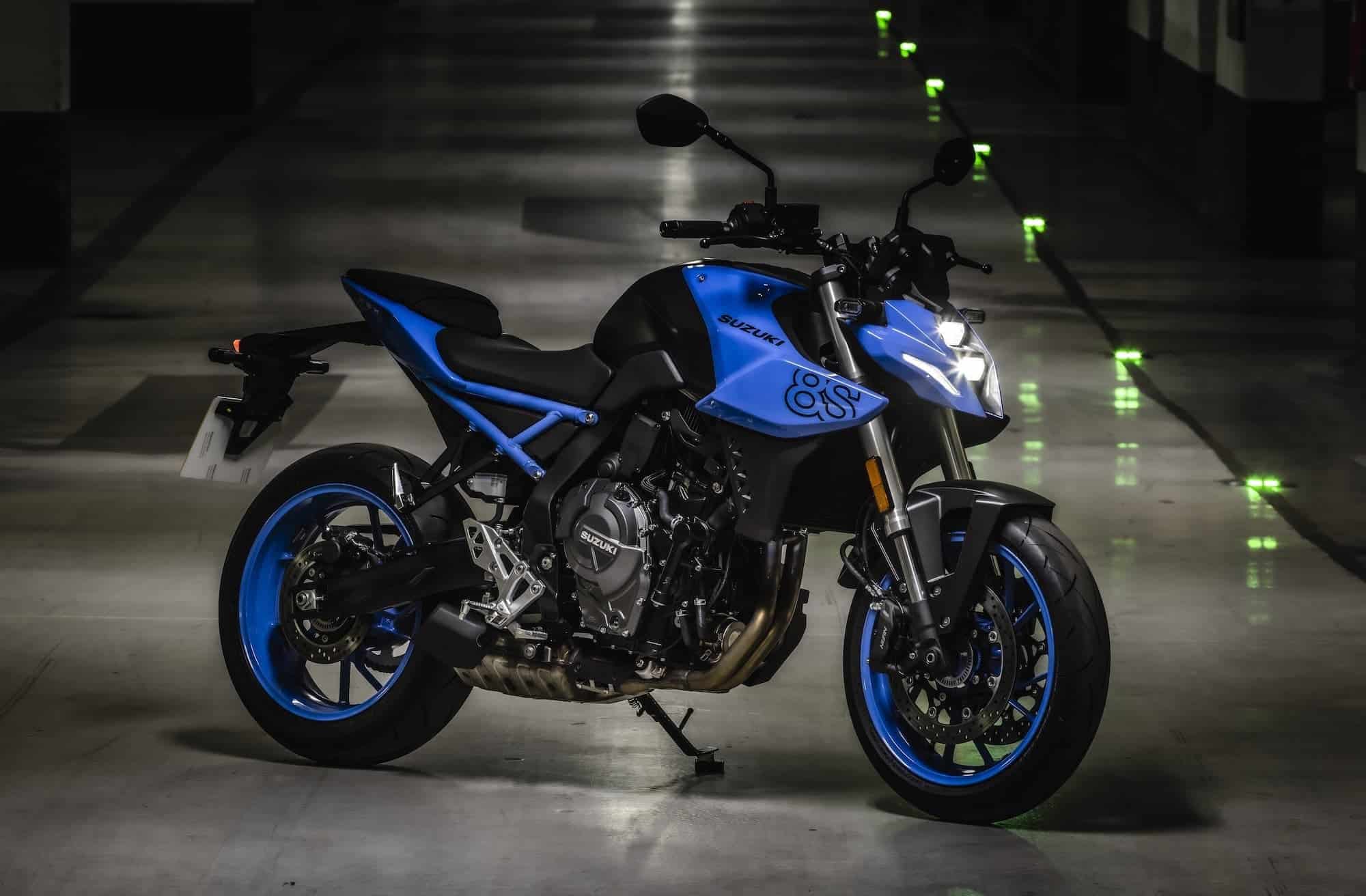
The GSX-8S is the platform in its most direct form: broad tapered handlebar, no fairing, modern stacked lights, and a 14 L (3.7 US gal) tank. It is comfortable enough for commuting and long back-road days, but sustained motorway speed puts all the wind on you.
Its KYB fork is simple and non-adjustable, yet the basic chassis and brakes are the same as the more expensive retro models. The 8S therefore makes the strongest rational case. You lose the 8R’s fairing and Showa fork, and the T models’ larger tank, but you don’t lose performance.
The 8S also makes the cleanest successor to the Suzuki SV650. It is more powerful, much better equipped, and slightly heavier. What it can’t reproduce is the SV’s lovely 90-degree V-twin architecture or the cheap used-bike prices created by more than two decades of production.
Suzuki GSX-8R (2024 onward): the road-sport choice
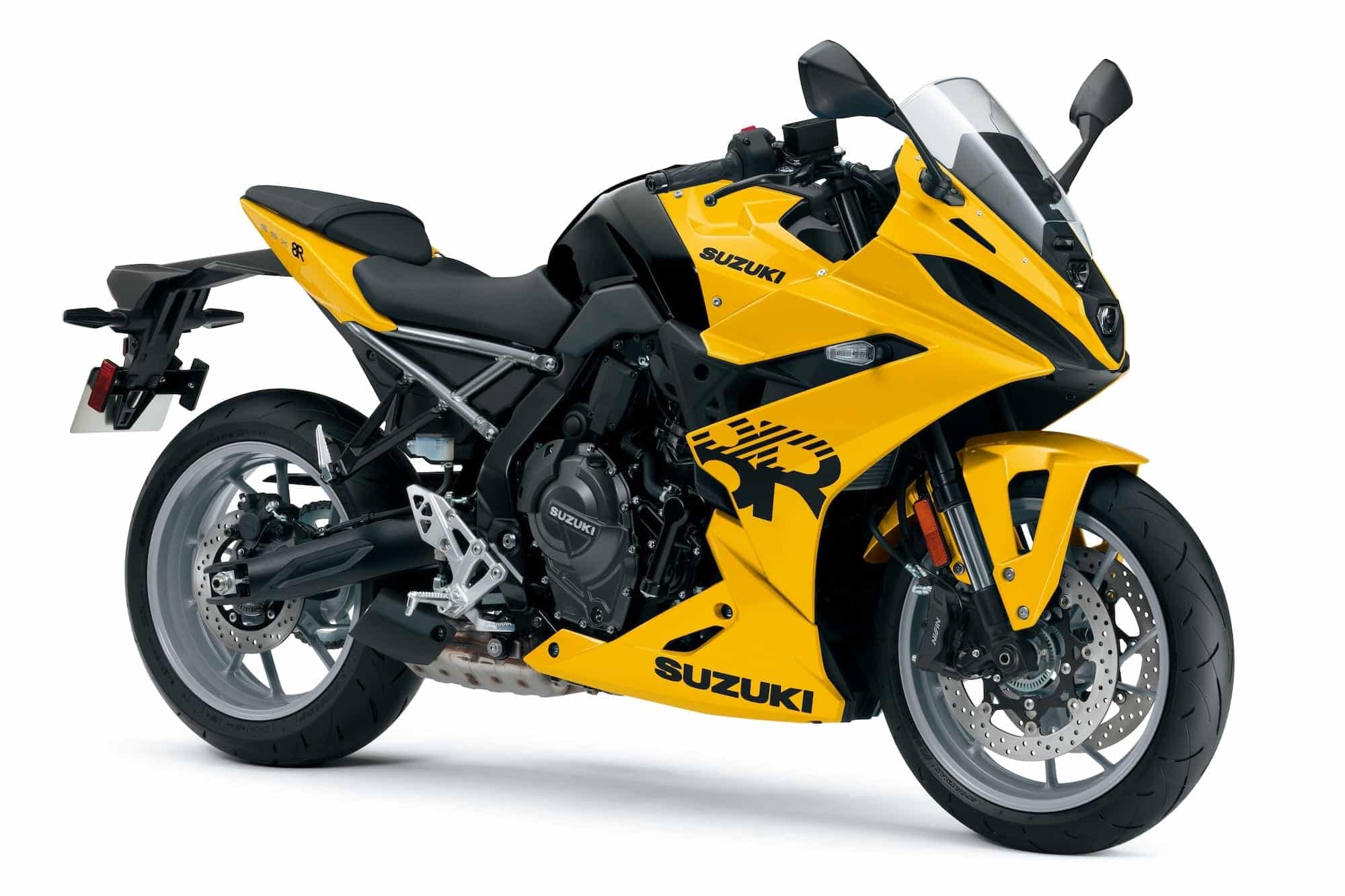
The GSX-8R adds a wind-tunnel-developed full fairing, a screen, separate aluminium handlebars, and Showa SFF-BP suspension. It weighs 3 kg (7 lb) more than the 8S and has the same 810 mm (31.9 in) seat height, wheelbase, brakes, tyres, and engine output.
The Showa fork uses a separate-function, big-piston design. One leg handles most spring duties while the other handles damping, reducing parts and letting Showa use a larger damping piston. It gives Suzuki more control over the standard tune, but it doesn’t give the owner adjusters. If you want to learn more about the difference between fork layouts, see our motorcycle fork guide.
The 8R isn’t a cheaper GSX-R. Its bars sit high, the pegs are sane, and the twin produces usable road torque instead of demanding five-digit revs. Think of it as an everyday sport bike in the tradition of the CBR650R or an old Ducati SuperSport, not a supersport race replica with a little extra padding.
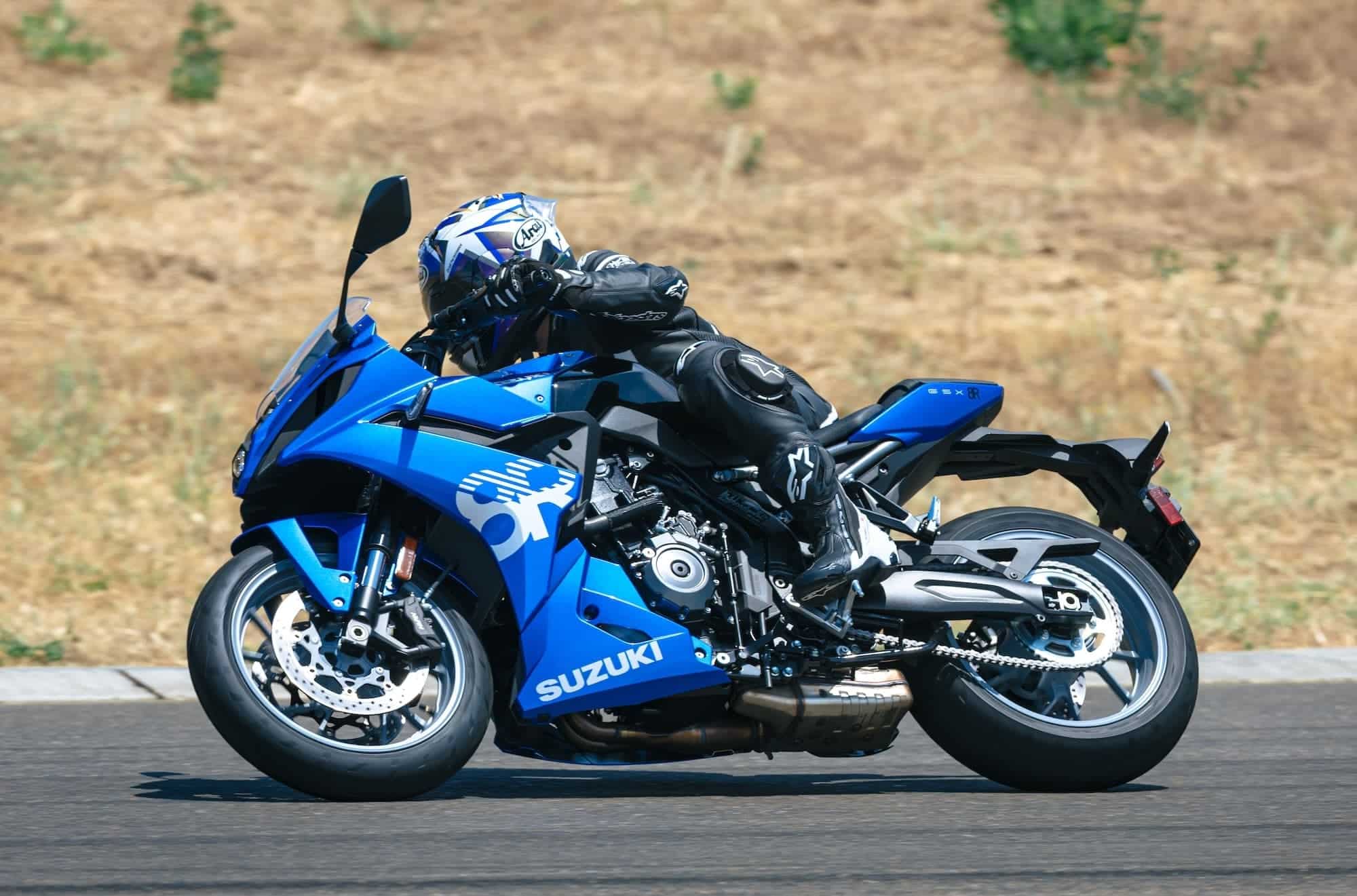
Choose it over the 8S for motorway comfort, the more secure feeling of a fairing around you, or the sport-bike appearance. Choose it for occasional track days too, but budget for suspension work and stickier tyres before pretending it is a GSX-R750.
Suzuki GSX-8T (2026 US): the practical retro
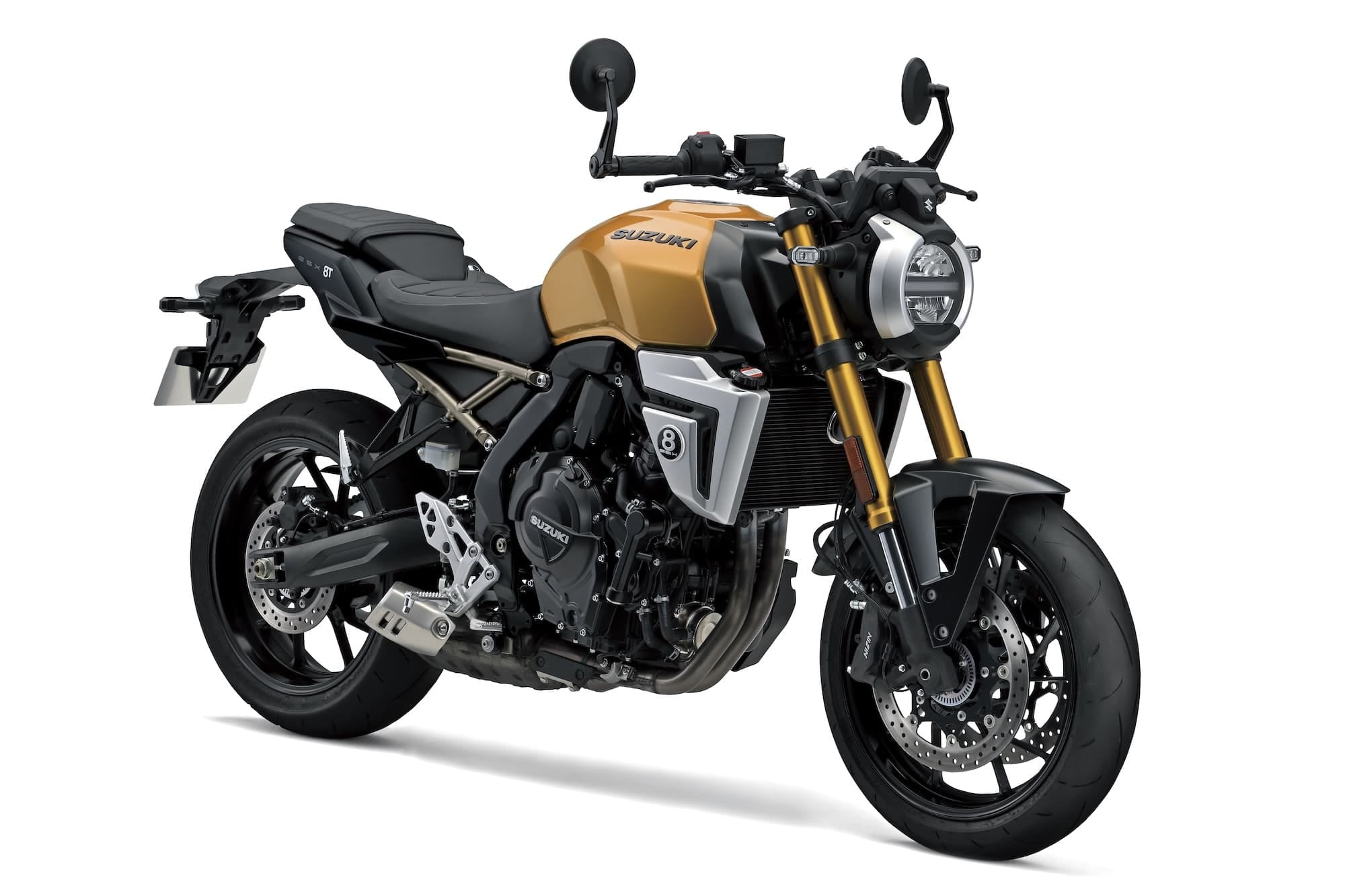
The GSX-8T isn’t merely an 8S with a round headlight. It gets a reshaped 16.5 L (4.4 US gal) tank, a flatter two-piece seat, bar-end mirrors, its own tail and side covers, a short brushed-metal muffler cover, and a lithium-ion starter battery. Suzuki says the styling takes inspiration from the 1960s T500 Titan.
The extra 2.5 L of fuel is actually a little boon, as it takes the theoretical range from about 333 km (207 mi) for the 14 L bikes to about 393 km (244 mi). So that T should give you roughly 50–60 km (30–37 mi) more between comparable fuel stops.
The T’s seat is 5 mm higher than the others at 815 mm (32.1 in), yet its claimed kerb mass is actually the lowest of the four at 201 kg (443 lb). Its KYB suspension and riding geometry closely follow the 8S, so the retro design doesn’t make it slow-steering or old-fashioned.
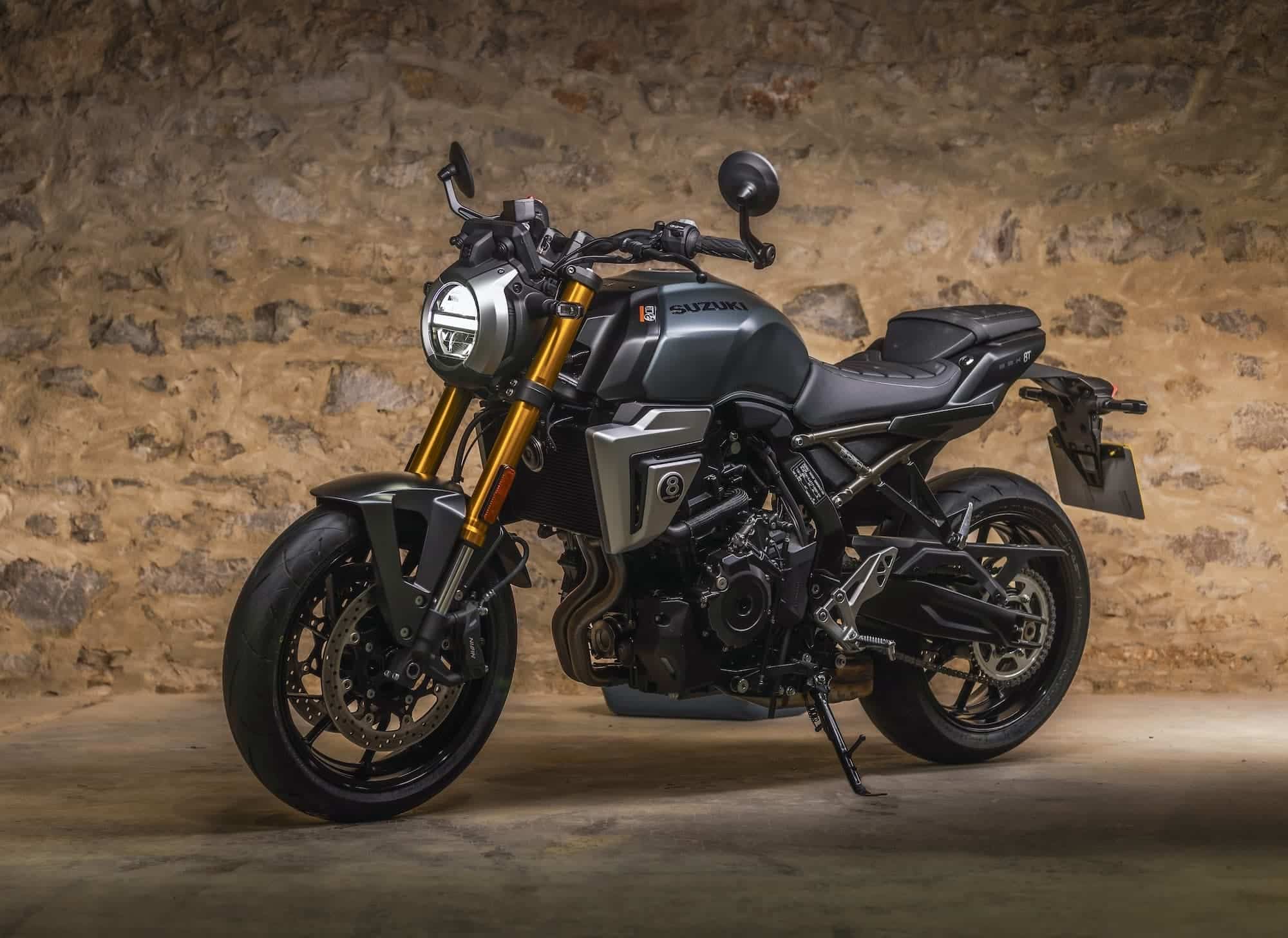
The catch is price. In the US, Suzuki asks considerably more for an 8T than an 8S, despite the common engine, brakes, and suspension specification. You are paying for the design, larger tank, detail finishes, and battery. And the T.
Suzuki GSX-8TT (2026 US): the one you buy with your eyes
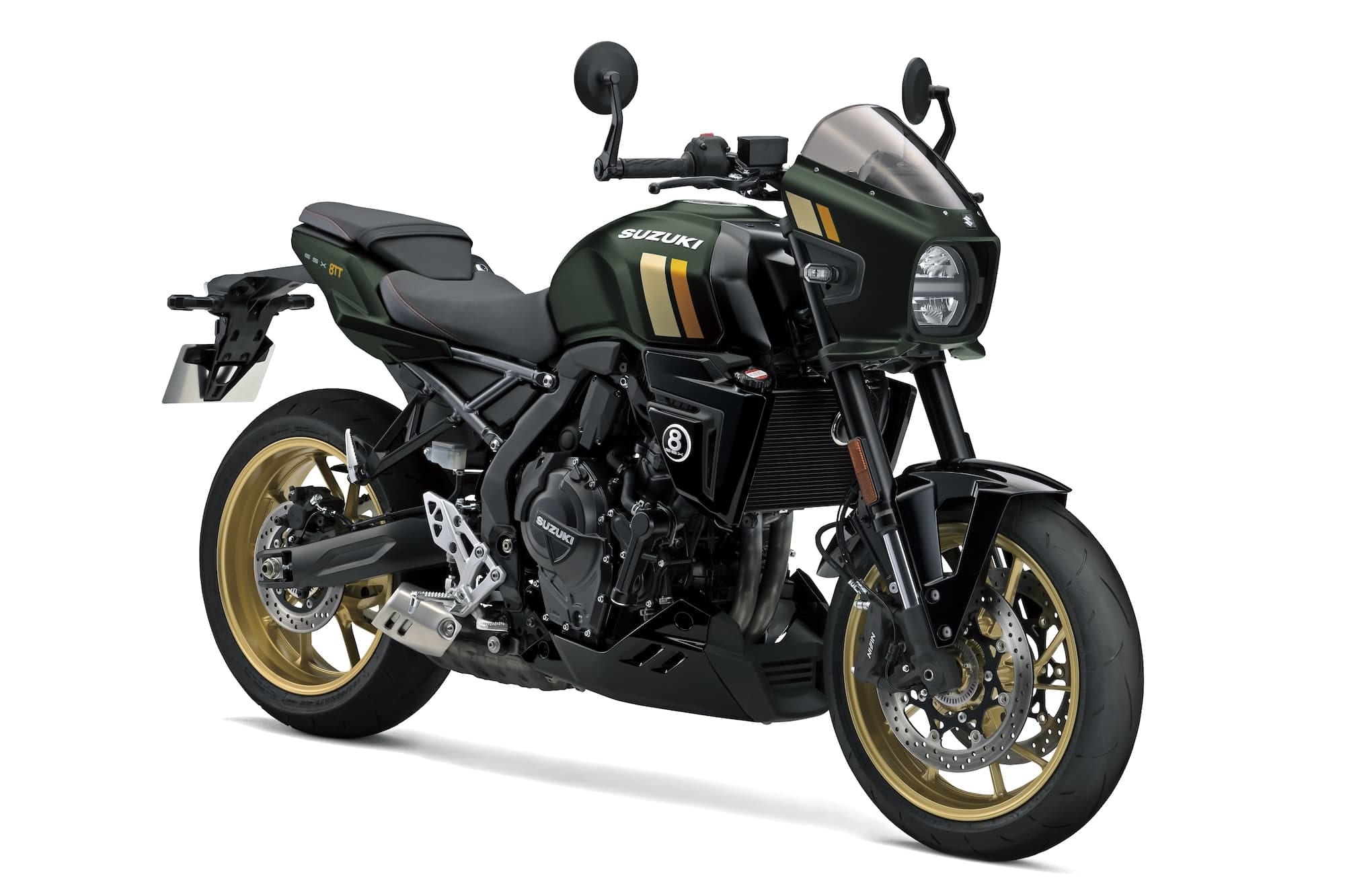
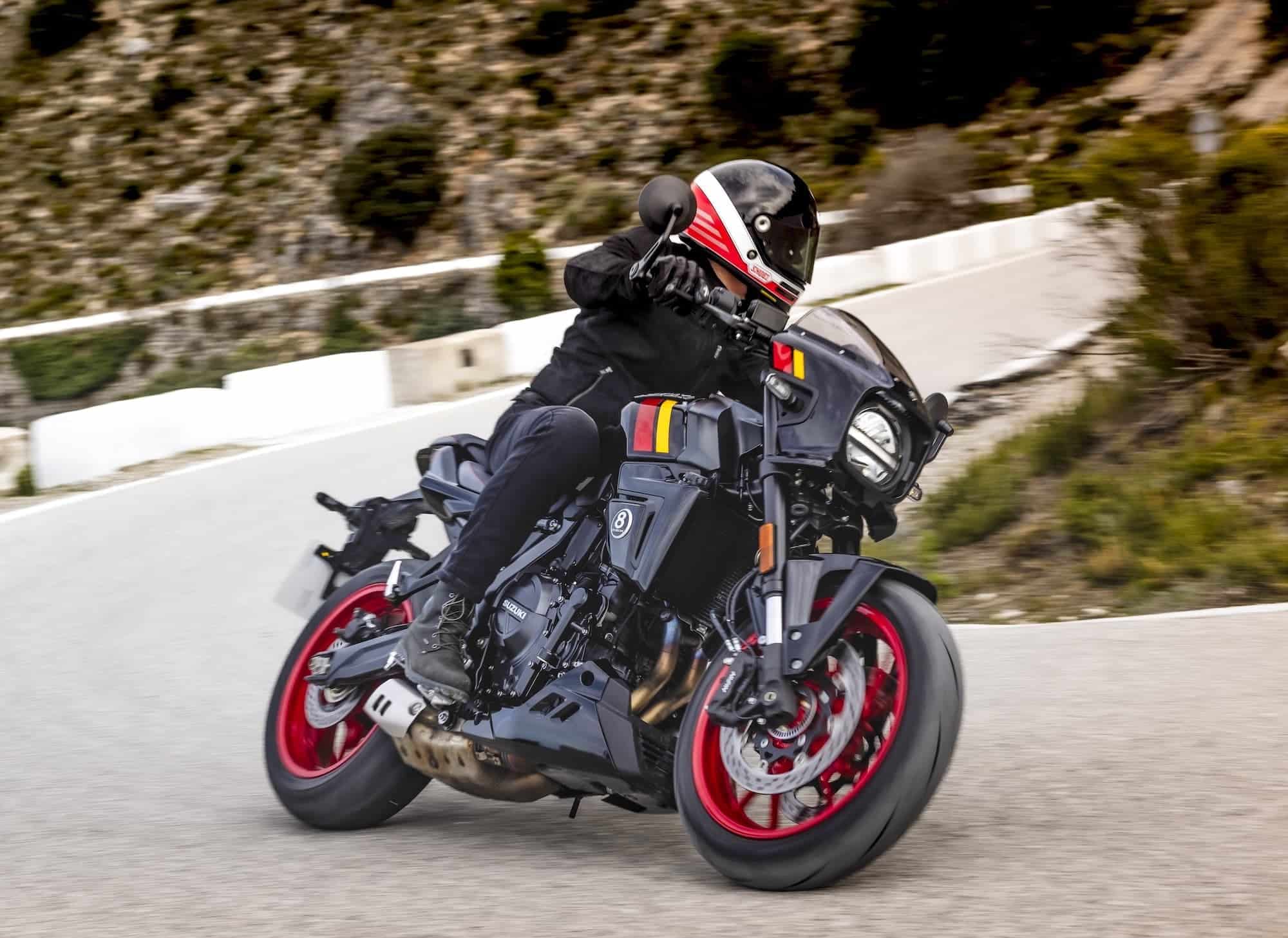
The GSX-8TT takes the T and adds a small headlight fairing, lower cowl, dedicated colour schemes, black fork legs and shrouds, and different trim. Suzuki says the design recalls 1970s road racers and the GS1000 AMA race bike. The second T means “Timeless”, not touring or twin.
Mechanically, it is almost all 8T. The little fairing raises the overall height and may take the edge off the wind at the chest, but it doesn’t turn the TT into a miniature GSX-S1000GT. Its seat drops back to 810 mm (31.9 in), and the extra bodywork lifts claimed kerb mass by 2 kg (4 lb).
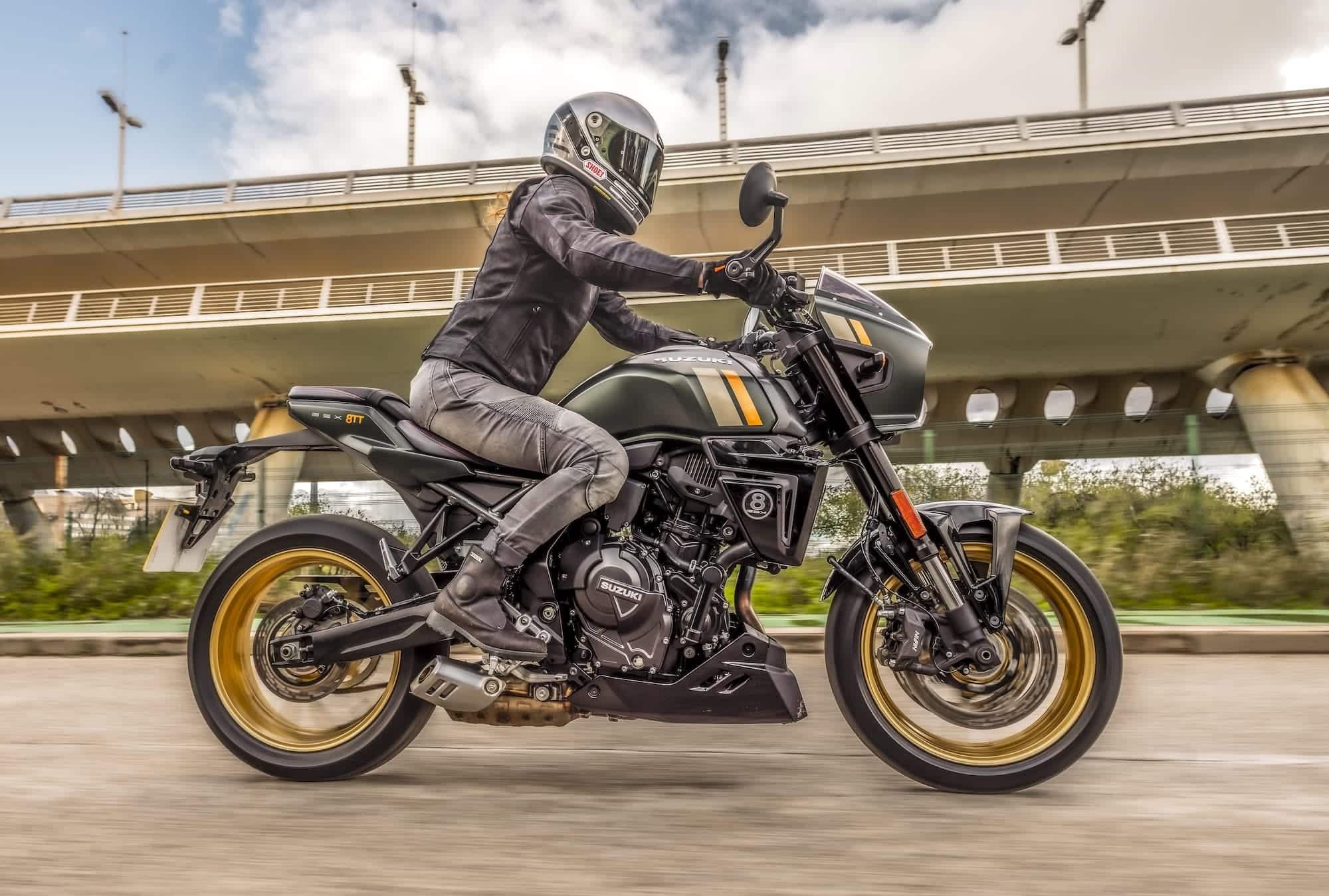
This is the least rational purchase in the family and possibly the easiest to understand. If the TT is the one you keep looking at, a spreadsheet won’t make the 8S prettier to you. Just know that you are buying the styling, not a performance upgrade.
GSX-8T vs GSX-8TT: what does the extra T buy?
| Item | GSX-8T | GSX-8TT | What it means |
|---|---|---|---|
| Engine, brakes, electronics | Shared GSX-8 hardware | Same | No performance gain for the TT |
| Fuel tank | 16.5 L (4.4 US gal) | 16.5 L (4.4 US gal) | Same useful range advantage over 8S/8R |
| Front bodywork | Round headlight, no cowl | Headlight cowl plus lower cowl | TT looks sportier; only modest wind protection |
| Seat height | 815 mm (32.1 in) | 810 mm (31.9 in) | TT is fractionally easier to reach the ground from |
| Claimed kerb mass | 201 kg (443 lb) | 203 kg (448 lb) | Too small a difference to guide the purchase |
| 2026 US MSRP | $10,649 plus destination | $11,149 plus destination | $500 for the TT treatment |
Buy the T if you prefer the clean roadster shape or want to spend the difference on heated grips and luggage. Buy the TT if removing its fairing in your imagination makes the motorcycle worse. That is the entire decision.
How the four GSX-8 models differ in real use
City and commuting
The 8S is the obvious choice. It has the same low-speed engine manners, assist clutch, quickshifter, seat height, and steering geometry as the expensive models, but there is less bodywork to worry about in a parking space. The T is just as credible if its shape makes you happier every morning.
The 8R is still an easy commuter by sport-bike standards. Its bars aren’t painfully low, and the fairing helps in cold weather. It is wider and more expensive to repair after a stationary drop, though. The TT’s bar-end mirrors add width exactly where filtering gaps become interesting.
Motorways and travel
The 8R wins for sustained high-speed riding because a full fairing changes fatigue more than the other chassis differences. The T and TT counter with an 18 percent larger fuel tank and available 15–20 L expandable soft side cases. The TT’s cowl helps less than its appearance suggests.
None gets cruise control, and all use chain final drive. If long-distance travel is the main job, Suzuki’s GSX-S1000GT or the road-focused V-Strom 800 makes a more complete touring argument. The GSX-8 bikes can tour; they just don’t make touring their first job.
Back roads and occasional track days
The 8S and 8R make the most sense. Their 14 L tanks keep the middle narrow, and both put the same torque and brakes to work. The 8S gives you a broad bar and easy leverage. The 8R gives you wind protection and a Showa front end with a sportier standard tune.
For track days, start with the 8R. Its limits are also clear: the suspension has almost no adjustment, the brakes use conventional ABS rather than cornering ABS, and the standard RoadSport 2 tyres favour road life over outright circuit grip. The motorcycle can have a very good day at a track without pretending to be a supersport.
GSX-8 prices: what are you paying for?
These are Suzuki Motor USA’s 2026 base prices as listed in September 2026. Each also has a $700 destination charge before tax, registration, dealer fees, and accessories.
| Model | 2026 US MSRP | Premium over GSX-8S | What the premium buys |
|---|---|---|---|
| GSX-8S | $9,249 | — | The complete mechanical baseline |
| GSX-8R | $9,699 | $450 | Full fairing, screen, separate bars, Showa suspension |
| GSX-8T | $10,649 | $1,400 | Retro bodywork, 16.5 L tank, seat, bar-end mirrors, lithium battery |
| GSX-8TT | $11,149 | $1,900 | The 8T package plus headlight and lower cowls and TT finishes |
The 8R is the easy upgrade to justify. For $450 over the 8S, it changes high-speed comfort and suspension hardware. The 8T and TT ask you to value their design much more strongly. Their larger tanks add real utility, but not $1,400–$1,900 worth on their own.
Maintenance, reliability, and used buying
The four road models share the same basic service schedule. The 8T and 8TT are too new for a useful catalogue of long-term faults, and the whole engine family only dates to 2023. Don’t turn a handful of forum reports into a reliability verdict.
| Maintenance item | Interval | What it means |
|---|---|---|
| First service | 1,000 km (600 mi) or two months | Important on a nearly new used bike; ask for evidence |
| Regular service and engine oil | Every 6,000 km (3,750 mi) or 12 months | Shorter than some current rivals, especially for high-mileage commuters |
| Spark plugs | Inspect at 6,000 km; replace at 12,000 km (7,500 mi) | A recurring cost before the major valve service |
| Valve-clearance inspection | Every 24,000 km (15,000 mi) | Conventional shim service; fairing removal adds labour on the 8R |
| Brake fluid | Every two years | Time matters even on a low-mileage bike |
| Drive chain | Inspect before riding; clean and lubricate about every 1,000 km (600 mi), sooner after rain or dirt | All four need normal chain care |
For the complete task lists, fluids, parts, and manual extracts, use the maintenance schedules for the GSX-8S, GSX-8R, and GSX-8T/8TT.
When buying used, check the basics first:
- Service history: Confirm the 1,000 km first service and annual oil changes. A low odometer doesn’t cancel the time interval.
- Quickshifter: Test upshifts and downshifts once the engine is warm. A poor adjustment or damaged shift linkage can make a good system feel clumsy.
- Crash damage: Inspect bar ends, levers, engine covers, footrests, radiator corners, wheel rims, and steering stops. Check the expensive fairing panels particularly closely on an 8R or 8TT.
- Chain and tyres: Look for tight links, hooked sprocket teeth, uneven tyre wear, and squared-off rear tyres on commuter bikes.
- Modifications: Inspect wiring around tail tidies, heated grips, USB outlets, and exhausts. Neat work is more important than a famous logo.
- 8T/8TT battery care: These models use a lithium-ion starter battery. Use a compatible charger or maintainer; don’t assume every old lead-acid charger is suitable.
For a broader inspection, use our used-motorcycle buying checklist. Also check with your dealer for recalls — these are region-specific.
The closest alternatives
The closest rival changes with the GSX-8 version. A naked 8S shopper and a faired 8R shopper may want the same engine behaviour, but they aren’t asking the same motorcycle to do the same job.
| Alternative | Closest GSX-8 | Choose it instead if… | Choose the Suzuki if… |
|---|---|---|---|
| Yamaha MT-07 / XSR700 | 8S / 8T | You want less mass, a huge used market, and the familiar CP2 engine | You want stronger performance, a standard quickshifter, better brakes, and a colour TFT |
| Honda CB750 Hornet | 8S | You want more power and lower claimed mass | You prefer the Suzuki’s standard quickshifter, chassis feel, or dealer offer |
| Yamaha YZF-R7 | 8R | You want a lighter, more committed sport-bike riding position | You want more everyday comfort, stronger standard electronics, and easier road pace |
| Triumph Daytona 660 | 8R | You want a revvier three-cylinder engine and more peak power | You prefer the Suzuki twin’s low-to-midrange punch and simpler value argument |
| Kawasaki Z900RS | 8T / 8TT | You want an inline four, more performance, and a deeper retro treatment | You want a narrower, less intimidating motorcycle with lower running costs |
Read our MT-07 and XSR700 buyer’s guide, Honda Hornet history, Yamaha R7 guide, and Triumph Daytona buyer’s guide for the longer versions of those decisions. The current middleweight naked-bike comparison places the 8S against the wider field.
Which Suzuki GSX-8 should you buy?
For most people, buy the GSX-8S. It gives you the engine, quickshifter, brakes, electronics, and core chassis at the lowest price. Add a small screen if you occasionally travel.
Buy the GSX-8R if you like sport bikes but live on public roads. The fairing changes high-speed comfort, the Showa suspension is a worthwhile detail, and the riding position doesn’t demand a physiotherapist on retainer. The modest price gap over the 8S makes sense.
Buy the GSX-8T if you want the most useful retro version. The larger tank is a genuine improvement, and the clean round-headlight design will age more quietly than the 8S’s sharper bodywork. You must be comfortable paying for design rather than extra performance.
Buy the GSX-8TT if it is the one you really want. It doesn’t beat the T in any objective way that matches the price increase. It does look excellent, though, and motorcycles aren’t municipal fleet purchases. Sometimes the one that makes you turn around after parking is the correct one.