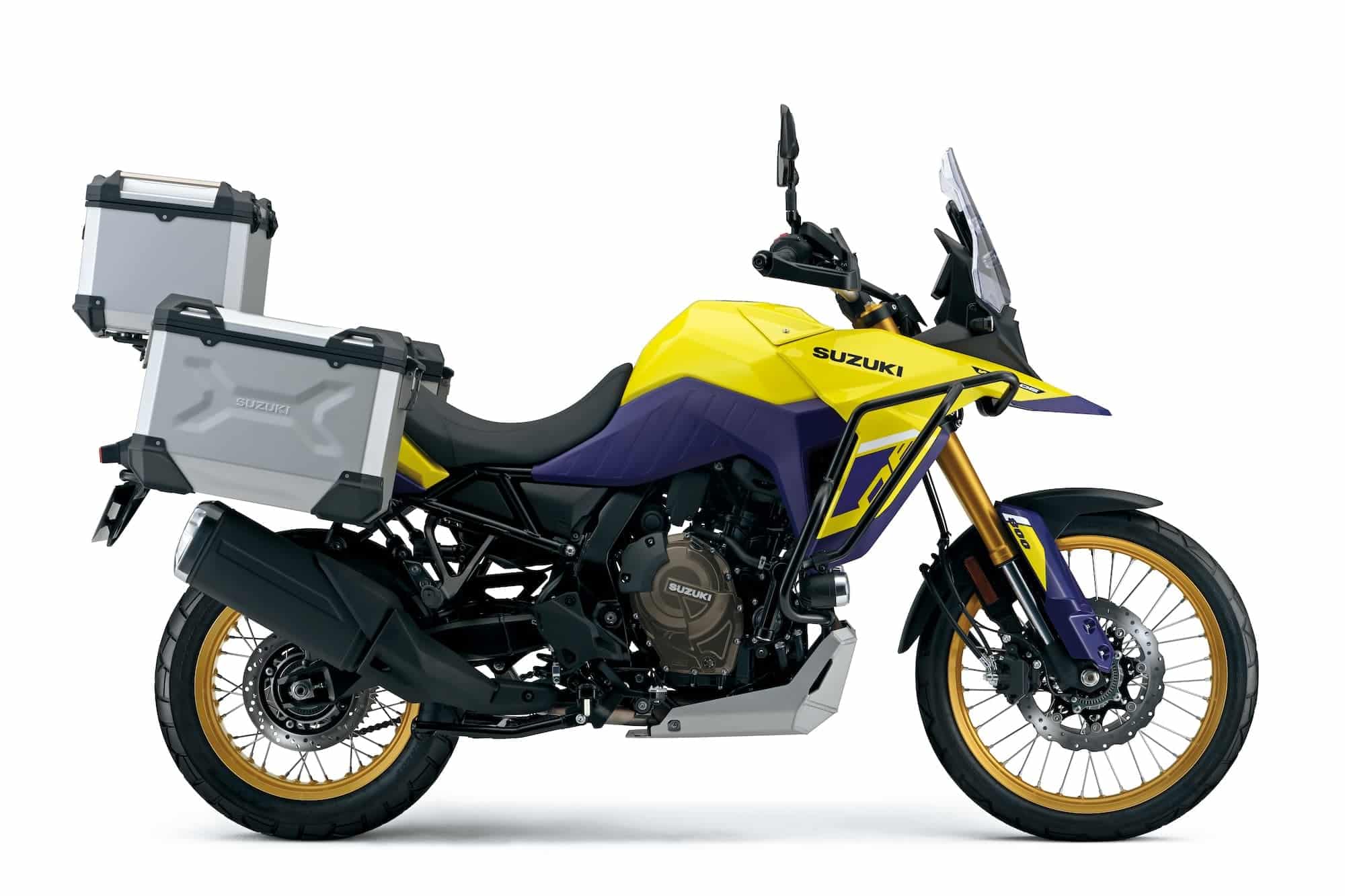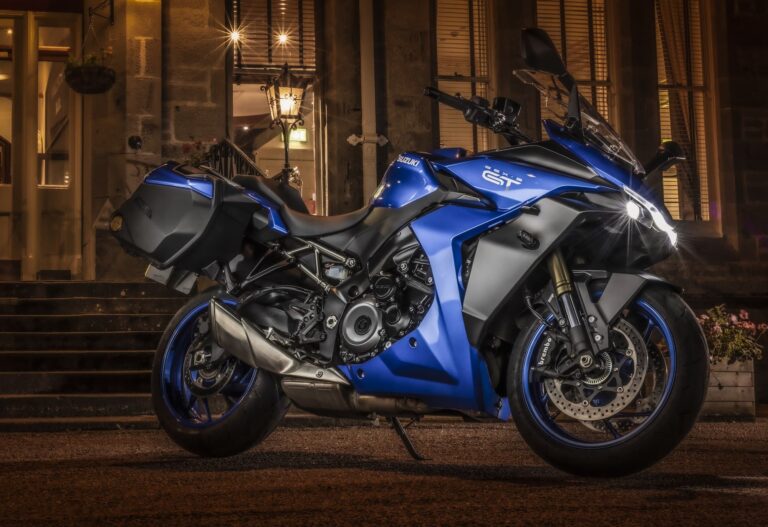

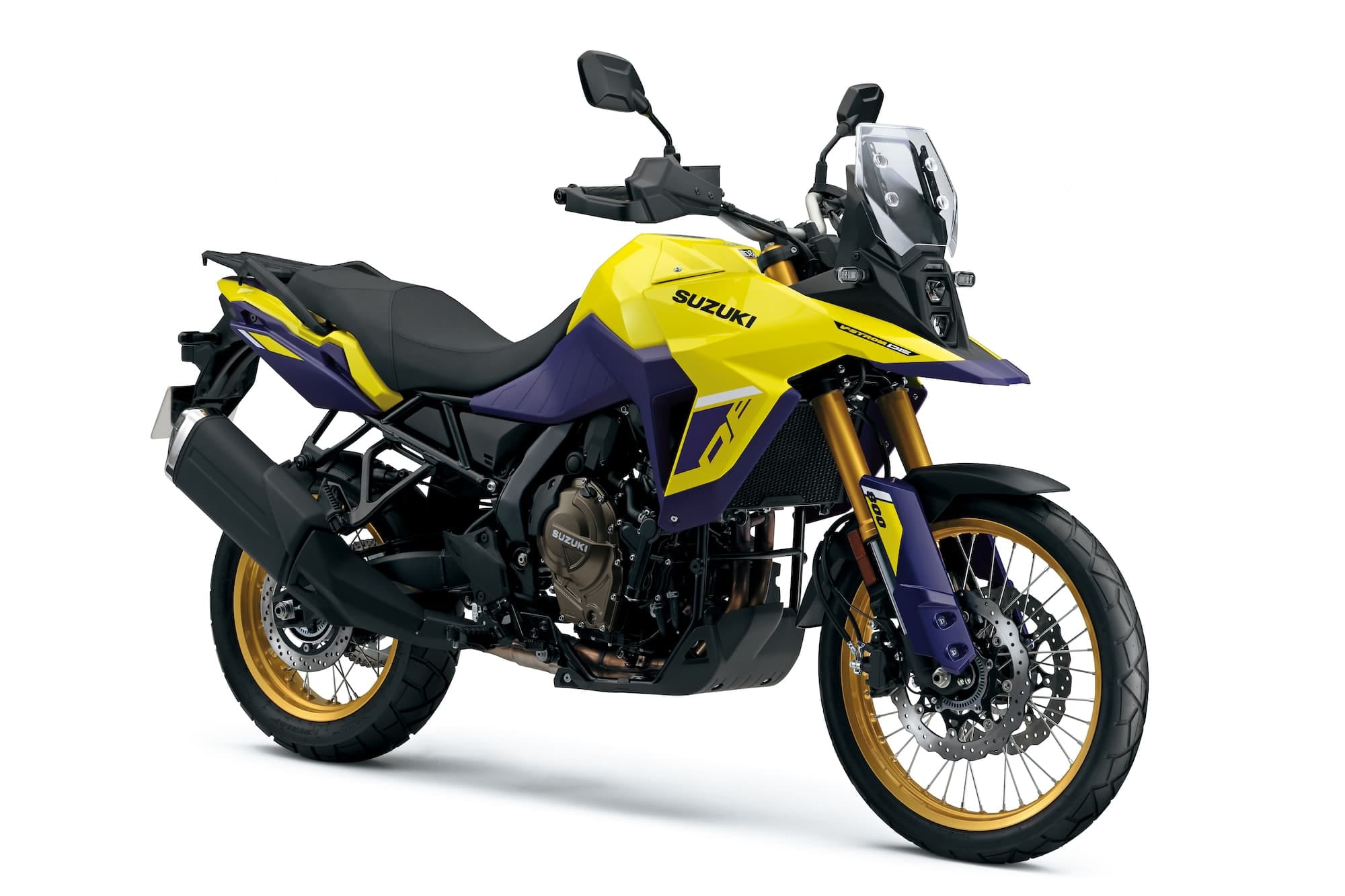
The Suzuki V-Strom 800 looks simple until you try to work out which one you should buy. The 800RE and 800DE share an engine, a steel backbone frame, a 20 L tank, a 5-inch TFT, and a very similar silhouette. But they are not the same motorcycle with different wheels.
The V-Strom 800RE is the road bike: lower, lighter, sharper on sealed roads, and set up for commuting and long days with luggage. The V-Strom 800DE is the dirt-capable one: taller, slower-steering, and much more credible once the road becomes rough. Both have Suzuki’s excellent new 776 cc parallel twin, which is the reason either one is worth considering.
This guide covers the current V-Strom 800 platform through the 2026 model year, including its relationship to the V-Strom 650, what the RE/DE/SE letters mean, and which alternatives are actually comparable. Specifications and available accessory packs vary a little by country, so check your local Suzuki listing before treating a price or luggage package as universal.
Short version: Buy the 800RE if nearly all your riding is on tarmac and your idea of adventure is a good back road, a commute, and a big trip. Buy the 800DE if you will regularly ride loose, rutted, rocky, or sandy roads and want the suspension, wheel, ground clearance, and brake settings to support that. Do not buy the DE just because it looks tougher if you are never going to leave the road.
Are you obsessed with motorcycles?
Well, I am. That’s why I created this site — as an outlet. I love learning and sharing what others might find useful. If you like what you read here, and you’re a fraction as obsessed as I am, you might like to know when I’ve published more. (Check the latest for an idea of what you’ll see.)
Before the V-Strom 800 — the V-Strom 650 legacy
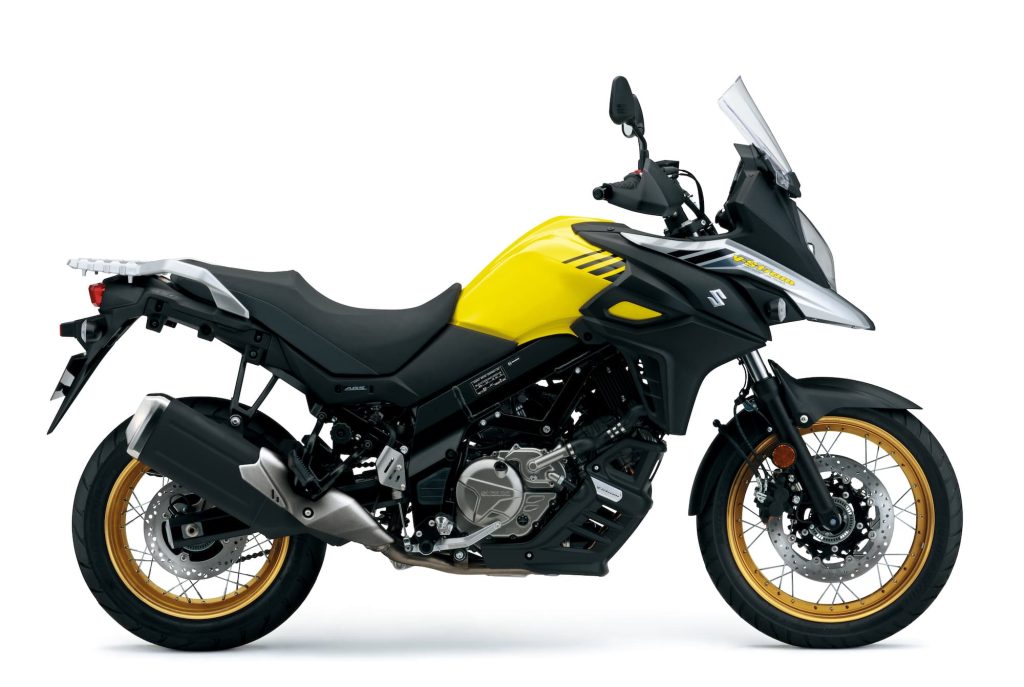
The original V-Strom 650 arrived in 2004 with a 645 cc, 90-degree V-twin derived from the SV650. It became popular because it got the boring important things right: a friendly engine, sensible servicing, a roomy riding position, useful range, and enough suspension for bad roads without pretending to be a rally bike.
Suzuki revised it heavily for 2012, then added wire-wheeled XT variants in 2015/2017 depending on market. The basic idea stayed the same. A V-Strom 650 was the bike you bought to commute during the week, tour with soft luggage, and take down a gravel road without getting precious about it.
The V-Strom 800DE, launched for 2023, is a successor in role, but not in mechanical lineage. It has no version of the old 650’s V-twin or alloy frame. Suzuki started again with a 776 cc parallel twin and a new steel chassis. It makes a claimed 62 kW (83 hp) at 8,500 rpm and 78 Nm (57.5 lb-ft) at 6,800 rpm—usefully more than the 650’s roughly 52 kW (70 hp) and 62 Nm (46 lb-ft).
The 800 moves the V-Strom closer to the current middleweight adventure-bike class. A 21-inch front wheel, 220 mm (8.7 in) of travel, proper adjustability, and rear-ABS-off mode on the DE would have been a very different proposition from the old 650. The 800RE, introduced for 2024, takes the same platform in the opposite direction: it is closer to the practical all-road touring brief that made the 650 successful in the first place.
What do RE, DE, and SE mean?
Suzuki has made this needlessly regional. The important thing is to identify the hardware, not just the letters on a dealer listing.
- V-Strom 800RE means Road Explorer in markets that use the RE name, including Australia and the UK. It is the 19-inch-front, cast-wheel, road-biased model. In the US, it is simply called the V-Strom 800.
- V-Strom 800DE means Dual Explorer. It is the 21-inch-front, spoked-wheel, longer-travel model with more off-road-focused electronics.
- V-Strom 800SE means Sport Explorer in some continental European markets. It is another road-oriented variant, not a special edition of the DE. Do not assume an SE sold overseas has the same spec or accessories as an Australian RE.
- Touring and Adventure usually describe factory accessory packages: luggage, a top case, an aluminium sump guard, or accessory bars. They do not change the core RE/DE chassis decision.
The 776 cc parallel twin — why it matters
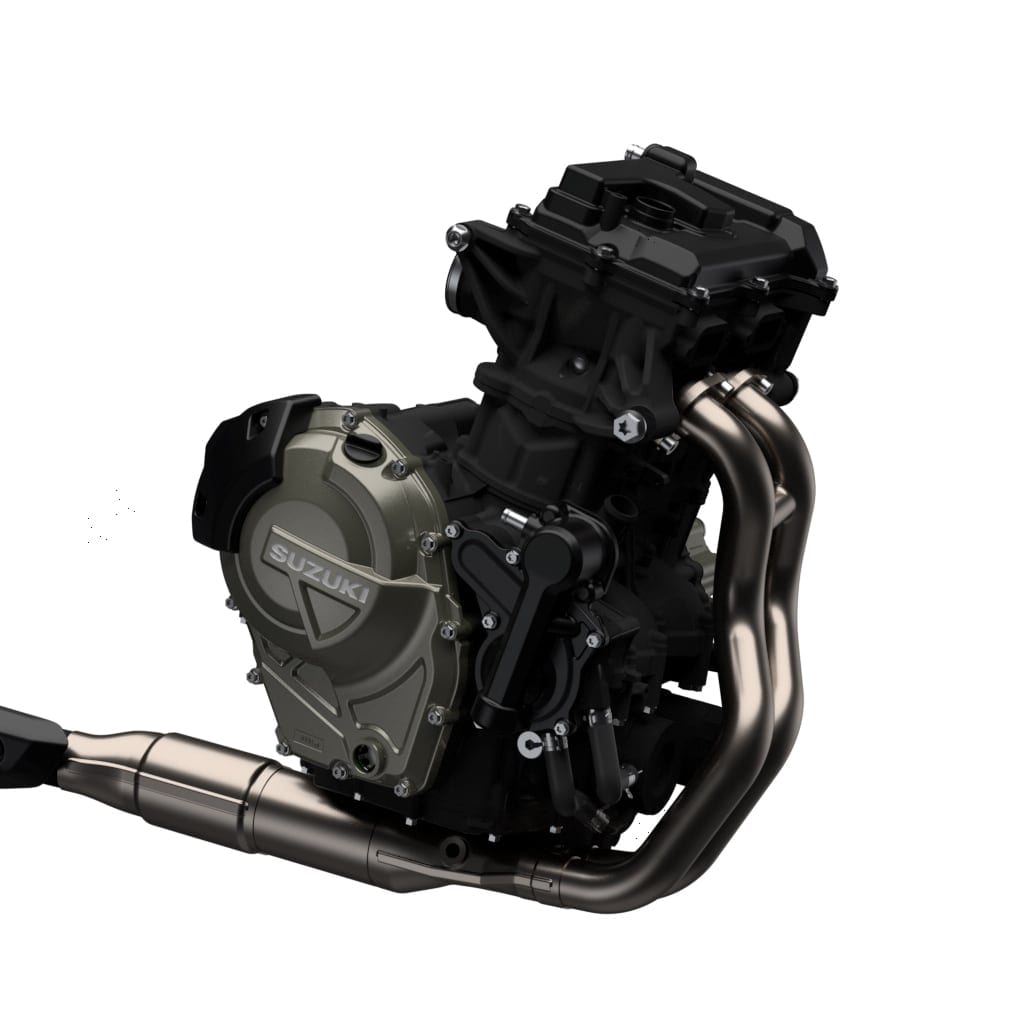
The engine is a liquid-cooled, DOHC, eight-valve parallel twin with an 84 mm × 70 mm bore and stroke. Suzuki gave it a 270-degree crankshaft. Instead of the two pistons rising and falling together, the firing pulses are unevenly spaced: 270 degrees, then 450 degrees. That gives it some of the pulse and rear-tyre feel riders like in a 90-degree V-twin, rather than the busy sound of a 180-degree twin.
That does not mean it is trying to impersonate the V-Strom 650’s V-twin. The old motor felt soft and mechanical, with an easygoing throb. The 800 is more compact, revs more freely, and pulls harder through the middle. Cycle World’s rear-wheel dyno test recorded 53.8 kW (72.2 hp) at 8,500 rpm and 68 Nm (50.2 lb-ft) at 5,500 rpm on an 800DE, which tells you where the useful bit of the curve lives.
There is also Suzuki’s Cross Balancer: two counter-rotating balancer shafts arranged to fit the compact engine. It lets Suzuki retain the 270-degree motor’s character without filling the bars and footpegs with vibration at cruising speed.
Both V-Strom 800s get ride-by-wire throttle, three engine maps, switchable traction control, low-RPM assist, an assist-and-slipper clutch, and a bidirectional quickshifter as standard. The quickshifter is a genuinely useful inclusion on a touring bike; it is smooth enough that you will use it in traffic, not just when trying to look fast at a servo exit.
For more on the layout, see our guide to parallel twins with a 270-degree crankshaft. The Suzuki is one of the better examples of why this configuration has become so common.
V-Strom 800RE vs 800DE — the differences that change the ride
Here is the comparison that matters. Figures are claimed, and can change slightly with a market’s tyre, accessory, and model-year specification.
| Item | V-Strom 800RE / “800” | V-Strom 800DE |
|---|---|---|
| Bias | Road, commuting, sport touring | Gravel travel and rough-road capability |
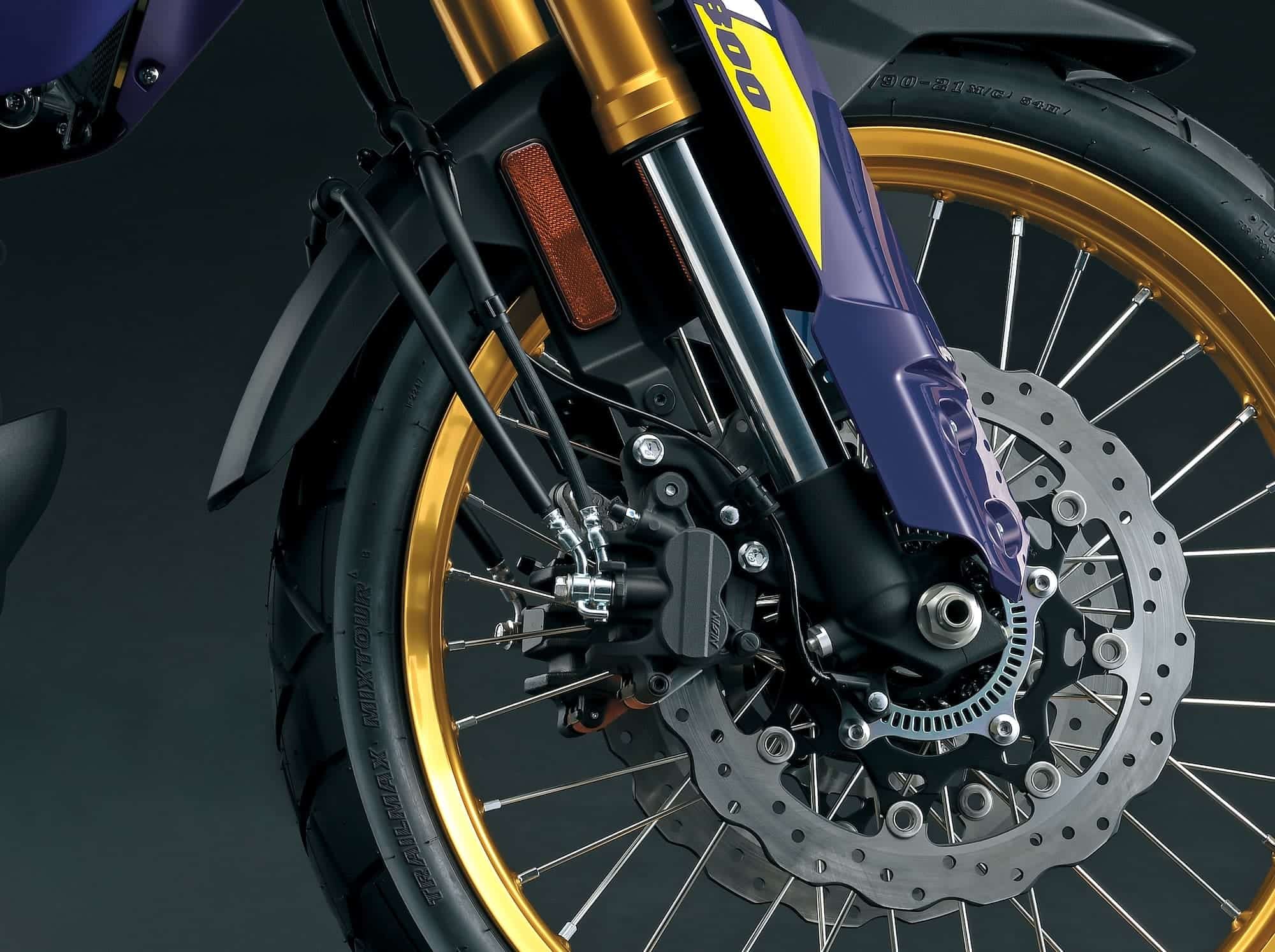
| Front / rear wheel | 19 in / 17 in cast aluminium, tubeless | 21 in / 17 in spoked, tube-type |
| Tyres | Dunlop D614 road-ADV tyres | Dunlop Trailmax Mixtour semi-block tyres |
| Suspension travel | 150 mm (5.9 in) front and rear | 220 mm (8.7 in) front and rear |
| Adjustment | Fork preload; rear remote preload and rebound | Fork preload, compression, rebound; rear remote preload, compression, rebound |
| Seat height | 825 mm (32.5 in) | 855 mm (33.7 in) |
| Ground clearance | 185 mm (7.3 in) | 220 mm (8.7 in) |
| Wheelbase | 1,515 mm (59.6 in) | 1,570 mm (61.8 in) |
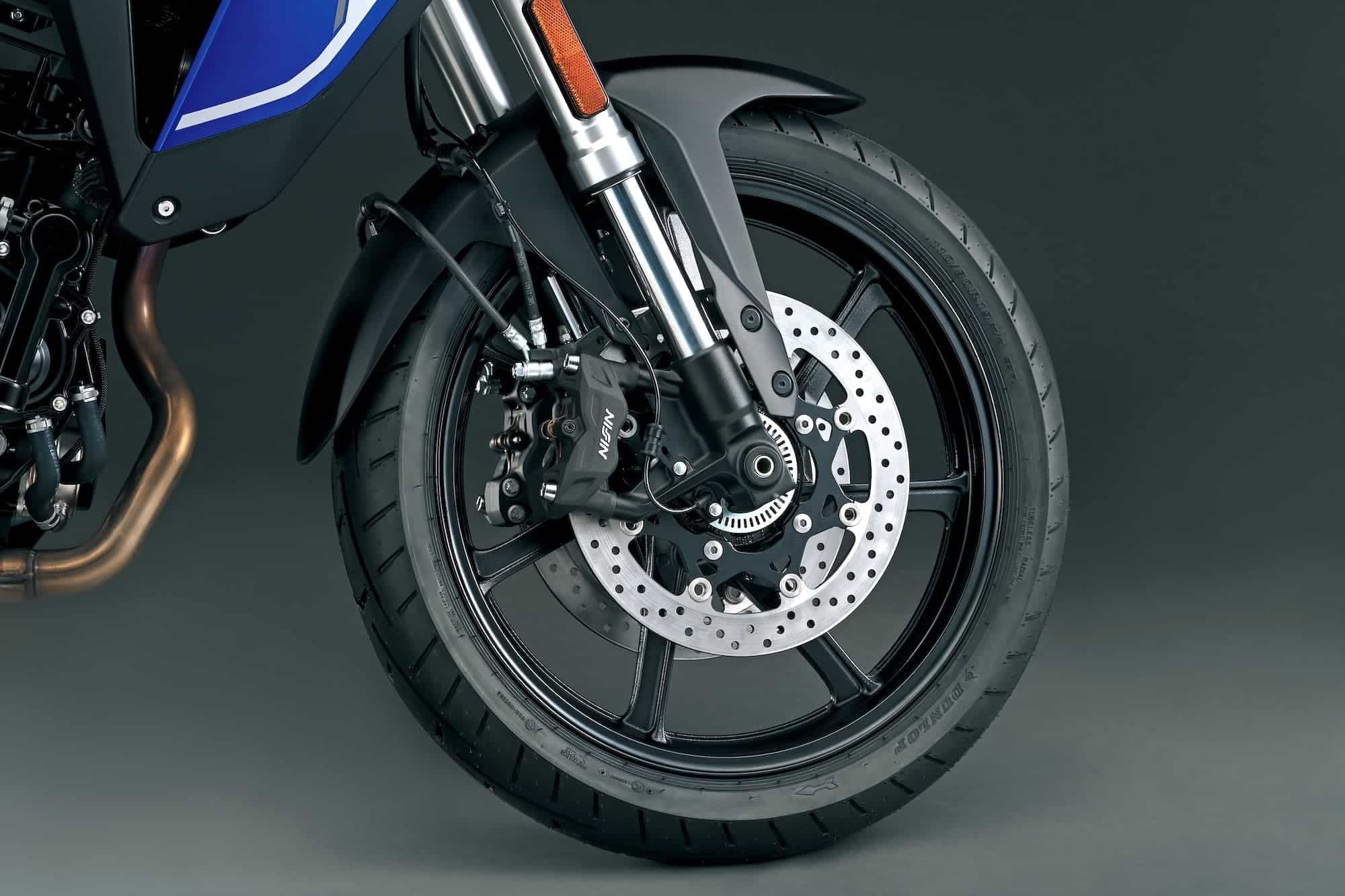
| Front brakes | 310 mm discs with radial four-piston Nissin calipers | 310 mm discs with axial two-piston Nissin calipers |
| Off-road electronics | Two ABS modes; no Gravel TC or rear-ABS-off mode | Gravel TC, TC off, and rear ABS can be disabled |
| Claimed wet mass | 223 kg (492 lb) | 230 kg (507 lb) |
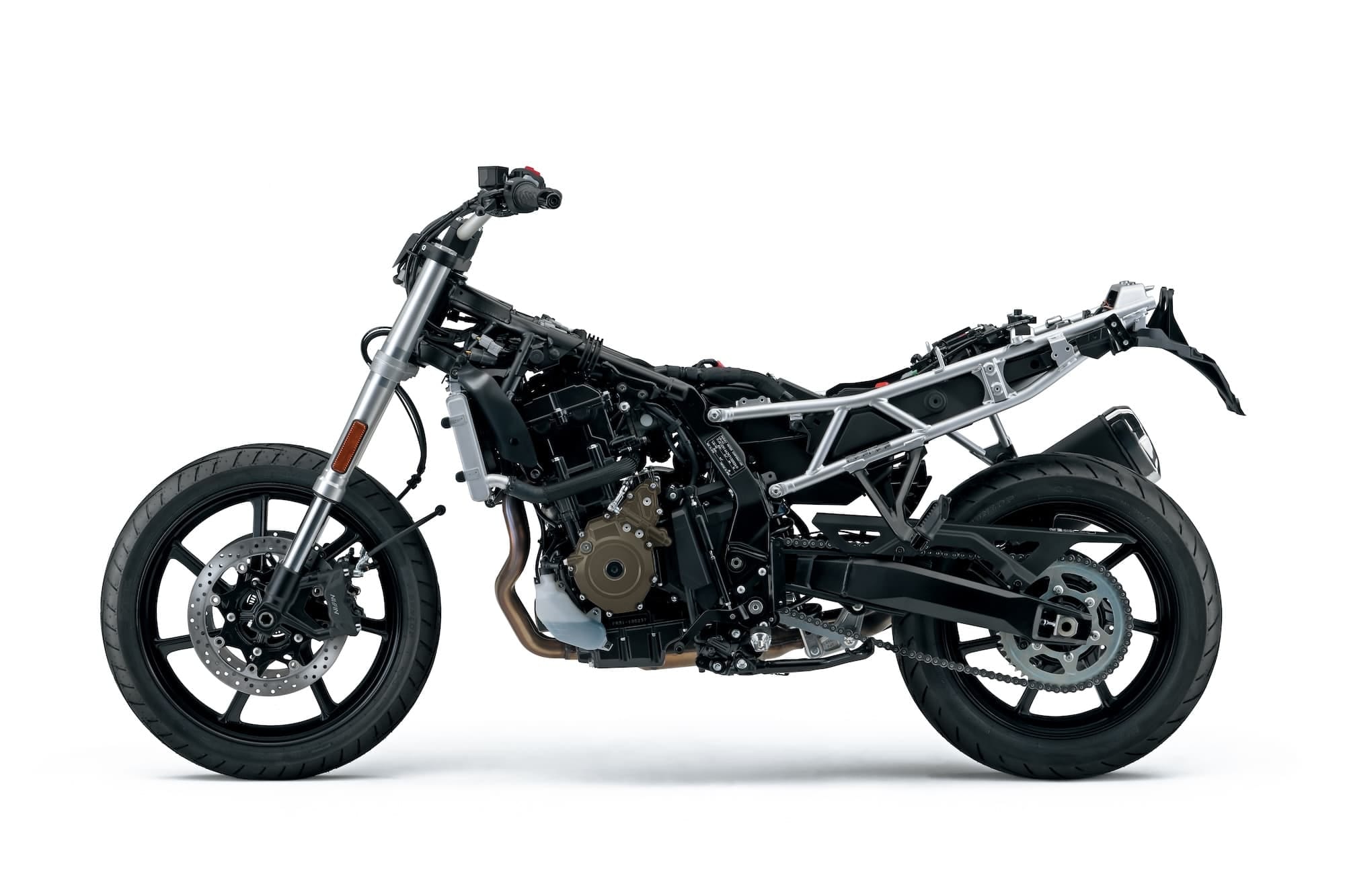
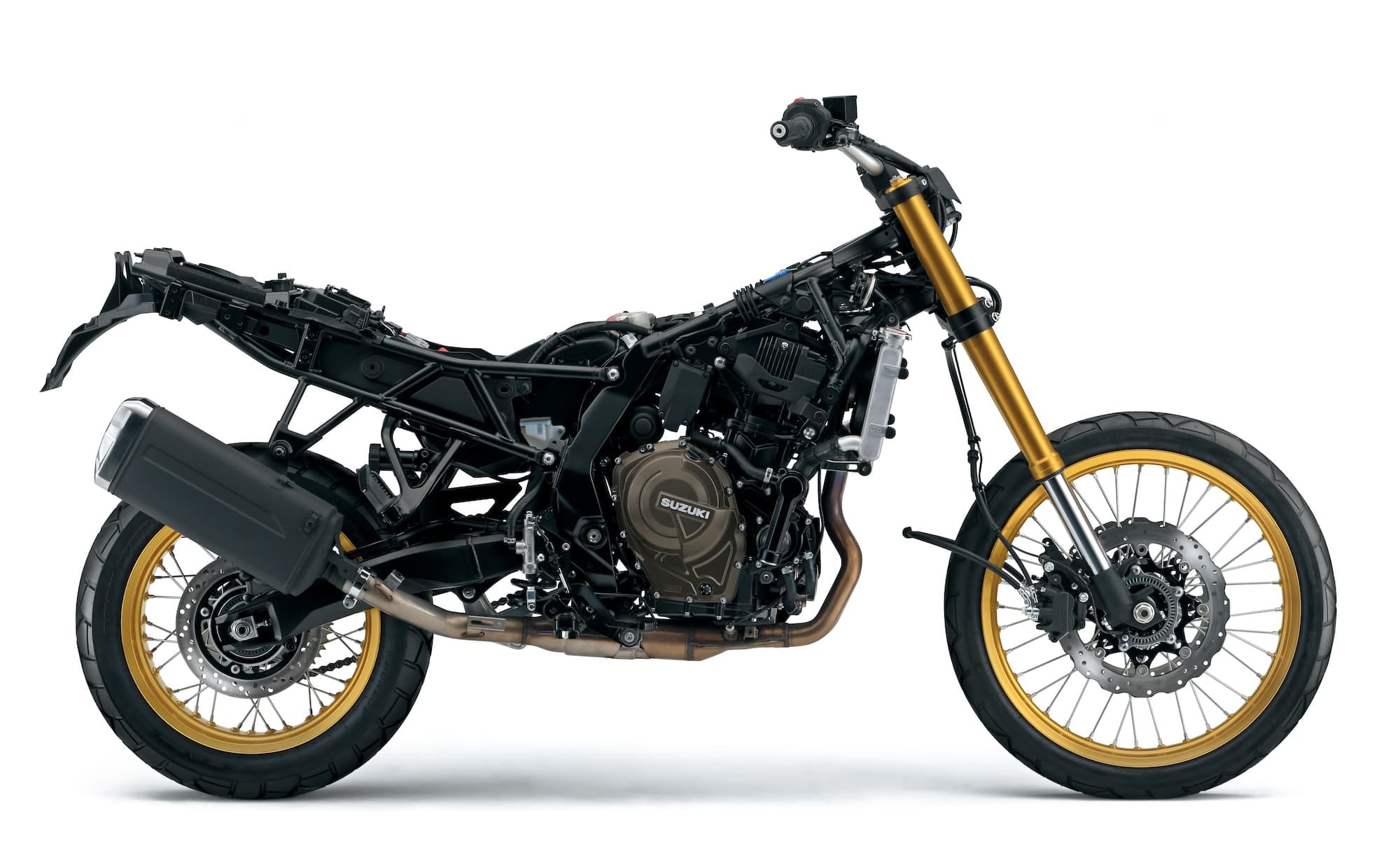
The RE’s 19-inch front does not make it a roadster pretending to be an adventure bike. It will happily use a dirt road. But it turns in with less effort, holds a line more naturally on fast tarmac, and puts a shorter rider closer to the ground. Its tubeless wheels are also much less annoying when you pick up a puncture on a trip.
The DE earns its extra height. The 21-inch wheel rolls over holes and loose rocks more calmly, the long suspension has room to absorb repeated hits, and the wide bar makes standing easy. The spoked wheels, clearance, Gravel mode, and rear-ABS-off setting add up when the surface gets loose. Its 17-inch rear wheel is a compromise, though: good for road tyre availability, less ideal for serious off-road tyre choice than the 18-inch rear used on the Honda Transalp, Yamaha Ténéré 700, or Ducati DesertX.
There is one surprising point on the spec sheet. The RE has the larger four-piston radial front calipers, while the DE uses simpler two-piston axial calipers. That is a reasonable trade. The DE needs a brake that is easy to modulate on loose ground; the RE benefits from firmer road feel and stronger repeated tarmac braking.
How the RE and DE feel in real riding
Commuting
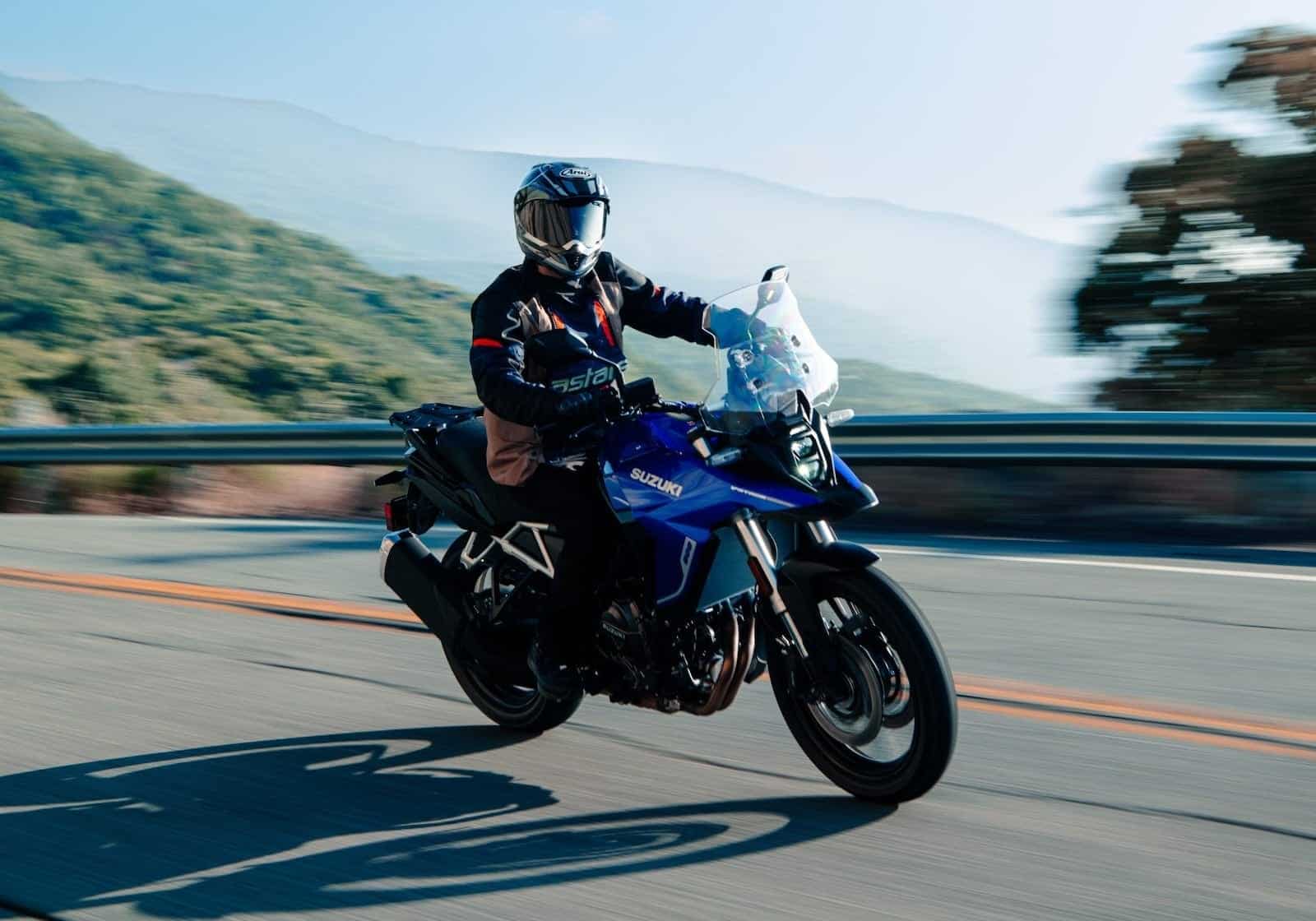
Pick the RE. Its lower 825 mm (32.5 in) seat, lower centre of gravity, less bulky tyre, and 19-inch front wheel make it easier in stop-start traffic and tight parking. It is still a 223 kg (492 lb) motorcycle with a broad tank, so do not mistake it for a lightweight commuter. But the engine has enough low-rpm pull that you can short-shift and let it get on with things.
Fast sealed back roads
Again, the RE. The difference is most obvious in a series of turns, not at a single sweeping corner. The RE asks for less bar input, settles sooner, and gives you a better tyre and brake package for bitumen. The DE is not bad on a fun road—far from it—but the tall 21-inch front and extra suspension travel give it a little more fore-and-aft movement and less precise initial steering.
Travel
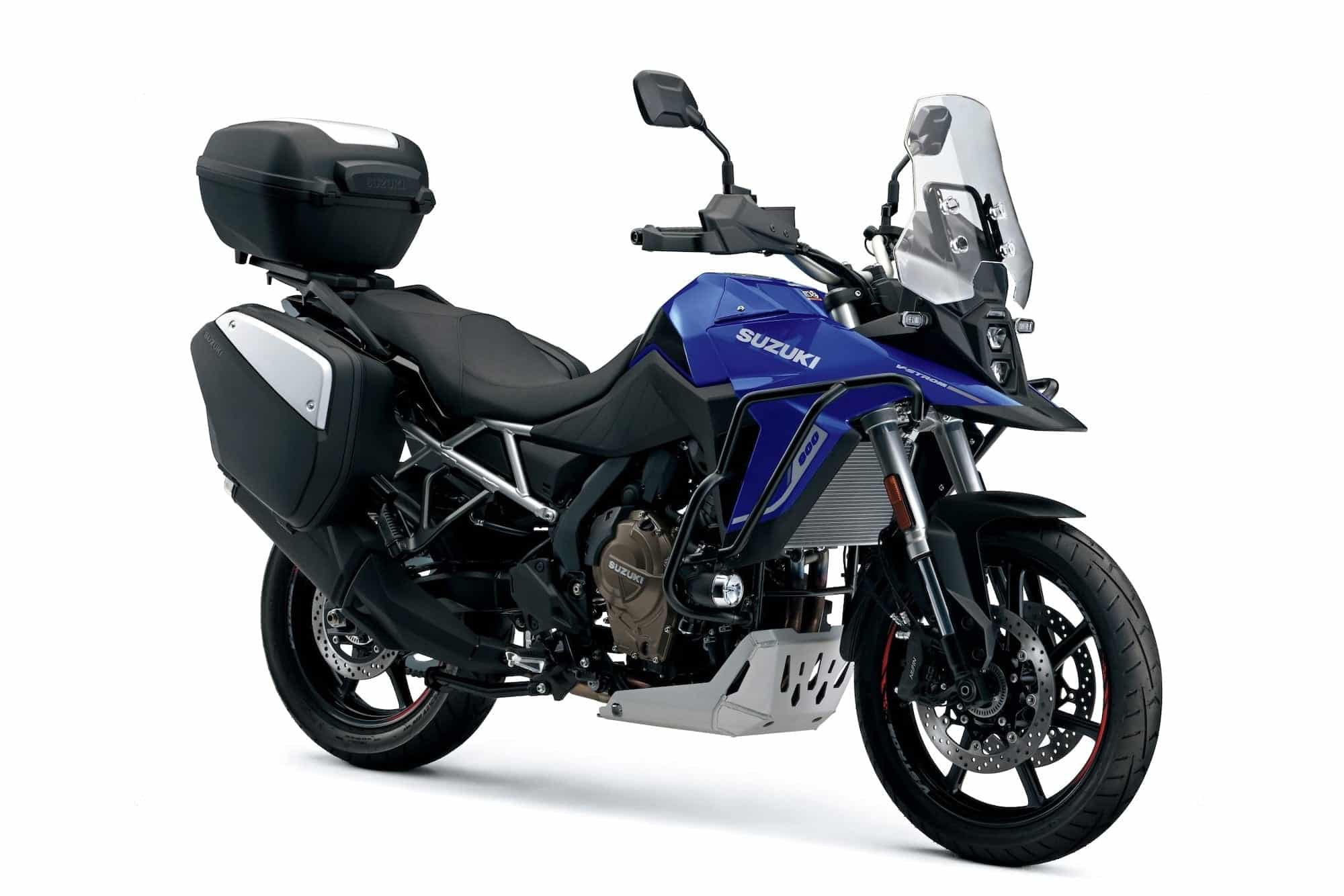
Either can do it. The 20 L tank is generous for this class, and both have a wide seat, a useful five-inch dash, a quickshifter, and luggage options. The RE is better for all-tarmac touring because its wider screen gives more protection and the lower seat makes fuel stops less tiring. The DE is better for a trip where the destination includes real unsealed roads; fit a taller screen if you spend day after day at freeway speed.
Gravel roads and trails
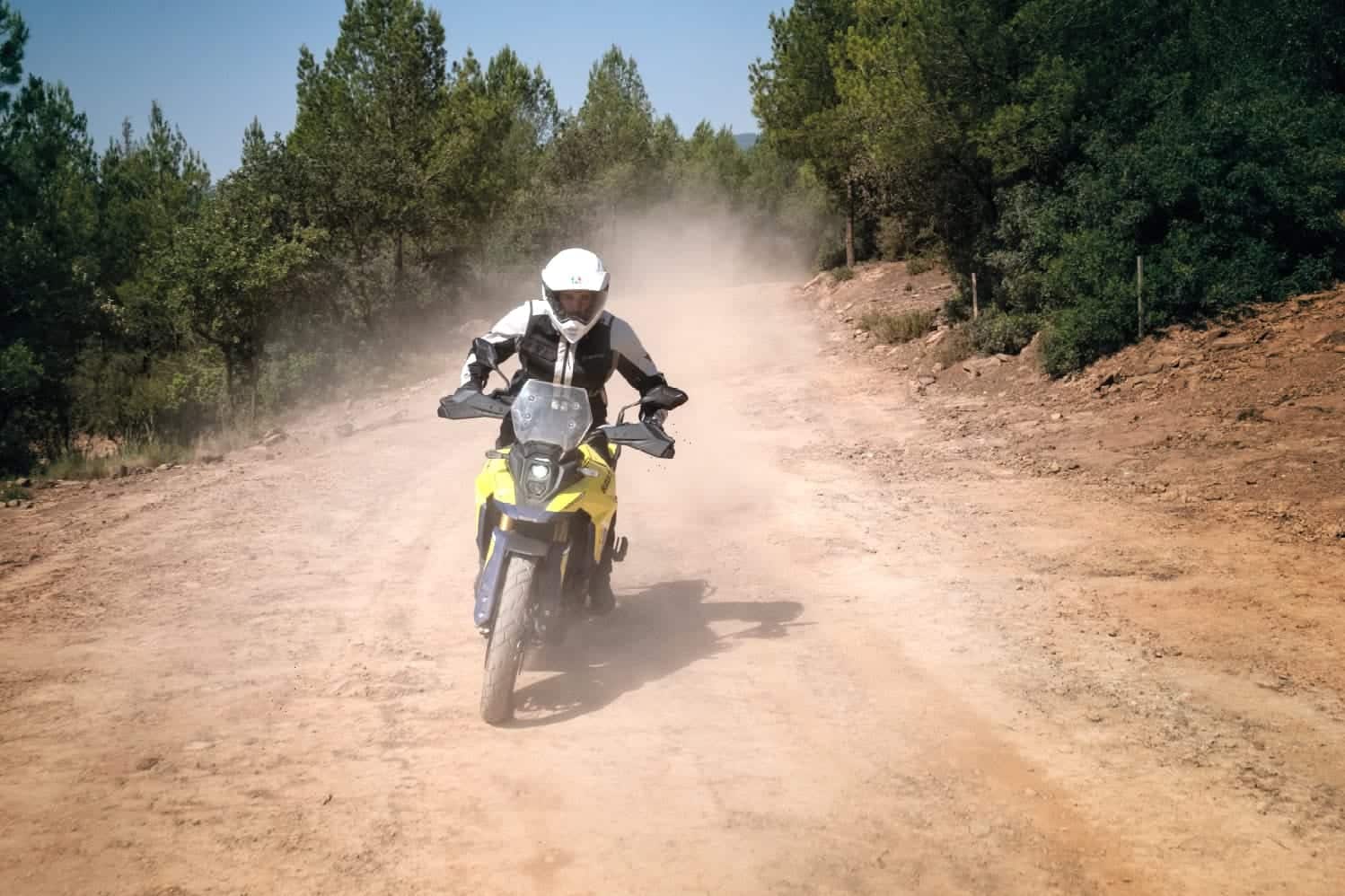
This is the DE’s territory. Think well beyond a groomed winery road: loose climbs, washboard, deep potholes, ruts, and rocky tracks. The extra travel and clearance make a big difference before you even touch a menu. Then you can select Gravel traction control or turn it off, and switch off rear ABS to steer the bike with the rear brake.
It is still a 230 kg (507 lb) middleweight ADV with a 17-inch rear wheel, not a DR-Z or a 450 rally bike. If a trail would be hard work on a loaded 690/701, the V-Strom will be hard work too. But the DE is much more than a cosmetic “adventure” version of the RE.
The V-Strom 800’s main alternatives
Do not compare every 700–900 cc adventure bike as though they are interchangeable. The correct comparison depends on whether you want an RE-style all-road tourer or a DE-style dirt-capable travel bike.
| Motorcycle | Closest V-Strom | Why you would choose it instead | Why you might still choose the Suzuki |
|---|---|---|---|
| Honda XL750 Transalp | 800DE | Lighter claimed mass, 21/18-inch wheels, more peak power, and a stronger case for more technical dirt riding. | The DE has a larger 20 L tank, more suspension adjustment, standard quickshifter, and a wonderfully tractable engine. |
| Yamaha Ténéré 700 | 800DE | Much lighter-feeling off road, 21/18-inch wheels, huge aftermarket, and simpler electronics. | The Suzuki is much better equipped for daily road use and two-up travel, with more power, fuel capacity, wind protection, and electronic control. |
| Ducati DesertX | 800DE | More power, 21/18-inch wheels, and a much more aggressive off-road performance ceiling. | The Suzuki costs less to buy and own, is less intimidating, and will be easier to justify for mixed everyday use. |
| BMW F 800 GS | 800DE | More torque, a 21-inch front wheel, and BMW’s dealer/accessory ecosystem. | The V-Strom’s engine, standard quickshifter, and simple value proposition are hard to argue with. |
| Triumph Tiger 850 Sport | 800RE | A three-cylinder character, polished road manners, and a 19-inch front wheel. | The RE is equally practical, has a standard quickshifter, and feels more modern in its electronics. |
| Honda NC750X | 800RE | Low-rev torque, excellent fuel economy, storage where the tank would be, and optional DCT. | The Suzuki is much quicker, more engaging on a good road, and better suited to rougher touring routes. |
| Ducati Multistrada V2 | 800RE | A more premium road-tourer with more power and a deeper electronic package. | The RE provides most of the real-world touring usefulness for far less money and with less ownership anxiety. |
The Yamaha Ténéré 700 is the comparison people will make most often with the DE. It is fair, but it is not a tie. The Yamaha is the better choice if you will ride difficult tracks often and are happy to add the touring pieces yourself. The Suzuki is the better choice if your riding is mostly road and fast gravel, with a passenger or luggage involved. See our longer Ténéré 700 comparison for that side of the decision.
For a wider view of this class, see our middleweight adventure motorcycle comparison. It is worth cross-shopping based on the roads you actually ride, rather than the trip you might one day take.
So which Suzuki V-Strom 800 should you buy?
Most riders should buy the V-Strom 800RE. It has the same very good motor, a better road chassis, stronger front brakes, lower seat, tubeless wheels, and the touring equipment most owners will use every week. It is the natural upgrade for a V-Strom 650 owner who wants more torque, more power, and current electronics but not a taller or more demanding motorcycle.
Buy the V-Strom 800DE because you need its suspension, wheel, clearance, and dirt settings—not because it is the more photogenic one. If you ride forestry roads, long unsealed touring routes, or genuine trails, it is the right tool and still a pleasant road traveller. But if your dirt riding is occasional hard-packed gravel, the RE will be easier and more satisfying for the other 95 percent of your kilometres.