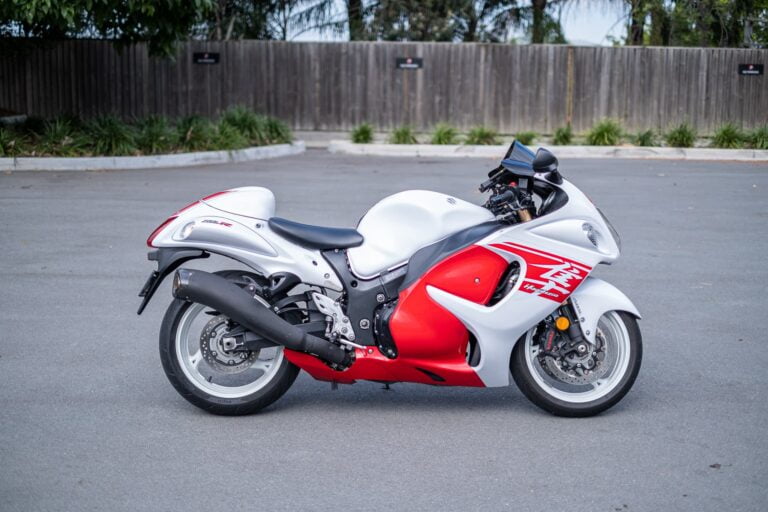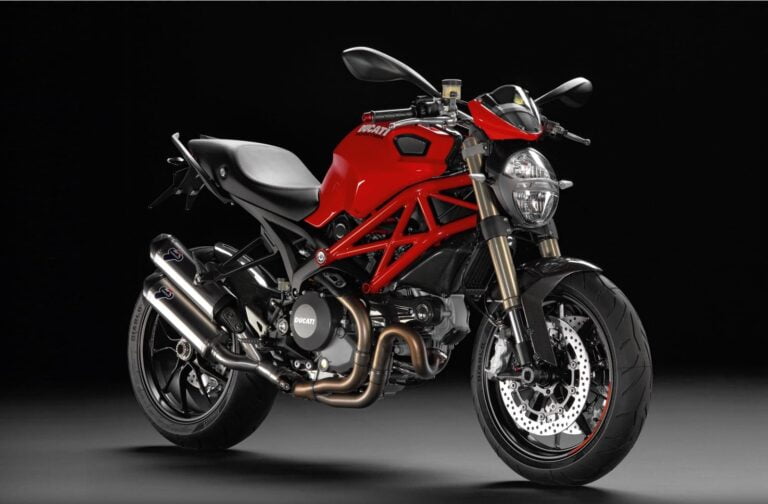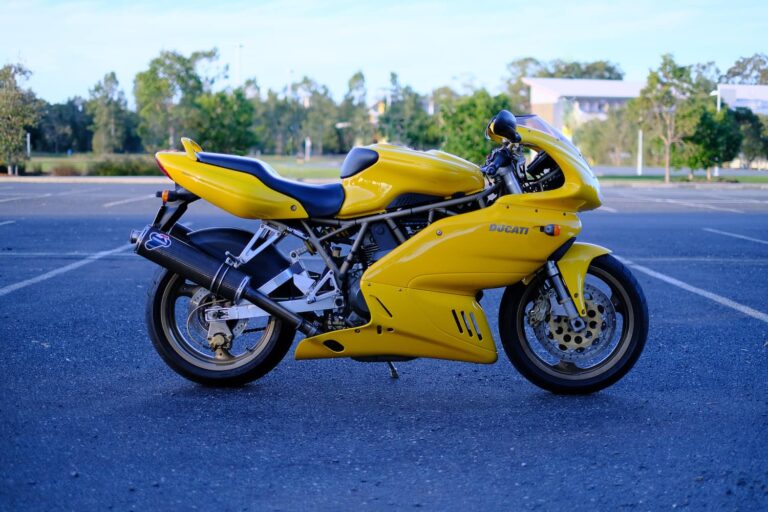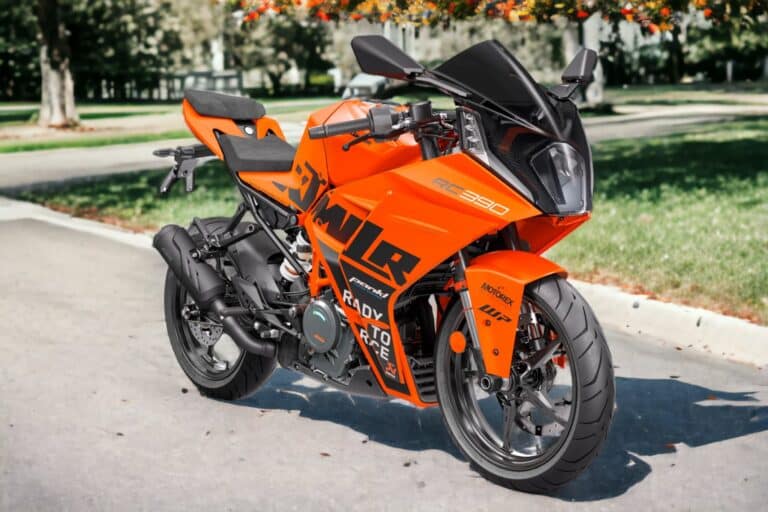

There is a type of learner sport bike that people buy with a countdown clock already running: easy, cheap, and likely gone by the end of the first summer. In learner countries like Australia and Europe, they’re gone as soon as your license is upgraded.
But there’s a new class of motorcycles that are low power enough to be legal for everyone, but high-spec enough — and sufficiently good looking — to last years longer. The Aprilia RS 457 is an example of these.
The RS 457 has the usual licence-limit ingredients — a 457 cc parallel twin making 35 kW (47.6 hp) — but Aprilia gave it an aluminium twin-spar frame, ride-by-wire, a 320 mm front disc, a slipper clutch, and a light kerb weight of 175 kg (386 lb). That means it works as a first sport bike without feeling like a compromise an experienced rider needs to excuse.
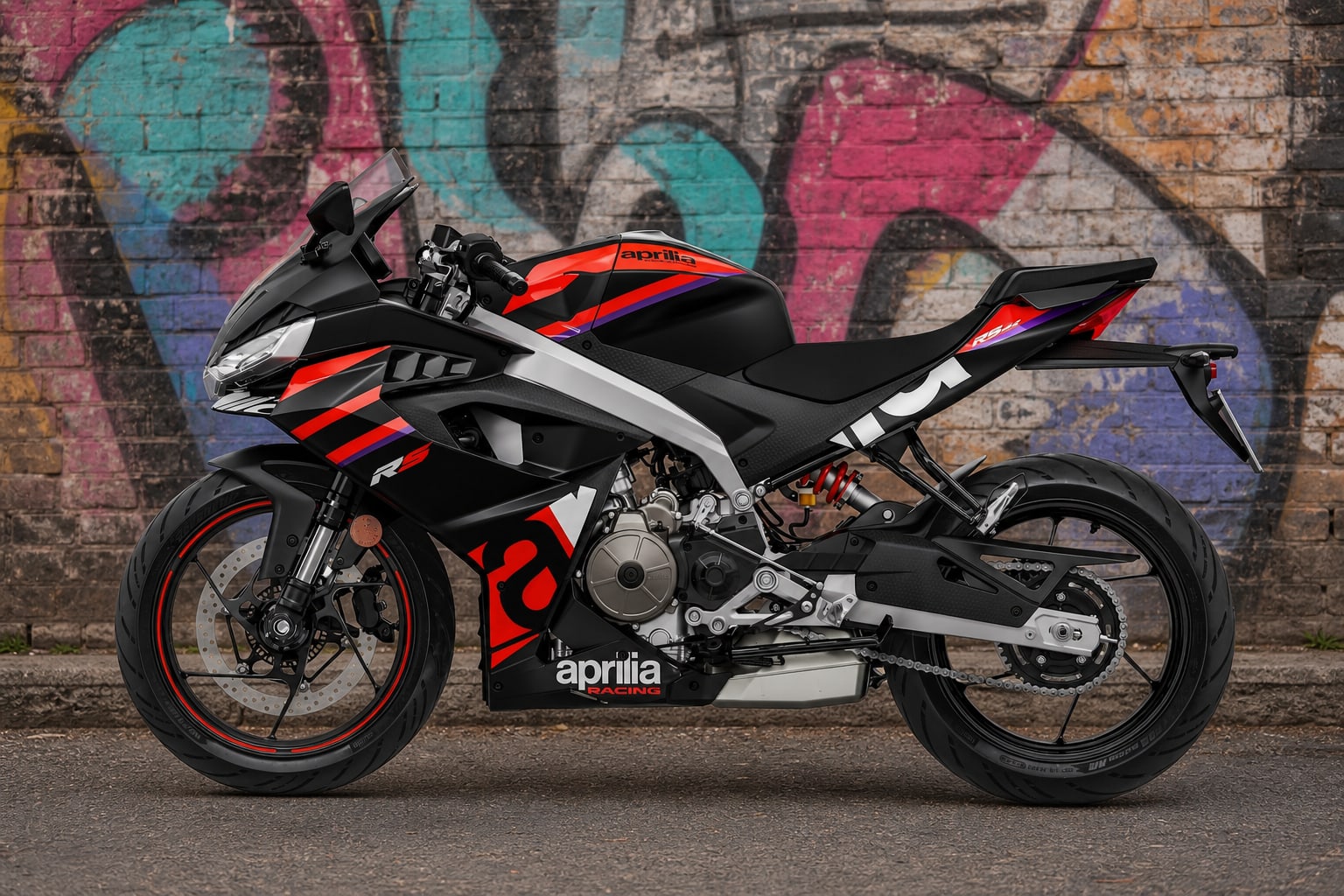
- Engine: 457 cc liquid-cooled DOHC parallel twin, four valves per cylinder, ride-by-wire
- Output: 35 kW (47.6 hp) at 9,400 rpm; 43.5 Nm (32.1 lb-ft) at 6,700 rpm, claimed
- Chassis: aluminium twin-spar frame, engine used as a stressed member
- Suspension: 41 mm USD fork and preload-adjustable shock
- Brakes: 320 mm front disc with radial-mount ByBre four-piston caliper; ABS
- Weight and seat: 175 kg (386 lb) kerb weight and 800 mm (31.5 in) seat height, claimed
Are you obsessed with motorcycles?
Well, I am. That’s why I created this site — as an outlet. I love learning and sharing what others might find useful. If you like what you read here, and you’re a fraction as obsessed as I am, you might like to know when I’ve published more. (Check the latest for an idea of what you’ll see.)
The small RS that Aprilia had been missing
Aprilia fans know it for its bigger sporty bikes. Big v-twins, v-fours… huge, rumbly engines, electrical problems, high power, electrical gremlins… you get the picture…
But times have changed as Aprilia — just like all manufacturers — improved electronics and reduced complexity by using simpler, digital wiring looms. (Using a CAN-Bus. See here for more.)
Where did the RS 457 come from? Aprilia has plenty of RS history, but it has not always had a four-stroke road bike in this part of the market. The RS 125 is familiar to younger riders and is a popular choice in both Europe and Asian countries. Before it, the RS 250 was an exhilarating two-stroke that disappeared when its era did. The modern RS 660 re-established Aprilia as a serious middleweight sport-bike maker, but left a gap below it.
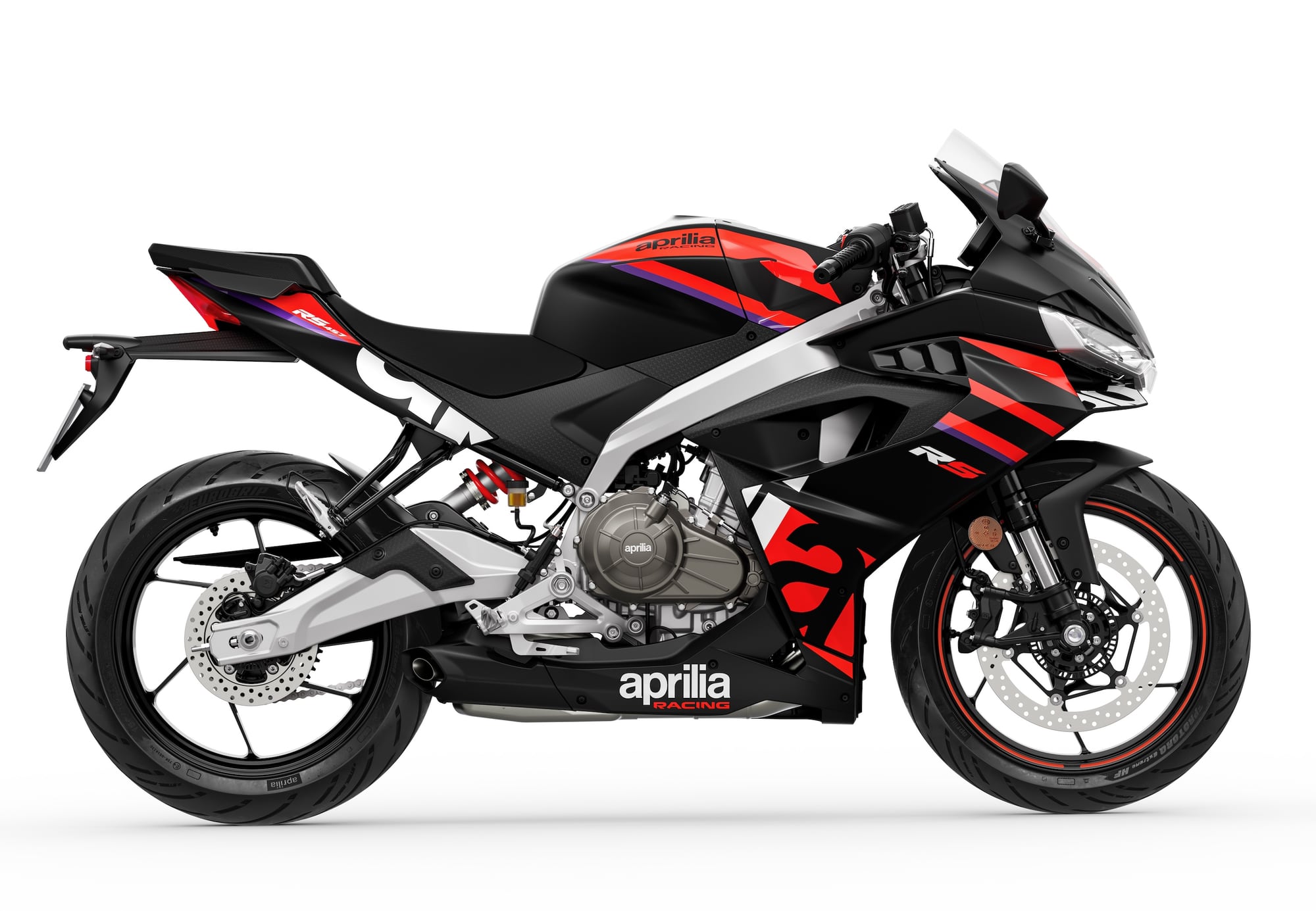
The RS 457 fills that gap without pretending to be an RS 660 reduced in size (or, gasp, detuned). It has a new engine, a new frame, and a brief that makes sense for riders who may be buying their first sport bike but do not want to replace it after one summer. The styling brings the familiar triple-light face and sharp tail, but the important part is underneath: an aluminium perimeter frame is rare at this price and capacity.
The engine is the reason it works
The 457 cc twin does not need a dramatic peak number to feel alive. It has usable torque in the middle of the rev range, where a street rider actually spends time, and it continues pulling cleanly toward the top. Aprilia gives it a 270-degree crank, a balance shaft, dual 36 mm throttle bodies, and ride-by-wire. That is a more considered recipe than the usual “make it cheap, then make it rev” approach.
The crank gives the twin uneven firing intervals and a more deliberate pulse than a conventional 180-degree parallel twin. It does not turn it into a V-twin, and it does not add fictional grip. It gives the rider a clear, mechanical connection at the throttle, especially when feeding power in while leaned over. The balance shaft keeps the character without making the bars feel like a massage chair.
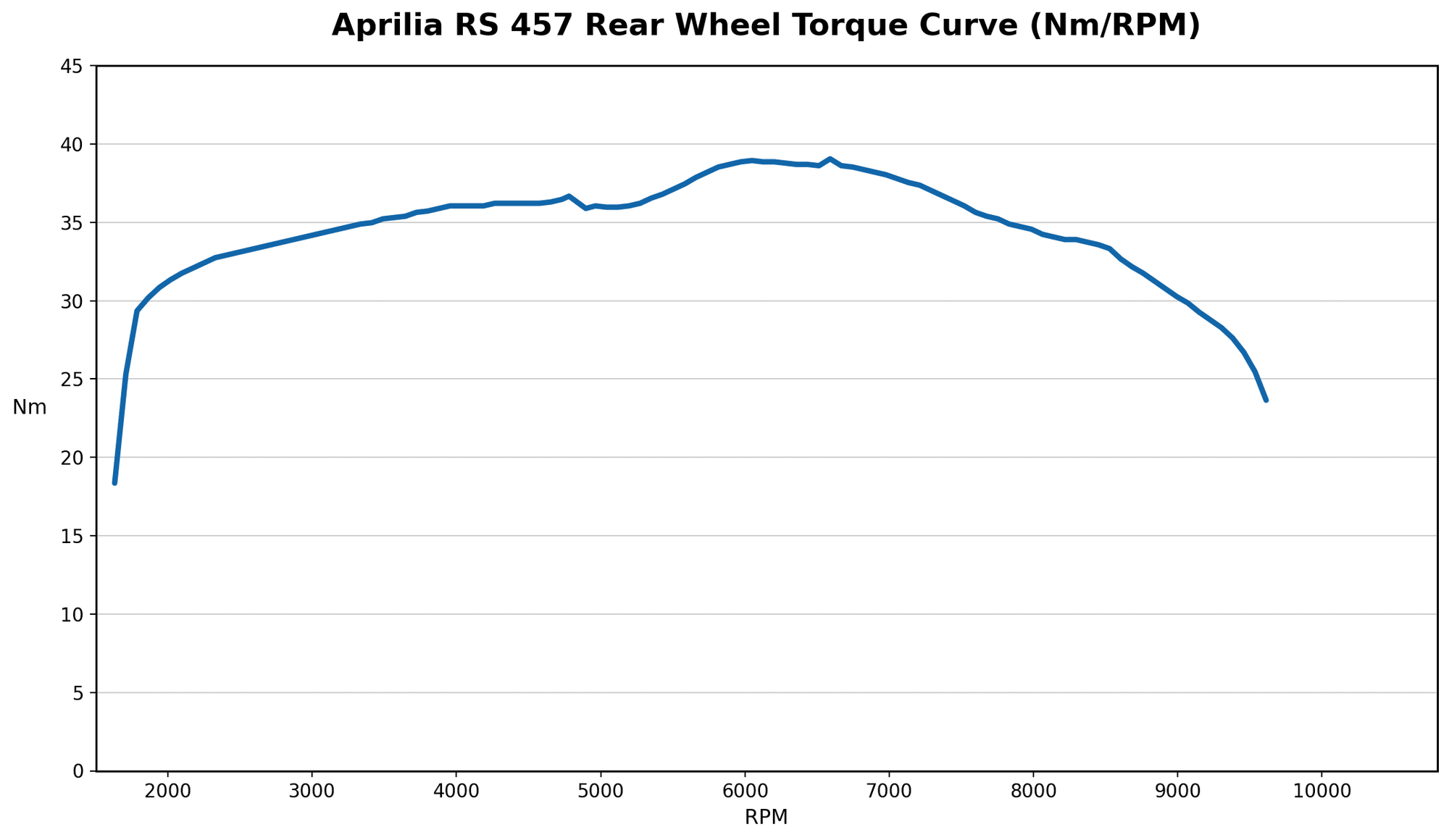
The engine makes its claimed peak 43.5 Nm (32.1 lb-ft) at 6,700 rpm, well before peak power. That is why the RS 457 can pull a taller gear out of a tight bend and why it is not tiring in traffic. You still need to use the six-speed gearbox if you want the full show, but you are not constantly hunting for the narrow part of the tachometer. The assist-and-slipper clutch helps when you are being clumsy on a downshift; a quickshifter is available as an accessory.
Proper controls, rather than beginner-bike filler
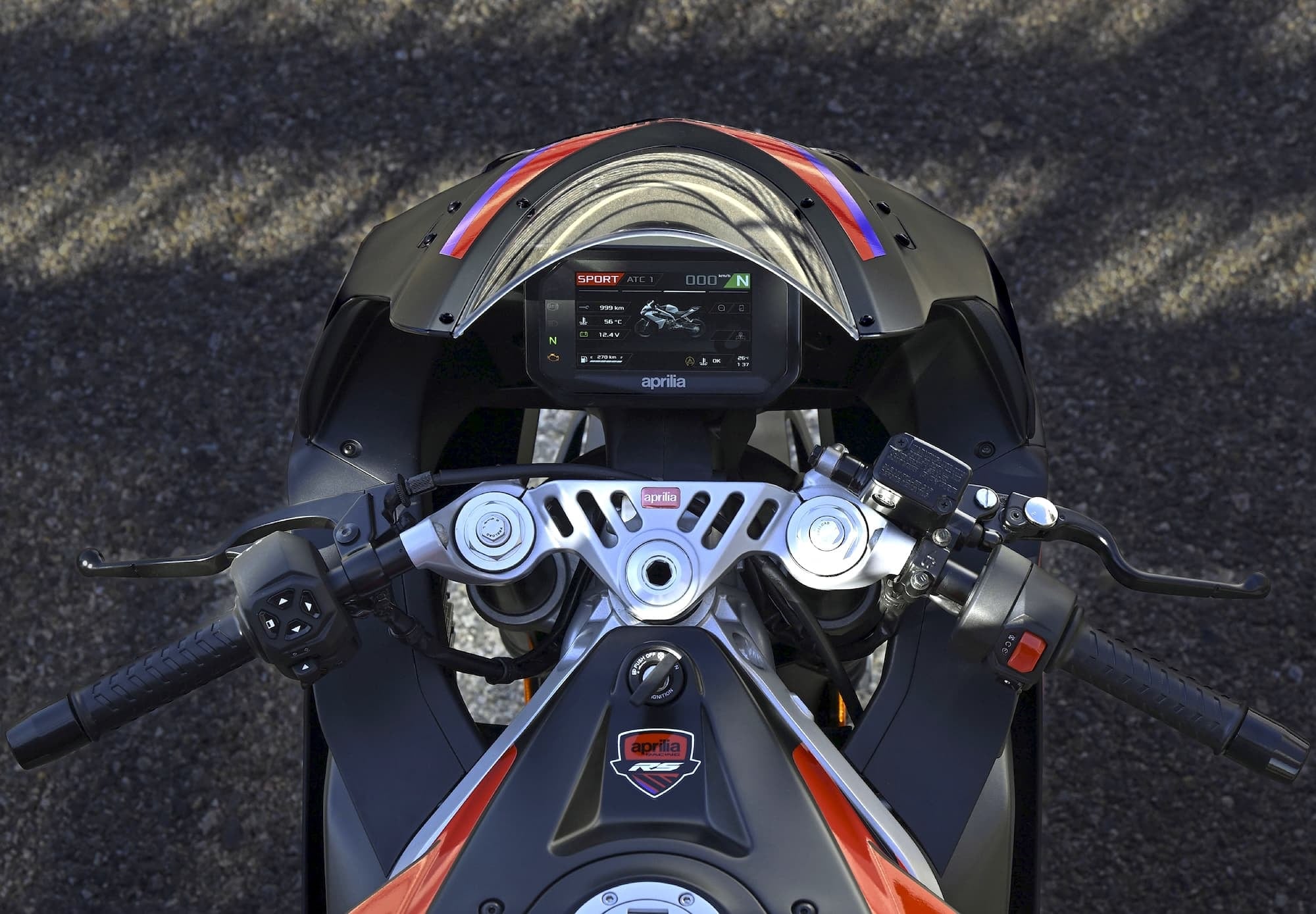
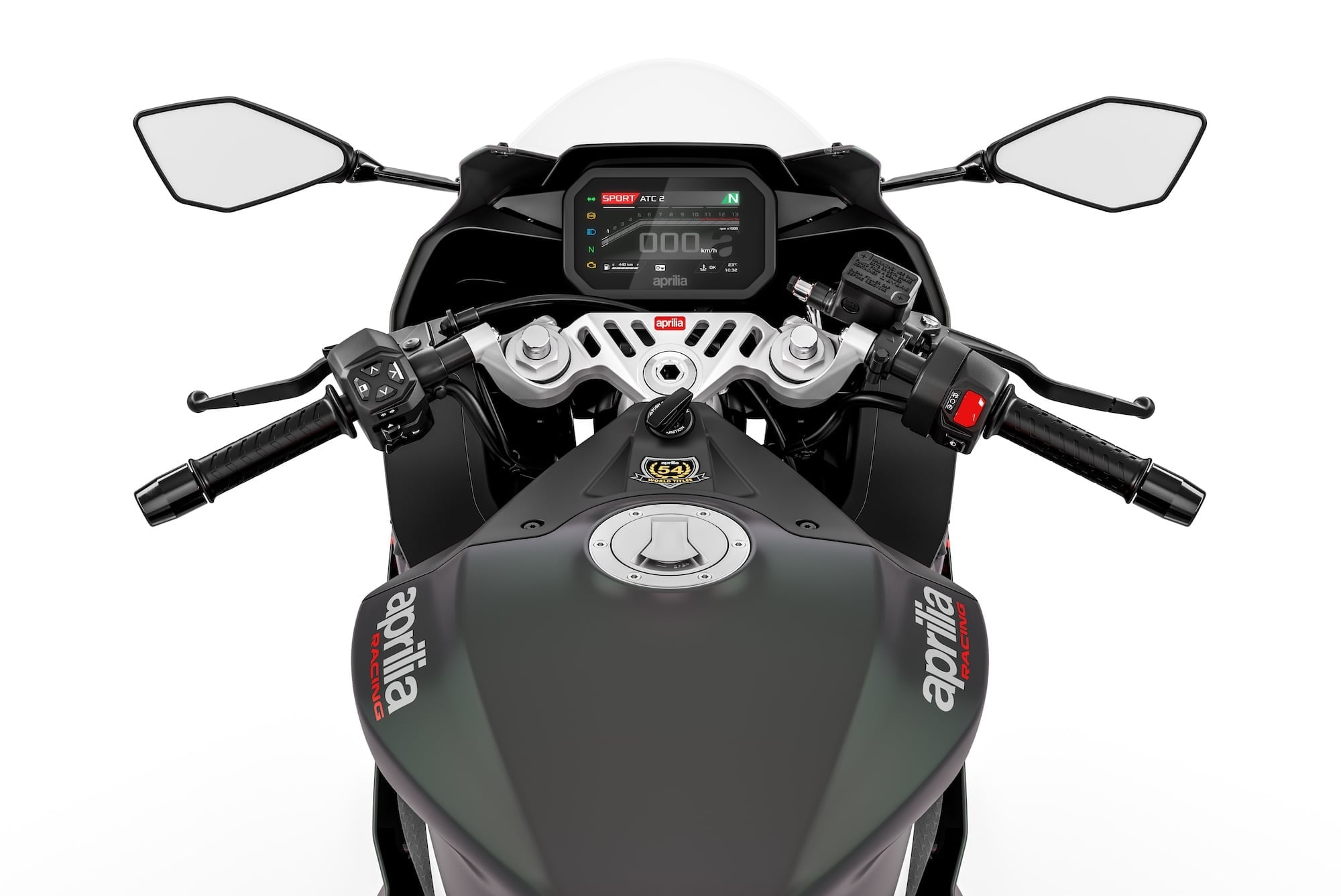
Aprilia gives the RS 457 a 5-inch colour TFT, backlit controls, ride-by-wire, three riding modes, and traction control with three settings plus off. The Bosch two-channel ABS has two mappings and lets the rider switch off rear-wheel ABS. A bi-directional quickshifter is an accessory on the standard bike; it is standard on the GP Replica.
What it is like on the road
The RS 457 has clip-ons and rear-set pegs, but it is not an instrument of torture that folds you into an origami swan. The bars sit high enough that city work is possible, while being narrow enough to let you lane split (or share, or whatever), the fairing takes the edge off freeway wind, and the 800 mm (31.5 in) seat is approachable for a sport bike. The riding position asks you to participate, which is the point, but it does not make a short commute feel like punishment.
In town, the low- and mid-range torque is more useful than another 3 kW at the top. The clutch is light, the chassis is narrow, and the steering lock is reasonable for something wearing a fairing. The rear-set position will still remind you that this is a sport bike when traffic stops moving, but the Aprilia has enough civility that it can be your only motorcycle if you are realistic about luggage and passengers.
On a decent road, the aluminium frame explains the price. The fork and shock each have preload adjustment, but not damping adjustment, so this is not a suspension-tuning platform. The firmer setup should suit fast, smooth roads better than broken urban surfaces.
Is the Aprilia RS 457 Track-Ready?
You wouldn’t ride an RS 457 just for the straights… but that’s just a small part of the track riding experience.
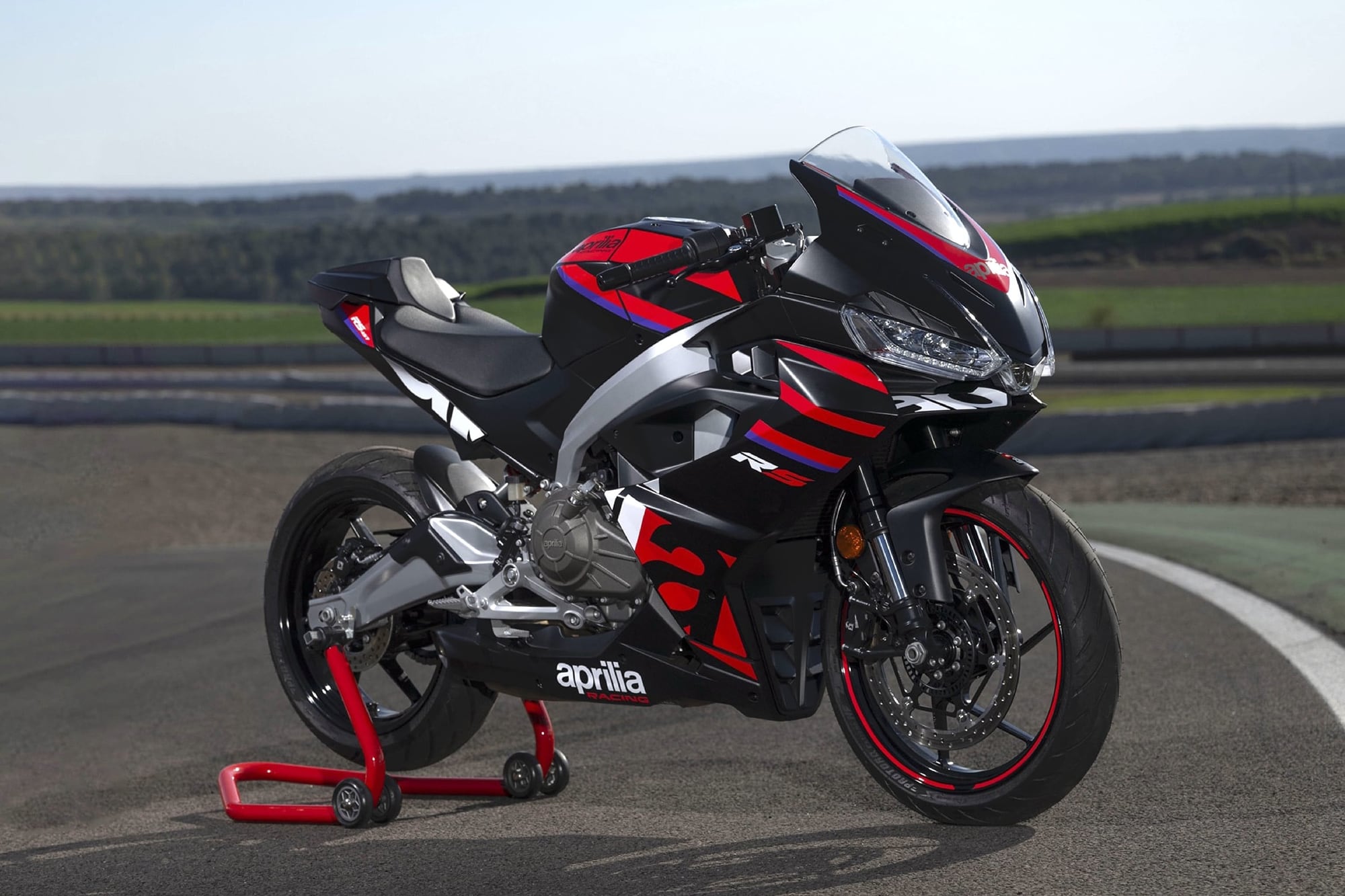
Look deeper into the RS 457’s specs and you’ll see there’s less compromise than there needs to be. It has a 320 mm front disc, radial-mount four-piston caliper, a stiff aluminium frame, a slipper clutch, and a riding position that makes sense once the pace picks up. It will not embarrass a larger bike through a fast straight, but that is not the game. You can carry corner speed, work on braking, and use the throttle early without needing to manage absurd velocity.
The electronics are usable on the track. Three riding modes and adjustable traction control give a new track rider a sensible safety margin without making the bike feel anaesthetised. Riders who get serious about repeated track days may eventually want stickier tyres, more capable brake pads, and suspension setup tailored to their weight. The base chassis is good enough to reward those changes rather than expose them as expensive lipstick.
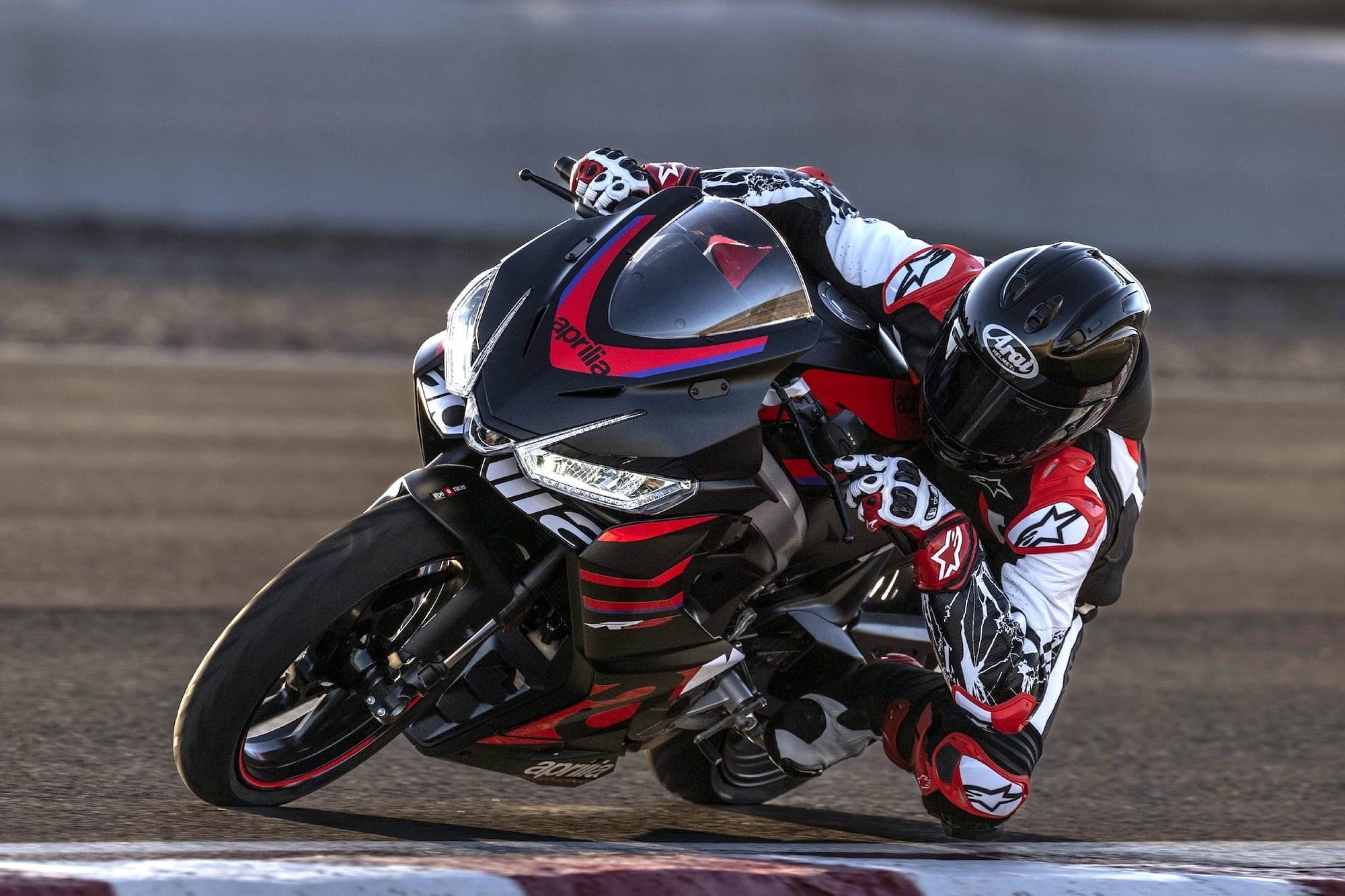
The RS 457 has two-channel ABS rather than an IMU-based cornering ABS system. It does, however, let the rider disable rear-wheel ABS for track use.
The sub-500 cc alternatives
The Aprilia RS 457 competes with a number of high-spec sub-500-cc motorcycles that might be targeting learners, and might now. Below is a quick summary table.
| Motorcycle | Why you might choose it | What the Aprilia does differently |
|---|---|---|
| Kawasaki Ninja ZX-4R / ZX-4RR | A 399 cc inline-four with a wonderful high-rpm sound, proper sport-bike equipment, and an appetite for revs. (But it’s not learner legal!) | The Aprilia has more mid-range per rpm and does not need five figures on the tacho to become interesting. |
| Kawasaki Ninja 500 | A practical, friendly twin with a broad dealer network and easy street manners. | The RS 457 has a more focused chassis and electronics package. The Kawasaki is a more sedate affair. |
| Honda CBR500R | A bigger-capacity twin, a polished all-rounder, and a sensible choice for longer rides. | The Aprilia is lighter and more track-minded. Read our Honda CBR500R guide if daily usefulness is the priority. |
| Yamaha YZF-R3 | Light, proven, easy to ride, and supported by a huge aftermarket. | The R3 is still good fun, but its chassis and electronics are now simpler. The Aprilia feels like the newer, more expensive idea of a small sport bike. |
| CFMOTO 450SR / 450SS and 450SR S | Strong value, a lively 270-degree twin, and in some markets very high equipment for the money. | The CFMOTO is the sharp price play; the Aprilia is the more established sport-bike chassis and dealer-support bet, depending on where you live. |
| KTM RC 390 | Very light, single-cylinder punch, and a distinctive compact track-day feel. | The Aprilia twin is smoother and more flexible, while the KTM remains the more mischievous, pared-back choice. |
2026 update: RS 457 GP Replica
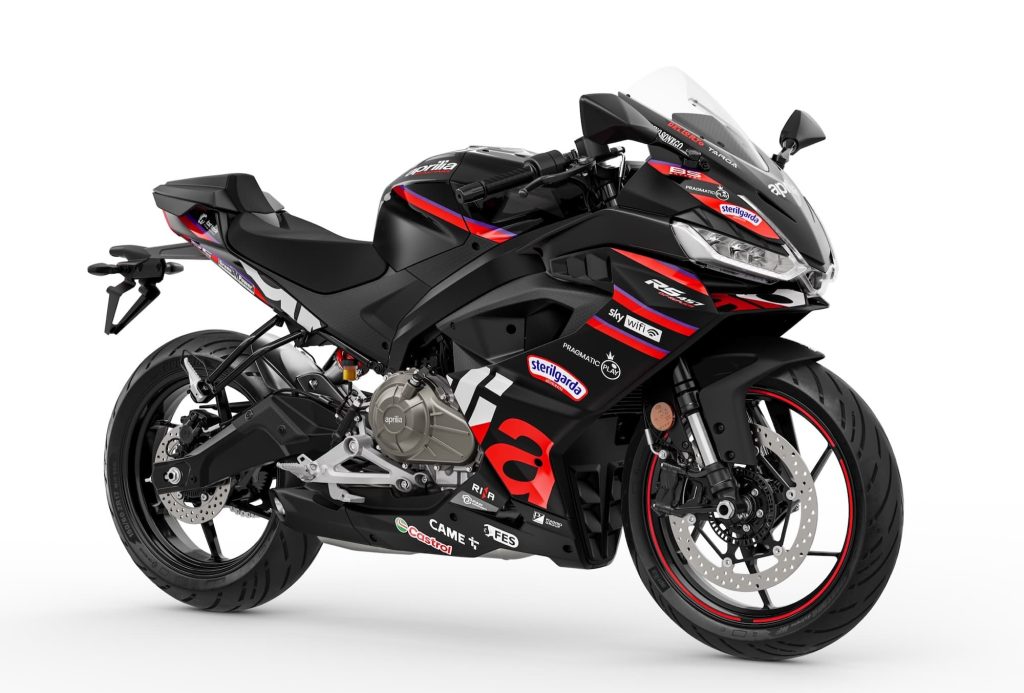
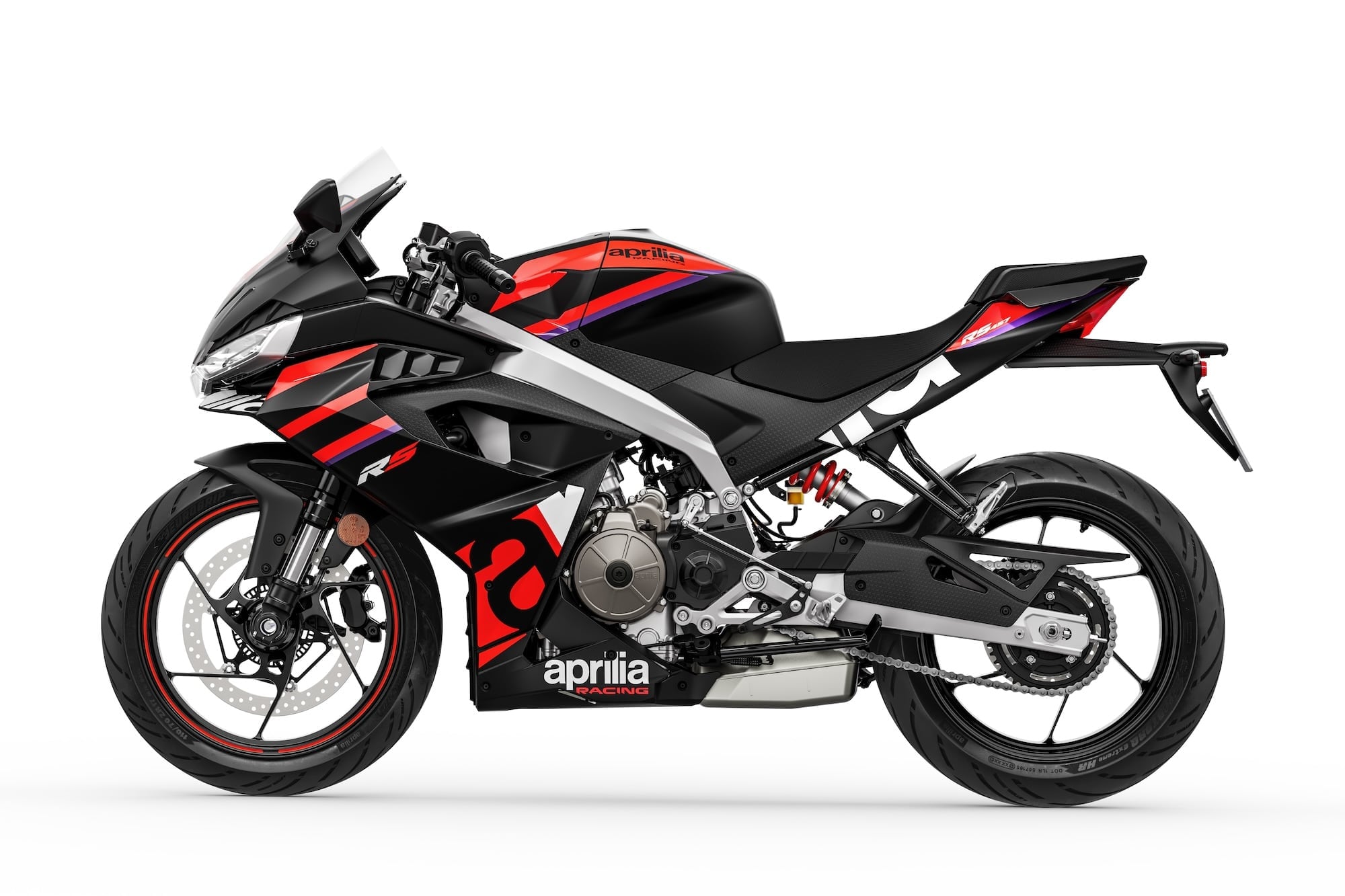
For 2026, Aprilia released the RS 457 GP Replica. It keeps the standard 457 cc engine and aluminium-frame chassis, but adds Aprilia Racing’s RS-GP-inspired black livery, a black frame, swingarm and upper triple clamp, a single-seat cover, higher-friction front brake pads, an adjustable front brake lever, and the bi-directional quickshifter as standard. It is a real equipment upgrade, not only a decal package.
The GP Replica is priced only slightly higher than the standard RS 457. If you would buy the accessory quickshifter anyway, the price gap is small. The standard bike still makes better sense if you need the pillion seat or prefer a cleaner paint scheme.
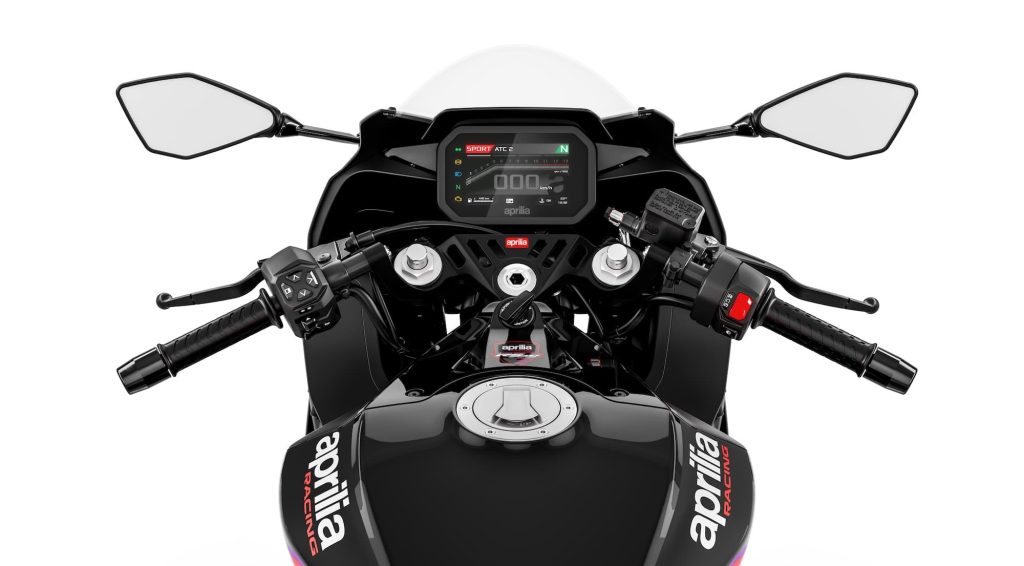
The 2026 colour options
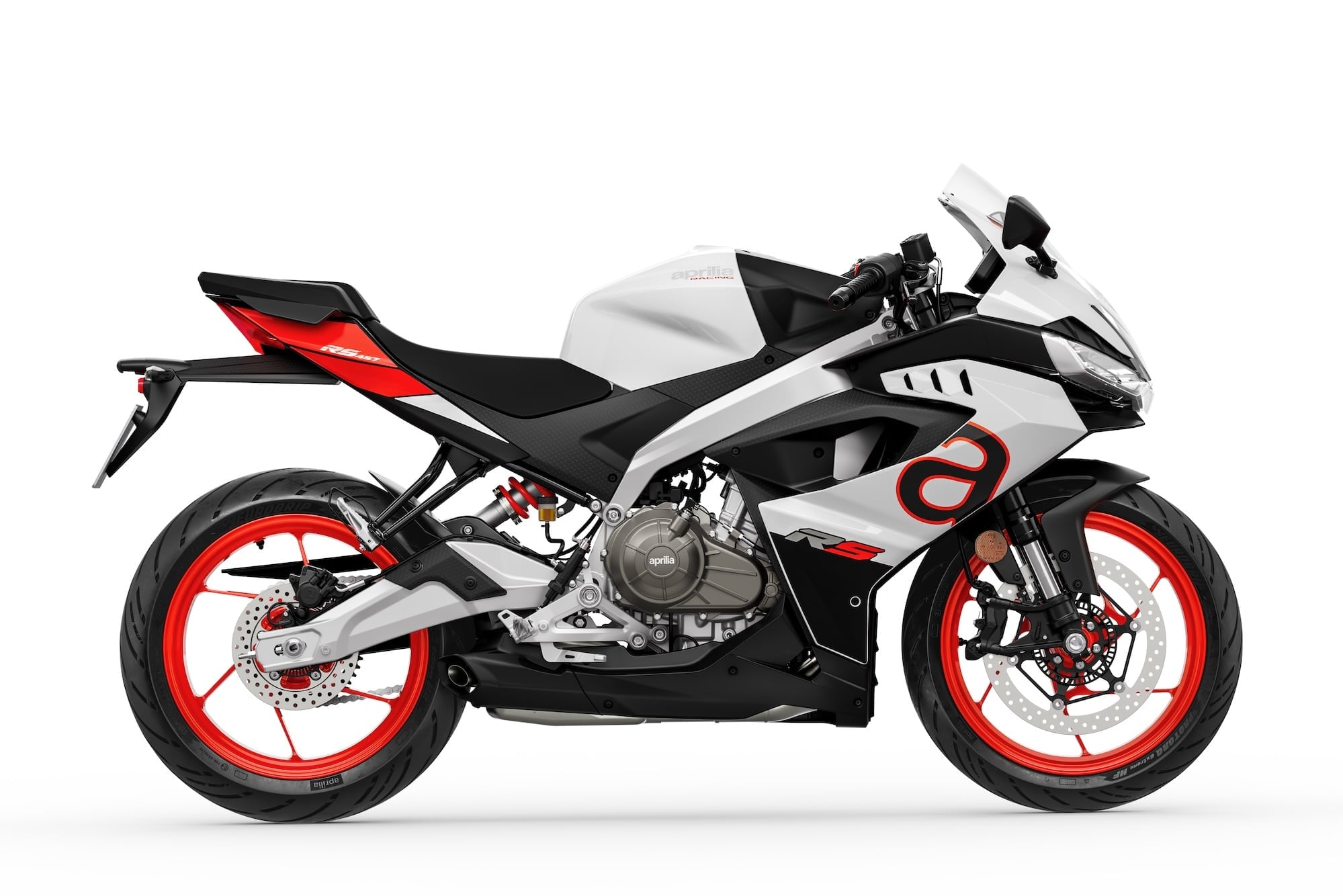
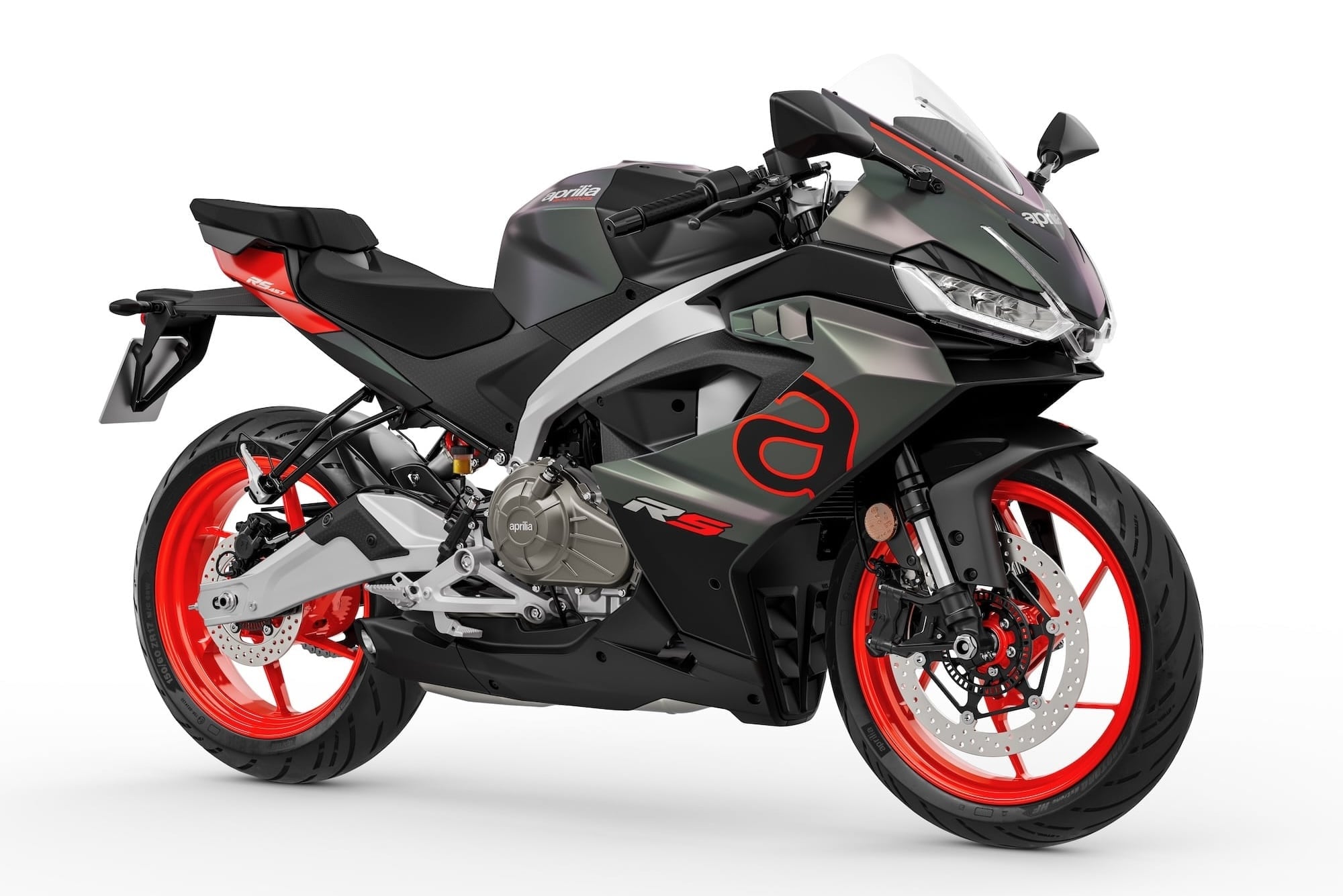
The standard 2026 RS 457 is available in Coral Snake Blue and Arsenic Yellow in Australia. The GP Replica has its own gloss-and-matte black MotoGP-inspired livery. Specification is otherwise unchanged for the regular colour choices.
Who the RS 457 is for
Buy the Aprilia RS 457 if you want a small sport bike that feels deliberately engineered, not merely approved for a learner licence. Its special trick is the balance: a flexible engine, chassis feedback that encourages better riding, and enough comfort to use it on an ordinary Tuesday. It is still a compact, firm, single-passenger sport bike, so it will not replace a touring machine or make bad roads feel smooth.
But if your riding includes twisty roads, the occasional track day, and a strong preference for motorcycles that feel like something at 80 km/h (50 mph), the RS 457 deserves a serious look. It is more than the sum of a 457 cc engine and an A2 power limit. That is exactly why it is interesting.