
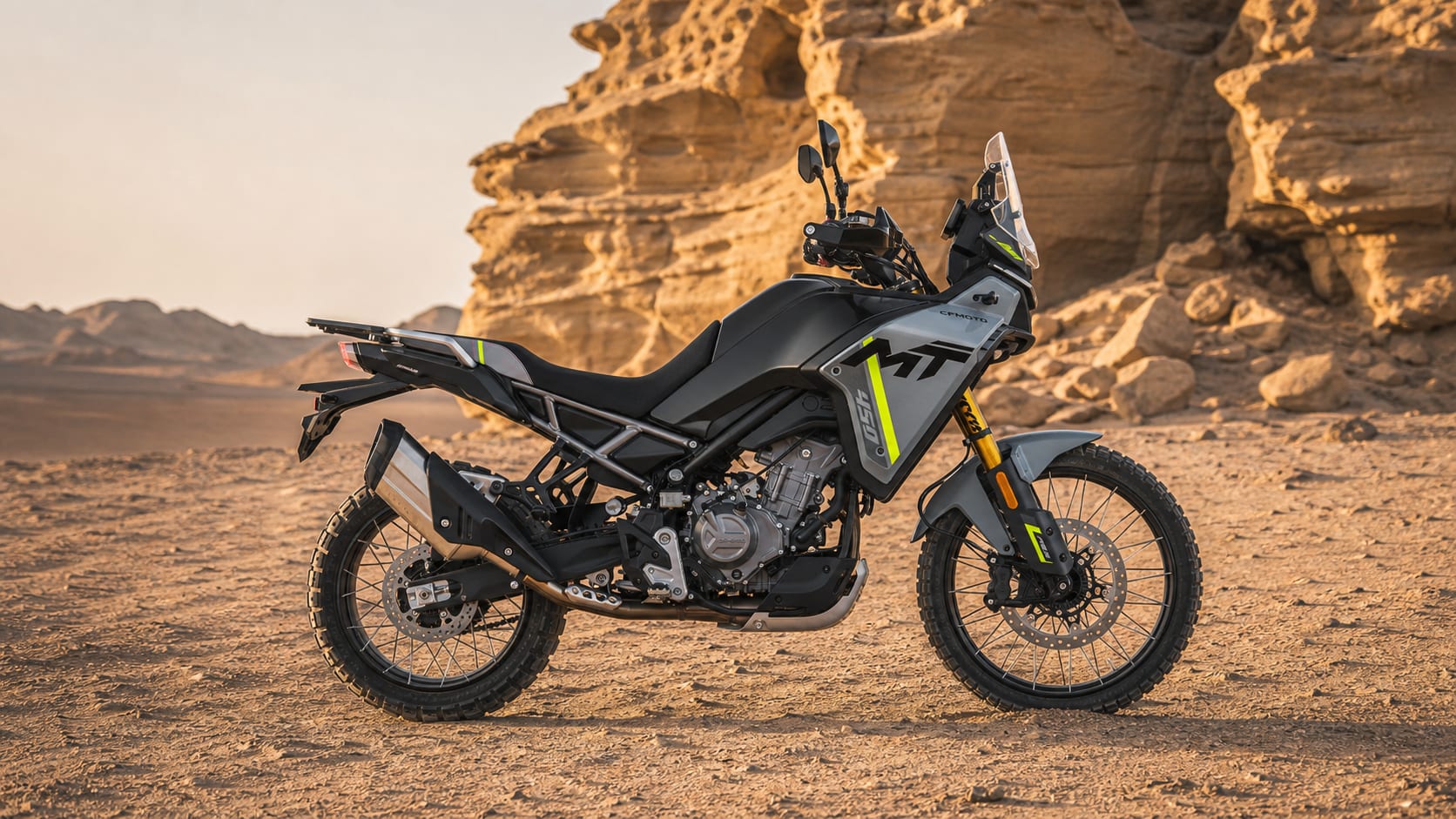
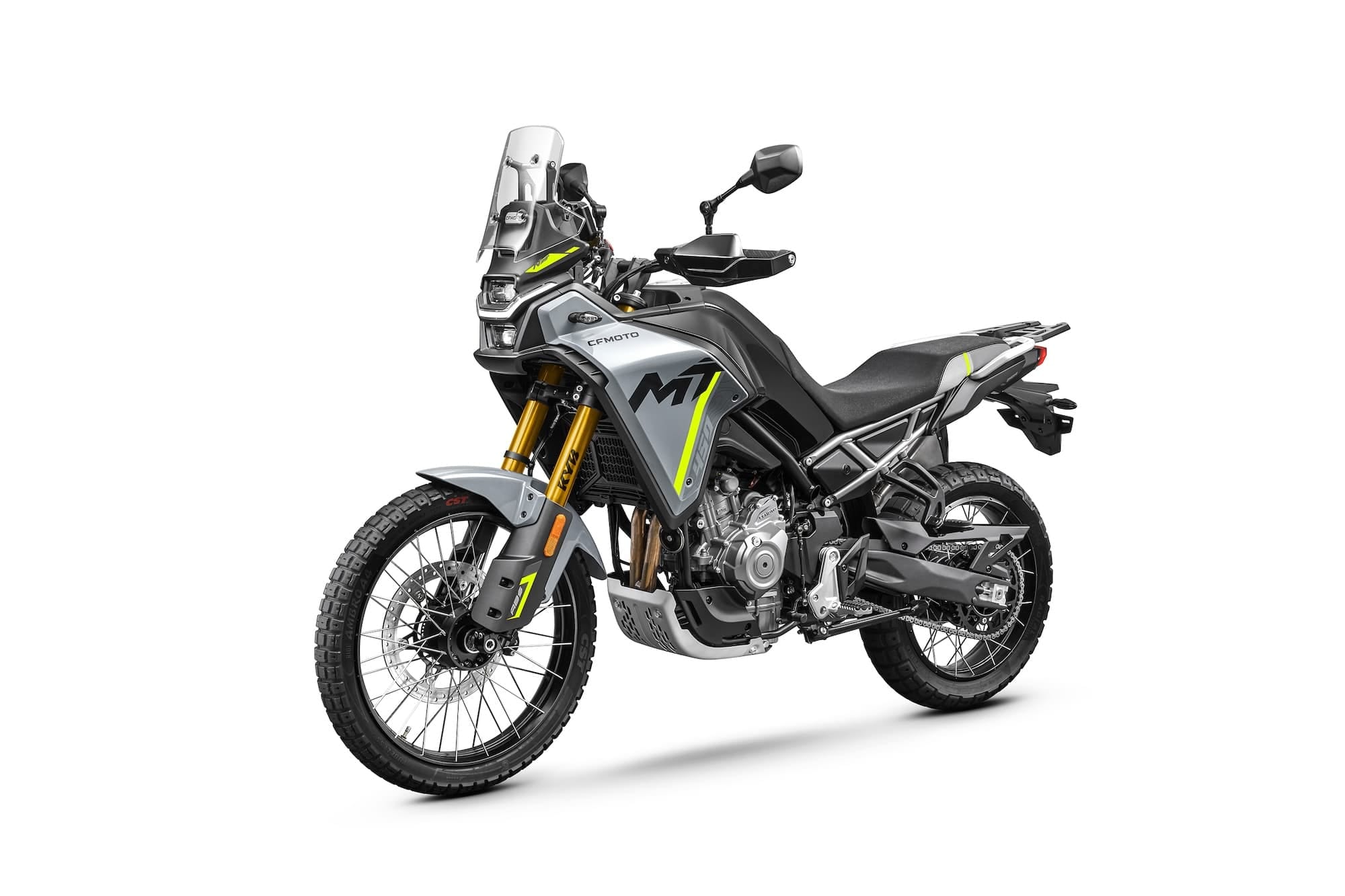
The CFMOTO 450MT is one of the most convincing answers to a simple question: how much motorcycle do you really need for a dirt-road trip? On paper, it has everything you might need: a 449.5 cc parallel twin, a 21-inch front wheel, 200 mm (7.9 in) of suspension travel at each end, tubeless wire-spoke wheels, and a claimed 175 kg (386 lb) weight figure. That is a useful set of numbers, but the more important point is that CFMOTO has put them together in a bike that looks designed to leave sealed roads rather than merely pose beside them with the rest of us.
The 450MT sits between a small dual sport and a full middleweight adventure bike. It has enough engine and wind protection to make a long road link realistic, but it does not bring the mass, width, or price of an 800 cc machine. It is not a hard-enduro substitute, and it is not a two-up continent-crosser with no compromises. If your trips mix ordinary roads, gravel, sand, rough tracks, camping gear, and the occasional freeway, that middle ground is exactly why it — and this whole class of “small, but not too small” class of adventure motorcycles — is interesting.
Core specs:
- Engine: 449.5 cc liquid-cooled DOHC parallel twin, six-speed gearbox, mechanical throttle, assist-and-slipper clutch
- Output: 32.5 kW (43.6 hp) at 8,500 rpm and 44 Nm (32.5 lb-ft) at 6,250 rpm, claimed
- Chassis: steel-tube frame, aluminium swingarm, 21/18-inch tubeless wire-spoke wheels
- Suspension: 41 mm KYB upside-down fork and KYB linkage shock, each with 200 mm (7.9 in) of travel
- Brakes and electronics: J.Juan 320 mm four-piston front brake, 240 mm rear brake, Bosch ABS and traction control; rear ABS and TC are switchable
- Practical figures: 820 mm (32.3 in) standard seat, 800 mm (31.5 in) low setting, 220 mm (8.7 in) clearance, and 17.5 L (4.6 US gal) tank
Are you obsessed with motorcycles?
Well, I am. That’s why I created this site — as an outlet. I love learning and sharing what others might find useful. If you like what you read here, and you’re a fraction as obsessed as I am, you might like to know when I’ve published more. (Check the latest for an idea of what you’ll see.)
Where the 450MT came from
The 450MT takes inspiration from other, bigger adventure bikes in CFMOTO’s garage, and borrows parts from other bikes in the line-up.
First, there are CFMOTO’s older MT road-adventure models. The 650MT gave the brand a value-minded, road-biased parallel-twin tourer; the 800MT took that idea into a much faster, heavier, more electronically equipped class. Both are useful travel bikes, but neither has the 21/18-inch wheel layout or compact weight target that matters when a route becomes rough.
Second, there is the 450 platform. The 450SR/SS sport bike, 450NK naked, and 450CL-C cruiser established CFMOTO’s 449 cc parallel twin. The 450MT takes that compact twin into a different job: lower gearing, a longer-travel chassis, a 21-inch front wheel, and luggage-ready bodywork. It is therefore better understood as the first genuinely lightweight MT in the current range than as a smaller 800MT. CFMOTO’s current 450MT specification page confirms the central hardware, though trim and connected functions vary by market.
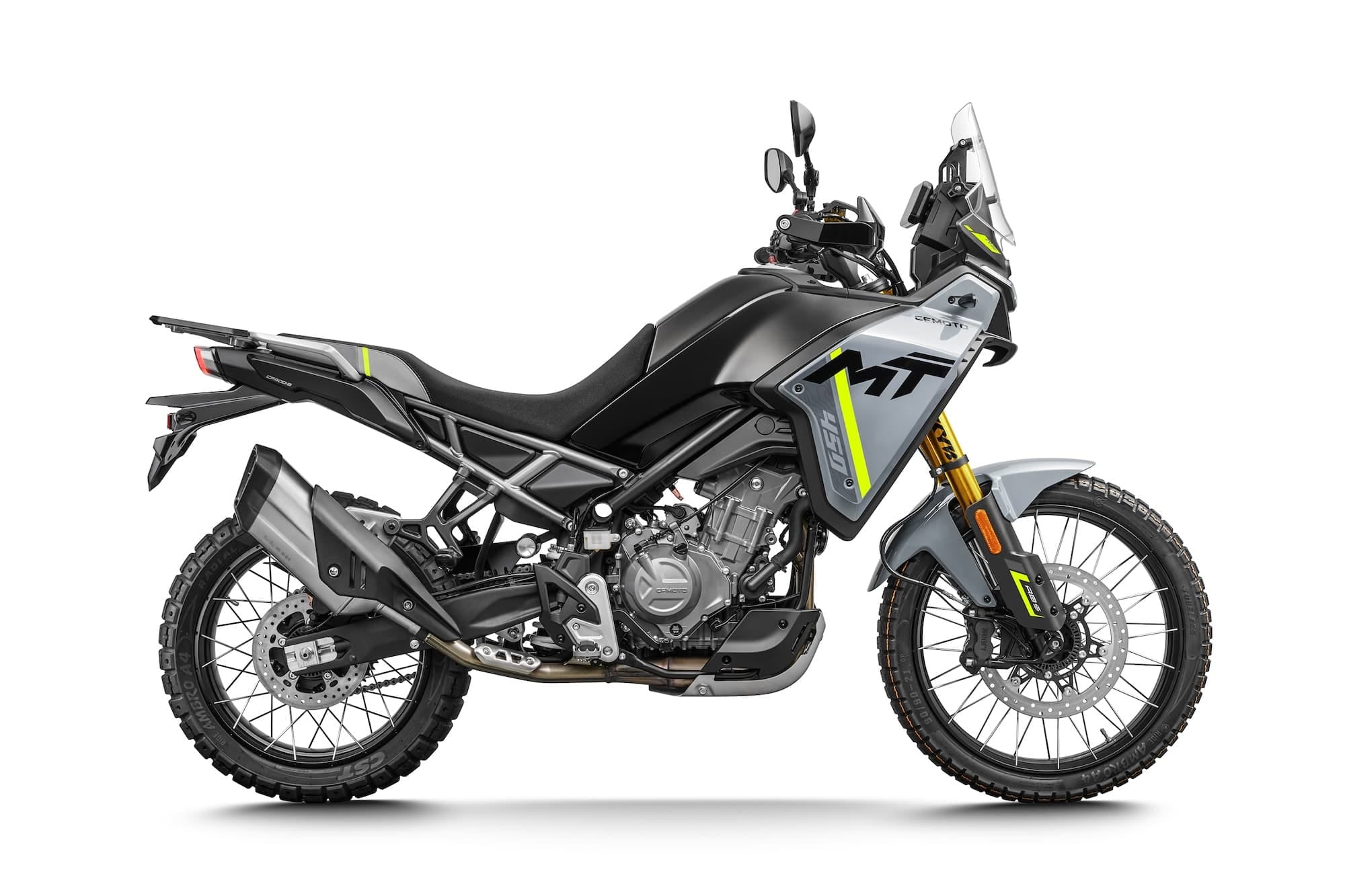
CFMOTO 450MT specifications — and why they matter
| Item | CFMOTO 450MT | Why it matters on the road or trail |
|---|---|---|
| Engine | 449.5 cc liquid-cooled DOHC parallel twin; 72 x 55.2 mm; 11.5:1 | A twin gives smoother sustained road speed and more passing reserve than the single-cylinder alternatives. The short stroke helps it make power without needing a huge engine. |
| Power and torque | 32.5 kW (43.6 hp) at 8,500 rpm; 44 Nm (32.5 lb-ft) at 6,250 rpm | Enough for real highway use and climbing with luggage, without the abruptness or tyre-spinning surplus of a much bigger adventure bike. |
| Clutch and throttle | Mechanical throttle; wet multi-plate slipper clutch | The cable throttle keeps response direct and simple. The slipper clutch reduces rear-wheel chatter from an untidy downshift on loose ground or a steep descent. |
| Frame and swingarm | Steel-tube frame; integrated aluminium-alloy swingarm | The frame can take luggage and rough-road loads, while the lighter swingarm helps the rear suspension follow broken surfaces. |
| Wheels and tyres | Tubeless wire spokes; 90/90-21 front, 140/70-18 rear CST tyres | The 21-inch front rolls over holes and loose rocks more calmly than a 19-inch wheel. Tubeless construction makes a roadside puncture repair less painful than a tube change. |
| Suspension | 41 mm KYB USD fork and KYB linkage shock; 200/200 mm (7.9/7.9 in) travel | There is enough movement for corrugations, washouts, and sensible trail riding, yet not so much height that it becomes an 870 mm (34.3 in) seat-height specialist machine. |
| Brakes | 320 mm front disc with opposed four-piston J.Juan caliper; 240 mm rear single disc with single-piston caliper | The front brake is sized for loaded road riding. The rear is deliberately less aggressive, which makes it easier to meter in dirt. |
| ABS and traction control | Bosch ABS and TC; rear ABS and TC independently switchable | On tarmac, leave the safety systems on. In loose climbs and descents, being able to lock the rear or steer with the throttle gives the rider more control. |
| Screen and connectivity | 5-inch curved TFT; MotoPlay and OTA capability; 18 W USB/USB-C; T-Box availability varies by market | The useful part is navigation/phone support and charging, rather than a long menu of modes. Confirm the local connected package before buying on that basis. |
| Seat, clearance, and tank | 820 mm (32.3 in) standard seat, 800 mm (31.5 in) low setting; 220 mm (8.7 in) clearance; 17.5 L (4.6 US gal) | The seat adjustment is unusually welcome in an off-road-leaning bike. Clearance is meaningful on ruts, while the large tank should allow long gaps between fuel stops if ridden sensibly. |
| Weight | 175 kg (386 lb), manufacturer-quoted figure | Weight matters most when you stop, turn around on an off-camber track, or pick the bike up. Check your local market’s stated wet/dry convention before comparing it directly with rivals. |
That last qualification is worth keeping in mind. Motorcycle makers do not all quote weights the same way, and 450MT equipment differs between markets. Treat the 175 kg (386 lb) figure as a good indication of intent, then ask the local dealer what is included on the bike you are actually buying.
How the 450MT compares with its closest rivals
The 450MT’s nearest competitors are not all trying to solve the same problem. The Royal Enfield Himalayan 450 is a relaxed, torquey single with a serious travel remit. The KTM 390 Adventure R is the more trail-biased and taller option. BMW’s new F 450 GS brings a high-spec twin and a 19-inch front wheel, so it has a stronger paved-road bias. Kawasaki’s new KLE500 is another useful parallel-twin alternative, with a 21-inch front wheel and a conventional but sensible equipment list.
| Item | CFMOTO 450MT | Royal Enfield Himalayan 450 | KTM 390 Adventure R | BMW F 450 GS | Kawasaki KLE500 |
|---|---|---|---|---|---|
| Engine | 449.5 cc liquid-cooled parallel twin | 451.65 cc liquid-cooled single | 398.7 cc liquid-cooled single | 420 cc liquid-cooled parallel twin | 451 cc liquid-cooled parallel twin |
| Claimed output | 32.5 kW (43.6 hp); 44 Nm (32.5 lb-ft) | 29.44 kW (40 PS); 40 Nm (29.5 lb-ft) | 33.1 kW (45 PS); 39 Nm (28.8 lb-ft) | 35.8 kW (48 hp); 43 Nm (32 lb-ft) | 38.0 kW (51 hp); 43 Nm (31.7 lb-ft) |
| Wheels | 21/18-inch tubeless wire spokes | 21/17-inch wire spokes | 21/18-inch wire spokes | 19/17-inch aluminium cross spokes | 21/17-inch wire spokes |
| Suspension travel | 200/200 mm (7.9/7.9 in), KYB | 200/200 mm (7.9/7.9 in), 43 mm USD/linkage shock | 230/230 mm (9.1/9.1 in), adjustable WP APEX | 180/180 mm (7.1/7.1 in), 43 mm USD/adjustable shock | 211/195 mm (8.3/7.7 in), 43 mm KYB/Uni-Trak |
| Brakes | 320 mm four-piston / 240 mm one-piston, J.Juan | 320 mm two-piston / 270 mm one-piston | 320 mm two-piston / 240 mm one-piston, ByBre | 310 mm Brembo four-piston / 240 mm one-piston | 300 mm two-piston / 230 mm two-piston |
| Safety and tech | Bosch ABS + TC; rear ABS and TC switchable; 5-inch TFT | Switchable dual-channel ABS; ride-by-wire modes; 4-inch round TFT with navigation | Ride-by-wire; off-road ABS/traction settings; 5-inch TFT | ABS Pro, DTC, ride modes; TFT-connected package varies by market | Selectable ABS; LCD and smartphone connectivity |
| Seat and clearance | 800/820 mm (31.5/32.3 in); 220 mm (8.7 in) | 805-845 mm (31.7-33.3 in); 230 mm (9.1 in) | 870 mm (34.3 in); 272 mm (10.7 in) | 846 mm (33.3 in); check local final spec | 871 mm (34.3 in); 185 mm (7.3 in) |
| Tank | 17.5 L (4.6 US gal) | 17.0 L (4.5 US gal) | 14 L (3.7 US gal) | 13.5 L (3.6 US gal) | 15.9 L (4.2 US gal) |
| Weight figure | 175 kg (386 lb), manufacturer quoted | 181 kg (399 lb) dry; 196 kg (432 lb) kerb | 165 kg (364 lb) without fuel; 176 kg (388 lb) full | 178 kg (392 lb) road-ready, fully fuelled | 174 kg (384 lb) estimated dry; 193 kg (426 lb) kerb |
| What it does differently | The balanced, value-led twin: 21/18 wheels, useful tank, approachable seat, and stronger road pace than a single. | The calmer, more characterful travel single, with good clearance and a useful navigation display. | The clear pick for difficult terrain if you can live with the tallest seat, smaller tank, and single-cylinder road manners. | The premium road-and-gravel twin, with the strongest braking/electronics package and a 19-inch front wheel. | The practical, new twin alternative: less ground clearance and travel, but an adjustable screen and straightforward touring equipment. |
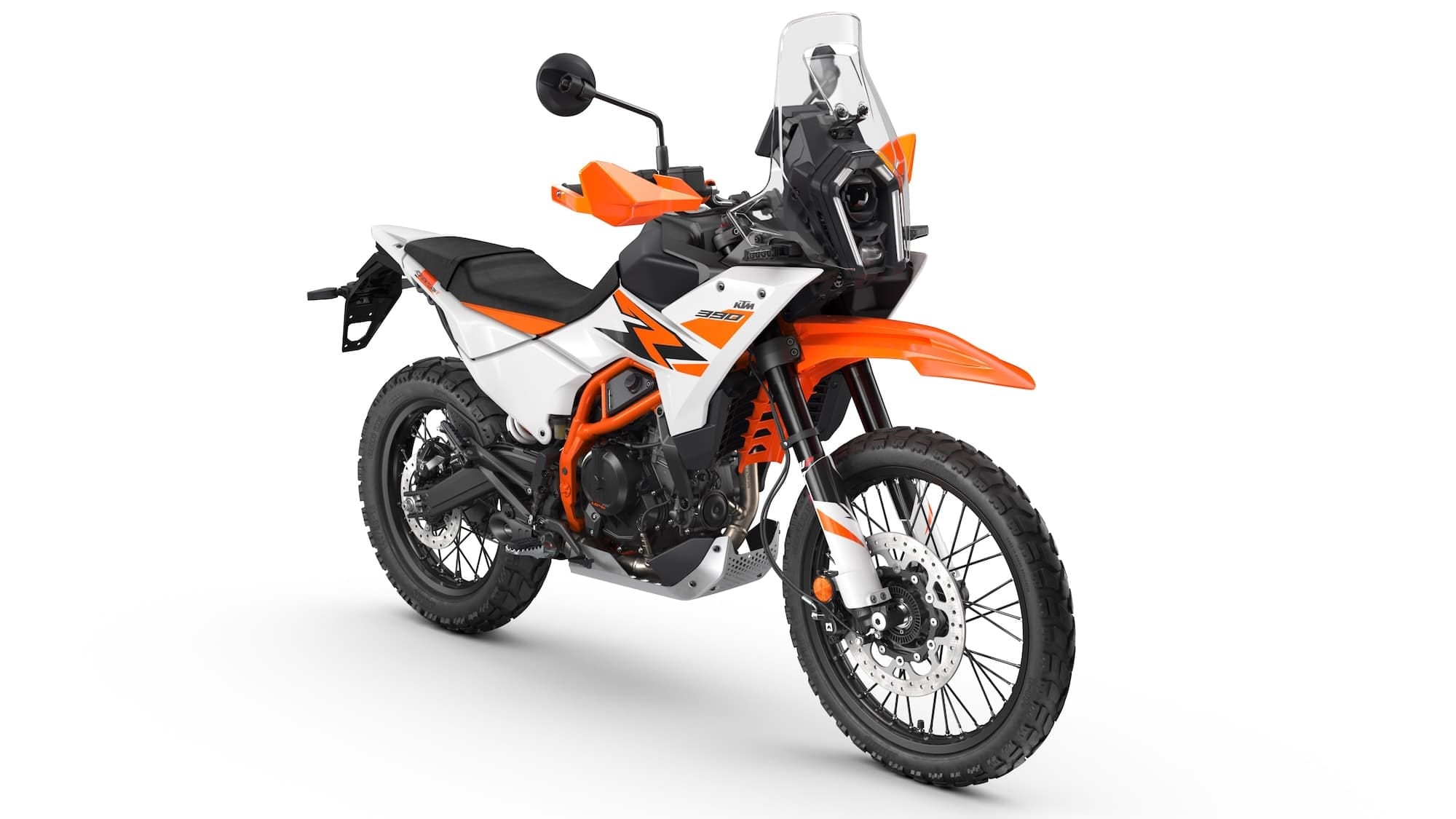
The table hides one important distinction: the KTM is materially taller and more dirt-oriented than the CFMOTO. Its 230 mm (9.1 in) travel and 272 mm (10.7 in) ground clearance give it a real advantage in deep ruts and rocky ledges. The trade is an 870 mm (34.3 in) seat and a 14 L (3.7 US gal) tank. The 450MT makes a better case if most rides start with a highway or suburban link and only then turn rough. KTM’s technical specification gives the detail behind that off-road focus.
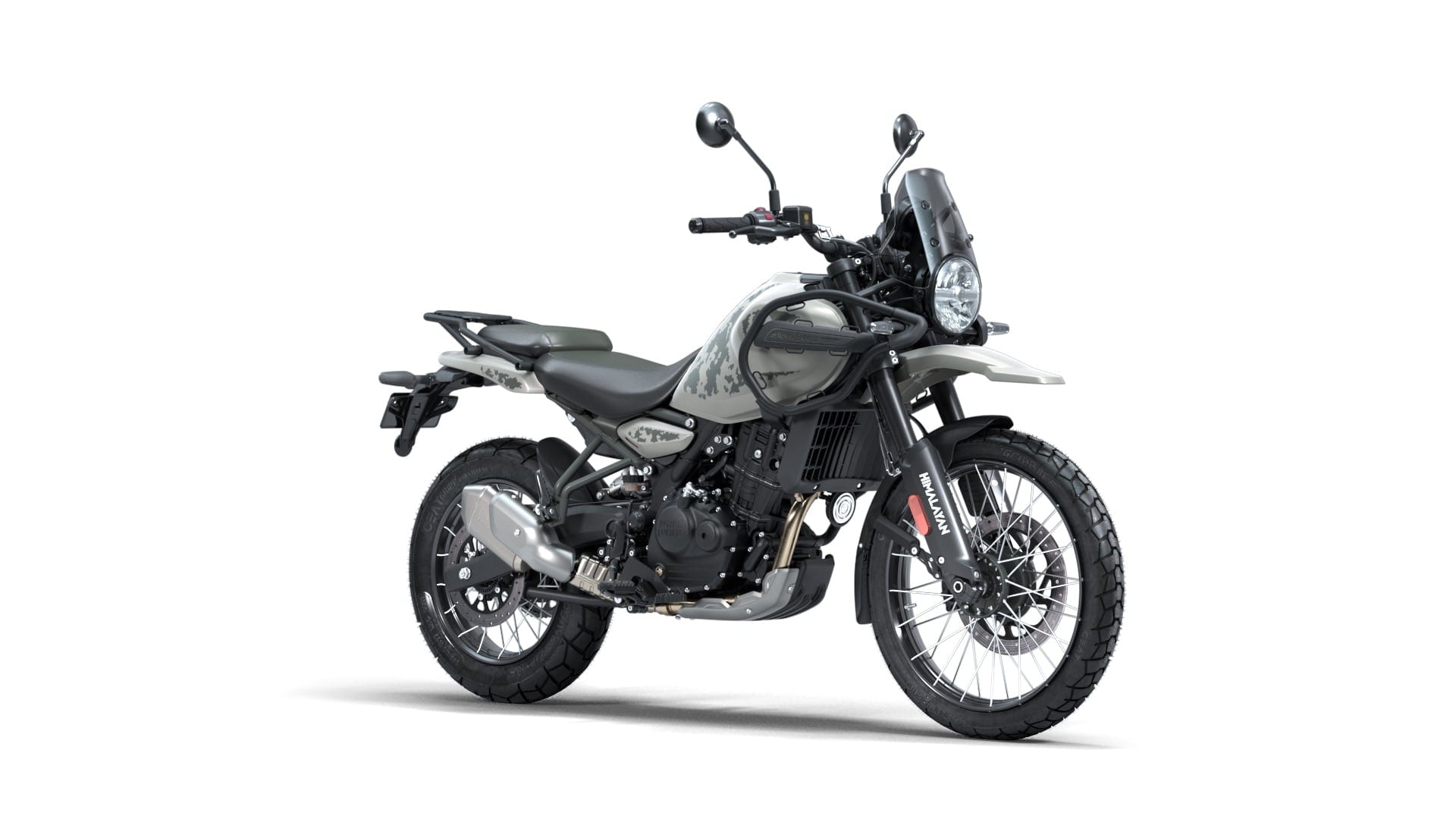
The Himalayan 450 is the gentler rival. Its 451.65 cc Sherpa single makes less peak power than the CFMOTO, but its 40 Nm (29.5 lb-ft) arrives at 5,500 rpm and it has a 17 L (4.5 US gal) tank. It also brings a useful factory navigation display. The CFMOTO will feel smoother at sustained speed and has the stronger front brake and 18-inch rear wheel; the Himalayan may suit riders who prefer a slower, simpler, more upright pace. Royal Enfield’s 2026 specification sheet is a good current reference.
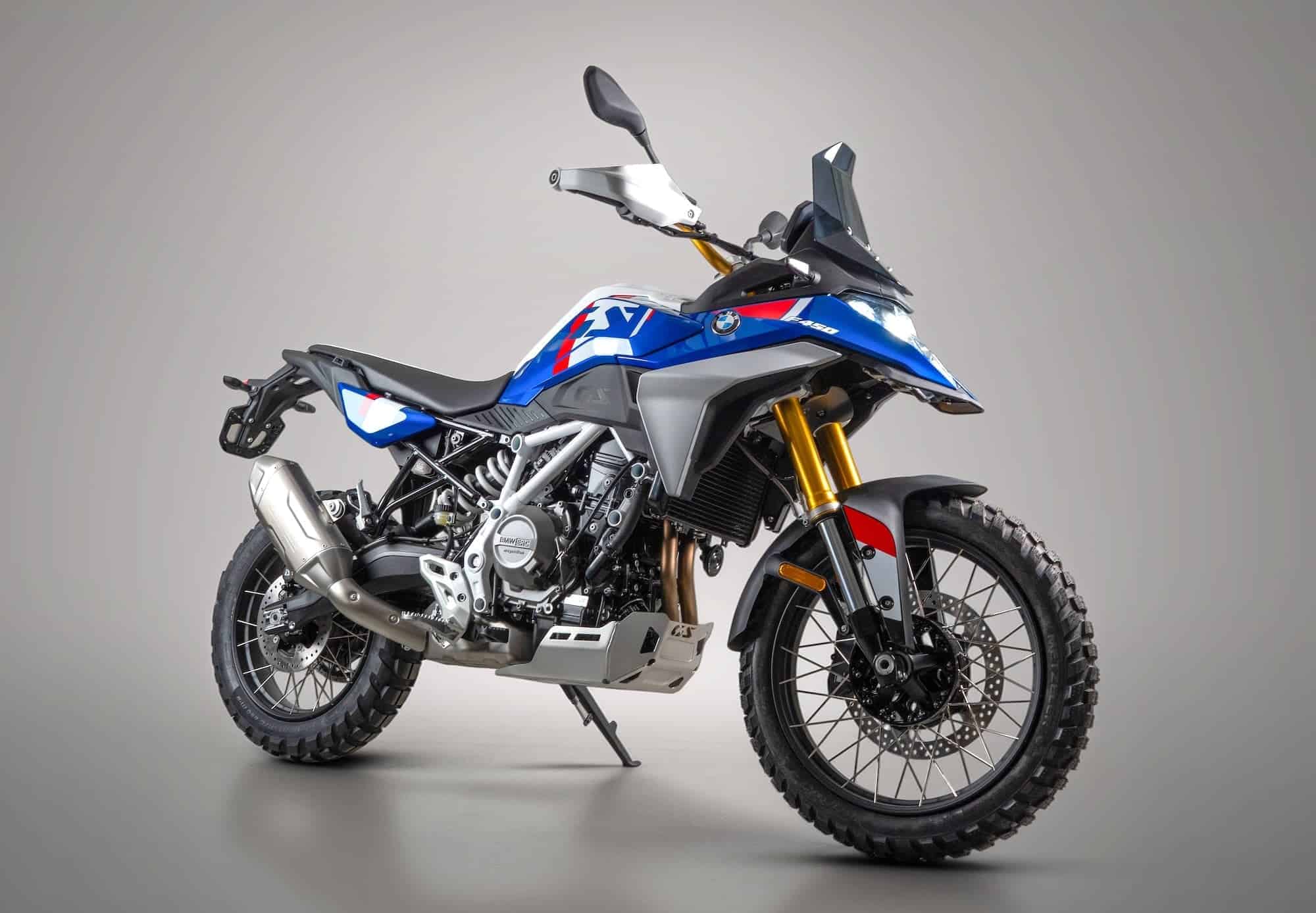
The BMW F 450 GS is the premium alternative and has a different focus. Its 420 cc twin makes 35.8 kW (48 hp), it has BMW ABS Pro and traction control, and its 310 mm Brembo four-piston front brake is serious equipment. But the 19/17-inch wheels and 180 mm (7.1 in) travel put it closer to road-plus-gravel use than the CFMOTO. BMW quotes 178 kg (392 lb) road-ready and fully fuelled. See BMW’s F 450 GS technical data; availability and option packs will differ between countries.
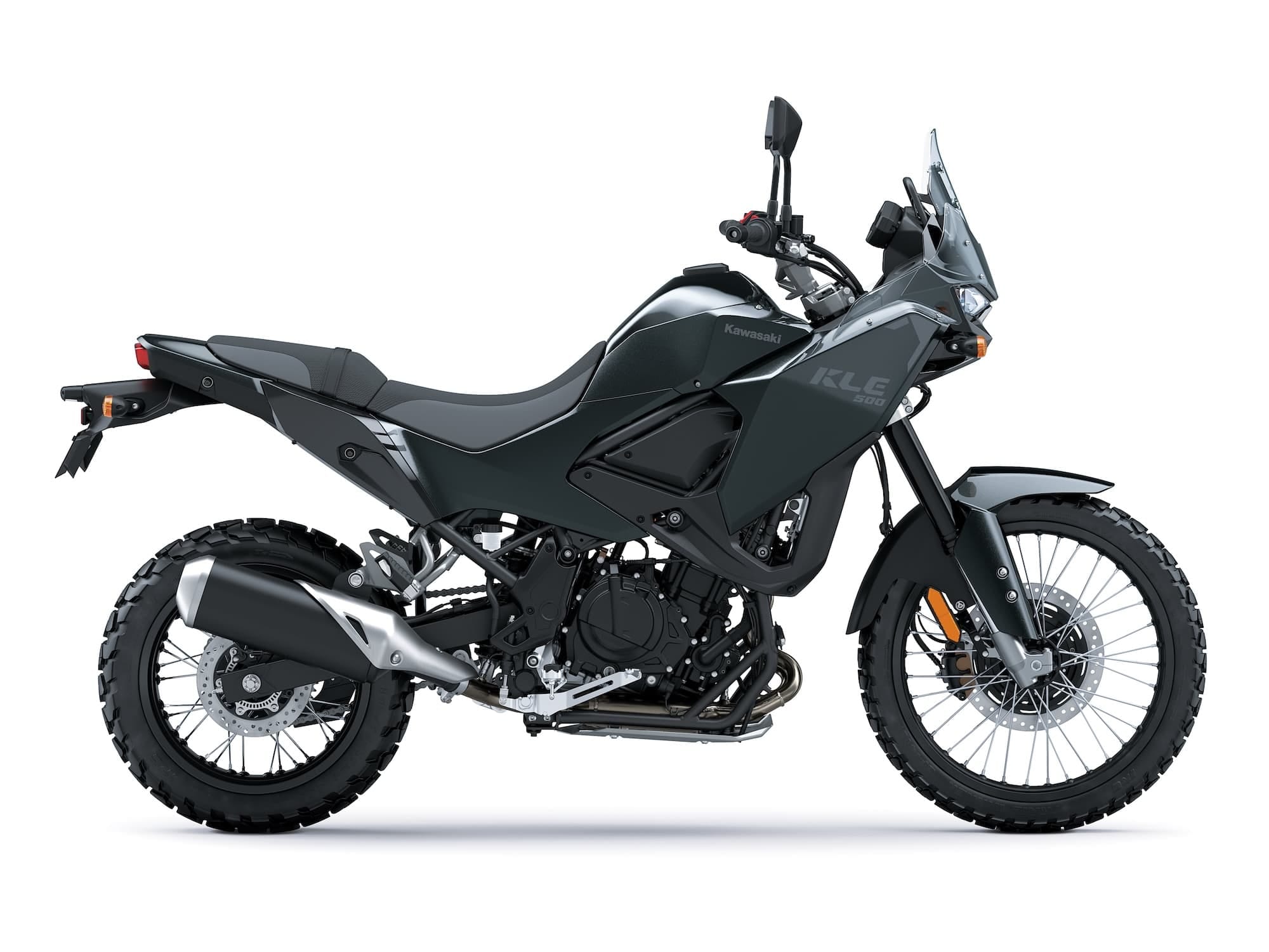
The new Kawasaki KLE500 is also worth watching. It uses a 451 cc parallel twin, a 21-inch front wheel, a 300 mm front disc, selectable ABS, an adjustable windscreen, and smartphone connection through Kawasaki’s app. Its 185 mm (7.3 in) clearance is lower than the CFMOTO’s 220 mm (8.7 in), and its 21/17-inch wheel pairing signals a slightly more road/travel-minded brief. Kawasaki’s 2026 KLE500 specification sheet lists a 51 hp output and 425.6 lb (193 kg) kerb weight for the ABS model.
And what about the Honda CRF300L Rally and Kawasaki Versys-X 300?
They belong in the conversation, though they are a smaller and slightly lower-spec class of motorcycle. The CRF300L Rally has a 286 cc single, modest road performance, and no parallel-twin smoothness, but it is dramatically lighter and has much more dirt-bike-like suspension. If the route includes tight single-track, repeated water crossings, or simply the prospect of picking the bike up many times, that lightness may be the deciding advantage.
The Versys-X 300 is the opposite kind of sensible. Its 296 cc twin is happy at revs, it has a 19-inch front wheel and a more road-oriented chassis, and it is much less expensive to intimidate yourself with. For commuting, easy gravel roads, and long paved rides where a rider wants light weight and low running costs, either bike can be preferable to a 450MT. Neither has the 450MT’s engine torque, 21/18-inch wheel set, braking hardware, or trail-ready ground clearance.
What the 450MT is like to ride
You might be buying the CFMOTO 450 MT with your eyes on the horizon, but the reality for most riders is a lot of day-to-day — or, at very least, some boring commuting + freeway in between actual adventuring.
In town: The standard 820 mm (32.3 in) seat is not low, but the 800 mm (31.5 in) adjustment gives shorter riders a useful option. The twin is smoother and less busy than the Himalayan or KTM singles in stop-start use, while the wide bars and long-travel suspension deal with poor urban surfaces well. It will still feel taller and wider than a naked 450NK, and the 21-inch front wheel will not turn as sharply at walking pace as a 17-inch road wheel.
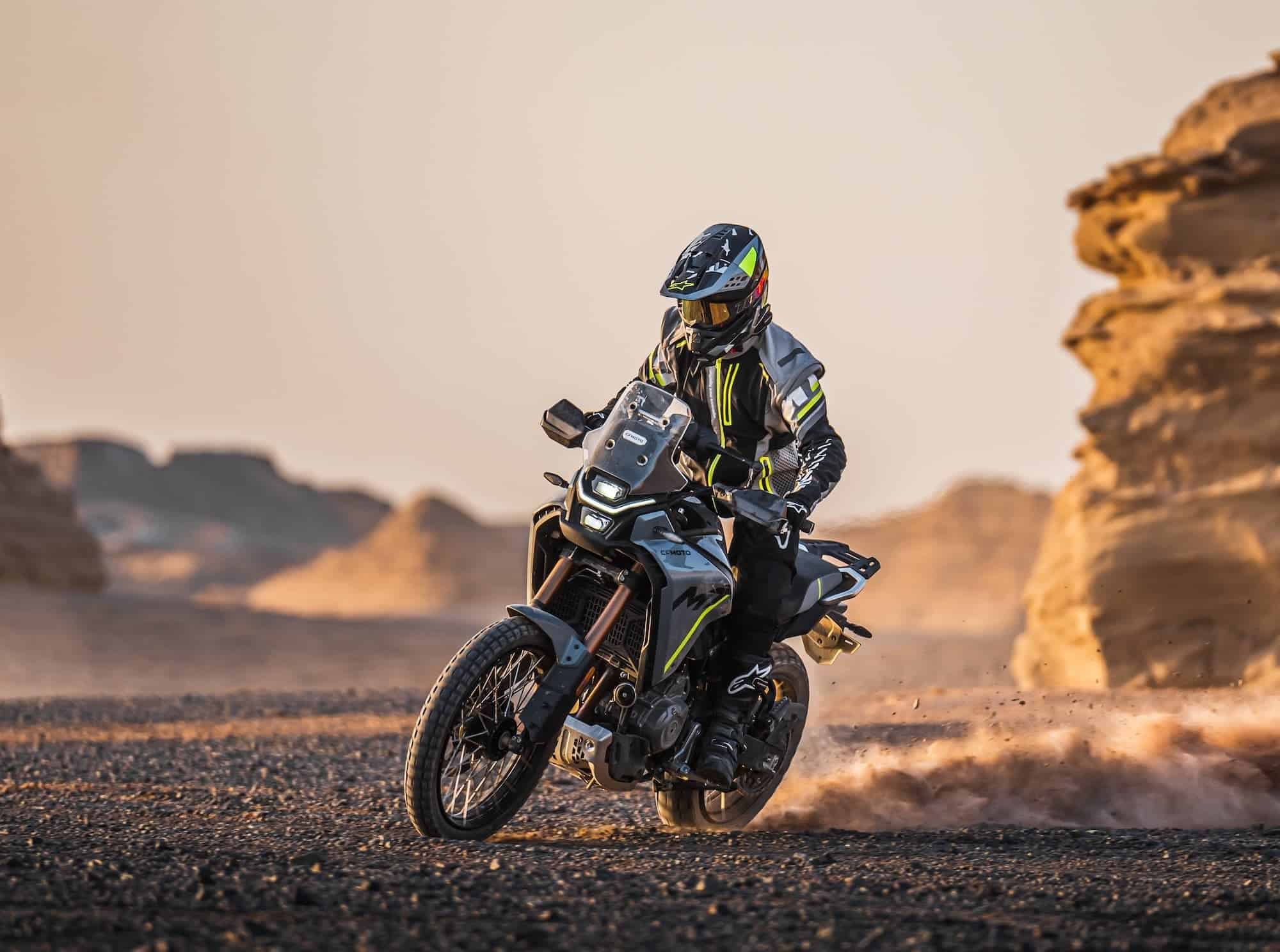
On fast roads: This is where the twin earns its keep. A claimed 44 Nm (32.5 lb-ft) at 6,250 rpm makes overtakes and hills with a soft bag or panniers less of a planning exercise than on a 300 cc bike. The screen is enough to take pressure off the chest rather than create a silent touring bubble. Riders who do sustained freeway work should test the screen position, seat comfort, and vibration at their usual cruising speed before committing. Small twins can be smooth without being effortless when heavily loaded.
On flowing sealed roads: The 21-inch front wheel, long suspension, and block-pattern CST tyres mean the 450MT will not feel like a sport-tourer. It feels planted and forgiving over patched tarmac rather than ultra-quick from one edge of a tyre to the other. The 320 mm four-piston front brake is a welcome sign that CFMOTO expects the bike to carry speed and luggage on real roads.
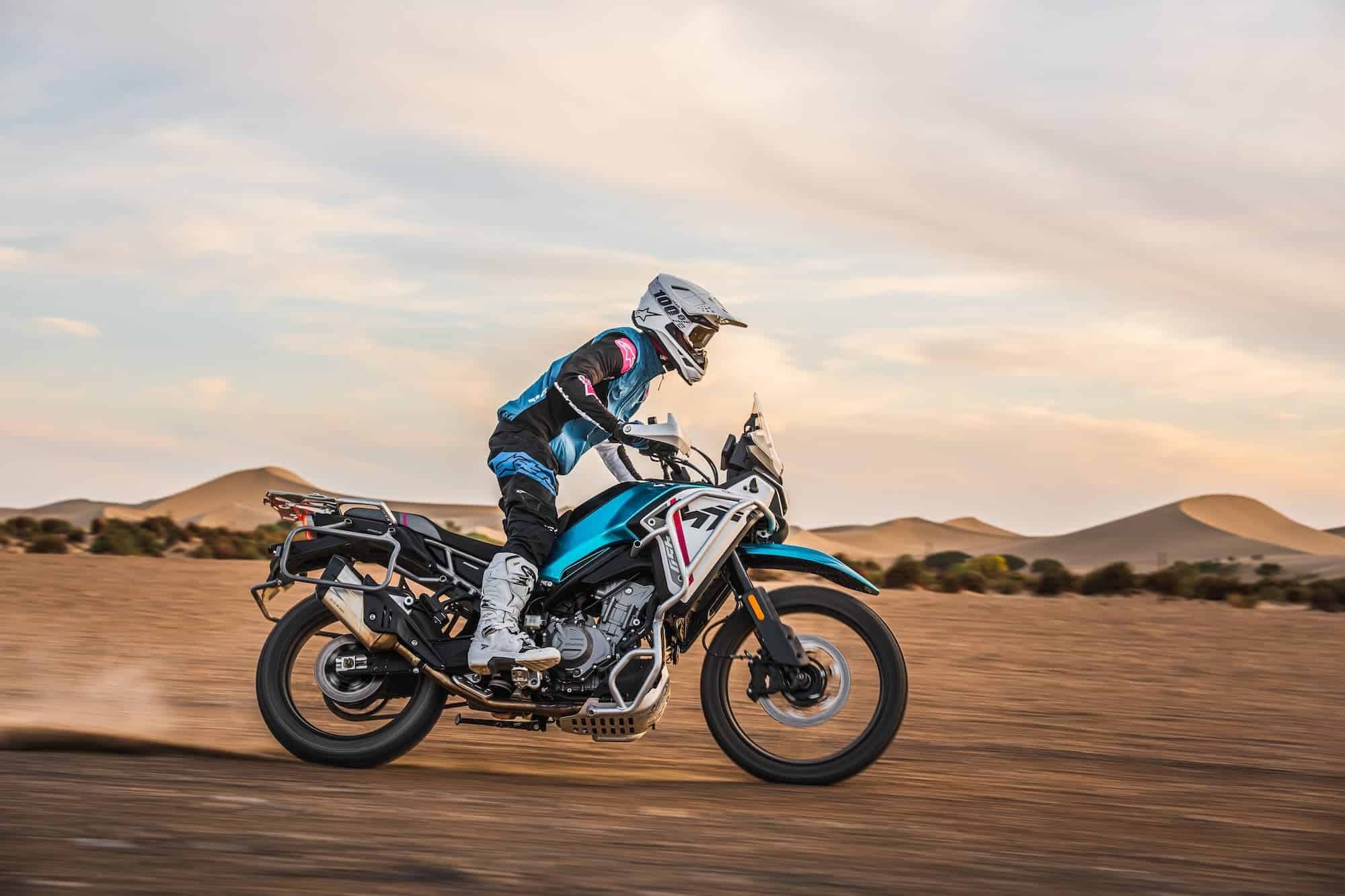
On gravel and corrugations: This is likely the 450MT’s best environment. The front wheel diameter, 200 mm (7.9 in) travel, neutral standing position, and switchable rear ABS/traction control let a rider settle into a sensible pace rather than fight the chassis (but suspension setup still matters). Add luggage, then set rear preload and tyre pressures for the actual load; an adventure bike with the wrong rear sag will feel vague no matter how promising the catalogue is.
In sand, rocks, and tight tracks: The 450MT is capable in these environments within limits. At about 175 kg (386 lb) before a full tank and luggage, it has much more momentum than a CRF300L Rally. The 21/18 wheel combination, clearance, and ABS/TC adjustment give it the right starting kit, but deep sand and repeated technical climbs reward a lighter bike, more aggressive tyres, and a rider willing to stand. Think “adventure trail” rather than “enduro route.”
Luggage, travel, and the less glamorous bits
The 17.5 L (4.6 US gal) tank is one of the 450MT’s quiet advantages. It is larger than the KTM’s 14 L (3.7 US gal) tank and close to the Himalayan’s 17 L (4.5 US gal), so it suits routes with uncertain fuel stops. Actual range depends heavily on speed, wind, tyres, luggage, and how much time you spend using the upper half of the rev range. Plan fuel from a measured trip consumption, not a brochure range.
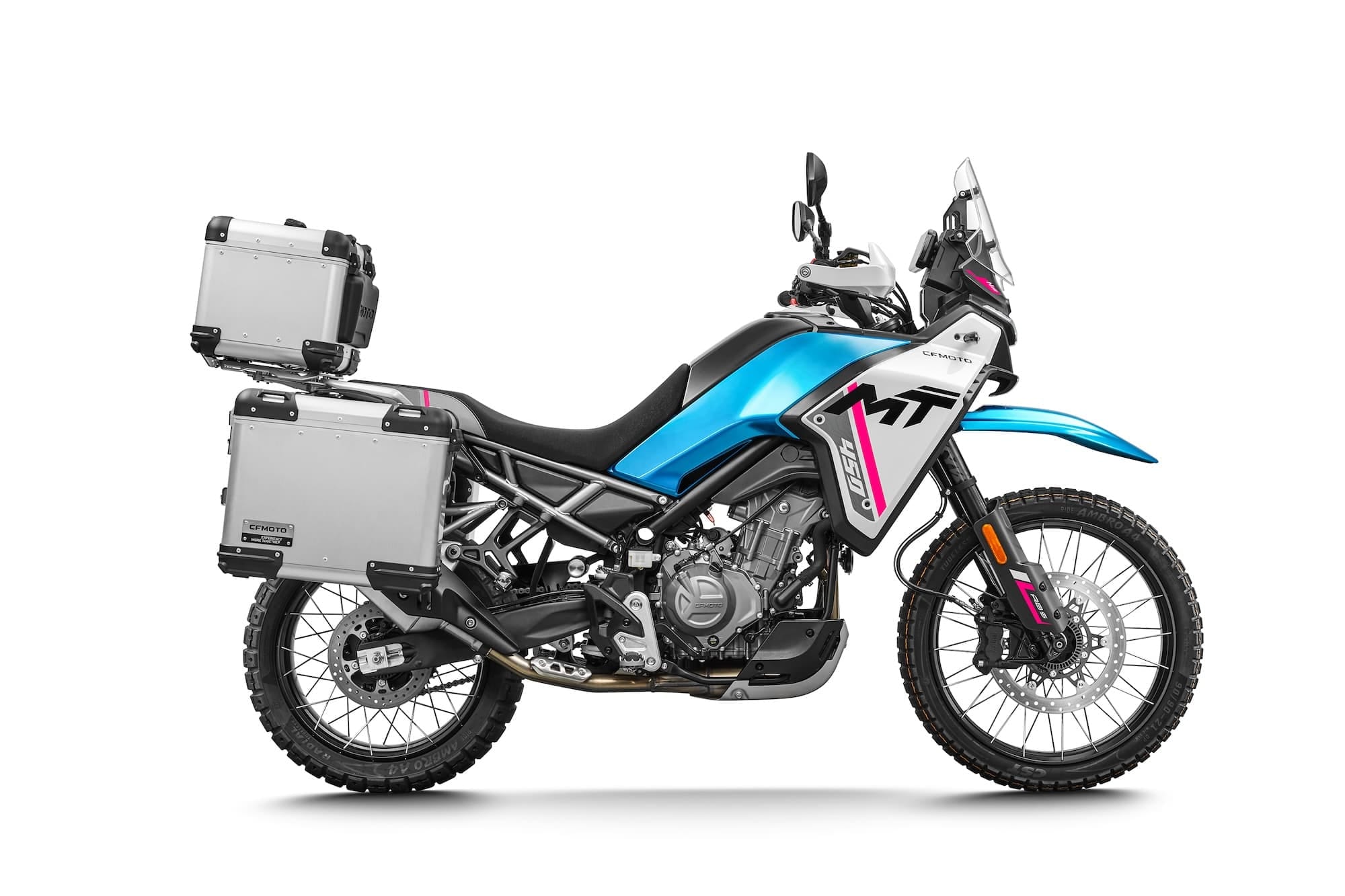
CFMOTO offers the bike with luggage hardware and, in some markets, complete aluminium cases. They make the bike practical for a long trip, but they also make a low-speed fall more expensive and shift mass upward and rearward. For difficult dirt, soft luggage is usually the kinder choice. For mostly sealed-road travel, the hard cases in the supplied image look useful and keep weather out.
Maintenance schedule — what ownership asks of you
The 450MT owner’s manual is refreshingly clear: use whichever comes first, distance or time. Confirm the schedule with the dealer supplying your motorcycle, as regional warranty terms and consumables can differ.
| When | What the schedule calls for | Owner takeaway |
|---|---|---|
| First 1,000 km (600 mi) | Replace engine oil and oil filter; clean the coarse filter. Inspect coolant, throttle, electrics, brakes, tyres, spokes, suspension, steering, fasteners, cables, and fault memory. | Do not skip this service. It is the point at which the engine’s running-in oil and the whole motorcycle get their first proper check. |
| Every 5,000 km (3,000 mi) or 6 months | Replace oil and oil filter; clean coarse filter. Inspect clutch, idle, throttle and throttle body; clean air filter; inspect spark plug, spokes, cables, suspension, and exhaust joints. | This is the core service cadence. Dusty, wet, or hard off-road use shortens several intervals by 50 percent according to the manual. |
| Every 10,000 km (6,000 mi) | Replace spark plugs; inspect brakes, brake pads, wheel condition/bearings, cables, cooling system, steering bearings, chain/sprockets, and electrical functions. | Budget for a more thorough inspection, not only an oil change. |
| Every 20,000 km (12,000 mi) or 24 months | Replace air-filter elements; replace brake fluid at 24 months. | A dusty expedition may need an air filter far earlier. Brake fluid age matters even if the mileage is low. |
| Every 35,000 km (21,000 mi) or 24 months | Replace coolant. | Use the specified coolant and let the system cool completely before checking or servicing it. |
| Every 40,000 km (24,000 mi) | Inspect valve clearance and adjust if necessary. | The long valve-check interval is welcome, but this is a dealer-level job for most owners. |
| Every 600 km (373 mi), and after rain | Lubricate chain; inspect chain slack every 1,000 km (600 mi). | This is the habit that matters most on an adventure bike. Sand, water, and grit will not wait for the next scheduled service. |
For riders using the 450MT as intended, the inspection routine deserves as much attention as the formal service book: tyre pressures before dirt, chain condition after water or dust, spoke tension, loose fasteners, brake-pad thickness, and leaks from fork seals or coolant hoses. None of that is glamorous, but it is the difference between an adventure bike that travels and one that becomes a recovery story.
Who should buy the CFMOTO 450MT?
Buy the 450MT if you want one motorcycle to commute, tour, and take down gravel roads or manageable trails, and you value a 21/18-inch wheel set without an extreme seat height. Its strongest argument is not raw engine output. It is the combination of twin-cylinder road manners, a useful tank, appropriate brakes, tubeless spokes, switchable off-road aids, and mass that is still possible to manage when the road turns awkward.
Choose the KTM 390 Adventure R if difficult terrain is the centre of the brief and you fit its tall seat. Choose the Himalayan 450 if you prefer a relaxed single-cylinder travel bike and its navigation package. Choose the BMW F 450 GS if you spend more time on tarmac and want the premium electronics and road hardware. Look at the KLE500 if Kawasaki’s dealer support, a 451 cc twin, and a more conventional road/travel setup suit you.
The 450MT is for the rider who wants to go a long way without bringing more motorcycle than the route needs. That is a hard balance to get right. On paper, CFMOTO has come unusually close.