
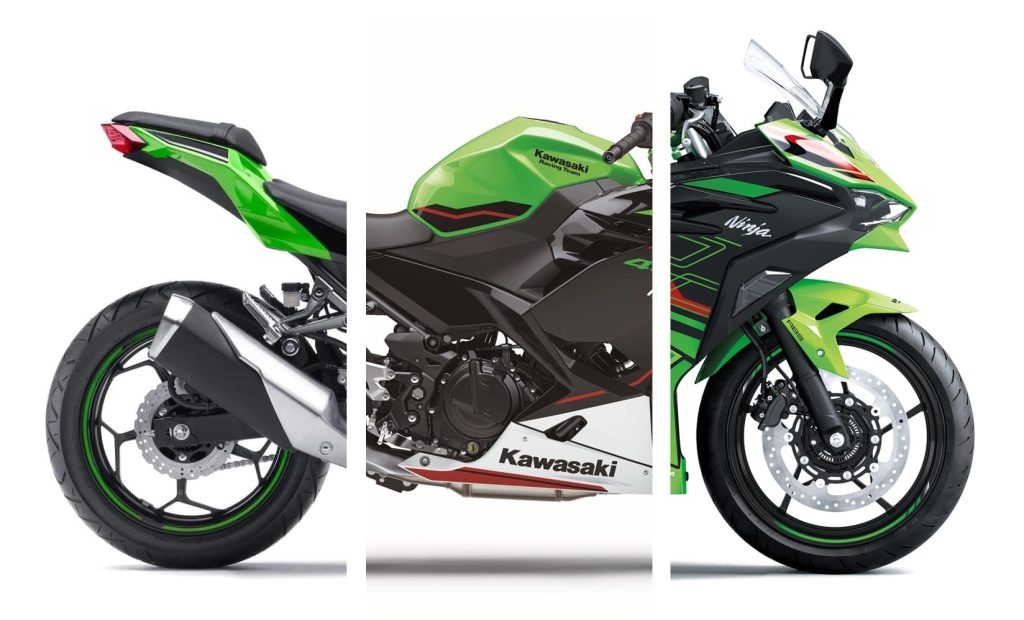
Kawasaki’s smallest twin-cylinder Ninja has spent four decades doing the same basic thing: looking somewhat like a serious sport bike while remaining light, affordable, and friendly enough to learn on. The capacity has grown from 249 cc to 296, 399, and now 451 cc (451 rounds up to 500! I’m going to tell my bank loan officer this), but the idea has stayed the same.
This is the complete history of that family, from the 1986 Ninja 250R through the Ninja 300, Ninja 400, and current Ninja 500. It also covers their naked siblings—the Z300, Z400, and Z500—and explains what changed in the engine, chassis, ride gear, styling, and electronics.
The short version is that the Ninja 250’s days are probably mostly behind us (unless you have an old faithful in the garage still putting along), the Ninja 300 is the cheap, rev-hungry used buy; the Ninja 400 is the peak of the light and revvy formula; and the Ninja 500 trades a little of that frantic top-end character for more useful torque. The Z versions are much the same motorcycles with less plastic, wider bars, more wind, and sometimes, more sugomi.
In a nutshell: Buy a clean Ninja 300 if price matters most. Buy a Ninja 400 if you want the lightest-feeling, most eager version and do not mind using revs. Buy a Ninja 500 or Z500 if you want a new bike with a warranty, stronger everyday acceleration, and current displays and connectivity. A well-kept 400 remains close enough that upgrading from one to a 500 rarely makes financial sense.
Are you obsessed with motorcycles?
Well, I am. That’s why I created this site — as an outlet. I love learning and sharing what others might find useful. If you like what you read here, and you’re a fraction as obsessed as I am, you might like to know when I’ve published more. (Check the latest for an idea of what you’ll see.)
What the “baby Ninja” line represents
There are so many Ninjas. Everything’s a Ninja! Not in every market, but in the US, the Ninja includes things from 250cc carburetted bikes up to huge, supercharged tourers that are not for mortals.
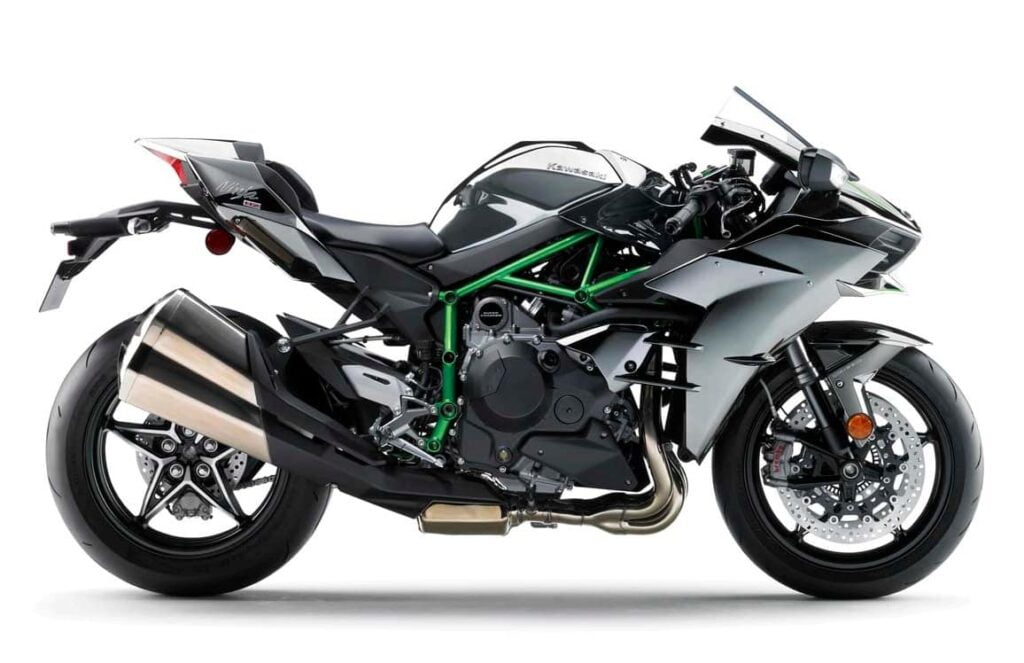
The Ninja/Z 300-500 motorcycles sit below many other ranges of Ninja/Z:
- The supercharged H2 line (see the guide here)
- The sport touring range (the Ninja 1100 and 1000)
- The supersport 900/1000 cc range (the ZX-9R and ZX-10R)
- The 636 range (now discontinued) of inline four-cylinder sport bikes
- The 650 range (also parallel twins) of everyday sport bikes
In fact, the 300-500 be right at the bottom if it weren’t for the diminutive Z125 (there’s no Ninja 125).
But that doesn’t matter, because even though I don’t have the figures, I’m fairly confident that the 300-500 range would be the highest sellers Kawasaki has. Learner or small-capacity bikes are the biggest market. In the US, there’d be competition with the 650 so I’m not so sure, but other than that, I’m sure I’m right.
A Ninja 300, 400, or 500 is built around access: low weight, low seat height, ordinary running costs, and enough performance to remain useful after the learner period.
The naked Z models use the same engine and basic frame as the corresponding Ninja. They lose the full fairing and screen, gain wider one-piece handlebars, and usually weigh a few kilograms less. Around town they feel even easier to steer. At sustained highway speed, the Ninja’s wind protection wins.
But because of the similarities, we often think of the Ninja and Z bikes together — what you choose is mostly up to your personal preferences about riding near you.
The Ninja 250R before the Ninja 300
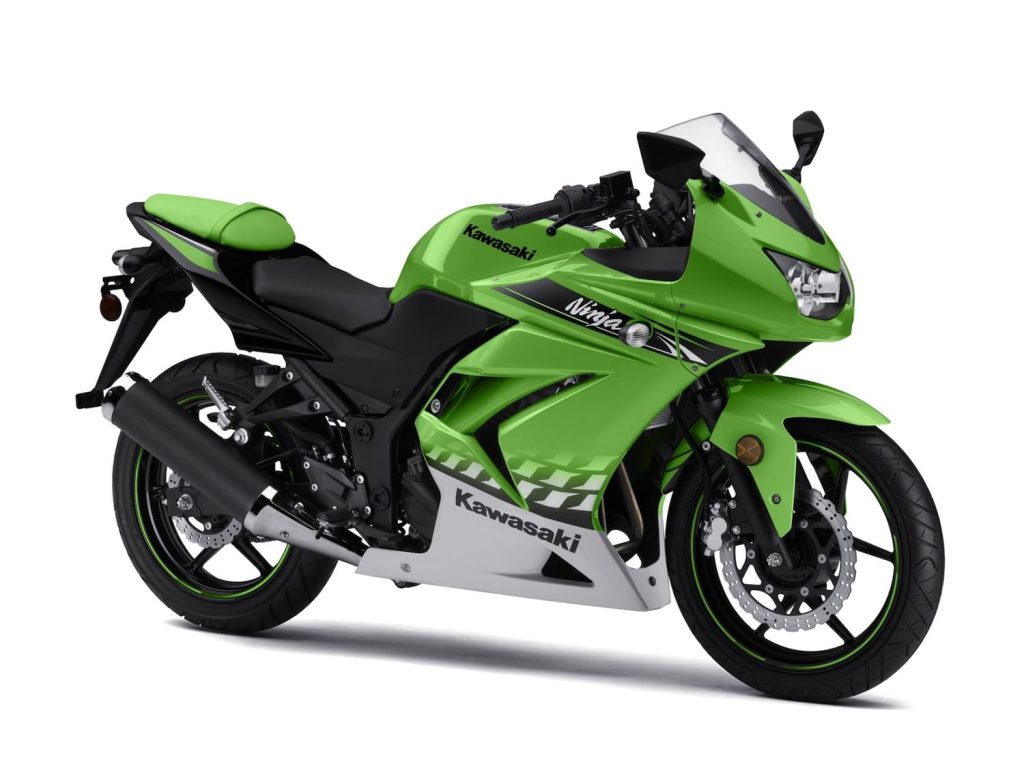
For decades, the answer to “What bike should I get?” was a Turbo ‘Busa Ninja 250.
Kawasaki had been making the Ninja 250 since 1986. From the beginning, it was a learner-focused, easy-to-ride sport bike with enough good looks to keep you looking cool but with an accessible riding position and easy power delivery.
The Ninja 250 was easy to recommend as a learner bike because it wasn’t just easy to ride, it was also FUN. Something about the way the revs soared above 10,000 made it feel like a tiny jet plane. I had a blast on my friend’s one when I borrowed it for a few weeks (ok, not really, he just didn’t have a garage, and I took it out… what, I had to circulate the oil!). I also had a couple of old Ducatis in the garage but something about the Ninja just felt so playful. I wanted to wring it out.
Below is a quick overview of how the Ninja 250 evolved.
1986-1987 Ninja 250R (EX250-E): The compact original
The first US-market Ninja 250R arrived for 1986 as the EX250-E. Its basic recipe already contained the line’s long-term character: a liquid-cooled, dual-overhead-cam, eight-valve parallel twin; six-speed transmission; full fairing; and a willingness to rev that made the small capacity entertaining rather than merely economical.
It was narrow and approachable, but very much a product of the mid-1980s. Small wheels, skinny tyres, simple suspension, modest brakes, and angular bodywork (in not quite a Ferrari kind of way) date it more than the engine concept does. Today it is an enthusiast’s curiosity rather than the obvious cheap first motorcycle, mainly because age and parts condition matter more than the original specification.
1988-2007 Ninja 250R (EX250-F): The 20-year constant
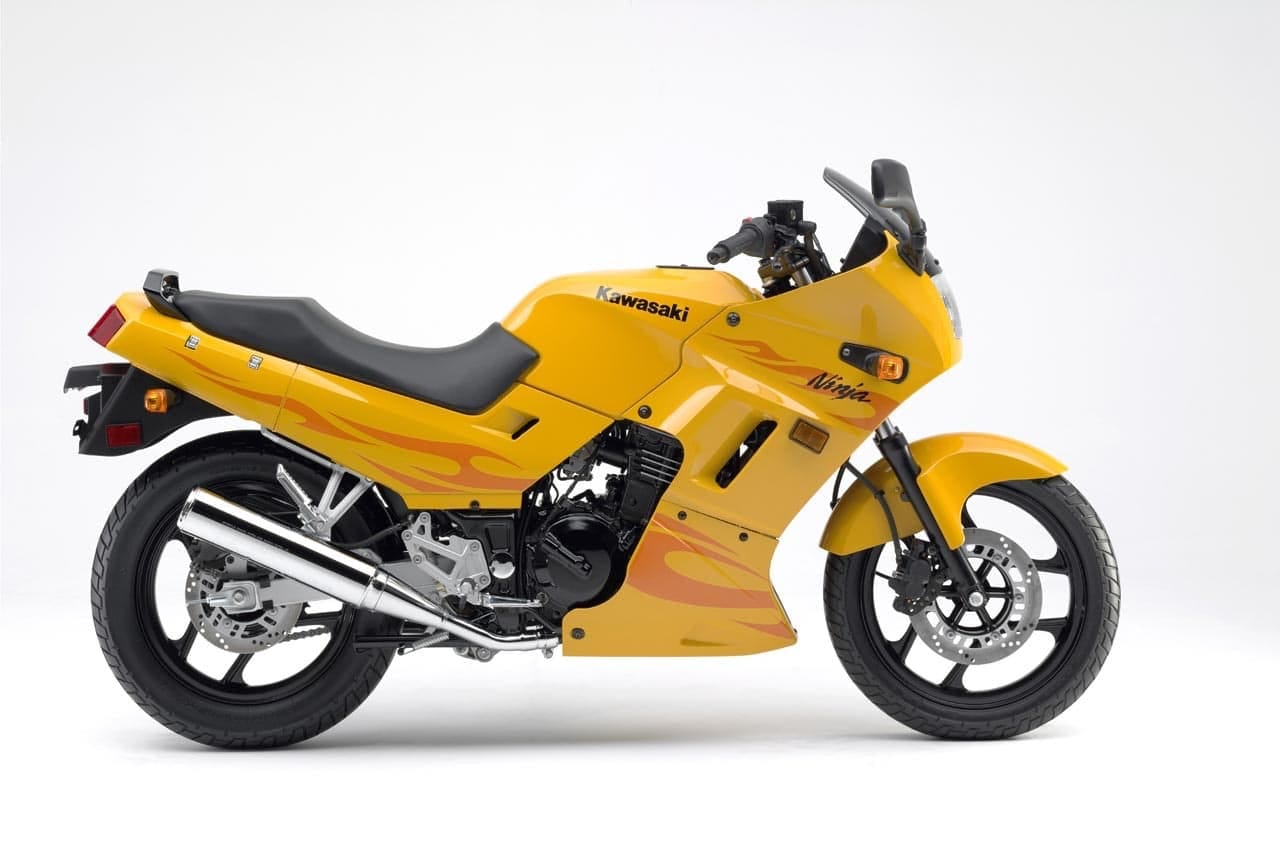
Now here’s a looker! Or maybe I’ve just got retro tastes.
Kawasaki replaced the short-lived EX250-E with the EX250-F for 1988. This became the familiar old Ninja 250: a tiny twin that survived, with detail changes, through the 2007 model year in the US. Two decades is a crazy run for an entry motorcycle.
The EX250-F kept carburettors and an old-school chassis long after larger motorcycles had moved on. That simplicity helped make it cheap, light, and easy to repair. It also means a neglected example can need more work than its purchase price suggests. Dried carburettor passages, cracked intake rubbers, stale brake fluid, old tyres, and corroded electrical connectors are age problems, not charming vintage character.
On the road, the 250 needs to be pushed. There is little useful thrust at low rpm, so brisk progress means keeping the engine spinning and using the gearbox. That teaches good habits—looking ahead, preserving momentum, and choosing a gear—but motorway overtakes need planning.
2008-2012 Ninja 250R (EX250-J): The first global Ninja entry bike
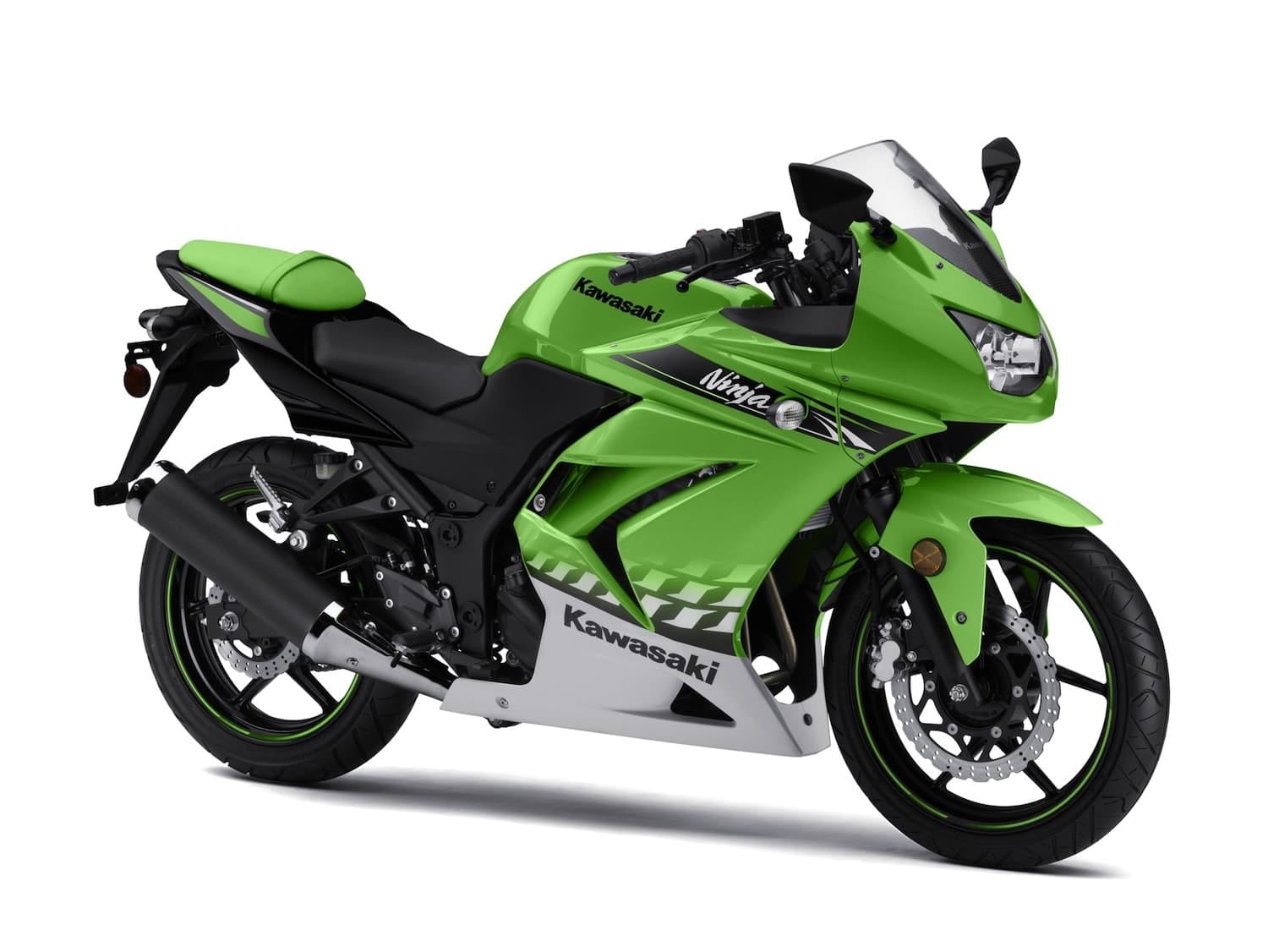
The 2008 redesign is where the modern baby Ninja story begins. Kawasaki gave the 250R sharper full-size Ninja styling, 17-inch wheels, a stiffer frame, larger brakes, wider tyres, and a substantially reworked engine with better low- and mid-range response.
Fuel delivery varied by market. The US model retained twin carburettors, while many other markets started to get fuel injection. That distinction matters when buying parts or diagnosing a cold-start problem. It also explains why two apparently identical 2010 Ninja 250Rs may have different intake hardware.
The 2008 bike was physically bigger and more polished than the EX250-F, but it still made its fun near the top of the tachometer. Kawasaki had established the formula it would refine from then on: authentic sport-bike styling, forgiving geometry, a low 785 mm (30.9 in) seat, and a small parallel twin that preferred revs.
Ninja 250, 300, 400, and 500 history in brief
Production dates vary by country. The table uses the main Western-market runs; the Ninja 300 remained in production much longer in India and a 250 cc version continued in displacement-sensitive Asian markets.
| Generation | Main model years | What changed | Best reason to buy |
|---|---|---|---|
| Ninja 250R EX250-E | 1986-1987 | First liquid-cooled, DOHC parallel-twin Ninja 250R | Historic interest |
| Ninja 250R EX250-F | 1988-2007 | Long-running carburetted platform and revised body/chassis | Very cheap, simple mechanical project |
| Ninja 250R EX250-J | 2008-2012 | Modern styling, 17-inch wheels, stronger chassis and brakes; EFI in many markets | Classic small-bike revs with modern proportions |
| Ninja 300 / Z300 | Ninja: 2013-2017 US, longer elsewhere; Z: roughly 2015-2018 | 296 cc, fuel injection, assist/slipper clutch, optional ABS, wider rear tyre | Lowest-cost modern used choice |
| Ninja 400 / Z400 | Ninja: 2018-2023; Z: 2019-2023 | New 399 cc engine, trellis frame, major weight loss, 41 mm fork, LED lighting | Best balance of revs, power, weight, and used value |
| Ninja 500 / Z500 | 2024-present | 451 cc long-stroke engine, new bodywork and lights, connected display; TFT on SE | Best new everyday version |
2013-2017 Kawasaki Ninja 300 and Z300: Much more than a bored-out 250
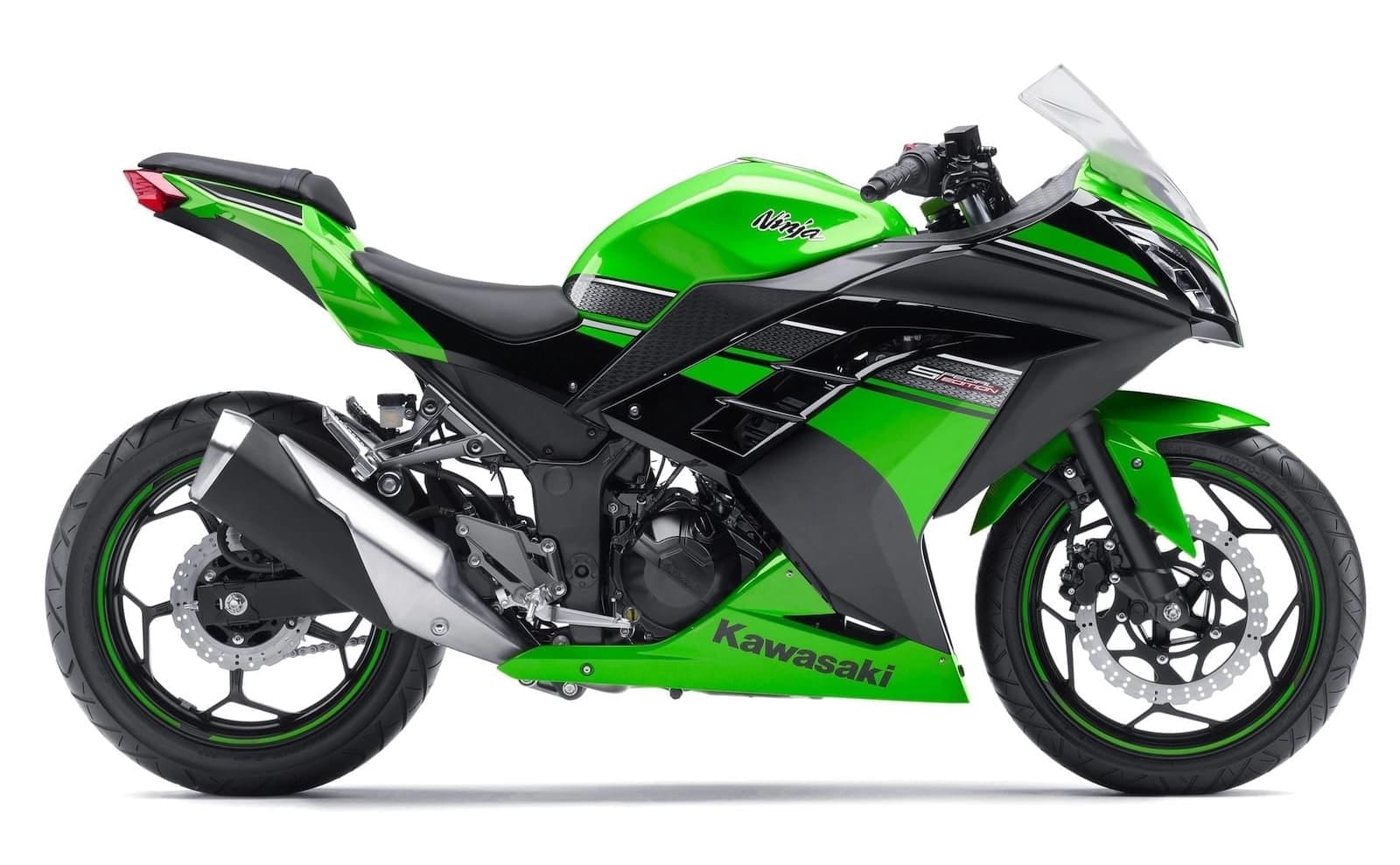
Kawasaki launched the Ninja 300 for the 2013 model year. The 296 cc engine retained the 250’s 62 mm bore but increased stroke from 41.2 to 49 mm. Claimed output rose to 29 kW (39 hp) at 11,000 rpm and 27 Nm (19.9 lb-ft) at 10,000 rpm.
The longer stroke gave it more drive without removing the small-bike appetite for revs. Kawasaki’s own development targets were specific: add 10 km/h to maximum speed, cut 0-400 m acceleration by 0.7 seconds, and let the bike pull in one gear higher than its predecessor. Those goals tell you more than “20 per cent more capacity” does.
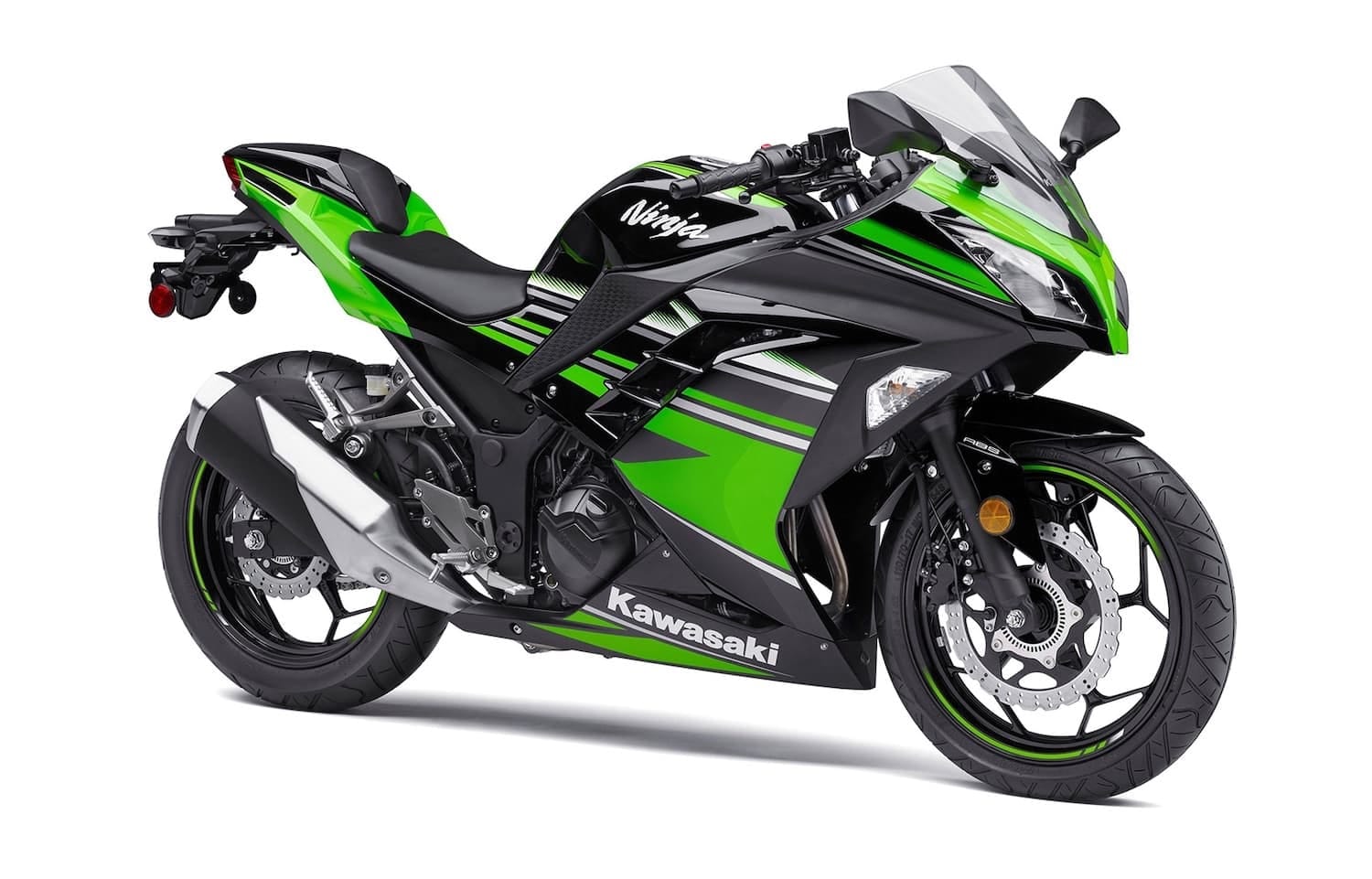
The rest of the motorcycle matured with the engine. The Ninja 300 finally got fuel injection, an assist-and-slipper clutch, a digital speedometer paired with an analogue tachometer, a 140-section rear tyre, improved heat management, and optional ABS (standard in some places). The clutch used a cam to reduce lever effort while letting the plates slip under strong back-torque, making an abrupt downshift less likely to hop the rear tyre.
The frame was still a steel diamond design and the suspension stayed simple: a 37 mm conventional fork and preload-adjustable Uni-Trak shock. The Ninja 300 therefore feels more substantial than the old 250R, but not dramatically sharper. Its 172 kg (379 lb) curb mass is reasonable, but the later Ninja 400 would make it look heavy.
The Kawasaki Z300
The Z300 translated the same 296 cc platform into Kawasaki’s angular “Sugomi” naked-bike styling. It uses a wider handlebar, minimal wind protection, and less bodywork. Power delivery is effectively the same; the difference is in leverage and air pressure. The Z feels lighter in slow traffic and more exposed above about 100 km/h (62 mph).
The Z300 is less common than the Ninja in many used markets. That can make it either a bargain or an awkward search for model-specific cosmetic parts. Mechanically, the shared engine and service parts keep ownership straightforward.
2018-2023 Kawasaki Ninja 400 and Z400: The big leap
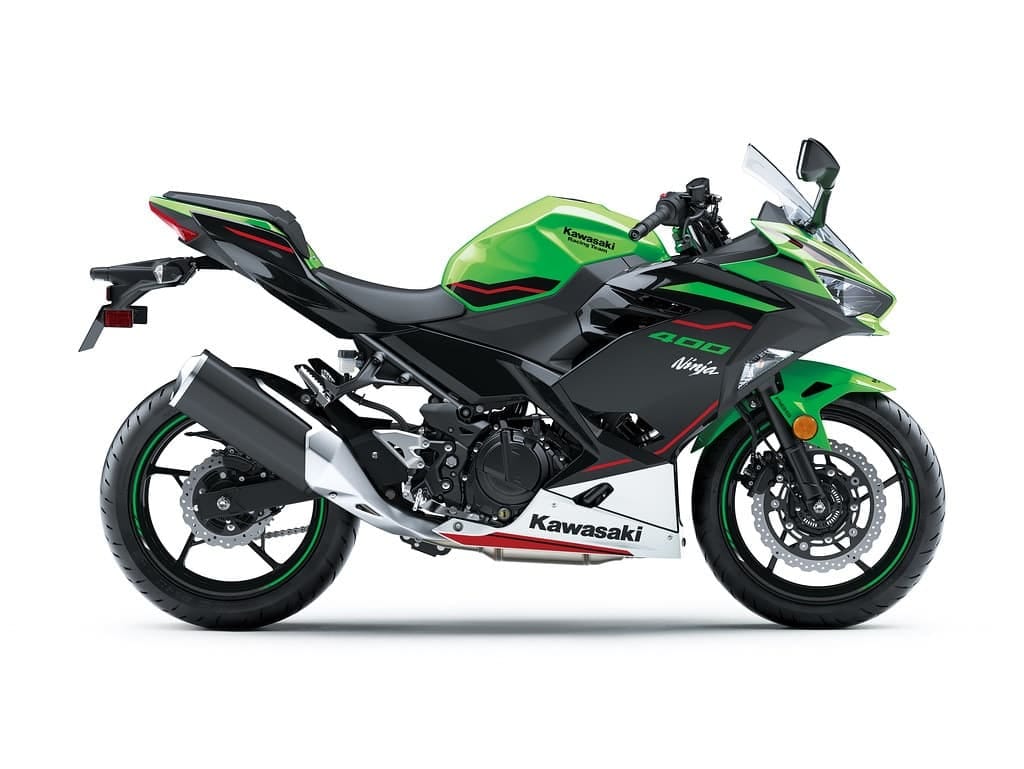
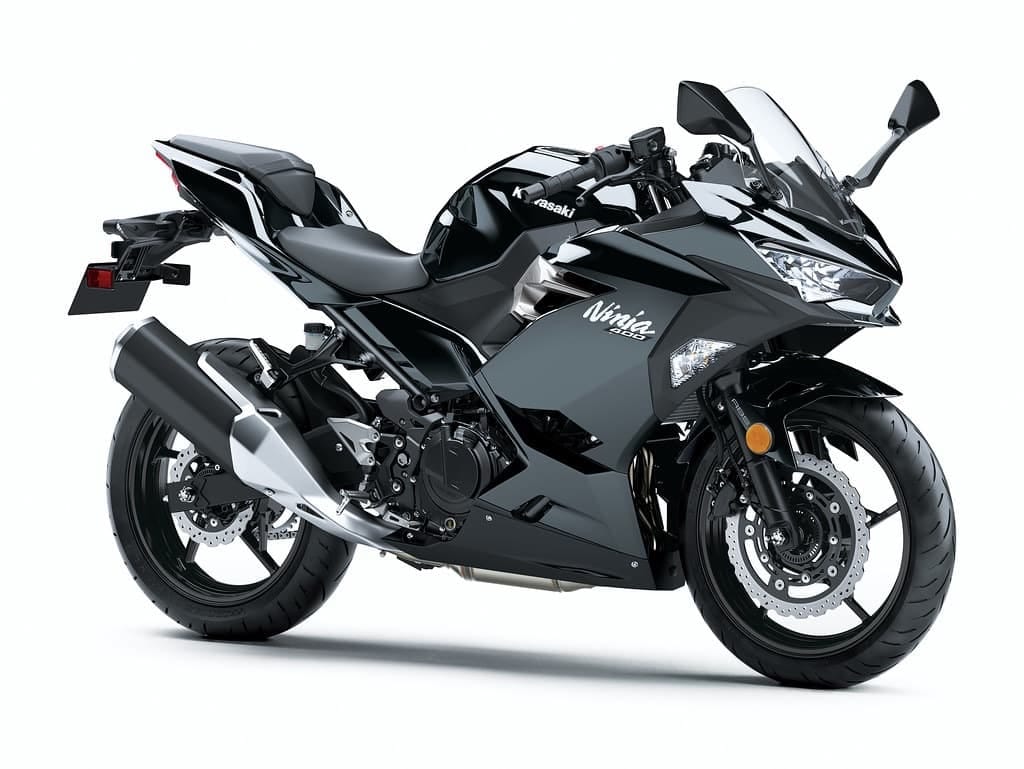
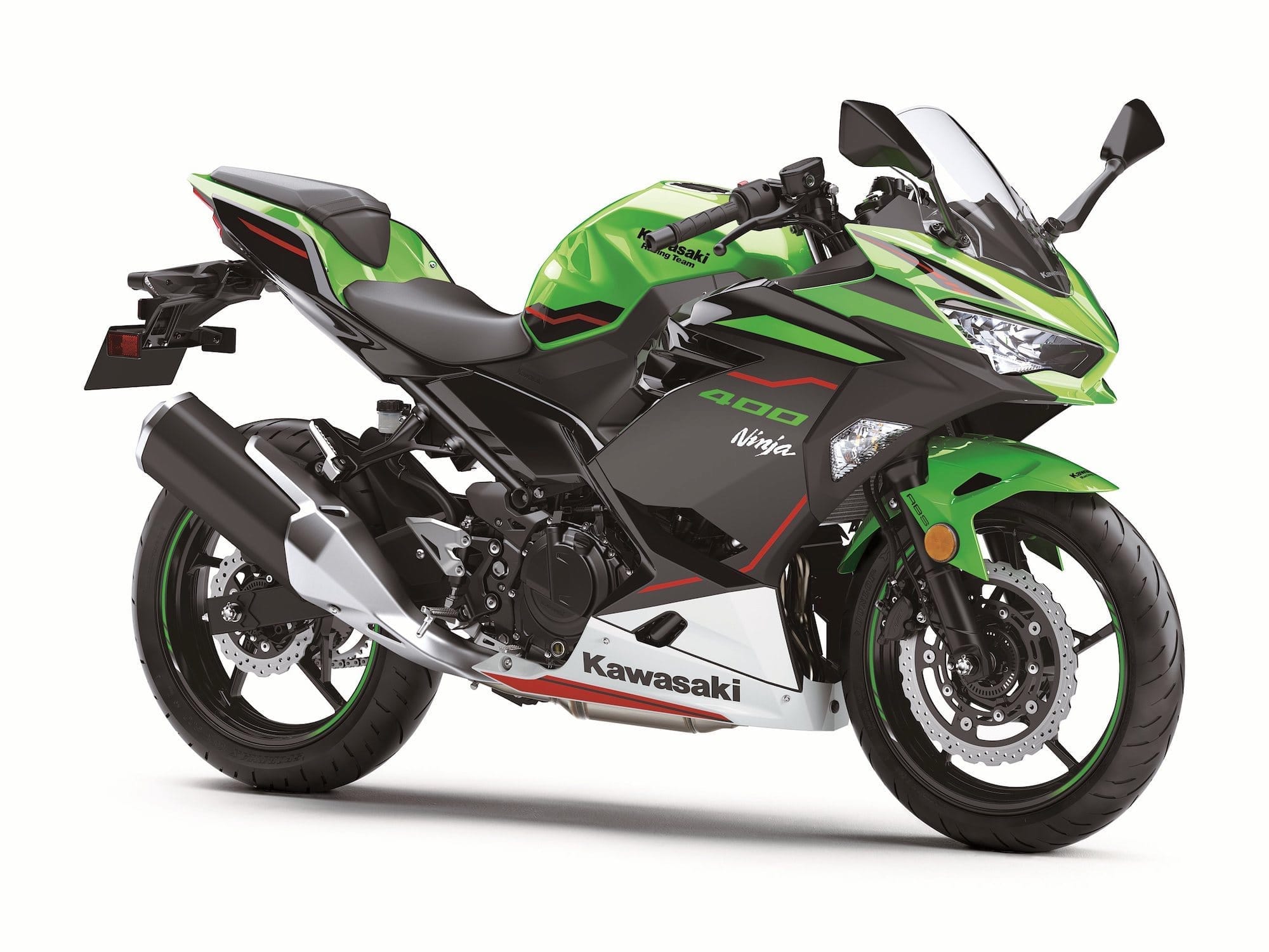
The Ninja 400 was not a further stretch of the 300. Kawasaki designed a new 399 cc engine and a new trellis frame, then packaged them in a body based on the new-market Ninja 250. The result was both stronger and lighter.
Bore grew to 70 mm and stroke to 51.8 mm. Full-power versions were rated at about 35 kW (47 hp) at 10,000 rpm and 37 Nm (27.3 lb-ft) at 8,000 rpm. More importantly, the Ninja 400 weighed about 168 kg (370 lb) ready to ride—around 4 kg (9 lb) less than the Ninja 300 despite the larger engine.
You got that right. More power, more torque, less weight. This makes the Ninja 400 an easy pick, and it means that there just aren’t many Ninja 300s around.
The high-tensile-steel trellis frame uses the engine as a stressed member. The fork grew from 37 to 41 mm, the front disc from 290 to 310 mm, the rear tyre from a 140 to 150 section, and the headlights became LEDs. The dashboard kept an analogue tachometer with an LCD information panel.
This is the generation that turned the baby Ninja into a credible lightweight track-day platform. It still has budget suspension and a single two-piston front caliper, but it changes direction easily, carries corner speed, and makes enough power that an experienced rider can concentrate on braking and lines rather than simply waiting for the next straight to end.
The Kawasaki Z400
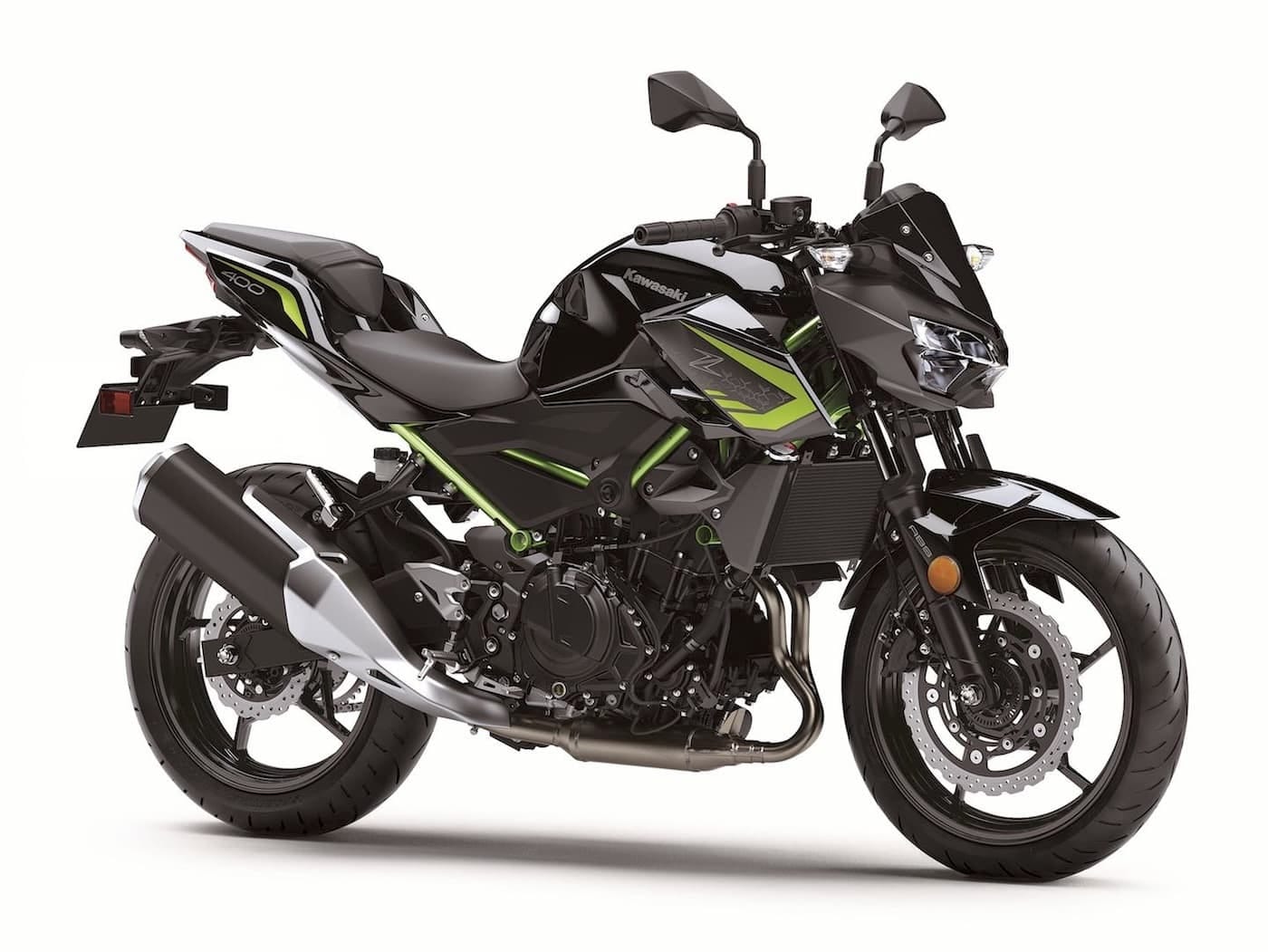
The Z400 arrived a year after the Ninja in several markets. At roughly 167 kg (368 lb), it is slightly lighter and feels more immediate at the handlebar. Its upright position makes commuting easier, while the lack of a screen makes a long freeway run noisier and more tiring.
If you are buying used, the Z400 often costs less than a comparable Ninja 400 because the fairing carries more showroom appeal. Mechanically, neither is the inferior choice. Pick the body style that suits where you ride.
2024-present Kawasaki Ninja 500 and Z500: Same light chassis, longer-stroke engine
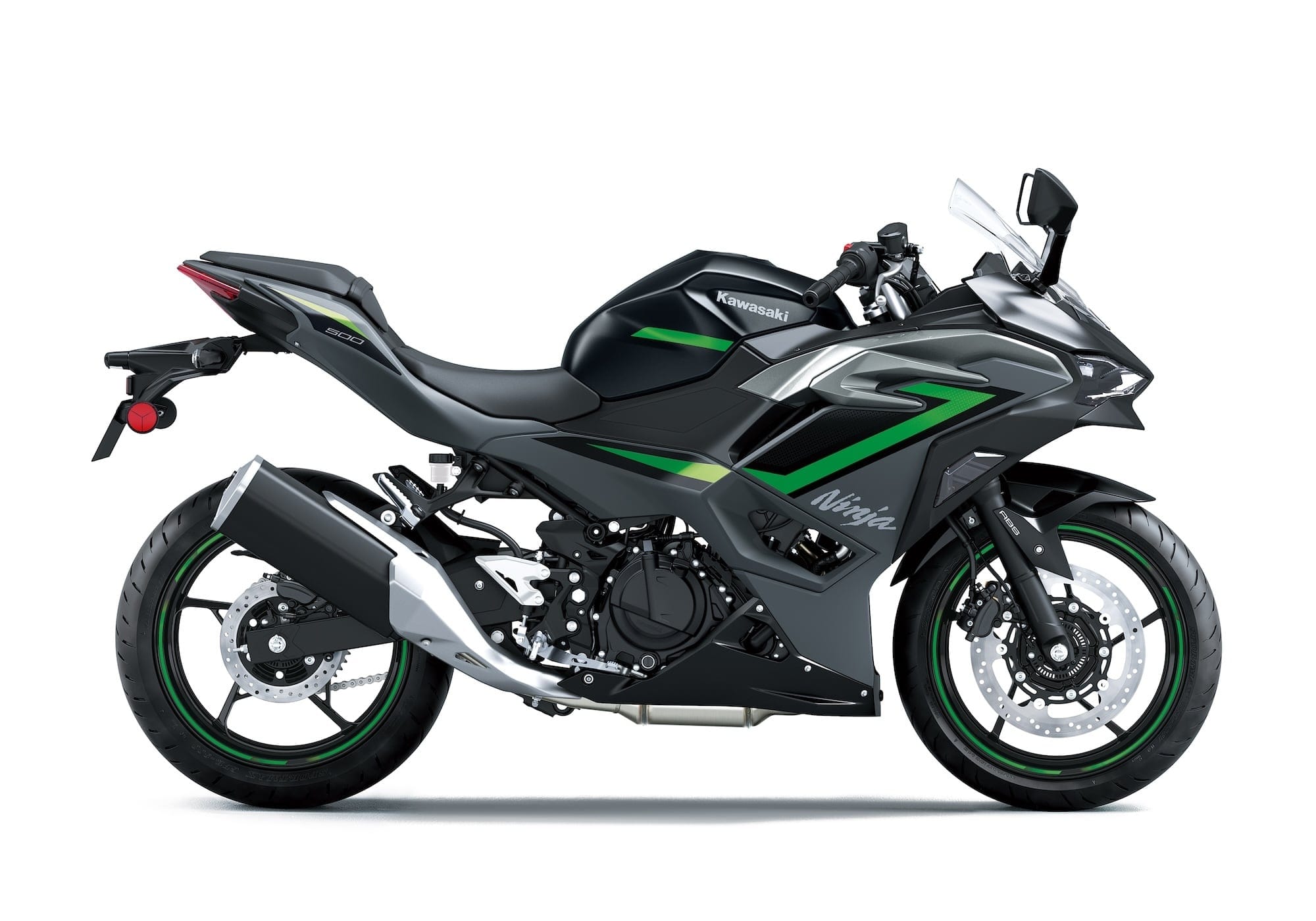
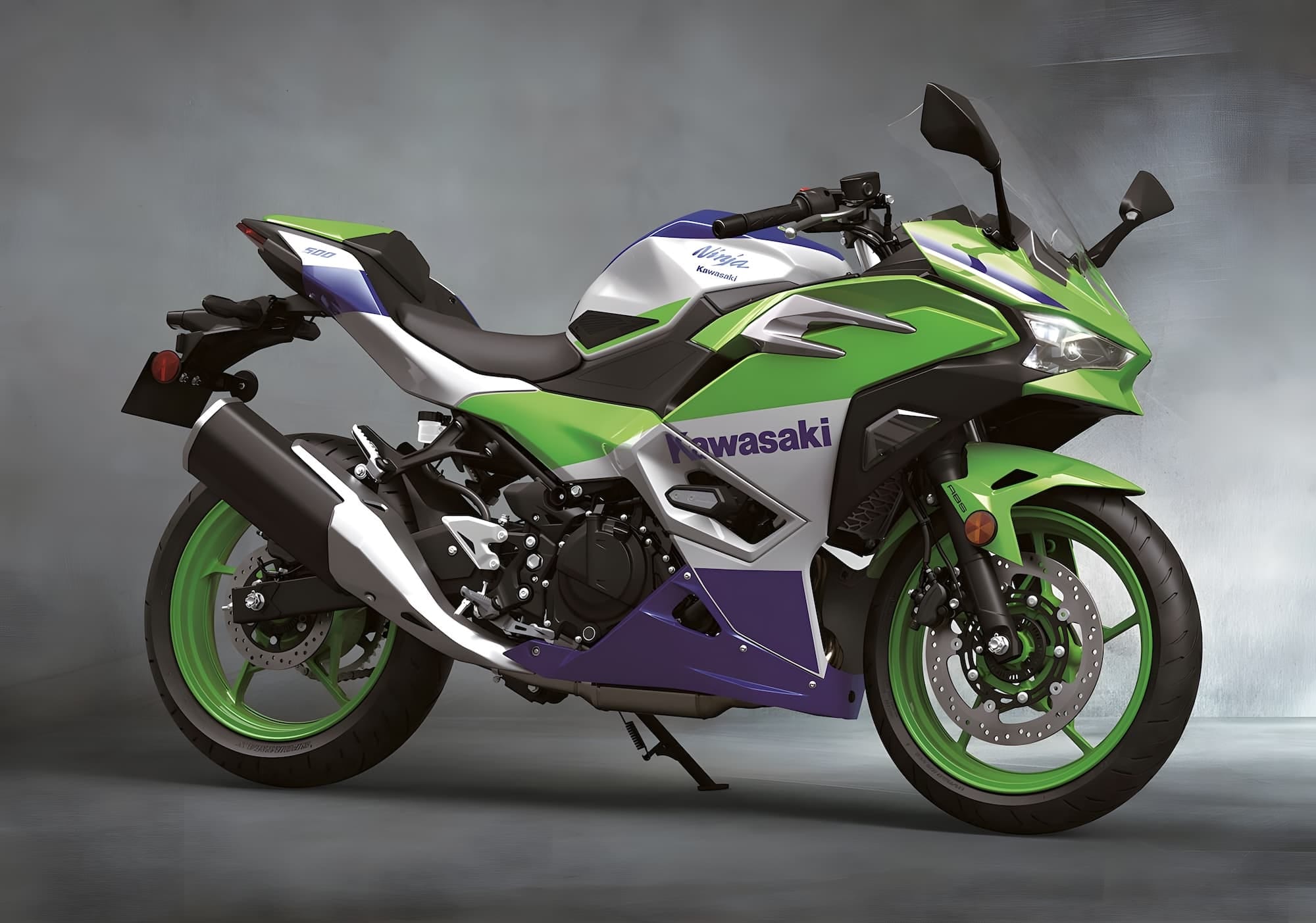
The modern Ninja 500 is unrelated to the old GPZ500S / EX500, which Kawasaki also sold as the Ninja 500 and Ninja 500R from the late 1980s into the 2000s. The reused name is convenient for marketing and inconvenient for parts searches. Add the year or model code whenever you order anything.
For the new 500, Kawasaki kept the 400’s 70 mm bore and lengthened the stroke from 51.8 to 58.6 mm, taking capacity to 451 cc. The frame-related specification carries over closely from the Ninja 400 and Z400. The Ninja 500 therefore weighs 171 kg (377 lb), only 3 kg (7 lb) more than its predecessor.
There are two important output specifications. Full-power models produce 38.3 kW (51.3 hp) at 10,000 rpm and 42.6 Nm (31.4 lb-ft) at 7,500 rpm. The A2/Australian specification is rated at 33.4 kW (45 PS) at 9,000 rpm and the same 42.6 Nm at a much lower 6,000 rpm. This is why an American review may describe the 500 as still willing to rev, while an Australian rider notices that the useful work arrives earlier.
The standard model has a high-contrast LCD dash with smartphone connectivity. SE equipment varies by country, but can include a colour TFT, Kawasaki’s KIPASS proximity key, USB-C outlet, frame sliders, a larger windscreen, radiator screen, and cosmetic trim. ABS also varies by trim and market. The base motorcycle does not have traction control or an IMU.
The Kawasaki Z500
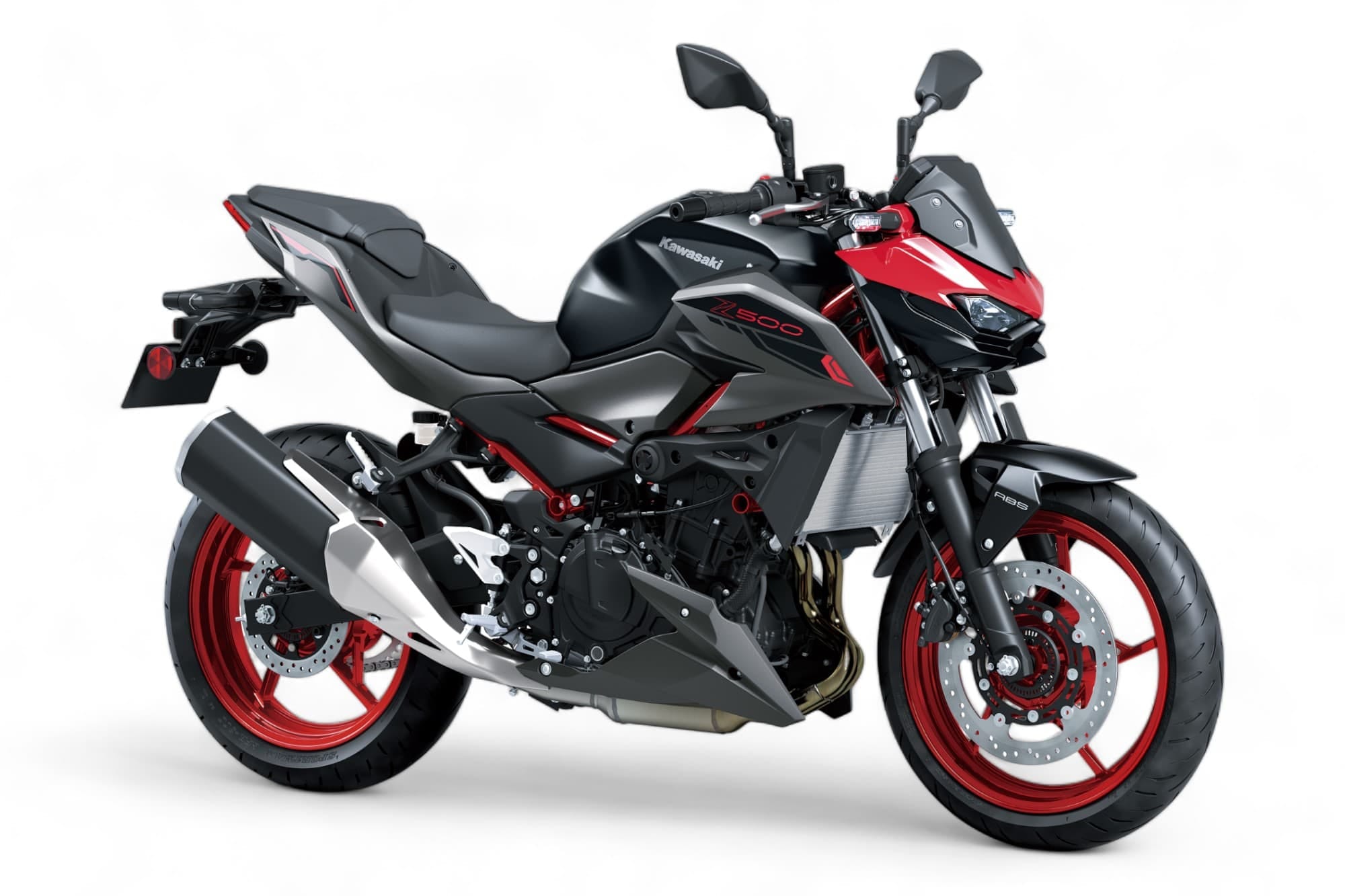
The Z500 uses the same 451 cc engine and closely related chassis in a 167 kg (368 lb) naked package. Kawasaki gave it a new compact headlight and the same connected instruments. The useful distinction remains simple: Z for wider bars and city leverage; Ninja for wind protection and a calmer highway ride.
Comparing the engines of the 250, 300, 400, and 500
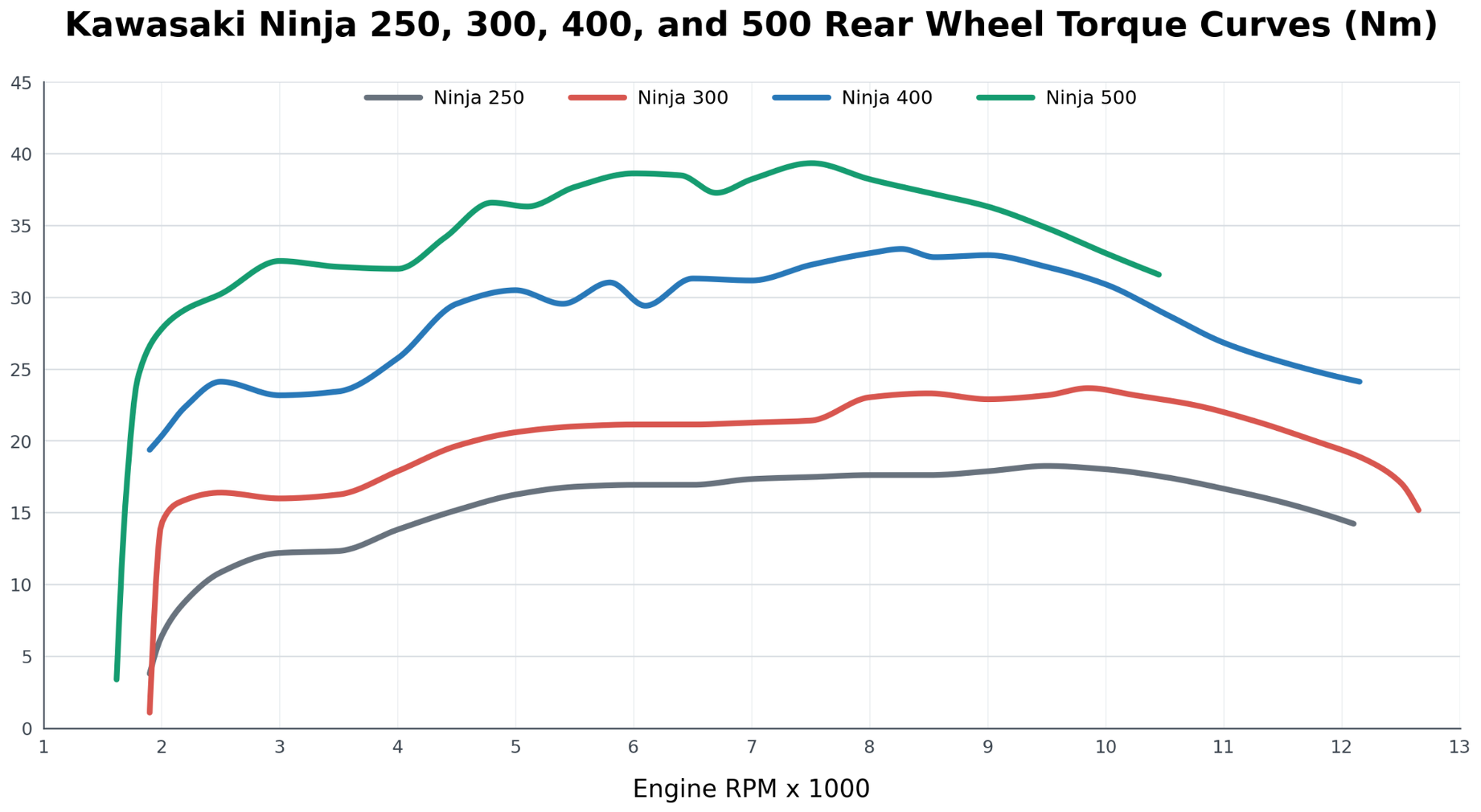
Every motorcycle in this lineage uses a liquid-cooled, dual-overhead-cam parallel twin with four valves per cylinder and a six-speed gearbox. They also use a conventional 180-degree crankshaft: one piston is at top dead centre when the other is at bottom dead centre.
That produces one firing interval after 180 degrees of crank rotation and the next after 540 degrees. It is not the loping 270-degree arrangement now common in bikes such as the Aprilia RS 457 and CFMOTO 450SS. Kawasaki’s 180-degree layout feels smoother and busier, with less of a low-rpm pulse and a stronger sense that the engine wants to spin.
The progression from 250 to 500 came mostly through stroke. The 300 kept the 250’s 62 mm bore and increased stroke. The 400 started again with a 70 mm bore and 51.8 mm stroke. The 500 kept that bore and added 6.8 mm of stroke. A longer stroke does not automatically create low-end torque, but here Kawasaki deliberately tuned the 451 cc engine for more low- and mid-range drive.
The practical result is a clear family gradient. The 250 and 300 ask you to chase the tachometer. The 400 still likes revs but has enough mid-range to overtake without a ceremonial downshift. The 500 gives the strongest roll-on acceleration and asks for fewer gear changes in ordinary traffic.
Ninja 300 vs 400 vs 500 specifications
These are representative full-power Ninja specifications. Z weights are included where they differ. Output, ABS, trim equipment, and even production dates vary by market.
| Item | Ninja / Z300 | Ninja / Z400 | Ninja / Z500 |
|---|---|---|---|
| Engine | 296 cc DOHC 180-degree parallel twin | 399 cc DOHC 180-degree parallel twin | 451 cc DOHC 180-degree parallel twin |
| Bore × stroke | 62 × 49 mm | 70 × 51.8 mm | 70 × 58.6 mm |
| Claimed output | 29 kW (39 hp) at 11,000 rpm | 35 kW (47 hp) at 10,000 rpm | Full: 38.3 kW (51 hp) at 10,000 rpm; A2/AU: 33.4 kW (45 PS) at 9,000 rpm |
| Claimed torque | 27 Nm (19.9 lb-ft) at 10,000 rpm | 37 Nm (27.3 lb-ft) at 8,000 rpm | 42.6 Nm (31.4 lb-ft) at 7,500 rpm full / 6,000 rpm A2 |
| Frame | Steel diamond | High-tensile-steel trellis, stressed engine | High-tensile-steel trellis, stressed engine |
| Fork / rear shock | 37 mm conventional / Uni-Trak, preload | 41 mm conventional / Uni-Trak, preload | 41 mm conventional / Uni-Trak, preload |
| Front brake | Single 290 mm disc, two-piston caliper | Single 310 mm disc, two-piston caliper | Single 310 mm disc, two-piston caliper |
| Rear tyre | 140/70-17 | 150/60-17 | 150/60-17 |
| Seat height | 785 mm (30.9 in) | 785 mm (30.9 in) | 785 mm (30.9 in) |
| Curb mass | Ninja about 172 kg (379 lb); Z about 168 kg (370 lb) | Ninja 168 kg (370 lb); Z 167 kg (368 lb) | Ninja 171 kg (377 lb); Z 167 kg (368 lb) |
| Fuel capacity | 17 L (4.5 US gal) | 14 L (3.7 US gal) | 14 L (3.7 US gal) |
| Tech step | EFI, assist/slipper clutch, optional ABS | LED lights, updated instruments, optional ABS | Connected LCD; TFT/KIPASS on some SE models; optional/standard ABS by market |
What the Ninja 300, 400, and 500 are like to ride
The family resemblance is stronger than the specification changes suggest. All three have a low seat, light clutch, modest steering effort, forgiving geometry, and an upright sport-bike position. They are narrow between the knees and easy to balance at parking speed. None asks a new rider to manage superbike heat, weight, or throttle response.
The suspension is built to a price. It works well on the road at ordinary speeds, but the fork can dive under hard braking and the shock has only spring-preload adjustment. A heavier or faster rider reaches the limits sooner. That is not a fault so much as the boundary of the category.
Ninja 300: Momentum and revs
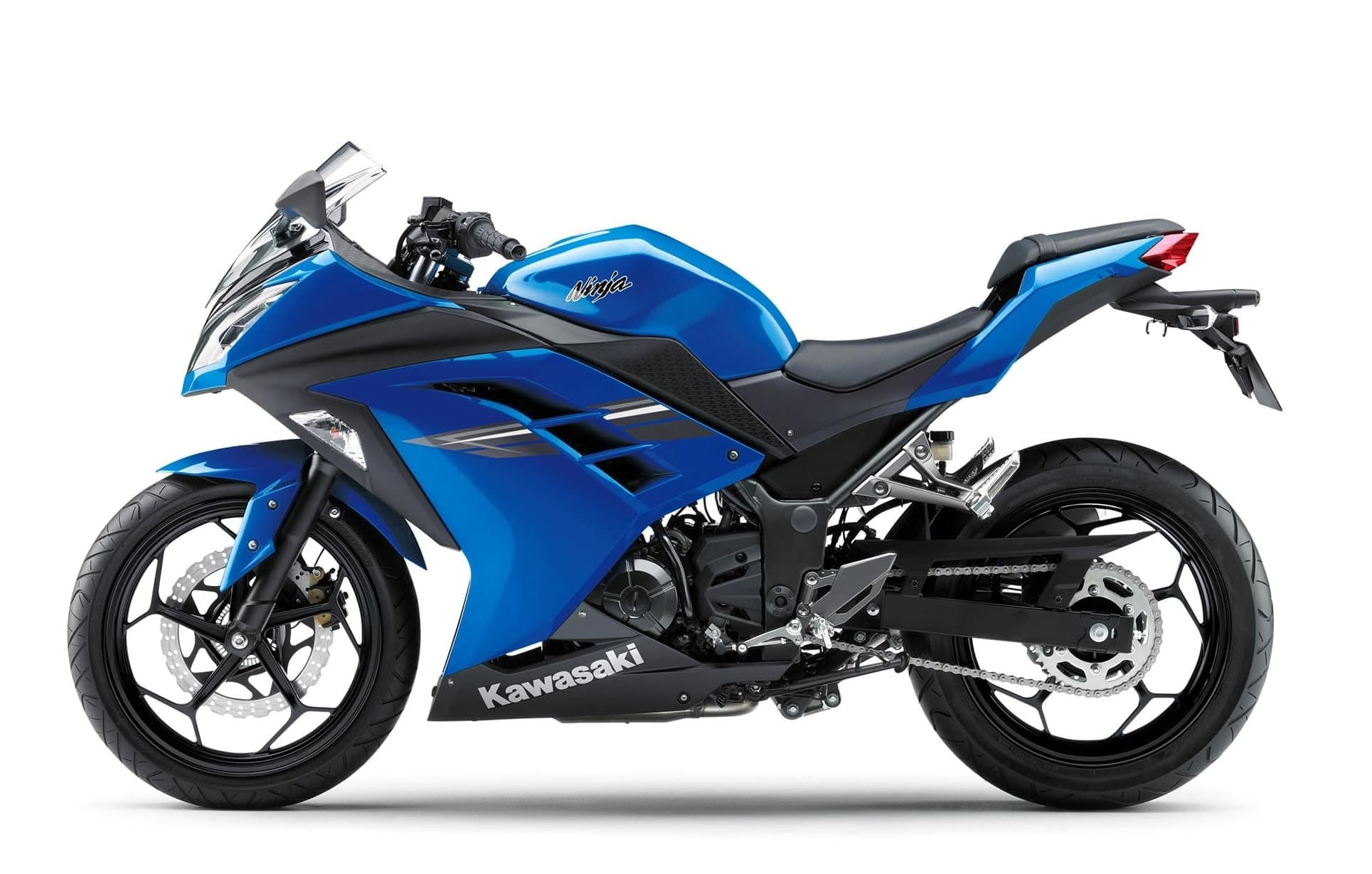
The 300 feels busiest. Below the middle of the tachometer it is polite; above it, the engine becomes smoother and more willing. Highway speed is possible, but acceleration in top gear is modest and headwinds matter. The pleasure comes from using the gearbox and carrying speed rather than opening the throttle and waiting for torque.
Ninja 400: The lively sweet spot
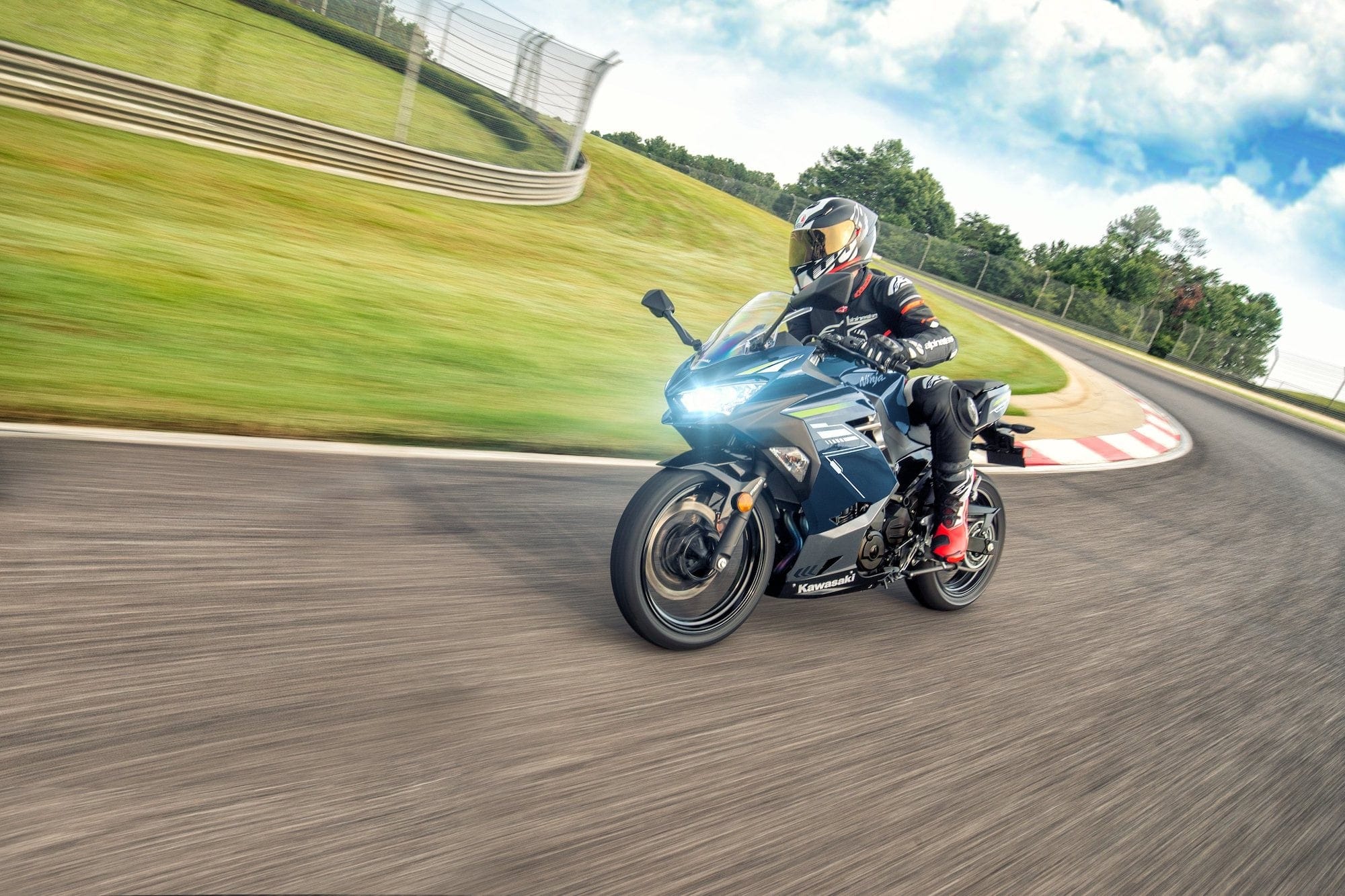
The 400 keeps the same interactive character and removes most of the frustration. It has enough mid-range for city gaps and highway merges, then pulls harder as the revs rise. Because it is lighter than the 300, it also steers with less effort and feels more alert when changing direction.
This is why the 400 became so popular at lightweight track days and club races. It is quick enough to be serious, but slow enough that braking markers, lines, and corner speed remain the main event.
Ninja 500: Fewer downshifts, less frenzy
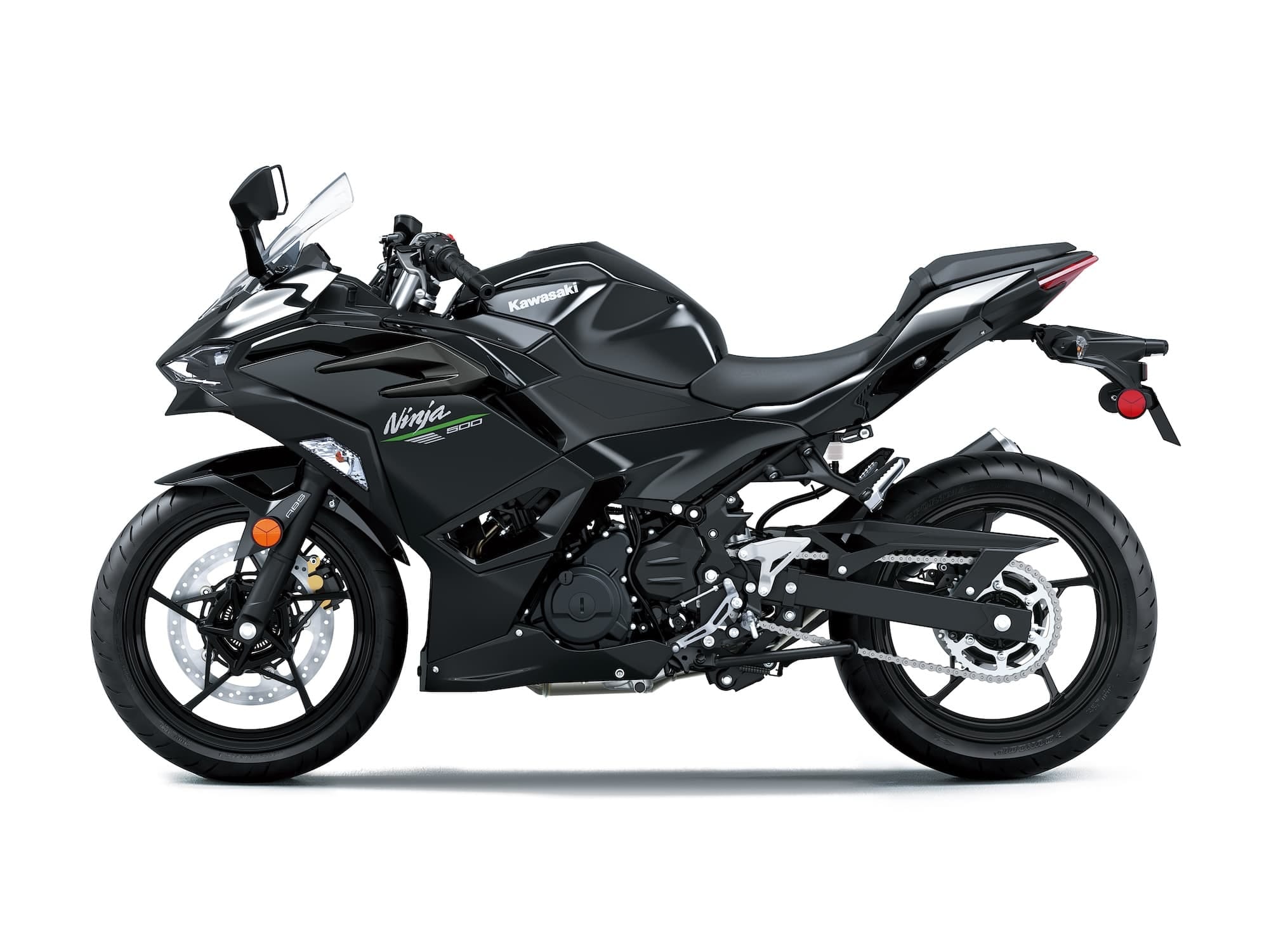
The 500 does not turn the platform into a middleweight bruiser. It simply fills in the lower half of the tachometer. It leaves a junction more decisively, pulls a taller gear through a bend, and responds better when a passenger or incline adds load.
In A2 tune, the lower power and torque peaks make the difference particularly clear: it feels strongest earlier and there is less reason to chase the last thousand rpm. Full-power versions retain more top-end. Either way, the 400 feels a little more eager; the 500 feels easier.
The Z versions sharpen low-speed steering through their wider bars. The trade is wind. If your regular ride includes 30 minutes at 110 km/h (68 mph), choose the Ninja. If it includes filtering, tight turns, and short urban trips, the Z may be the better tool.
Kawasaki Ninja 500 vs Ninja 650
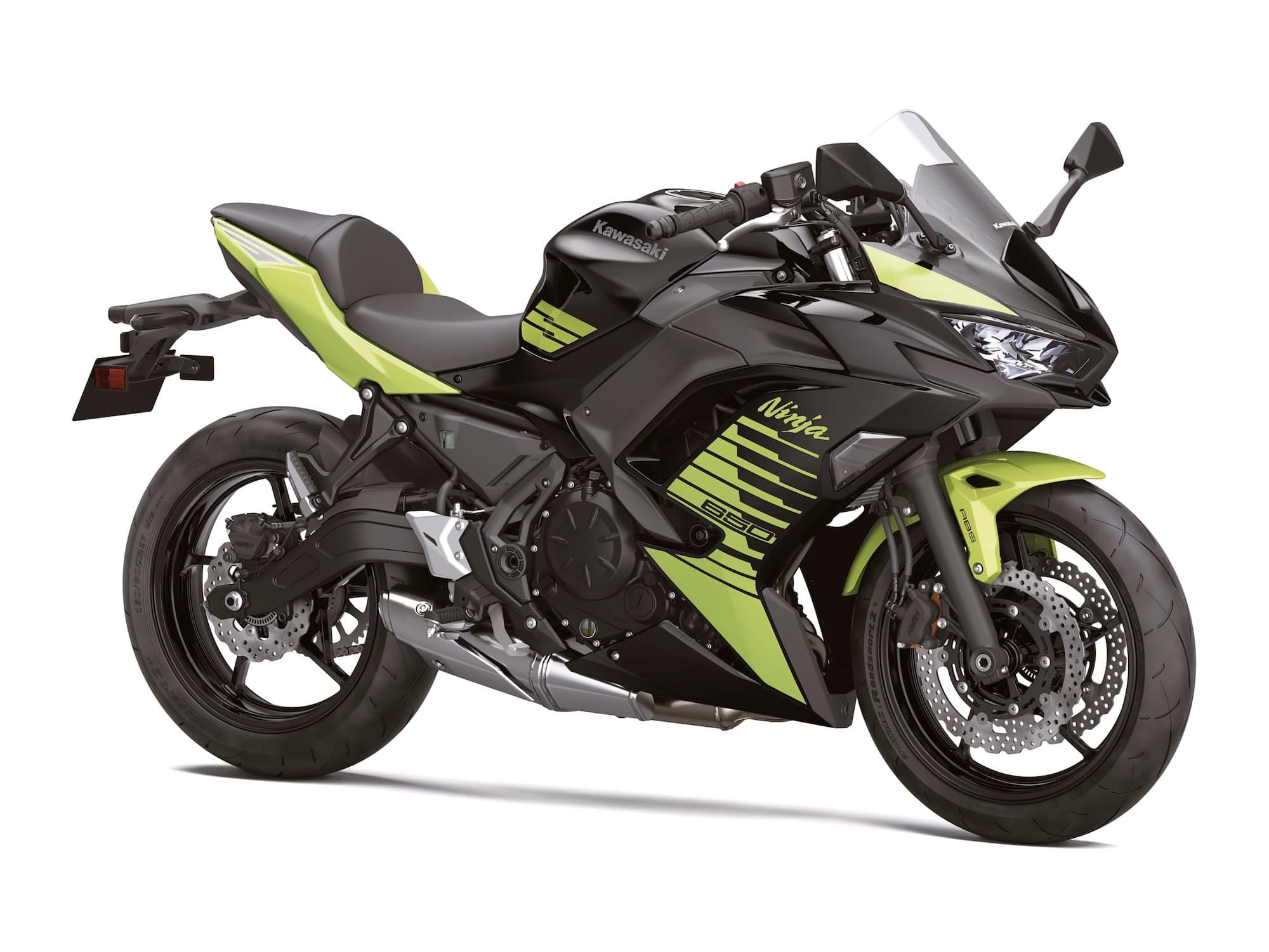
The names suggest adjacent sizes. The motorcycles target different buyers. The Ninja 500 is an entry platform built around minimum mass and cost. The Ninja 650 is a larger all-round road bike with more power, stronger highway performance, better passenger accommodation, and more equipment.
| Item | Ninja 500 | Ninja 650 full power |
|---|---|---|
| Engine | 451 cc parallel twin | 649 cc parallel twin |
| Claimed output | 38.3 kW (51 hp) full power; 33.4 kW (45 PS) A2/AU | 50.2 kW (68 PS) at 8,000 rpm |
| Claimed torque | 42.6 Nm (31.4 lb-ft) | 64 Nm (47.2 lb-ft) at 6,700 rpm |
| Curb mass | 171 kg (377 lb) | 192 kg (423 lb) |
| Seat / tank | 785 mm (30.9 in) / 14 L | 790 mm (31.1 in) / 15 L |
| Front brake | Single 310 mm disc | Dual 300 mm discs |
| Tyres | 110/70 and 150/60 | 120/70 and 160/60 |
| Electronics | ABS by trim; smartphone connection; no traction control | ABS, colour TFT, smartphone connection, KTRC traction control |
| 2026 US MSRP | US$5,399-5,599 non-ABS; US$5,799-5,999 ABS | US$7,599 non-ABS; US$8,199 ABS |
Choose the 500 for commuting, a first sport bike, tight roads, low running cost, or learning at a small circuit. Its 21 kg (46 lb) weight advantage is more useful at walking pace than the 650’s extra power.
Choose the 650 for frequent freeway use, two-up riding, luggage, or stronger roll-on acceleration. The dual front discs, wider tyres, traction control, and larger engine give it more margin when the pace and load rise. It also costs roughly US$2,400 more when comparing the 2026 ABS models.
For an Australian learner, compare the restricted Ninja 650L against the Ninja 500 rather than assuming the bigger number brings the full 50.2 kW output. The 650L still gives you the larger chassis and road presence, but it carries the weight without all of the full-power model’s performance.
Ninja 500 and Z500 vs the modern sub-500 cc competition
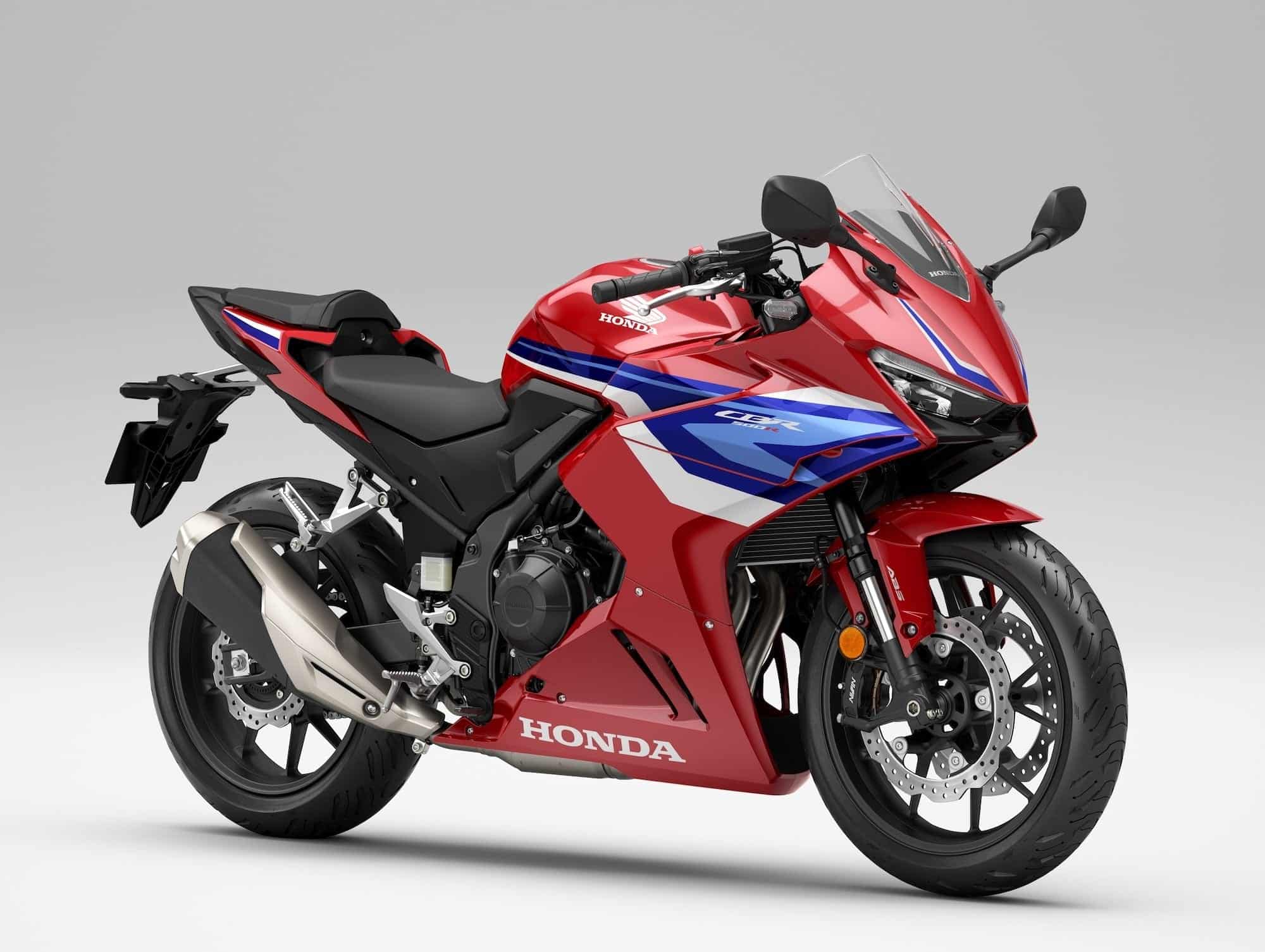
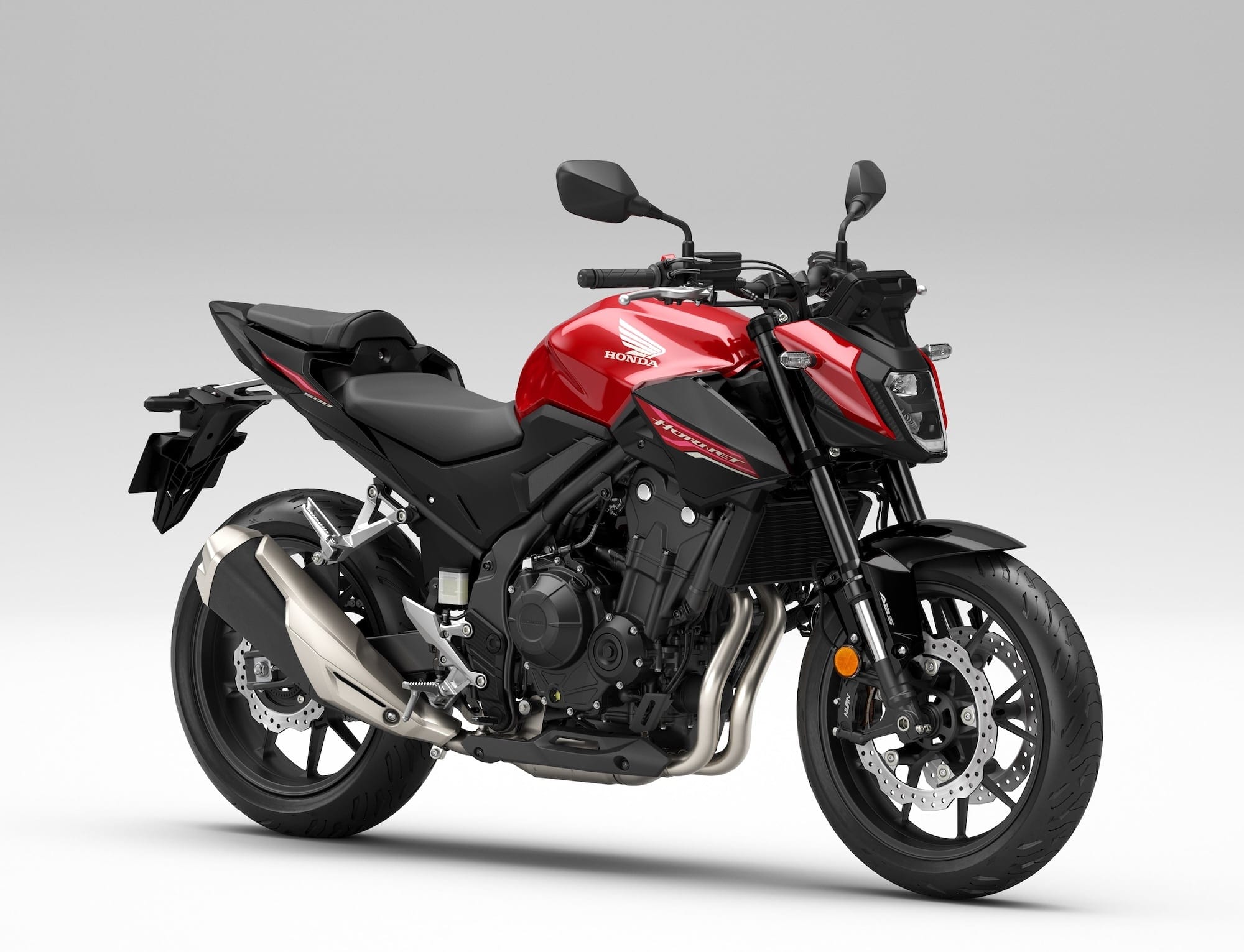
Honda does not sell a “CB500R” naked bike. The current naked model is the CB500 Hornet, formerly the CB500F. It is the natural Z500 rival; the CBR500R is the fully faired Ninja 500 rival.
| Motorcycle | Key figures | Why choose it over the Kawasaki | Why choose the Kawasaki |
|---|---|---|---|
| Honda CBR500R / CB500 Hornet | 471 cc twin; 35 kW (47 hp); 43 Nm; about 421 lb / 188 kg respectively | Longer-stroke road torque, Showa USD fork, stronger front brakes; HSTC/TFT in some markets; bigger-bike stability | About 17-20 kg lighter, more eager steering, cheaper 2026 US CBR comparison, and a livelier engine feel |
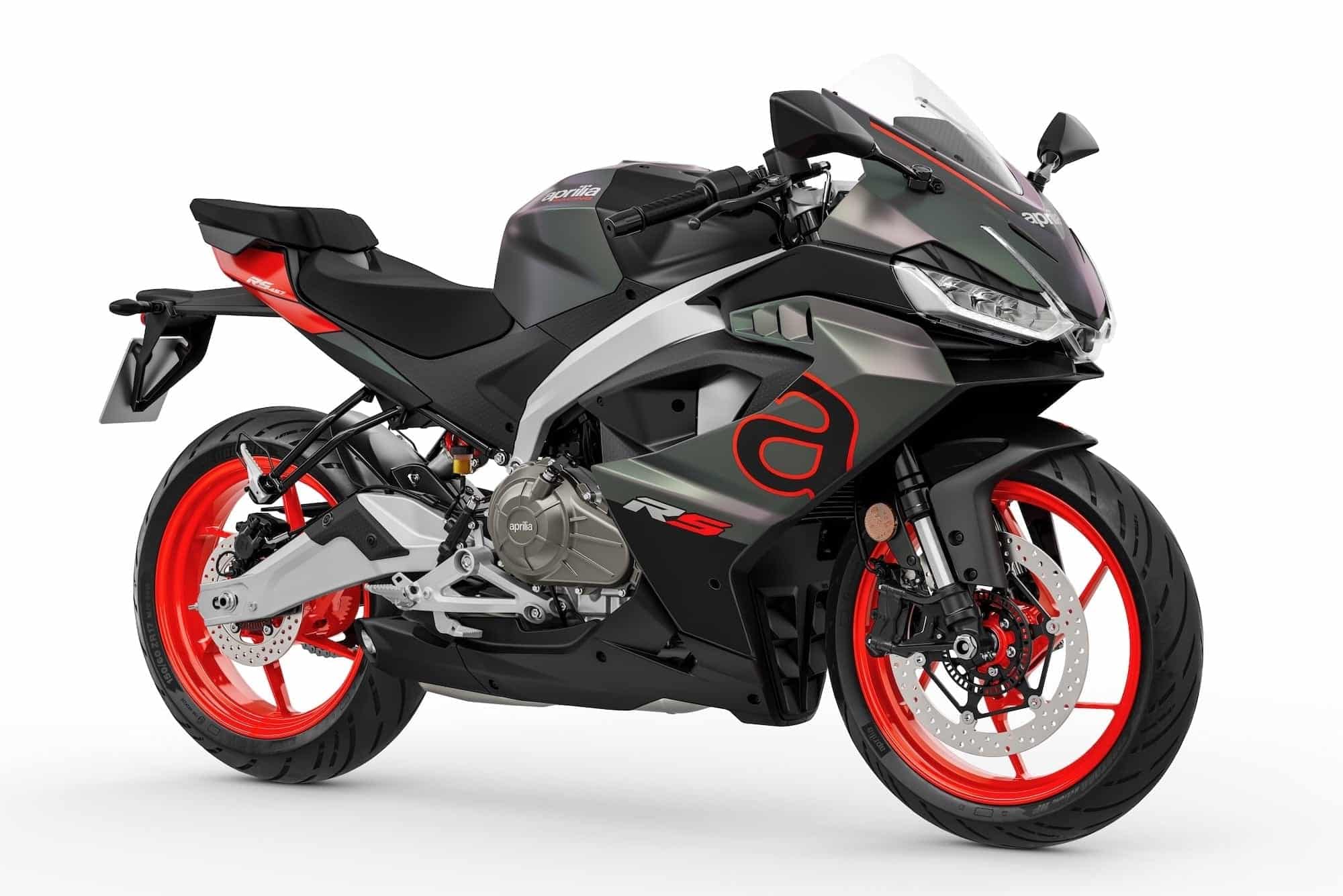
| Aprilia RS 457 / Tuono 457 | 457 cc 270-degree twin; 35 kW (47.6 hp); RS about 175 kg (386 lb) wet | Aluminium frame, ride-by-wire, modes, traction control, more focused chassis | Simpler controls, broad dealer familiarity, lower US entry price, calmer everyday ergonomics |
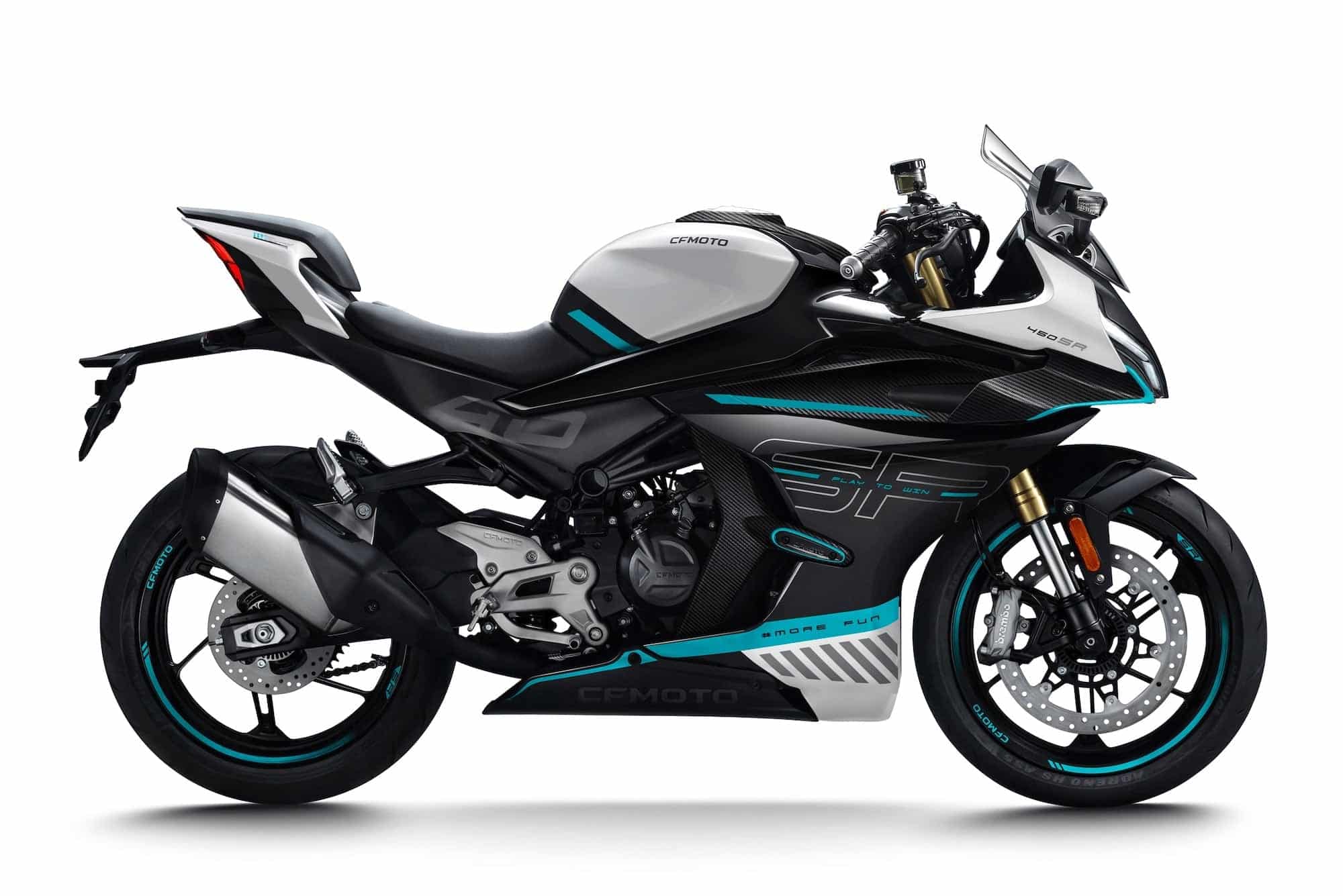
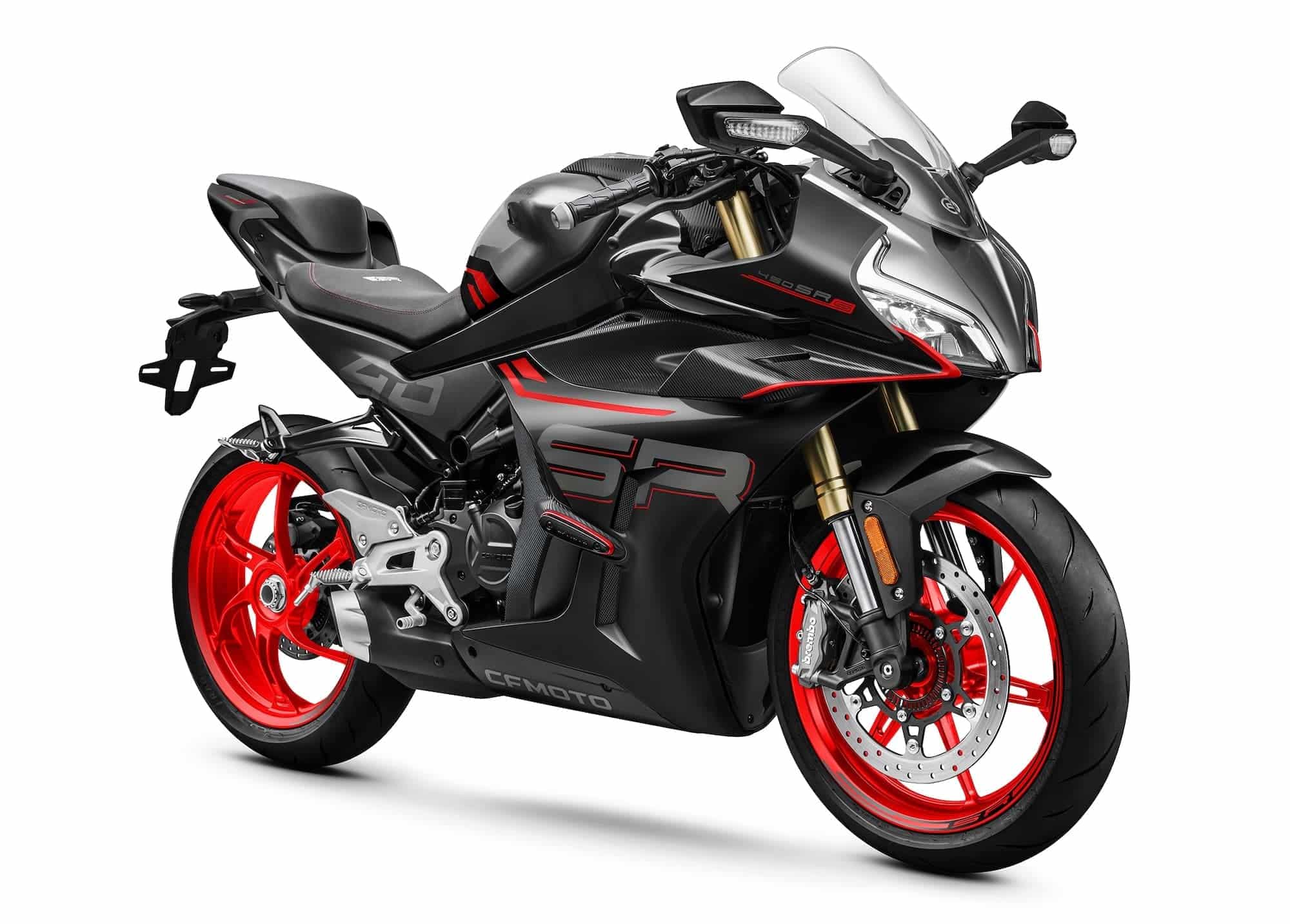
| CFMOTO 450SR / 450SS, 450SR S, and 450NK | 449 cc 270-degree twin; up to 38.1 kW (51 hp); equipment and mass vary by version | More standard equipment, TFT/connectivity, USD fork and stronger branded brakes. The 450SR S adds an adjustable fork, single-sided swingarm, underslung exhaust, revised bodywork, and an upgraded rear brake | Longer-established platform, larger aftermarket, and generally easier resale and parts confidence |
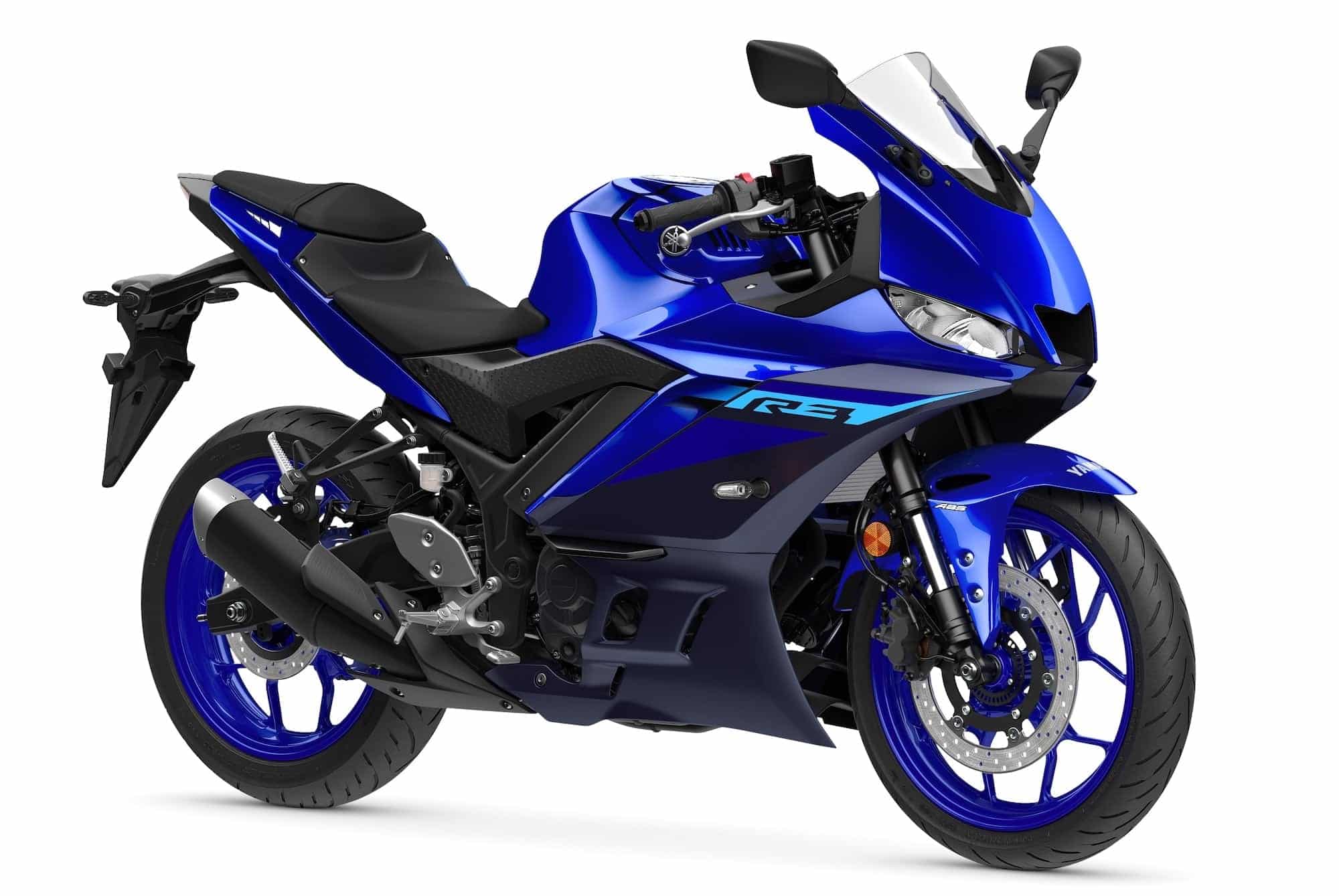
| Yamaha YZF-R3 / MT-03 | 321 cc twin; 30.9 kW (42 PS); 29.5 Nm; about 169 kg (373 lb) | Sweeter high-rpm chase, proven race aftermarket, slightly lower US MSRP | Far more mid-range torque, easier highway overtaking, newer display/connectivity |
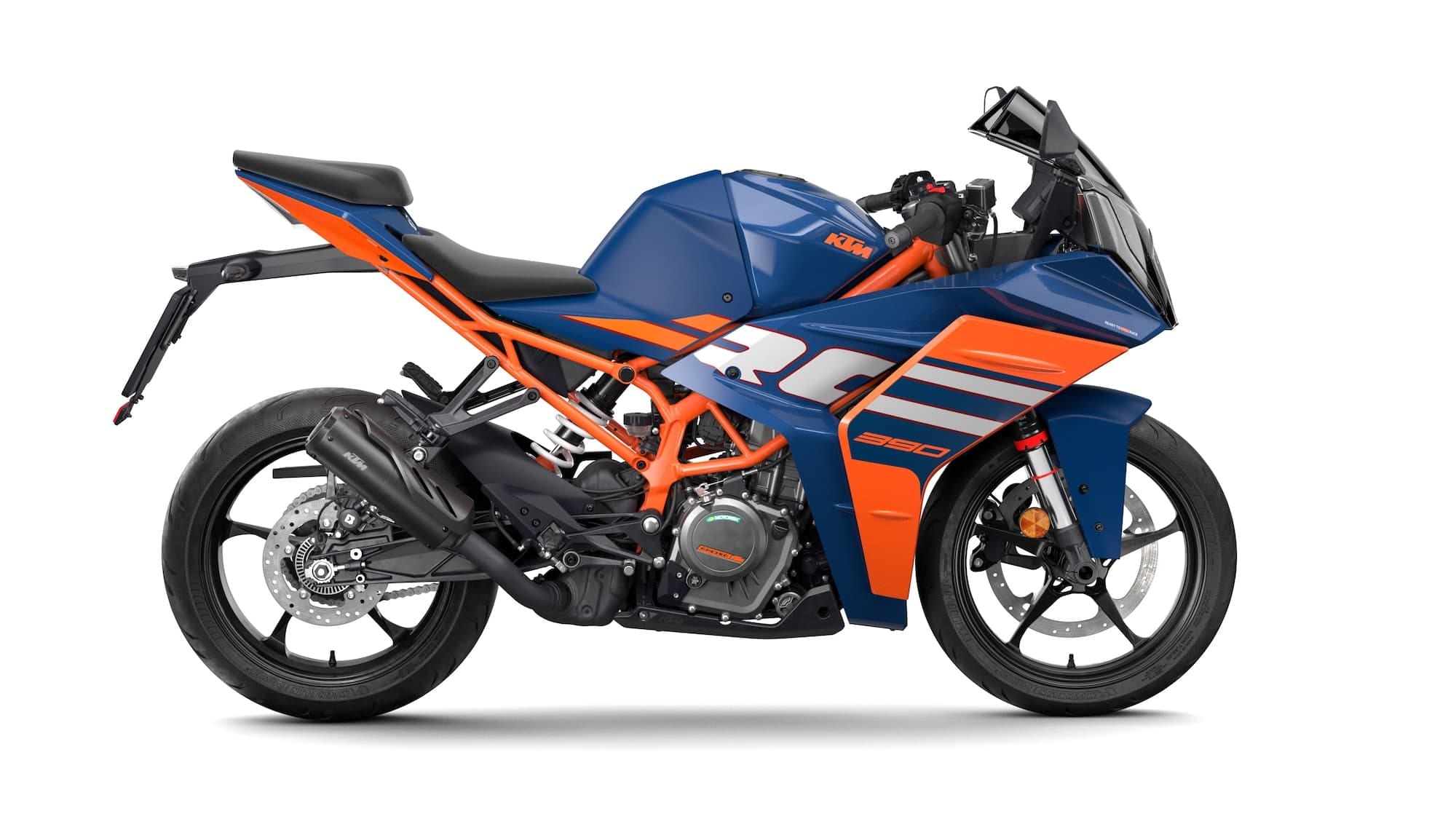
| KTM RC 390 / 390 Duke | Single-cylinder; current Duke 399 cc and about 165 kg (364 lb) wet | Punchy single-cylinder response, adjustable suspension on some versions, richer electronics | Smoother twin, lower seat, more relaxed road manners, less mechanically busy feel at speed |
The Honda is the conservative long-distance choice. It is heavier, but its longer-stroke 471 cc twin reaches 43 Nm at 6,500 rpm, and the chassis feels more planted. The Kawasaki is easier to pick up, turn, and use at low speed. Read the full Honda CBR500R history and buyer’s guide for its generation changes.
The Aprilia RS 457 is the more sophisticated chassis-and-electronics alternative. Its 270-degree parallel twin has a stronger pulse than Kawasaki’s 180-degree engine, while the aluminium frame, ride-by-wire throttle, riding modes, and traction control make it feel closer to a scaled-down modern sport bike.
CFMOTO’s names need some care. The standard 450SR is sold as the 450SS in North America; those are regional names for the same basic model, not two performance tiers. The 450SR S is the higher-spec derivative. It keeps the same basic 449 cc 270-degree twin but adds an adjustable 37 mm fork, single-sided swingarm, underslung exhaust, revised bodywork, and an upgraded rear brake. The standard 450SR/450SS is the closer price rival to the Ninja 500. The 450SR S is the better comparison if you would otherwise spend extra on an SE model or chassis upgrades.
The Yamaha YZF-R3 and KTM RC 390 take opposite routes. The R3 has less capacity and torque, so it asks for revs and clean corner speed much like an older Ninja 300. The RC 390’s single-cylinder engine gives a harder low- and mid-range hit, while its chassis and electronics can feel more track-minded. The Ninja 500 sits between them: smoother and easier than the KTM, but much stronger in everyday use than the Yamaha.
Reliability, maintenance, and used-bike checks
The small Kawasaki twins have a good reputation when serviced, but “beginner bike” often means multiple owners, outdoor storage, low-speed drops, and deferred maintenance. Condition matters more than a small difference in model year.
- Old Ninja 250R: Check cold starting, idle quality, intake rubbers, fuel leaks, charging voltage, tyre age, steering-head bearings, and every rubber hose. Carburettor cleaning can turn a cheap purchase into a time-consuming one.
- Ninja 300 / Z300: Inspect fairing mounts, radiator alignment, fork seals, ABS warning light, clutch take-up, and evidence of crash repairs. Confirm recall completion by VIN in your market.
- Ninja 400 / Z400: Some early bikes developed clutch slip or poor clutch release, particularly after hard or track use. Test full-throttle acceleration in a high gear and ask about clutch plates, springs, pull rod, and cable adjustment.
- Ninja 500 / Z500: The platform is young, so there is less long-term evidence. Check service history, software/display operation, both keys on KIPASS models, and whether accessories were wired cleanly.
- Every generation: Look at bar ends, levers, pegs, engine covers, steering stops, and panel tabs for drop damage. Check chain adjustment and tight spots, brake-fluid age, coolant age, fork tubes, tyres, and wheel alignment.
For the actual service tables, see the separate schedules for the 1988-2007 Ninja 250R, 2008-2012 Ninja 250R, Ninja 300, Ninja 400, and modern Ninja 500. Valve-clearance and oil-change intervals differ by market manual, so use the schedule for the exact model code.
Which Kawasaki Ninja 300, 400, or 500 should you buy?
Best low-budget modern buy: Ninja 300. It has fuel injection, ABS availability, a slipper clutch, and enough highway ability without the price premium of the later bikes. Buy on condition, not colour or odometer alone.
Best all-round used buy: Ninja 400. It is lighter than the 300, much stronger, still rev-happy, and supported by an enormous road and track aftermarket. It is the generation most likely to satisfy both a new rider and an experienced rider who likes lightweight bikes.
Best new everyday buy: Ninja 500. The stronger low- and mid-range makes traffic, hills, and highway merging easier. Buy the SE only if you value its TFT, keyless system, trim, and accessories; it does not become a faster or better-suspended motorcycle.
Best city option: Z400 or Z500. The wider bar and lack of fairing make low-speed use easy. A used Z400 may be the value pick of the whole family. Choose the Z500 if you want the current engine and a warranty.
Best for high-rpm character: Ninja 400. The 300 revs harder but gives away too much performance; the 500 is more useful but less frantic in A2 trim. The 400 lands between them.
Skip the 500 if you already own a good 400. The extra torque is real, but the chassis, brakes, suspension, dimensions, and overall experience are too similar to justify a costly change unless you specifically want a new warranty or SE equipment.
Final thoughts
The baby Ninja did not become a five-hundred-class motorcycle by abandoning its original purpose. It became easier to use. The Ninja 250R made a rider work for speed. The 300 polished that experience. The 400 added the performance the chassis had been waiting for. The 500 moved the useful part of the engine closer to ordinary road speeds.
For most used buyers, the Ninja 400 is the high point: light, lively, quick enough, and cheap to run. For someone walking into a showroom in 2026, the Ninja 500 and Z500 are the sensible continuation. They still teach a rider to carry speed and use a gearbox, but they no longer demand a downshift for every small request.