
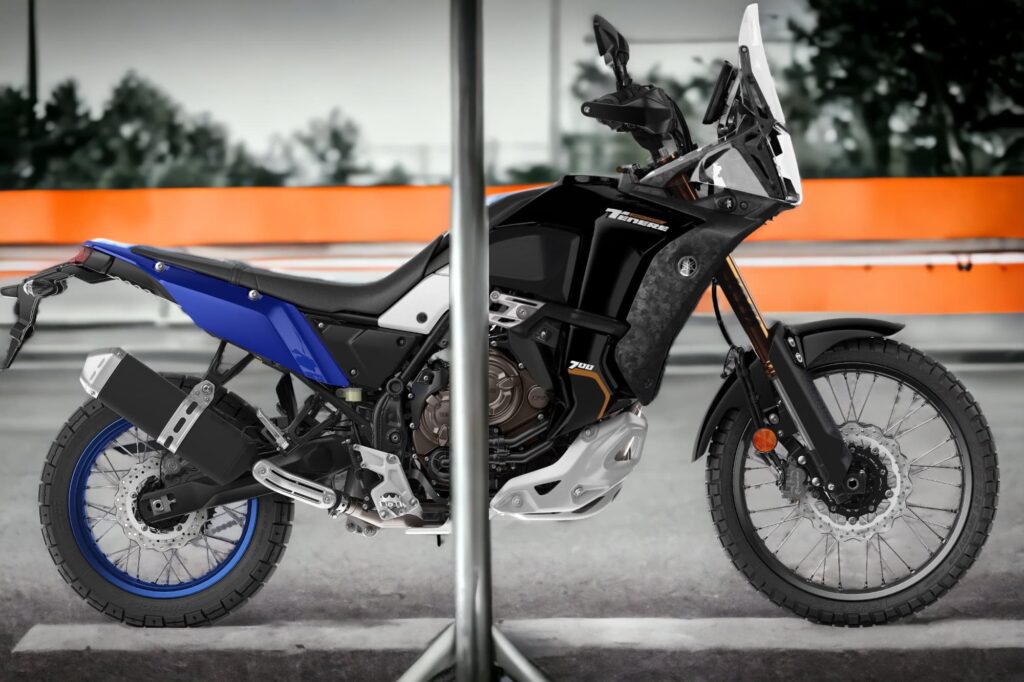
The Yamaha Ténéré 700 has become one of the default answers to “which middleweight adventure bike?” That simple answer has become harder to give, because Yamaha has sold several very different T7s since 2019 and made a major update for 2025.
This guide separates the used-bike family from the two current Australian models. The earlier Rally, Explore and Extreme editions are worth knowing when shopping second-hand, but they are not the current Australian range. For 2026, Australia sells the standard Ténéré 700 and the substantially upgraded Ténéré 700 World Raid.
The key dividing line is 2025. Earlier T7s use cable throttle and fairly simple electronics. The MY25/MY26 standard bike gained ride-by-wire throttle, power modes, traction control, a 6.3-inch TFT and revised suspension. The MY26 World Raid goes much further again, adding a six-axis IMU, cornering ABS, slide control, cruise control and a 23-litre tank.
You might also like this guide to middleweight adventure motorcycles.
Are you obsessed with motorcycles?
Well, I am. That’s why I created this site — as an outlet. I love learning and sharing what others might find useful. If you like what you read here, and you’re a fraction as obsessed as I am, you might like to know when I’ve published more. (Check the latest for an idea of what you’ll see.)
A Brief History of the Ténéré — How Did We Get Here?
Yamaha has been making the Ténéré since 1983, so they’re no strangers to the adventure motorcycling world. Below is a very brief history of the Ténéré brand, skipping over a few models — I’m sorry! (More detailed history coming in the future.)
The first version of the Ténéré, a single-cylinder rally-oriented bike, had an over-bored XT550 motor, a 33-litre tank, and off-road styling that still looks amazing.
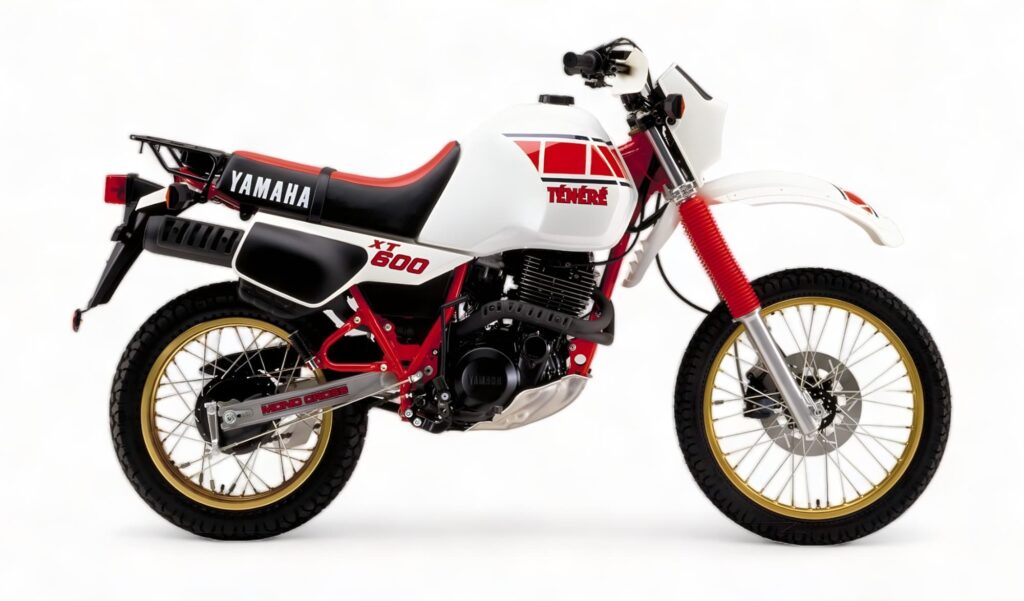
These days, the original Ténéré is a collector’s item, and hard to come by.
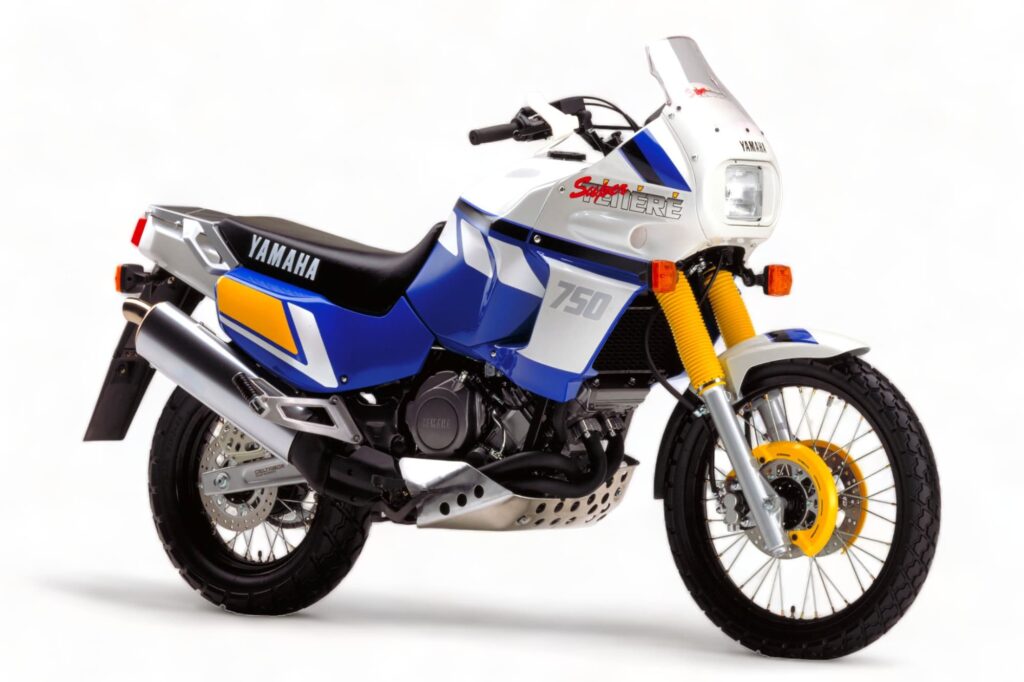
Over the next few decades, Yamaha released several Ténéré iterations. The first parallel twin was the 1989 XTZ750 Super Ténéré, which also has a large 26-litre tank.
The Super Ténéré these days is the much larger and heavier XTZ1200, powered by a big and low-revving 1198 cc parallel twin, and putting power down via a shaft drive. It’s a well-regarded adventure bike, but it hasn’t been updated in a while, and the writing is on the wall for it.
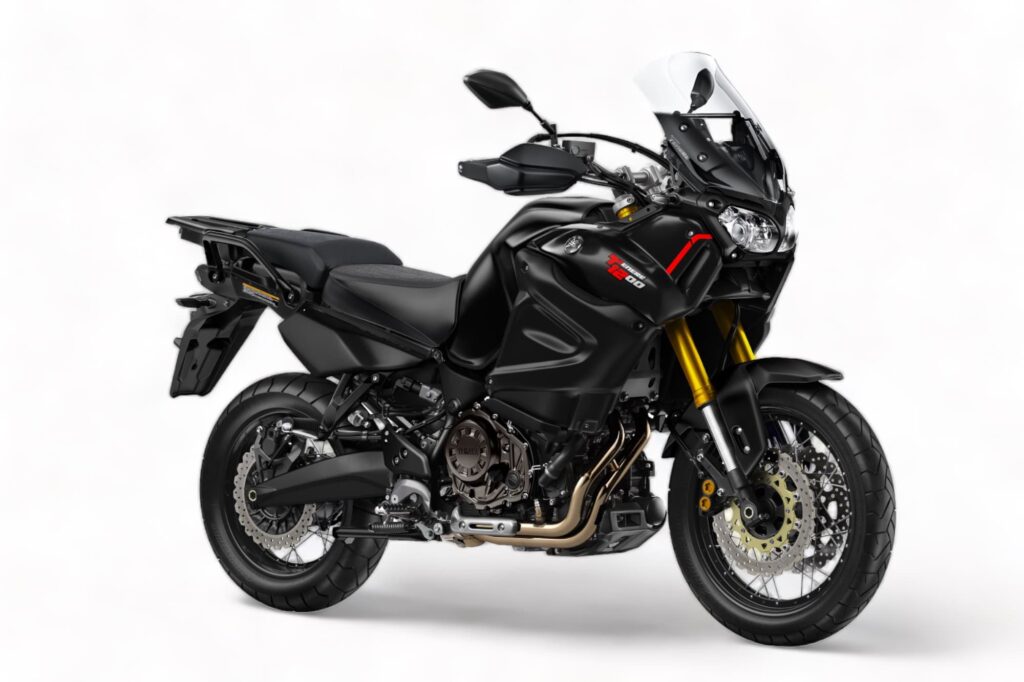
While the XTZ1200 is / was popular as a sleeper alternative to the BMW R 1200 GS, Yamaha went back to a single-cylinder for the smaller Ténérés.
They started with a five-valved carburettor-fuelled 660 in 1991, evolving into the fuel-injected XTZ660 single, the most immediate model in the lineup before the Ténéré 700.
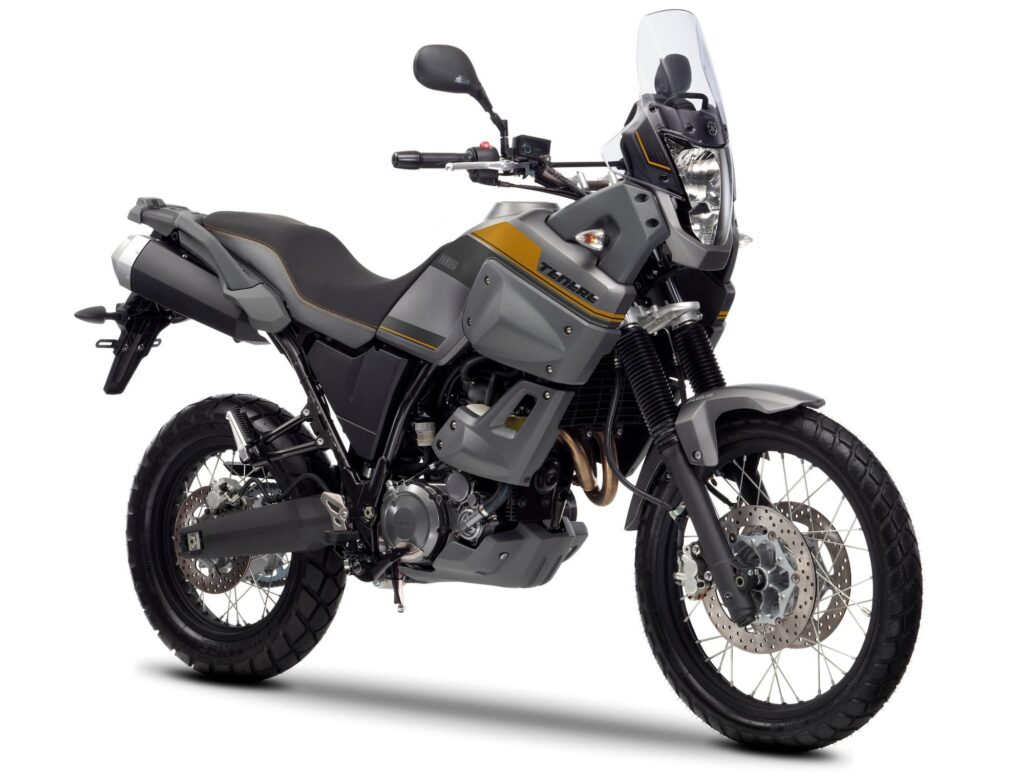
The XTZ660 Ténéré is a great bike, and a bit of a bargain buy if you can find them. They’re reliable, powerful enough, and very versatile.
However, the single-cylinder Ténéré 660 wasn’t available in every market, and was eventually discontinued for the Yamaha Ténéré 700.
Yamaha Ténéré 700 Shared Specifications — and the 2025 Break
All T7s use Yamaha’s 689 cc CP2 parallel twin: a liquid-cooled DOHC engine with a 270-degree crank, six-speed gearbox and chain drive. The fundamental engine layout, 80.0 x 68.6 mm bore and stroke, and 11.5:1 compression ratio have not changed. The specification around it has.
| Item | 2019–2024 T7 family | MY25/MY26 standard Ténéré 700 | MY26 World Raid |
|---|---|---|---|
| Engine | 689 cc CP2 parallel twin; 54 kW (72 hp) at 9000 rpm and 68 Nm (50 lb-ft) at 6500 rpm | Updated CP2 with shorter intake for stronger low-rpm response | Same latest CP2 engine and intake update |
| Throttle and power modes | Cable throttle; no selectable maps | YCC-T ride-by-wire; Sport and Explorer maps | YCC-T ride-by-wire; Sport and Explorer maps |
| Traction control | None | On or off | Lean-sensitive TCS: Street, Off Road or Off |
| ABS / braking | ABS; later bikes have three selectable ABS modes | Three ABS modes: both wheels on, rear off, or off | ABS modes plus IMU-based Brake Control / cornering ABS; steel-braided lines |
| Dashboard | LCD on early bikes; 5-inch TFT on 2023+ models in relevant markets | 6.3-inch vertical colour TFT, MyRide connectivity and USB-C | 6.3-inch vertical colour TFT with Street, Explorer and Raid themes, MyRide and USB-C |
| Quickshifter | Optional on later models | Optional up/down quickshifter | Optional up/down quickshifter |
Current Australian Ténéré 700 Models — MY26
As of the 2026 model year, Yamaha Motor Australia lists two Ténéré 700s. The standard bike is still the lighter, simpler choice. The World Raid is the long-range model, and it now has real touring and rider-assist hardware rather than just more fuel and suspension travel.
| Item | Ténéré 700 | Ténéré 700 World Raid |
|---|---|---|
| Australian model year / price | MY26; $21,799 ride-away | MY26; $27,349 ride-away |
| Fuel tank | 16 L (4.2 US gal) | 23 L (6.1 US gal), dual connected aluminium tanks; Yamaha quotes about 500 km range |
| Wet weight | 208 kg (459 lb) | 220 kg (485 lb) |
| Seat height | 875 mm (34.4 in) | 890 mm (35.0 in) |
| Suspension travel | 210 mm front / 200 mm rear | 230 mm front / 220 mm rear |
| Forks | 43 mm KYB USD, preload, compression and rebound adjustable | 46 mm KYB USD, Kashima-coated, fully adjustable |
| Ground clearance | 240 mm (9.4 in) | 255 mm (10.0 in), measured at the engine guard |
| Steering damper | No | 16-step adjustable damper |
| Rider aids | Two power modes, switchable TCS, three ABS modes | Six-axis IMU, lean-sensitive TCS and Slide Control, Brake Control / cornering ABS, three ABS modes |
| Touring equipment | MyRide navigation/connectivity; no cruise control | MyRide navigation/connectivity, cruise control and speed limiter, larger screen and side deflectors |
Historical Ténéré 700 Variants
These editions explain the used-bike market and appeared in different combinations by territory. They should not be treated as current Australian models.
| Variant | Years | What changed | Used-bike take |
|---|---|---|---|
| Base Ténéré 700 | 2019–2024 | 16 L tank, 210/200 mm travel and 875 mm seat. The 2023 update brought a TFT and three-mode ABS in relevant markets. | The straightforward original. Check the exact year and market before assuming TFT or switchable ABS. |
| Rally | 2020–2024 | High rally seat, heavy-duty skid plate, radiator guard and Akrapovič silencer, while retaining the base suspension. | More equipment, not a different chassis. The 895 mm (35.2 in) seat is a big commitment. |
| World Raid | 2022–2025 | 23 L twin tanks, 230/220 mm travel, 890 mm seat, 5-inch TFT, steering damper and better protection. | The original long-range T7. It is still mostly a simple-electronics bike compared with MY26. |
| World Rally | 2023–2024 | World Raid hardware with blue-and-yellow Dakar-inspired livery and rally-oriented equipment. | A special version of the old World Raid, not a separate mechanical generation. |
| Extreme | 2024 | Long-travel suspension, 910 mm (35.8 in) rally seat, titanium footrests and off-road accessories. | The tallest, dirt-focused option. It does not have the World Raid tank. |
| Explore | 2024 | Reduced 190/180 mm travel, 860 mm (33.9 in) seat, taller screen, pannier stays and standard quickshifter. | The road-biased, lower-seat option. |
| Rally / Low Seat (new-generation) | 2025+ | The Rally adds 230 mm front travel, a 910 mm (35.8 in) seat, 255 mm clearance, fully adjustable KYB suspension and a Raid-theme TFT. The Low Seat is the lower-access option. | Both are market-specific and were not part of the Australian launch range. The Rally is the current-generation dirt-focused T7. |
Yamaha Ténéré 700 Base Model (2019–2024)
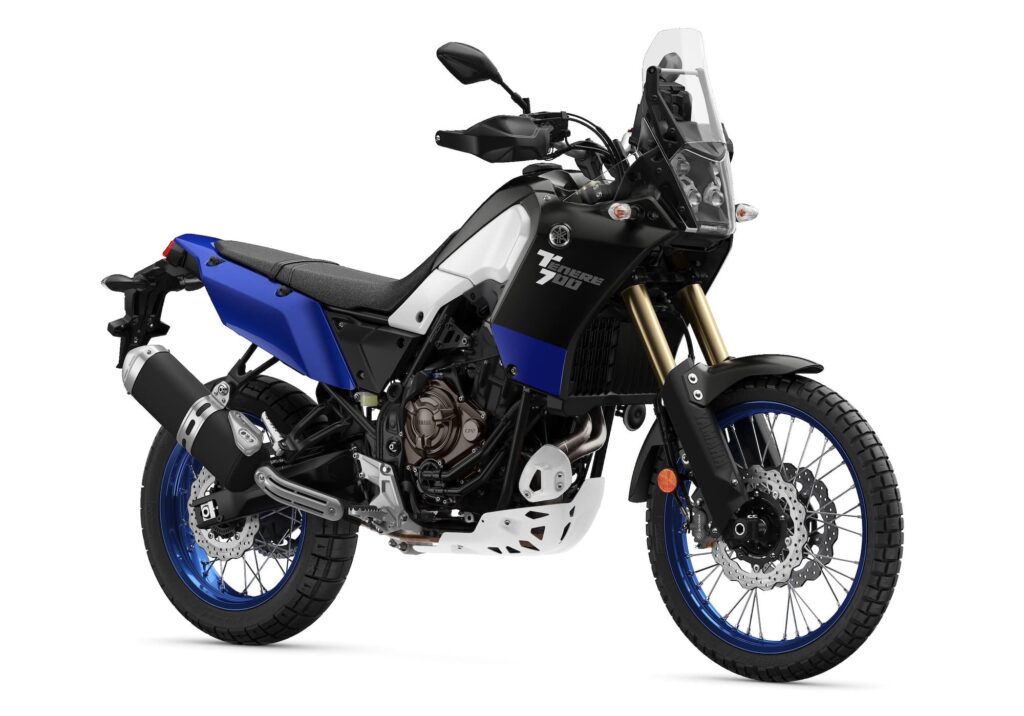
When Yamaha introduced the Ténéré 700 in 2019, it was simply the Ténéré 700. It combined the familiar CP2 engine from the MT-07 family with a steel double-cradle frame, 21/18-inch spoked wheels and long-travel suspension. It was a simple, relatively light middleweight adventure bike that was happy on a highway, gravel road or moderate trail.
The standard bike has a 16 L (4.2 US gal) tank, 875 mm (34.4 in) seat and 210 mm / 200 mm suspension travel. Early examples have a vertical LCD display and basic ABS. In 2023, Yamaha added the 5-inch TFT display and three ABS settings in relevant markets, so verify the exact local specification rather than relying on the year alone.
This is still the version for riders who want a durable, minimally complicated T7. The MY25 redesign adds useful chassis and electronic improvements, but a tidy earlier bike has the same essential engine and an enormous aftermarket behind it.
Yamaha Ténéré 700 Rally (2020–2024)
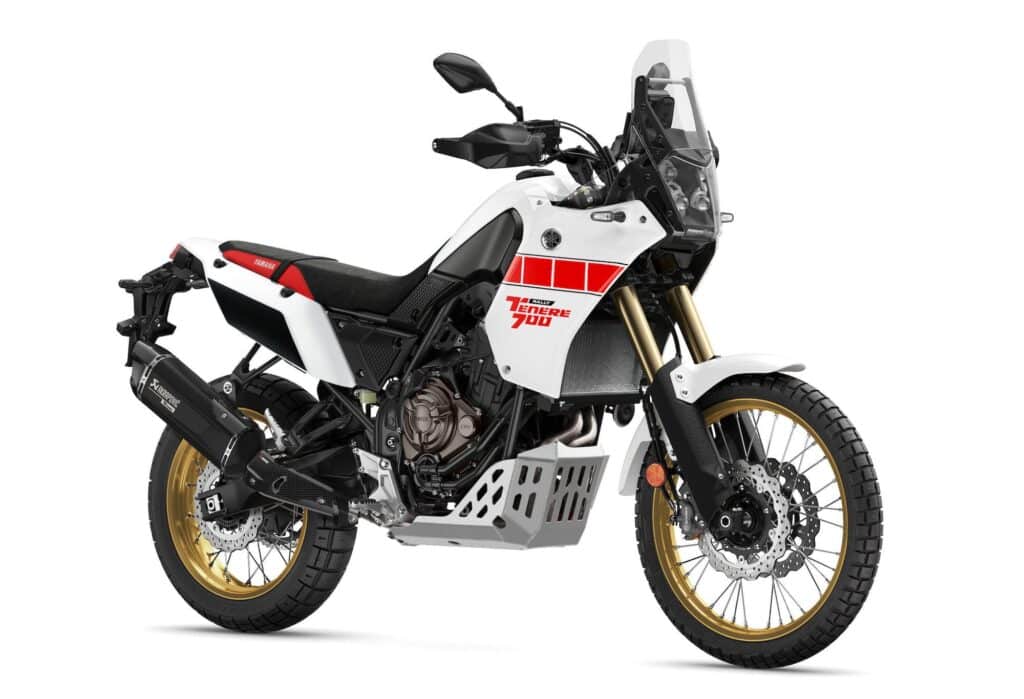
The older Rally is a base-model T7 with factory off-road equipment. Yamaha fitted a heavy-duty 4 mm skid plate, mesh radiator guard, chain guide, Akrapovič silencer and a one-piece rally seat that raises the seat height to 895 mm (35.2 in). It also had the quad-LED headlight before that design reached the standard bike.
It did not have a different engine or the World Raid’s long-travel chassis. The suspension remained the 210 mm / 200 mm arrangement of the regular T7. It makes sense if you want the factory protection and high seat, but it is not automatically the best dirt-focused T7 just because it says Rally on the side.
Yamaha Ténéré 700 World Raid (2022–2025)
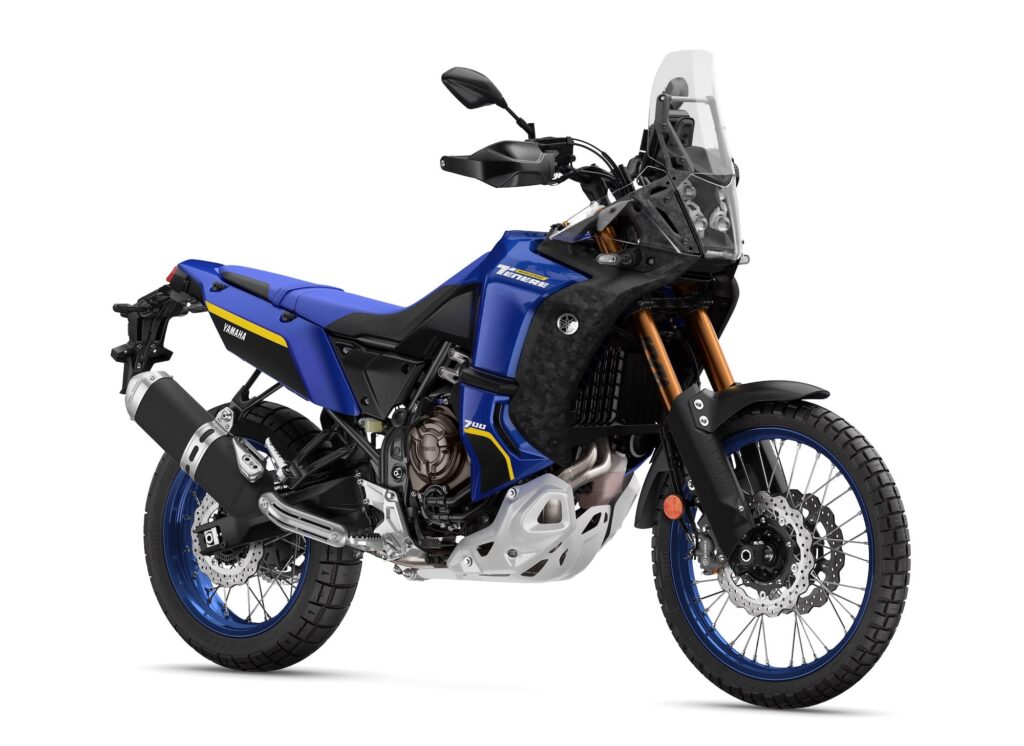
The original World Raid was the genuine long-range step up. Its dual side-mounted tanks hold 23 L (6.1 US gal), yet keep fuel lower than a conventional large top tank. It has 230 mm front and 220 mm rear travel, a flatter 890 mm (35.0 in) two-piece seat, a taller screen, removable side deflectors, larger footpegs, a three-piece aluminium engine guard and an Öhlins steering damper.
It was also the first T7 with a colour TFT and three-mode ABS. It still has cable throttle, no traction control and no cruise control, so it is mechanically closer to the original T7 than to the MY26 World Raid. That simplicity is attractive to some buyers; it is also why it should not be confused with the newer IMU-equipped bike.
Yamaha Ténéré 700 Extreme (2024)
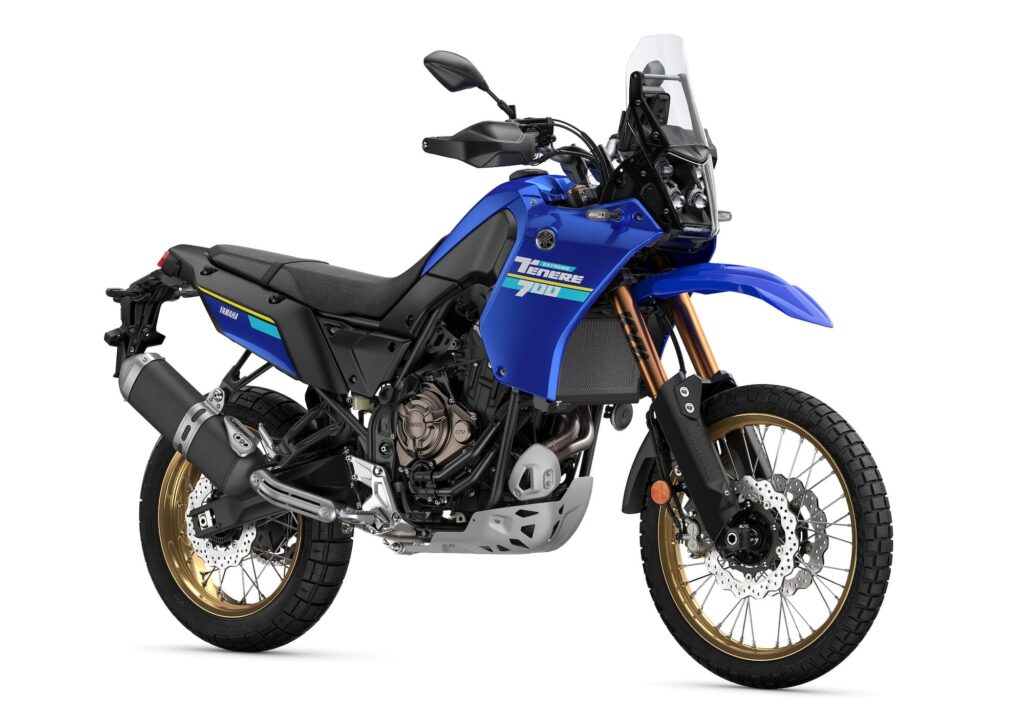
The Extreme combines the World Raid’s 230 mm / 220 mm suspension travel with a tall, flat rally seat, giving it a 910 mm (35.8 in) seat height. It also has titanium footrests, an aluminium radiator guard, high front guard and gold wheels. It is for a rider who will stand up and ride rough ground, and who has the inseam to live with it.
It does not get the World Raid’s 23 L tank, screen and broad touring specification. It is a more focused dirt-oriented special than the name makes clear, not a higher-spec World Raid.
Yamaha Ténéré 700 Explore (2024)
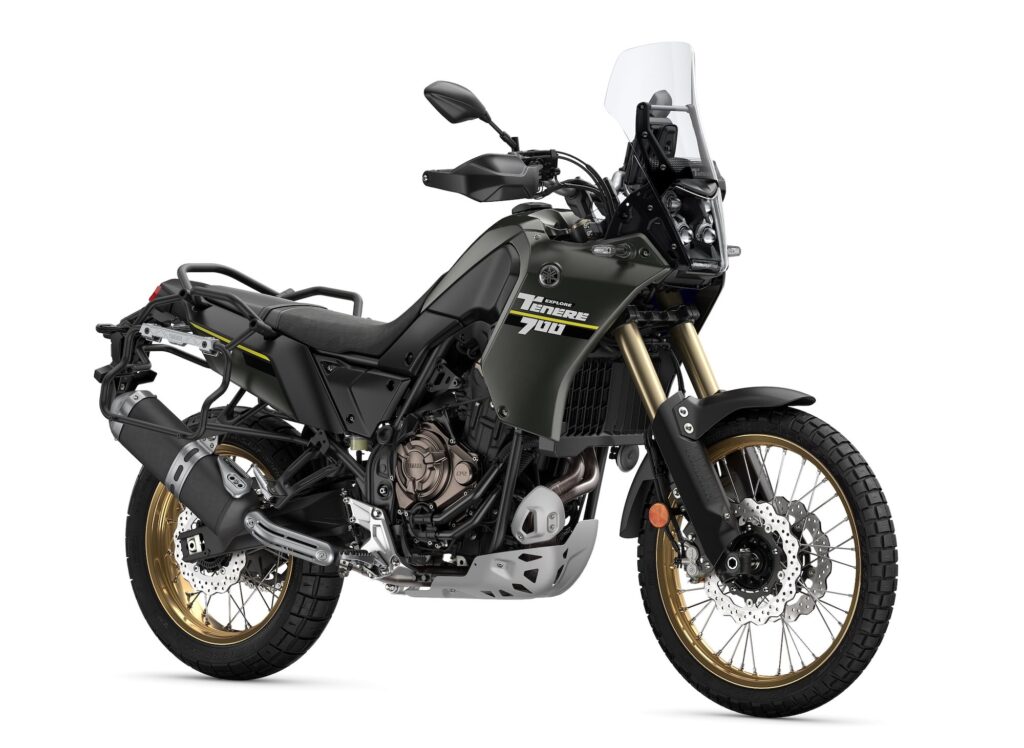
The Explore was the lower, road-biased T7. It has 190 mm front and 180 mm rear travel, an 860 mm (33.9 in) seat, taller screen, side-case stays and a standard quickshifter. It keeps the 21-inch front wheel and 16 L tank, so it is still an adventure bike rather than a road tourer.
For a shorter rider who wants the T7 engine and a relatively narrow step-over, the Explore is a sensible used option. The lower suspension is the trade-off: it has less clearance and less composure when the terrain gets rough.
2025–2026 Yamaha Ténéré 700 Base Model
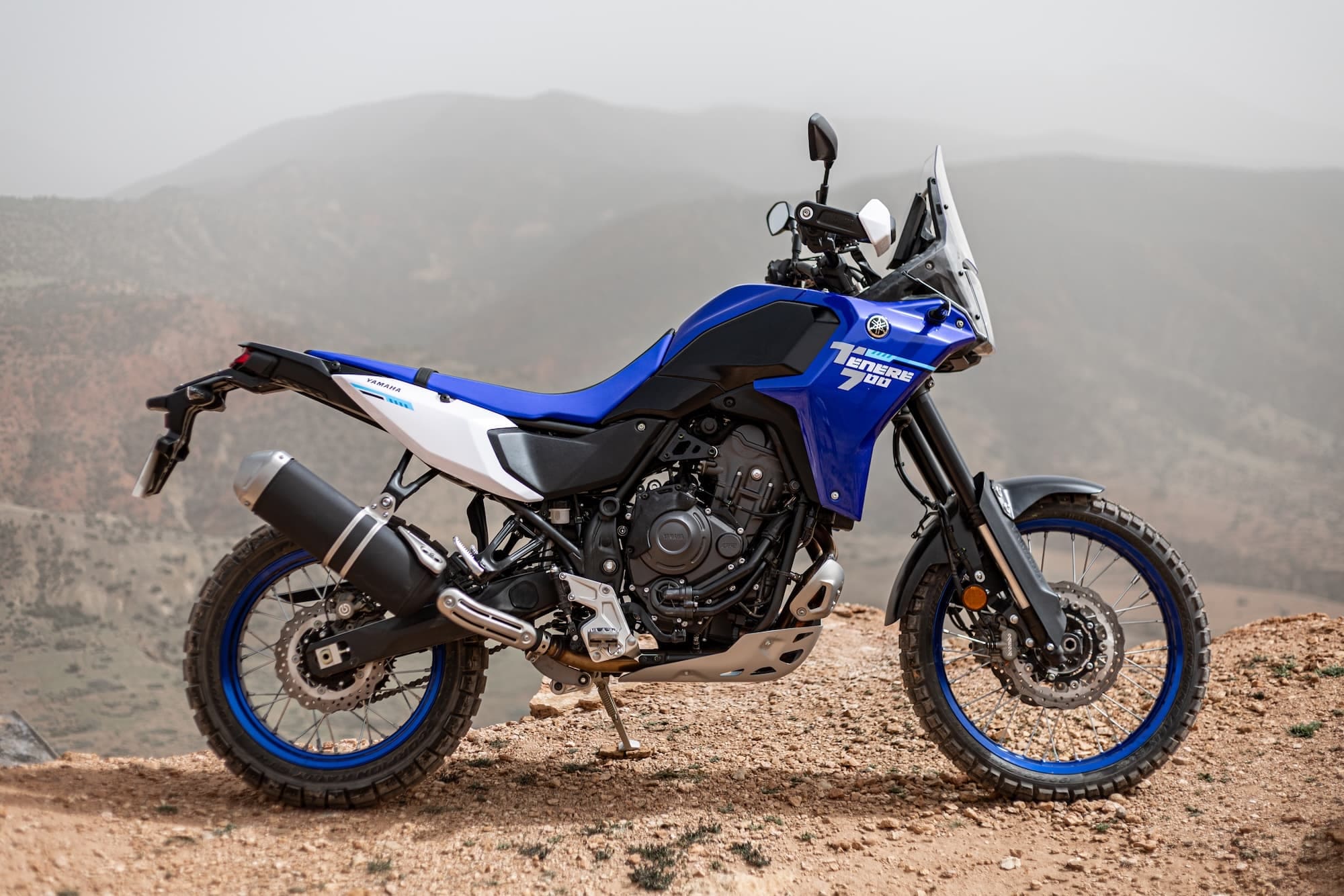
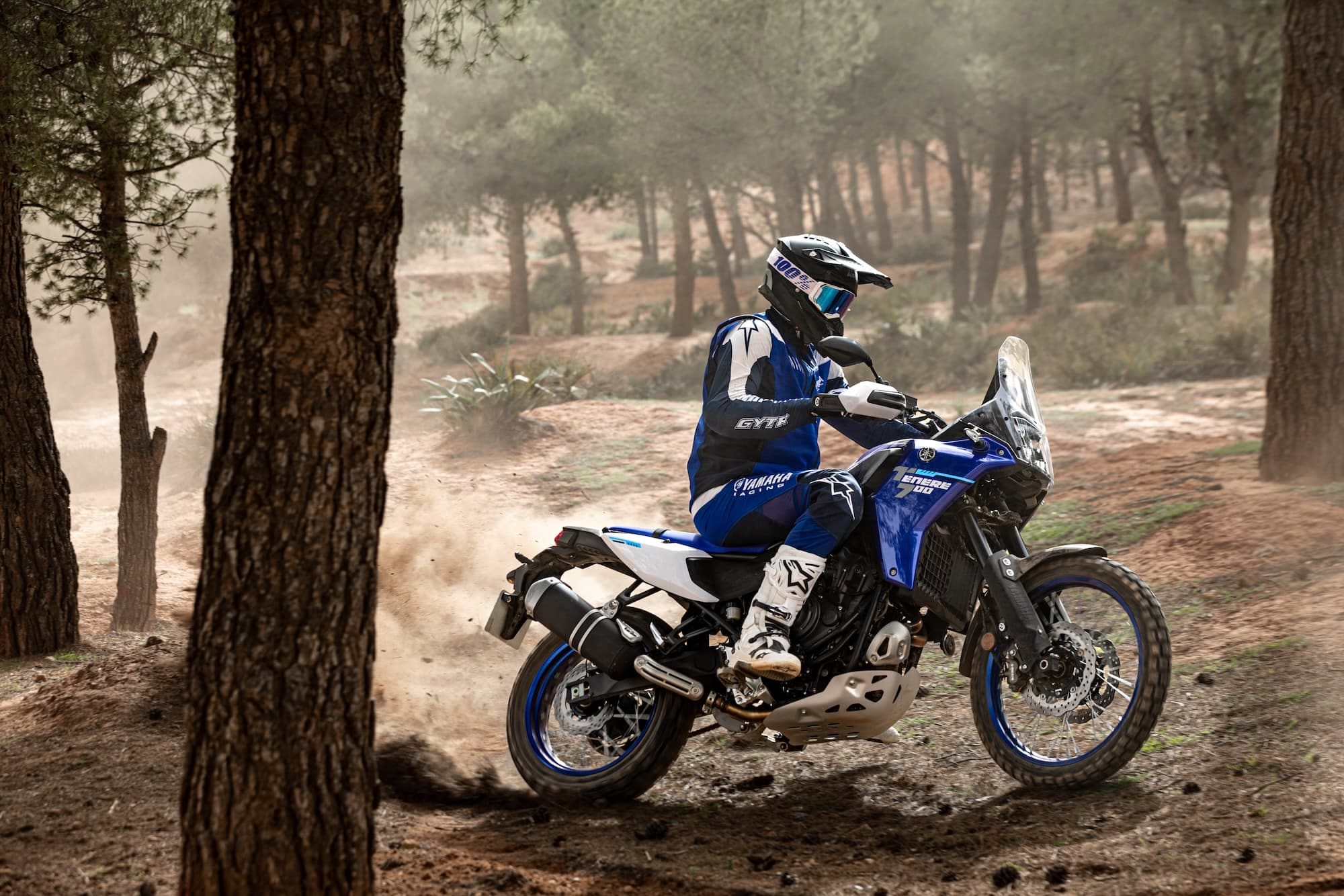
The MY25 redesign makes the regular T7 a materially better used or new-bike proposition than the earlier model, especially if you value adjustment and a modern interface. Yamaha kept the 16 L tank, 875 mm (34.4 in) seat, 21/18-inch wheels and 210/200 mm suspension travel, but revised almost everything a rider touches.
It has YCC-T ride-by-wire throttle with Sport and Explorer maps. Explorer softens throttle response, which helps when traction is poor; it does not reduce the bike to a beginner mode. Traction control is a simple on/off system, and the separate ABS button makes it quicker to select rear-off or fully off-road settings than digging through a menu.
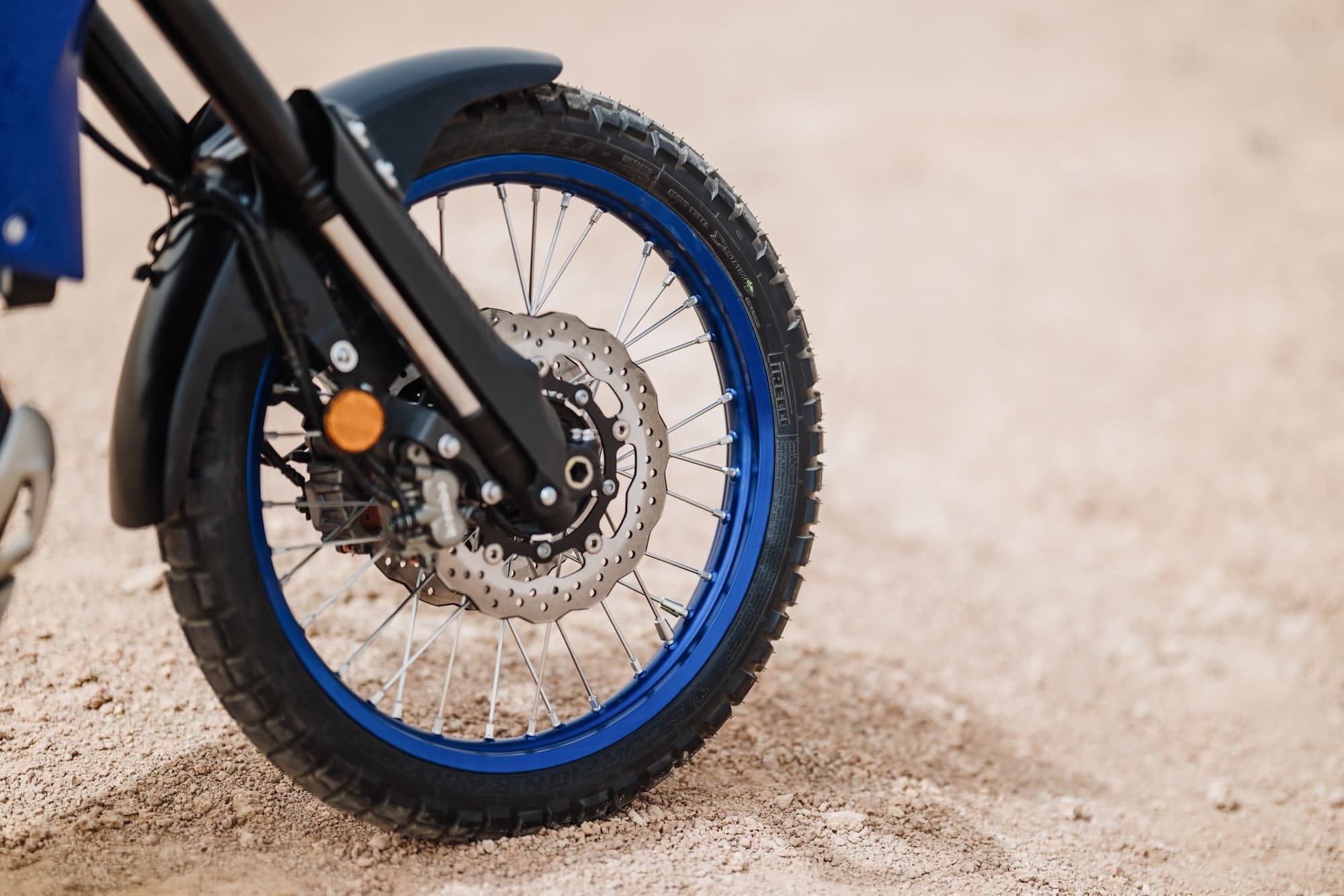
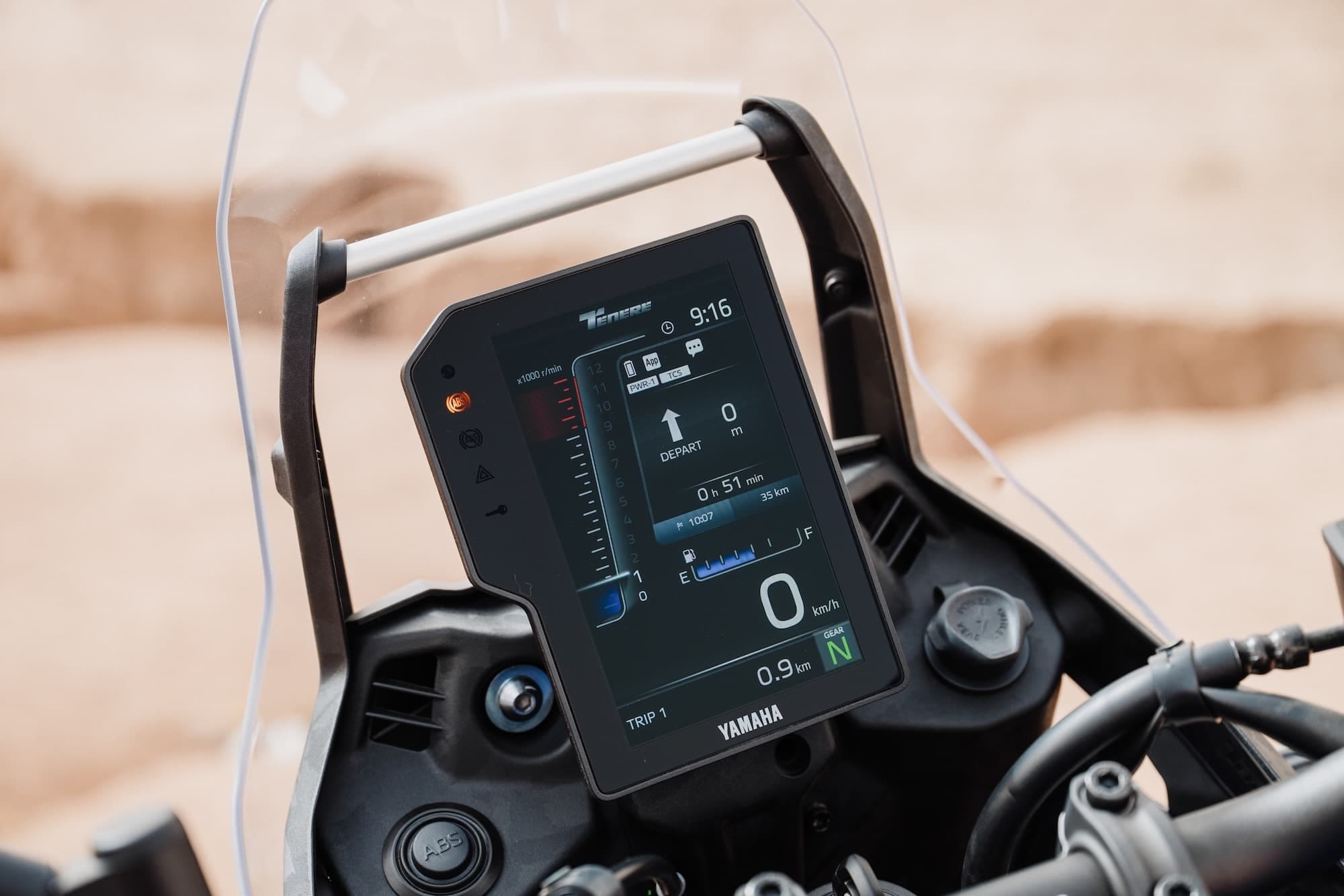
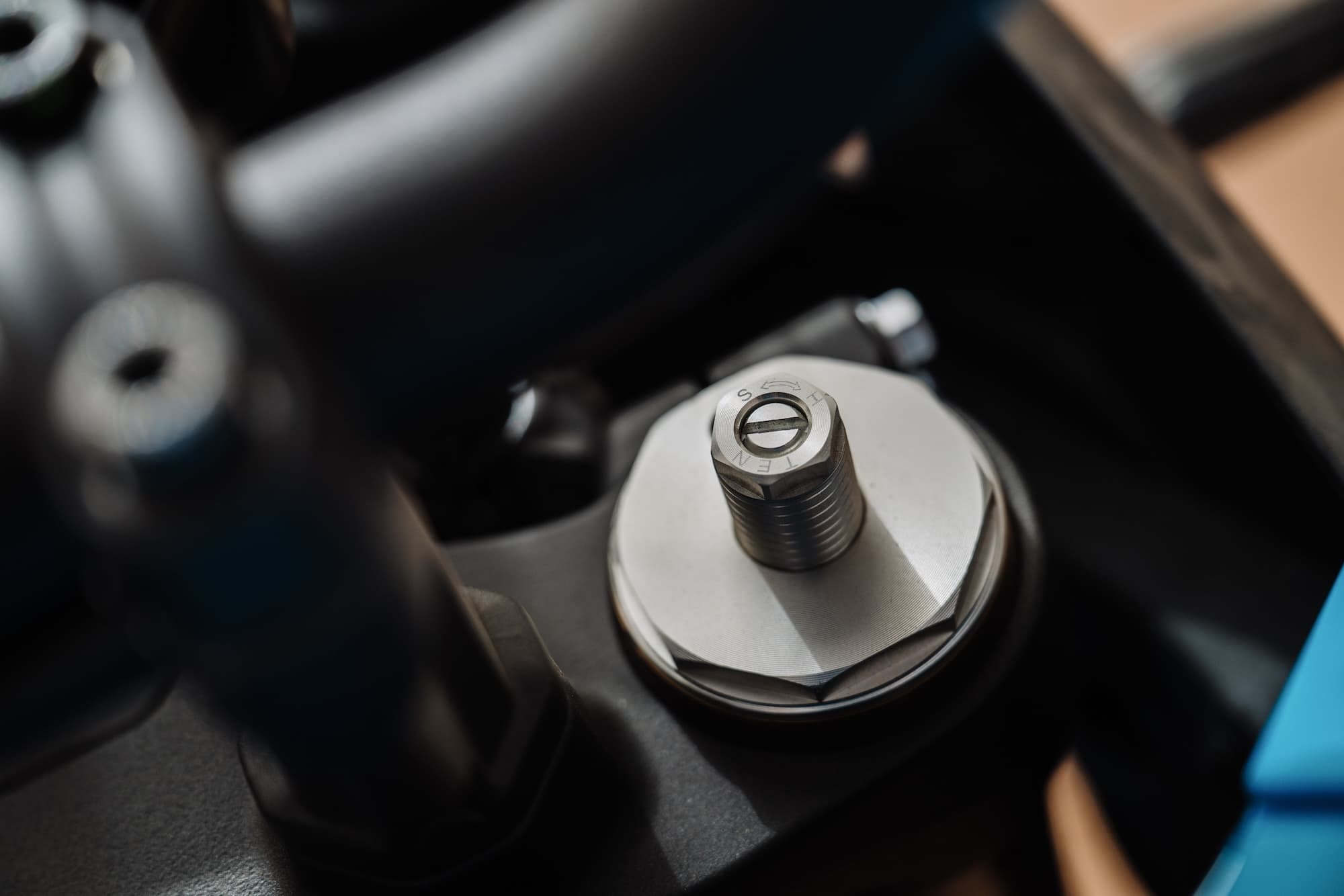
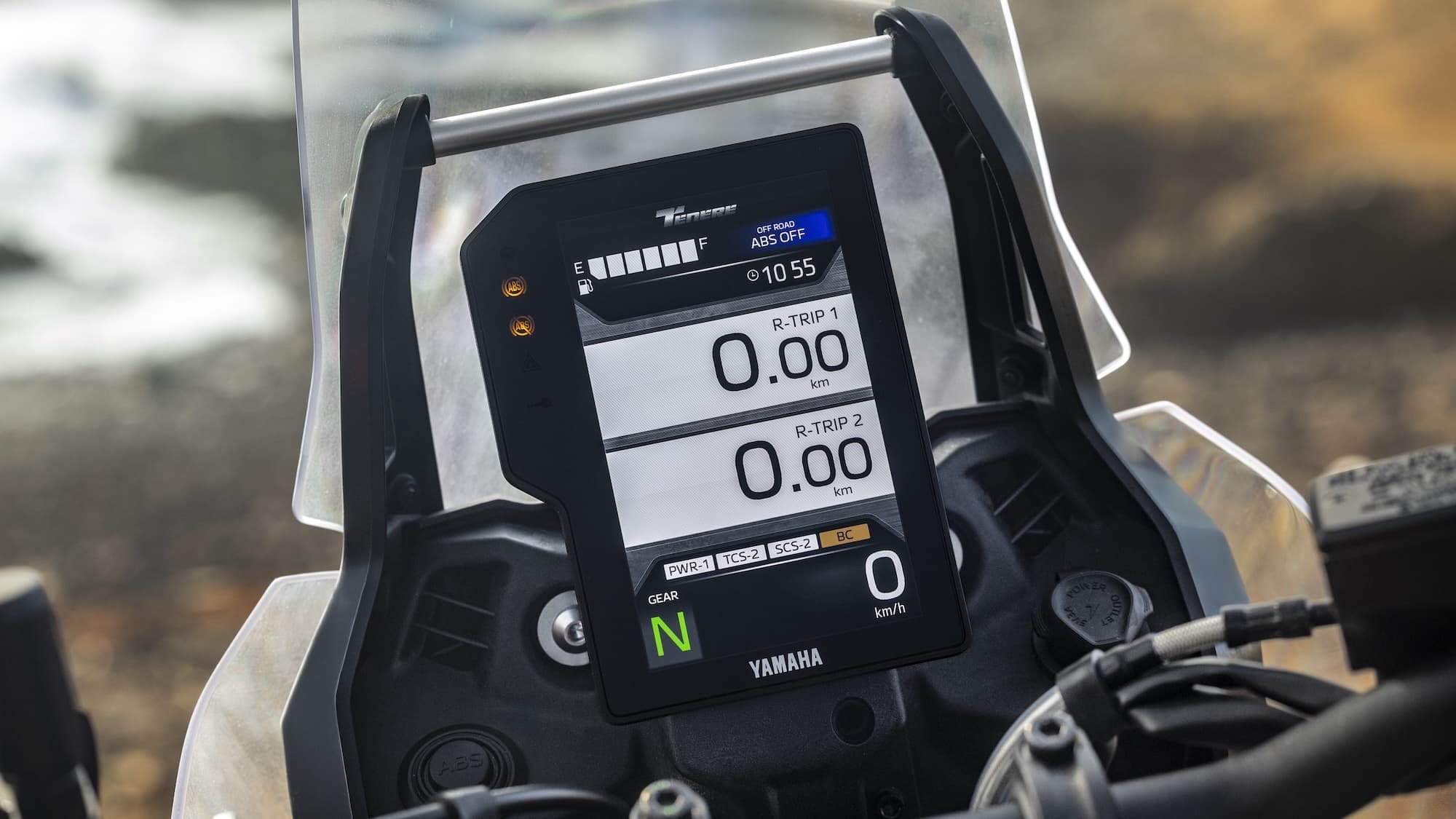
The new 6.3-inch vertical TFT has MyRide phone connectivity, Google-powered turn-by-turn navigation, calls, messages and music control, plus USB-C charging. Yamaha also fitted fully adjustable 43 mm forks, revised rear linkage and shock with remote preload adjustment, a narrower one-piece seat, larger footpegs and stronger luggage mounting points.
Standard T7 suspension, screen and controls
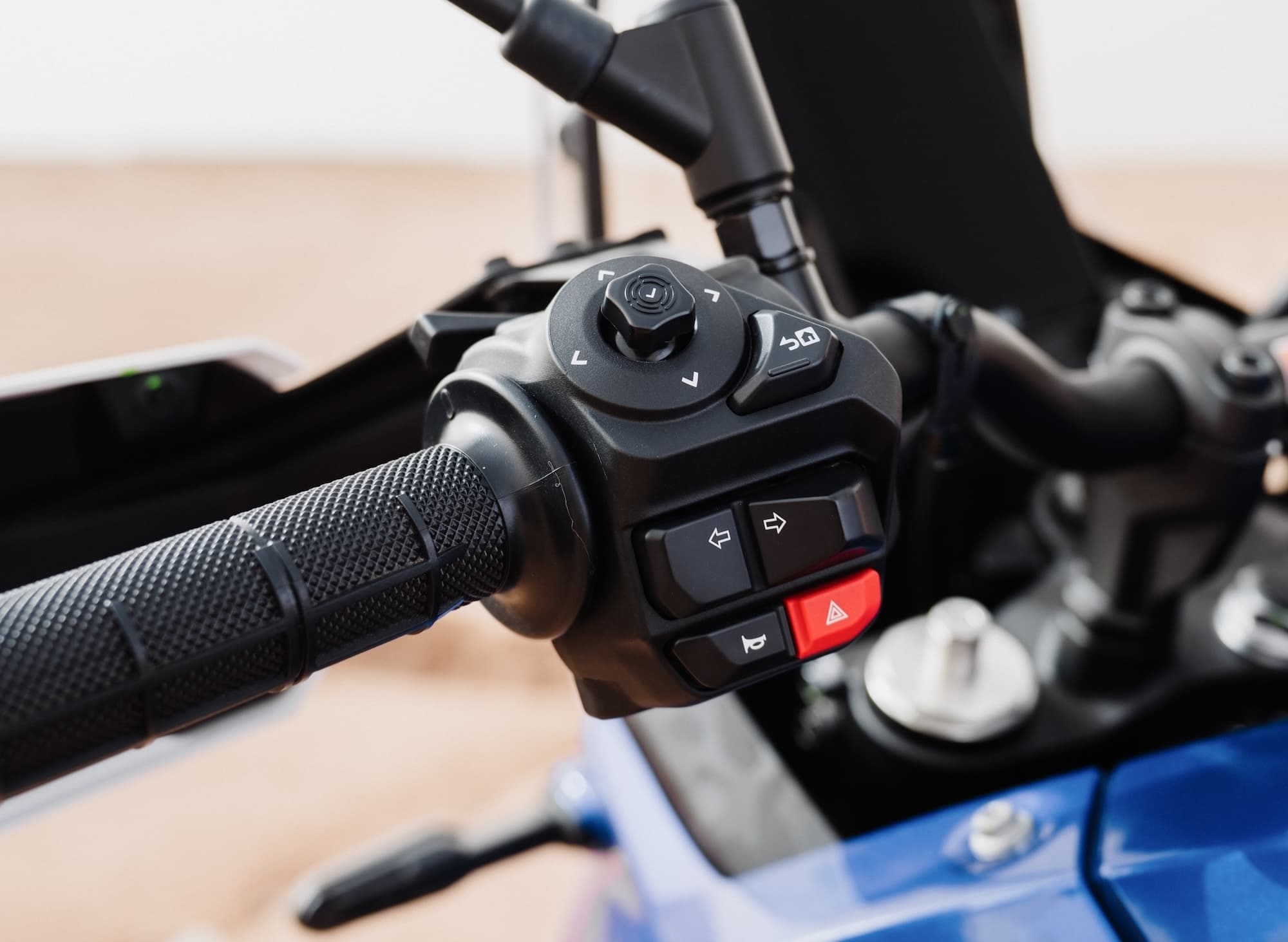
The MY25 redesign also changed the usable parts of the base bike: fully adjustable 43 mm forks, a revised linkage and remote-preload rear shock, a vertical 6.3-inch TFT, and new five-way switchgear. The aim is not to make the base T7 as electronic as the World Raid; it makes the standard model easier to set up and operate on a mixed road-and-dirt trip.
2025–2026 Yamaha Ténéré 700 Rally
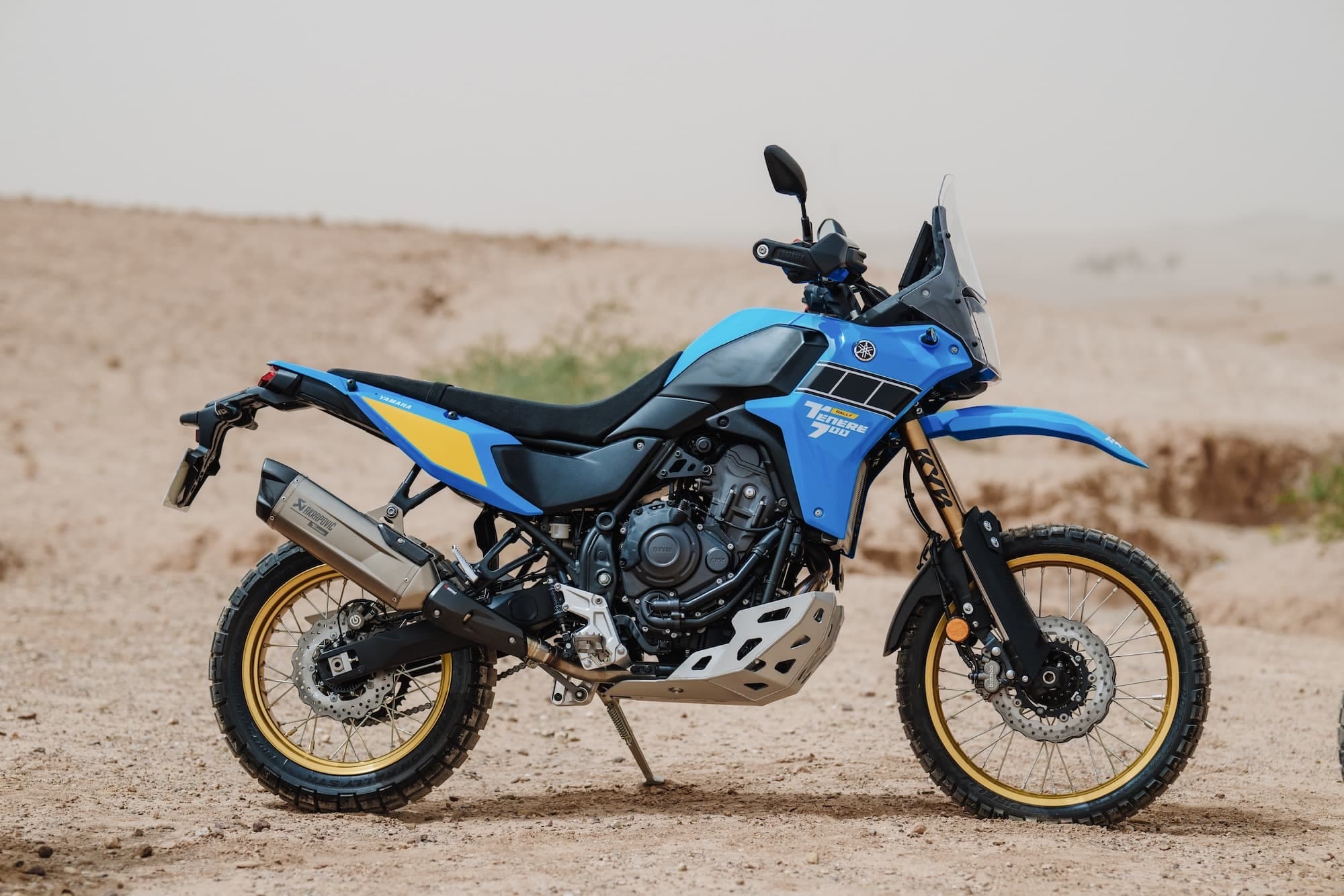
Yamaha also developed a new-generation Ténéré 700 Rally for selected markets. It takes the regular MY25 chassis in the opposite direction to the former Explore: 230 mm front suspension travel, 255 mm ground clearance, a 910 mm (35.8 in) one-piece rally seat, high front mudguard, gold wheels and fully adjustable KYB suspension. Its 6.3-inch TFT also includes the roadbook-style Raid layout.
The Rally does not use the World Raid’s 23 L twin tanks or IMU-based rider aids. It is the dirt-oriented member of the new T7 family, and effectively takes over the role once occupied by the Extreme. Yamaha Motor Australia has not listed it for Australia, so this is mainly useful context for readers comparing international models or used imports.
Rally hardware
The Rally’s high seat and 255 mm ground clearance are the practical distinction, rather than a more powerful engine. It shares the 689 cc CP2, ride-by-wire throttle maps, switchable traction control and 16 L tank of the new standard bike. Its revised suspension and taller riding position give it more room on rougher tracks; they also make it a much taller motorcycle at a standstill.
2026 Yamaha Ténéré 700 World Raid
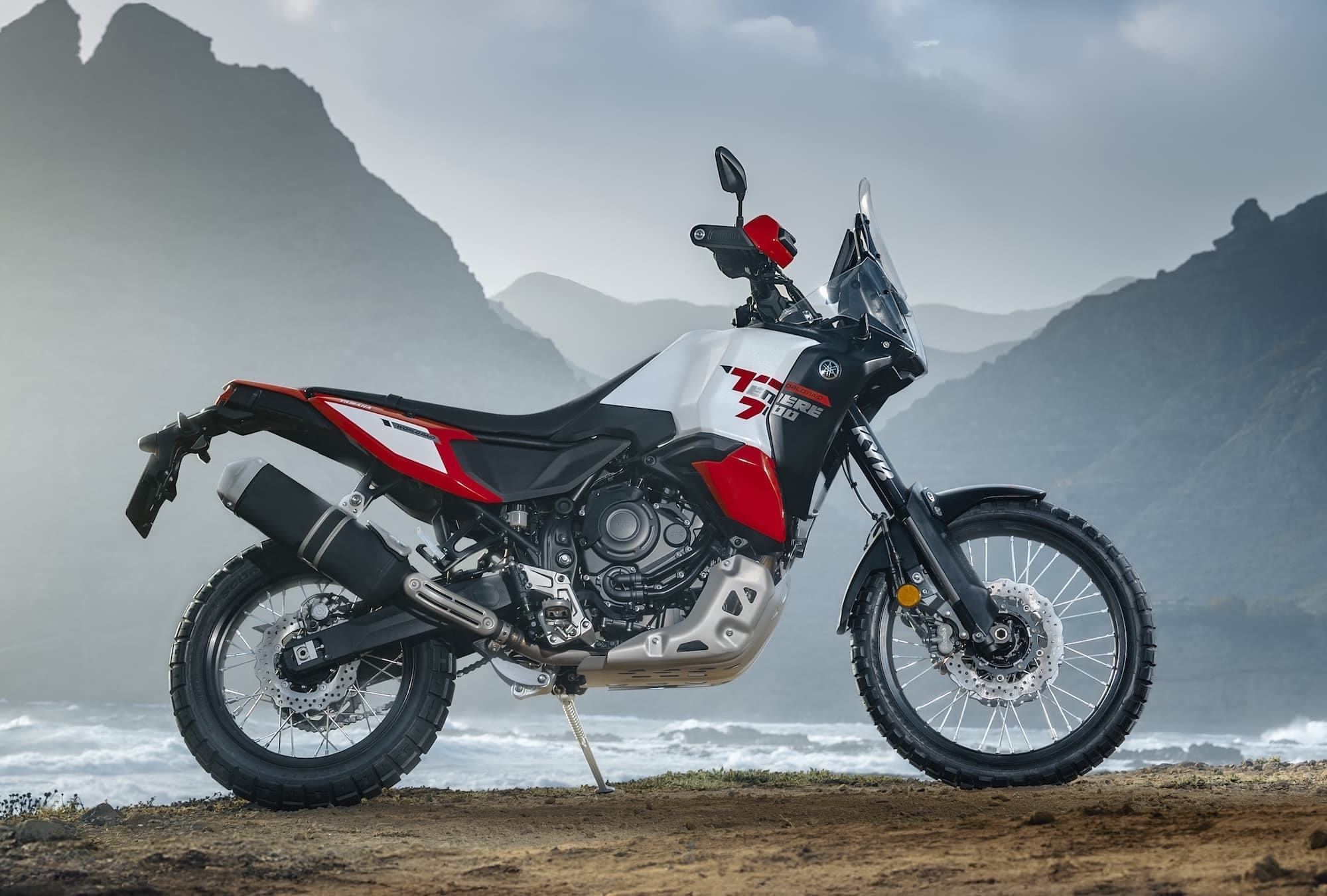
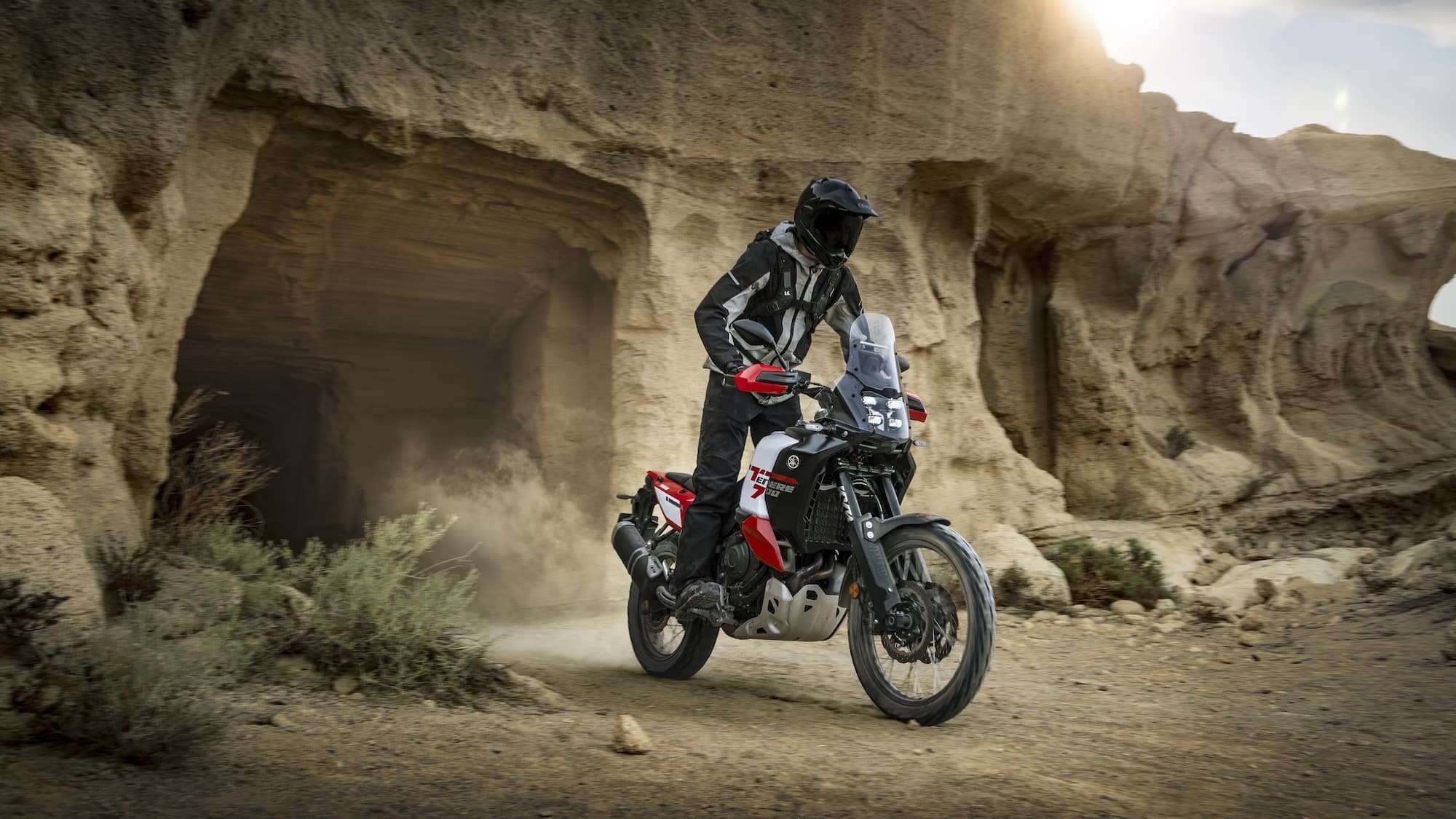
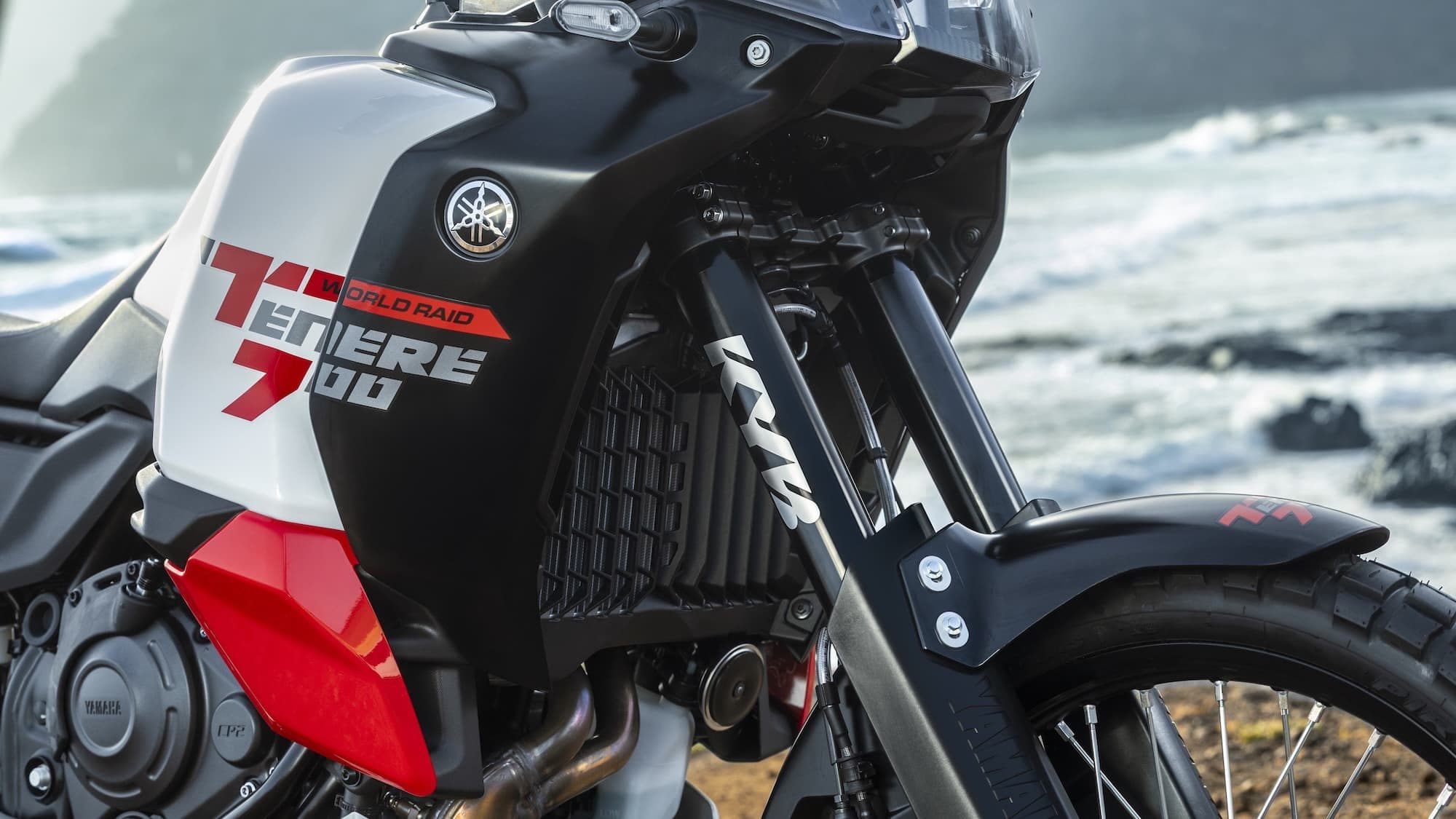
The MY26 World Raid is a new generation, rather than a colour-and-accessory update to the 2022 bike. The 23 L tank capacity and 230/220 mm suspension travel stay, but Yamaha has made the twin aluminium tanks 1.5 kg lighter and reshaped the seat-and-tank area to make standing and moving around easier.
The big change is the six-axis IMU. It gives the World Raid lean-sensitive traction control, slide control and Brake Control with cornering ABS. TCS and SCS each have Street, Off Road and Off modes; ABS can run fully on, rear off or fully off. This makes the World Raid the only current T7 with cornering ABS, and means the old statement that every T7 lacks an IMU is no longer true.
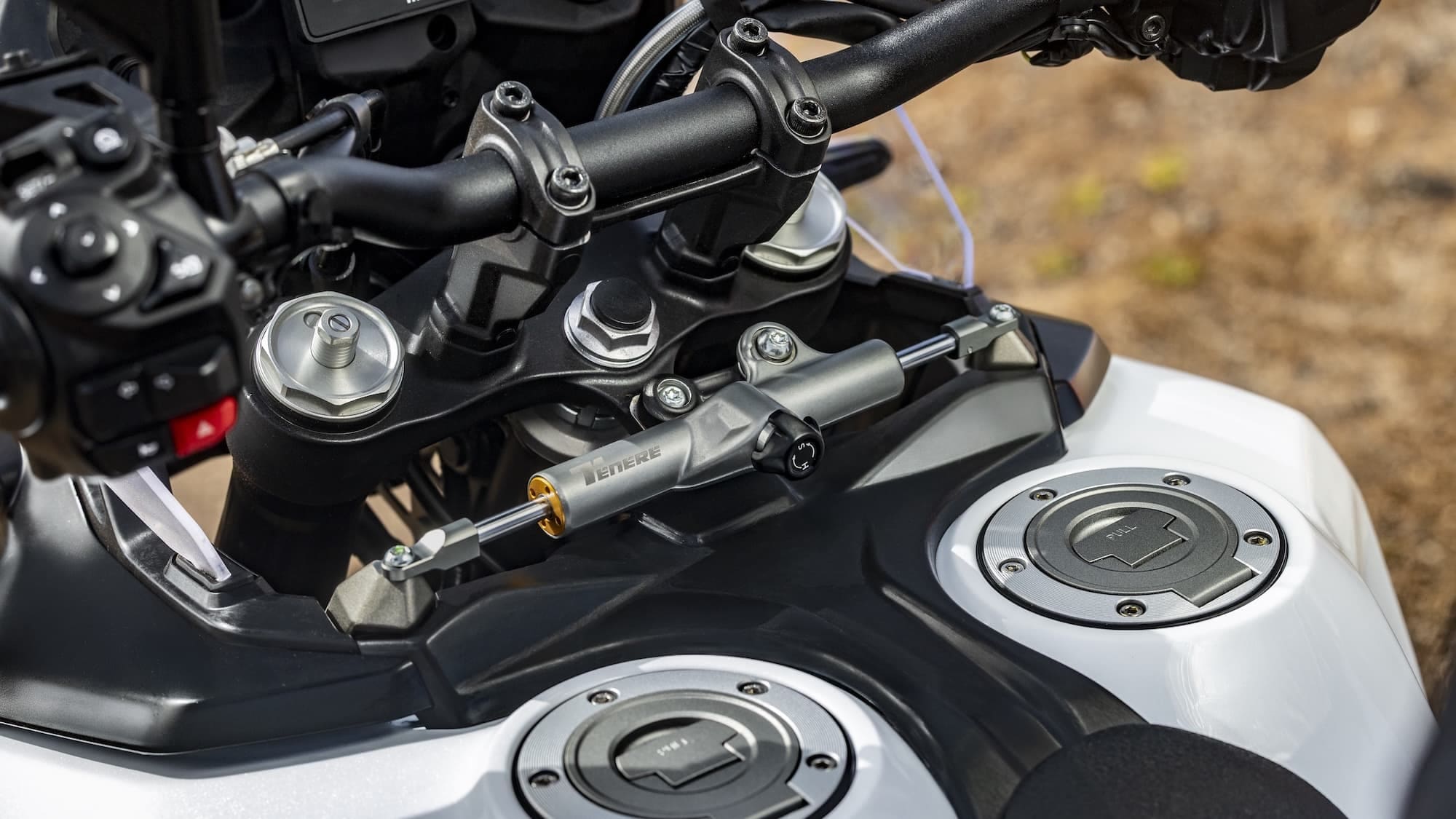
For highway work it also gains cruise control, a speed limiter, a larger windscreen with removable side deflectors, a 16-step steering damper and 46 mm Kashima-coated forks. It is 12 kg (26 lb) heavier than the standard model, but it carries seven extra litres of fuel and has the equipment that makes long sealed-road transit less tiring.
World Raid fuel and chassis
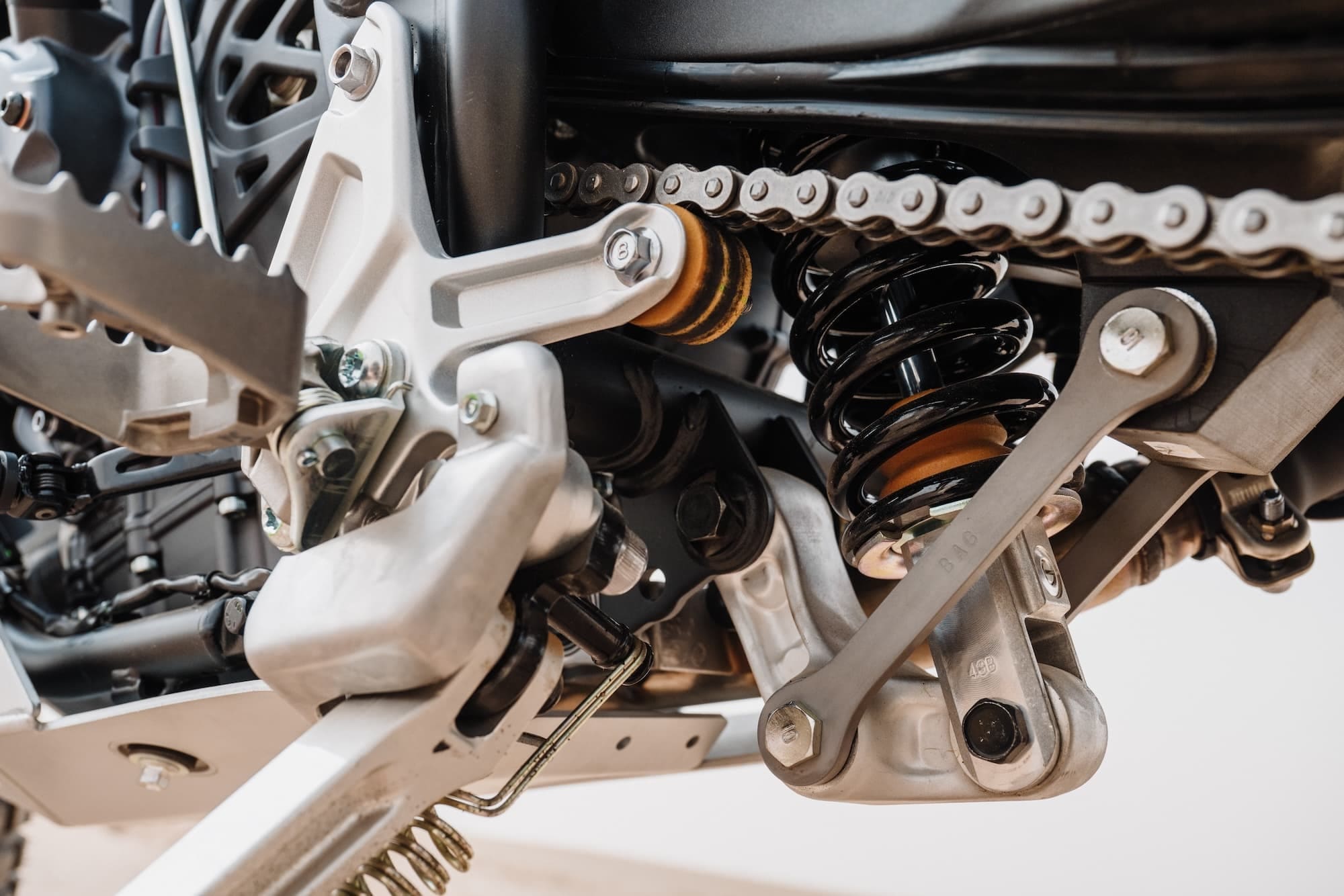
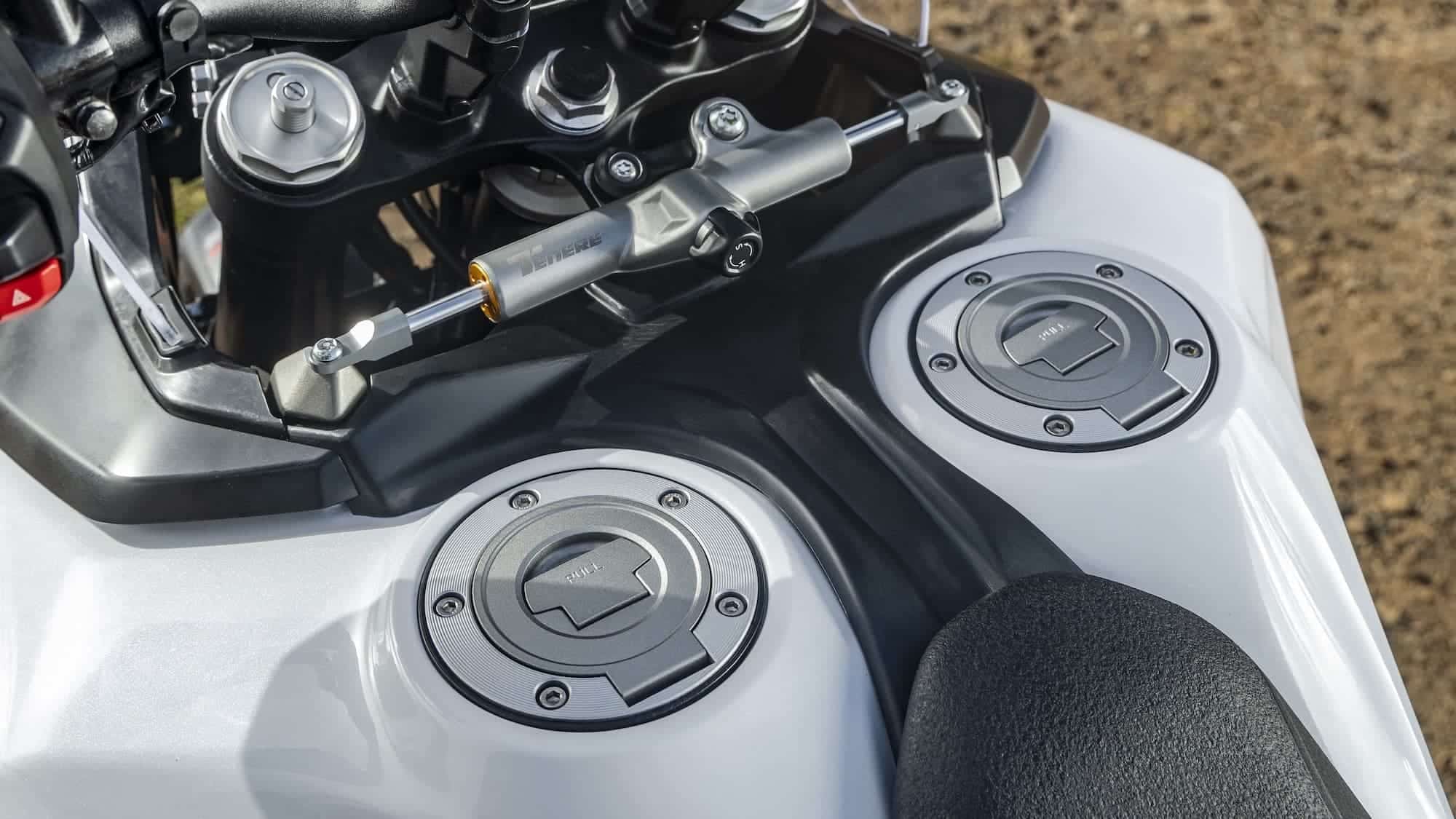
The aluminium tanks connect across the front of the bike but have two separate filler caps. They keep fuel low in the chassis rather than piling it above the rider’s knees. The 2026 model retains 23 L (6.1 US gal) capacity while reducing tank-assembly weight by 1.5 kg (3.3 lb). It also gains the 46 mm Kashima-coated fork, revised rear linkage and a 16-step steering damper shown below.
World Raid controls and rider aids
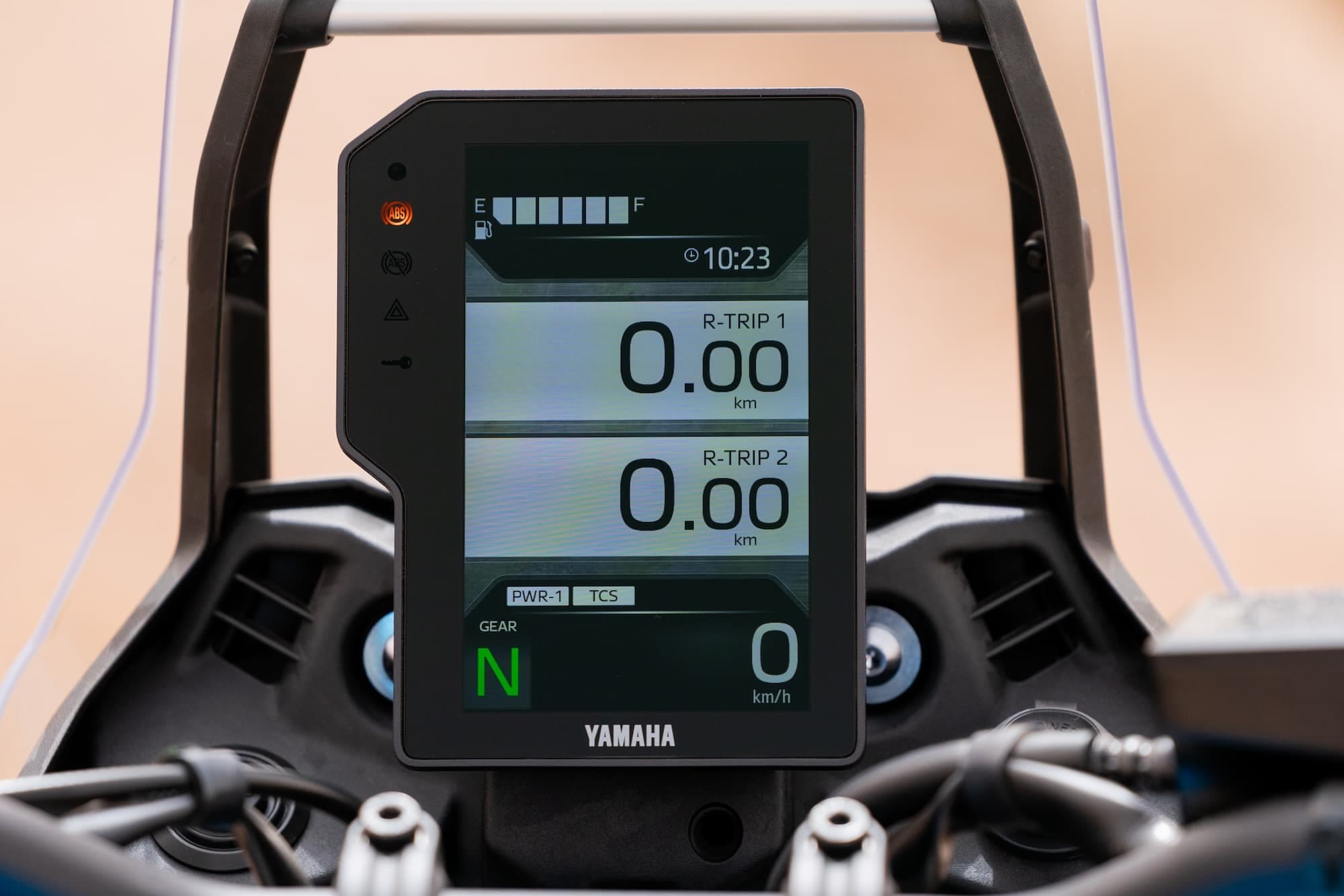
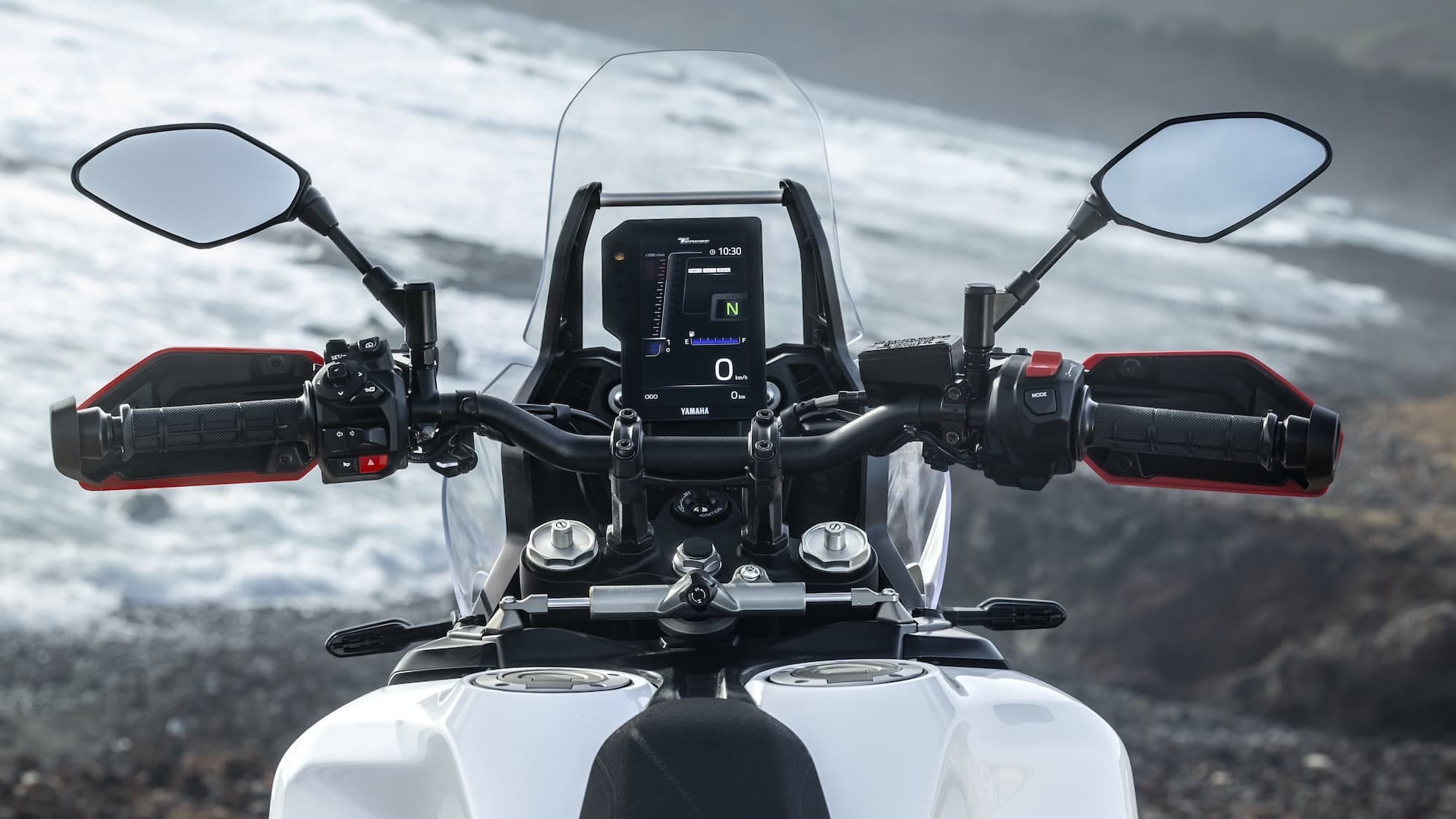
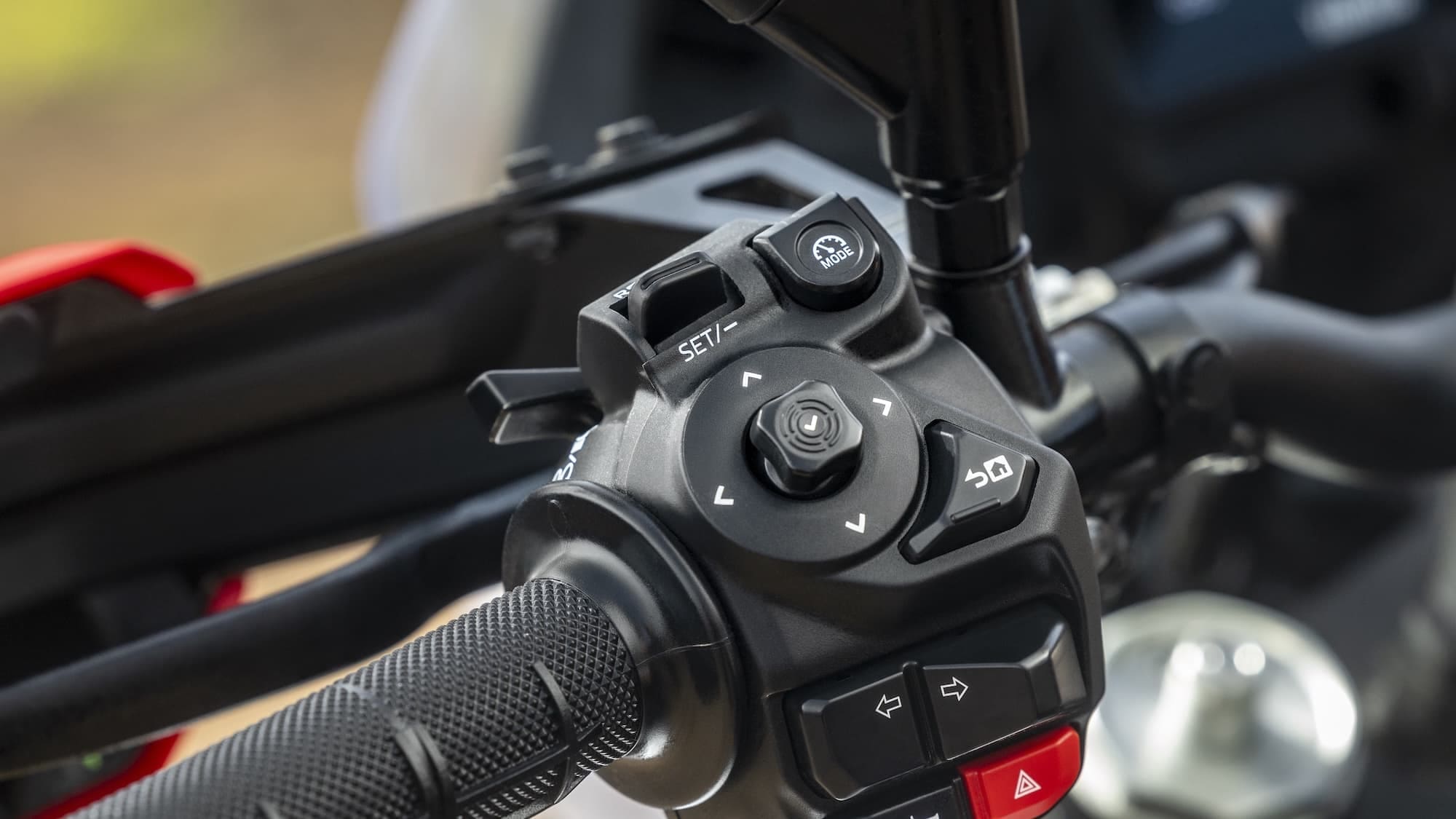
The World Raid’s upright TFT can show the Raid layout with two rally-style trip meters. The right-hand MODE control selects power and rider-assist settings, while the left cluster includes the cruise-control and speed-limiter functions. Its display also makes the extra electronics visible: traction control, slide control, Brake Control and the off-road ABS modes.
Which Ténéré 700 Should You Buy?
- Choose the MY25/MY26 standard Ténéré 700 if you want the lightest current T7, spend a meaningful amount of time on rough roads or trails, and do not need cruise control or a 500 km fuel range.
- Choose the MY26 World Raid if your rides involve long highway links, remote fuel stops and loaded travel. Its rider aids can be switched back for dirt, but the extra tank, height and mass are always there.
- Choose the current-generation Rally where it is sold if you value clearance and standing-room on rough terrain more than long range. It is a tall, 16 L dirt-focused T7, not a World Raid with a rally livery.
- Choose an earlier base model if price and mechanical simplicity matter more than the latest display, throttle maps and TCS. Confirm whether it has the 2023 electronics update.
- Choose an Explore, Extreme or older Rally only because its seat height and equipment suit you. Their names do not make them newer or better than the redesigned standard T7.
Using the Ténéré 700 Screen and Controls
Early bikes use an LCD or 5-inch TFT with their own switch layouts. The current standard T7 and World Raid use the 6.3-inch vertical TFT and five-way left-hand joystick. The right-hand MODE switch opens the riding-settings menu; the dedicated ABS button selects braking modes. On the World Raid, the cruise-control and speed-limiter controls sit behind the left switch cluster.
For a test ride, set the screen theme and phone pairing before moving off, then confirm the ABS and traction-control modes while stopped. The standard T7 has Street and Explorer themes. The World Raid adds a Raid layout with large trip meters for roadbook-style navigation.
What the Ténéré 700 Still Lacks
The answer now depends on the model. The standard T7 still has no cruise control, IMU or cornering ABS, and it keeps deliberately simple on/off traction control. The World Raid has those systems, but neither current T7 has semi-active suspension, a large factory luggage system or the on-road polish of a heavier touring adventure bike.
That does not make the standard model incomplete. Its appeal is still a durable steel-frame adventure bike with a compact twin and enough electronics to be useful without making every dirt-road decision for you.
Alternatives to the Yamaha Ténéré 700
This is quite a competitive market, with basically every manufacturer now clamouring for your middleweight adventuring wallet. Below is a slider of alternatives to the Yamaha Ténéré 700 for you to peruse.
Aprilia Tuareg 660
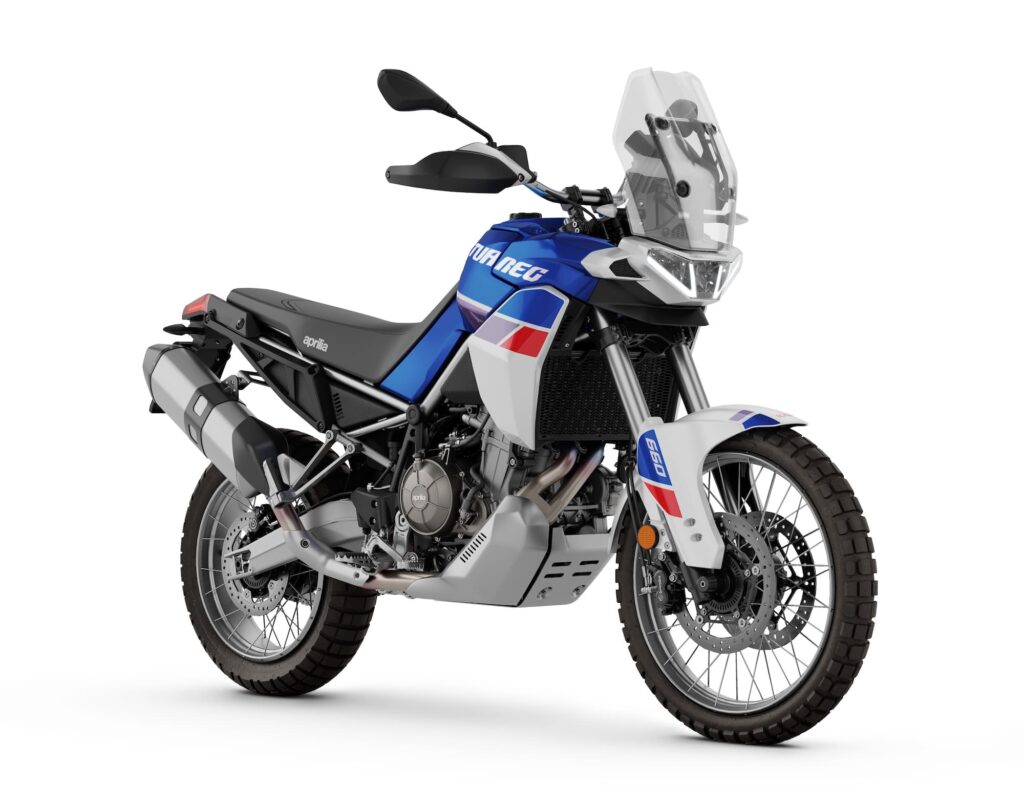
The Aprilia Tuareg 660 (one of the Aprilia 660 line) is a 2022 model. It uses Aprilia’s basic platform that powers the RS and Tuono street/sport bikes, but the engine is de-tuned for mid-weight power. The Tuareg 660 is quite high-spec, with cruise control and high-end ride gear (but lacking an IMU), moderately powered (with a peak of 60 kW / 80 hp at 6500 rpm, and lightweight for its class.
BMW F 900 GS
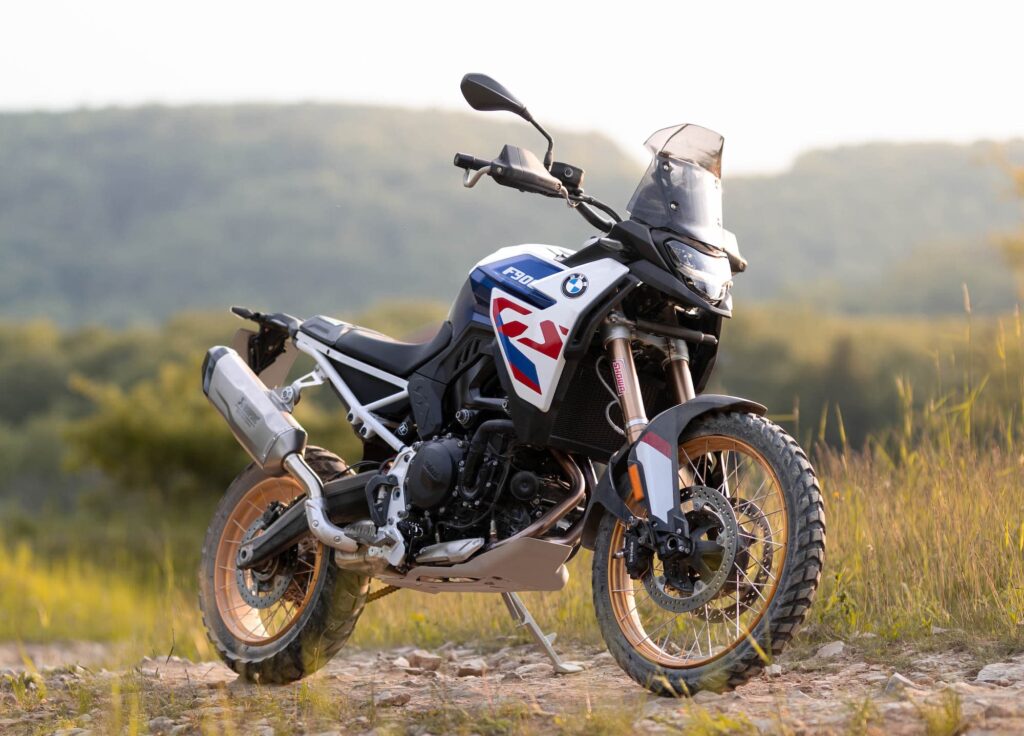
The BMW F 900 GS, taking over from the F 850 GS, is a do-everything vehicle. BMW riders often like the middleweight as the more capable all-round bike. The F 900 GS is It’s powered by a spicy 895 cc parallel twin with a 270-degree crank that tops out at 77 kW / 105 hp at 8500 rpm. It comes with the kitchen sink of tech, including optional dynamic suspension.
CFMOTO Ibex 800 / 800MT
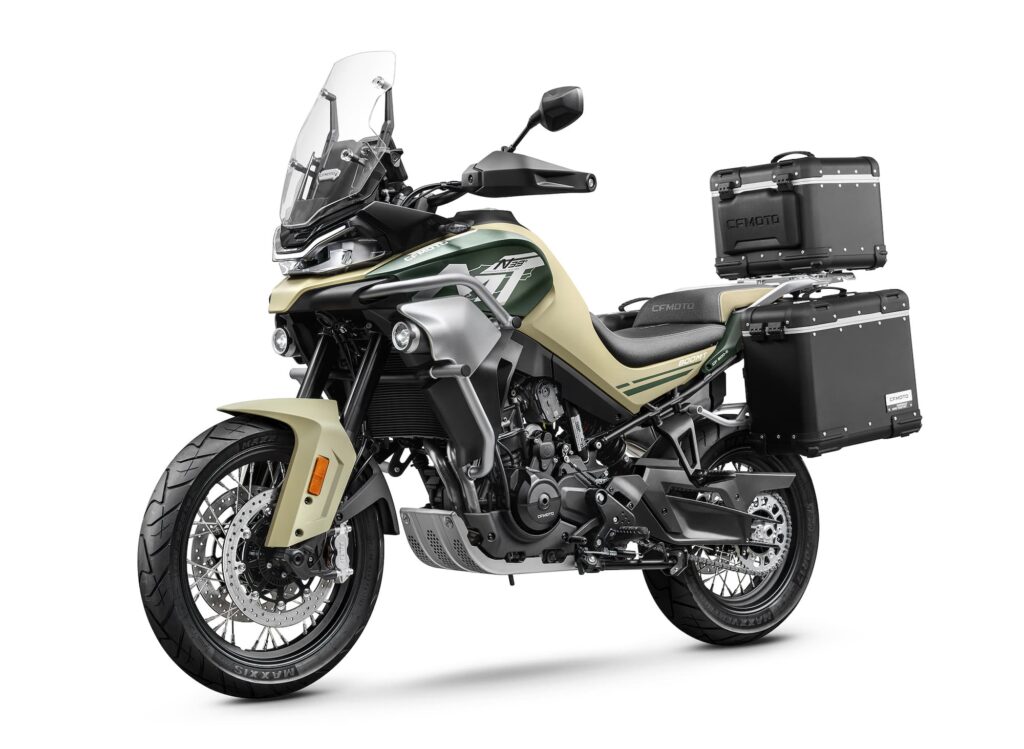
The CFMOTO Ibex 800 / 800MT is a middleweight adventure tourer powered by KTM’s 799 cc parallel twin that they stopped using in western markets for a few years. The CFMOTO bike comes loaded with tech, including cruise and an IMU, and its engine is no slouch. Plus, it’s very affordable — an equivalent motorcycle from a European brand usually cost 1.5x.
Ducati DesertX
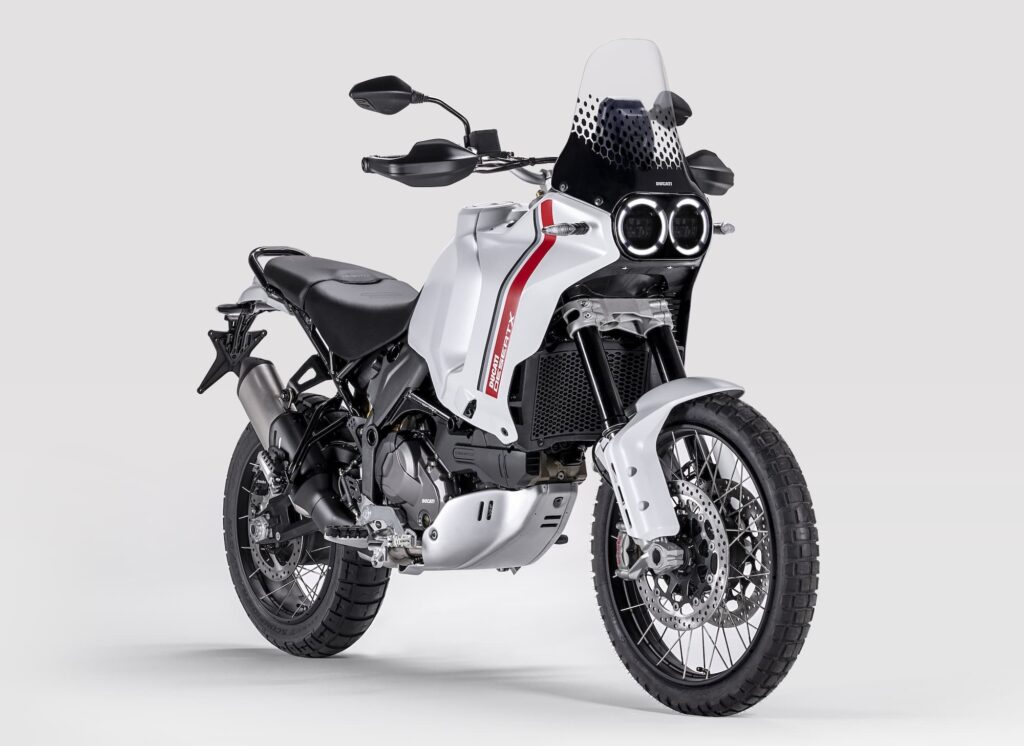
The Ducati DesertX is an offroad sporty adventure tourer based on the 937 cc Testastretta-11 degree engine that Ducati uses in many of its motorcycles, from the Supersport to the Multistrada V2. The DesertX has a 21-inch front rim, long-travel suspension, the full suite of ride aids, and killer (though sometimes divisive) good looks.
Honda XL750 Transalp
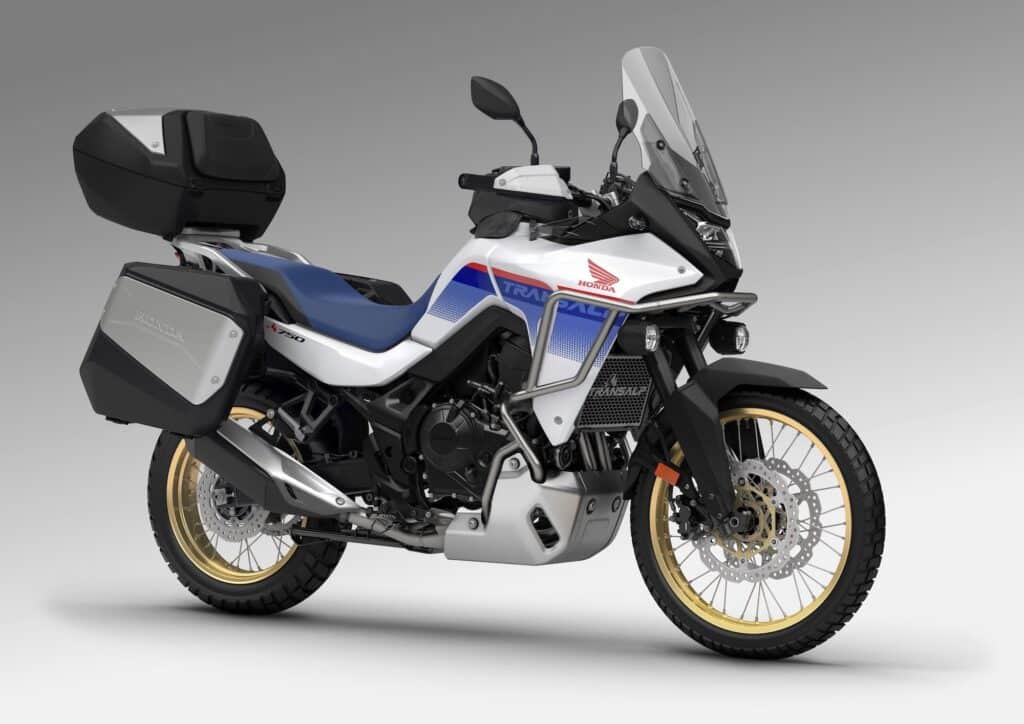
The Honda XL750 Transalp is a rebirth of the Transalp brand, which had expired a decade prior with the Transalp 700, a motorcycle veering more towards being a commuter. The XL750 Transalp has a new motor, a 755-cc parallel twin, and enough goodies (medium-long travel suspension, a 21-inch front wheel) to give it mixed-use pretension, without being a dedicated dirt bike. It’s on the affordable end, so lacks some niceties like dynamic suspension or even cruise control.
Husqvarna Norden 901
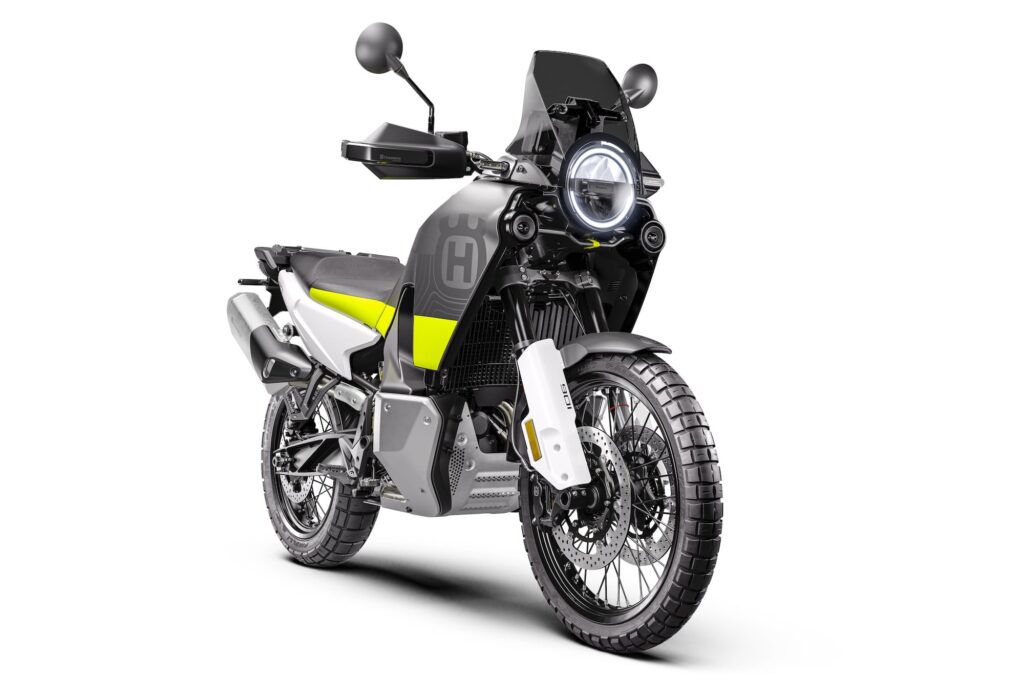
The Husqvarna Norden 901 is based on the same platform as the KTM 890 Adventure R, an 889 cc parallel twin with a 270-degree crankshaft. It has great specs, with long-travel (even longer in the Explorer edition), fully adjustable suspension, and ever ride aid you can think of. Plus, it looks cool.
Kawasaki KLR650
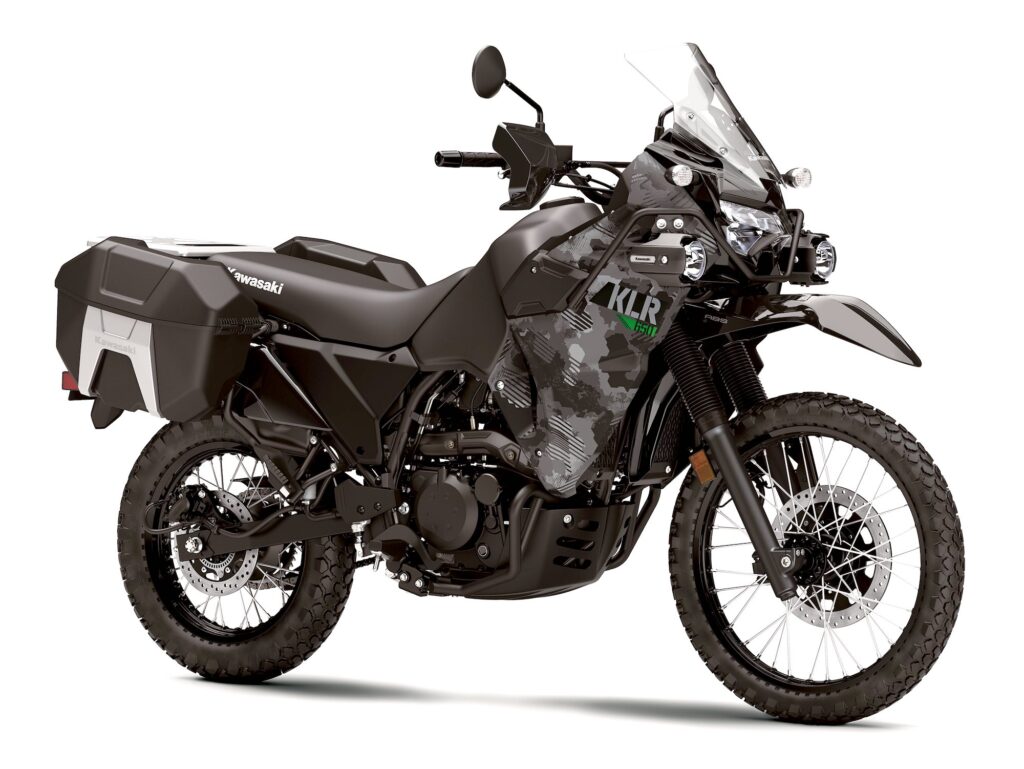
Kawasaki updated its iconic single-cylinder, low-power but unbreakable adventure motorcycle, the KLR650, for 2021 with fuel injection, ABS, and a digital display. It’s still the same cheap, back-to-basics adventurer that will get you anywhere and back, though not too quickly. Its main selling point is that it’s ready to rock right out the door for very little money.
KTM 890 Adventure
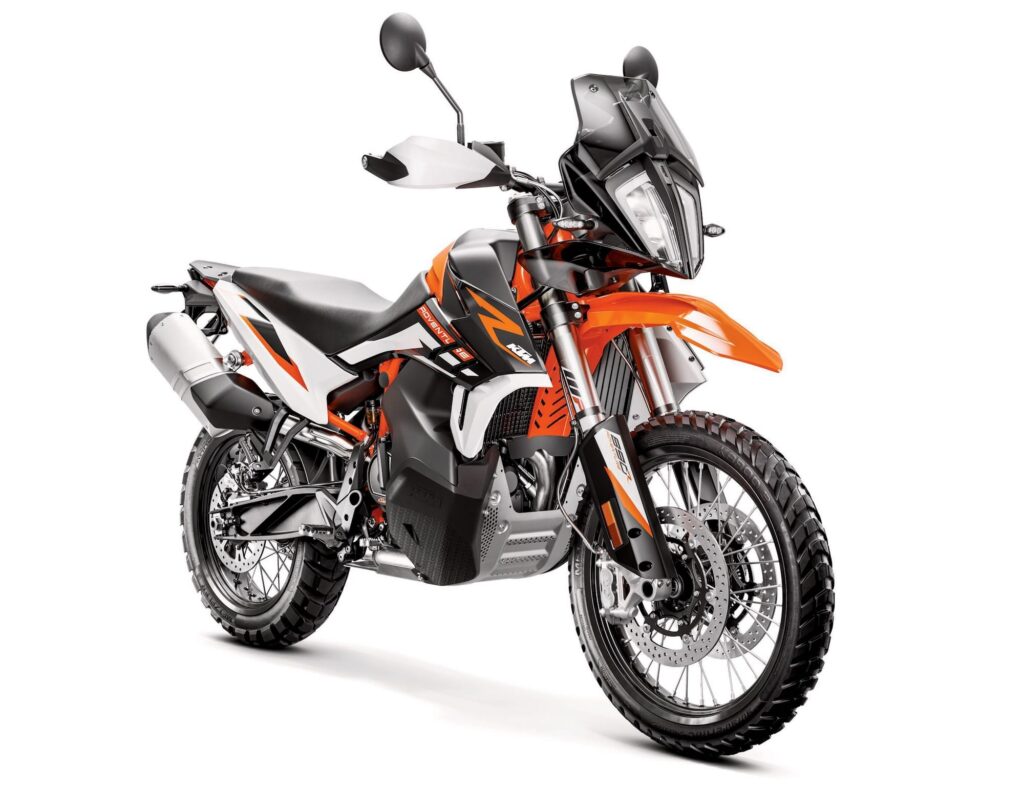
The KTM 890 Adventure R is the “Excitement” factor in the middleweight adventure motorcycle series. It has a sparkling 889 cc parallel twin (shared with the Husqvarna Norden 901), very long-travel suspension (longer than the non-R), and every kind of ride aid you can think of. Despite that, it’s one of the lighter bikes in the range (though not by much). It’s a fan favourite, but it’s not cheap.
Moto Guzzi V85 TT
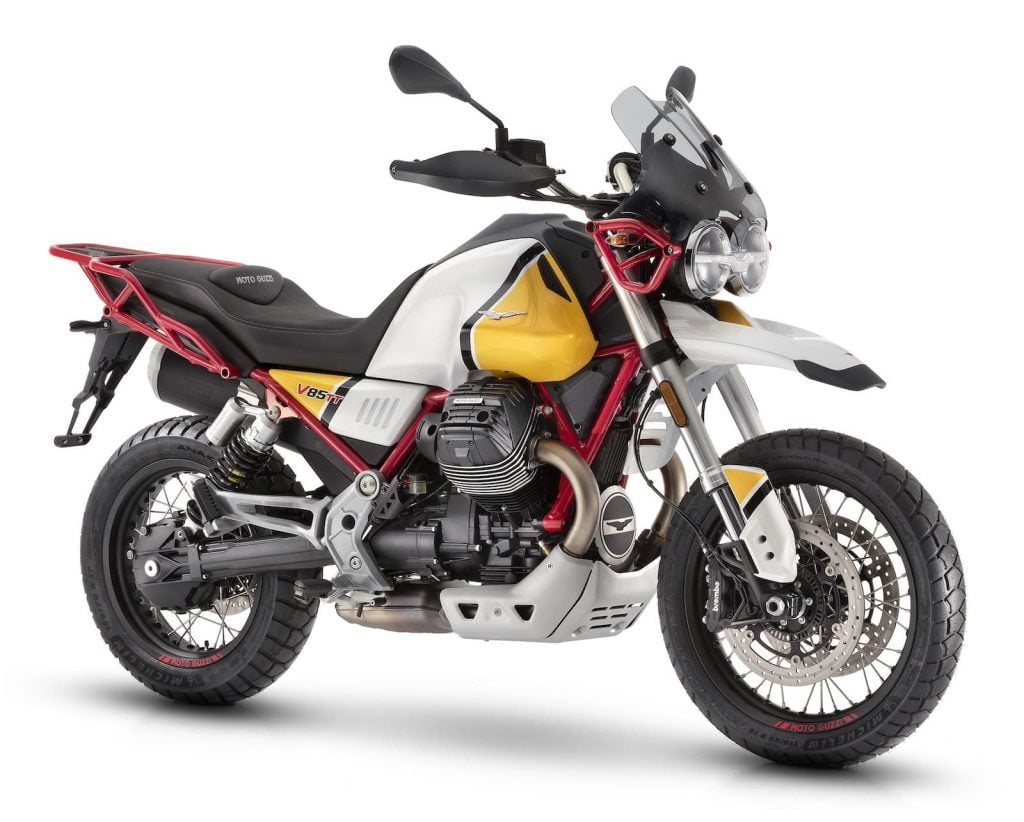
The Moto Guzzi V85 TT is an oddball bike, but it deserves to be included as it’s just so interesting. It’s powered by an air/oil-cooled longitudinal V-twin powering a shaft drive — this is the one you want if you don’t want to be lubing your chain! It lacks many ride aids, but it has cruise control! Plus, it’s very big on character and style. Finally, maintenance is easy, with pushrods and those big cylinders sticking out the side, and screw and locknut-style adjusters.
Suzuki V-Strom 800DE
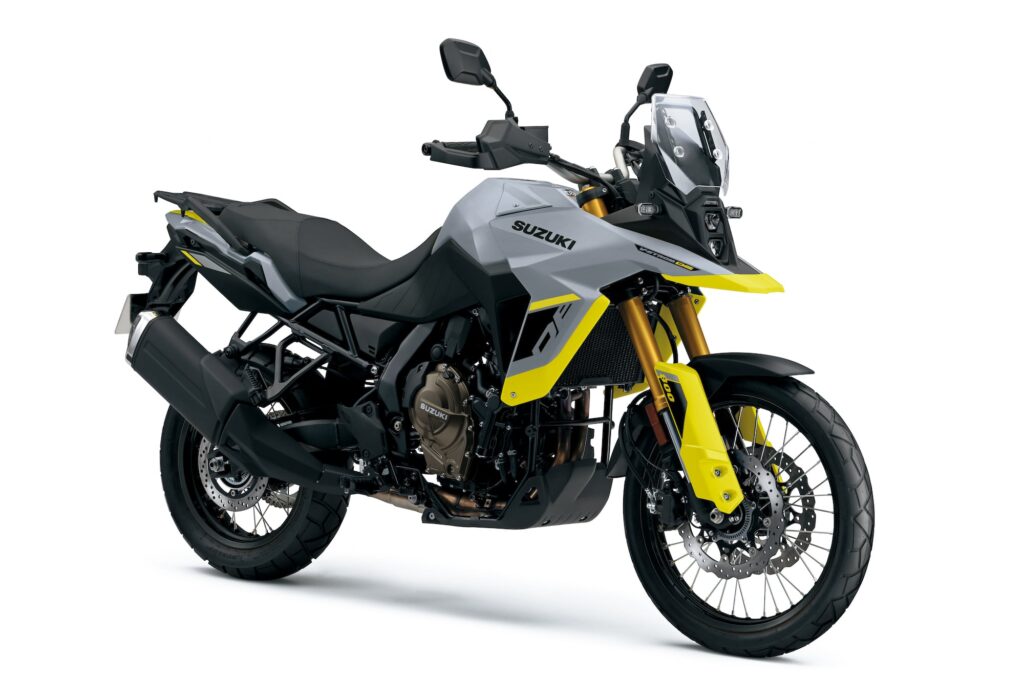
Suzuki updated their V-Strom for 2023 with the V-Strom 800DE, though it co-exists with the V-Strom 650XT (for now). The 800DE uses the same new sporty 776cc parallel twin as the GSX-8S, ditching the V engine associated with the series, and also earned a 21-inch front wheel, similar to its big sibling, the V-Strom 1050DE. It lacks an IMU and cruise, but the middleweight bike doesn’t benefit from them as much as big-bore tourers might.
Triumph Tiger 900 Rally / Pro
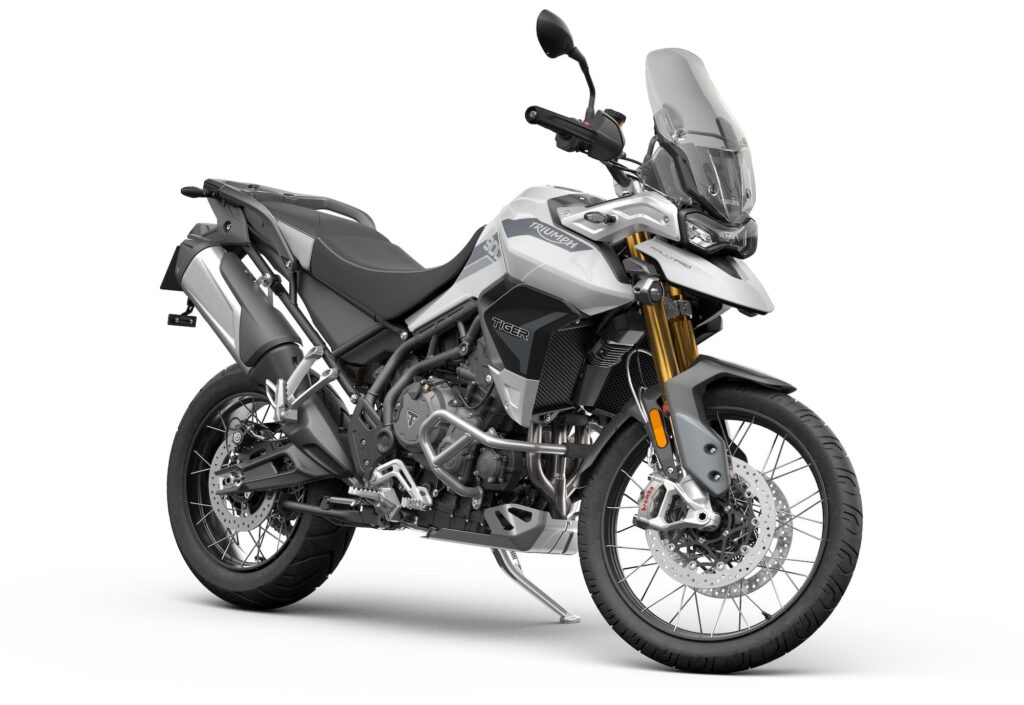
The Triumph Tiger 900 Rally Pro is the only middleweight adventurer to use a three-cylinder engine. The 900 Rally Pro is an update to the Triumph Tiger 800XE, but the 900 engine has a different, lower, more rumbling character. Aside from that, this is the same old luxury middleweight adventure bike, with every ride aid on the market available — even an optional heated seat.
Yamaha Ténéré 700
The Yamaha Ténéré 700 is an already-iconic middleweight adventure tourer, powered by the CP2 motor, a character-rich parallel twin we first saw in the Yamaha FZ-07. Yamaha blessed the T7 with an all-new chassis, long suspension (even longer in the World Raid edition), and classic good looks from the previous Ténéré 660. The Yamaha Ténéré 700 hasn’t got much tech in it, but that doesn’t stop people from loving it. See here for a full breakdown between the variants of the Tenere 700.