
I’m no Luddite. I have an electric house, an electric car (look, I like air conditioning and a stereo when doing groceries! And I hate driving and don’t go very far), and an electric lawnmower. Oh, and an electric guitar, though they’re old-school in their own way. But my motorcycles are petrol-powered.
So when Honda announced that the WN7 would go into production, I couldn’t help wondering: would this be the electric motorcycle to sway me over to the dark side?
No. Well, probably not. But I’m giving it the eyeballs emoji. “👀”
Electric motorcycles are paradoxical for me. I like machines that feel old. Electric guitars haven’t fundamentally changed since the 50s. Bicycles get new tech bits, but they’re still the same basic machine (and they’re free to ride!). Add too much electric power to a bicycle, and they end up in a no-man’s land: too fast for a shared path, but without the range, stability, or legal freedom of a motorcycle.
Full-size electric motorcycles have had another problem. Most have come from companies with smaller dealer networks and uncertain long-term support. A battery-powered bike is exactly where I want boring things such as parts supply, software support, warranty work, and a nearby workshop to be boringly dependable.
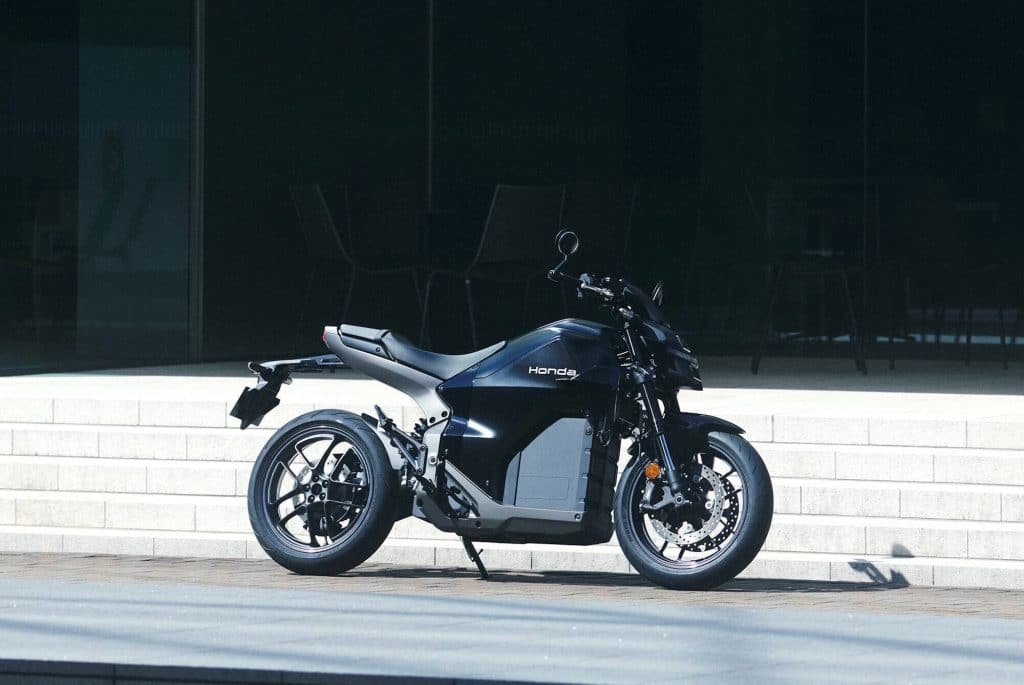
Honda changes that calculation. The WN7 looks like a proper motorcycle rather than an awkward scooter with delusions of grandeur. It has enough performance to be interesting, CCS2 rapid charging, a slim chassis, decent electronics, and a manufacturer that will almost certainly still exist when the battery warranty expires.
Are you obsessed with motorcycles?
Well, I am. That’s why I created this site — as an outlet. I love learning and sharing what others might find useful. If you like what you read here, and you’re a fraction as obsessed as I am, you might like to know when I’ve published more. (Check the latest for an idea of what you’ll see.)
The Honda WN7 in a Nutshell
The Honda WN7 is Honda’s first full-size production electric motorcycle. It is a middleweight naked bike built around a fixed 9.3 kWh battery, a liquid-cooled motor, belt final drive, and an aluminium chassis that uses the battery case as a stressed member.
The name is Honda code with a little corporate poetry: W means “Wind”, N means “Naked”, and 7 denotes its performance class. “Wind Naked” sounds like an embarrassing misunderstanding at a resort, so WN7 was probably the right call.
There are two European versions:
- WN7 18 kW: 18 kW (24 hp) rated output, 50 kW (67 hp) maximum output, 100 Nm (74 lb-ft), and a 129 km/h (80 mph) top speed. This is the A2-licence model.
- WN7 11 kW: 11.2 kW (15 hp) maximum output, the same claimed 100 Nm (74 lb-ft), and a 120 km/h (75 mph) top speed. This version fits the European A1 licence class.
The higher-output model weighs 217 kg (478 lb), covers 0–100 km/h (0–62 mph) in a claimed 4.6 seconds, and has 140 km (87 miles) of certified range. Those numbers make it quick enough for any normal road, but not a substitute for a petrol sport bike on a long, fast ride.
| What looks good | What gives me pause |
|---|---|
| Strong, simple acceleration with no clutch or gear changes | 140 km (87 miles) is a city-and-short-trip range, not a touring range; I often look for a charger when I have 100km of range left in a car |
| CCS2 charging can take the battery from 20 to 80% in about 30 minutes | 217 kg (478 lb) is a lot for a bike with a modest top speed |
| Low central mass, slim body, reverse assist, and an 800 mm (31.5-inch) seat | The fixed battery makes secure access to a power point important |
| IMU-based cornering ABS, traction control, and adjustable regeneration | £12,999 in the UK puts it against much faster petrol motorcycles |
| Honda dealer and parts support | No storage where a petrol bike would have its fuel tank |
If you want to see the petrol bikes people will inevitably compare with the WN7, see my guide to middleweight naked sport bikes you can buy now.
The Motor: 18 kW, 50 kW, or Both?
The most confusing WN7 specification is its power. Honda calls the main model an “18 kW” motorcycle, then lists 50 kW maximum power. Both figures are correct.
The 18 kW figure is its rated output: the level used for licensing and the power the system can sustain. The 50 kW figure is its short-term maximum. Electric motors can deliver a much bigger burst than their rated output, limited by battery discharge, motor heat, and software.
So don’t picture a 217 kg motorcycle powered by the equivalent of a Ninja 250. At full acceleration, 50 kW (67 hp) puts the WN7 around the power level of a healthy middleweight twin. The 100 Nm (74 lb-ft) torque claim is more than a Honda CB750 Hornet makes, and the WN7 does not need a downshift before delivering it.
That last part matters more than the peak number. On a petrol bike, maximum power lives near the top of the rev range. Around town, you’re usually using a fraction of it and choosing a gear. On the WN7, you turn the throttle and get the response Honda’s control software permits immediately. No clutch, no kick down two gears, and no moment of wondering whether third or second was the better choice.
Honda claims 0–100 km/h (0–62 mph) in 4.6 seconds for the 18 kW version. That is quick rather than frightening. For context, it is far slower than the original Harley-Davidson LiveWire I rode, but still comfortably fast enough to leave normal traffic behind.
The 129 km/h (80 mph) limit tells you where Honda drew the box around this bike. It can use a motorway, but its best work happens in town, through outer suburbs, and on slower back roads. Riders who regularly sit at 110 km/h will use the battery quickly and spend too much time close to the bike’s maximum speed.
What the WN7 Appears to Be Like to Ride
The early road tests are now in, and they agree on the important points.
Test riders describe the WN7 as much lighter on the move than its 217 kg figure suggests. The battery sits low and close to the middle, the body is narrow, and the bike doesn’t have a fuel tank carrying mass above the motor. Visordown’s first ride praised the acceleration, build quality, and nimble handling, while marking down the range and seat comfort.
That matches my experience with the LiveWire. A heavy electric motorcycle can feel remarkably easy once it is moving because the mass is concentrated low, the throttle is predictable, and you never have to balance engine revs against clutch slip. Slow traffic becomes twist, coast, brake. The machine gets out of the way.
The WN7 also has adjustable regenerative deceleration. Paddles on the left bar let you choose levels 0–3, independently of the four riding modes. A low setting lets the bike coast on a fast road. A high setting gives strong engine-braking-like deceleration when you close the throttle, which reduces how often you reach for the brakes. The brake light comes on when regeneration slows the bike firmly enough, so following traffic gets a warning.
The four modes are Sport, Standard, Rain, and Econ. They change throttle response, traction control, and the default regeneration setting. This isn’t about creating four different personalities for marketing. It lets you choose between a sharp response in the dry, a softer throttle in poor grip, and less wasteful acceleration when range matters.
Chassis, Brakes, and Ergonomics
Honda did not put the WN7 motor into a CB750 Hornet frame. The battery case is part of the chassis, with aluminium steering-head and swingarm-pivot sections mounted around it. That keeps the bike narrow and avoids wrapping a conventional frame around a very large rectangular object.
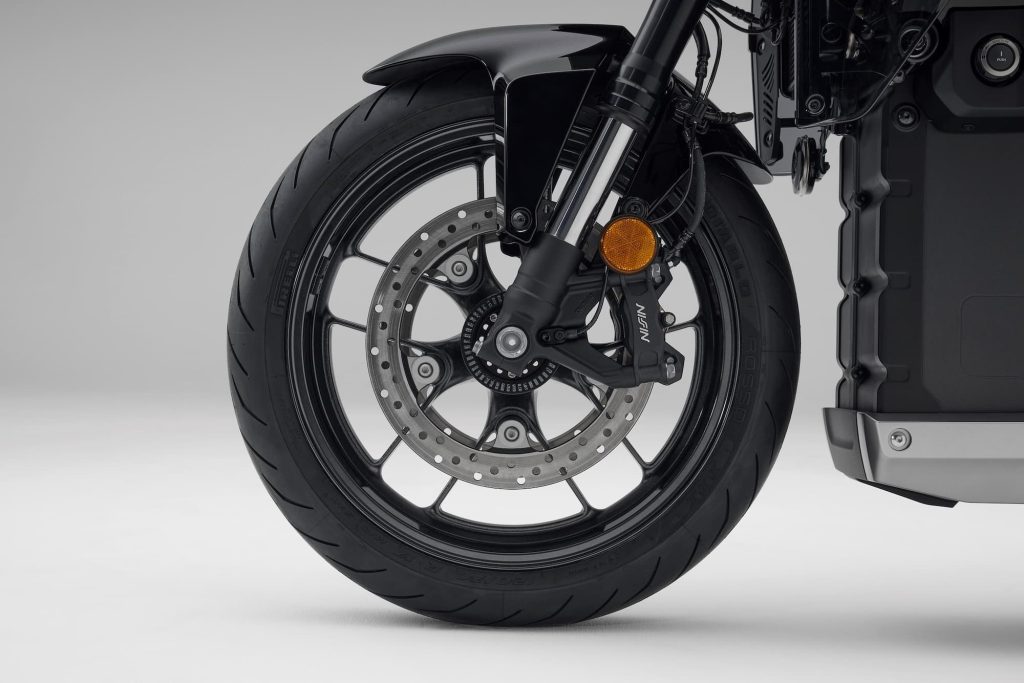
At the front is a non-adjustable 43 mm inverted fork with 120 mm (4.7 inches) of travel. The rear monoshock also gives 120 mm of wheel travel and has adjustment, though Honda’s public specification does not promise a full set of damping controls. The aluminium single-sided swingarm looks expensive and makes rear-wheel access easier.
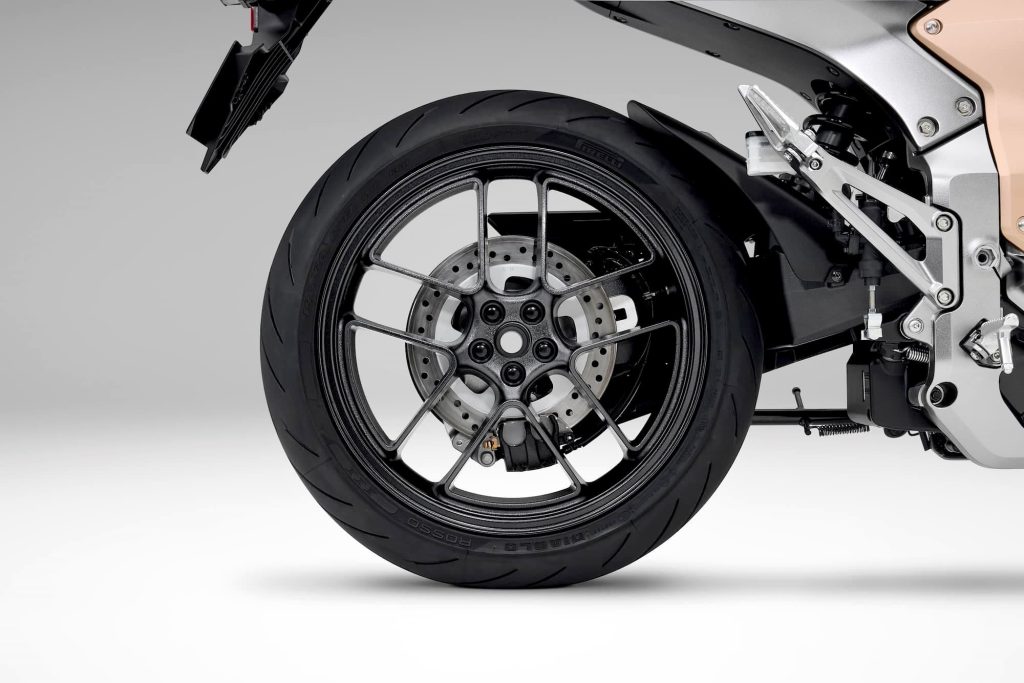
The brakes are modest for the weight: twin 296 mm discs with two-piston calipers at the front and a 256 mm rear disc. But regenerative deceleration shares the work, and early testers report strong, natural stopping. A six-axis IMU supports lean-sensitive ABS and Honda Selectable Torque Control. See my explanation of cornering ABS and IMUs if those terms sound like brochure soup.
The seat is 800 mm (31.5 inches) high, the riding position is upright, and the waist is much narrower than the battery’s side profile suggests. The wheelbase is a fairly long 1,480 mm (58.3 inches), but Honda the bike has a small 2.8 m (9.2-foot) turning radius.
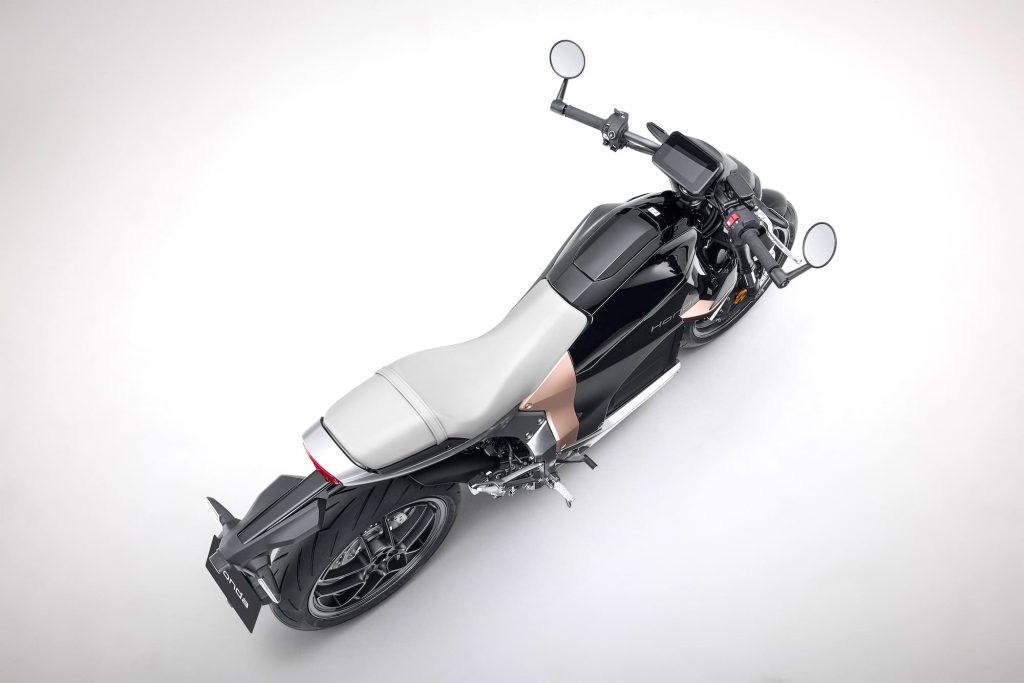
A forward-and-reverse walking mode, limited to 5 km/h (3 mph), helps when the bike’s weight becomes real again in a sloping driveway or tight parking spot.
There is one slightly funny detail: a 150/60-17 rear tyre. That’s narrower than the 160 or 180-section rubber you see on many middleweights. It should help steering and efficiency, but it gives the back of the bike less visual heft. I prefer a manufacturer choosing the tyre the motorcycle needs rather than fitting a fat one to win a car-park beauty contest.
Range: Enough for a Routine, Not Enough for Freedom
The main WN7 has a certified WMTC range of 140 km (87 miles). The lower-power 11 kW model stretches that to 154 km (96 miles). Both use the same fixed 9.3 kWh lithium-ion battery.
Those are mixed-cycle figures. Speed hurts electric motorcycle range because aerodynamic drag rises sharply, and a naked bike gives the air plenty of rider to push against. A route with repeated 100–110 km/h sections will produce a less cheerful number than urban riding with regenerative deceleration.
You also don’t plan around using the full 100%. If you leave a sensible reserve and normally operate between 20 and 90%, the official figure gives you about 98 km (61 miles) to play with. Cold weather, hills, a passenger, headwinds, and enthusiastic use of Sport mode can reduce that.
This is why I don’t like calling 140 km “good” or “bad” without describing the rider. It is ample for a 25 km commute, errands, and a loop through nearby back roads. It is restrictive for someone who wakes up on Saturday and decides to ride 300 km without planning lunch around a charger.
Not everyone can charge at home, either. I prioritised off-street parking when moving, so I can drag a cable to my car. If you live in an apartment without a power point near the bike, the fixed battery turns charging into an errand. That undermines one of the best parts of an EV: waking up with a full battery.
Charging: This Is the WN7’s Strongest Practical Argument
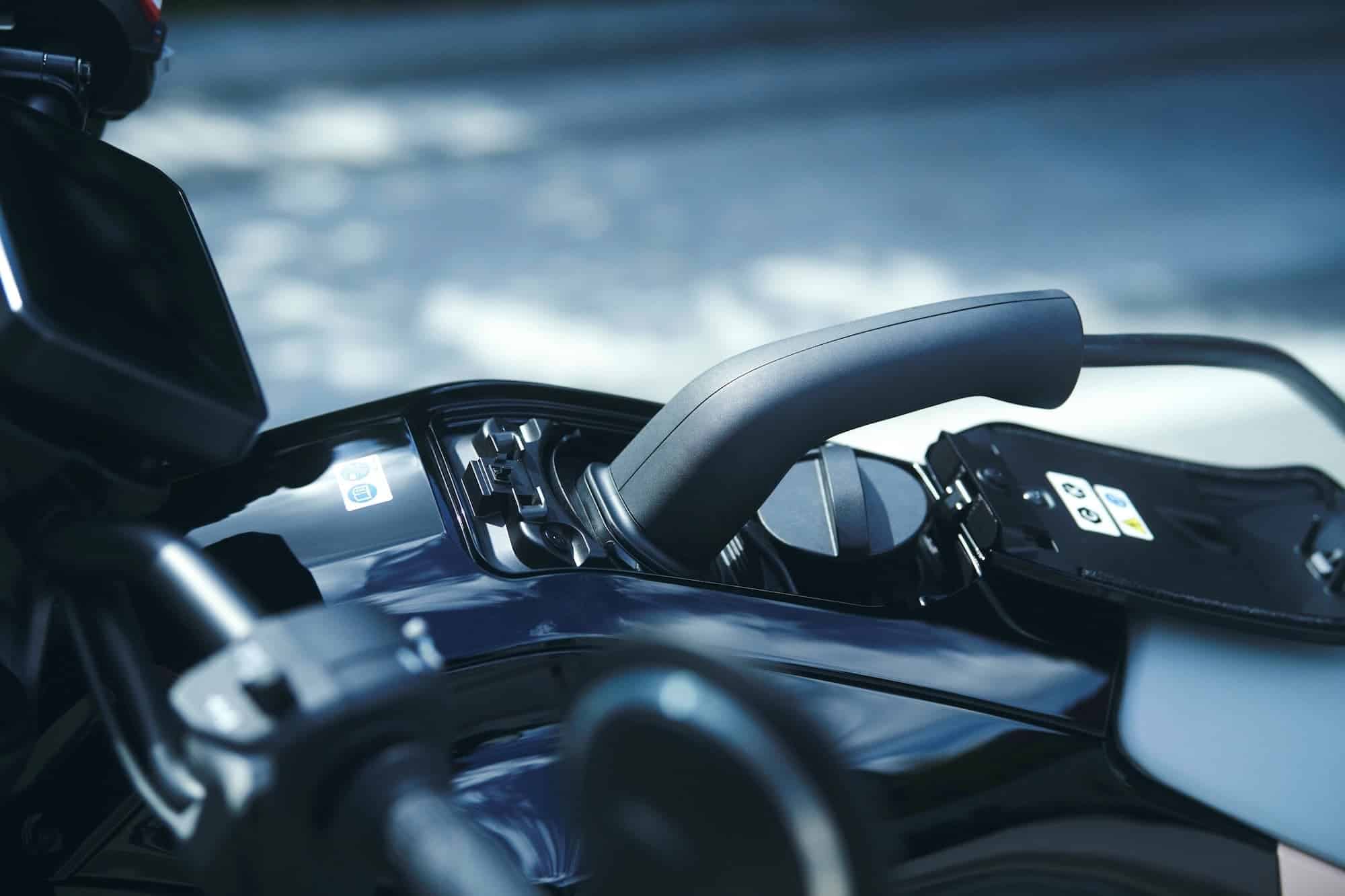
Honda gave the WN7 both Type 2 AC charging and automotive-style CCS2 DC charging. This means real fast charging, much better than most electric motorcycles, which make you spend hours at every public stop. (And they’re not always in very scenic places!)
- CCS2 DC rapid charger: about 30 minutes from 20 to 80%.
- Mode 3 Type 2 AC charger: under 2 hours 30 minutes from 0 to 100%.
- Household outlet: Roughly 5 hours 30 minutes for a full charge.
A 20–80% rapid charge adds about 60% of the certified range, or roughly 84 km (52 miles) on the 18 kW model. Half an hour is still far longer than filling a tank, but it is short enough for a meal or coffee stop. More importantly, CCS2 chargers are built for cars and already exist in far greater numbers than motorcycle-specific charging hardware.
Charging at home should also be cheap. A complete 9.3 kWh fill costs about A$2.80 before charging losses at an electricity rate of A$0.30/kWh. The saving over petrol is real, although it takes a lot of $10-20 fuel stops to recover a large purchase-price difference.
The battery is passively air-cooled while the motor and power electronics are liquid-cooled. The fixed pack keeps the chassis clean and allows the high-voltage charging system, but you can’t carry it upstairs like a scooter battery.
Controls and Everyday Details
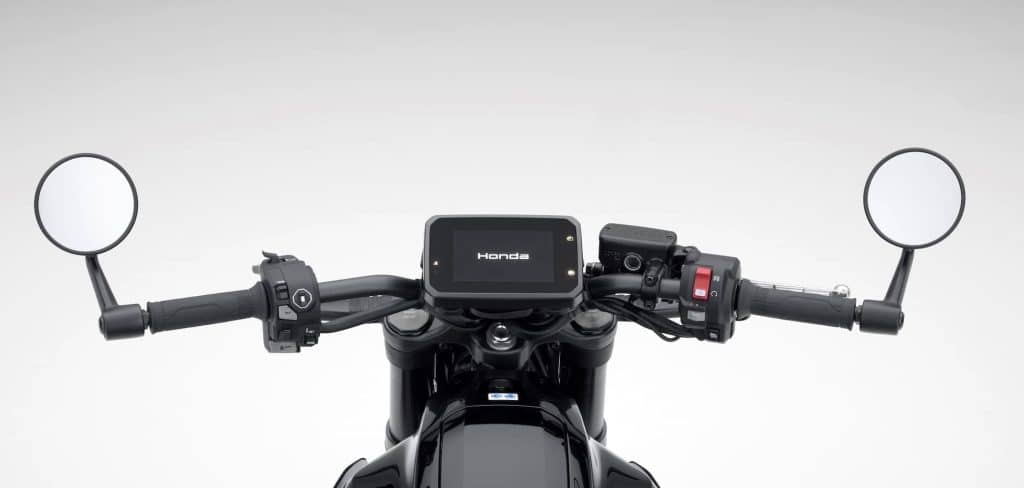
The WN7 has a ton of conveniences: a smart key, backlit switches, self-cancelling indicators, LED lighting, a USB-C socket under the seat, and an Emergency Stop Signal that flashes the hazard lights under hard braking.
The five-inch colour TFT connects to Honda RoadSync for turn-by-turn navigation, calls, messages, and music control. One disappointing omission reported in early testing is remote battery monitoring: RoadSync does not currently let you check the WN7’s charge level from your phone. On an electric car, “Is it done yet?” is one of the first things I want the app to answer. (Luckily, public charging apps usually let you do this.)
Honda also includes a selectable speed limiter. You choose a speed and the bike prevents an accidental creep above it. That sounds unnecessary until you ride an EV with an effortless throttle through a camera-heavy 40 km/h zone.
There is no clutch lever, gear shifter, fuel tank, or useful storage cavity in the fake-tank area. Honda offers a 15-litre rear-seat bag that expands to 22 litres, which is a practical accessory but takes away the passenger seat. Commuters will probably want luggage from day one.
Maintenance: Less Work, but Not No Work
The WN7 removes engine oil, spark plugs, valve clearances, a clutch, and a multispeed gearbox from the service list. Belt final drive also avoids chain cleaning, lubrication, and regular slack adjustments.
It still has tyres, brake fluid, brake pads, suspension, steering bearings, coolant for the motor system, and a final-drive belt that will eventually need inspection or replacement. The battery and electronics also make dealer diagnostic support more important, even if scheduled workshop time should be lower than on a petrol middleweight.
This is where the Honda badge matters to me. Low routine maintenance is helpful only if a fault does not turn the bike into an unsupported laptop on wheels.
Looks: Futuristic, but Still a Motorcycle
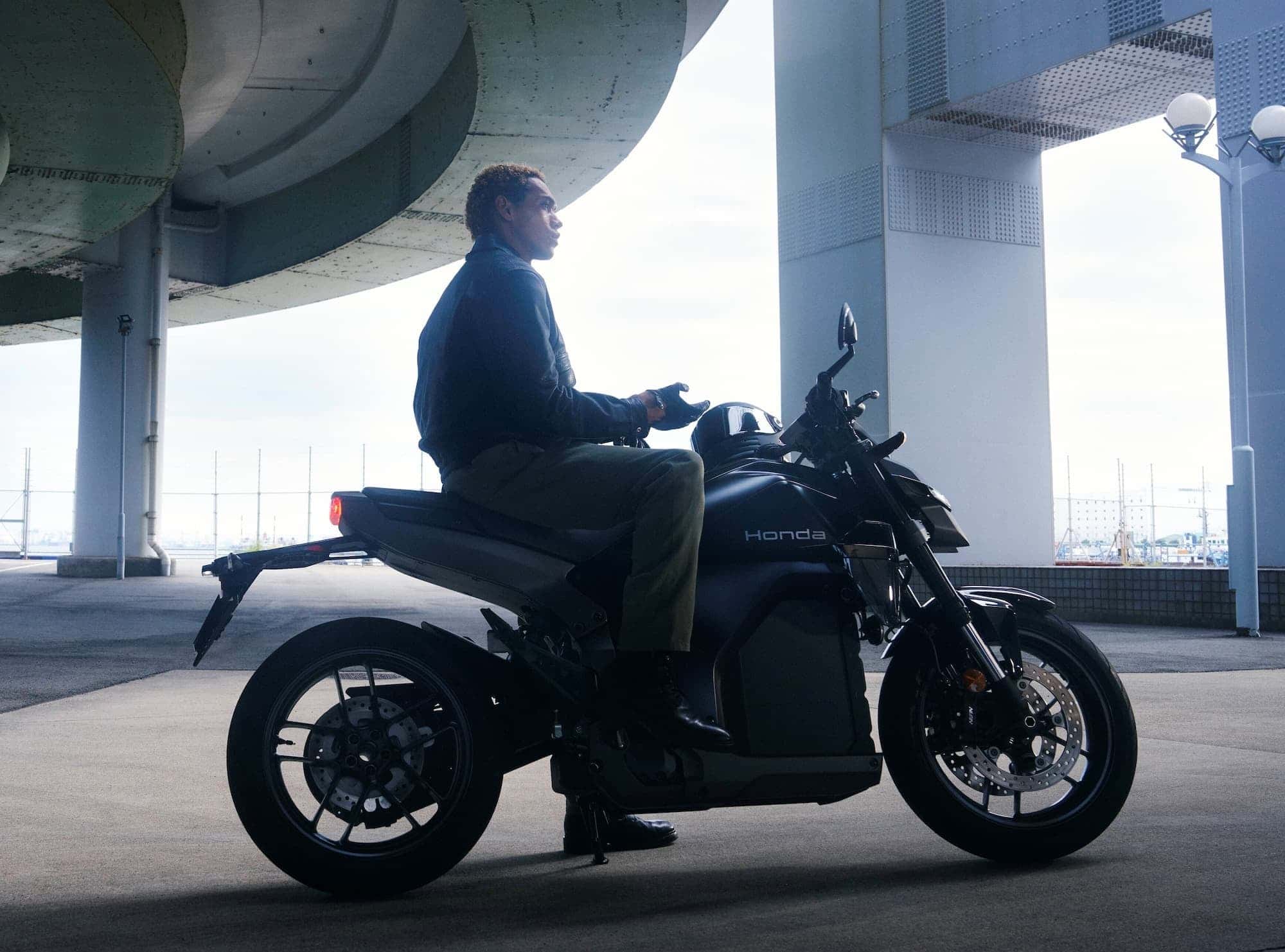
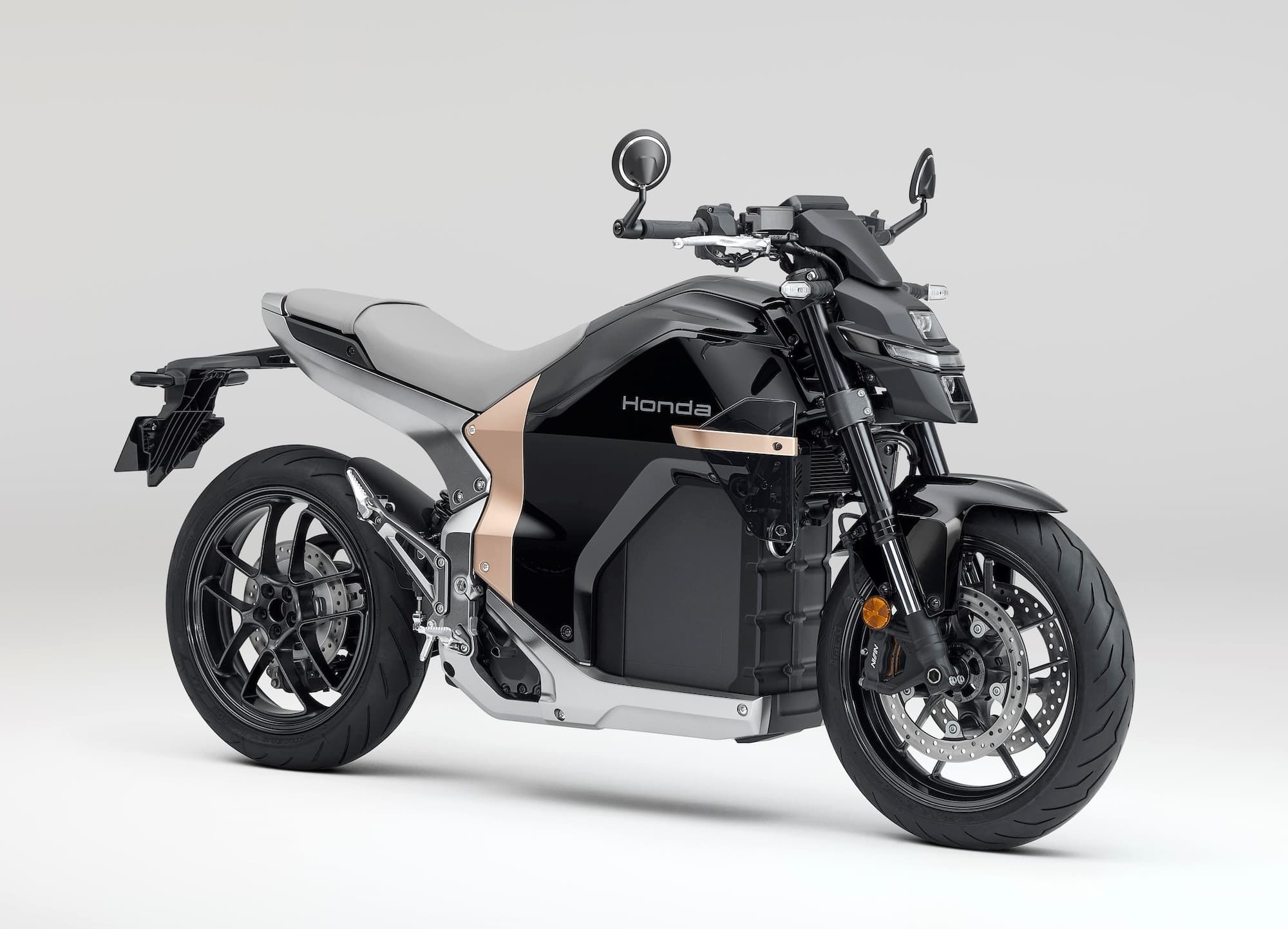
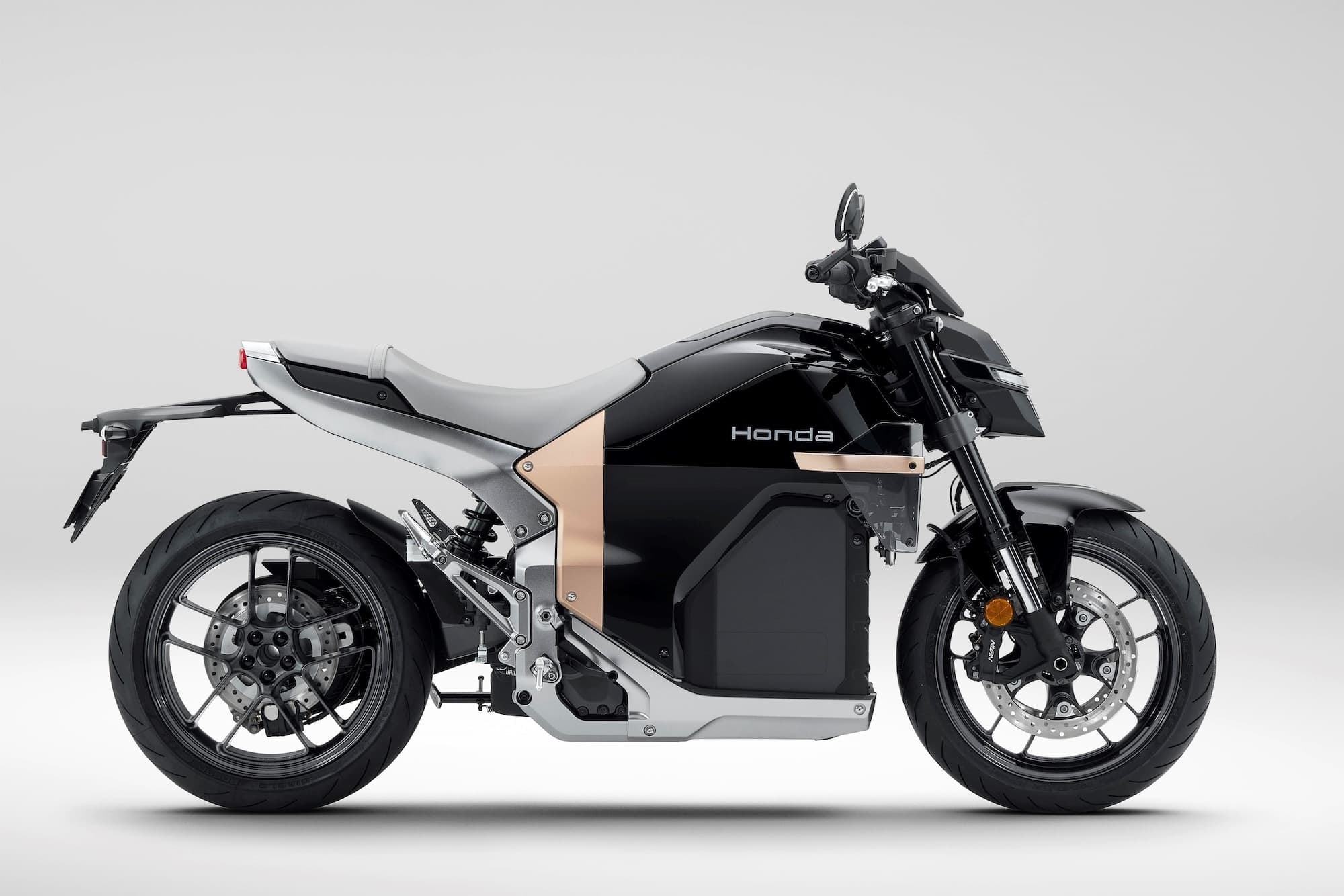
The WN7 looks much better than it had to. Honda avoided pretending the battery was an engine, but also resisted making the bike look like a household appliance. The horizontal bodywork, slim projector headlights, and large black battery case give it a deliberate shape.
It does look a little like it was made from expensive Lego. I mean that affectionately. The pieces have clear jobs, the proportions make sense, and the empty area below the seat stops the middle from becoming one enormous slab.
The design has already won iF Gold and Red Dot “Best of the Best” awards in 2026. Awards don’t make a motorcycle enjoyable, but in this case I understand the judges. It looks modern without wearing a silly science-fiction costume.
Honda WN7 Specifications
| Specification | Honda WN7 18 kW | Honda WN7 11 kW |
|---|---|---|
| Rated / maximum power | 18 kW rated; 50 kW (67 hp) maximum | 11.2 kW (15 hp) maximum |
| Maximum torque | 100 Nm (74 lb-ft) | 100 Nm (74 lb-ft) |
| Top speed | 129 km/h (80 mph) | 120 km/h (75 mph) |
| Claimed range | 140 km (87 miles), WMTC | 154 km (96 miles), WMTC |
| Battery | 9.3 kWh, 349.44 V fixed lithium-ion | |
| Charging | Type 2 AC; CCS2 DC; 20–80% in about 30 minutes on DC | |
| Final drive | Belt | |
| Kerb weight | 217 kg (478 lb) | |
| Seat height | 800 mm (31.5 inches) | |
| Wheelbase | 1,480 mm (58.3 inches) | |
| Ground clearance | 139 mm (5.5 inches) | |
| Front suspension | 43 mm inverted fork, 120 mm (4.7 inches) travel | |
| Rear suspension | Monoshock, 120 mm (4.7 inches) wheel travel, aluminium single-sided swingarm | |
| Front brakes | Twin 296 mm discs, two-piston calipers, IMU-based ABS | |
| Rear brake | Single 256 mm disc, single-piston caliper | |
| Tyres | 120/70R17 front; 150/60R17 rear | |
| Riding aids | Four modes, HSTC, cornering ABS, deceleration levels 0–3, forward/reverse assist, speed limiter | |
| UK price | £12,999 on the road | |
Pricing and the Strange Subscription
In the UK, Honda lists both WN7 versions at £12,999 on the road. That is the bike’s hardest number to defend. A petrol middleweight costs far less, goes much farther, and can be refuelled almost anywhere in minutes.
The WN7 partly earns its premium through the aluminium chassis, single-sided swingarm, high-voltage battery, CCS2 hardware, and electronics. None of that changes the fact that a buyer must pay premium-bike money for commuter-bike range and performance.
Australia gets a completely different proposition. Honda Australia’s expression-of-interest page says the WN7 will be offered through Carbar at an indicative A$400 per month, based on a 24-month subscription. That’s A$9,600 over two years, after which you don’t own the motorcycle.
Registration and insurance are included (OK, that’s roughly $4,000 value over two years…), and that the initial allocation is only 50 bikes. Bikesales also reports that subscribers can cancel or swap with two weeks’ notice, though Honda’s own page describes the advertised price as based on a two-year term. Read the final contract rather than treating either summary as the last word.
I initially thought A$400 a month sounded steep. With registration and insurance included, it is more interesting. The subscription moves battery ageing, depreciation, and resale risk back to Honda and its partner. It also makes sense for what Honda says it is doing: testing Australian demand rather than pretending it knows how many people want an electric motorcycle.
Still, this is a trial rather than conventional ownership. If you like keeping bikes for years, modifying them, or buying used, the arrangement is unlikely to appeal. If you’re curious about living with an EV motorcycle and don’t want to gamble on resale value, it may be the best version of the WN7 offer.
So, Is the Honda WN7 Any Good?
Yes, within a fairly tight definition.
The WN7 looks like a very good urban and regional motorcycle for someone who rides predictable distances, can charge where they park, and values an easy throttle, low routine maintenance, and Honda support. The early ride reports give me more confidence than the specification sheet alone: testers consistently describe it as slim, easy to place, well built, and more fun than its weight and power figures suggest.
It is a bad choice for a rider who tours, lives without reliable charging, wants to carry a passenger and luggage, or expects maximum performance for the money. A 140 km range and 129 km/h top speed are limits you will plan around, not numbers that fade into the background.
Would it replace my petrol motorcycle? No. I got into motorcycles partly because I enjoy engines, gearboxes, and the unnecessary mechanical drama of the whole thing. The WN7 removes much of that.
But as a second bike for commuting and short rides, I understand it. It takes the parts I liked about the LiveWire — instant response, silence, low-speed ease, and the feeling that the machine is waiting for me rather than the other way around — and puts them into a smaller, more sensible Honda.