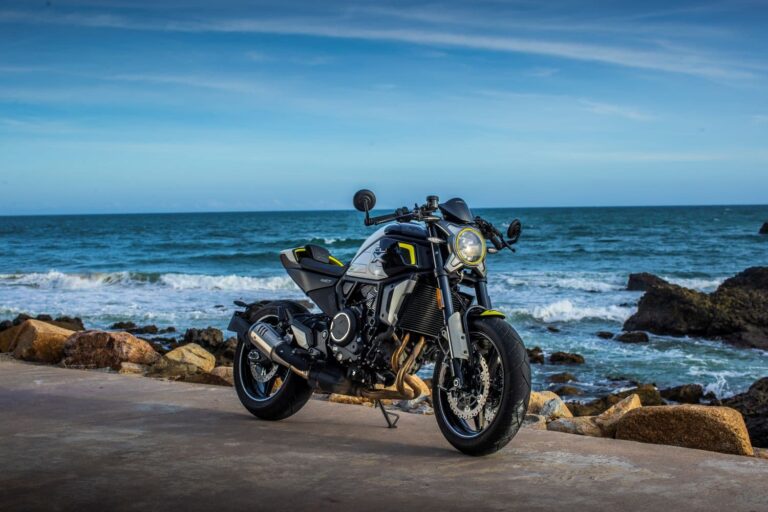

The odd thing about the Kawasaki Ninja ZX-4R is that it makes more sense once you stop asking what it beats.
A Ninja 500 is cheaper and easier. A ZX-6R is faster. Several 450-ish twins make more torque with less effort, and with a growl that’s easier to get to. But none of them gives you a 399 cc inline-four that pulls cleanly through town, turns feral above 10,000 rpm, and keeps going until the tachometer is alarmingly deep into five figures. That combination had almost disappeared from new motorcycles, and to be frank, I thought it’d never return.
The ZX-4R and ZX-4RR bring back the small-capacity four-cylinder supersport without pretending it is still 1993 (I was there, at the time, and we didn’t really think it was that special, back then… hence all the droning grunge bands). They have fuel injection, riding modes, traction control, a colour TFT, ABS, and — on the RR — a bidirectional quickshifter and a serious rear shock. They are also more expensive and heavier than the romantic memory of a tiny four suggests. But isn’t everything?
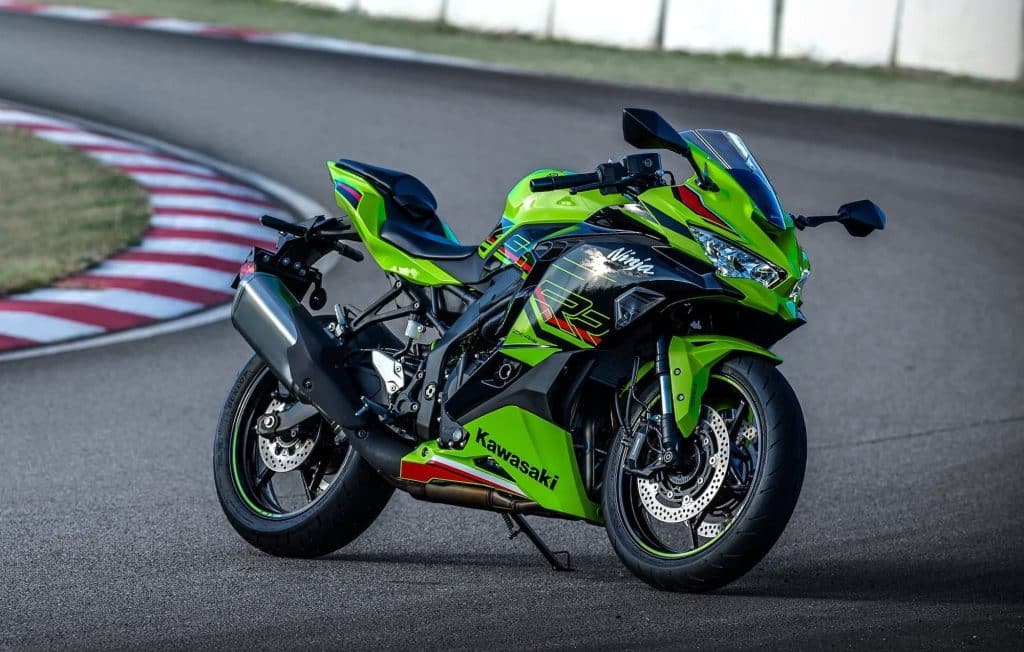
TL;DR: the ZX-4R is for the rider who values sound, precision, and the process of building speed more than effortless acceleration. The ZX-4RR is the one to buy if you ride hard or plan to visit a circuit. North American buyers should understand that their engine calibration is substantially softer at high rpm than the full-power specification sold in Europe and Australia.
Updates
- 19 October 2026: Added the announced 2027 BMW F 450 RR to the twin-cylinder alternatives, with its output, weight and lean-sensitive rider aids.
Are you obsessed with motorcycles?
Well, I am. That’s why I created this site — as an outlet. I love learning and sharing what others might find useful. If you like what you read here, and you’re a fraction as obsessed as I am, you might like to know when I’ve published more. (Check the latest for an idea of what you’ll see.)
Why Kawasaki built a small four again
For most manufacturers, the modern small sportbike formula is settled: one or two cylinders, moderate revs, a simple chassis, and a price that attracts newer riders. It works. The Ninja 250, 300, 400, and 500 family proves how good that formula can be. In fact, as evidenced by them, small twins have been the thing for decades.
A four-cylinder 400 is a much less rational object. Four pistons, 16 valves, four throttle bodies, more bearings, and more manufacturing work all serve an engine with less displacement than many commuter singles. The payoff is sacrificing cheap torque for impossibly smooth delivery, an intake and exhaust note that changes character several times on the way to the redline, and the freedom to use more of the gearbox before the road becomes absurd.
Kawasaki had already tested the modern version of that idea with the 249 cc Ninja ZX-25R, unveiled in 2019 and sold from 2020 in Japan and selected Asian markets. The ZX-4R followed in 2023, using the ZX-25R concept as a starting point but with a newly developed 399 cc engine and frame. Kawasaki quoted up to 59 kW (80 PS) with ram-air pressure for the full-power version at launch.
Before the ZX-4R: Kawasaki’s small-four history
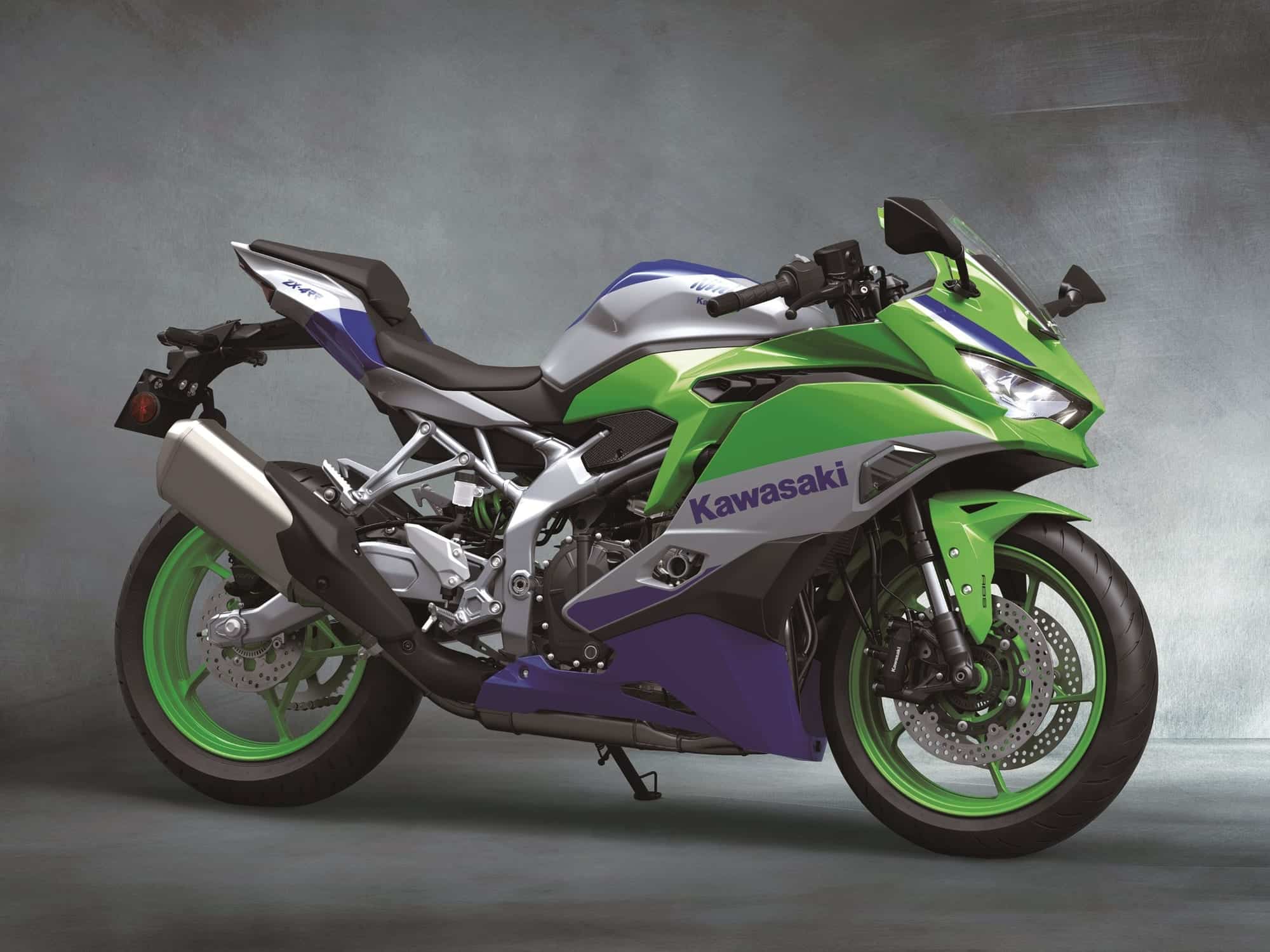
Kawasaki did not invent the high-revving small four. Honda, Yamaha, and Suzuki all built extraordinary 250 and 400 cc multis during the Japanese performance boom. But Kawasaki’s machines were among the most vivid, and the modern ZX-4R borrows heavily from their cultural memory even though it shares no engine or chassis hardware with them.
| Model | Years | What mattered | Where it was sold |
|---|---|---|---|
| Kawasaki ZX-4 | 1987-1988 | Early 398 cc, 16-valve inline-four and the immediate ancestor to the ZXR400 idea | Japan |
| Kawasaki ZXR400 | 1989-1999, with later UK registrations | H and L-series 400 supersports; rare R homologation versions | Japan and parts of Europe, including an official UK presence; grey imports elsewhere |
| Kawasaki ZXR250 | 1989-1990s | Quarter-litre four with an enormous rev range; often nicknamed “ZX-2R” | Primarily Japan; grey-imported into the UK, Australia, New Zealand, and other markets |
| Ninja ZX-25R | 2020-present | Modern 249 cc four with electronics and a ZX-series chassis | Japan and selected Asian markets |
| Ninja ZX-4R / RR | 2023-present | 399 cc four, modern electronics, genuinely global availability | North America, Europe, Australia, Japan, and selected Asian markets |
ZX-4 and ZXR400: the first 400 chapter
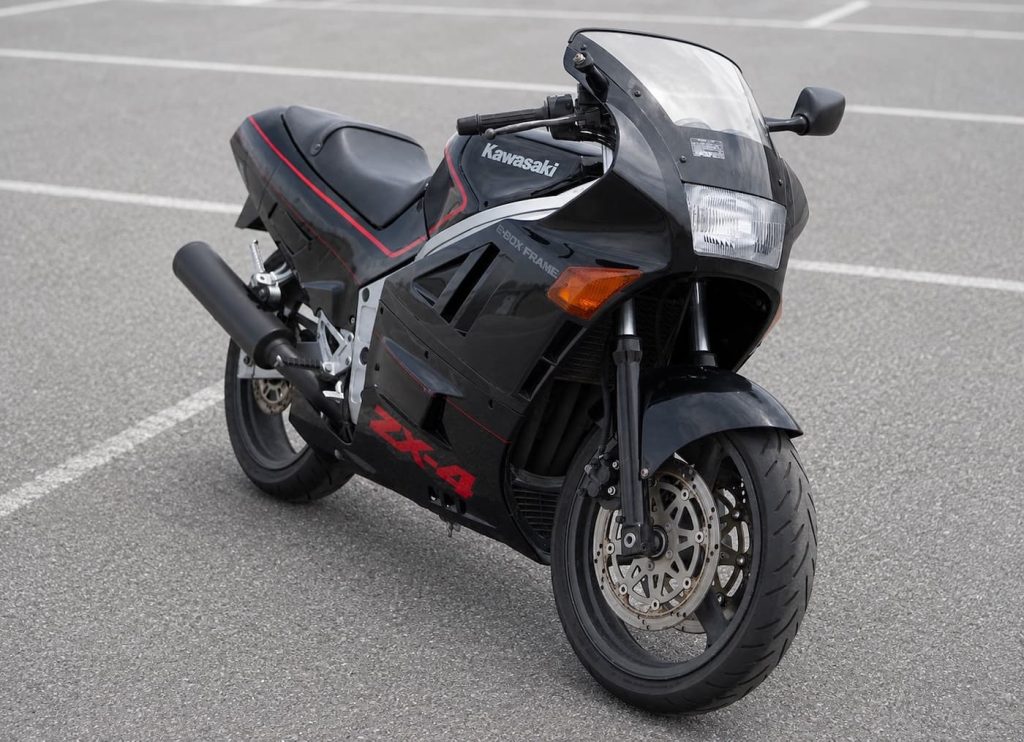
The 1987 ZX-4 was a Japanese-market 398 cc four that lasted only briefly before the ZXR400 arrived in 1989. The early ZXR400 H-series looked like a scaled-down endurance racer, complete with twin round headlights and the famous intake hoses running from the fairing to the top of the tank. In 1991 the slimmer L-series replaced it, gaining a single headlamp and the shape most riders now associate with the model.
Unlike many Japanese 400s, the ZXR400 gained an official foothold in Europe and the UK. It was never a normal US-market model, while Australian and New Zealand examples were mostly parallel imports from Japan. That distinction matters: the bikes were visible in many places, but their parts books, power claims, lighting equipment, and registration history can reflect their original market rather than the country in which they now live.
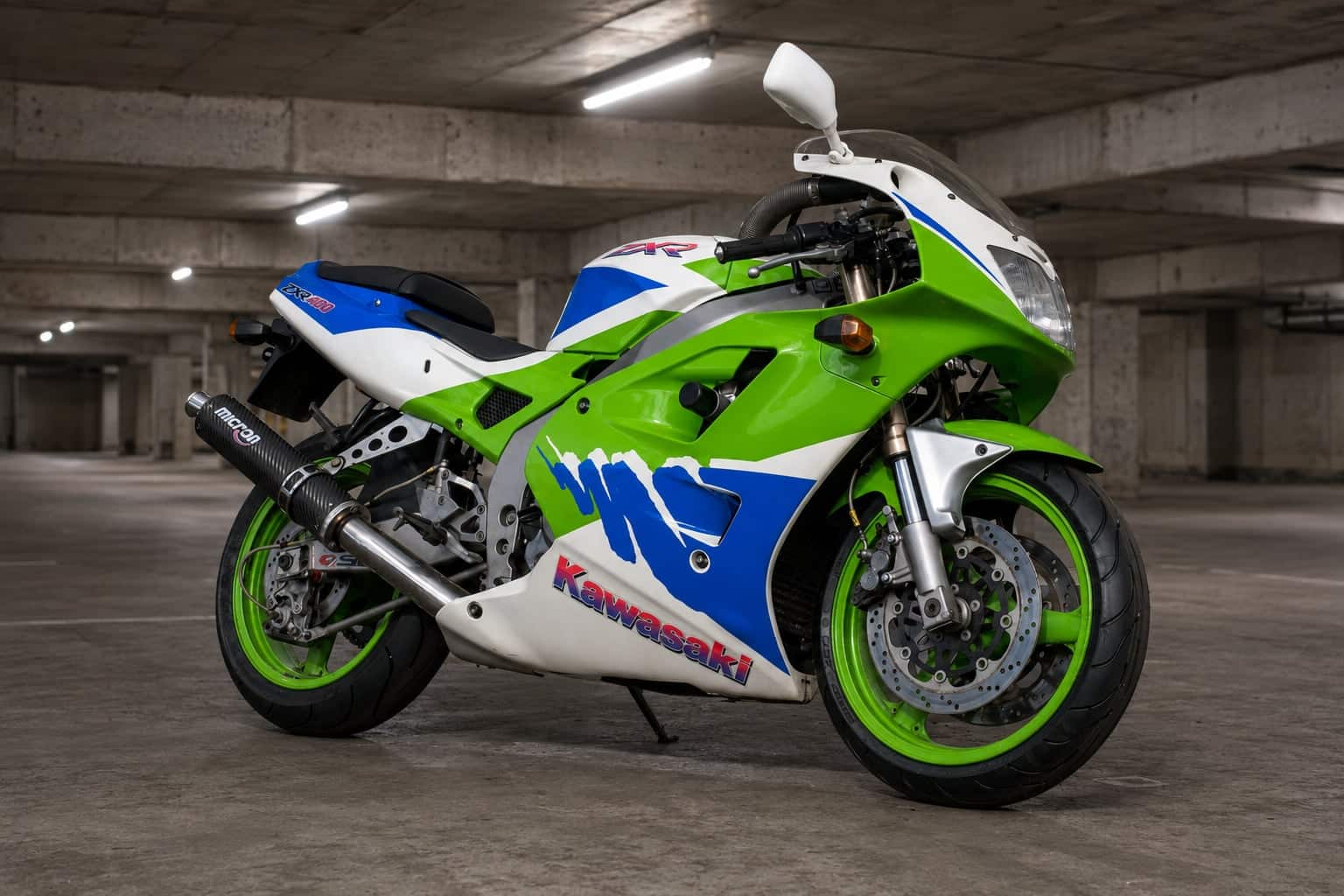
The standard ZXR400 made roughly 60-65 hp depending on year and market. The scarce ZXR400R homologation models added equipment such as flatslide carburettors, close-ratio gearboxes, a single seat, and more adjustable suspension. They existed to go racing, not for your milk run.
There is a tasty engineering coincidence between old and new: both the ZXR400 and modern ZX-4R use a nominal 57.0 mm bore and roughly 39 mm stroke. Of course, the engines are separated by three decades of emissions rules, materials, fuel injection, combustion work, and packaging… don’t go looking for more similarities!
ZXR250—and the “ZX-2R” name
The smaller ZXR250 is frequently called the ZX-2R online and on imported bikes. Kawasaki did not sell it under that official model name. “ZX-2R” became a useful enthusiast and importer shorthand, sometimes helped along by replacement decals. The factory name was ZXR250.
It was a Japanese domestic-market 249 cc inline-four, produced in A/B and later C/D generations. Early versions were quoted around 45 PS before Japanese output limits pulled later claims closer to 40 PS. The point was the delivery: very little happened at ordinary engine speeds, then the bike came alive as the tachometer swept toward the mid-teens.
The ZXR250 was not officially sold in the United States. It was also not a regular official UK model, despite being well known there; the 1990s grey-import trade brought Japanese-only 250s into Britain in meaningful numbers. The same broad story applies in Australia and New Zealand. Selected Asian markets saw local or imported examples, but “available” does not always mean “officially distributed.” For the wider story, see our guide to all the four-cylinder 250 cc motorcycles before the ZX-25R.
ZX-25R: the bridge to the present
Kawasaki shocked everyone by introducing the ZX-25R — a modern inline four-cylinder bike with a 249 cc engine and fuel injection.
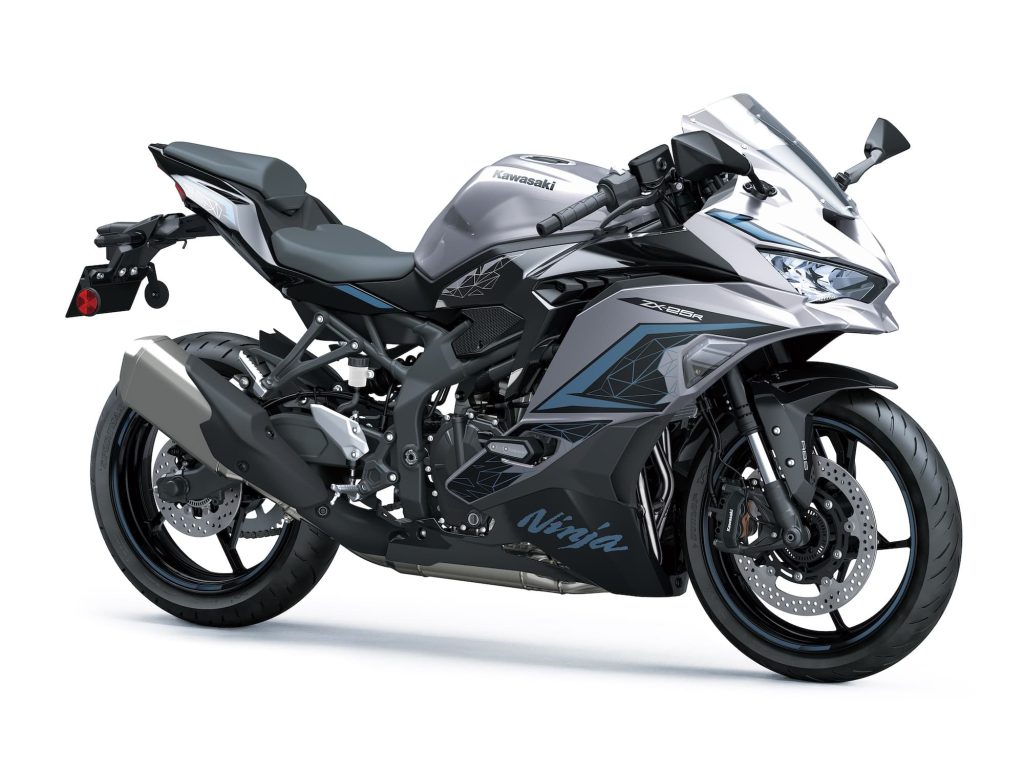
Kawasaki only released it in several Asian markets. A wise move. Y’all clamoured for one in the US, but we all know Kawasaki would only have sold a few dozen of them. They weren’t cheap, and they are a niche pursuit.
Still, with the ZX-25R, Kawasaki proved that a contemporary small four could meet emissions rules, carry modern electronics, and still rev like a miniature race engine. Its 249 cc capacity limited both torque and export-market appeal, but the chassis architecture, ram-air thinking, electronics package, and production experience made the 399 cc project possible.
The ZX-4R is therefore a reincarnation in spirit, not a retro remake. It connects the ZXR era to a motorcycle that can pass modern noise and emissions tests, display phone notifications, and commute without carburettor rituals.
Kawasaki Ninja ZX-4R / ZX-4RR specifications
Below is a bunch of numbers that probably mean something to nerds like you (and me).
| Engine | 399 cc liquid-cooled DOHC 16-valve inline-four |
|---|---|
| Bore × stroke | 57.0 × 39.1 mm |
| Compression ratio | 12.3:1 |
| Full-power output | 55.0 kW (75 PS), or 56.7 kW (77 PS) with ram air, at 14,500 rpm in current Australian specification; launch claim up to 59 kW (80 PS) with ram air |
| US output | 56.0 hp at 11,500 rpm |
| Peak torque | 37.6 Nm (27.7 lb-ft) at 12,500 rpm in current Australian specification; US: 26.5 lb-ft (35.9 Nm) at 11,000 rpm |
| Transmission | Six-speed; assist-and-slipper clutch; bidirectional quickshifter on RR |
| Frame | High-tensile steel trellis |
| Front suspension | 37 mm Showa SFF-BP inverted fork; RR adds spring-preload adjustment |
| Rear suspension | Horizontal back-link; RR uses Showa BFRC Lite shock with preload, compression, and rebound adjustment |
| Front brakes | Dual 290 mm semi-floating discs, radial-mount four-piston monobloc calipers, ABS |
| Tyres | 120/70 ZR17 front; 160/60 ZR17 rear |
| Seat height | 800 mm (31.5 in) |
| Fuel capacity | 15 L in most markets; US lists 4.0 US gal (15.1 L) |
| Curb weight | 188 kg (414 lb) in current Australian specification; US RR 414.5 lb |
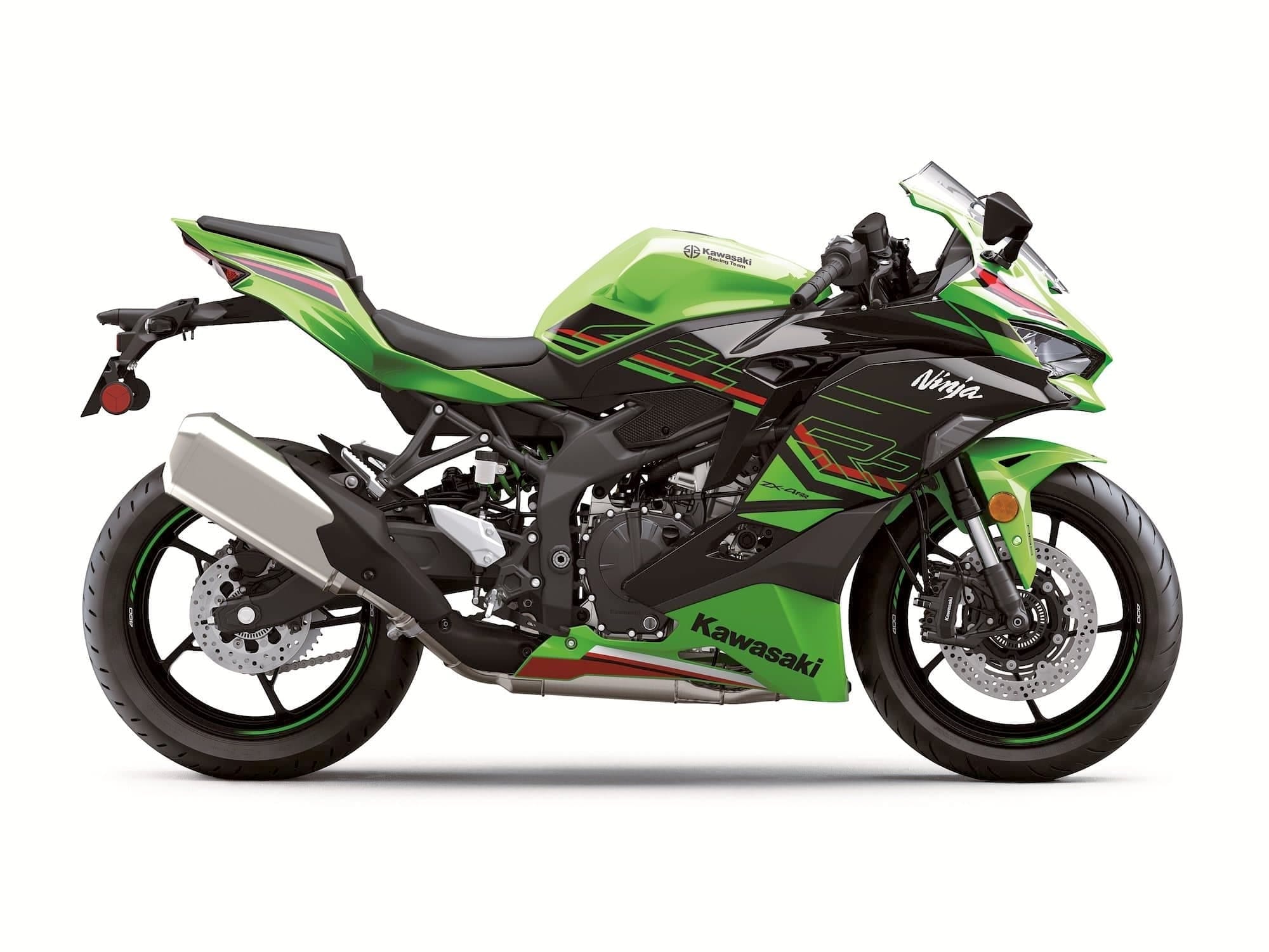
The 399 cc engine: ordinary, then extraordinary
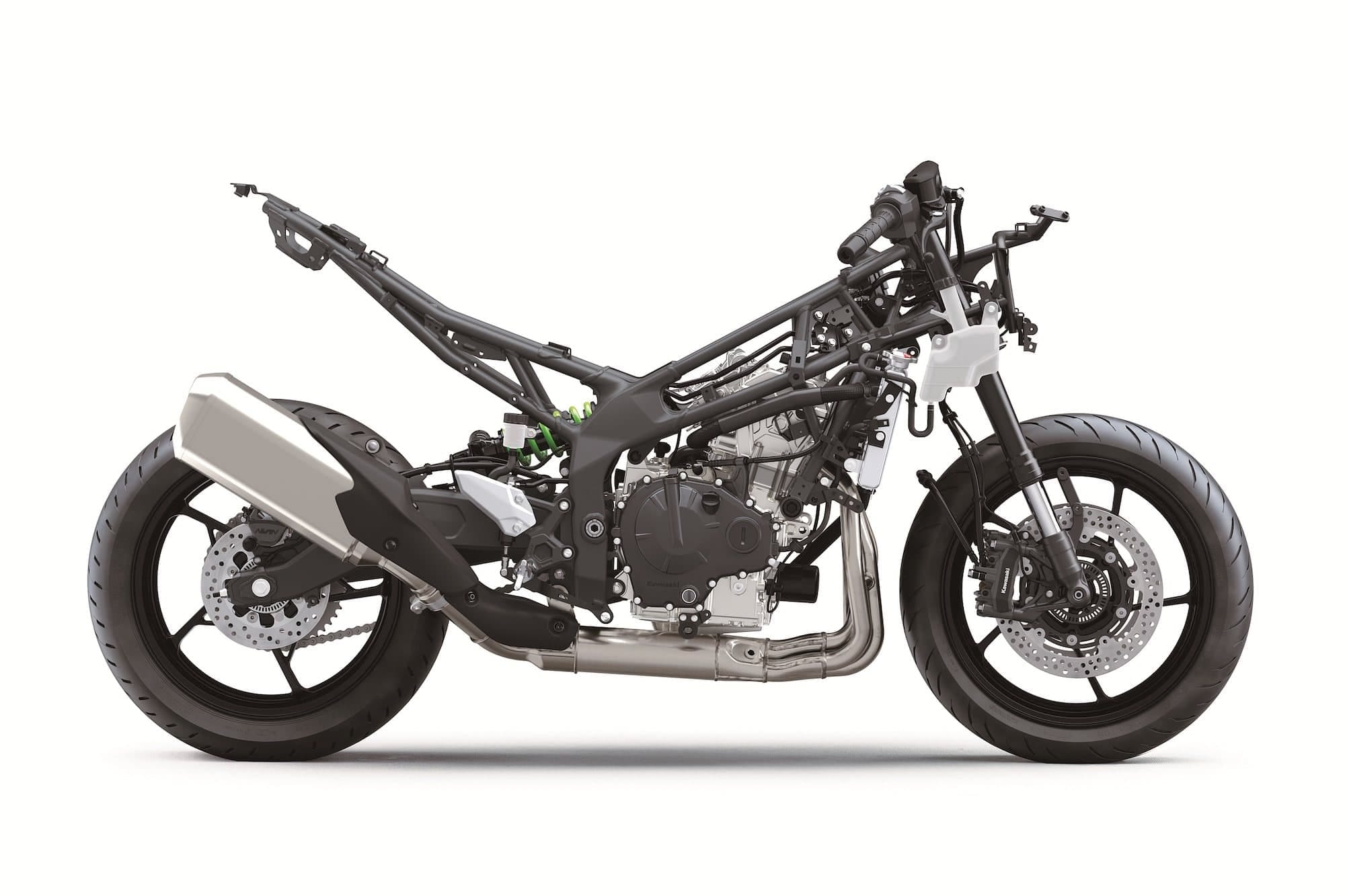
The ZX-4R starts, idles, and trickles through traffic with the polished manners you expect from fuel injection and four tiny pistons. It will accept 3,000-4,000 rpm without coughing. But it won’t give the instant shove of a 450 twin. Opening the throttle in a tall gear at urban speed means smooth progress rather than acceleration that rearranges your face.
Around 8,000 rpm the engine begins to gather itself. By 10,000 rpm it has changed personality, and the final third of the tachometer is the reason the bike exists. The intake hardens, the exhaust note rises into a clean metallic wail, and each upshift drops the motor back into the useful part of the curve. On a full-power bike, the rush continues far beyond the point where a conventional small twin has finished making its argument.
There is still no great wall of torque. You go quickly by choosing gears and preserving engine speed. That makes the ZX-4R demanding in a satisfying way: poor gear selection is exposed, but the consequences of learning are less dramatic than on a 120 hp supersport. It is the rare modern motorcycle that makes second, third, fourth, and sometimes fifth gear feel like part of the entertainment on the road.
Full-power bikes versus the US and Canada
There’s an important regional difference that applies to North American markets.
Current Australian figures are 55.0 kW (75 PS), rising to 56.7 kW (77 PS) with ram air, at 14,500 rpm. European versions have carried similar full-power claims, with some earlier material quoting up to 80 PS under ram-air pressure. By contrast, Kawasaki USA lists 56.0 hp at 11,500 rpm. Kawasaki Canada explicitly says the ZX-4R and RR reach maximum power at 11,500 rpm there because of noise regulations.
The North American bike still revs beyond that point, but its electronic-throttle calibration stops the power from continuing to build like the full-output version. A stock US bike therefore feels much closer to the international bike below the restriction than the headline gap suggests; the missing performance is concentrated in the upper rev range, precisely where this engine is supposed to deliver its finale.
ECU reprogramming can restore much of the high-rpm behaviour, which explains why flashes are so common in the American owner community. Just be warned — a flash can affect warranty coverage, emissions and noise compliance, insurance, and road legality. It should also be matched to the actual intake and exhaust configuration by someone who understands the bike.
ZX-4R vs ZX-4RR—and where the SE fits
The R and RR share the engine, frame, brakes, bodywork, TFT, traction control, riding modes, tyres, and basic dimensions. The RR premium buys control and convenience rather than a larger engine or a fundamentally different motorcycle.
| Feature | ZX-4R | ZX-4RR |
|---|---|---|
| Engine tune | Same market-specific tune | Same market-specific tune |
| Quickshifter | Not standard in current Australian specification | Bidirectional KQS standard |
| Fork | 37 mm SFF-BP, non-adjustable | 37 mm SFF-BP with spring-preload adjustment |
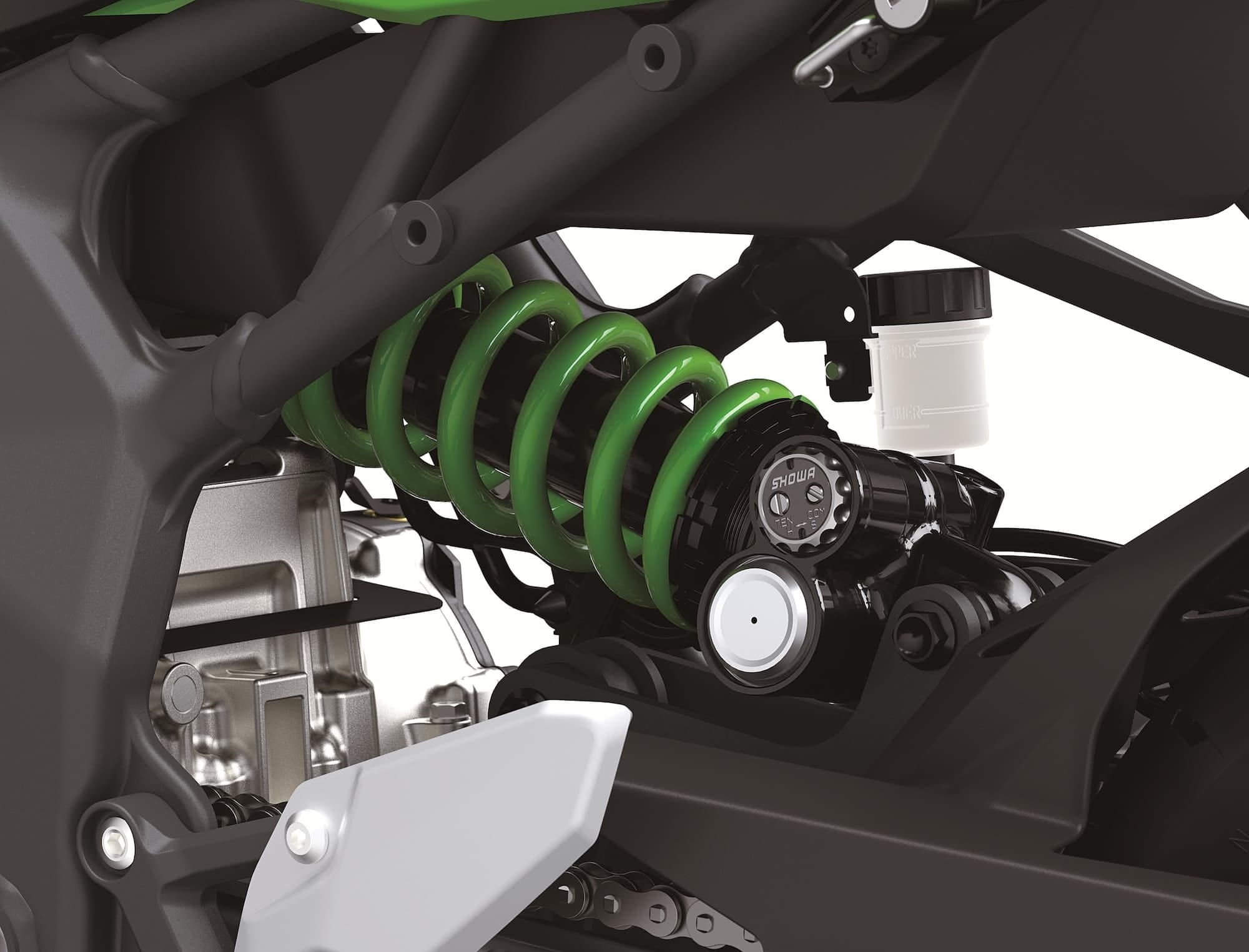
| Shock | Basic horizontal back-link shock with spring-preload adjustment | Showa BFRC Lite with preload, compression, and rebound adjustment |
| Brakes and electronics | Same core hardware | Same core hardware |
| Best for | Road use, budget-sensitive buyers, riders planning a custom suspension build | Fast road riding, track days, and buyers who want the finished package |
The ZX-4R SE has appeared in selected markets and model years. It is best thought of as an equipment and graphics package between the two, commonly adding the quickshifter and cosmetic or protective accessories while retaining the standard model’s simpler rear suspension. Exact SE contents vary, so check the distributor specification for the year you are buying.
For most enthusiastic riders, the RR is worth the difference. The quickshifter suits an engine that constantly invites another gear, and the rear shock gives you room to set sag and damping for road, luggage, rider weight, and track use. The base R remains sensible if the price gap is large in your market or if you already intend to replace the suspension.
What the ZX-4R is like every day
Town and commuting
At low speed the ZX-4R is much friendlier than its bodywork suggests. The clutch is light, the throttle is clean, the 800 mm seat is approachable, and the bike is narrow where your knees and feet meet it. The steering is not scooter-light, but the mass sits neatly enough that filtering and U-turns are straightforward.
You can commute without holding 12,000 rpm everywhere. The motor is perfectly content loafing along; it simply has little urgency there. If a gap opens, you need a downshift or two. That becomes automatic after a few rides, though riders coming from a large twin or litre bike may initially interpret the absence of low-rev shove as a lack of performance.
The RR quickshifter is best when the engine is loaded and spinning. It can feel deliberate at low rpm, where using the light clutch is smoother, while clutchless downshifts are generally the more consistently satisfying half of the system. The gearbox itself rewards a positive boot rather than a lazy nudge.
Motorway and longer rides
The riding position is committed but surprisingly humane. The clip-ons are not as low and remote as a traditional 600 supersport’s, the seat-to-peg relationship leaves reasonable room, and the fairing takes the hard edge off highway wind. It is more comfortable than a Ninja ZX-6R, though less relaxed than a Ninja 500 or 650.
At 100-120 km/h (62-75 mph), the four sounds busy but not distressed. Passing is the recurring theme: sixth gear will maintain speed, but brisk overtakes demand one or two downshifts. The mirrors are usable, the engine is mechanically smooth, and a 300-500 km day is realistic if your wrists, knees, and neck suit the posture. It is not a natural tourer—there is no cruise control, luggage options are limited, and sustained high-frequency noise can become tiring.
Fuel use swings with the tachometer. Gentle riding can return roughly 5-6 L/100 km (39-47 mpg US), giving useful range from the 15 L tank. Repeated runs through the upper rev range consume the benefit quickly. That is hardly a flaw; it is the operating instruction.
Spirited riding and track days
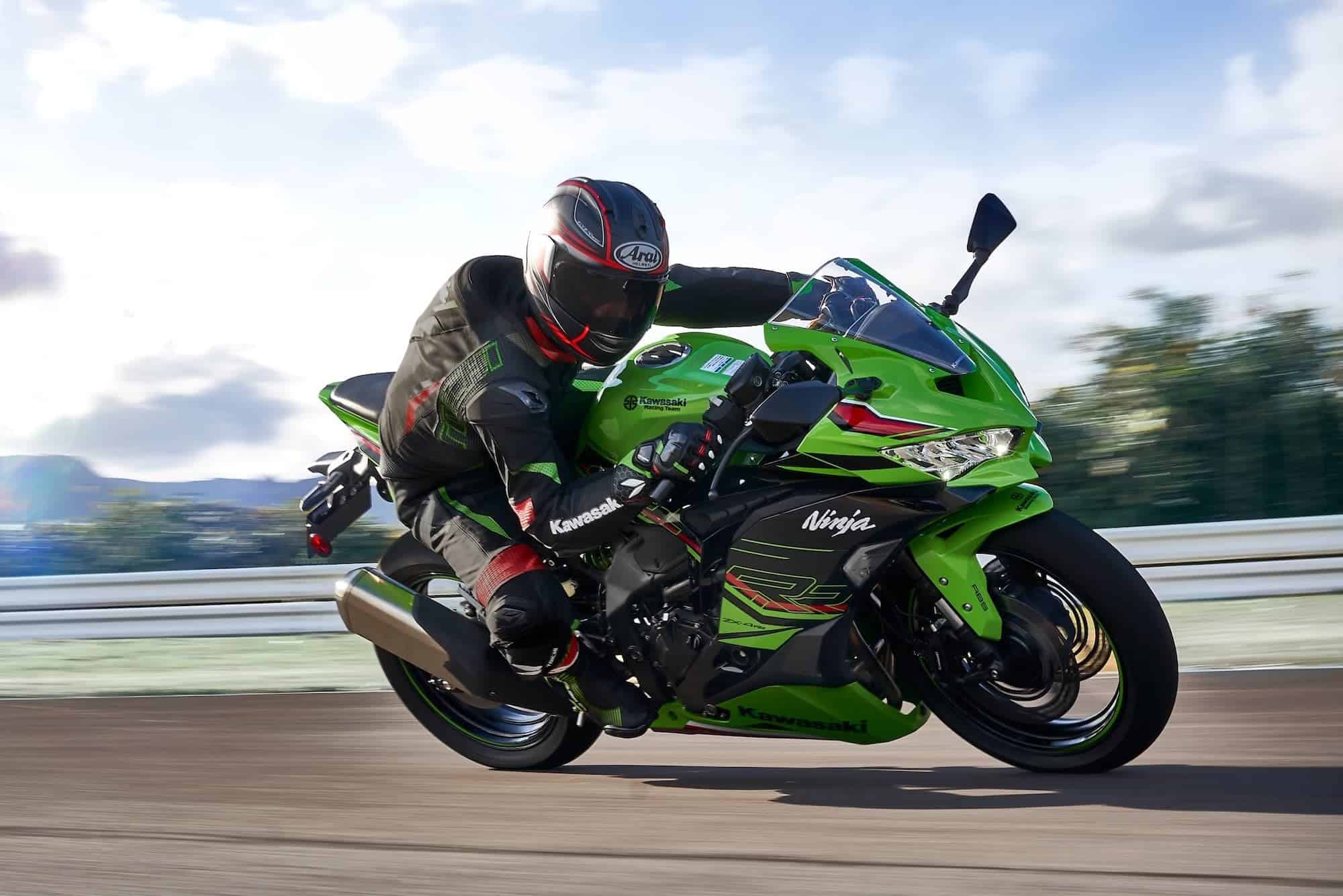
A fast road reveals why 188 kg is an incomplete description of the ZX-4R. That number is not especially light for a 400, but the motorcycle is compact, the engine has little flywheel drama, and the 160-section rear tyre does not resist direction changes like a 190. It tips in accurately, holds a line without nervousness, and changes direction with less effort than a middleweight supersport.
The chassis asks you to carry momentum. Enter smoothly, release the brake, let the bike turn, and keep the engine near the top of the tachometer. Exit speed comes from preparation more than rescue torque. On a flowing road this creates a rhythm larger bikes often interrupt with braking and acceleration. You work hard while travelling at a pace that leaves more mental bandwidth.
The same qualities make it a natural track-day motorcycle. It teaches lines, corner speed, and gear choice, and it does not destroy rear tyres with superbike torque. The gearing is relatively tall for very tight circuits, so some track builds alter final-drive ratios. Before buying parts, ride it: the standard gearing is a reasonable compromise for road speed and the long-legged engine.
Suspension and brakes
The standard R is well controlled on the road, but its adjustment range is limited. The RR’s rear shock is the meaningful upgrade: preload, compression, and rebound adjustment let you correct more of the balance rather than merely living with it. The RR fork only adds spring-preload adjustment, not external compression and rebound damping. Heavier riders and serious circuit users may still want springs and damping matched to their weight and pace.
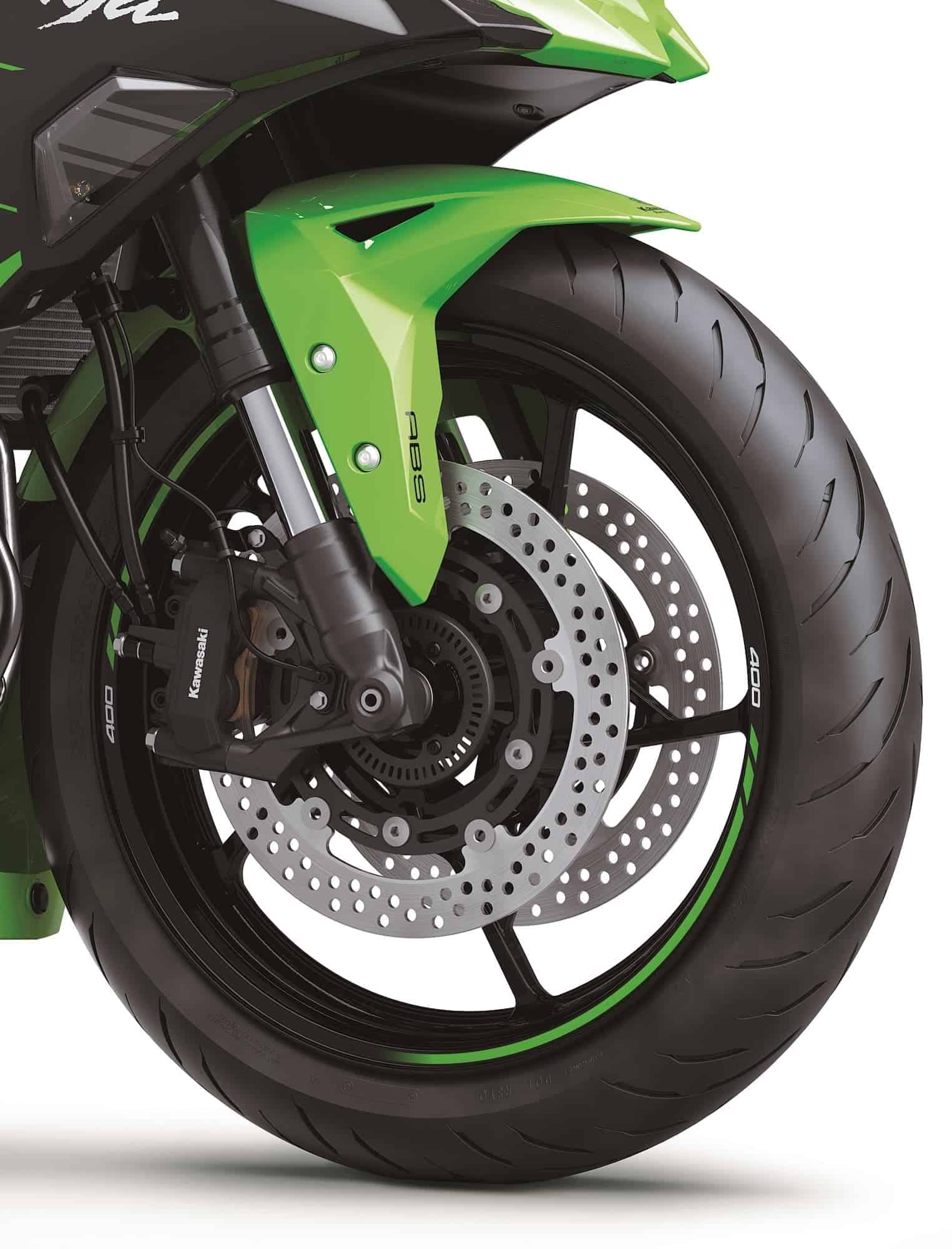
Twin 290 mm discs and radial four-piston calipers provide strong, progressive braking with enough feel to trail the lever toward an apex. The master cylinder and pad choice keep the first bite friendlier than a race setup. For road use that is a virtue. Track riders chasing a sharper response may move to pads and fluid before assuming the whole system needs replacement.
The ABS is conventional rather than lean-sensitive, and the traction control is not an IMU-based cornering system. Both are useful safety nets, but neither turns the motorcycle into a miniature ZX-10RR. Experienced track riders may notice ABS intervention under very hard braking. Newer riders should leave themselves plenty of margin and use a structured first track-day plan rather than treating electronics as instruction.
Electronics and display
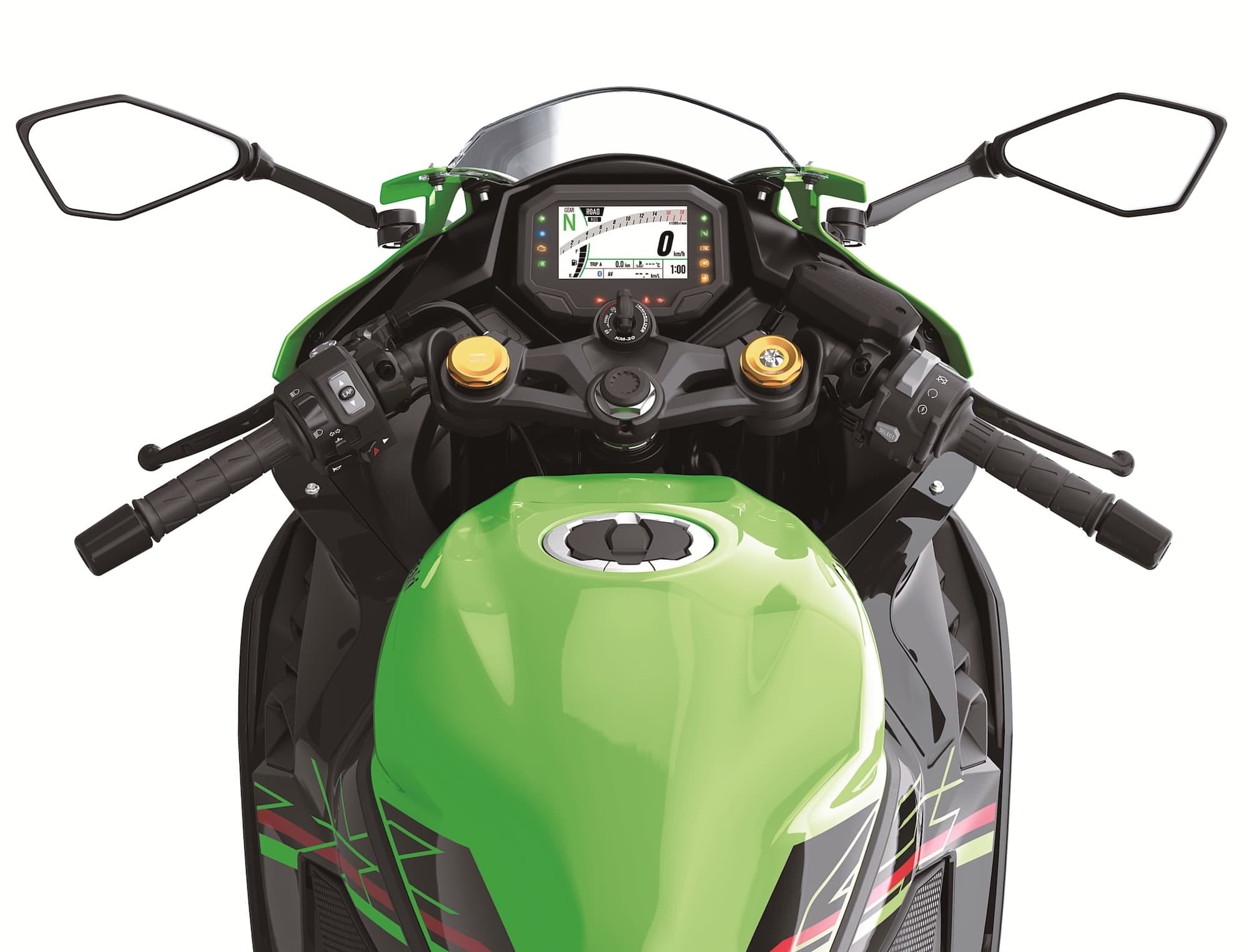
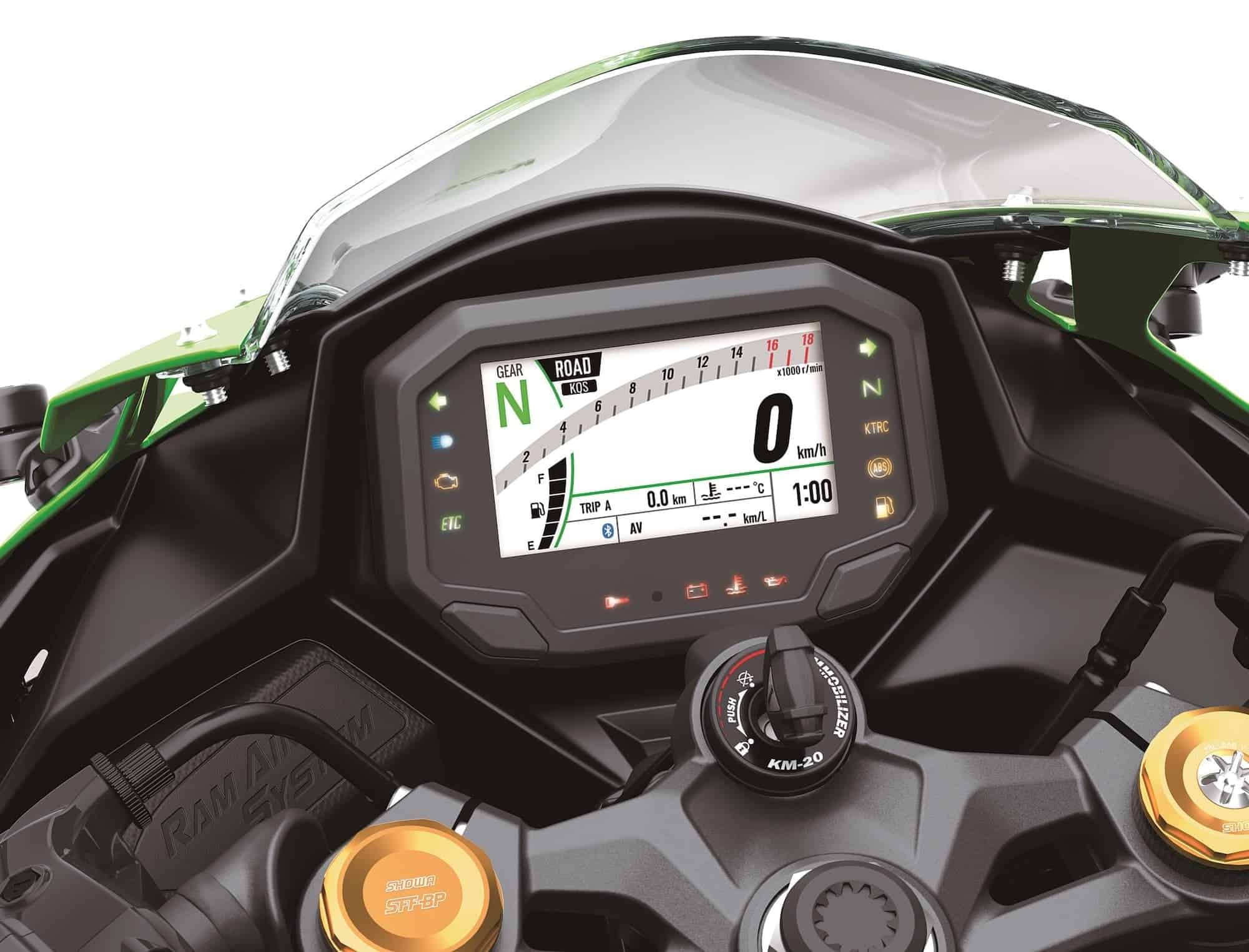
Four integrated riding modes—Sport, Road, Rain, and a configurable Rider mode—combine full or low power with three traction-control levels. The system is simple enough to use without a laminated card. Low power softens the response for poor conditions; it does not solve the North American high-rpm calibration.
The 4.3-inch colour TFT is clear and includes a circuit layout that prioritises the bar tachometer, gear position, lap timing information, and shift light. Bluetooth connectivity through Kawasaki’s Rideology app adds ride logs and basic phone notifications. It is pleasant rather than transformative. The useful information—rpm, gear, temperature, fuel, and rider-aid settings—is available without the phone.
Ownership, maintenance, and buying notes
The ZX-4R is a Kawasaki production motorcycle, not an exotic, but a 16-valve four will never be as cheap to inspect as a single or twin. Major services involve more components and more fairing removal. Insurance can also classify the bike by its ZX supersport badge rather than its modest capacity. Get a quote before assuming “400” means inexpensive.
- Check recalls by VIN. Early bikes in some markets were recalled for spark plugs that may have been damaged during assembly; other campaigns have varied by region.
- Confirm the market specification. A parallel-import full-power bike and a local North American bike may look identical while having different ECU calibrations.
- Ask about ECU history. A flash is not automatically bad, but you want to know who supplied it, what intake and exhaust it was mapped for, and whether the original file is available.
- Inspect track-day consumables. Brake pads, fluid, tyres, chain adjustment, engine covers, bar ends, and fastener witness marks reveal more than glossy bodywork.
- Verify suspension settings. An RR with every adjuster at an extreme may simply be poorly set up. Return to a known baseline and measure sag.
- Budget for the way you will use it. Track tyres, pads, protection, transport, and entry fees can overwhelm the difference between R and RR purchase prices.
The basic road hardware is conventional: 17-inch tyres in common sizes, chain final drive, ordinary fuel, and no desmodromic or exotic valve gear. The engine’s best defence is unglamorous—correct oil, proper warm-up, a clean air filter, and valve-clearance checks at the schedule specified for your market.
Alternatives to the ZX-4R and ZX-4RR
Nothing combines the ZX-4R’s exact capacity, global reach, and high-rpm four-cylinder character. The alternatives divide into two groups: established 400-500 cc twins that deliver easier performance, and a new wave of small fours from China and Honda.
| Motorcycle | Engine | Why consider it | Availability note |
|---|---|---|---|
| Aprilia RS 457 | 457 cc parallel twin | Lighter, torquier in normal road use, excellent chassis, usually cheaper | Widely available |
| CFMOTO 450SR / 450SS / 450SR S | 449.5 cc 270-degree parallel twin | Strong value, strong midrange, modern equipment | Name and specification vary by market |
| CFMOTO 500SR | 499 cc inline-four | The closest conceptual rival: 58 kW claimed, quickshifter, Nissin brakes, TFT | Confirmed by CFMOTO for 2026; rollout varies by country |
| Kove 450RR | About 443 cc inline-four | Roughly 52 kW claimed and a low 165 kg curb-weight claim | China and selected export markets; dealer and parts coverage are market-dependent |
| Honda CB500 Super Four | 502 cc inline-four | Naked ergonomics, 52.8 kW (71.1 PS) claim, E-Clutch, classic CB idea | China-market launch for 2026; wider export unconfirmed |
| Honda CBR500R Four | 502 cc inline-four | Honda’s faired small-four return, with E-Clutch and more midrange than a 400 | China-market launch for 2026; wider export unconfirmed |
| Kawasaki ZX-6R | 636 cc inline-four | Far faster, stronger brakes and suspension, established track ecosystem | Widely available, but more demanding and expensive to run |
| BMW F 450 RR | 420 cc parallel twin | 35 kW (48 PS), 43 Nm (32 lb-ft), 177 kg (390 lb) road-ready; standard lean-sensitive ABS Pro and DTC | Announced for 2027 on 15 October 2026; check local delivery dates and package prices |
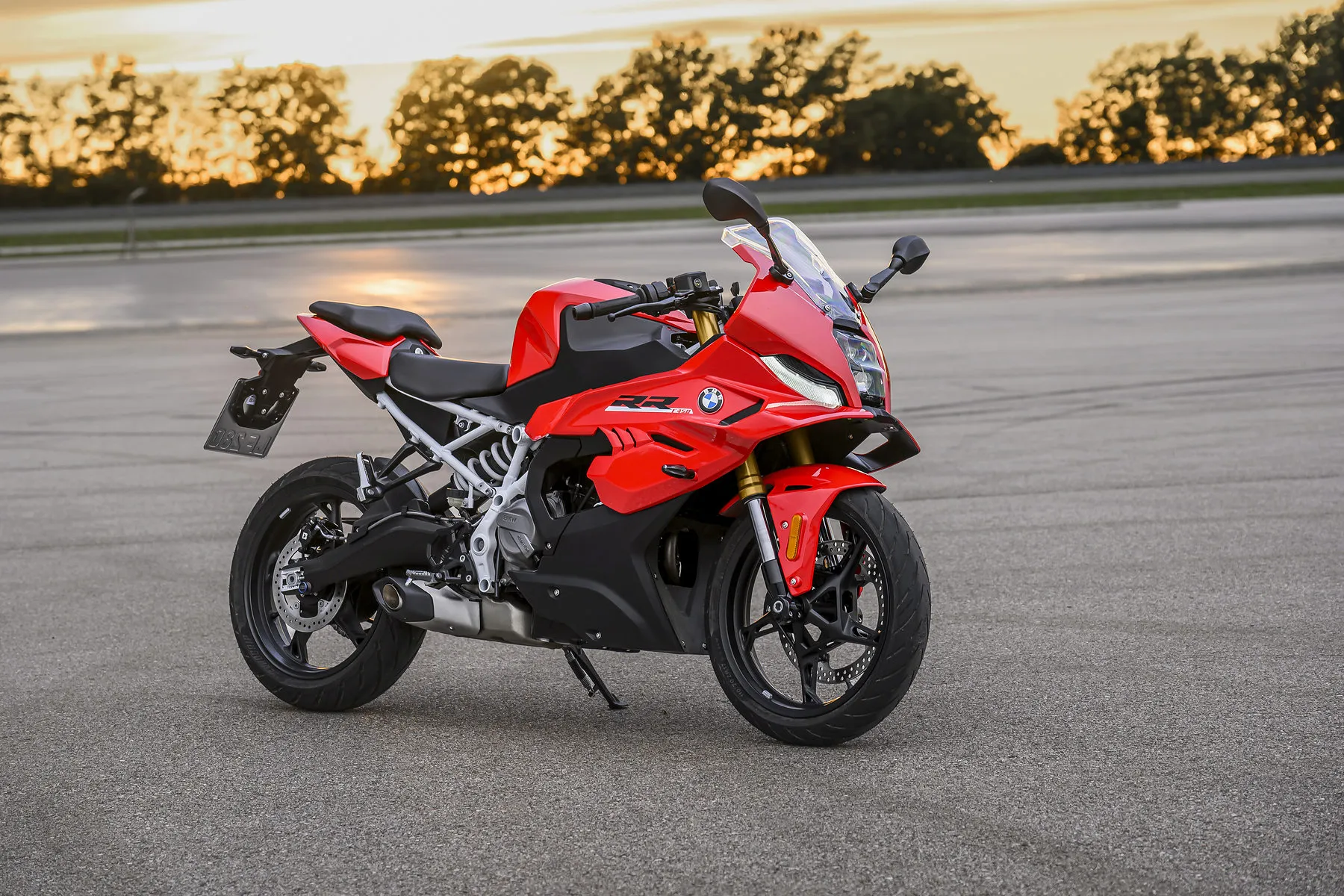
The 2027 BMW F 450 RR belongs with the twin-cylinder alternatives. BMW’s launch specification puts peak power at 8,750 rpm and peak torque at 6,750 rpm, far below the full-power Kawasaki’s peaks quoted above. Choose between them on the kind of engine you want to use: the BMW’s modest peak output and the Kawasaki’s high-revving four make different demands on your gear selection. BMW also supplies lean-sensitive ABS Pro and DTC as standard, where the ZX-4R’s ABS and traction control don’t use an IMU.
The Honda “400” comeback is actually a 500
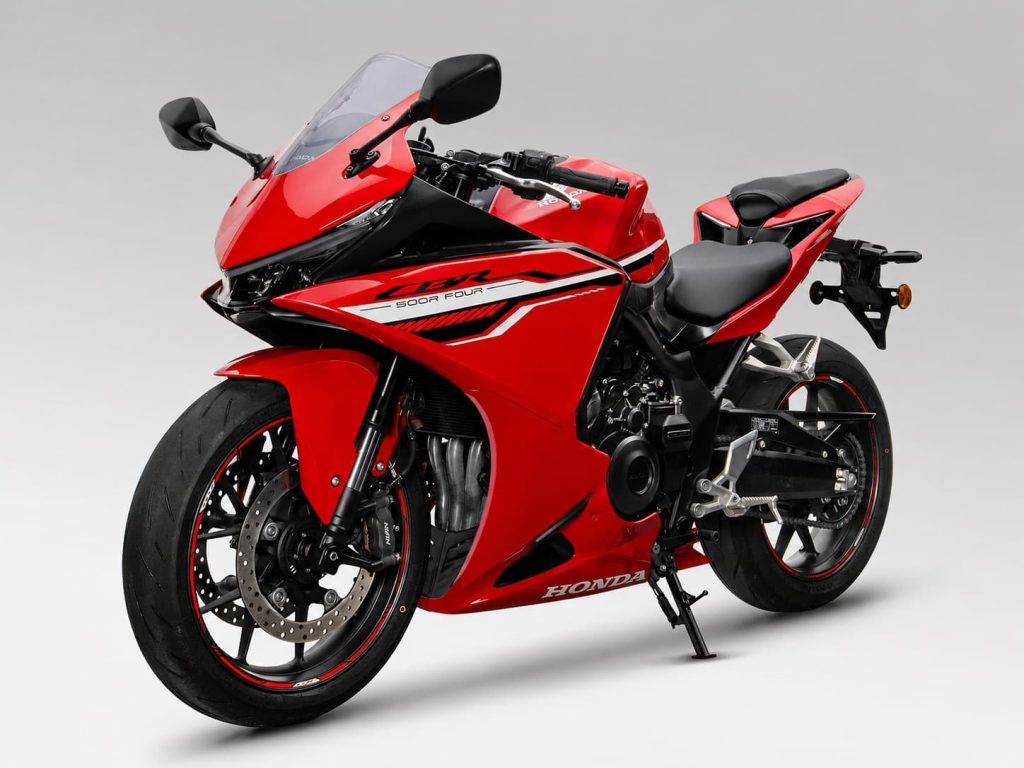
For about a year, we all thought we were getting a new CB400 Super Four. Turns out we’re getting a 500, instead! The confirmed bikes are the CB500 Super Four and CBR500R Four, both using a new 502 cc inline-four and Honda E-Clutch. Honda launched them for China in 2026. Existing Honda models called CB500 and CBR500R are separate parallel-twin machines; the four-cylinder names should not be conflated with them. (I assume Honda will think of some new names, though.)
The naked CB is arguably the more interesting foil to the Kawasaki. It brings back the everyday four-cylinder roadster tradition represented by the original Honda CB400 Super Four, while the CBR goes directly after riders who want the shape and sound of a small four without the Kawasaki badge.
CFMOTO, Kove, and the new four-cylinder field
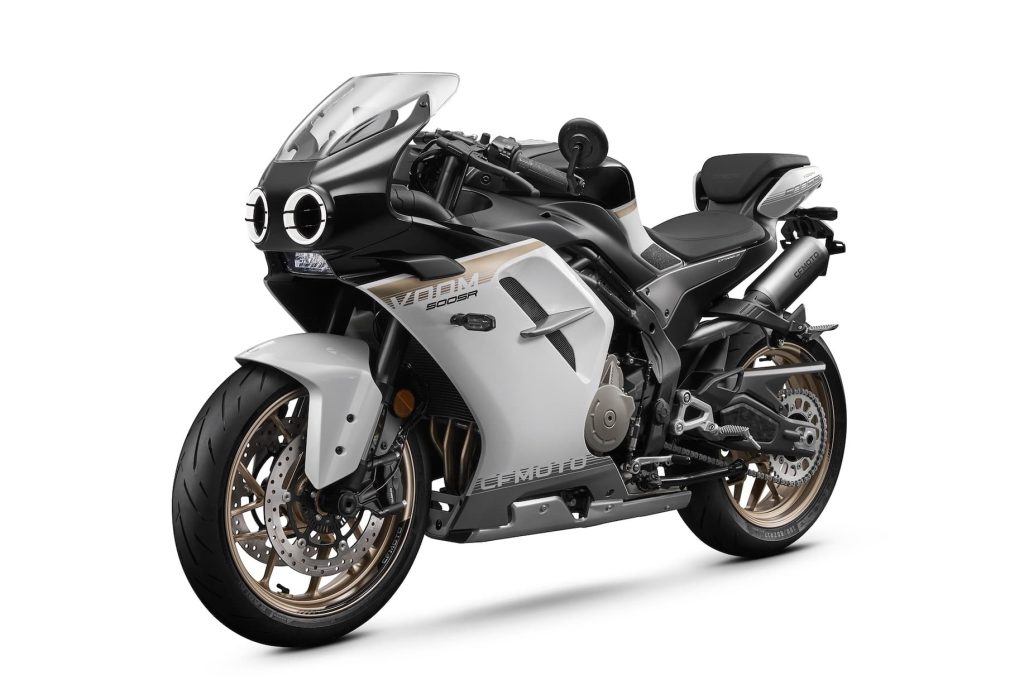
CFMOTO also entered the fray with the 2026 500SR. It has a 500 cc inline-four, ram air, traction control, quickshifter, tyre-pressure monitoring, Nissin brakes, and a 6.2-inch display.
Kove’s 450RR is more aggressively weight-focused and potentially much cheaper, while QJMotor has also developed four-cylinder 400-class machines for selected markets.
The caveat is ownership infrastructure. Kawasaki’s dealer coverage, parts catalogues, service information, and model continuity are known quantities. An exciting specification sheet does not tell you how quickly a fairing panel, sensor, or engine gasket will arrive in your country. The emerging rivals make the class healthier, but their value should include local support, not only power-to-weight arithmetic.
Of the three above, CFMOTO has been the stablest manufacturer in recent years, with many happy owners .
Verdict: who should buy a ZX-4R or ZX-4RR?
Buy the Kawasaki Ninja ZX-4R if you want a motorcycle that turns revs and gear selection into the main event. It works every day, but it never hides what it prefers. Below 8,000 rpm it is a polished small motorcycle. Above 10,000 it becomes the thing you paid for.
Choose the ZX-4RR when the price difference is manageable. Its quickshifter and adjustable rear suspension are not decorative extras; they improve the two activities the bike encourages most—using the gearbox and riding quickly. Choose the base R if road use dominates, the local RR premium is unreasonable, or a custom suspension build is already part of the plan.
North American buyers have a more difficult decision. The stock 56 hp calibration removes some of the high-rpm climax while leaving the premium price and mechanical complexity intact. It remains smooth, precise, and entertaining, but anyone buying specifically for the international bike’s last 3,000 rpm should enter with open eyes.
The ZX-4R is not the quickest motorcycle for the money, the lightest 400, or the easiest way to commute. It is the only broadly available modern bike that lets you hear a 399 cc four clear its throat, build through the midrange, and keep climbing while the rest of the small-bike class has already shifted. For the right rider, that is a complete argument.