

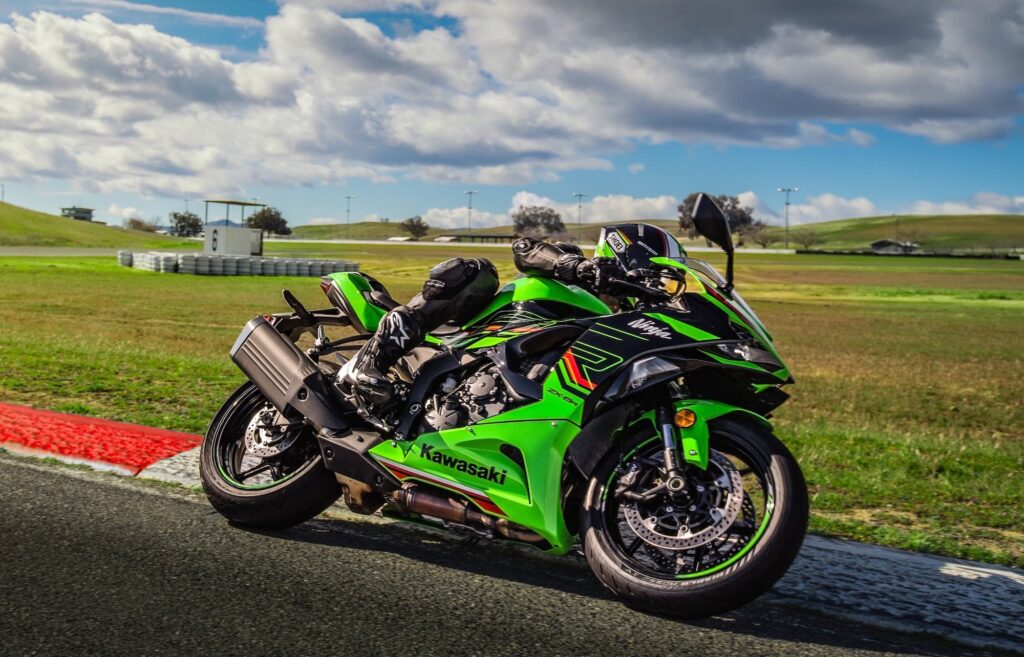
The Kawasaki Ninja ZX-6R has survived while most road-going 600-class supersports have disappeared or become track-only machines. It is still the familiar formula: a compact chassis, an inline four that rewards revs, serious brakes and suspension, and ergonomics that make no apology for their track bias.
Kawasaki launched the first ZX-6R in 1995 with a 599 cc engine. It later ran 599 cc and 636 cc versions side by side, then settled on the 636 cc road bike that defines the model today. The extra 37 cc gives it a little more midrange than a traditional 600 without changing its basic supersport character.
This guide covers the whole family from 1995 through the announced 2027 model: what changed, which generations used 599 or 636 cc engines, what to check when buying, and how the current bike compares with the alternatives.
- A short pre-history of Kawasaki’s middleweight sport bikes
- The complete ZX-6R model history from 1995 through 2027
- What the ZX-6R is like on the street
- Current new and used alternatives
Updated 28 August 2026: Added the 2025 WorldSSP homologation, 2026 and 2027 model-year information, corrected the 2019 update, refreshed the alternatives, and added new Kawasaki media.
Are you obsessed with motorcycles?
Well, I am. That’s why I created this site — as an outlet. I love learning and sharing what others might find useful. If you like what you read here, and you’re a fraction as obsessed as I am, you might like to know when I’ve published more. (Check the latest for an idea of what you’ll see.)
Before the ZX-6R — A Brief Pre-History
Before the ZX-6R, Kawasaki was already making middleweight sport bikes, of course.
Let’s start at the first bike that bears some resemblance to the ZX-6R: The Kawasaki GPZ600R, also known as the Ninja 600R, which Kawasaki launched in 1984 for the 1985 model year.
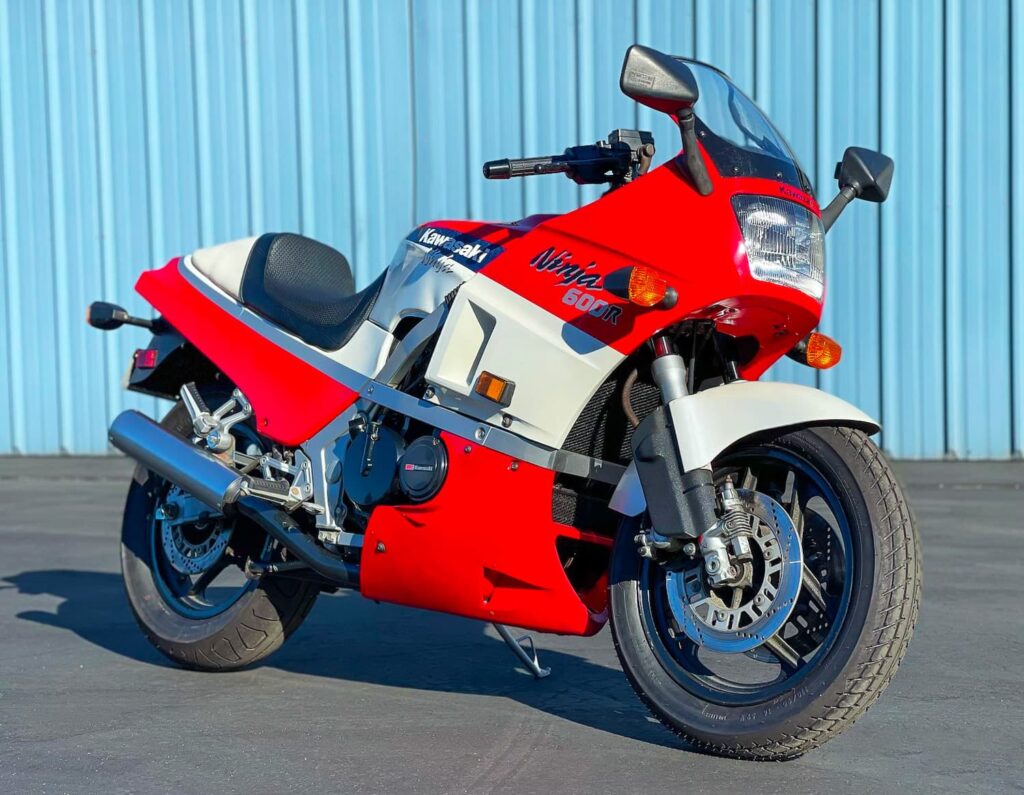
The Kawasaki GPZ600R was based on a 592-cc liquid-cooled inline four-cylinder engine with dual overhead cams and four valves per cylinder. To be reductionist, it was a bigger-capacity liquid-cooled version of the air-cooled 1982 Kawasaki GPZ550R, sharing the same stroke (but with a 2mm bigger bore), primary drive, and gearbox ratios. Now, of course, with liquid cooling.
In retrospect, Kawasaki’s move of “just” adding liquid cooling wasn’t bold enough, because the competitors were building clean-sheet 600-cc and 750-cc liquid-cooled sport bike designs, and managing to extract much more from their engines than Kawasaki’s relatively modest peak power of 55 kW / 75 bhp at 10500 rpm.
Kawasaki made some improvements to the Ninja 600R in 1988, giving it more power and a higher compression ratio. The final iteration of the series was the GPX600 with a higher-tuned engine, making a peak of 84 bhp @ 11000 rpm.
Because of the limited potential of the engine, the GPZ600R / Ninja 600R never quite caught up to the runaway success that the Honda CBR600F proved to be, but it still marked a turning point in the way Kawasaki built bikes.
See here for the history of the Honda CBR600F / CBR650F sport bikes.
Kawasaki had a go at catching up to Honda’s 600-class success by with the Kawasaki ZZ-R600 (also known as the Kawasaki ZX-6 Ninja) which they launched in 1990.
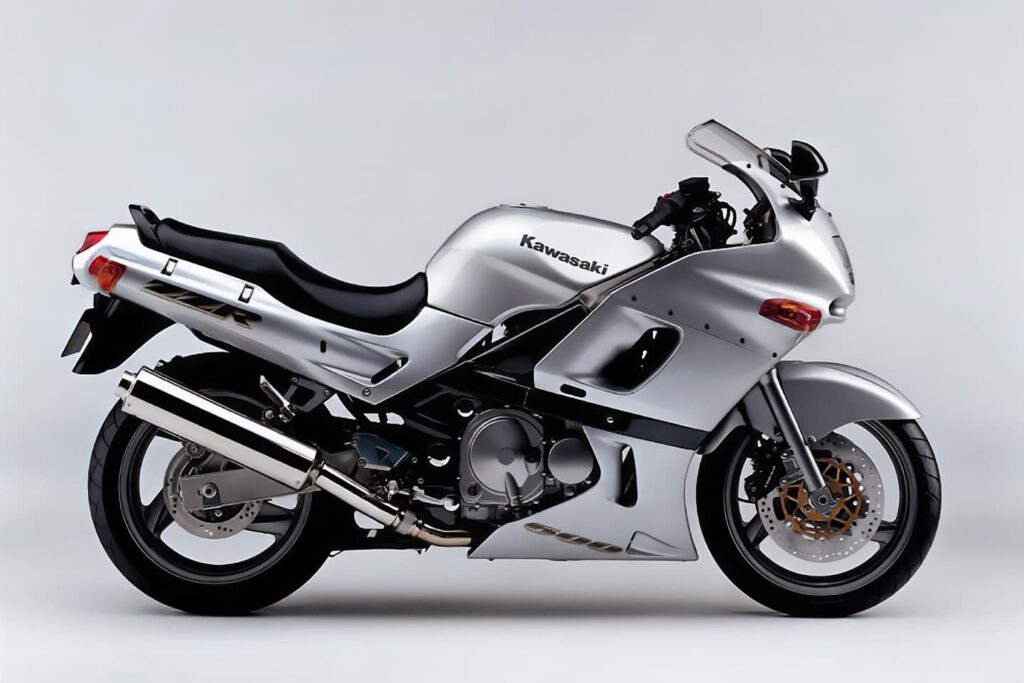
Kawasaki also intended the ZZ-R600 / ZX-6 Ninja to be a high-power agile four-cylinder sport bike, but as time has passed, it seems more and more like a middleweight four-cylinder sport tourer, a class of bikes I really miss.
In fact, the ZZ-R600 / ZX-6 was so successful as an everyday sport bike that Kawasaki kept the ZZ-R600 in production for over a decade after releasing the “proper” sport bike, the ZX-6R, in 1995. They even revised the ZZ-R’s engine once for the 2004 model year before finally retiring it in 2007.
For the ZZ-R600 / ZX-6, Kawasaki used a shorter-stroke engine design (64 x 46.6 mm, vs 60 x 52.4mm of the GPZ600R), letting it rev higher to a 14000 rpm redline, and thus build more power — 73 kW / 99 bhp at peak.
But as you might expect from the above description of being like a “sport tourer”, the Kawasaki ZZ-R600 was a little soft around the edges, even at launch. The suspension wasn’t firm enough, and the riding position wasn’t that aggressive. Still, it was quick.
The final significant bit of context for the ZX-6R is the Kawasaki ZXR750, known as the ZX-7 in the US. Kawasaki released the first ZX-7 for 1989.
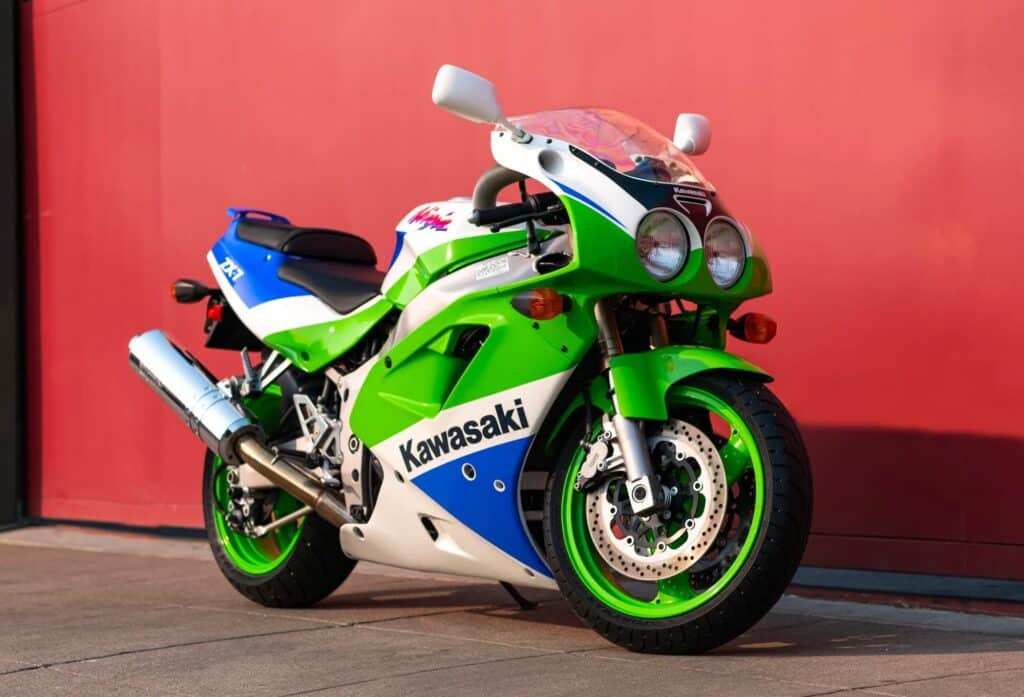
Kawasaki built the ZXR750 / ZX-7 to win the World Superbike Championships, and win it did, in 1993. Kawasaki kept improving the ZXR750, redesigning the engine (changing bore / stroke from 68 x 51.5 mm to a shorter stroke 71 x 47.3 mm, upping the power and improving the brakes along the way.
Kawasaki also released the ZXR750R / ZX-7R in 1991 as a more focused race bike, leaving the non-R as the consumer bike.
There’s a lot that’s really awesome about the Kawaski ZXR750. It looks great — classic twin headlight looks that scream “retro cool” today, if you can find one (they’re a bit rare / “collectable”), though at least a few readers have sent in photos of them. The paint and angle of the frame and seat help it look fast when it’s standing still.
But one of the things I particularly like about the Kawasaki ZXR750 is how they implemented the ram air ducts through Star Wars-like hoses from the front fairing to the tank. It just looks so space-age.
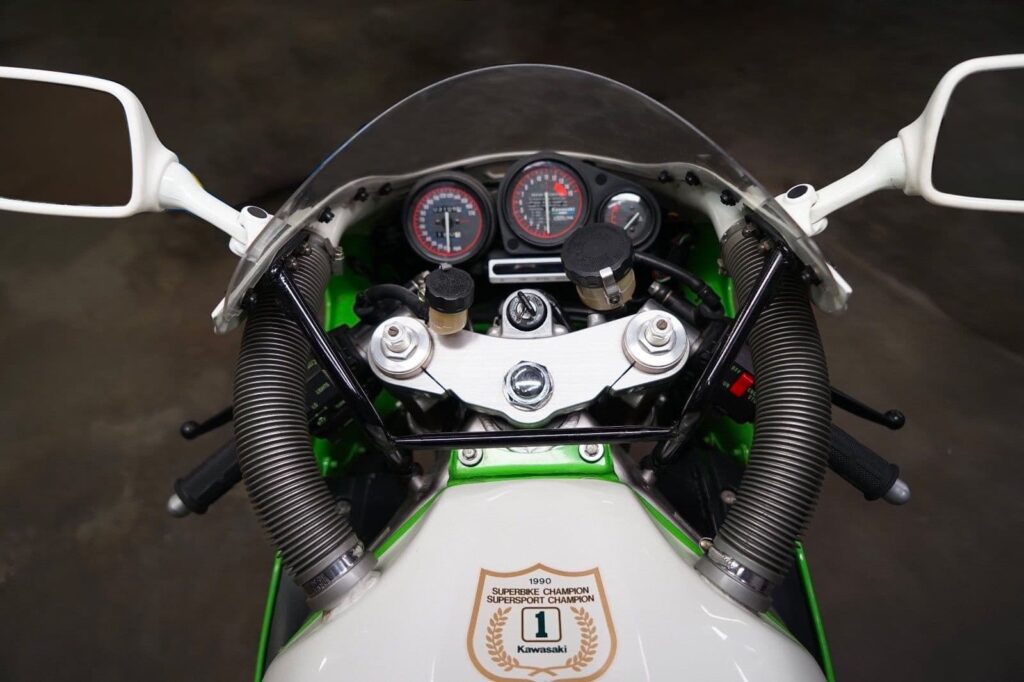
Kawasaki continued iterating on the ZXR750, and eventually redesigned it again and universally gave it the name ZX-7R from 1996. But that’s another story, as we’ve now passed the time when the ZX-6R was released!
Kawasaki introduced the first Kawasaki ZX-6R in 1995. The first ZX-6R was heavily based on the ZX-9R, which Kawasaki had introduced the previous year, but of course the 6R had a smaller 599-cc engine.
More about the ZX-6R below.
Kawasaki ZX-6R History in brief
Before going on into a blow-by-blow model history, let’s quickly talk about the generations of the Kawasaki ZX-6R.
The generations of the 6R aren’t as clear-cut as with other models. Kawasaki kind of changed little bits and pieces every two years — sometimes just the engine, sometimes components around it. I don’t want to get into a war about generation definitions with passionate diehards on forums, because I’m trying to be helpful more than anything else, so it’s just easier to separate out every 1-3 year period below and show what changed.
But in brief, there are definite phases to the ZX-6R, in retrospect.
- Phase 1: 1995-2002. These bikes were all carburettor-fed 599cc sport bikes.
- Phase 1.5: late 2002 only. Weird interim phase with a 636-cc bike but still with carburettors and the ride gear from the earlier generations.
- Phase 2: 2003-2006. Fuel-injected 636, in parallel with a fuel-injected 599 “RR”. These bikes all got improved brakes, suspension, and other bits.
- Phase 3: 2007-2012. Just the 599. Kawasaki didn’t make any 636-displacement street bikes in this period. As a result, kind of fell behind the competition. In 2009, Kawasaki offered ABS as an option.
- Phase 4: 2013-2023. The 636 returned with selectable power modes and three-level traction control, plus optional KIBS ABS. The 2019 refresh brought shorter final gearing, new bodywork and lighting, a quickshifter, a revised seat, Bridgestone S22 tyres, and emissions updates.
- Phase 5: 2024-2027. Revised engine parts and exhaust tuning kept the 636 compliant in current markets. The bike also gained a 4.3-inch TFT display with smartphone connectivity, integrated ride modes, full LED lighting, and 310 mm round front rotors. The 2025-2027 changes are primarily homologation and colour updates rather than another mechanical redesign.
Kawasaki Ninja ZX-6R Model History
Below is the chronological model history of the Kawasaki ZX-6R from 1995.
As mentioned above, I’ll try to go over it year-by-year rather than by “generation”.
1995-1997: The F Series (ZX-6R ZX600 F1, F2, F3) — The Original
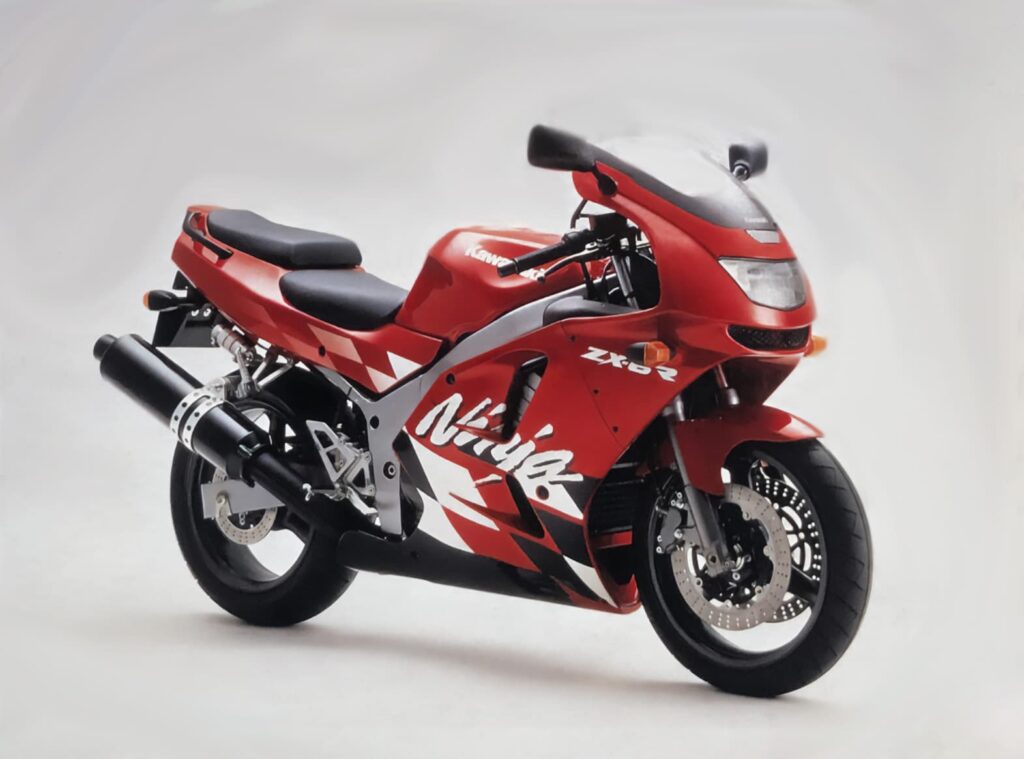
The first generation of the Kawasaki ZX-6R, known as the F1, F2, and F3 models, was based on a 599-cc motor only.
At the time, Honda had just released the CBR600F3, which shook things up again for the already successful CBR600F line. It seemed like Kawasaki was releasing the ZX-6R in an attempt to catch up.
The ZX-6R was a big departure from the ZX-6, also known as the ZZ-R600. Kawasaki rebuilt the engine, using a shorter-stroke design (with a 2mm wider bore) that let the ZX-6R rev higher and thus make more power.
Kawasaki also moved the camshaft drive chain from the centre to the right of the crank, allowing them to use fewer bearings, reducing frictional loss.
Both the ZX-6 (ZZ-R600) and ZX-6R had an inline four-cylinder engine and sporting pretensions. They both also wore 160/60×17 rear tires!
| Spec | ZZ-R600 (1st gen) | ZX-6R (F1-3) |
|---|---|---|
| Engine capacity | 599 | 599 |
| Bore x Stroke | 64 x 46.6 | 66 x 43 |
| Compression ratio | 12.0:1 | 11.8:1 |
| Peak power | 75 kW / 100 hp @ 11500 rpm (Cycle World Dyno: 87 rwhp) | 78 kW / 106 hp @ 12500 rpm (Cycle world Dyno: 95.2 rwhp @ 12000 rpm) |
| Peak torque | 64 Nm / 47 lb-ft @ 9500 rpm | 64 Nm / 47 lb-ft @ 10000 rpm |
| Front suspension | 46mm cartridge, fully adjustable | 41mm conventional KYB fork, fully adjustable |
| Rear suspension | Shock, preload/rebound adjustable. | KYB shock, fully adjustable |
| Front brake | Dual 300 mm discs, 4-piston calipers | Dual 300mm discs, 4-piston Tokico caliper |
| Wet weight (full tank) | 226 kg / 499 lb | 206 kg / 455 lb |
Source for specs if you want to go hunting: this subscribers-only article in Cycle World.
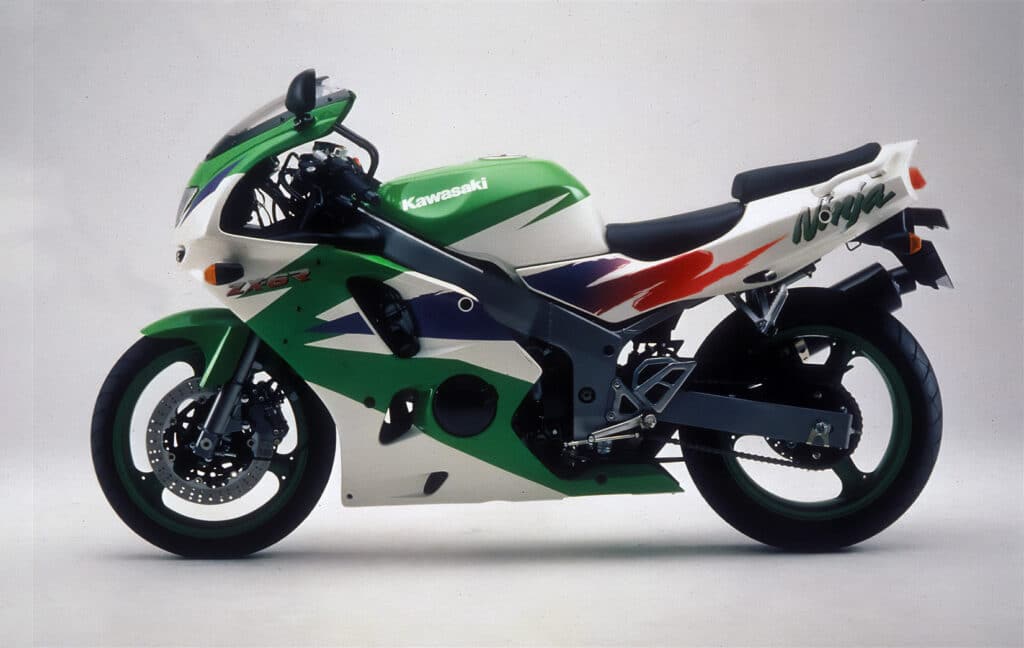
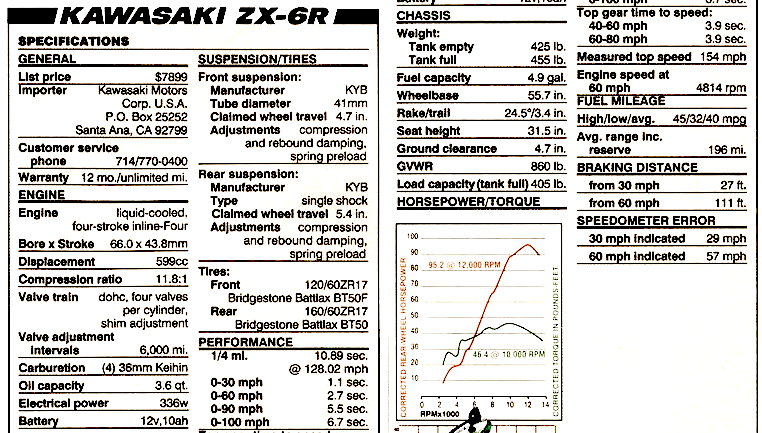
By today’s standards, the Kawasaki ZX-6R may look cool, but it’s pretty dated in terms of ride gear. It makes enough power, but there’s not much reason to look for this model in particular, unless you just like old stuff (nothing wrong with that) or are opening a museum (please invite me).
1998-1999: The G series (ZX-6R ZX600 G1, G2) — Stepping Up
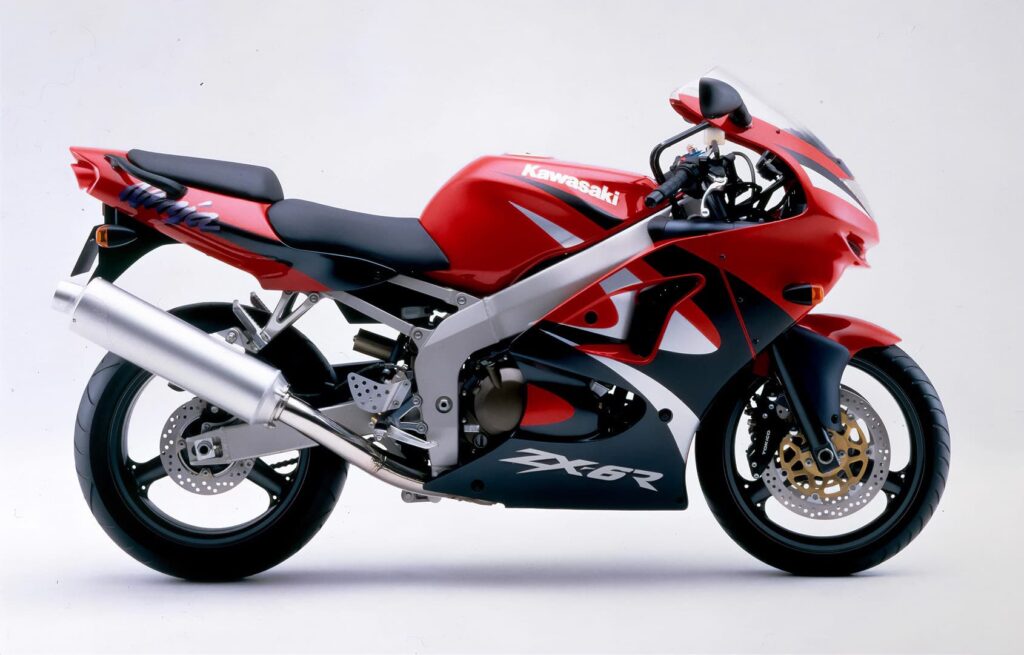
Kawasaki made their first significant update to the ZX-6R in 1998. Kawasaki had three goals for the 1998 revamp of the ZX-6R: to make it smaller, more focused, and more race-oriented. In the process, they actually knocked $300 off the list price. (Which in today’s dollars is more… but really who cares when back then fuel prices were a fraction of what they are today.)
Kawasaki gave the G model an all-new chassis, racetrack-ready suspension, and new brakes. The suspension and brakes were borrowed from the ZX-9R, though modified for the ZX-6R.
Plus, they overhauled the engine, focusing on making it lighter and quieter. I’ve seen some reports that claim the 98 ZX-6R makes more power, but it’s not in the official literature or technical reviews. At this stage, it’s more likely that how well the bike’s carburettors are maintained or how well modifications are done is more important.
Changes between the 95-97 and 98-99 ZX-6R include:
| Spec | 95-97 ZX-6R | 98-99 ZX-6R |
|---|---|---|
| Fuelling | 4 x Keihin CVKD36 | 4 x Mikuni BDSR 36R |
| Front suspension | 41 mm conventional fork | 46mm conventional fork |
| Front brakes | 2 x 300mm discs, 4-piston Tokico caliper | 2 x 300mm discs, 6-piston Tokico calipers |
| Display | Analogue only | Digital LCD + Analogue dials |
| Rear tire | 160/60-ZR17 | 170/60-ZR17 |
One note on picking them up used — even though the 6-piston Tokico calipers are good when they work well, they seem to need a lot of attention, and some owners complain of stuck pistons. So, they might need a rebuild or replacement. Many owners of the versions with 6-piston calipers opt to swap them out for Nissin calipers from 07-10 models.
2000-2002: The J series (ZX-6R ZX600 J1, J2, J3) — The Last Carburettor Upgrades
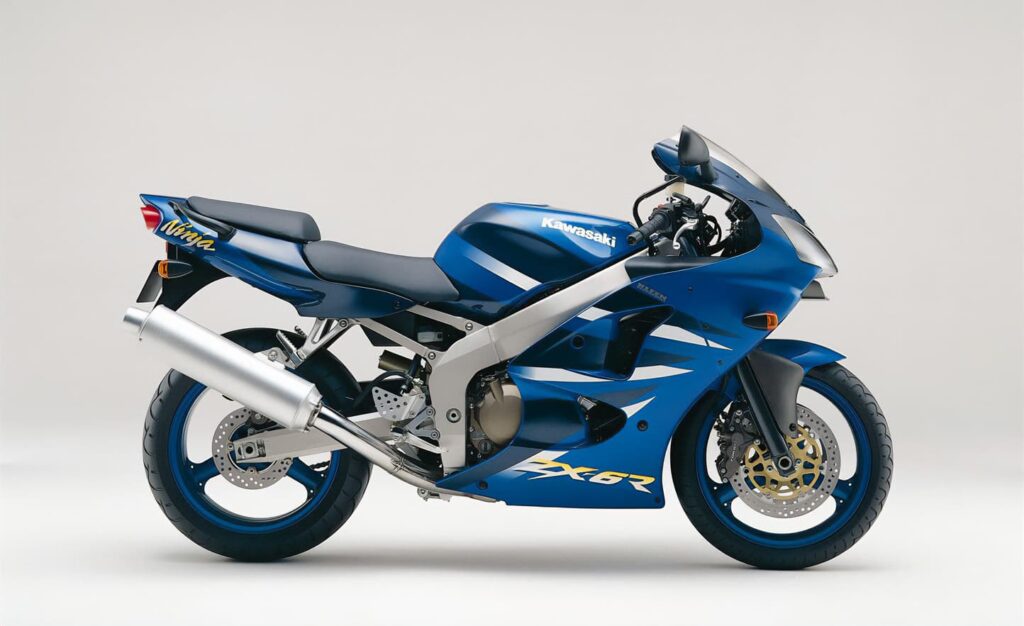
This was the last generation of ZX-6R motorcycles to have only a 599-cc engine… for a while. In fact, there’s a bit of an overlap with the 636 phase.
In 2002, since Kawasaki released the ZX636 with more capacity (more on that in a second), the ZX600 started having just limited production runs, as it had niche appeal only — just people who wanted to race.
For the J models, Kawasaki re-tuned the engine, giving it more torque through the whole rev range, and raising the redline too. Kawasaki increased the compression ratio (the 2000 model now requiring premium fuel, if you weren’t giving it that already), and made changes to the tire profiles.
The 2000 model now has a standard 180-size rear tire, but the front is still a slightly odd 120/65 (most modern sport bikes run a 120/70).
| Spec | 95-99 ZX-6R | 2000-02 ZX-6R |
|---|---|---|
| Compression ratio | 11.8:1 | 12.8:1 |
| Peak power | 78 kW / 106 hp @ 12500 rpm | 82 kW / 112 bhp @ 12500 rpm |
| Redline | 14000 rpm | 14500 rpm (Limit: 15000) |
| Coil type | Coil + HT lead | Coil-on plug |
| Front tire | 120/60 ZR 17 | 120/65 ZR 17 |
| Rear tire profile | 170/60 ZR 17 | 180/55 ZR 17 |
2002 A1P (ZX-6R ZX636 A1P) — The Interim 636
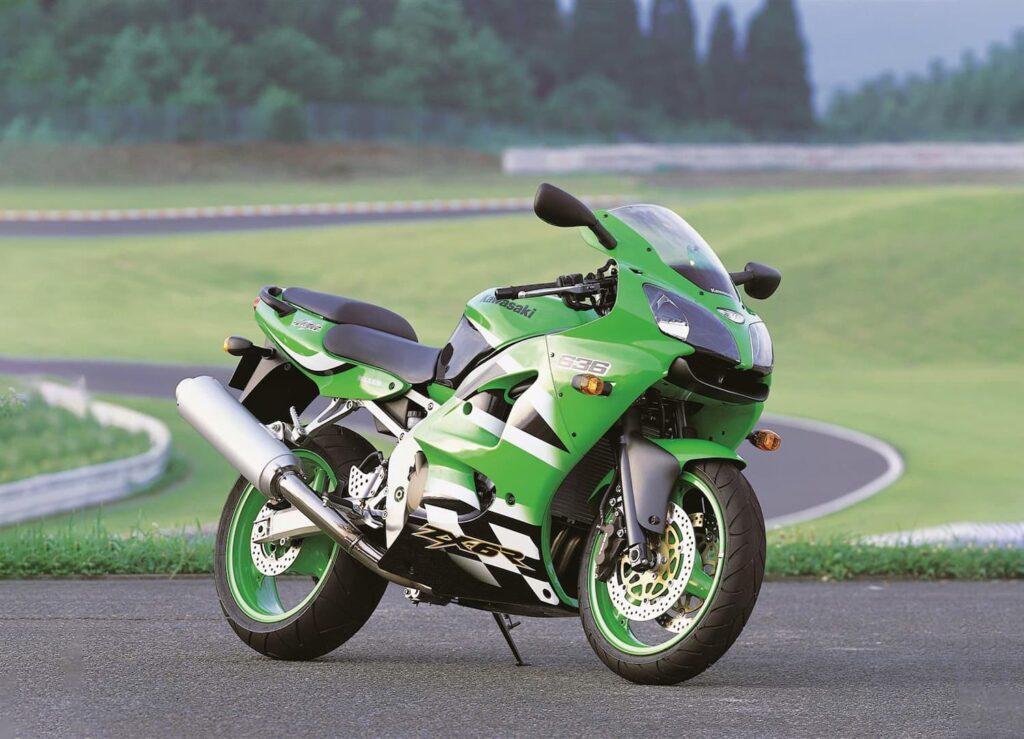
The mid-late Kawasaki 2002 ZX-6R is a bit of a unicorn because it’s a brief period in which Kawasaki made a motorcycle the same as the old spec, but with a 636-cc carburettor-fed (rather than fuel-injected) engine.
The first year that Kawasaki released a 636-cc ZX-6R was 2002. They designated it as the A1P model. Kawasaki released the A1P model from mid-2002 — so not every 2002 ZX-6R is necessarily an A1P. (And some A1P models may have been registered as 2003 model year motorcycles).
Kawasaki increased the bore by 2mm, and of course changed fuelling to suit (though still using Mikuni 36mm BDSR carburettors), but didn’t change anything else! It has the same suspension, brakes, and everything else from the previous year.
| Spec | 2000-2002 ZX-6R 600 | 2002 ZX-6R 636 (A1P) |
|---|---|---|
| Displacement (cc) | 599 | 636 |
| Bore x Stroke (mm) | 66 x 43.8 | 68 x 43.8 |
| Fuelling | 4 x 36mm Mikuni carburettors | 4 x 36mm Mikuni BDSR carbs |
| Peak power | 81 kW / 112 bhp @ 12500 rpm | 86 kW / 118 hp @ 12500 rpm |
| Peak torque | 66 Nm / 49 lb-ft @ 10000 rpm | 69 Nm / 51 lb-ft @ 12000rpm |
It also looks awesome in green with green wheels. Yow!
2003-2004 B series (ZX-6R ZX636 B1, B2) — The Fuel-Injected 636
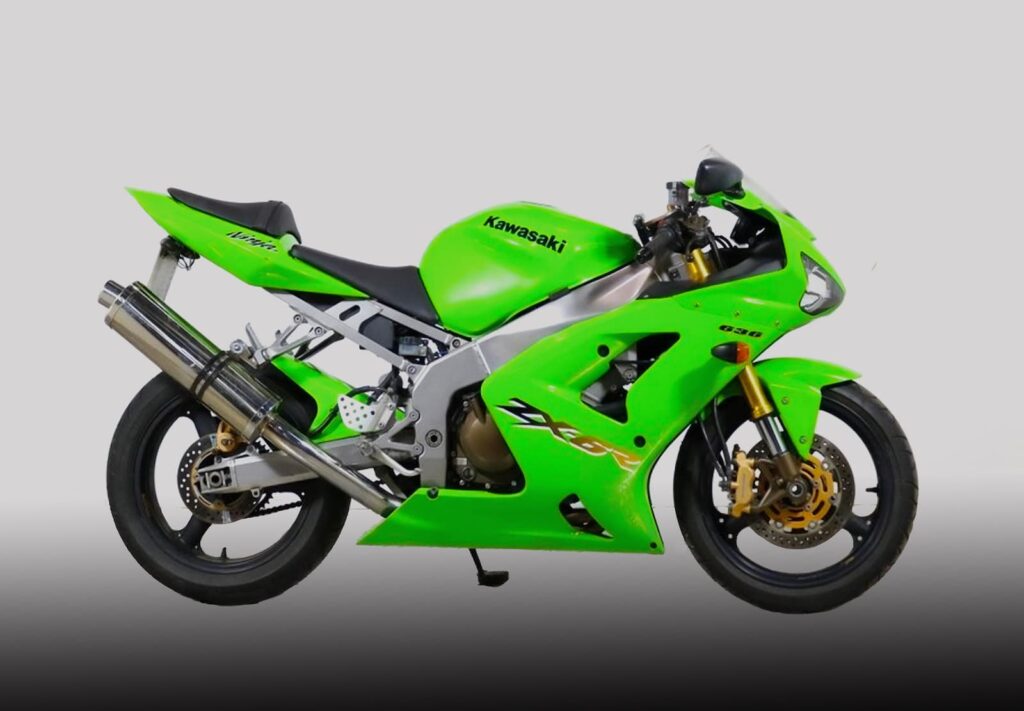
For 2003, Kawasaki made more significant changes to the ZX-6R 636. They kept the engine capacity that people loved from 2002, with the same dimensions (bore and stroke), but gave the engine fuel injection and overhauled the braking and suspension, giving it radially mounted callipers and an inverted fork.
| Spec | 2002 ZX-6R 636 (A1P) | 2003-04 ZX-6R 636 (K) |
|---|---|---|
| Displacement (cc) | 636 | 636 |
| Bore x Stroke (mm) | 68 x 43.8 | 68 x 43.8 |
| Compression ratio | 12.8:1 | 12.9:1 |
| Fuelling | 4 x 36mm Mikuni BDSR carbs | 4 x 38mm Keihin throttle bodies + sub-throttle bodies |
| Peak power | 86 kW / 118 hp @ 12500 rpm | 87 kW / 118 hp @ 13000 rpm Add ~5% with ram air |
| Peak torque | 69 Nm / 51 lb-ft @ 12000rpm | 67 Nm / 49 lb-ft @ 11000 rpm |
| Redline / cut-off | 14500 rpm / 15000 rpm | 15000 rpm / 15500 rpm |
| Front suspension | Conventional 46mm cartridge fork | Inverted Kayaba (these days KYB) 41mm. Can alter ride height with shims |
| Front brakes | 2 x 300mm discs, 6-piston Tokico calipers | Twin 280mm discs, radially-mounted Tokico 4-piston calipers |
The 2003 Kawasaki ZX-6R was actually the first motorcycle in the 600cc class to use radially-mounted calipers. They’re now par for the course, and many mid-range street bikes use them.
2003-2004 K series (ZX-6RR ZX600 K1, K2) — The first ZX-6RR
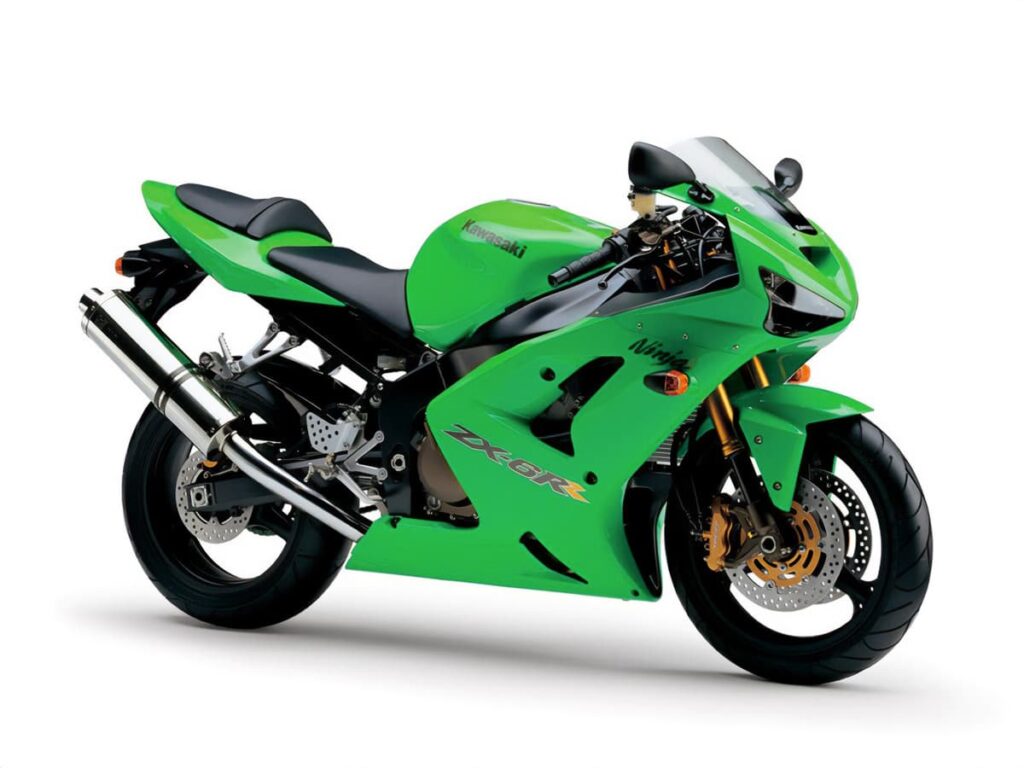
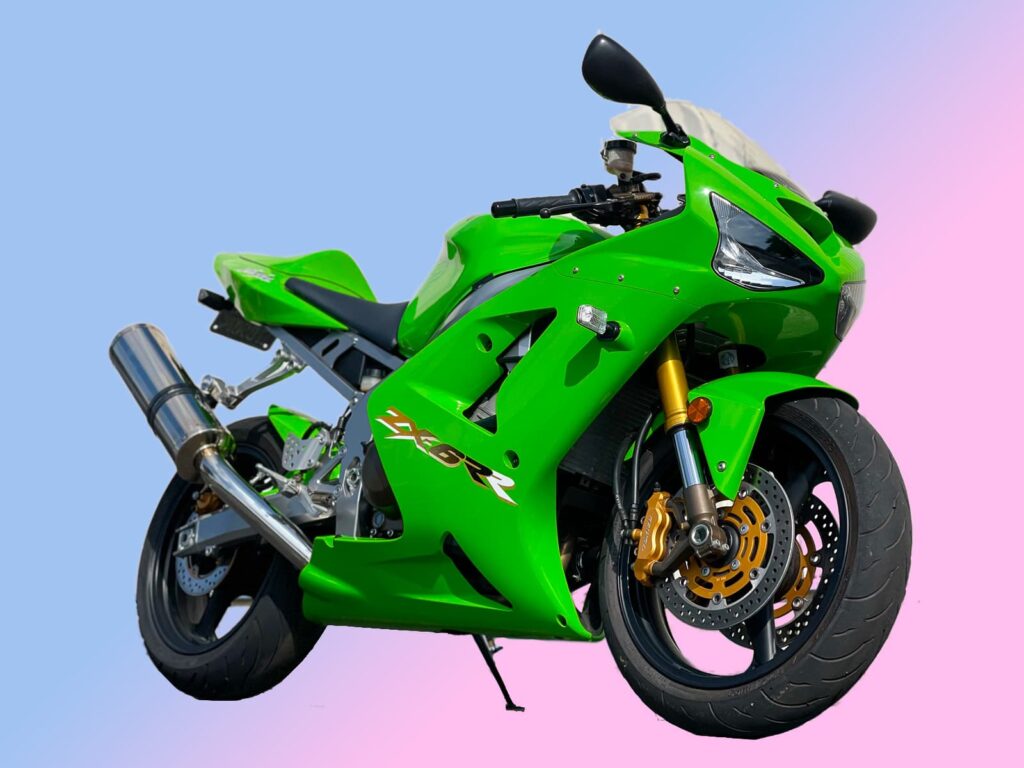
In 2003, because the street bikes had a 636-cc engine, Kawasaki released the K series in RR spec, with a 599-cc engine to be used by racers with capacity limits in classes.
| Spec | 2000-2002 ZX-6R (previous gen, for ref) | 2003-2004 ZX-6R (Single R) | 2003-2004 ZX-6RR (Double R) |
|---|---|---|---|
| Displacement (cc) | 599 | 636 | 599 |
| Bore x Stroke (mm) | 66 x 43.8 | 68 x 43.8 | 67 x 42.5 |
| Compression ratio | 12.8:1 | 12.9:1 | 13.0:1 (per product release) 13.5:1 (per owner’s manual) |
| Ride aids | None | None | Slipper clutch |
These motorcycles share everything with the 2003-2004 B series (with the 636-cc fuel injected engine) other than the engine, of course, which is 599 cc and lower power.
Note that the bore and stroke of the 2003 599-cc engine are different from the previous-gen 599-cc engine. To make the 636, bored out the previous 599. But to make the new 599, they still bored out the previous engine, but also reduced the stroke compared to the 636. The result is that the new 2003 599-cc engine has a shorter stroke, which helps it rev high, for high-end power.
To further help rev high, the RR has forged 67 mm pistons that weigh a mission-critical 5 grams less than the R’s 68 mm cast pistons. But otherwise, a lot about the engine is the same.
Some extra trick bits that the RR gets
- Adjustable swingarm pivot to change geometry
- Steering damper (optional) — the RR comes with threaded slots to accept one, but the R doesn’t
- Slipper clutch (a.k.a. back torque-limiting clutch) — Kawasaki was always very early with the riding aids on their sport bikes! The regular single-R got it from the 2005 generation.
The K1 and K2 are identical other than that the K1 has a silver frame and the K2 has a black frame.
Generally speaking, the 2003-2004 ZX-6RR sold far less due to its more niche appeal — mostly people who want to track or race them.
2005-2006 ZX-6R ZX636 C1, C6, D6 — Under-seat exhausts, and whopping power
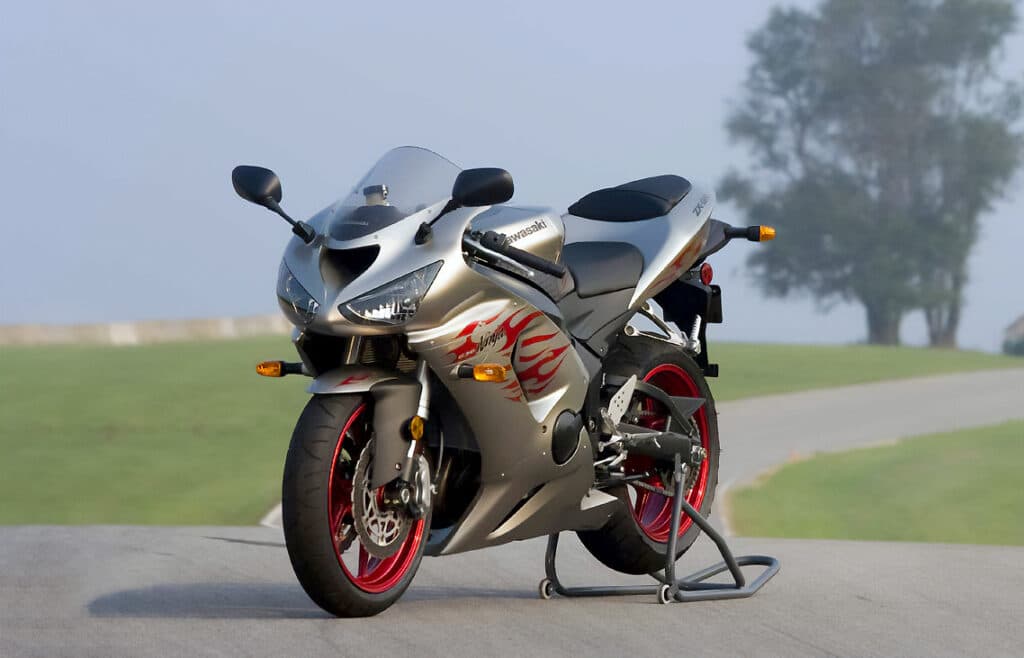
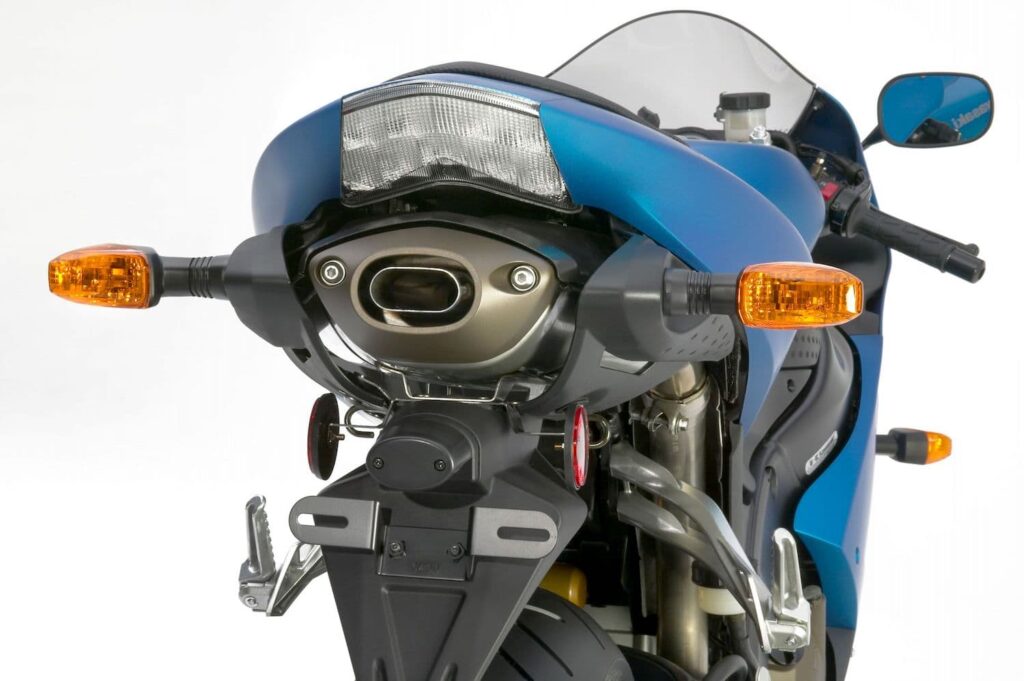
Spoiler — this is my favourite generation of the ZX-6R 636! But that’s just because — despite their drawbacks — I like the look of under-seat exhausts.
I read somewhere that they had to move that format because of emissions restrictions, presumably leading to a bigger exhaust unit. But you can’t help noticing it looks cool. Kawasaki made the most of it in marketing, anyway, saying it made it look “racy”. To me, it looks like a jet plane.
This was a rare phase in the ZX-6R for under-seat exhausts, by the way. The 599-cc version also got it for a few years afterwards. It looks cool, like a fighter plane, but it’s heavier than a short side exhaust of course (much more piping), with other disadvantages to mass centralisation. Still, I’ll take it any day.
But obviously (I hope), there were many more changes to the 2005 Kawasaki ZX-6R 636 than just the position of the exhaust. They improved the engine, the brakes, the suspension, and even the ride aids.
Kawasaki kept the same basic prototype of the engine for the 2005-2006 ZX-6R 636 — the 636-cc liquid-cooled inline four-cylinder engine, with the same 68 x 43.8 mm bore and stroke, same 12.9:1 compression ratio, and same fuel injection via four 38mm Kein throttle bodies.
But Kawasaki made changes to the upper parts of the engine, including:
- Dual fuel injection
- Oval-shapes sub-throttles on the Keihin throttle bodies, increasing their surface area while keeping the engine slim
- New ECU, supporting the second fuel injector
- Separating the intake/exhaust valves farther apart for improved breathing / higher combustion efficiency
- Larger-diameter intake and exhaust valves
- New cam profiles
- New pistons with reshaped crowns and low-friction skirt profiles
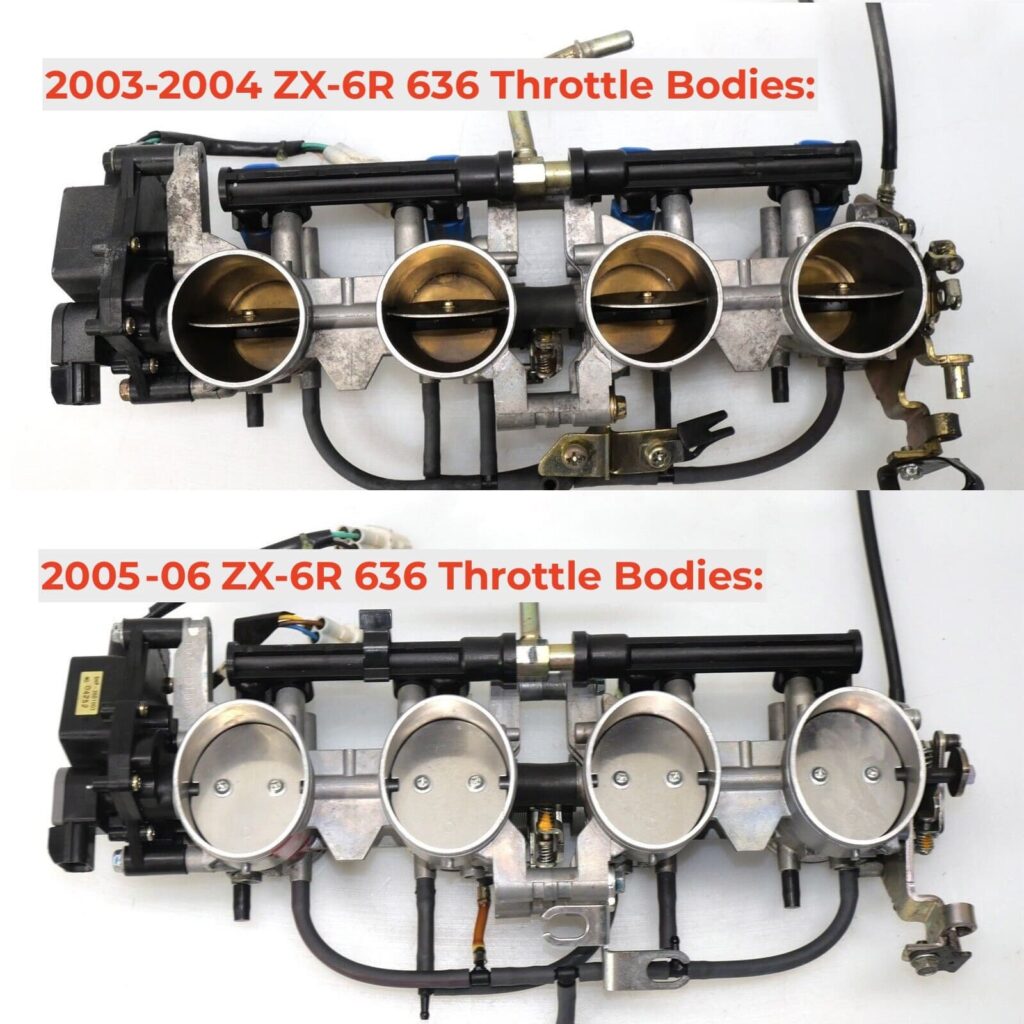
Here’s the full blow-by-blow list of changes between the 2003/04 and 05/06 ZX-6R 636 models.
| Spec | 2003-2004 ZX-6R 636 | 2005-2006 ZX-6R 636 |
|---|---|---|
| Fuelling | EFI, 4 x 36mm Keihin throttle bodies | EFI, 4 x 36mm Keihin throttle bodies, oval-shaped sub-body, dual fuel injectors |
| Peak power | 87 kW / 118 hp @ 13000 rpm Add ~5% with ram air | 95.5 kW / 130 hp at 14000 RPM (Eur / Aus) 92.5 kW / 125 hp (USA / Can) Add ~5% with ram air |
| Peak torque | 67 Nm / 49 lb-ft @ 11000 rpm | 70.5 Nm / 52 lb-ft @ 11500 rpm |
| Front suspension | Kayaba 41mm inverted fork | Showa 41mm inverted fork |
| Brakes | 2 x 280mm standard (non-petal) discs, radially-mounted 4-piston calipers | 2 x 300mm petal discs, radially-mounted 4-piston calipers + radial front brake master cylinder |
| Ride aids | None (ZX-6RR had a slipper clutch) | Slipper clutch (back-torque limiter) |
Look at that again… that’s an almost shocking amount of power for a 600-class motorcycle! Yes, it’s “cheating” with the displacement, but only by 6%… and yet the ZX-6R makes a claimed 95.5 kW (130 PS / 128 bhp) at 14000 rpm, or even more with ram air.
This is significantly higher than most 600-class bikes, and almost in GSX-R750 territory. People measured around 115 bhp at the rear wheel on the dyno, which matches up with the claims.
But of course, the engine is just the beginning of the changes. Kawasaki also distinctly improved the brakes, suspension, and even the ride aids — adding a back-torque limiter (a.k.a. a “slipper” clutch). It wasn’t strictly necessary, as down-shifts were never hard, but it’s welcome.
The Kayaba suspension was already good, but the Showa suspension is plusher and more sophisticated. And the radial mount calipers are a distinct improvement, both in performance and in reliability. (See our guide to brakes and calipers for more about radial-mounted calipers.)
The 2005-2006 ZX-6R 636 kept the slightly odd-ball 120/65 ZR 17 tire size of the previous gen.
The model code D6 is used just for the “Titanium Tribal” colour scheme, with titanium silver paint, red anodised wheels, and red flames (pictured above).
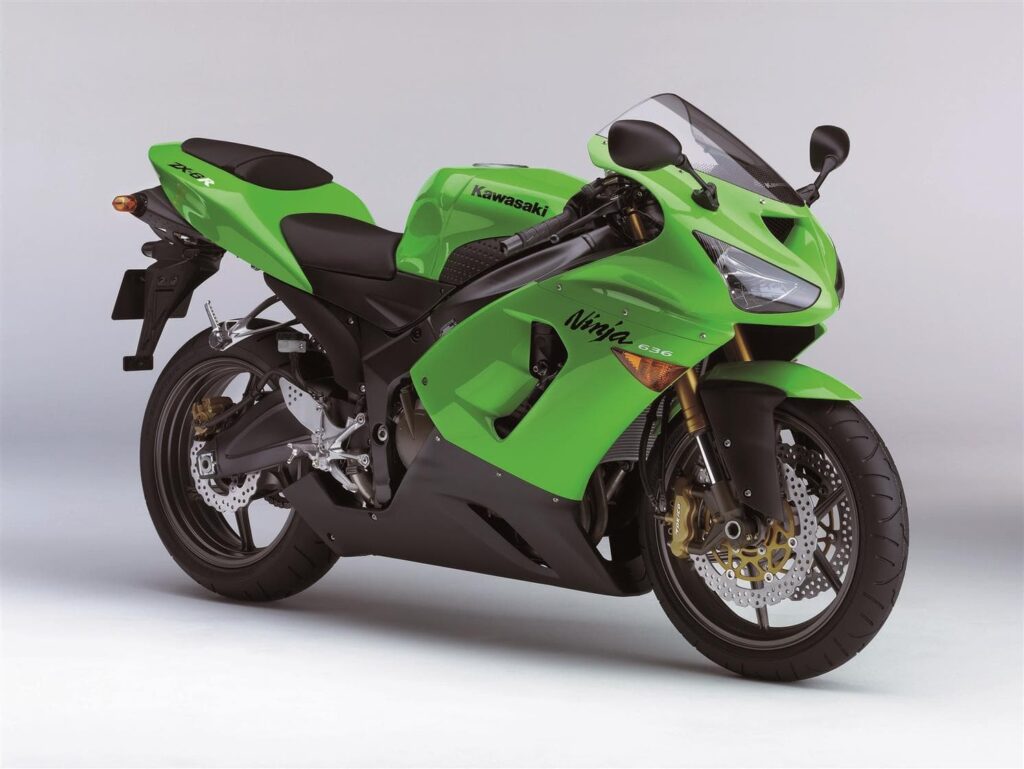
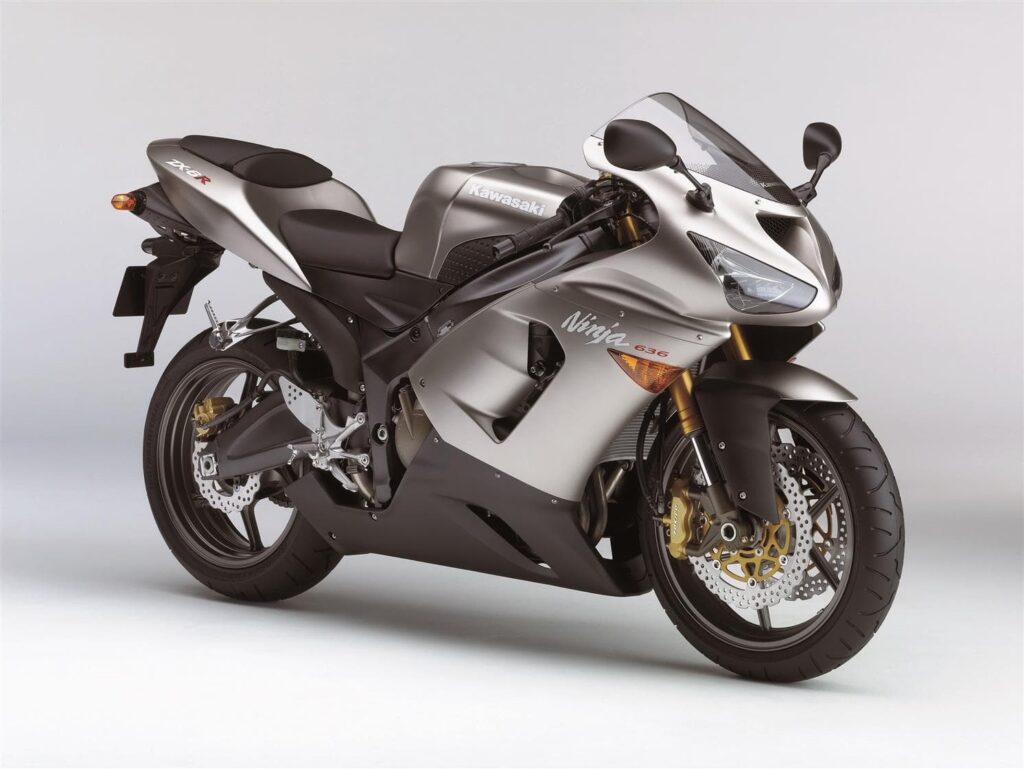
2005-2006 N series ZX-6RR ZX600 N1, N6 — The revised race bike
Similar to the earlier ZX-6RR, Kawasaki released the 2005-2006 ZX-6R with a 600 engine, but with those under-seat exhausts. It’s also known as the Ninja 600, but don’t confuse it for the Ninja 650. (If you’re deep in the race bike world that may sound obvious, but remember, it’s not obvious to beginners! This was a question I once had, too.)
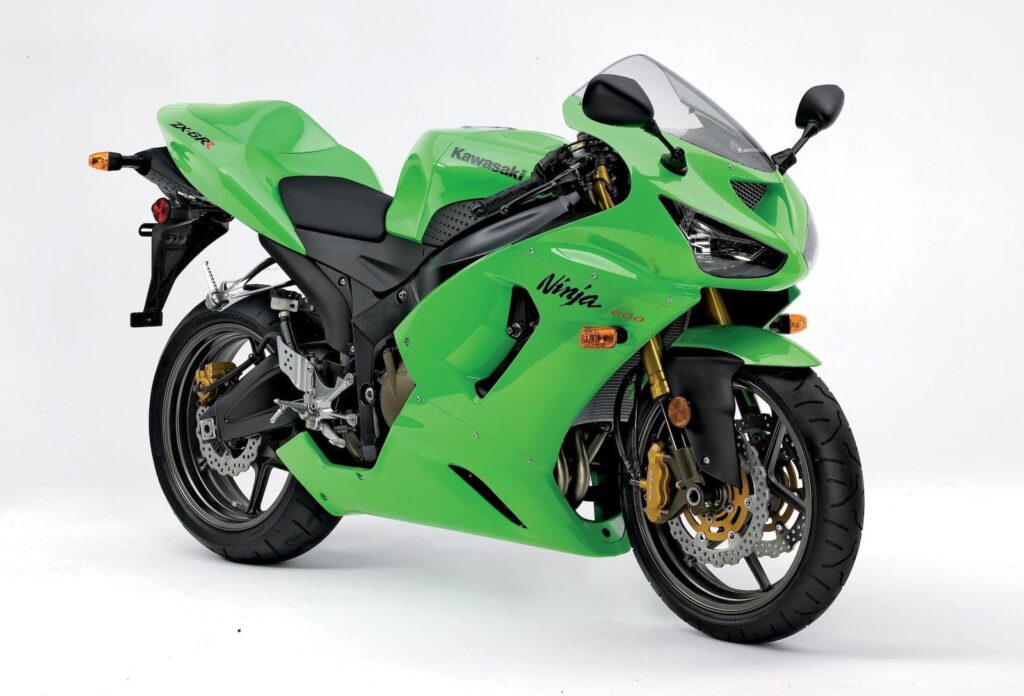 2005-2006 Kawasaki ZX-6RR 600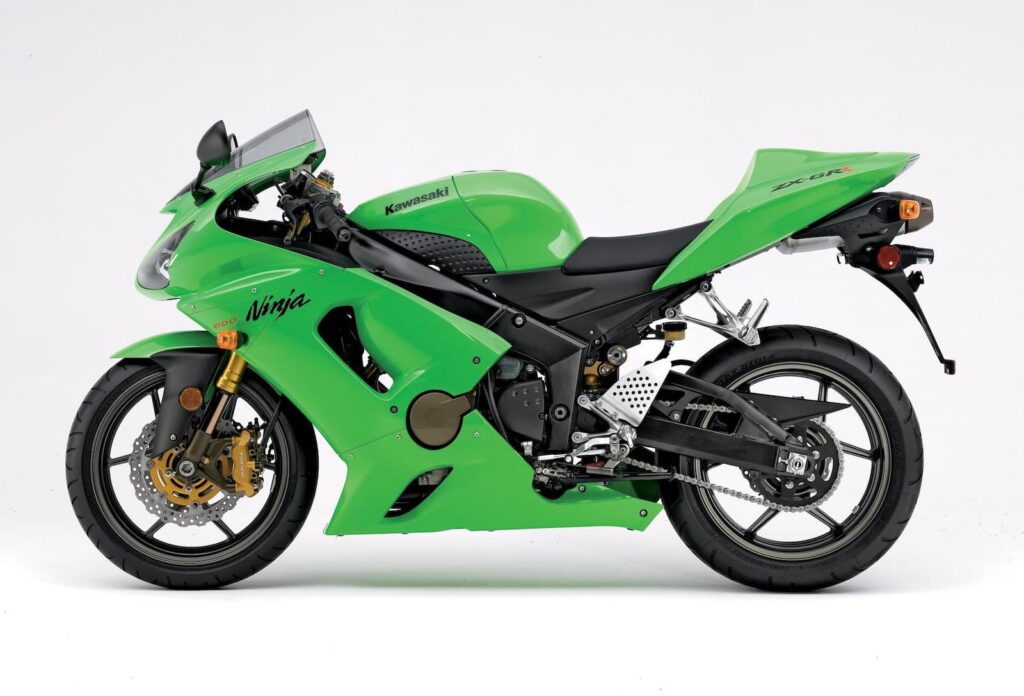
2005-2006 Kawasaki ZX-6RR 600
The 2005-2006 Kawasaki ZX-6RR got the same upgrades as the single-R, with Tokico 4-piston calipers on petal discs and a Showa inverted fork, but kept the engine of the earlier ZX-6RR, along with the close-ratio gearbox, and a mounting for a steering damper.
2007-2008 P series ZX-6R ZX600 P7-P8
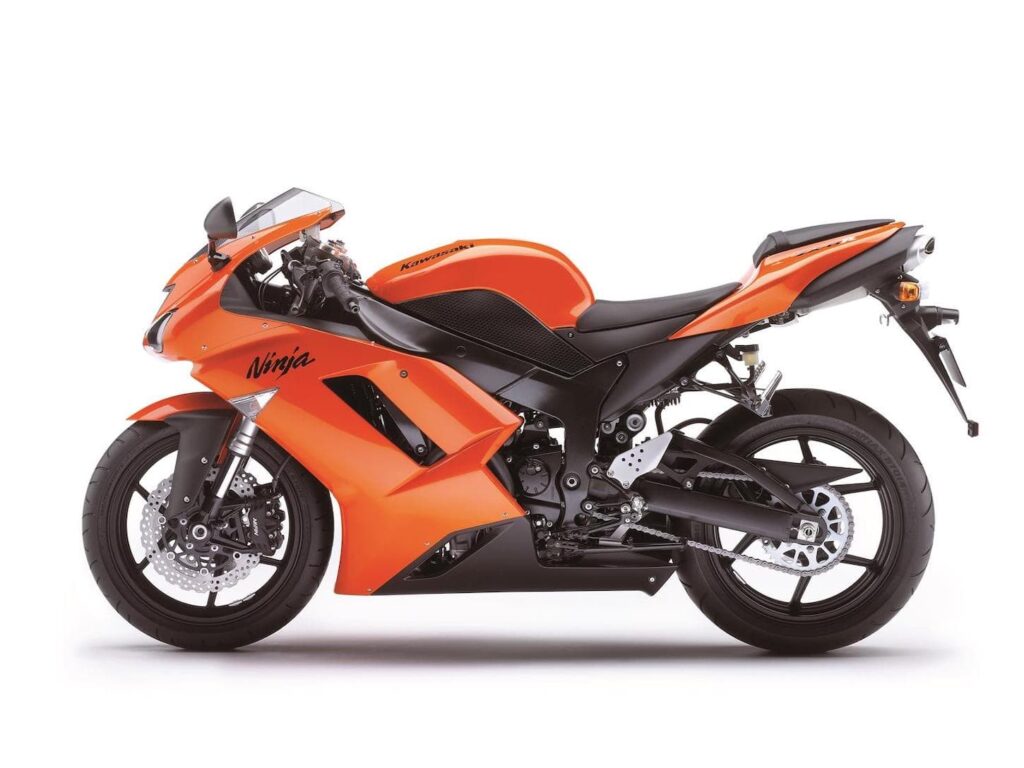
From 2007 through to 2012, Kawasaki decided to axe the ZX-6R 636 from its line-up and just make the ZX-6R in 599 cc trim. So, if you buy a ZX-6R of any of these years, know it’ll be the smaller capacity, but not a bad bike.
However, because 636 has been the accepted capacity of the ZX-6R for most of its life, the 599 cc versions didn’t sell as well. They’re a fine bike, but they have more niche appeal and are harder to sell, if you’re thinking of trying one out for a while.
The 2007-2008 Ninja ZX-6R was the first, early version of this 600-only sport bike. It kept the under-seat exhaust, and indeed it’d be the last we’d see of that format of exhaust — ever.
Even though it makes sense for smaller motorcycle manufacturers like Kawasaki to make just one production motorcycle, people really missed the 636 cc. The extra bottom-end torque was something that people got used to. So even though it was an improvement over the early ZX-6RR, and the 10000 rpm-plus power remained impressive, reviewers were lukewarm about it.
2009-2012 R series (ZX-6R Zx600 R9, R9A, RA, RB, RC)
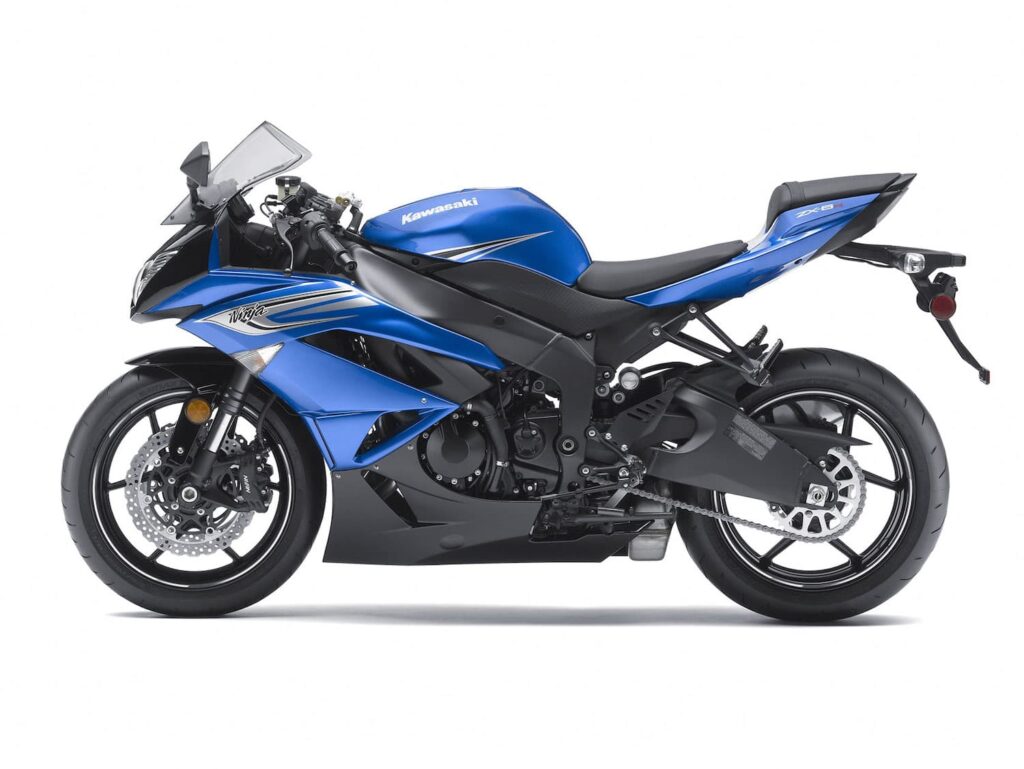
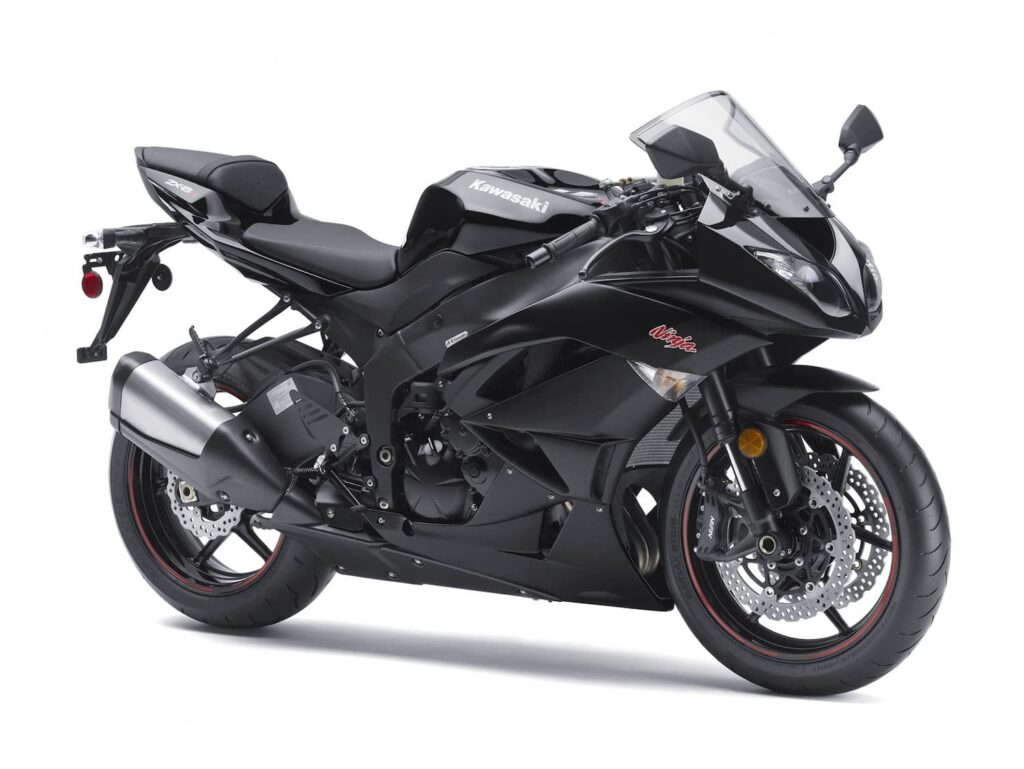
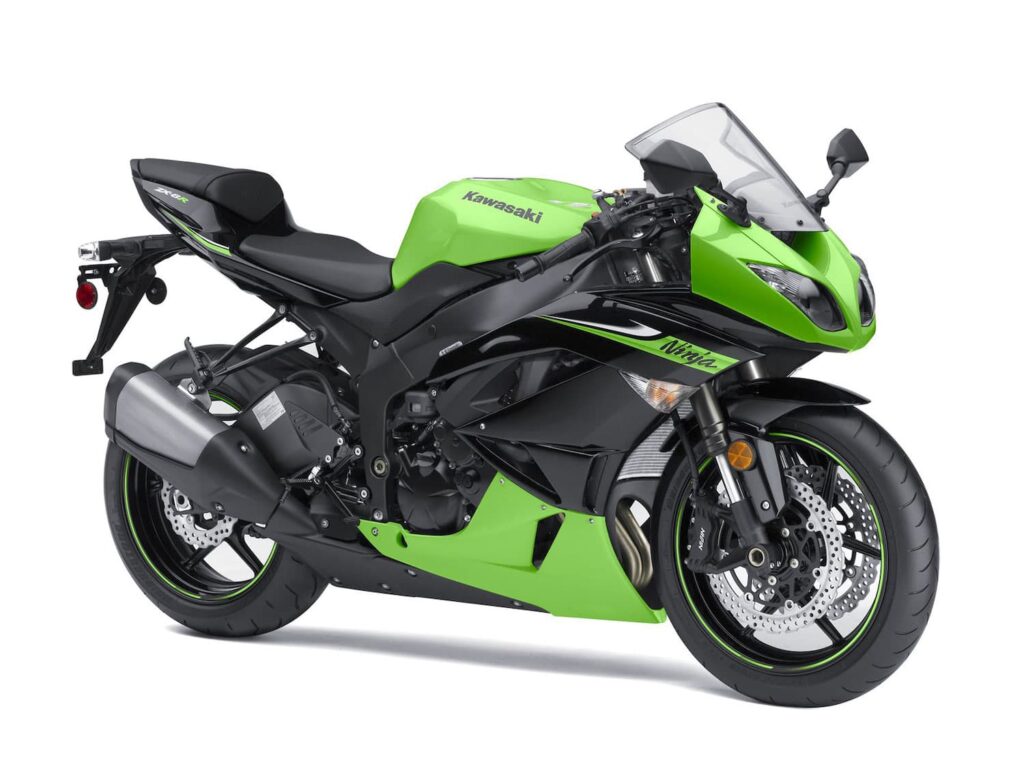
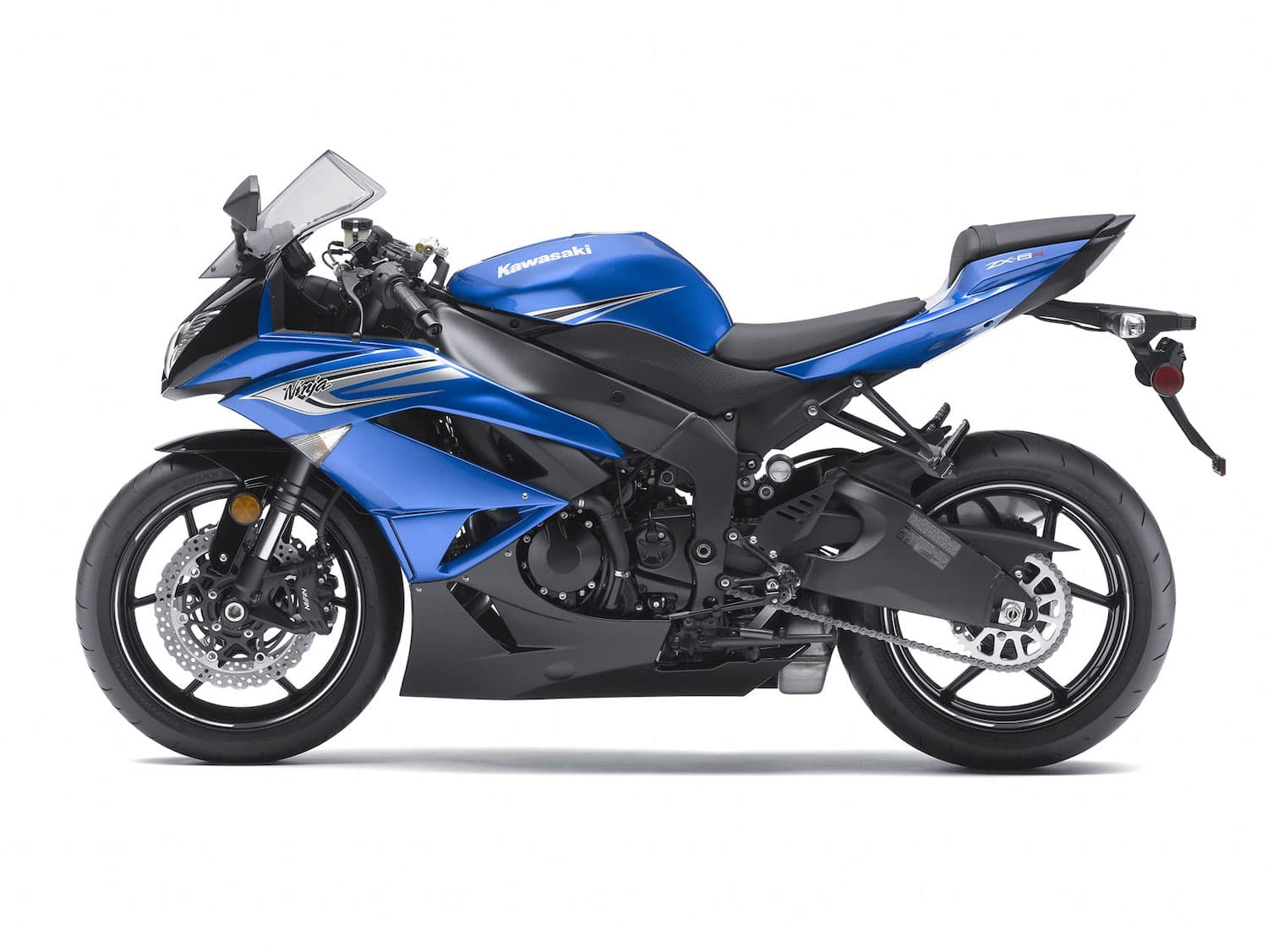
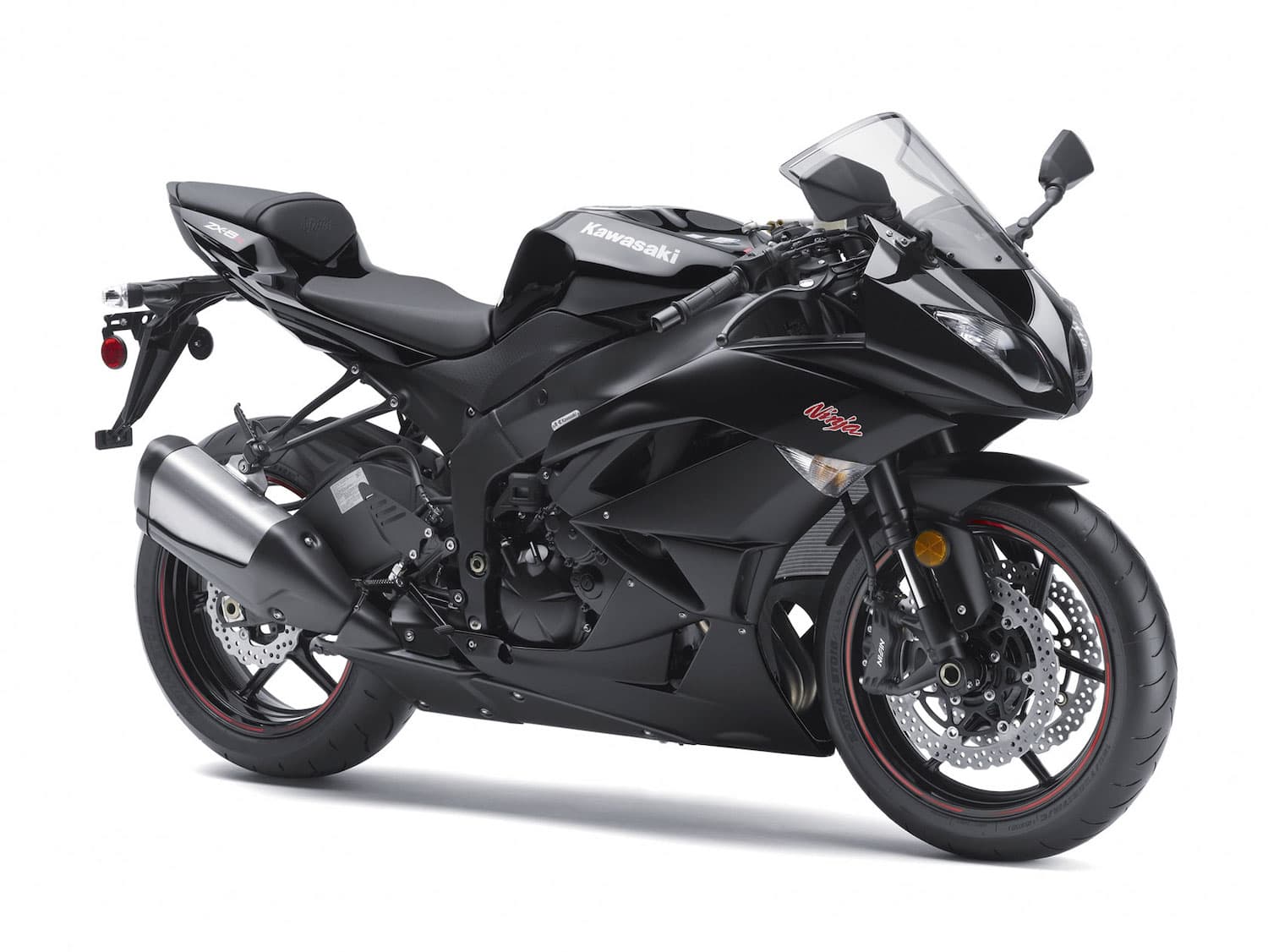
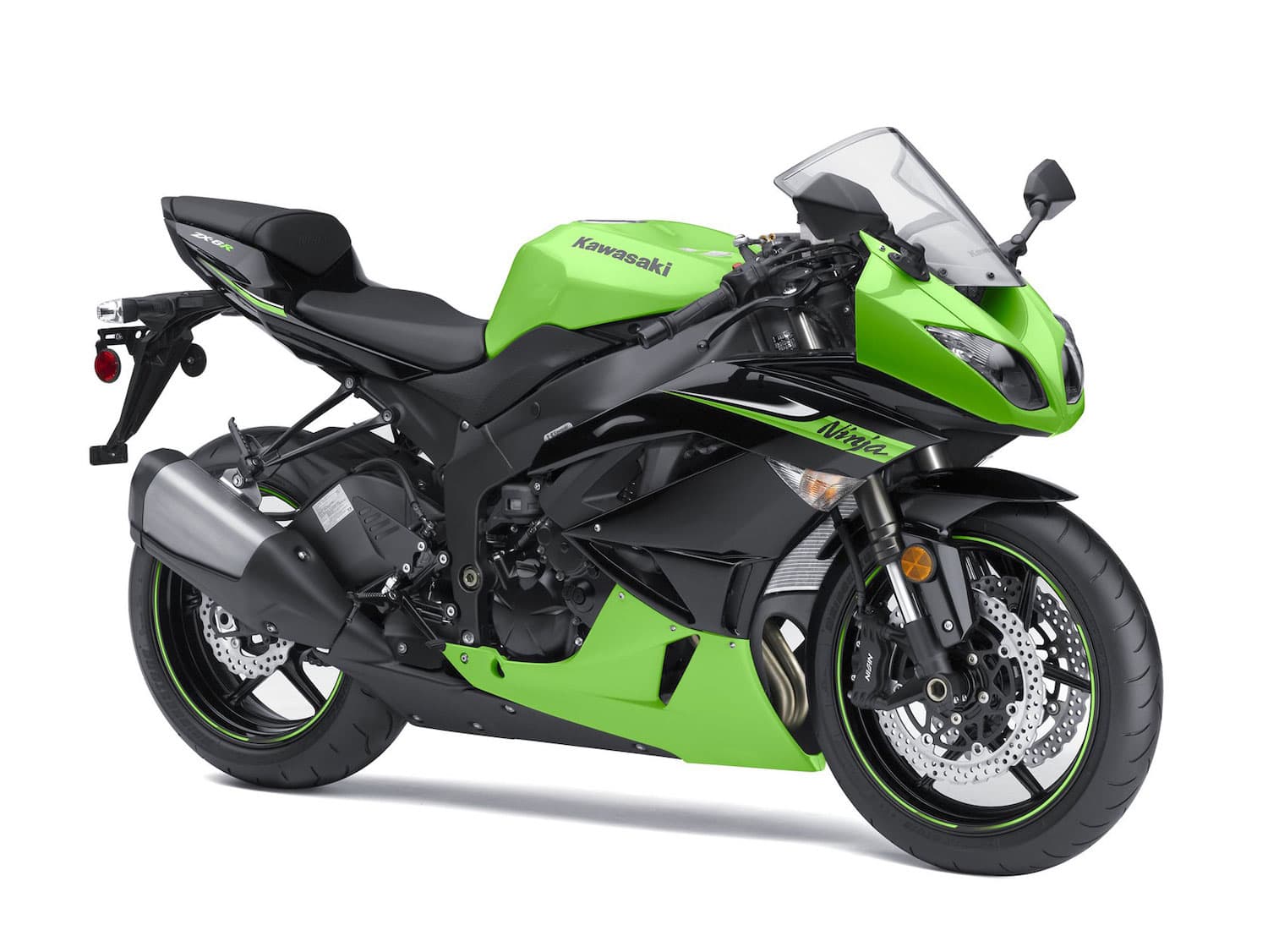
Kawasaki made some significant changes in 2009 to the ZX-6R. It’s still a 599 cc-only model through to 2012 — things change then.
The main changes for the 2009-2012 Kawasaki ZX-6R are weight-related.
Firstly, they removed that under-seat exhaust and replaced it with a side pipe. Style-wise, this makes a lot of people mad (as does switching from dual exhausts to single), but there’s no question that there’s less weight, and more significantly, that there’s less weight high up.
The single pipe also makes it much easier to reduce weight even further via a slip-on exhaust.
Secondly, Kawasaki combined supports up front for the fairing and dash with that for the ram-air intake and airbox, also reducing weight.
Thirdly, Kawasaki reduced weight inside the engine and transmission, with magnesium engine side covers.
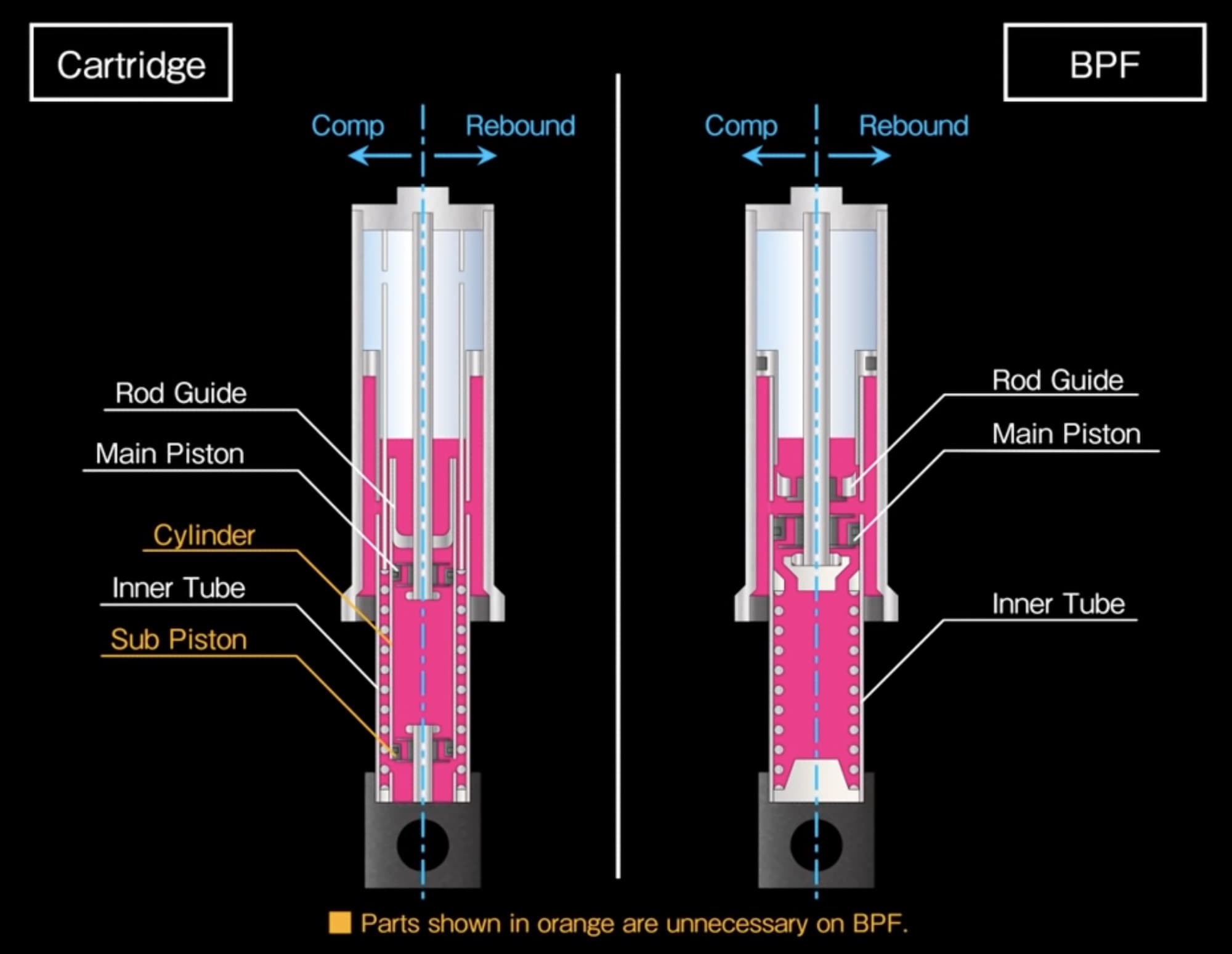
But aside from weight, the 2009 Kawasaki ZX-6R was also the first to get Showa’s “Big Piston Fork” design front suspension. This design has become pretty commonplace in sport bikes, even mid-range ones — which sometimes get the “Separate Function” variant.
Big Piston Fork (or BPF) design is different from a conventional cartridge-design suspension unit. In a BPF fork (I feel stupid saying Big Piston Fork Fork… but there you go), the inner tube is used as the cartridge itself. This means there’s only one, larger (“big”) piston and fewer fork internals.
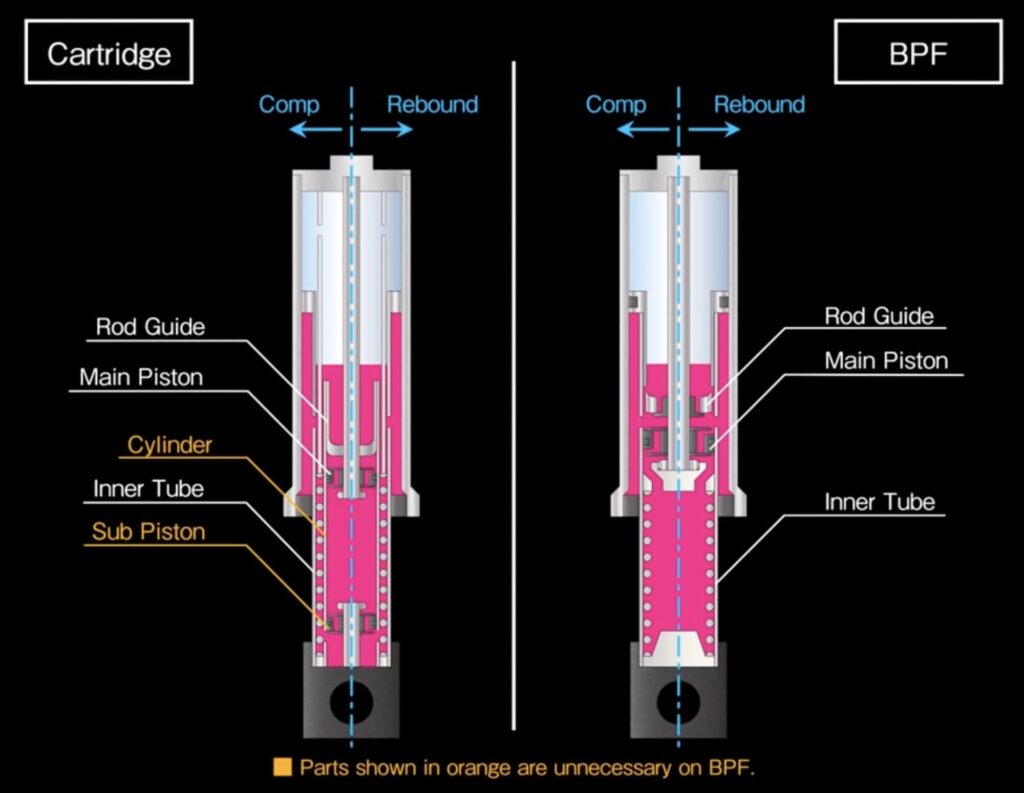 BPF Fork internals
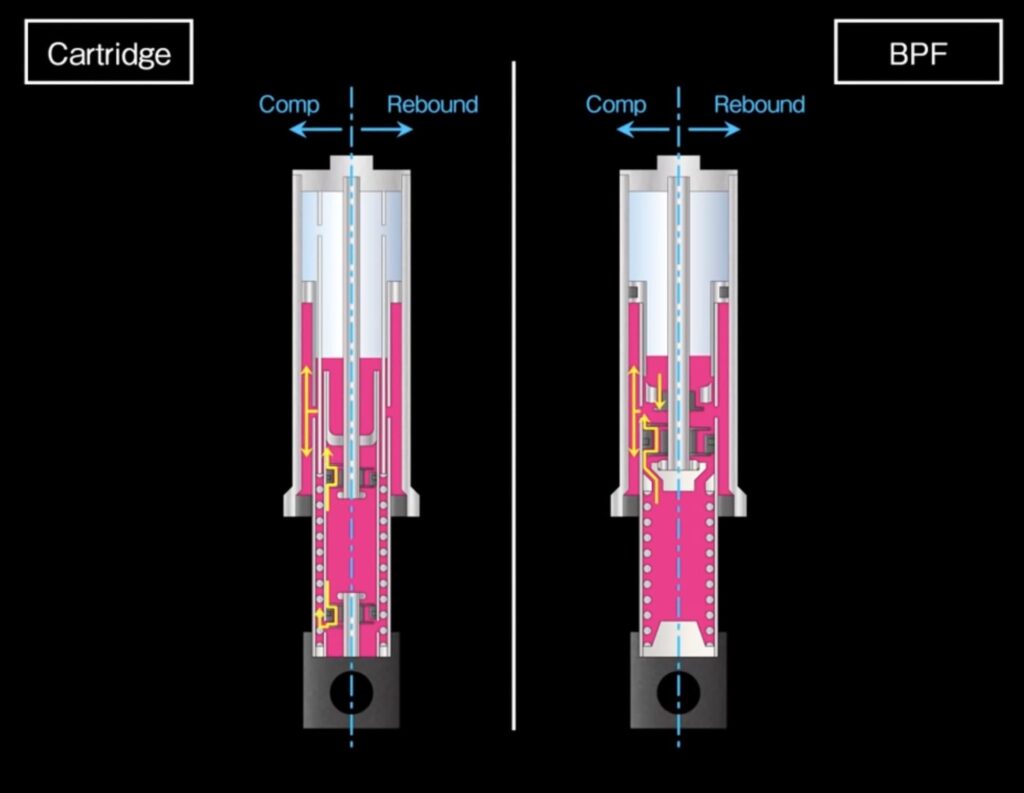 Compression stroke
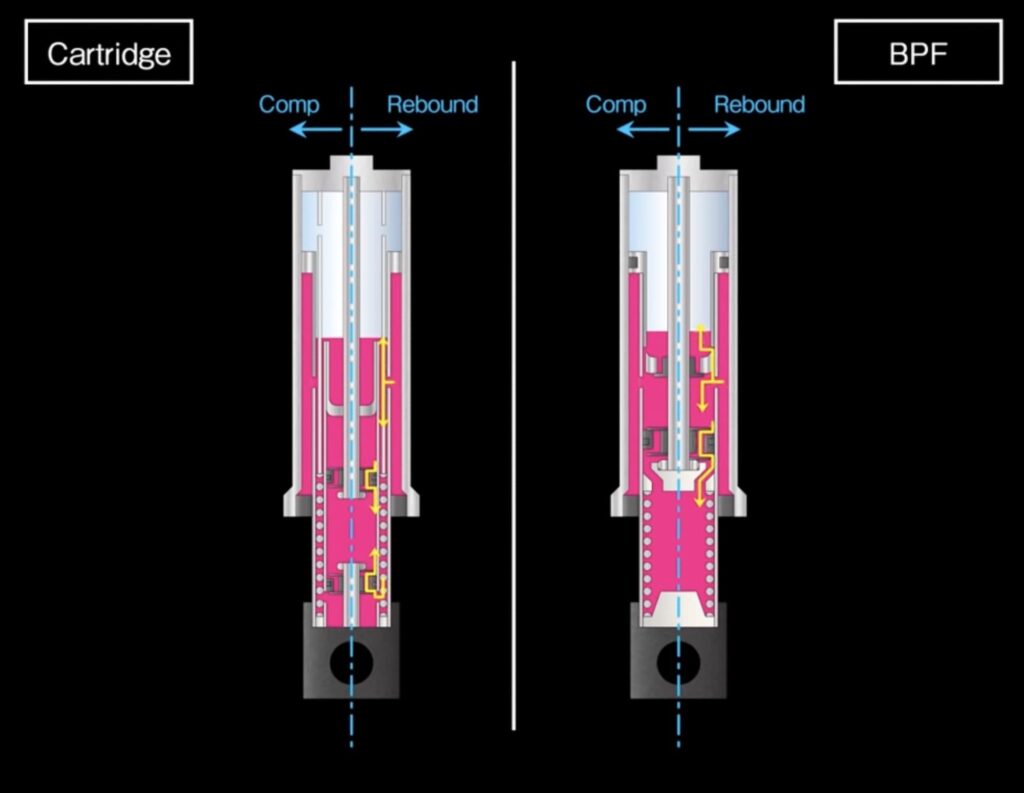 Rebound stroke
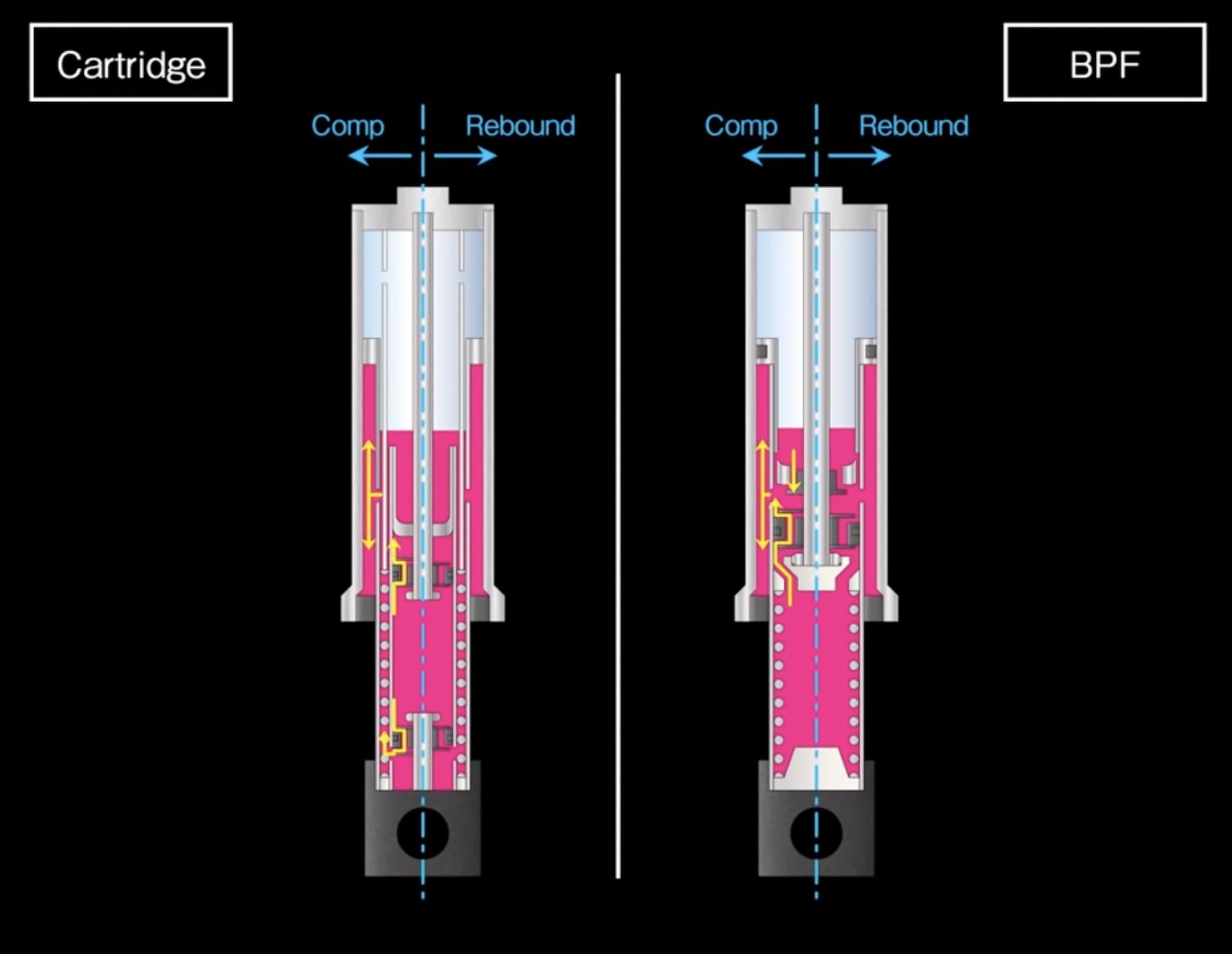
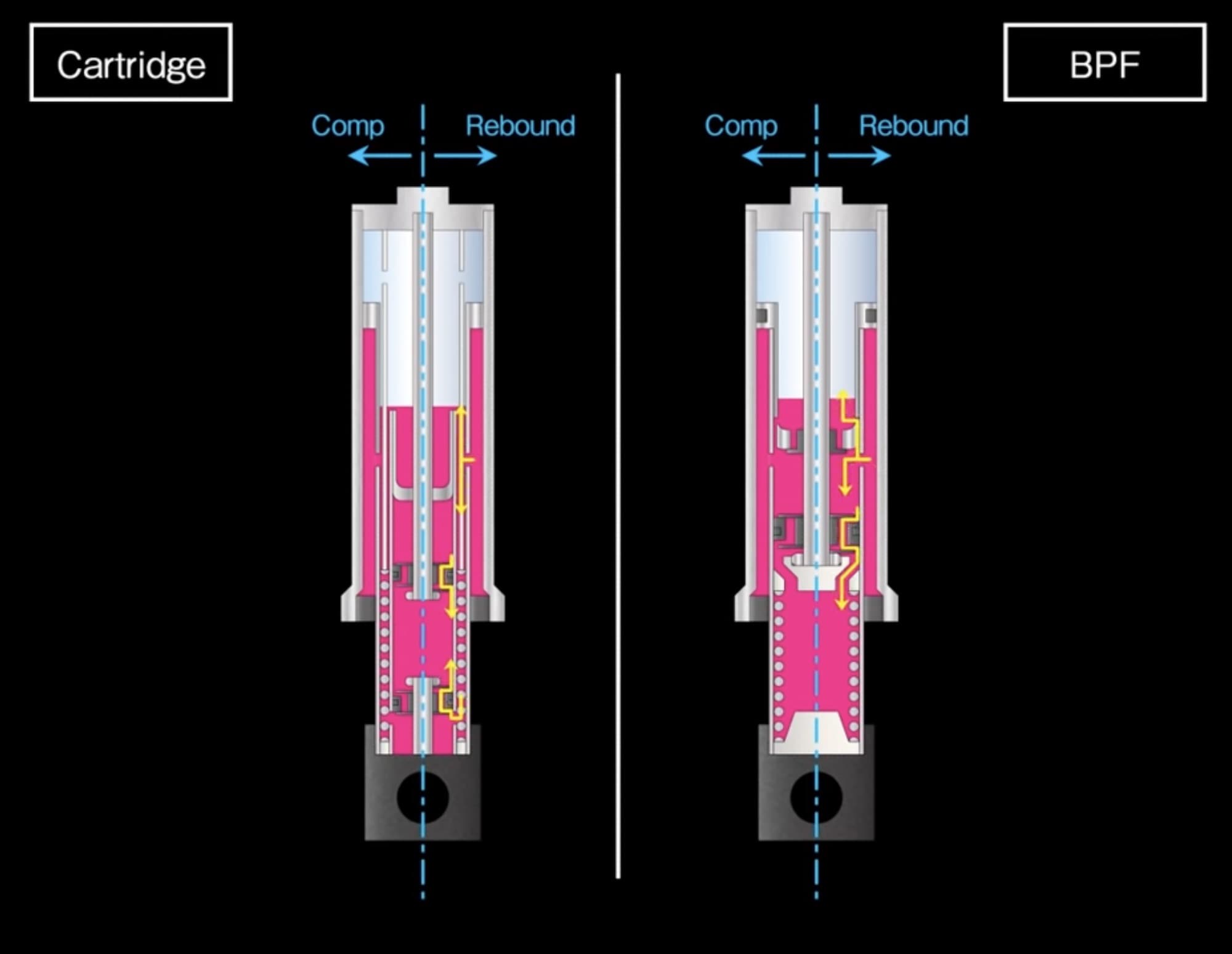
(Images from Kawasaki’s video explaining the operation of the BPF)
The BPF design is also easier for a user to service, and is lighter in weight, too, meaning there’s less unsprung mass (see this guide to unsprung mass in simple terms).
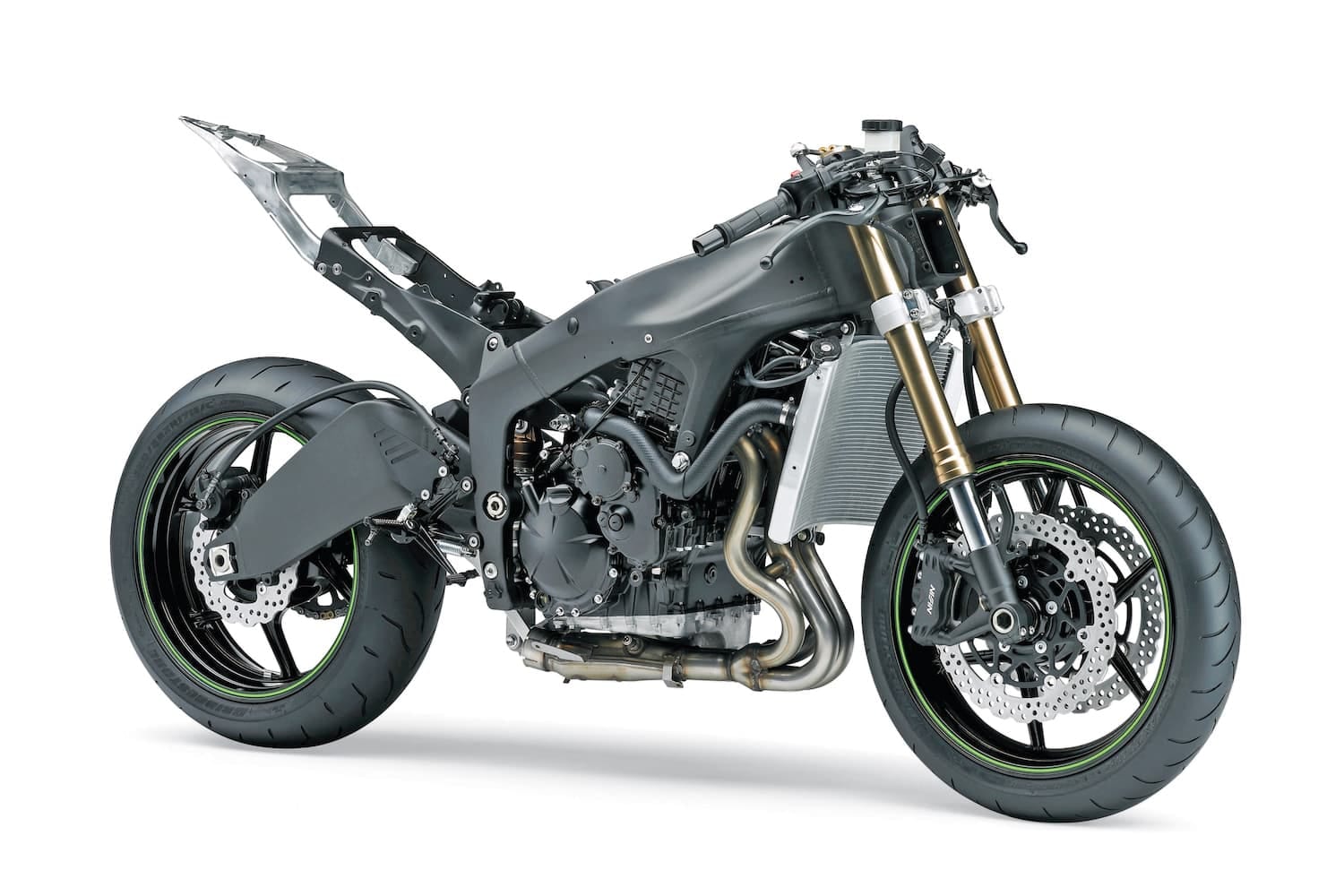
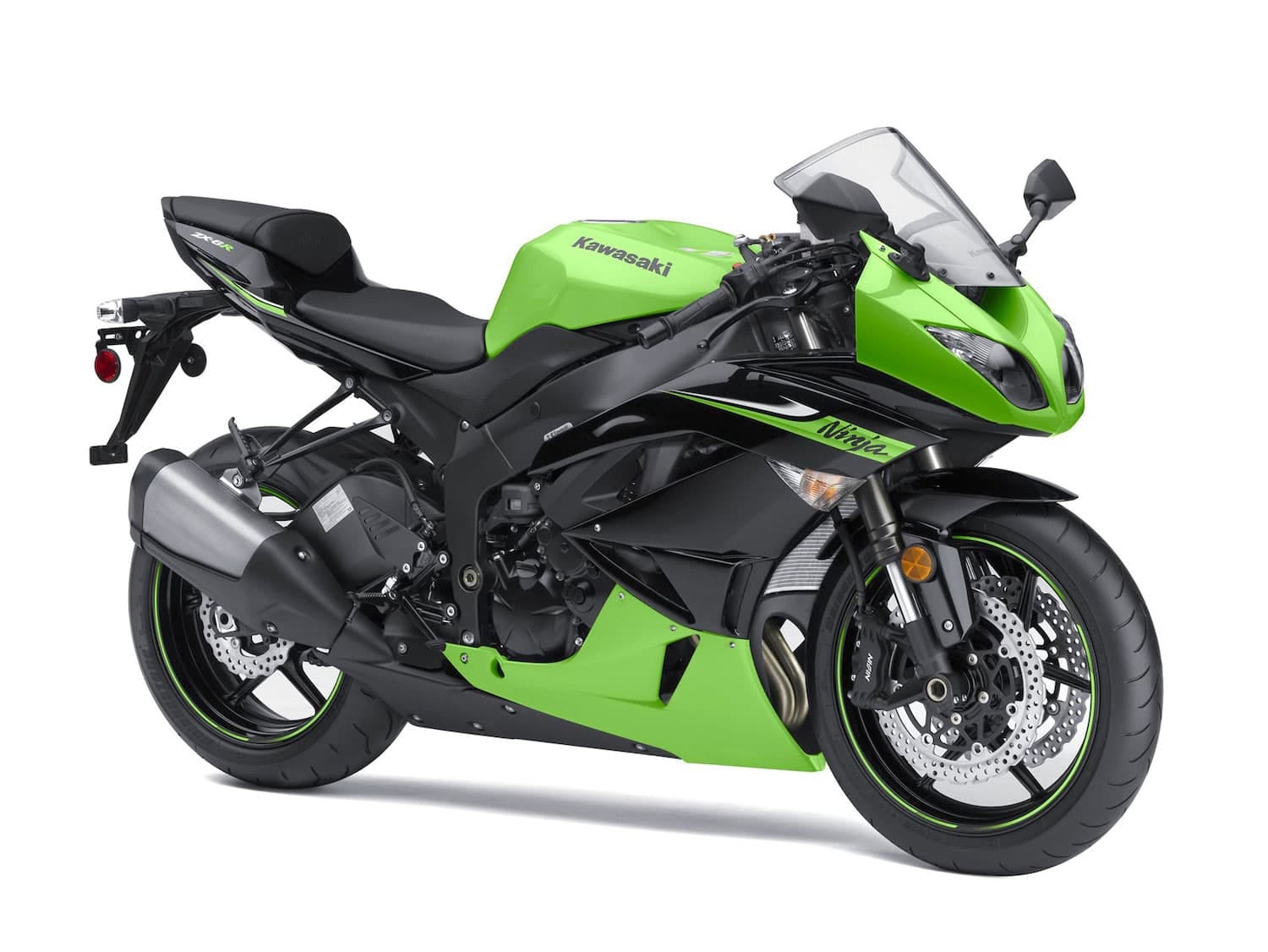
The 2009 redesign is easier to understand with the fairings off. The main spars curve over the engine, while the ram-air duct and radiator packaging keep the front of the bike tightly wrapped.
2013-2023 ZX-6R 636: the 636 returns
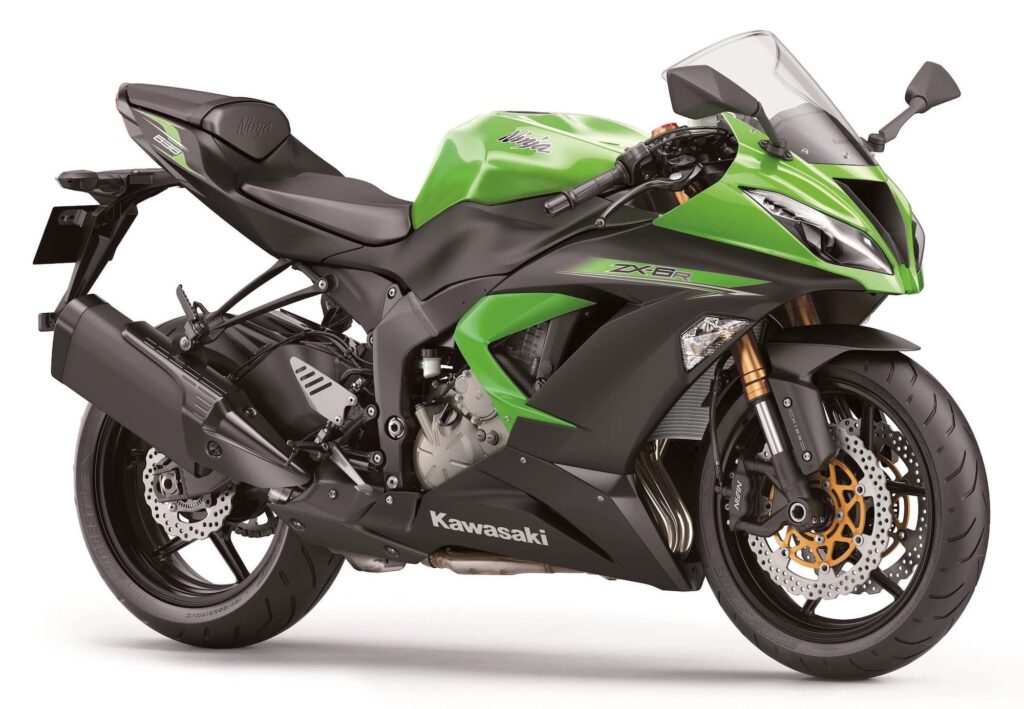
For 2013, Kawasaki brought the 636 cc engine back and kept it as the road-going ZX-6R. The 599 cc version continued mainly where racing rules required it.
The 636 cc engine used a 67.0 × 45.1 mm bore and stroke and gave the street bike a broader spread of torque than a 599 cc supersport. Kawasaki paired it with two power modes and three-level KTRC traction control. KIBS ABS was available on ABS models, while the chassis used a 41 mm Showa Separate Function Fork-Big Piston and radial-mount Nissin front calipers on 310 mm petal discs.
The important second step came for 2019. It was more than a gearing and graphics change: Kawasaki fitted shorter final gearing, a revised front and tail cowl, LED head and tail lamps, a narrower and shorter seat, a new silencer and heel guard, Bridgestone S22 tyres, and the upshift-only Kawasaki Quick Shifter. The engine and exhaust were also revised for Euro 4 compliance. Kawasaki’s 2019 launch release lists the complete set of changes.
The underlying 2013 platform remained. That makes the used-bike split fairly simple: 2013-2018 bikes have the original bodywork and gearing, while 2019-2023 bikes have the later styling, LED lights and factory quickshifter. Condition, service history and evidence of careful track preparation matter more than chasing a particular paint scheme.
2024-2027 ZX-6R 636: TFT display, ride modes, and the current bike
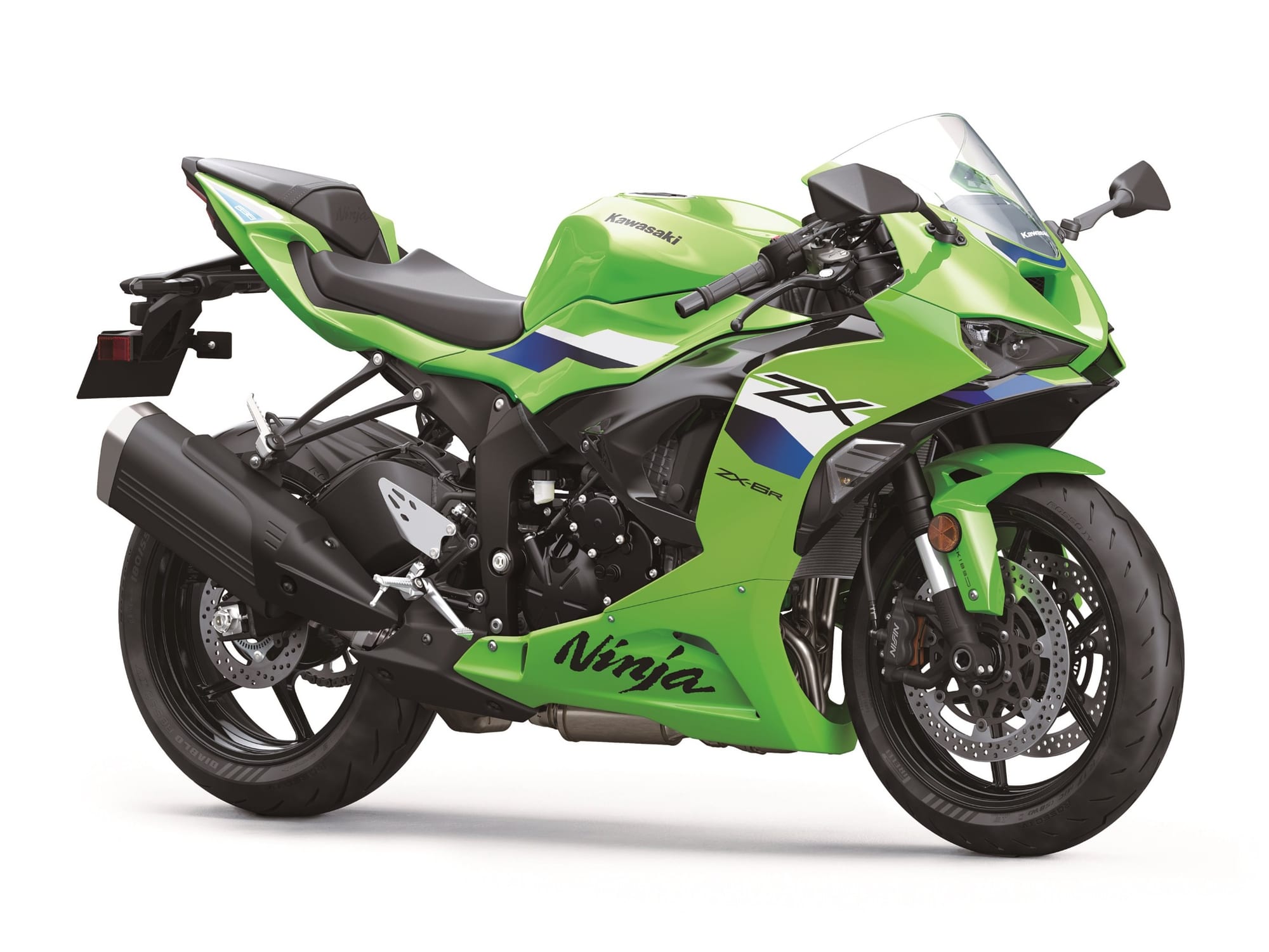
The 2024 update kept the 636 cc engine and the basic 2013 chassis, but it made the bike current enough to return to markets with stricter emissions rules. Revised cam profiles, intake funnels, cylinder-head details and exhaust tuning changed the delivery slightly; the attraction is still an inline four that comes alive at high rpm, with more usable midrange than a traditional 599 cc supersport.
Published output varies by market and test standard. Kawasaki Australia lists 91.0 kW (124 PS) at 13,000 rpm, or 95.2 kW (129 PS) with ram air, plus 69 Nm (51 lb-ft) at 10,800 rpm. The bike has two power modes, three-level KTRC traction control, integrated ride modes, an assist-and-slipper clutch, and an upshift-only KQS quickshifter. It still does not use an IMU, so the electronic rider aids are not lean-angle sensitive.
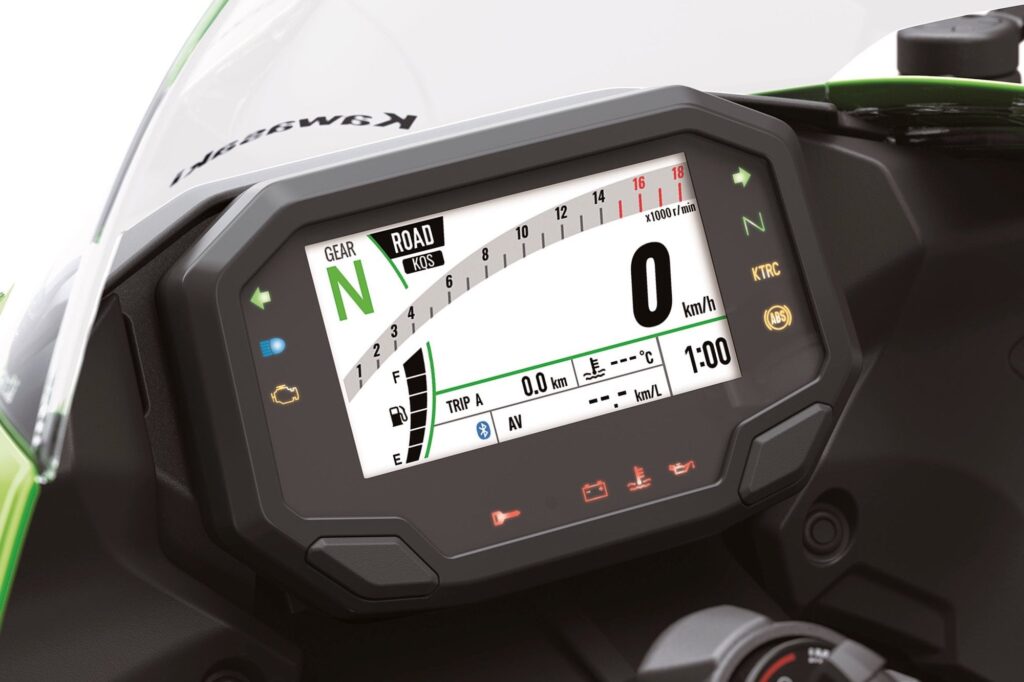
The visible changes are useful: a 4.3-inch colour TFT with smartphone connectivity, full LED lighting, new nose bodywork, and round 310 mm front discs in place of the old petal rotors. The 41 mm Showa SFF-BP fork remains fully adjustable, as does the rear shock.
For 2025, the ZX-6R was homologated for the WorldSSP championship. That matters for the model’s racing life, but it did not create a separate street generation. The 2026 model was another colour-and-graphics year.
Kawasaki has already announced the 2027 ZX-6R. Mechanically it continues the 2024 package. The announced European colours are Lime Green / Blue, Metallic Spark Black / Metallic Flat Spark Black, and Metallic Matte Carbon Gray / Metallic Spark Black. Availability, equipment and colour names vary by market.
In buyer’s-guide terms, 2024-2027 bikes are one generation. Choose among them by price, warranty, colour and local specification rather than expecting a performance difference.
Is the Kawasaki ZX-6R Good for the Street?
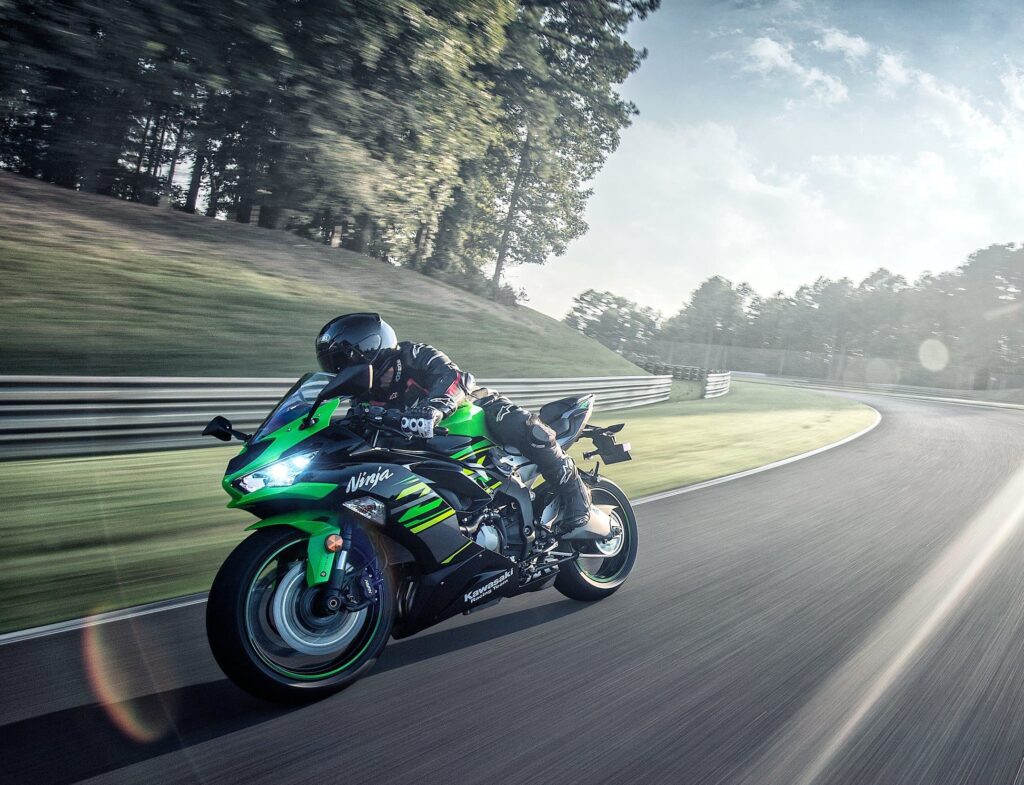
Is a Kawasaki ZX-6R a good street bike? Well, it depends on one main thing: Do you like riding high-strung 600 cc-class sport bikes?
I’m personally of the opinion that everyone needs to try the 600 class once. There’s way too much hyperbole about them to have a rational discussion about it (much like about the “literbike” class).
There’s just so much that’s cool about 600-class sportbikes like the Kawasaki Ninja ZX-6R. They look amazing, they make an intoxicating high-RPM wail, and above 8000 rpm they feel like a jet taking off.
Even though motorcycles like the ZX-6R rev really high, it’s at least theoretically possible to get them over 10000 rpm without being in “lose your license” territory. In fact, you can do so in second gear, especially if you have one with more reasonable gearing. That’s just not possible (legally) on bikes like its big brother, the ZX-10R.
The Kawasaki ZX-6R is lightweight, easy to manipulate at low speeds, and narrow. So it actually makes a decent commuter… If you don’t mind the weight on your wrists at low speeds, anyway.
One thing is certain: Unless you live near roads in perfect condition with no other traffic, it’s impossible to extract the “most” out of any 600 cc class motorcycle on the street safely most of the time. There’s always some oil on the road, some jerk going the other way, or some traffic jam that’s guaranteed to ruin the fun.
But that doesn’t mean that there aren’t little bits of joy to be had with 600 bikes — freeway on-ramps, quiet Sunday rides in the mountains, or just the joy of looking at it in the garage.
Aside from those little joys, overall, I’m personally of the opinion that race-spec 600-cc and 1000-cc sport bikes are not the best for the street, for one reason: it’s just so rare to be in the meat of the torque curve.
Getting the most out of a 600-cc sport bike attracts attention from everyone — police, other cars, neighbours — because you can hear the wail of that exhaust above 8000 rpm from miles away. Especially because we have neighbours and I like to go for rides early in the day before people clog the roads.
Frankly, as awesome and spine-tingling as it is, I’m super self-conscious of it anywhere but on track days (where I usually can barely even hear my own bike).
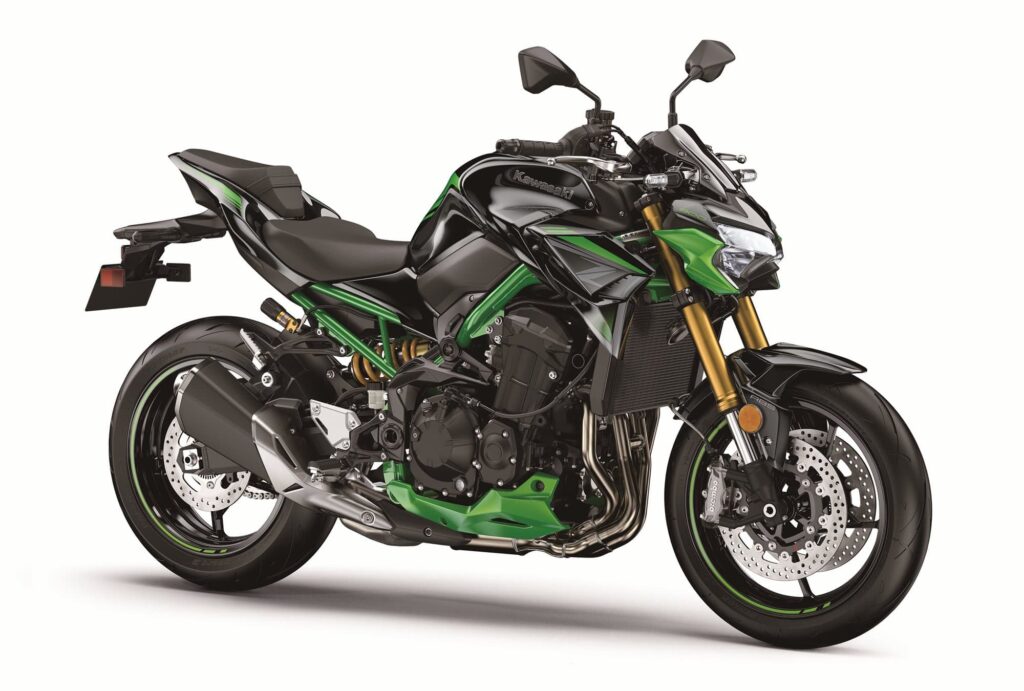
If you’re not taking your ZX-6R (or any other bike with a redline above 13000 rpm) up there, then you’re basically riding a slower bike than you could be. Other motorcycles, like those with bigger but lower-revving engines, get to bigger peak torque numbers sooner. For example, I’m 100% confident that a Kawasaki Z900, one of the underdogs of the naked bike segment, would out-run a Ninja 600 to 60 mph / 100 km/h any day of the week, because it’d be easier to launch into the meat of the torque curve. Beyond that of course, the 6R would start to run away.
Cycle World’s testers squeezed this performance out of each bike respectively:
| Spec | Kawasaki Z900 | Kawasaki ZX-6R 636 |
|---|---|---|
| Quarter mile | 10.95 sec @ 125.06 mph | 10.58 sec. @ 132.36 mph |
| 0-60 mph | 3.0 sec | 3.0 sec. |
See? Same 0-60, though at high speeds the 636 is faster.
But none of that means it’s not awesome to ride a 600-cc sport bike. There are plenty of good reasons to ride a 600-cc sport bike at least once (I go over them here).
In a nutshell, riding a 600-cc sport motorcycle every day is like riding a rocket ship with a turbocharger. Sure, someone might get more out of their Mazda MX-5 in everyday driving, but that doesn’t mean it’s not awesome to drive a Ferrari. Plenty of dentists do, I hear! (I picked the wrong profession…)
The traditional 600 cc supersport class is much smaller than it was, but it is not gone. Honda has renewed the CBR600RR in some markets, Kawasaki continues the 636, and WorldSSP rules now admit a broader mix of engine layouts and capacities. The ZX-6R remains the most direct way to buy the old high-revving inline-four experience as a current road bike in the markets where it is sold.
Alternatives to the Kawasaki ZX-6R 636 / 600
The right alternative depends on which part of the ZX-6R appeals to you. A current CBR600RR or GSX-R600 is the closest match in layout; an R9 or Panigale V2 gives stronger road torque and newer electronics; an RS 660 or Daytona 660 is easier to live with but less intense at the top of the rev range.
| Alternative | Why consider it | What changes versus the ZX-6R |
|---|---|---|
| Honda CBR600RR | The closest current 599 cc inline-four rival in markets that receive the latest model | More advanced IMU-based electronics; availability and specification vary sharply by region |
| Suzuki GSX-R600 | A simple, proven 599 cc inline-four that remains on sale in the US | Older design with no ABS or traction control; the used market is much larger than the new one |
| Yamaha YZF-R9 | Modern track-focused chassis, 890 cc triple, IMU electronics | More midrange and less inline-four top-end character |
| Ducati Panigale V2 (2025+) | Light 890 cc V-twin with a broad road powerband and current electronics | More expensive and a different engine character |
| Aprilia RS 660 / RS 660 Factory | Light, agile and well equipped for road and occasional track use | Less peak power and a parallel-twin soundtrack |
| Triumph Daytona 660 | Accessible triple-cylinder road sport bike with useful midrange | More upright and less track-focused |
On the used market, the Yamaha YZF-R6 and Triumph Daytona 675R remain obvious choices. Earlier CBR600RRs, GSX-R600s and 2003-2006 ZX-6RR 599s also preserve the strict 600 cc formula. The usual caution applies: inspect any supersport carefully for crash repairs, lock-wired fasteners, removed road equipment, non-standard fuelling and signs of hurried track-bike conversion.
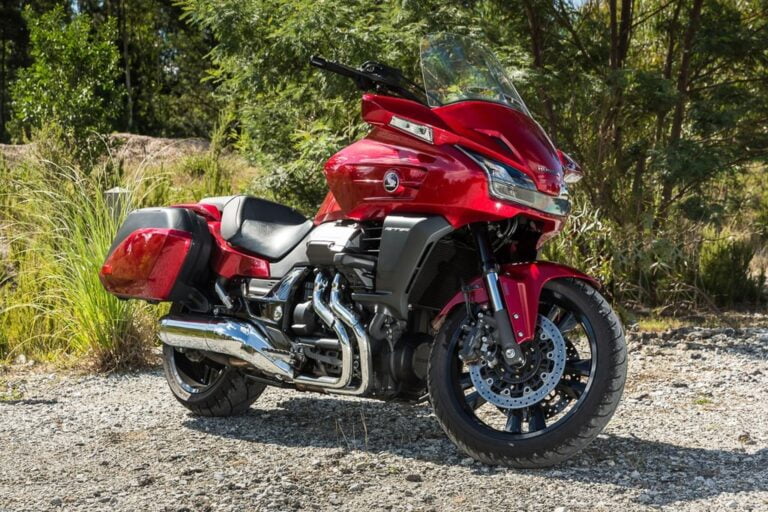
If you want the ZX-6R’s speed but not its riding position, the Kawasaki Z900 or a sport tourer such as the Ninja 1100SX will be easier on the street. The Ninja 1100SX has cruise control and better wind protection; the ZX-10R does not have cruise control and is an even more committed superbike.
For more context, see the guide to why 600 cc sport bikes feel the way they do, the CBR600F and CBR650R family, and the Kawasaki Ninja sport-touring guide.
Wrap up
The ZX-6R’s history is unusually tangled because Kawasaki moved between 599 and 636 cc engines, sometimes selling both at once. The useful buying split is simpler: early carburetted 599s, the 2003-2006 636/600 pair, the 2007-2012 599, the 2013-2023 636, and the TFT-equipped 2024-2027 636.
For a current road bike, the 2024-2027 version is the easy choice if you want the TFT display, LED lighting and updated emissions package. A clean 2019-2023 bike gives you the later bodywork and quickshifter for less money, while 2013-2018 bikes deliver nearly the same core experience. Earlier generations make more sense as enthusiast purchases, where originality and condition matter as much as specification.
What has kept the ZX-6R alive is still the thing that makes it demanding: it asks for revs, commitment and room to work. If that is the experience you want, there are very few new motorcycles left that deliver it in such a direct form.

Enjoyed