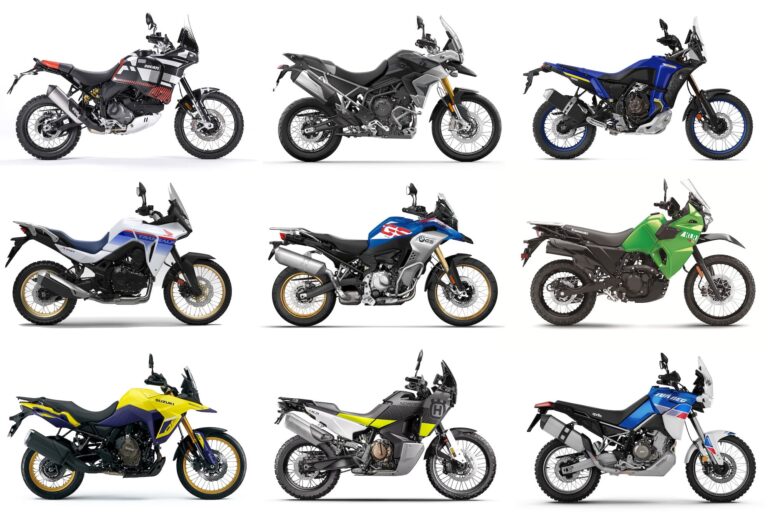

Here it is: another subjective list of the best-looking motorcycles of 2024. These are the bikes that made me stop scrolling, walk back across a showroom, or spend too long looking at press photos.
Some were announced in late 2023, and a few are older designs wearing especially good colours. The rule is simply that you could buy them new as 2024 models. I have picked one main motorcycle from each manufacturer, with a few honourable mentions where I couldn’t help myself.
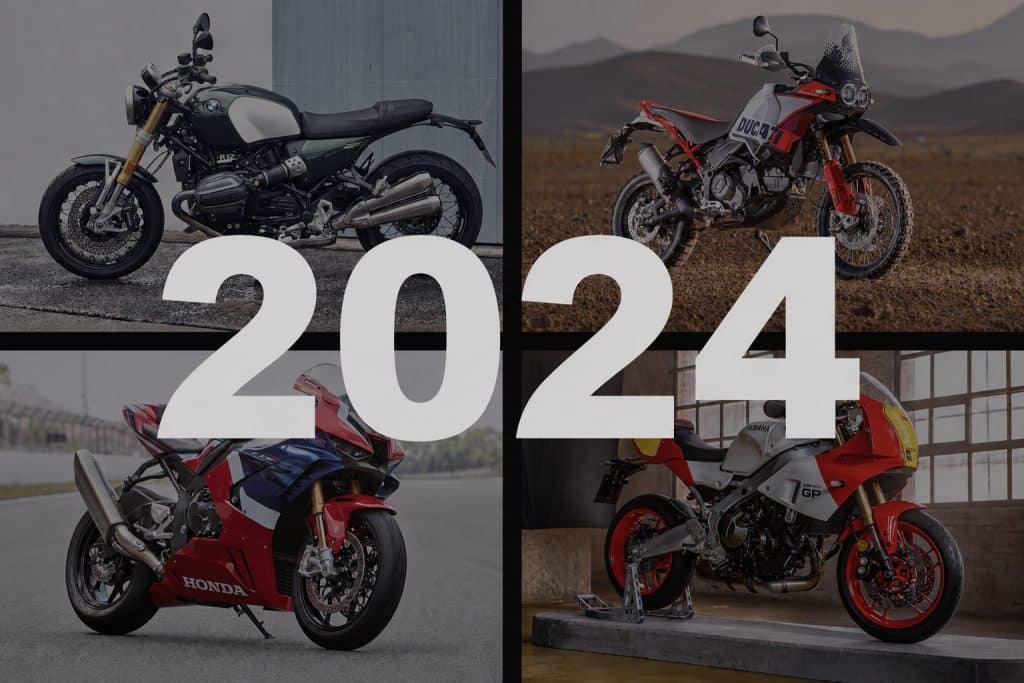
See all the lists of best-looking motorcycles if you want to look at other pretty pictures:
Are you obsessed with motorcycles?
Well, I am. That’s why I created this site — as an outlet. I love learning and sharing what others might find useful. If you like what you read here, and you’re a fraction as obsessed as I am, you might like to know when I’ve published more. (Check the latest for an idea of what you’ll see.)
BMW R 12 nineT
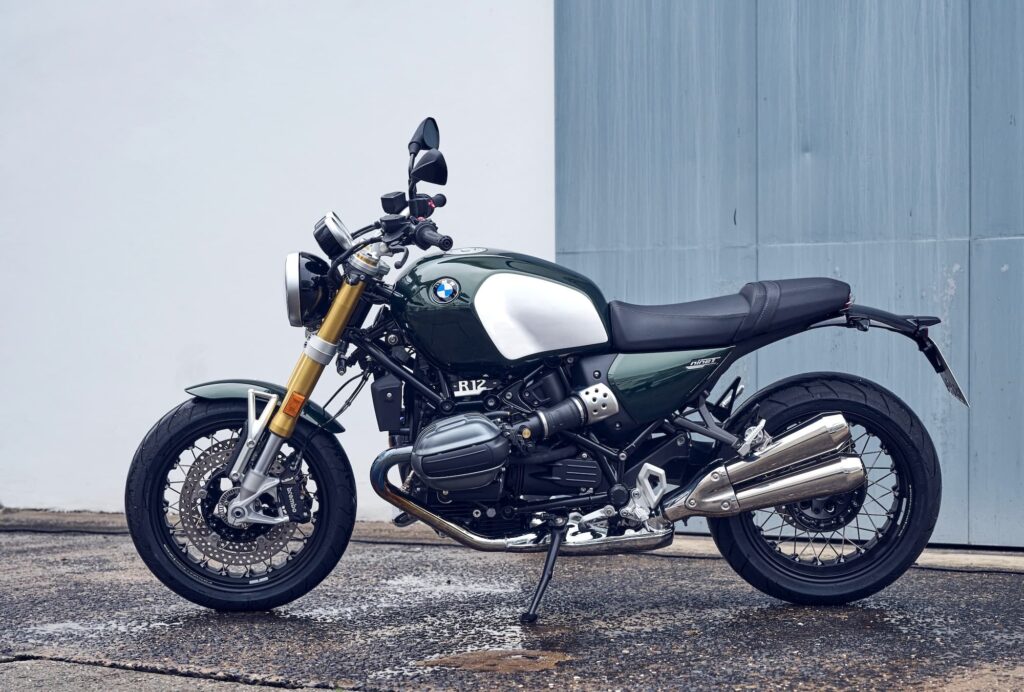
BMW replaced the R nineT with the R 12 nineT for 2024. The name is confusingly similar, but the motorcycle is a substantial redesign rather than a new badge and paint scheme. See my BMW R 12 model range buyer’s guide for the model differences and buying advice.
The R 12 nineT still uses BMW’s 1,170 cc air/oil-cooled boxer twin and shaft drive, now making 80 kW (109 PS) at 7,000 rpm and 115 Nm (85 lb-ft) at 6,500 rpm. BMW built it around a new one-piece tubular-steel bridge frame, moved the airbox beneath the seat, and fitted a neatly stacked pair of left-side silencers. Those changes leave the engine and rear wheel visually exposed, which is a large part of why the design works.
I like the green-and-silver Option 719 version most. It has enough polished metal and visible mechanical detail to look expensive without becoming fussy. See the BMW R nineT and R 12 nineT buyer’s guide for the full model history.
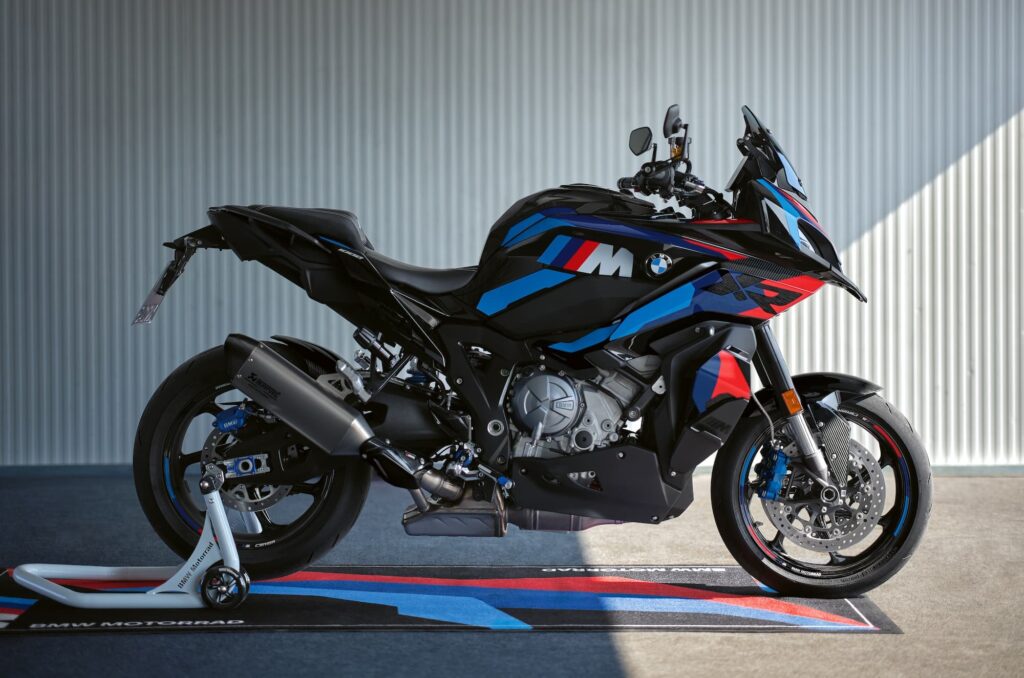
Honourable mention goes to the BMW M 1000 XR. It is nowhere near as classically pretty, but a 148 kW (201 PS) tall sports bike with winglets has its own slightly unhinged appeal.
Ducati DesertX Rally
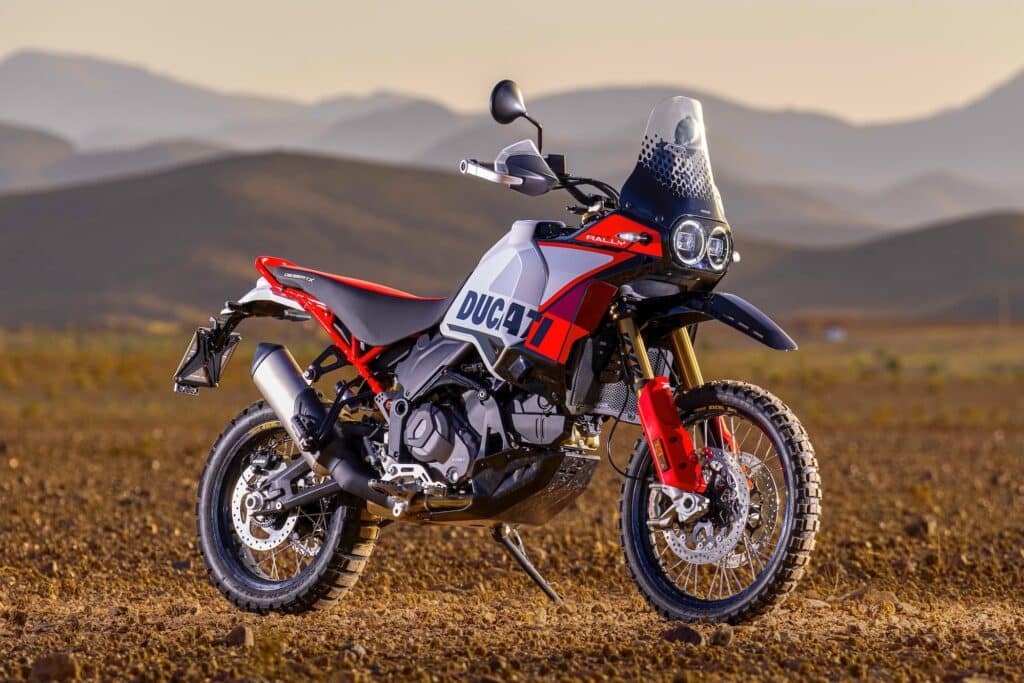
Ducati has yet to give the DesertX a bad colour scheme, and the Rally is the strongest-looking version so far. The high front mudguard, red frame, white bodywork, and blocky rally graphics make the standard bike look almost restrained.
The changes have a practical purpose. Ducati fitted a closed-cartridge 48 mm KYB fork with 250 mm (9.8 inches) of travel, a 240 mm (9.4-inch) rear shock, stronger tube-type wheels, a 21-litre (5.5 US gal) fuel tank, and an Öhlins steering damper. The Rally has 280 mm (11.0 inches) of ground clearance, so it looks tall because it really is tall.
It keeps the standard DesertX’s 937 cc Testastretta 11-degree engine, making 81 kW (110 CV) and 92 Nm (68 lb-ft), plus cruise control, cornering ABS, and a large electronics package. It is expensive and has a 910 mm (35.8-inch) seat, but few production adventure bikes look this close to a Dakar machine.
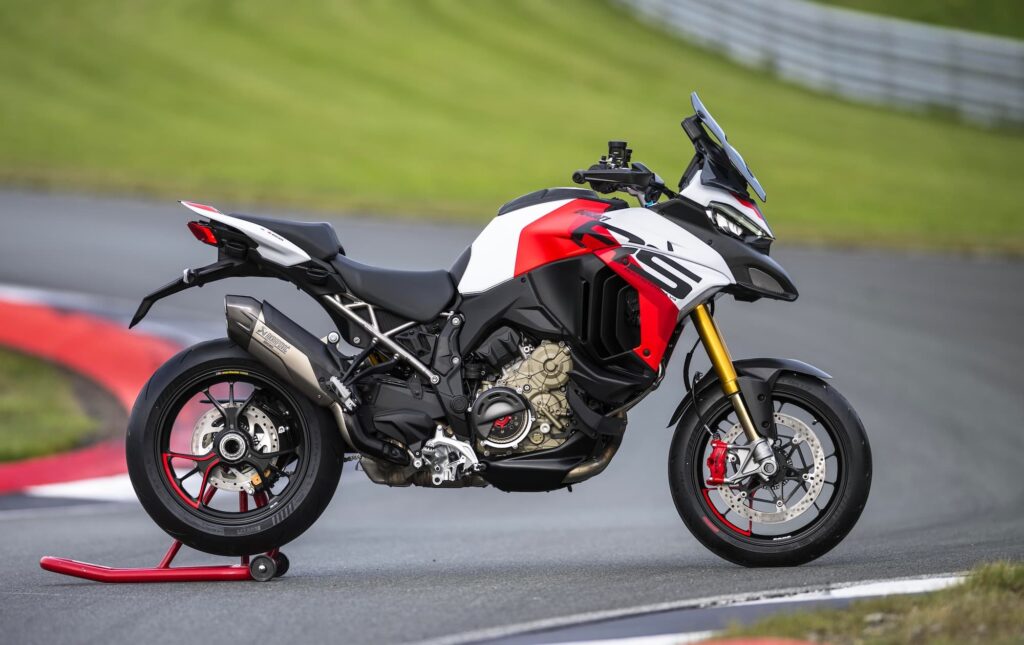
The Ducati Multistrada V4 RS deserves an honourable mention. Its Panigale-derived Desmosedici Stradale V4, dry clutch, and single-sided swingarm make it the visually and mechanically extravagant Multistrada.
Honda CBR1000RR-R Fireblade SP
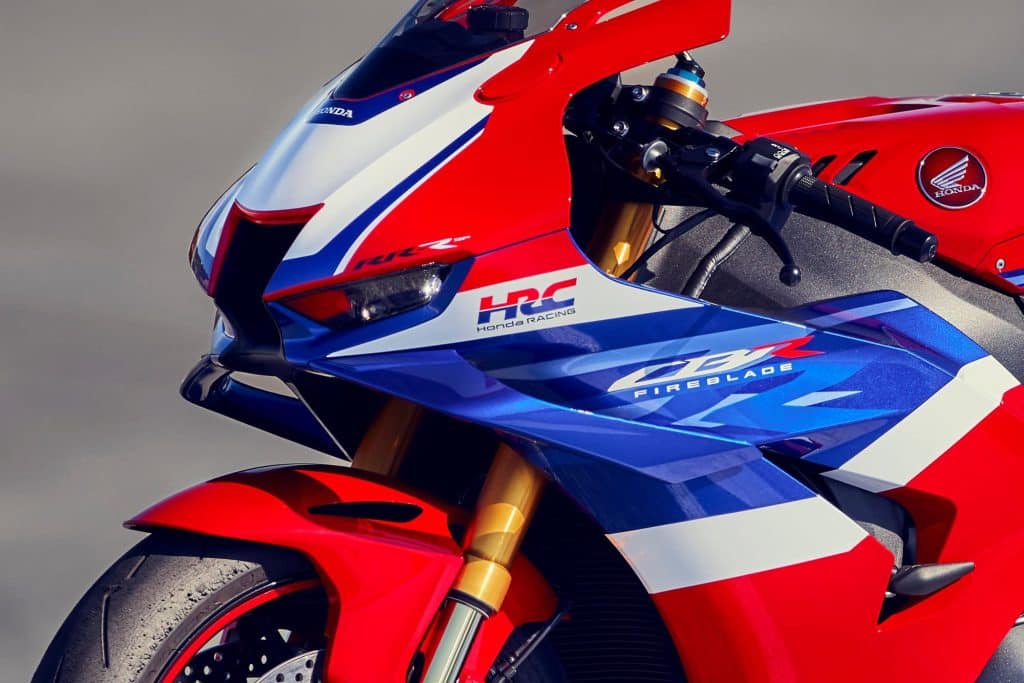
The HRC tricolour CBR1000RR-R Fireblade SP is the best-looking Honda superbike in years. The red, white, and blue paint breaks up a lot of fairing, while the gold Öhlins fork and compact winglets make it clear that this is the expensive one.
Honda made meaningful changes for 2024. The 999 cc inline four still makes 160 kW (215 hp) at 14,000 rpm and 113 Nm (83 lb-ft) at 12,000 rpm in European trim, but Honda revised the cylinder head, intake, gearbox ratios, frame rigidity, and riding position to give it stronger corner-exit acceleration and easier control. The SP also got third-generation Öhlins electronic suspension and Brembo Stylema R front calipers.
The name remains absurdly easy to mistype. By the time I have checked whether it needs two Rs or three, the bike has reached the next corner. “Fireblade SP” will do.
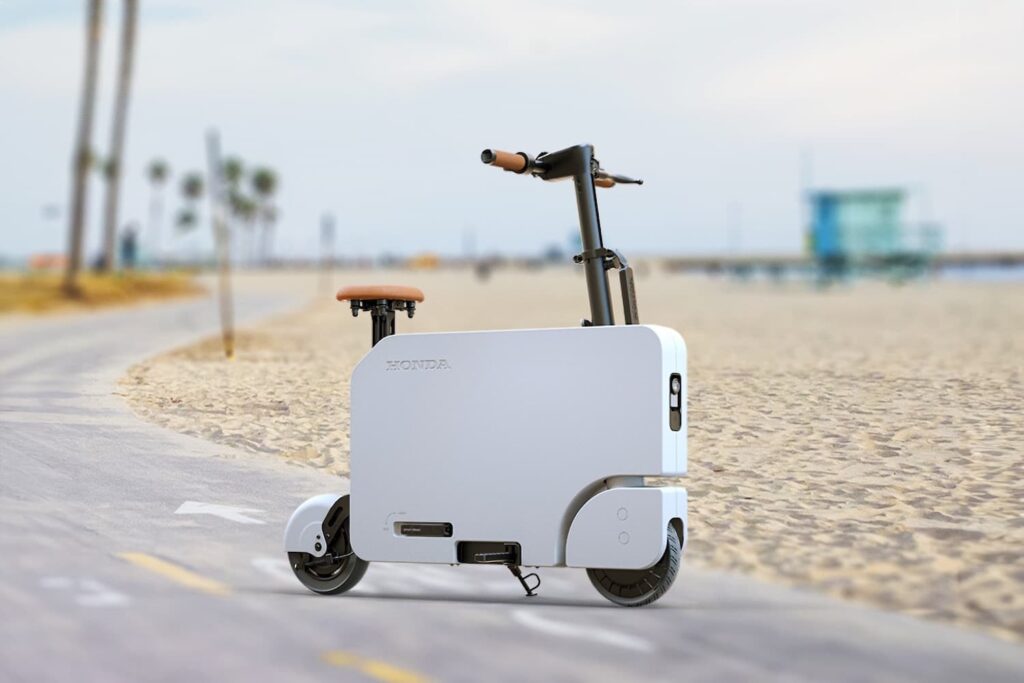
At the other end of Honda’s 2024 range, I also like the Motocompacto. It is an electric last-mile scooter that folds into something resembling a white suitcase. It is slow and deeply uncool, but the clean shape is much better resolved than most mobility devices.
Kawasaki Z900RS Yellow Ball

The Kawasaki Z900RS was not new for 2024, but I keep finding excuses to include it. The long teardrop tank, ducktail rear, round headlight, and twin analogue clocks borrow from the 1972 Z1 without turning the bike into a replica.
The Yellow Ball paint is the one I want. Kawasaki first used the name for the yellow-and-black Z1A colour scheme in 1974, then brought it back on the Z900RS SE. Gold wheels and an Öhlins rear shock make the SE look even better, though the basic 948 cc inline-four platform is much the same as the standard Z900RS.
See the guide to the Kawasaki Z900RS and its retro predecessors for more of Kawasaki’s best paintwork.
Moto Guzzi Stelvio
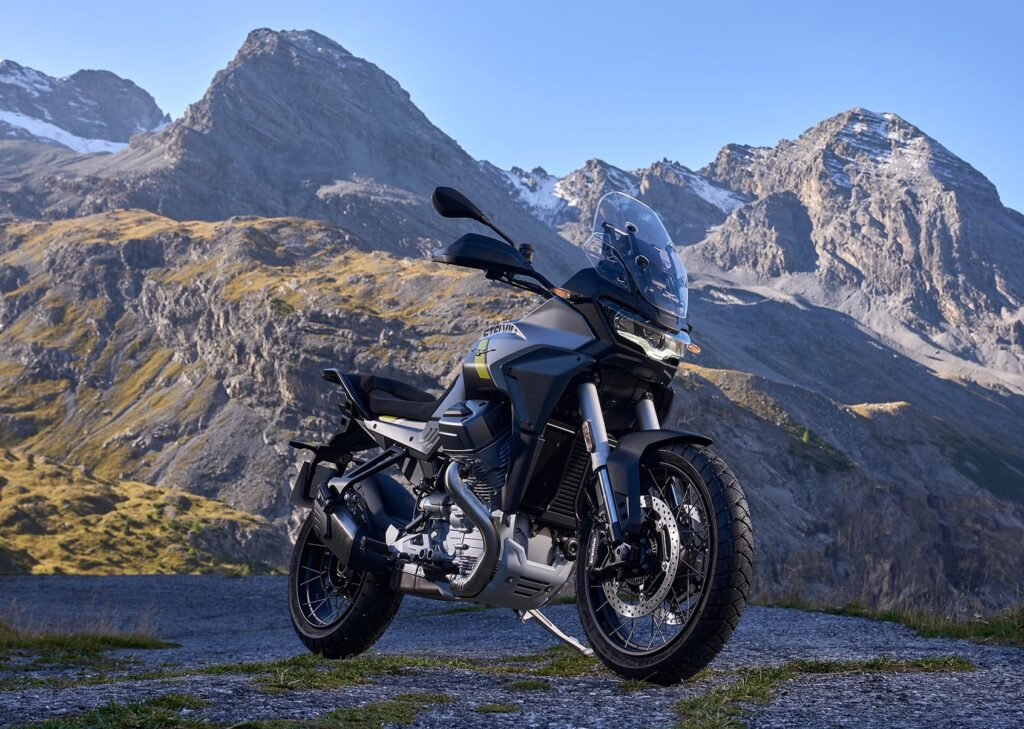
The revived Moto Guzzi Stelvio is a cleaner design than the old Stelvio 1200, which had the visual mass of an apartment building. The new bike still looks unmistakably like a Guzzi: the cylinders jut out either side, the shaft drive runs down the right, and the eagle-shaped daytime running light gives the front a useful identity.
Moto Guzzi based it on the V100 Mandello’s compact 1,042 cc liquid-cooled transverse V-twin. It makes 84.6 kW (115 CV) and 105 Nm (77 lb-ft), with 170 mm (6.7 inches) of suspension travel at both ends, a 19-inch front wheel, and an electrically adjustable screen. The optional PFF version adds radar-based blind-spot and collision warnings, though the sensors do not spoil the bodywork.
The yellow accents help, but the engine does most of the visual work. There are few modern adventure bikes where the mechanical layout shapes the design this clearly.
Norton Commando 961
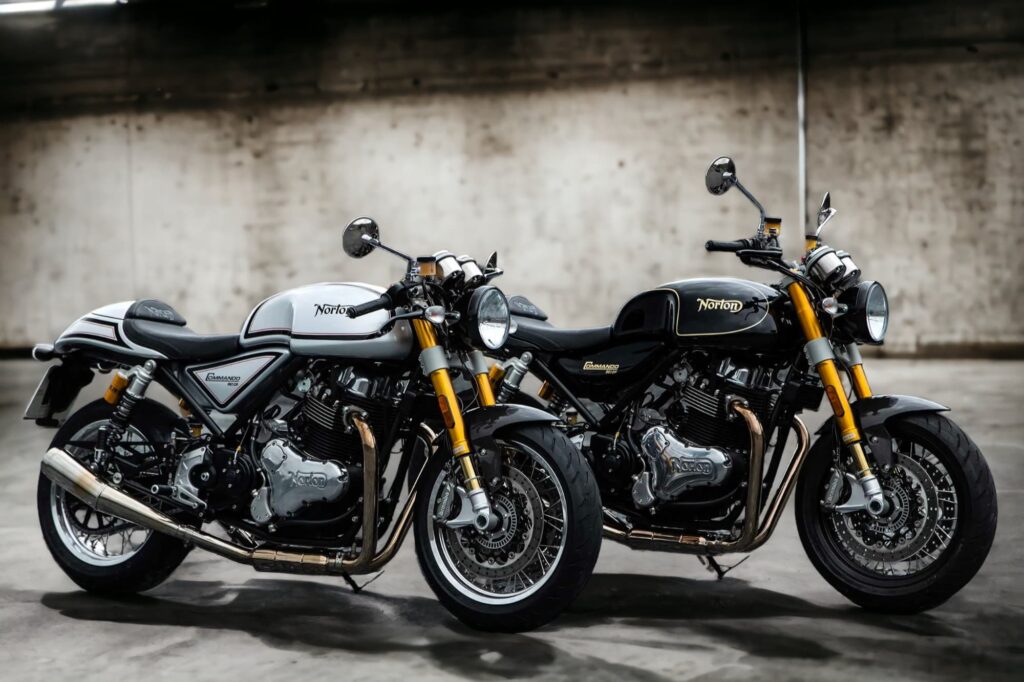
Norton went through a disastrous period under its previous owner, but TVS bought the company in 2020 and put the Commando 961 back into production with hundreds of revised parts and much tighter quality control.
The basic recipe is intentionally old-fashioned: a 961 cc air/oil-cooled parallel twin with pushrod valve actuation, two valves per cylinder, and a five-speed gearbox. It makes 57.3 kW (76.8 hp) and 81 Nm (60 lb-ft), so this is not a modern superbike hiding under a classic shape.
Norton spent the money where you can see and feel it. The 961 has Öhlins suspension, Brembo radial-mount front calipers, polished engine cases, wire wheels, and beautifully simple bodywork. I prefer the SP’s upright handlebar, but the CR’s clip-ons and small flyscreen complete the café-racer shape.
Suzuki GSX-8S
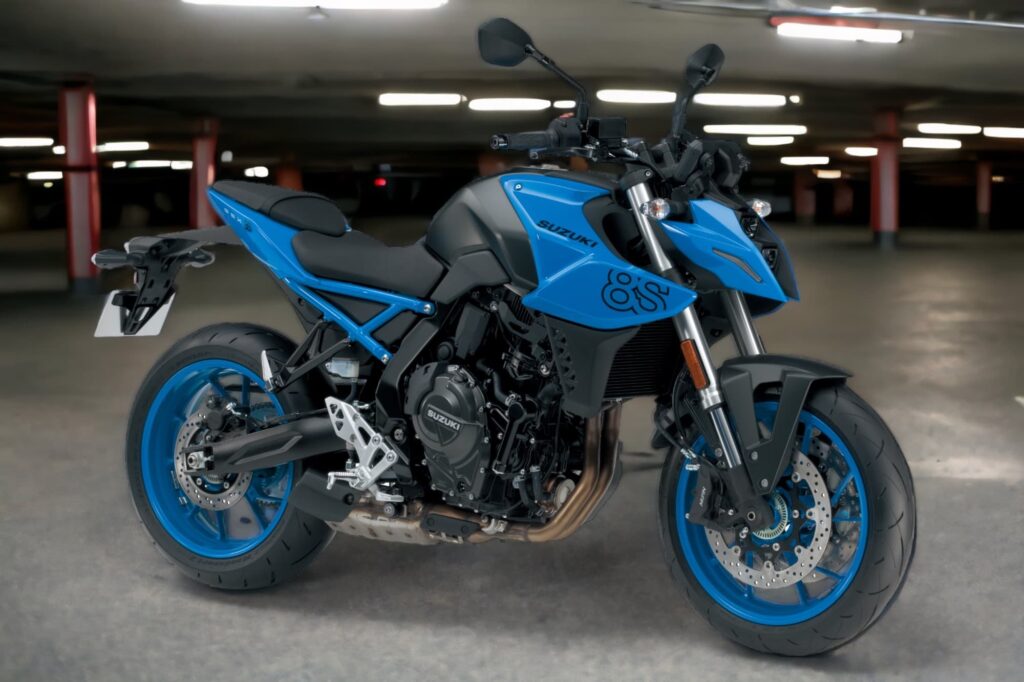
This will be the divisive choice. The GSX-8S has a stacked headlight, sharp radiator shrouds, and a lot of exposed frame and engine. It looks especially good in blue, where the wheels and bodywork make the black mechanical parts recede.
The 776 cc parallel twin makes the GSX-8S compact and narrow, and its 270-degree crank gives it a more interesting pulse than its cylinder layout suggests. Suzuki also fitted a bidirectional quickshifter, ride modes, and traction control as standard. At 202 kg (445 lb) wet, it is not unusually light, but the short tail and low-mounted mass keep it from looking bulky.
Suzuki has used bright, high-contrast colours better than most manufacturers for decades. The GSX-8S continues the tradition without pretending to be an old GSX-R or Katana.
Triumph Scrambler 1200 X
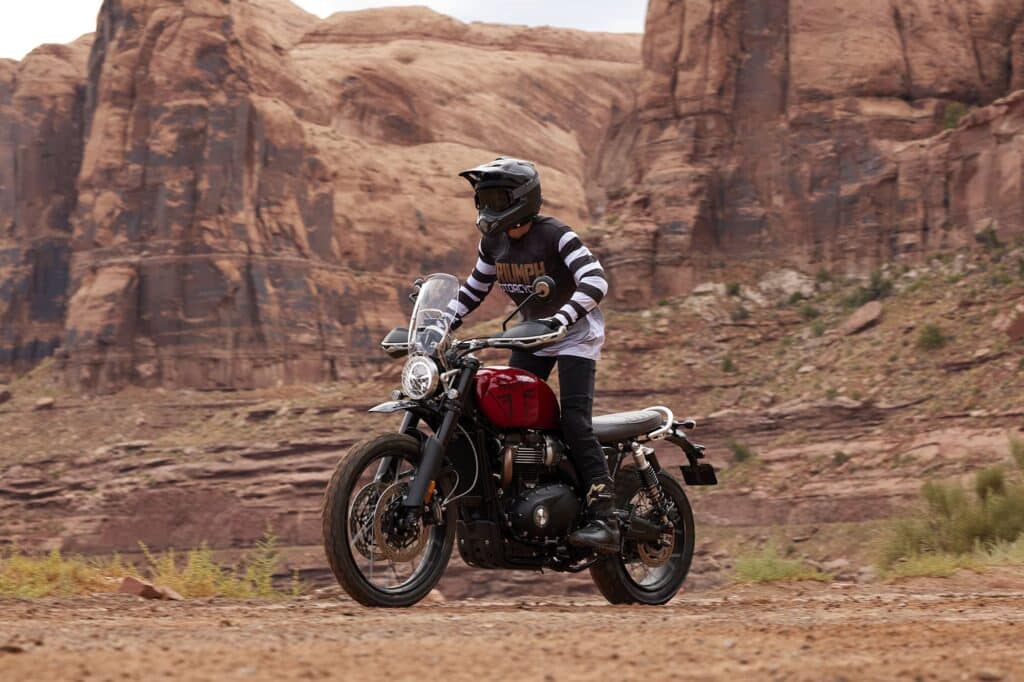
The Scrambler 1200 XE is the more capable off-road model, but I think the 1200 X has better proportions for a road-biased scrambler. Its 19-inch front wheel and 820 mm (32.3-inch) seat make it look lower and more compact, while the high pipes, bash plate, fork gaiters, and wire wheels keep the right amount of dirt-bike influence.
The 1,200 cc parallel twin makes 66.2 kW (89 hp) and 110 Nm (81 lb-ft), with most of that torque available low in the rev range. The X also has cornering ABS and traction control, so the more accessible chassis did not come with a cut-price electronics package.
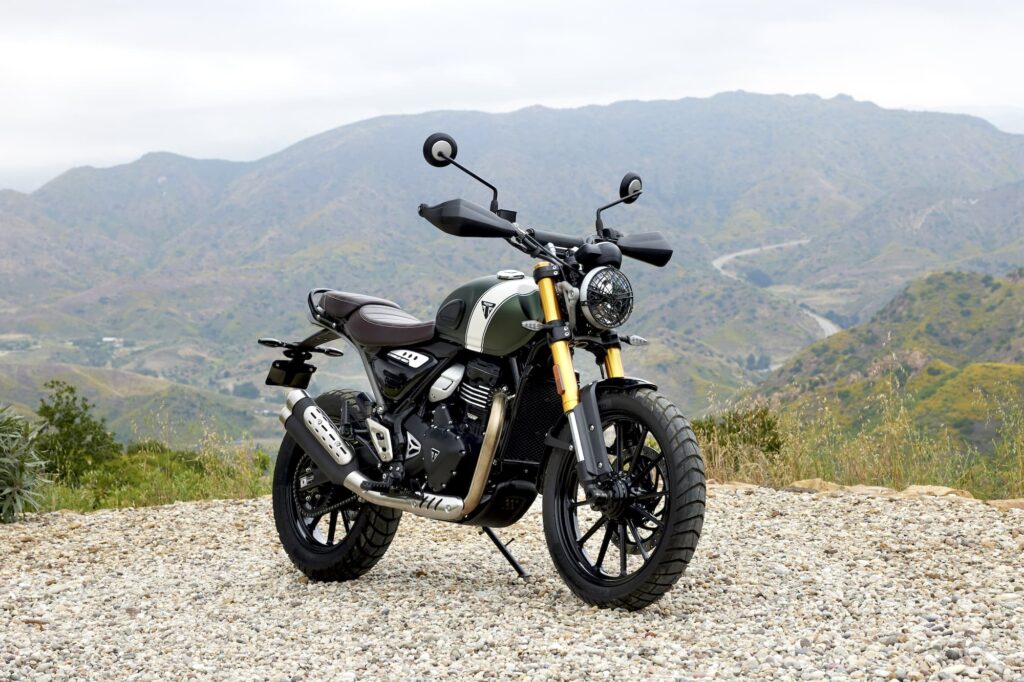
The smaller Scrambler 400 X deserves a mention, too. It carries the same general shape into a lighter and much cheaper single-cylinder bike without looking like a budget copy.
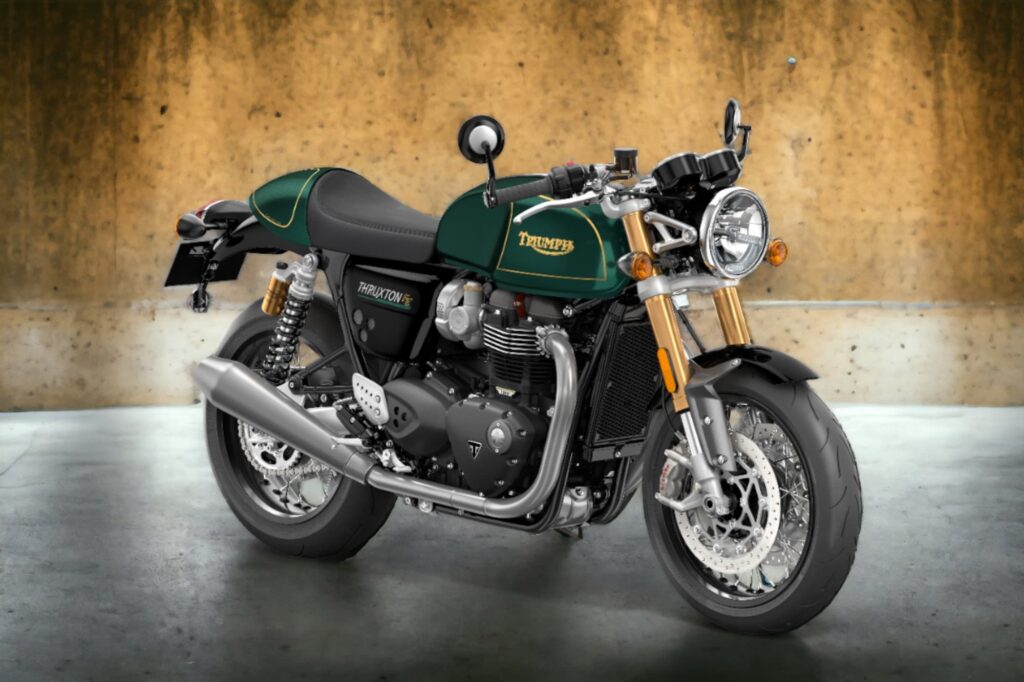
And then there is the Thruxton RS Final Edition. Mechanically it is the familiar 1,200 cc Thruxton RS, but the Competition Green paint, gold lining, and hand-signed tank badge are a fitting send-off. Triumph ended Thruxton production after the 2024 model year, which makes the “Final Edition” name unusually literal.
Yamaha XSR900 GP
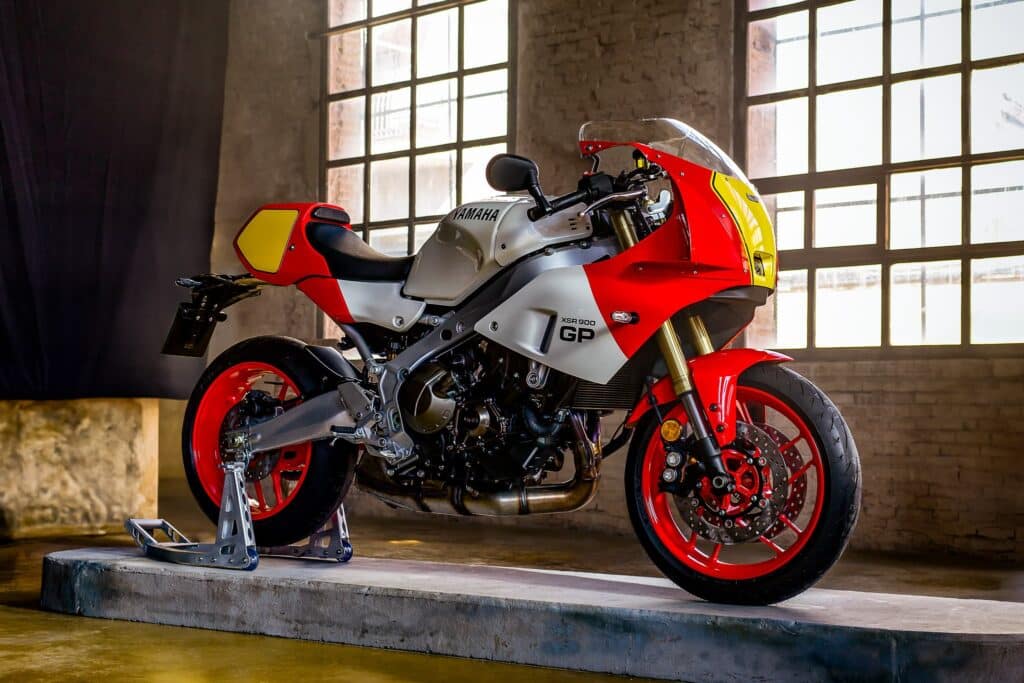
I will get flak for this, but I cannot take my eyes off the XSR900 GP. Yamaha wrapped the regular XSR900’s 890 cc CP3 platform in an upper fairing, changed the riding position, strengthened the frame around the steering head, and fitted higher-grade adjustable KYB suspension.
The red-and-white bodywork refers to Yamaha’s 1980s Grand Prix racers without copying any one machine. The boxy tail, broad fairing, visible frame, and tiny round headlight should look awkward together. Somehow they do not. See the Yamaha XSR900 buyer’s guide for the differences between the GP and the standard bike.
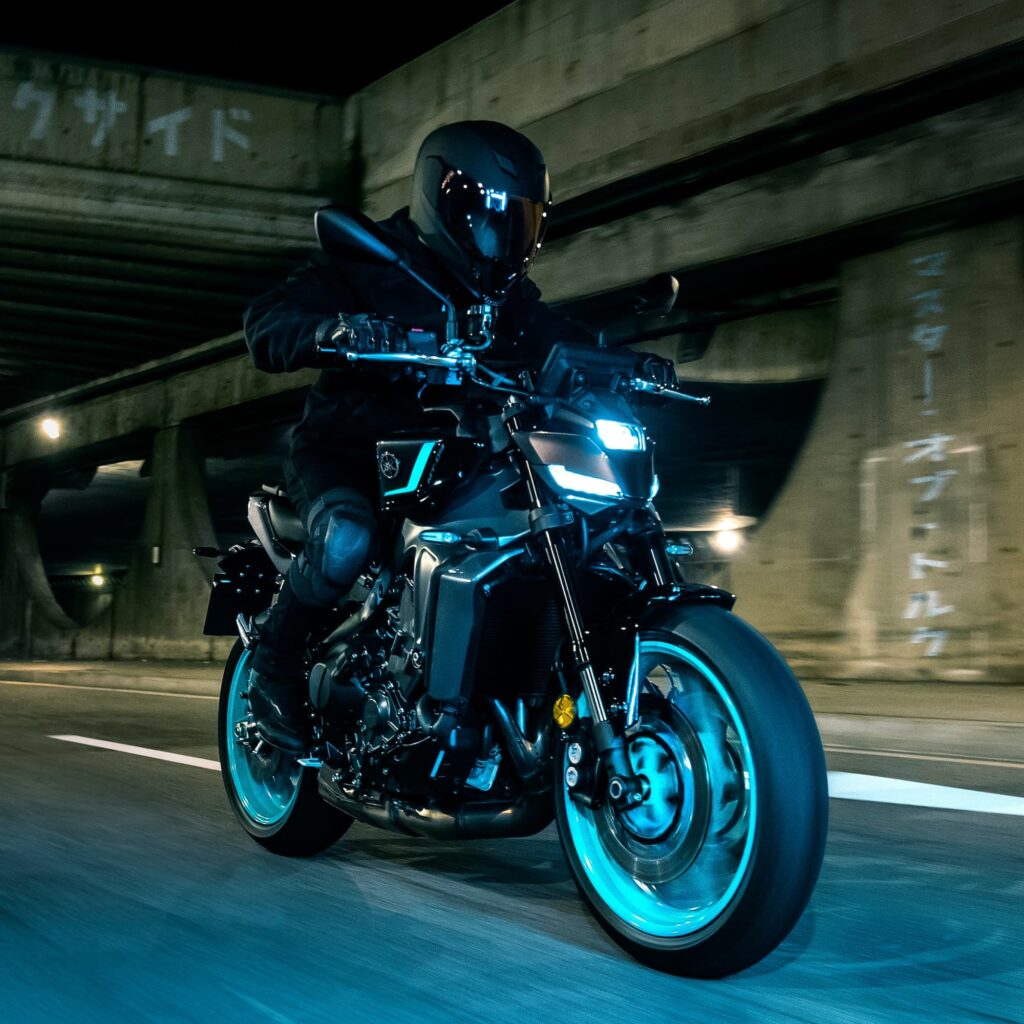
The 2024 MT-09 and MT-09 SP also deserve credit. Yamaha replaced the earlier model’s exposed projector with a compact, shrouded LED headlight, fixing the one detail that put many people off the otherwise excellent 2021–2023 bike.
Wrap-up
Retro influence is still doing a lot of work in 2024, from the R 12 nineT and Z900RS to the XSR900 GP and final Thruxton. But the DesertX Rally, Fireblade SP, Stelvio, and GSX-8S show that a motorcycle can look current without becoming a mess of black plastic and angry LED eyebrows.
That is my list. If you think I have missed the obvious winner, tell me which one and why.